Art & Cultural Property Law 2026
Czech Republic
Author

ŠIROKÝ ZRZAVECKÝ, attorneys-at-law is a Czech law firm, providing comprehensive legal services to corporate and private clients since 2018. It strives to combine legal services with a business approach, helping clients find the most appropriate solutions. Services are offered in Czech, Slovak, English and German. The legal team members’ core strengths lie in their ability to deal with complex issues pragmatically, weighing up the specifics of the relevant industry, and assisting clients in gaining full value from their projects. International experience allows the team to provide high-quality legal services in other jurisdictions through co-operation with various law firms abroad, ensuring that clients are fully supported in both domestic and cross-border transactions.
1. Art Law Framework
1.1 Relevant Authorities and Legislation
In the Czech legal system, there is no explicit definition of art law, which is generally understood to be a collection of legal rules and regulations covered by various legal acts, decrees and norms governing the creation and use of artworks, their acquisition, the art market, its ecosystem and its various participants.
These legal regulations are covered by legislation from various areas of the law such as intellectual property law (including copyright), civil law (contracts) and administrative law (cultural heritage regulation, etc), among others.
The Czech legal system also has no specific definition of “art”, which often makes it necessary to investigate “art” or “artwork” within a particular legislation.
- Copyright – copyright is included in Act No 121/2000 Coll., on copyright, rights related to copyright and amendments to certain acts (the “Copyright Act”), according to which the subject of copyright is a “literary or other artistic work and scientific work that is a unique result of the author’s creative activity and is expressed in any objectively perceivable form, including electronic form, permanently or temporarily, regardless of its scope, purpose or significance” (Section 2(1)). It can take various visual forms, including painting or sculpture, architectural or other work. The Copyright Act also governs types of work, who the author can be, creation of authorship (copyright), content and regulation of the rights to authorship and copyright, the collective administration of certain rights, and offences that may be committed by breach of the Act.
- Contracts – Act No 89/2012 Coll., as amended (the “Civil Code”), regulates the rules for various types of contracts, among others purchase contracts, lease contracts and consignment contracts. The Civil Code also regulates the general rights and obligations of licence agreements for art works protected by copyright. It also contains the definitions of “work” for the purposes of the work contract which are not just “works of art”, but, in this sense, “the production of a certain thing, if it does not fall under the purchase contract, and also the maintenance, repair or modification of the thing, or activity with a different result” (Section 2587 of the Civil Code).
- Cultural heritage and export rules – Act No 71/1994 Coll., on the sale and export of objects of cultural value, governs rules for the export of movable objects of cultural value if one wishes to sell artwork. In addition, the Act No 362/2022 Coll., on the entry and import of certain cultural property into the customs territory of the EU adopts EU Regulation 2019/880 on the Entry and Import of Cultural Goods, into the Czech legal system. The protection of cultural monuments is established by Act No 20/1987 Coll., applicable to state monument care, as amended.
Disputes arising from contracts regarding artworks are resolved by Czech general courts, although arbitration proceedings are an alternative, with the most significant arbitration court being the Court of Arbitration at the Chamber of Commerce of the Czech Republic and the Agrarian Chamber of the Czech Republic. This court is mostly used for arbitration clauses in commercial contracts between two Czech parties.
Consumer disputes may first be submitted for out-of-court settlement to the Czech Trade Inspection. According to Section 419 of the Civil Code, “a consumer is any person who, outside the scope of his business activity or independent performance of his profession, concludes a contract with an entrepreneur or deals with him in any other way”. Submission of a proposal and subsequent participation in an out-of-court settlement is free of charge, and the related costs are assumed separately by each party.
The Ministry of Culture (see Section 8 of Act No 2/1969 Coll., on the establishment of ministries and other central bodies of the state administration of the Czech Republic) is the central government body for art, cultural and educational activities, cultural monuments, the implementation of copyright law, and production and trade in the field of culture. The Monument Inspectorate is a specialised inspection body within the Ministry of Culture that controls compliance with the State Monument Act and its implementing regulations (see Section 27 of Act No 20/1987 Coll., on state monument care, as amended).
Cultural heritage care is administered by state bodies known as cultural heritage offices.
Where cultural monuments are to be exported or imported, customs offices co-operate with the Ministry of Culture.
2. Rights to Artworks
2.1 Artists’ Rights Over Their Art
According to the Copyright Act, copyright includes: (i) exclusive moral rights (Section 11 of the Copyright Act) and (ii) the exclusive economic rights of the author.
Moral rights cannot be waived by the author; they are non-transferable and expire upon the author’s death, subject to Section 11 paragraph 5 of the Copyright Act (please see below). Moral rights include:
- the right to decide to make their copyrighted work public;
- the right to claim authorship, including the right to decide whether and in what way the authorship is to be indicated when the copyrighted work is made public and further used, provided that indication of authorship is normal for this form of usage;
- the right to the inviolability of the copyrighted work, in particular the right to grant consent to any alteration or other intervention in the copyrighted work, unless otherwise stipulated in the Copyright Act; and
- the right of supervision over another person’s right to use the copyrighted work (ie, the author’s supervision), unless its nature or its use implies otherwise, or unless it is not possible to fairly require the user to enable the author to exercise their right to supervision.
Whereas the moral rights last until the author’s death, economic rights last 70 years after their death. (Note that there is an exception in the case of anonymous or pseudonymous copyrighted work, where the proprietary rights last 70 years from the time the work was lawfully made public.)
The economic right of the author is namely the right to use the work in its original or otherwise processed or changed form, separately or in a collection, or in connection with another work or elements of work, and the right to grant another person, by contract, authorisation to exercise the right to use the work. The right of use consists of, namely:
- the right of reproduction of the work;
- the right to distribute the original or the reproduction of the work;
- the right to rent the original or the reproduction of the work;
- the right to lend the original or the reproduction of the work;
- the right to exhibit the original or the reproduction of the work; and
- the right to communicate the work to the public.
2.2 Copyright in Collaborative Artworks
The concept of one author and co-authors applied in practice does not fully comply with the Copyright Act, which sees several contributors as co-authors (Section 8 paragraph 1): “Copyright to a work that was created from the joint creative activity of two or more authors until the completion of the work as a single work (the work of co-authors) shall belong to all co-authors jointly and severally”.
However, a co-author is not a person who has contributed to the creation of the work only by assisting or providing support of a technical, administrative or professional nature, or by providing documentary or technical material, or who has simply initiated the creation of the work.
Co-authors decide unanimously on the handling of the work (if an individual author opposes the handling of the work of co-authors without serious justification, the co-authors may request that the court decide). The right to defend against threats to the rights of co-authors can also be exercised by any of the co-authors individually (see Section 8 paragraph 4 of the Copyright Act).
Unless otherwise agreed between the co-authors, the share of each in the joint revenues from the copyright is proportional to the size of their creative contributions, and if these contributions cannot be broken down, an equal split is allocated (Section 8 paragraph 5 of the Copyright Act).
3. Protection Against Plagiarism
3.1 Legal Consequences of Copyright Infringement
Anyone who uses, without permission, a work, artistic performance, audio or video recording, or radio or television broadcast that is subject to protection under the Copyright Act – ie, without the consent of the holder of the copyright and related rights, or outside the scope of statutory licences provided by the Copyright Act (Section 30 et seq) – commits an infringement of copyright.
There are three relevant types of liability that may arise as a result of copyright infringement: civil liability, misdemeanour or criminal liability.
Civil Liability
Section 40 of the Copyright Act defines authors’ rights in civil proceedings if their copyright has been unlawfully infringed or is at risk of being unlawfully infringed.
- Establishment of authorship.
- Prohibition of the threat to one’s right, including the threat of repetition or unauthorised interference with one’s right, in particular prohibition of unauthorised production, unauthorised commercial sale, unauthorised import or export of one’s original work or a copy or imitation of the work, unauthorised communication of the work to the public, and unauthorised promotion, including all advertising.
- Disclosure of information on the manner and extent of the unauthorised use that has occurred, on the origin of the unlawfully made copy or imitation of the work, on the manner and extent of its unauthorised use, on its price, on the price of the service related to the unauthorised use, and on the persons involved, including those to whom the copies or imitations of the work were intended to be provided to a third party, and information on the facts determining remuneration under Sections 24 and 25 of the Copyright Act. The author may claim this right to information under this provision in particular against a person who:
- has unlawfully interfered with or endangered their rights, and also, in particular, against a person who is or has been in possession of an unlawfully made copy or imitation of a work for direct or indirect economic or commercial advantage;
- uses or has exploited, for the purpose of direct or indirect economic or commercial advantage, a service which infringes upon, endangers or jeopardises the author’s rights without justification;
- provides or has provided, for the purpose of direct or indirect economic or commercial advantage, a service used in activities which unduly infringe upon the author’s rights;
- has been designated by such person referred to above as being involved in the acquisition, production or distribution of a copy or imitation of a work or the provision of services which unduly infringe upon the author’s rights; or
- is trading with art.
- Removal of the consequences of the infringement of rights, in particular:
- by withdrawing an unlawfully made copy or imitation of a work from trade or other use;
- by destroying an unlawfully made copy or imitation of a work;
- by providing adequate satisfaction for the non-pecuniary damage caused, in particular by an apology, monetary satisfaction, if the award of other satisfaction does not appear to be sufficient, while the amount of financial satisfaction is determined by the court, which will take into account in particular the seriousness of the damage and the circumstances in which the infringement occurred (this does not exclude a conclusion of the settlement agreement); and
- a ban on the provision of a service that is used by third parties to infringe upon or threaten the author’s rights.
Misdemeanour
In less serious cases, where the unauthorised conduct does not meet the characteristics of a criminal infringement of copyright (see next paragraph), various fines may be imposed on the rights infringer in accordance with Sections 105a–105c of the Copyright Act.
Criminal Liability
Anyone who unlawfully interferes, not insignificantly, with the legally protected rights to a copyrighted work, artistic performance, sound or audiovisual recording, radio or television broadcast, press publication or database commits the crime of infringement of copyright, rights related to copyright and database rights, and may be punished by imprisonment for up to two years (for a basic criminal offence), a ban on activity, or forfeiture of property (Section 270(1) of the Criminal Code). In the case of a criminal offence by which the offender obtains significant benefit or causes substantial damage (CZK1 million or higher), or is doing so as part of a business activity, imprisonment may be imposed for a term of six months to five years, a fine, or forfeiture of property; if damage or the benefit is very substantial (CZK10 million or higher), a three to eight-year sentence could be imposed.
3.2 Registering Artwork
The copyright to a work arises when the work is expressed in any objectively perceivable form, in particular when it is recorded on a tangible medium (canvas, paper), or performed or recorded. According to Section 2 paragraph 6 of the Copyright Act, the work protected by copyright is not the subject matter of the work in itself, an idea, procedure, principle, method, data itself, discovery, scientific theory, mathematical formula, and so on.
Copyright protection in the Czech Republic is informal, with work protected from the moment of its creation. However, in the event of a dispute over authorship, the author is obliged to provide proof of the moment of creation of the work, which can, in practice, cause difficulties. The easiest way to prove creation of a work is by its presentation to the public. If a work is not immediately presented to the public, it is important to record its creation and completion by other means. For this reason, it is recommended to keep all preparatory materials, such as sketches and documents, etc.
Other possibilities that are not commonly used in practice are: (i) having the work evidenced by one of the collective administrators established under the Copyright Act; or (ii) escrow of the work (the material object) with a notary or attorney-at-law. However, the latter is simply procedural, showing that the work existed at the time of escrow.
3.3 Resale Right
According to the Czech Copyright Act, if art is sold by an entrepreneur, defined as “a gallery operator, auctioneer or any other person who consistently deals in works of art and takes part in the sale as a seller, purchaser or intermediary”, and for at least EUR1,500 (exclusive of VAT), authors (or their heirs) are entitled to royalties from such a resale (resale right) subject to conditions specified in Appendix 1 to the Copyright Act.
The royalty differs based on the value of the work, and cannot be higher than EUR12,500 per item. The royalties are to be paid to the relevant collective administrator (GESTOR).
However, the first resale is excluded from the resale right if the seller acquired the work directly from the author within three years of the resale and for a price of EUR10,000 or less.
3.4 Using Copyrighted Images
Based on the Czech legal system, in principle, downloading a copyrighted work from a legitimate source exclusively for personal use by a natural person when this is not for direct or indirect economic or commercial benefit is not illegal, being one of the statutory licences of free use. There are, however, certain exceptions to this rule, set down in the Copyright Act, such as computer programs or electronic databases. Copyright is not infringed by a person who makes a recording, reproduction or imitation of a work for their personal use, provided that a copy or imitation made for personal use cannot be used for any purpose other than specified (and in the case of works of visual art it must be clearly marked as a copy).
Other uses by natural or legal persons must be allowed, based on the law, or may be permitted contractually by licence agreements. Such agreements are governed by Section 2371 et seq of Act No 89/2012 Coll. (the Civil Code), under which “the author grants the licensee the right to use the copyrighted work in its original or processed or otherwise modified form, in a certain way or in all ways of use, to the extent limited or unlimited”.
The general rules imposed by the Civil Code – such as the obligation to use the licence – may otherwise be agreed in their majority by the parties to the licence agreement. The author of the work shall receive remuneration for the provision of the licence if it is not expressly stated that it will be provided for free. The licence should also include its purpose, the scope and limits of the use of the work, and whether it is exclusive or not. In principle, the author may withdraw from the contract, due to a change in their stance, if their as yet unpublished work no longer corresponds to the author’s convictions and its publication would jeopardise the author’s substantial personal interests, or to the acquirer’s inactivity (if not agreed otherwise), the latter being subject to the author’s obligation to compensate the acquirer for any resulting damages.
4. Authentication of Artworks
4.1 Posthumous Rights to Authenticate Artwork
When an author dies, no one may claim the author’s authorship of the work. If it is customary, and if the work is not anonymous, the author must be credited each time someone uses the work. Even after the economic rights have expired, protection of these personal rights may be claimed by: (i) a person close to the author as defined in Section 22 of the Civil Code – this includes relatives in the direct line, a sibling, spouse or partner under another law governing registered partnerships; other persons in a family relationship or similar relationship are considered to be close if the harm suffered by one is reasonably perceived by another to be harm to themselves (Section 22 of the Civil Code); or (ii) a legal entity associating authors or the relevant collective administrator.
4.2 Art Authentication
There is no explicit legal obligation to include a work in a catalogue raisonné or to certify authenticity, but a refusal to do so must be justified as the general legal principles of civil law apply. When considering authenticity, all persons must act in good faith, with due care and honesty. Also, the owner of the artwork can prove the authenticity of the work in court using other evidence available to them.
4.3 Legal Remedies Following a Declaration of Inauthenticity
As inauthentic works are not legally defined under Czech law, for the purposes of this chapter, they will be understood to be intentionally illegally created imitations of other works of art that are not the creations of the relevant author. Since the originality and authenticity of the work are absolute necessities of the purchase contract, the seller is obliged to deliver a work matching the quality, execution and dimensions agreed, so the provision of a fake corresponds to a contract default on the part of the seller.
The purchaser must be careful with the description of the artwork in the purchase agreement and inspect the sold object’s quality and quantity promptly upon receipt as the seller is not liable for defects that the purchaser could have observed with due care at the time the purchase contract was concluded, or that were not claimed immediately after the purchaser became aware of, or could have become aware of, their existence with due care; this can be no later than two years after the handover of the work, unless the seller knew about the defect at the time of handover (Section 2079 et seq of the Civil Code) provided that the defect is notified to the seller without undue delay after it could have been discovered with the exercise of due diligence. In any event, the right to claim such defects shall be statute-barred if not exercised within the applicable limitation period, which is two years (for moveable assets) from the date of handover.
If the seller is liable for the defect, the purchaser will be entitled to claim (based on their sole discretion):
- an appropriate discount on the price;
- delivery of a new asset without defects;
- removal of the defect by repair; or
- immediate termination of the contract.
The purchaser must declare a preference without undue delay following notification of the defect to the seller (this is usually made simultaneously).
Given that, in most cases, sellers of fake artwork will not have the original artwork at their disposal, they will very likely be unable to remedy the situation by removing the defect or delivering a new asset. With the authentic piece not delivered and the buyer unlikely to wish to keep the fake, a discount would not be appropriate. Therefore, the only claim that would be practical under the circumstances would be the immediate cancellation of the contract with reimbursement of the full purchase price charged for the item. In addition, damages that would not be covered by claims for the seller’s liability for defects would be available to the purchaser. The latter could also initiate criminal proceedings against the seller.
In addition to the liability for defects, under certain circumstances the purchaser may also seek to have the contract declared invalid due to an error (Section 583 of the Civil Code). If the purchaser acted in error regarding the authenticity of the work and the seller caused such an error or must have known about it, the contract may be considered relatively invalid. In such a case, the parties must return what has already been received (the artwork for the full purchase price). The right to claim the invalidity of the contract or the right to damages is subject to a three-year subjective limitation period. This period begins on the day the purchaser becomes aware (or could have become aware with due care) of the error or the damage and the person liable. However, there is also an objective limitation period of ten years from the date the error occurred or the damage was caused, after which the right can no longer be successfully enforced in court if the counterparty raises a statute of limitations defence.
5. Cultural Heritage
5.1 Defining Cultural Heritage
Czech law differs for objects of cultural value and cultural treasures. Cultural treasures are movable or immovable individual items, or sets thereof. Objects of cultural value are products of nature or human creations or sets of these that are significant to history, literature, art, science or technology, and meet the criteria contained in Act 71/1994 Coll., on sale and export of objects of cultural value (the “Cultural Export Act”).
Governed by Act No 20/1987 Coll., on state monument care, cultural treasures are:
- important documents of historical development, way of life and environment from the earliest times to the present, with manifestations of the creative abilities and work of people from various fields of human activity, showing their revolutionary, historical, artistic, scientific and technical values; and
- directly related to important personalities and historical events, provided that they were declared by the Ministry of Culture of the Czech Republic as cultural treasures.
Cultural treasures enjoy a higher degree of protection than objects of cultural value, with “national treasures” – which must be declared by government decree – being the most protected. National treasures are also subject to Act No 20/1987 Coll., on state monument care.
An artwork may be declared a cultural treasure independently, as a movable cultural treasure or as part of a set of items declared to be cultural treasure; in this type of case, artworks can, for example, be part of a building’s inventory.
Czech law also recognises heritage reserves, which may be defined as such by decree for their cultural monuments or archaeological finds. Heritage zones are declared by the Ministry of Culture and are the areas with a smaller proportion of cultural monuments than heritage reserves, or historical areas or parts of a section of landscape with significant cultural value that meet protection conditions.
Cultural treasures, national cultural treasures, heritage reserves, heritage zones, protective zones of immovable cultural monuments and immovable national cultural monuments are all entered into the Central List of Cultural Monuments of the Czech Republic (hereinafter referred to as the “Central List”), which is maintained by the Czech National Heritage Institute.
5.2 Cultural Heritage and Adverse Possession
Based on Section 994 of the Civil Code, possession is presumed to be proper, faithful and true. In accordance with the basic principles of legal certainty and protection of acquired rights, a good-faith purchaser enjoys the same constitutional protection as an original owner. It must be always considered, objectively, whether a possessor is in good faith, and whether a purchaser should have had any reasonable doubts that an asset or right belonged to them during its prescription period (Supreme Court, No 22 Cdo 1843/2000 dated 7 May 2002).
The good-faith purchaser who believes that they are the owner of a work may acquire its title either by “ordinary prescription” after three years of uninterrupted good-faith possession or by “extraordinary prescription” that applies to cases when the good-faith possessor cannot prove the legal title upon which they possess it after six years of uninterrupted good-faith possession.
These rules apply also to cultural monuments. Since the Czech Republic has a pre-emptive right to national cultural treasures as well as movable cultural treasures only if the protected asset is intended to be sold to a third party (ie, it must involve transfer of the ownership title for remuneration), this does not apply to prescription. However, the pre-emptive right of the State remains unaffected for future sales.
5.3 State Rights to Cultural Heritage
The Czech Republic has a pre-emptive right to all movable cultural treasures and, in the case of immovables, national cultural treasures only. This right applies when the owner of the asset intends to sell it to (for remuneration) to a third party (an exception applies on sales between relatives and co-owners). Note that the owner of a protected cultural treasure is obliged to offer the protected object to the Ministry of Culture before a sale, otherwise its disposal may be declared invalid within the three years following its sale if the Ministry of Culture decides to raise an objection.
For movable cultural treasures (artwork), the Ministry of Culture has three months from delivery of the notice from the owner to inform the owner of its intention or not to purchase the work. If the Ministry misses this deadline, the pre-emptive right cannot be used on this sale, but can be applied on a future sale of the work, if applicable.
6. Sale of Art Objects Domestically and Abroad
6.1 Key Clauses in Art Sale Contracts
Most works of art are individual movable assets. Title to these works is transferred from the seller to the buyer once the purchase agreement is effective (usually once all the parties enter into the agreement, or at later agreed date). The parties are at liberty to agree terms differently – eg, on reservation of the ownership title transfer only after the full purchase price is paid to the seller, which is quite common in an art transaction. The risk of damage to the artwork is usually transferred to the purchaser only after the work is handed over to the latter. The expression of the intention of the seller to sell and that of the purchaser to buy must also be included in the contract.
The specification of the work and its provenance is important, as it may affect later damages claims on the part of the purchaser. Originality and authenticity are vital features of the purchase contract, as is purchase price. As part of the warranty, the seller is obliged to sell and transfer to the buyer a piece of work matching the quality, execution and dimensions agreed in the contract. Also, a list of representations of the seller is usually included. If an artwork is purchased by a collection, it is also advisable to include a licence enabling the collection to reproduce the work in its publications, on-site screening, digital images, etc. This type of licence is usually also included in the purchase contract. Prior to the purchase, it should be verified with the Ministry of Culture and the Central List that the artwork is not a cultural monument.
6.2 Issues in Cross-Border Art Sales
The Czech Republic implemented obligations following ratification of several international treaties that concern cross-border art transactions, such as the following:
- 1970 United Nations Educational, Scientific and Cultural Organization (UNESCO) Convention on the Means of Prohibiting and Preventing the Illicit Import, Export and Transfer of Ownership of Cultural Property;
- UNESCO Convention’s Operational Guidelines adopted by UNESCO in 2015;
- UNESCO Convention for the Protection of Cultural Heritage in the Event of Armed Conflict (the “Hague Convention”) and its two Protocols;
- UNESCO Convention concerning the Protection of the World Cultural and Natural Heritage;
- UNESCO Convention for the Safeguarding of the Intangible Cultural Heritage; and
- Convention on International Trade in Endangered Species of Wild Fauna and Flora (the “CITES Convention”).
Obligations arising from EU law arise under the requirement that the export of certain categories of art be subject to a permit issued by the relevant art institution or the Ministry of Culture – depending on the level of cultural protection of the relevant object.
Cultural treasure (including national treasures) may be exported from the Czech Republic only upon prior written approval from the Ministry of Culture and for a limited (defined) period only. The consent of the Ministry of Culture must be granted for the whole period during which the cultural treasure is to be located outside the territory of the Czech Republic.
If the work is an object of cultural value, an export permit is also needed. Objects of cultural value are defined in the Act on the Sale and Export of Objects of Cultural Value (Act No 71/1994 Coll.), Appendix 1 of which establishes several categories of cultural objects subject to export based on (i) age and (ii) value. For example, an export permit is needed for a painting older than 50 years and worth more than CZK150,000 (approximately GBP5,000), or in the case of drawings more than 50 years old having a market value of at least CZK30,000.
A permit is issued by a local institution, as also specified in the Appendix to the Law on the Sale and Export of Objects of Cultural Value. Without an applicable permit(s), the above artworks cannot be exported; violation of this rule may result in a fine of up to CZK1 million (depending on the provision breached) and seizure of the work by customs. Exporting the artwork without a permit, or an attempt to do so, could also be considered a criminal offence.
Within 60 days of importing the cultural object into the Czech Republic, the owner must apply to the Ministry of Culture for a certificate confirming that the item of cultural value has been relocated to the Czech Republic. The application must include proof that the item left its country of origin legally – either by presenting an export permit issued by the local authorities or proving that the item did not require such a permit in its country of origin. If the conditions for import are fulfilled, the Ministry of Culture will then issue an import certificate valid for ten years.
If a cultural monument or an object of cultural value is to be exported from the customs territory of the EU, the procedure is governed by Act No 214/2002 Coll., on the export of certain cultural goods from the customs territory of the European Communities. In addition to the above-mentioned export permit, an export permit from the EU is required, which is also issued by the Ministry of Culture.
Cultural goods that are listed in Appendix A of EU Regulation 2019/880 and were unlawfully removed from the territory of the country in which they were created or discovered are prohibited from being imported into EU member states. This Regulation is implemented by the Act on entry and importation of certain cultural goods into the customs territory of the European Union (Act No 362/2022 Coll.). The Act requires those who import or participate in the entry of a cultural property from the country of origin into the customs territory of the EU to present to the customs office a permit for the export of the cultural property issued by the authority of the country of origin or a certificate from the authority of the country of origin stating that there is no obligation to have an export permit for the cultural property in question, and other documents proving that the export of the cultural property was carried out in accordance with the legislation of the country of origin.
If the customs office has reasonable grounds to suspect that the import rules have been violated or has reasonable doubts about its origin, or the authenticity or validity of the submitted documentation, it may detain the item. However, it must immediately notify the Ministry of Culture, which will preliminarily assess the justification for such detention within five working days and inform the customs office whether the detention should continue to exist, in which case the item is handed over to the Ministry. The item will be stored professionally at a professional institution designated by the Ministry, applying the rules for their safe storage and examination by a professional contributory organisation, until a decision on their confiscation and subsequent return to the country of origin.
The Ministry of the Environment is responsible for issuing the relevant CITES (Convention on International Trade in Endangered Species of Wild Fauna and Flora) permits and enforcing EU Wildlife Trade Regulations.
6.3 Gallery and Auction House Liability for Fake Art
Originality and authenticity are vital features of the purchase contract, as is purchase price. As part of the warranty, the seller is obliged to sell and transfer to the buyer a piece of work matching the quality, execution and dimensions agreed in the contract. In principle, the seller is not liable for defects that the purchaser could have observed with due care at the time the purchase contract was concluded, or that were not claimed immediately after the purchaser became aware of, or could have become aware of, their existence with due care; this can be no later than two years after the handover of the work, unless the seller knew about the defect at the time of handover. However, if the contract includes the seller’s express guarantee that the work is authentic, the seller is still liable. In the event of defects, the buyer can request immediate cancellation of the contract and the return of all monies against the return of the work (versus three other rather impractical options).
In addition, damages that would not be covered by claims for the seller’s liability for defects are also available to the purchaser. The purchaser may also institute criminal proceedings against the seller.
6.4 Pre-Sale Checks for Auction Houses and Galleries
There is no explicit obligation to perform due diligence into the work’s title, although it is advisable to perform as much research as possible. The seller must also act with due professional care – this is important with respect to their liability towards the purchaser, as they must provide the warranty of good title for the work in the contract provided that the scope of the warranty is not limited by the seller in advance. The seller is obliged to notify the purchaser of any title defects of which they are aware.
6.5 Role and Responsibilities of an Art Adviser
Until recently, it has not been customary to involve the art consultant when dealing with transactions, and collectors often only requested that an expert provide an opinion on the authenticity of the work. As the market is currently growing rapidly, an increasing number of legal advisers and consultants are offering their services. However, since only an open trade licence is needed in this case, their activities are not specifically regulated.
6.6 Anti-Money Laundering Regulations and the Art Market
The Anti-Money Laundering Act (Act No 253/2008 Coll.) includes obligations that affect the following art market participants:
- persons trading in (a) works of art (further specified in Appendix 3 to the Act) with a value of at least EUR10,000 (mainly galleries/auction houses selling contemporary art) and/or (b) cultural monuments or objects of cultural value (these are galleries/art dealers/auction houses selling modern or old masters), or intermediaries to such trades (art advisers, certain art dealers, etc); and/or
- persons authorised to store works of art according to Appendix 3 of the Anti-Money Laundering Act if their value reaches at least EUR10,000, and cultural monuments or objects of cultural value if they are located in free zones (there is one freeport near Prague).
These are the most typical examples. However, the range of those subject to obligations is fairly extensive, and must be reviewed on a case-by-case basis (eg, the obliged persons are also persons authorised to trade in second-hand goods or to mediate such trades or to accept items as collateral or trading in precious metals or precious stones pursuant to Appendix 1 of the Act in transactions worth EUR10,000 or more).
A simplified regime applies on the tasks specified relating to (a) above (Section 28 of Act No 253/2008 Coll.), as these persons are obliged only to:
- perform client identification;
- refuse to execute a transaction under the conditions specified in the Act;
- inform the Financial Analytical Office of this fact;
- carry out due diligence on the client;
- store information as requested in the Act;
- report suspicious transactions;
- provide information to the Financial Analytical Office if asked; and
- respect confidentiality obligations.
Obliged persons must perform know-your-customer checks on clients upon conclusion of long-term business relationships or where transactions have involved cultural monuments or objects of cultural value exceeding EUR1,000.
7. Collections
7.1 Legal Status of Collections
Cultural treasures can be understood to mean important documents of historical development, way of life and environment from the earliest times to the present, with manifestations of the creative abilities and work of people from various fields of human activity, showing their revolutionary, historical, artistic, scientific and technical values and directly related to important personalities and historical events, and may be declared by the Ministry of Culture of the Czech Republic as cultural treasures.
In addition, archival materials which are of exceptional importance for general, national or regional history, for science, technology or cultural history, or due to their uniqueness or originality, or which have any other exceptional properties, and are of exceptional importance to society, and that are stored in a collection or cultural and scientific institution (museums, galleries, memorials, institutes of the Academy of Sciences and universities) or with one owner, may be declared to be archival cultural heritage. The government of the Czech Republic can declare these to be cultural treasures. The Ministry of the Interior keeps a register of all archival materials declared to be cultural treasures.
8. Photography
8.1 When Are Photographs Protected as Art?
Photography can be considered an artwork subject to copyright protection if it fulfils the criteria specified in the Copyright Act:
- it is an artistic work that is the unique result of its author’s creative activity; and
- it is expressed in any objectively perceivable form, including electronic form, “permanently or temporarily, regardless of its scope, purpose or significance” (Section 2(1) of Act No 121/2000 Coll.).
Photographs that are sufficiently creative/unique will fulfil this definition. In addition, a further provision grants protection to “… photographs and creations, expressed in a process similar to photography, which are original in the sense that they are the author’s own intellectual creation”, as these are also considered protected work by the Copyright Act (Section 2 (2) of Act No 121/2000 Coll.).
8.2 Legal Protection for Different Types of Photographs
Photographs protected by copyright can be split into two main groups:
- artistic photographs that are primarily professional photographs (artistic photographs, portraits, photographs of nature, styling, etc) – where the result must be unique; and
- other original photographs (eg, photographs taken by amateurs when travelling, civil photographing, etc).
Photographs from automatic devices, eg, automatic machines for ID photo, or simple copies from a photocopier, are not protected. The subject of the photograph itself is not protected by copyright.
9. Artworks and New Technologies
9.1 NFTs
An NFT is a non-fungible token. It should be a unique electronic identifier (ie, non-fungible, making it different from cryptocurrency, which is fungible) that is registered on the blockchain and is connected to a specific artwork or digital asset (this can be a video, picture, digital art, animated GIF picture, etc). NFTs can be created based on a physical piece of work or a digital asset that does not exist in the physical world. An NFT certificate in principle contains a set of metadata relating to the rights accompanying it towards the underlying asset (eg, the ownership of digital copies of the work).
There are certain difficulties connected with NFTs, as follows.
- The author of the underlying work remains the owner of the work; they may create the NFT and dispose of it, or may grant a licence for its creation to a third party.
- The owner of an NFT is usually not entitled to create any other NFT or does not have any control over the creation of copies of the NFT or the original work.
- The relevant rights are thus included in the NFT’s purchase contract, including the terms of disposal of the NFT and information on the rights and obligations of all parties and limitations of use. The contract is usually prepared in electronic form and signed electronically. The jurisdictions that will apply to the contract are also relevant.
- Finally, it is crucial to review the content of the contract to check the rights held by the NFT, and what the buyer is actually buying.
9.2 Counterfeit NFTs
If an NFT is made illegally – ie, its creator did not possess the relevant rights from the owner of the work and the artist to create it – the artists may, in principle, require the marketplaces/exchanges to withdraw it from their offer, and execute other rights granted by the Czech Copyright Act provided that the NFT is subject to Czech law.
10. Gifts, Donations, Trusts and Inheritance
10.1 Planning for Generational Transfer of Artworks
There are several legal forms used for private collections.
- Private ownership or trust – used mainly for smaller collections built by private individuals as part of their personal property. Czech trusts are purpose-separated properties without legal personality (ie, without an owner). In the scheme, the founder appoints a trustee whose responsibility is to take care of the property. The beneficiary is entitled to benefit from the allocated property and receives benefits (income or other proceeds) but cannot dispose of the assets, providing a certain protection to ensure the prosperity and integrity of the collection.
- Foundation or a foundation fund – used mainly for larger collections. The Act on Income Taxes introduces a family foundation or endowment fund that supports the founder or persons close to the founder or whose activity is aimed at supporting the founder or persons close to the founder. Foundations are established with a socially or economically useful purpose. They are a legal entity of permanent operation. Foundations represent a special purpose property association.
When considering the relevant form of the collection management, from personal ownership, to trust or foundation, it is always necessary to consider the aim of the collector, how the collection will operate, and the complexity of tax issues that will be covered by a specialist tax adviser.
10.2 Legal and Fiscal Issues in Artwork Succession
Trusts are very commonly used for the generational transfer of assets in the Czech Republic (Section 1448 et seq of the Civil Code). Property in trust does not belong to anyone and is referred to as property without an owner. First, the founder establishes a trust by means of a contract. A trust fund can also be set up in the event of the founder, although this would need to be after the death of the latter.
If a trust is created by setting up a contract during the founder’s life, a trustee must be appointed to manage it; once the trustee accepts the responsibility of managing the trust, it exists from the point that it is entered into the trust fund register.
The trust must have its own statute in the form of a public deed (notary deed), and it must include a purpose. If the trust is to make profits or operate a business/asset, its purpose must be private, and not for public benefit. The proceeds from the trust belong to beneficiary but the beneficiary cannot dispose of the assets or participate in the management of the trust. The main advantages of an intergenerational transfer of assets through a trust are ensuring collection continuity and control over it in the future. The founder can also be the trustee of the fund having control over the collection management if there is at least one other person appointed as a trustee with the founder.
Another possibility is direct transfer of the collection from the trust to descendants. However, this option may include different types of transfer, depending on how the collection is owned (natural person, legal entity, etc) and needs careful detailed structuring/tax planning.
The option that has been most recently discussed is transfer through a family holding, which is based on the family constitution. This should contain the values that the collection stands for and the goals the family wants to achieve in the future, as well as the relevant rights and obligations of the family members. In this option, there is no need to involve a third party – the family holding may be run by the family itself.
10.3 Tax Implications of Artwork Gifts and Donations
Gift tax no longer officially exists, but is part of income tax. Individuals pay tax at the rate of 15% (or 23%, depending on the amount), and legal entities pay 21%. However, many donations/gifts are exempt from the tax – eg, if there is a family relationship between the donor and the beneficiary, the donation is exempt from tax.
Tax is not paid from donations if the sum of the values of all donations from the same donor does not exceed the limit of CZK50,000 for a tax period (usually a calendar year).
Donations are also exempt from tax if:
- there is a direct family relationship between the donor and the beneficiary (parents, children, grandchildren, spouses);
- the donor and the beneficiary are relatives in the collateral line (siblings, nephews and nieces, uncles and aunts, sons-in-law and daughters-in-law, spouses of parents, children of the husband or parents of the spouse, spouses of children); and
- the beneficiary and the donor have lived in the same household for at least one year, taken care of the common household, or the beneficiary is dependent on the donor for maintenance.
Any tax-exempt income that exceeds CZK5 million must be reported to the tax authorities within the deadlines for submission of the tax declaration as specified in the law.
10.4 Artworks Exempt from Inheritance/Donation Taxes
Property and income that a natural person acquires through inheritance are no longer subject to inheritance or any other tax. Inheritance is exempt from personal income tax under the Income Tax Act. It is still necessary to pay inheritance fees to a notary as a court commissioner in inheritance proceedings.
Any tax-exempt income that exceeds CZK5 million must be reported to the tax authorities within the deadlines for submission of the tax declaration as specified in the law.
10.5 Trusts
A collection of artworks can be placed in trust (placing single pieces may be costly). The allocation of assets to a trust and/or the increase in the assets of a trust by contract or for death are regarded as contributions to a business corporation. In principle, the fund’s profit is currently subject to income tax at a rate of 21% (subject to certain exceptions). In the event of a payout from trust’s profit to a beneficiary, payments must be made first from the fund’s profit and only then from other assets. Generally, in the case of a payout from the profit to a legal entity as a beneficiary, a withholding tax is applied (currently at 15%). There are, however, some exceptions; therefore, the relevant taxation must always be reviewed with respect to each particular case.
ŠIROKÝ ZRZAVECKÝ, attorneys-at-law
Myšák Gallery
Vodičkova 710/31
110 00 Prague 1
Czech Republic
+420 226 216 790
info@sirokyzrzavecky.cz www.sirokyzrzavecky.cz/en/
Trends and Developments
Authors

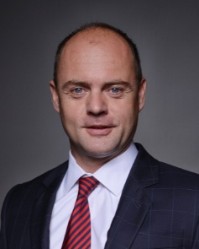
ŠIROKÝ ZRZAVECKÝ, attorneys-at-law is a Czech law firm, providing comprehensive legal services to corporate and private clients since 2018. It strives to combine legal services with a business approach, helping clients find the most appropriate solutions. Services are offered in Czech, Slovak, English and German. The legal team members’ core strengths lie in their ability to deal with complex issues pragmatically, weighing up the specifics of the relevant industry, and assisting clients in gaining full value from their projects. International experience allows the team to provide high-quality legal services in other jurisdictions through co-operation with various law firms abroad, ensuring that clients are fully supported in both domestic and cross-border transactions.
The Czech Art Market
General overview
Although more of a local market, in the past few years the Czech art market in the Czech Republic has been constantly growing. After the record-breaking year of 2024, data recording public auctions in 2025, however, shows that participants at public art auctions in the Czech Republic spent CZK1.2 billion, which is the second-lowest result in the last decade. Despite the lower overall turnover, many new artist records were set (692 new auction records were set; 165 of the auction records were in a category of works over CZK100,000), and average prices for auctioned works in certain segments continued to rise (source: Ročenka Art+ 2026 – Culturenet).
From the COVID-19 pandemic onwards, there has been the need to be able to react flexibly, and online and digital tools are now being used by galleries as well as auction houses. As a result of this shift, the art market is becoming more attractive for new collectors who are interested in art-related education rather than just pure investors.
As regards the overall data on public and online auction sales compared to 2024, total sales volume fell by approximately 6%, from an even CZK3 billion to CZK2.82 billion (source: Livebid Index). Further, the results (source: Artplus.cz) also show a slow-down in the segment of the most expensive items and the middle price segment; the increase in prices occurred only in one fifth of the most expensive items (approx. 1,000 artworks). The average price of the top 5% of items, starting at CZK660,000, fell by 20% year-on-year.
The results seem to be confirmation of two major trends: the market is still expanding and the shift to online market continues.
Key players
The key players in the Czech art market are auction houses, private and public museums and galleries (eg, the National Gallery in Prague or Rudolfinum gallery), collectors, art dealers and the artists themselves. It is still common that the collector purchases the artwork from the artist directly from the studio.
The art market in the Czech Republic is still developing – it was practically non-existent until the 1990s. Since then, the market has been developing naturally, and only in the last decade have the professional rules of the art market started to become established. Several rules remain built upon laws that were established in the 1960s during communism, although amended several times – eg, the cultural heritage legislation. Nowadays, certain rules do not necessarily suit the current state of the art market, society and trends, and sometimes cause rather a burden on the art market, although the latest legislation changes focus on removing these burdens.
Some purchasers remain unaware of the applicable rules and the legal aspects of buying works of art, which makes them vulnerable to dishonesty and causes potential purchasers to lose confidence in the art market. Under Czech law, “fakes” are not legally defined. However, from a civil law perspective, if a fake is delivered instead of the original authentic work, the performance is different to that agreed in the purchase contract. As part of the warranty, the seller is obliged to sell and transfer to the purchaser a piece of work of the quality, implementation and dimensions agreed in the contract.
Court proceedings may be complex, time-consuming and, in civil proceedings, also expensive for the plaintiff. Thus, the general advice to purchase artworks from reputable entities also applies to the Czech art market.
The market expands by number of lots and online
The data confirms the ongoing trend of the auction market shifting into the online environment (source: Livebid.cz). While roughly 400 fewer items were sold at floor auctions compared to 2024, online auctions saw an increase of 13,500 items sold, over 89,600 in total (including not only artworks but also other collectibles).
Meanwhile, the number of floor auctions and their supply has remained stable. In contrast, online auctions are experiencing long-term growth and significantly expanding the overall market supply every year.
Czech Art Law
May AI be an author of the work protected by copyright?
The impact of AI raised several interesting legal topics and issues. One of these topics was the legal nature of the artwork created by AI. This issue was resolved by the decision of the Municipal Court in Prague No 10 C 13/2023-16 on 11 October 2023 and is one of the first court decisions that addressed the question of authorisation of the graphic work made by AI based on the instruction of the physical person, the user of the software.
Copyright in the Czech Republic is governed in particular by Act No 121/2000 Coll., on Copyright, on Rights Related to Copyright and on Amendments to Certain Acts, as amended (the “Copyright Act”). The Copyright Act defines the work protected by copyright as a “literary or other artistic work and scientific work that is a unique result of the author’s creative activity and is expressed in any objectively perceivable form, including electronic form, permanently or temporarily, regardless of its scope, purpose or significance.” In addition, the Copyright Act clearly states in Section 5 that the author is “the natural person who created the work”.
The Ministry of Industry and Trade is currently responsible for the implementation of the EU AI Act in the Czech legal system. Therefore, the definition of AI system for this part is borrowed from the EU AI Act, under which it is a “machine-based system that is designed to operate with varying levels of autonomy and that may exhibit adaptiveness after deployment, and that, for explicit or implicit objectives, infers, from the input it receives, how to generate outputs such as predictions, content, recommendations, or decisions that can influence physical or virtual environments”.
In the case in question, the essence of the claim was to determine the authorship of a graphic created by AI based on the author’s assignment, with the defendant (which was a law firm) interfering with his copyright by publishing the graphic on its website without the plaintiff’s consent. On the contrary, the defendant countered that an image created by AI in the environment of the Czech legal system does not constitute a copyrighted work under the Copyright Act.
As part of the proceedings, the court first addressed the question of whether AI could be the author of the work. It was undisputed that the depiction of the shaking hands in question was created by means of AI. However, AI itself cannot be an author due to the failure to meet the conditions of Section 5 of the Copyright Act, according to which only a natural person (see above), who is not AI, can be the author. The plaintiff claimed in the proceedings that the image in question was created by AI based on his specific instruction and therefore he was entitled to the copyright of the image created by AI. However, he did not manage to prove this fact with any evidence in the proceedings, only with his personal statement.
The court further stated that “an image created by artificial intelligence does not constitute copyrighted work under the Copyright Act, as it does not meet the conceptual characteristics of copyrighted work, specifically it is not a unique result of the creative activity of a natural person”. In addition, the plaintiff did not prove that he personally created the work, in which case the plaintiff could have become the author.
It is also interesting how the court looked at the instruction itself, which was allegedly supposed to be the basis for the subsequent image created by AI. According to the court’s conclusions, in this case it was only the theme of the work, or possibly an idea, which, however, is not protected by copyright law.
Finally, the court stated that copyright is a right belonging to an individually designated person, and therefore if “the image in question was not created by the plaintiff personally, but was created by artificial intelligence, it cannot by definition be a copyrighted work”.
May AI be liable for breach of copyright when learning?
As mentioned above, the Czech Copyright Act in principle prohibits using copyrighted work without the author’s consent, or without other legal authorisation (mainly resulting from statutory licences specified in the Copyright Act) (ie, legal reason for the authorised use of the copyrighted work even if the author has not granted consent).
As shown above, Czech copyright law is currently based on the notion that AI cannot acquire rights or be subject to obligations itself, and thus cannot be liable. This means that where copyright is infringed using AI, the person/entity using it shall be liable.
Further, in 2023, Directive (EU) 2019/790 of the European Parliament and of the Council on Copyright in the Digital Single Market was implemented in the Czech legal system by amendment to the Czech Copyright Act, whereby a new statutory licence was established. This licence under Section 39c of the Copyright Act specifies that copyright is not infringed if anyone “makes a copy of a work for the purpose of automated analysis of texts or data in digital form, carried out for the purpose of obtaining information, including, among other things, patterns, tendencies and correlations”. However, they are entitled to retain such a copy only for the period necessary for the purpose of such automated text or data analysis. This relates mainly to so-called data mining; however, it will not apply to reproductions of a work whose author has expressly reserved the right to such use in an appropriate manner. The interpretation of the extent of “automated analysis” is not clear as regards the learning of generative AI models and this shall be resolved by case law in future.
In Section 39d of the Copyright Act, a statutory licence to reproduce a work for the purposes of automated analysis of texts or data for scientific research is allowed for the following:
- higher education institution, where the aim is to perform scientific research, subject to the condition that such research must be performed in the public interest or on a non-profit basis, or all profits must be reinvested in the scientific research of that university or legal entity; or
- cultural heritage institutions (ie, library, archive, museum, gallery or institution caring for the preservation of film, sound or other cultural heritage).
Authorised persons are obliged to store such a copy with an appropriate level of security and may subsequently retain it for the purposes of scientific research, including verification of research results. There is no specific time limit, as under the Section 39c licence mentioned above, and the author also does not have the right to reservation as under the Section 39c licence.
Note that the Section 39c licence applies to use of the work for any purpose, including commercial purposes. Authors should be cautious of this – to prevent such use, they need to make the above-mentioned reservation allowed by Section 39c(3) of the Copyright Act; such right shall then apply for the future.
Current Developments in the Legislation That Affect the Art Market
Artist status
A new set of rules implementing a person’s status as artist became effective on 1 July 2025. The aim of the legislation was to improve and clarify the status of artistic professions, including:
- definition of artistic professions;
- labour law norms preventing disadvantages to those in artistic professions; and
- rules concerning tax, social security and copyright.
As a part of this aim, the amendment to Act No 203/2006 Coll., on Certain Types of Cultural Support implemented in Czech law the instruments of financial support for artists as well as persons performing other creative professions directly related to artistic activities, fulfilling certain criteria:
- artists performing their activities mainly outside the employment relationship; and
- artists who have been engaged in artistic or creative activities in the last three years for at least 24 months; and
- artists who earn through their artistic activities an income of no more than the average salary in the Czech Republic.
These artists, if they are registered in the establishment and register of artists, which is maintained by the Ministry of Culture, may apply to receive support in the form of a scholarship for creative or study purposes, if they meet the specified conditions. However, there is no legal claim to it.
Students at high schools or universities are excluded from the scholarship, as well as artists who work more than 20 hours a week in an employment relationship.
Statistics as of the end of 2025 (source: the Ministry of Culture, 14 January 2026) show that interest in acquiring artist status during the first months of its existence has been rather low. A total of 412 applications has been submitted: 365 artists have already received certificates of entry into the registry; 37 applications have been rejected so far. According to the Ministry of Culture, 64% of the artists are authors of artworks, 28% are performance artists and only 8% are from artistic technical professions.
Amendment as to expert opinions
For decades there was dissatisfaction with the work of experts in several cases when giving expert opinions on artworks, necessitating stricter regulation of their activities. Brand new Act No 254/2019 Coll., on Experts, Expert Offices and Expert Institutes was enacted and became effective on 1 January 2021. The Act established significant changes to the functioning of experts and their activities, including:
- conditions for giving expert opinions;
- the obligation to conclude insurance with a minimum limit of at least CZK1 million for individuals and CZK5 million for expert institutes and offices;
- administrative and evidence obligations; and
- high sanctions for breach of obligations.
Given these changes, many experts ceased to provide their expert services. This caused many problems not only in the private sphere but also in public institutions and courts for which expert opinions are essential. Thus, the new amendment of Act No 254/2019 Coll., on Experts, Expert Offices and Expert Institutes came into effect as of 1 January 2026, with the intention of overcoming constraints caused by the previous 2021 amendment, as follows.
- The mandatory professional indemnity insurance introduced by the 2021 amendment has been cancelled for experts who are natural persons, whereas obligatory insurance remains valid for expert companies. Experience had shown that the conditions for insurance were unclear and, thus, the cost of such insurance was quite high. For those experts providing opinions only occasionally, this constituted an undue burden, leading to a significant number of resignations.
- The time periods for evidence of the expert opinion in the database were too short, which turned out to be unrealistic; therefore, they were significantly prolonged to 30 days from the former five days (in case of evidence of the opinion) and 90 days (as regards information relating to expert fees).
- Experts registered in the list of experts before 2021 will not need to prolong their authorisation, as this will no longer be time limited. The 2025 amendment also prolonged the deadline to 31 December 2028 for expert companies to obtain new licences, as the former deadlines were short.
Implementation of EU Regulation No 2019/880
Effective from December 2022, the Act No 362/2022 Coll., on the Entry and Import of Certain Cultural Property into the Customs Territory of the EU adopts EU Regulation 2019/880 on the Entry and Import of Cultural Goods, into the Czech legal system. The Act requires those who import or participate in the entry of a cultural property from the country of origin into the customs territory of the EU to present to the customs office a permit for the export of the cultural property issued by the authority of the country of origin or a certificate from the authority of the country of origin stating that there is no obligation to have an export permit for the cultural property in question, and other documents proving that the export of the cultural property was carried out in accordance with the legislation of the country of origin.
If the customs office has reasonable grounds to suspect that the import rules have been violated or has reasonable knowledge of its origin, handling in accordance with the rules of change of origin or the authenticity or validity of the submitted documentation, it may detain the item. However, it must immediately notify the Ministry of Culture, which will preliminarily assess the justification for such detention within five working days and inform the customs office whether the detention should continue to exist, in which case the item is handed over to the Ministry. The item will be stored professionally at a professional institution designated by the Ministry, applying the rules for their safe storage and examination by a professional contributory organisation, until a decision on their confiscation and subsequent return to the country of origin.
Several new amendments were also implemented by the 2025 amendment of the Act 362/2022 Coll. This amendment implemented the protection of cultural property included in parts B and C of the Annex to EU Regulation 2019/880 as before the amendment only the regulation on cultural goods included in part A of the Annex was implemented in the Act effective from 28 June 2025. The amendment implemented the above import licence in the form of an electronic licence using the ICG system.
In addition, the 2025 amendment to the Act No 71/1994 Coll., on the Sale and Export of Objects of Cultural Value implements a new obligation of applying for a certificate concerning cultural goods being imported from abroad. Within 60 days of importing the relevant cultural goods into the Czech Republic, the owner must apply to the Ministry of Culture for a certificate confirming that the item of cultural value has been relocated to the Czech Republic. The application must include proof that the item left its country of origin legally – either by presenting an export permit issued by the local authorities or by proving that the item did not require such a permit in its country of origin. If the Ministry of Culture finds out that the conditions for import are fulfilled (including EU Regulation No 2019/880 and Implementing EU Regulation 2021/1079), the Ministry of Culture will then issue an import certificate that shall be valid for ten years.
Update of legislation on cultural heritage and on export of objects of cultural value
The Act on the Sale and Export of Objects of Cultural Value enacted in 1994 establishes in its Annex 1 the relevant categories of cultural objects subject to export based on (i) age and (ii) value. Such value has not been amended since then.
As a part of the 2025 customs amendments implemented, these limits were changed, to reflect better the changes in prices (this does not apply to objects declared national monuments, for which a different regime applies).
For example, an export permit needed for a painting older than 50 years and worth more than CZK30,000 (approx. GBP1,000) is now CZK150,000 (approx. GBP5,000) (ie, it was increased by five times the former amount); for drawings more than 50 years old, it is now CZK30,000 compared to former CZK10,000 (ie, a threefold increase).
The amendment further aims to decrease the administrative burden on the art businesses dealing with imports of cultural property, by introducing the possibility of applying for the permit electronically.
The term “displacement” (within EU) is introduced in comparison to “export” (outside EU) whereas the former regulation used the word export for both options. The amendment also introduces the possibility of extending a certificate of temporary export whereas formerly a new permit needed to be issued.
Issues To Be Addressed in the Future
As an increasingly developing (emerging) art market, the Czech art market continuously faces several challenges.
The occurrence of fakes
This difficulty is experienced by every art market to a greater or lesser extent. The Czech market has counterfeits not only of the most important authors from the period of Czech modernism, but also of contemporary authors and lesser-known authors of the 19th and 20th centuries. Despite the success in developing new tools to detect fakes in the past decade, this topic is still pertinent.
The legal regulation of experts’ activities should contribute to reducing this issue and the results of these measures will become clear in the future. However, according to the Ministry of Justice, the experience so far is that many experts still work in the old way they have been used to for years and have not yet adapted to the new law. Therefore, certain (mainly administrative) obligations were reduced and eased; however, the principles applicable to the content of expert opinion should remain the same. Some experts also ended their expert activities due to the need to pay for insurance, which made this activity economically unattractive for them. Therefore, the recent amendment cancelled the insurance requirement for physical persons, in an effort to avoid a lack of experts in the future (in the field of expert opinion on art, most experts are providing opinions as individuals, not within expert companies). This is clearly a transformation that will take some more time.
Need for continued effort to increase transparency and digitalisation of research tools in the market
It is not unusual in the Czech market for some private sales to have no written purchase contract. As a result, it is still common to encounter informality in the conclusion of the contract, resulting in a lack of provenance research adequate to the value of a work at stake. This may cause difficulties in proving the ownership of the work in a later sale or selling the work abroad. Some collectors are still not aware of the legal aspects of buying works of art – therefore, market participants will need to be better educated in the future. In addition, research tools on stolen objects or cultural monuments research should be improved; this would be more effective for both researchers and public authorities.
The newly implemented regulation of import licences, certificates and evidence may also help to avoid illicit imports with respect to works imported from other EU member states as well as from countries outside the EU.
Artists are often uncertain about their rights and obligations towards state authorities. Only recently, increasing numbers of artists have become aware of the need to issue certificates and create their own archive during their lifetime. This is even more important in the Czech Republic as it is still common for collectors to purchase works of art directly from the artist in the Czech art market.
ŠIROKÝ ZRZAVECKÝ, attorneys-at-law
Myšák Gallery
Vodičkova 710/31
110 00 Prague 1
Czech Republic
+420 226 216 790
info@sirokyzrzavecky.cz www.sirokyzrzavecky.cz/en/
Law and Practice
Author
ŠIROKÝ ZRZAVECKÝ, attorneys-at-law is a Czech law firm, providing comprehensive legal services to corporate and private clients since 2018. It strives to combine legal services with a business approach, helping clients find the most appropriate solutions. Services are offered in Czech, Slovak, English and German. The legal team members’ core strengths lie in their ability to deal with complex issues pragmatically, weighing up the specifics of the relevant industry, and assisting clients in gaining full value from their projects. International experience allows the team to provide high-quality legal services in other jurisdictions through co-operation with various law firms abroad, ensuring that clients are fully supported in both domestic and cross-border transactions.
Trends and Developments
Authors
ŠIROKÝ ZRZAVECKÝ, attorneys-at-law is a Czech law firm, providing comprehensive legal services to corporate and private clients since 2018. It strives to combine legal services with a business approach, helping clients find the most appropriate solutions. Services are offered in Czech, Slovak, English and German. The legal team members’ core strengths lie in their ability to deal with complex issues pragmatically, weighing up the specifics of the relevant industry, and assisting clients in gaining full value from their projects. International experience allows the team to provide high-quality legal services in other jurisdictions through co-operation with various law firms abroad, ensuring that clients are fully supported in both domestic and cross-border transactions.
