Aviation Finance & Leasing 2026
Serbia
Authors

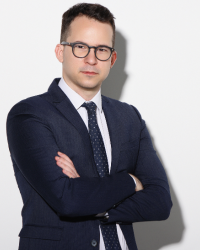
Drašković Popović & Partners (D2P) is a leading full-service business law firm that provides legal services in both Serbia and Montenegro. The firm was founded in January 2013. Its partners are locally and internationally educated and qualified and it specialises in specific industry sectors to provide expert advice to the most demanding clients in relation to the most complex transactions. The firm is a trusted partner in navigating the complexities of aircraft purchase and sale, leasing and debt finance transactions. With a team of seasoned aviation lawyers, it provides comprehensive legal support tailored to the specific needs of regional aviation businesses, operators, lessors and financiers. The firm handles the needs of foreign and domestic clients in all commercially relevant areas of law, including: general corporate counselling; financial consulting; aviation finance and leasing; commercial agreements; dispute resolution; competition issues; data protection; employment; ESG; energy; tax; capital markets; public private partnerships; M&A; real estate; and intellectual property.
1. Aircraft and Engine Purchase and Sale
1.1 Sales Agreements
1.1.1 Taxes/Duties Payable Upon Execution of the Sales Agreement
Upon the execution of a sale and purchase agreement, the seller has to pay the absolute rights transfer tax. The tax rate levied is 2.5% of the purchase price.
1.1.2 Enforceability Against Domestic Parties
From the Serbian law perspective, a sale and purchase agreement needs to be notarised to be enforceable against the domestic party. However, a translation of the sale and purchase agreement is only necessary if it is to be used before the authorities in Serbia including, but not limited to, the courts. If a sale and purchase agreement is to be governed by a foreign law, its validity will be assessed from the perspective of the governing law.
1.2 Taxes/Duties Payable Upon Execution of a Bill of Sale
1.2.1 Transferring Title
A duly executed sale and purchase agreement under Serbian law will present the basis for the transfer of title to an aircraft from one party to another. The transfer will be perfected through its entry in the aircraft register. If the sale and purchase agreement were to concern the sale of the entire aircraft the agreement would automatically entail the sale of all of its integral parts including engines. The sale and purchase agreement may also have the sale and purchase of an individual part of an aircraft, eg, the engine, as its subject.
In addition, the sale of ownership interest in an entity that owns an aircraft or engine will not effectively be recognised as a sale of the aircraft or engine itself as long as the sold entity remains the owner.
1.2.2 Sales Governed by English or New York Law
Serbian law will in principle recognise the transfer of title to an aircraft that is registered in a foreign register if the transfer of title was governed by English or New York law.
1.2.3 Enforceability Against Domestic Parties
A bill of sale, governed by the foreign law, does not need to be translated, certified, notarised or legalised in order for it to be enforceable against the domestic party. However, translation of the bill of sale is necessary if it were to be used before the authorities in Serbia including, but not limited to, the courts.
1.2.4 Registration, Filing and/or Consent From Government Entities
If a bill of sale were to be registered in the Serbian Aircraft Register the following steps will have to be taken.
Firstly, an aircraft can be registered in the Serbian Aircraft Register if it is not registered with a foreign aircraft register and one of the following conditions is met:
- the aircraft owner (in whole or in part) is Serbia, a legal entity or entrepreneur registered in Serbia;
- the aircraft owner (in whole or in part) is a citizen of Serbia, with a permanent residence in Serbia or abroad, if the home airport of the aircraft is in Serbia;
- the aircraft operator is a legal entity, entrepreneur or natural person whose corporate seat or permanent residence is in Serbia; or
- the aircraft owner or operator is a foreign natural or legal entity and consent has been obtained from the Ministry of Construction, Transport and Infrastructure.
The process of registering an aircraft with the Aircraft Register consists of:
- applying to the Commercial Court in Belgrade for a resolution on the registration of aircraft. The following documentation is needed: a bill of sale; excerpts from the relevant registers; and any other document that could be requested by the judge based at their own discretion; and
- filling out an application form and submitting it to the Civil Aviation Directorate along with the court resolution.
There is no legally prescribed timeframe but the total process is expected to take approximately one month.
1.2.5 Taxes/Duties Payable Upon Execution of a Bill of Sale
See 1.1.1 Taxes/Duties Payable Upon Execution of the Sales Agreement.
2. Aircraft and Engine Leasing
2.1 Overview
2.1.1 Non-Permissible Leases
All types of operating/wet/finance leases or leases concerning only engines or parts are generally permissible and recognised.
2.1.2 Application of Foreign Laws
Contractual obligations between the parties to the lease agreement may be governed by a foreign law. However, issues of ownership over the aircraft and other proprietary rights are governed by the law of the land in which the aircraft is registered. While the contractual obligations (such as the ones stemming from the lease agreement) can be governed by a foreign law, particular potential disputes that could stem from the lease agreement could be governed by Serbian law, if the aircraft is registered in Serbia (disputes concerning insolvency proceedings over the lessee, disputes over ownership over the aircraft and the like).
2.1.3 Restrictions Concerning Payments in US Dollars
Rent payments may be made in US dollars.
2.1.4 Exchange Controls
There are no specific exchange control rules that will prevent rent payments under a lease or any repatriation of realisation proceeds.
2.1.5 Taxes/Duties Payable for Physical Execution of a Lease
The registration of the lease of an aircraft is optional. However, if it is registered, the registration of the lessee with the Aircraft Register will cost between RSD4,210 (approximately EUR36) and RSD16,750 (approximately EUR140), depending on the category the aircraft is in.
2.1.6 Licensing/Qualification of Lessors
The lessor does not have to be licensed or otherwise qualified in Serbia to do business with a domestic lessee.
2.2 Lease Terms
2.2.1 Mandatory Terms for Leases Governed by English or New York Law
No mandatory terms have to be in a lease governed by English or New York law.
2.2.2 Tax and Withholding Gross-Up Provisions
Tax and other withholding gross-up provisions are permissible and enforceable.
2.2.3 Parts Installed or Replaced After a Lease’s Execution
The concluded lease can cover parts that are installed or replaced on an aircraft or engine after its execution.
2.2.4 Risk of Title Annexation
There is no specific risk of title annexation in respect of aircraft engines installed on an airframe.
2.2.5 Recognition of the Concepts of Trust/Trustee
The concept of trust/trustee of an owner is not recognised under Serbian law.
2.3 Lease Registration
2.3.1 Notation of Owner’s/Lessor’s Interests on Aircraft Register
An aircraft lease may be registered in the Aircraft Register. This is optional but advisable as the lease becomes a matter of public record once it is registered.
2.3.2 Registration If the Owner Is Different From the Operator
The Aircraft Register contains information regarding both the owner and the operator of the aircraft. Both the owner and the operator of the aircraft may therefore be registered.
2.3.3 Aircraft/Engine-Specific Registers
Lease information is registered in the Aircraft Register. There is no separate engine-specific register in Serbia.
2.3.4 Registration of Leases With the Domestic Aircraft Registry
Registration of the lease with the Aircraft Register is optional but preferable. This is because if the lease is registered with the Aircraft Register third parties will be considered to be familiar with the existence of the lease.
The registration of the lease of an aircraft may be initiated by the lessor or the lessee by submitting the request for the registration of the lease to the Aircraft Register along with the:
- lease agreement;
- airworthiness certificate;
- corporate documentation; and
- court decision on registration of the aircraft.
If the lessee is a foreign person/entity, the consent of the competent ministry is required. Additional documentation may be requested by the Aircraft Register.
The estimated period for completion is one month.
2.3.5 Requirements for a Lease to Be Valid and Registrable
A lease needs to be concluded in the form specified in its governing law. There are no additional requirements under Serbian law. If the lease agreement were to be presented to the Serbian authorities, a certified translation of the agreement would be needed.
2.3.6 Taxes/Duties Payable for Registering a Lease
See 2.1.5. Taxes/Duties Payable for Physical Execution of a Lease.
2.3.7 Registration of Aircraft in Alternative Countries
There are no popular alternative countries in which aircraft habitually based in Serbia are typically registered.
2.3.8 Requirements for Documents Concerning Registration
All documents submitted to the authorities, including, but not limited to, the bill of sale or the lease agreement have to be provided in the original or a certified copy and accompanied by the certified translation.
2.4 Lessor’s Liabilities
2.4.1 Tax Requirements for a Foreign Lessor
A foreign lessor has to pay income tax on the income it gains through its permanent business unit in the territory of Serbia, unless otherwise stipulated in a tax treaty.
In other words, unless a foreign lessor has a permanent establishment in Serbia, it is not required to pay income tax.
2.4.2 Effects of Leasing on the Residence of a Foreign Lessor
A foreign lessor may not be considered to be resident, domiciled, carrying on business or subject to any taxes as a result of its being a party to, or its enforcement of, the lease.
2.4.3 Engine Maintenance and Operations
Generally speaking, liabilities in respect of aircraft or engine maintenance and operations may not be imposed on a foreign lessor under a lease as a result of it being a party to the lease.
2.4.4 Damage or Loss Caused by an Asset
A lessee is liable for the damage that is caused to the property or health of third persons by the aircraft.
2.4.5 Attachment by Creditors
Creditors of a lessee could not attach an aircraft leased to it but owned by a different entity.
2.4.6 Priority of Third Parties’ Rights
In very limited circumstances, it is possible that some third-party rights will take priority over a lessor’s rights under an aircraft lease through the legal concept of “right of retention”. This is where the third party retains the aircraft as a guarantee of payment owed, eg, repair and maintenance costs, warehousing, depository costs, etc.
2.5 Insurance and Reinsurance
2.5.1 Requirement to Engage Domestic Insurance Companies
There are no mandatory Serbian regulations which dictate insurance must be placed with a domestic insurance company.
2.5.2 Mandatory Insurance Coverage Requirements
Current insurance limitations are aligned with the Montreal Convention, which amount up to:
- 100,000 SDR for injury and death;
- 4,150 SDR per passenger for delay;
- 1,000 SDR for baggage; and
- 17 SDR for cargo.
2.5.3 Placement of Insurance Outside of Jurisdiction
Reinsurance of an aircraft abroad is not regulated under Serbian law. However, from a general legal perspective, one might conclude that the practice will not be against the applicable regulation.
2.5.4 Enforceability of “Cut-Through” Clauses
“Cut-through” clauses are not valid in Serbia because of the limitations imposed by the mandatory foreign exchange (FX) rules which are set out in Serbian legislation.
2.5.5 Assignment of Insurance/Reinsurance
Assignments of insurance/reinsurance are allowed.
2.6 Lease Enforcement
2.6.1 Restrictions on Lessors’ Abilities
There are no specific restrictions on a lessor’s ability to terminate an aircraft lease, re-export the aircraft and/or sell the aircraft following termination of the lease under Serbian law.
In addition, it is not mandatory for an aircraft to be physically located in Serbia for either of these operations.
2.6.2 Lessor Taking Possession of the Aircraft
A lessor will have to have obtained a court order to take possession of the aircraft from the lessee.
2.6.3 Specific Courts for Aviation Disputes
There are no specific courts for aviation disputes. If an aviation-related dispute were to arise and the Serbian courts had the competence to decide the dispute, it would be adjudicated by the competent commercial court.
2.6.4 Summary Judgment or Other Relief
A lessor may request an interim injunction before the final resolution of the judicial proceedings. As a result of the interim injunction, the aircraft could be taken away from the lessee until the proceedings are completed.
In order for the court to grant an interim injunction, the lessor will have to prove both the existence of its claim and that it would incur damage if the interim injunction were not granted by the court. In practice, it usually takes approximately one month for a court to decide on the request.
2.6.5 Domestic Courts’ Approach to Foreign Laws and Judgments
Serbian courts in general uphold:
- a foreign law as the governing law of an aircraft lease;
- submission to a foreign jurisdiction; and
- a waiver of immunity by the parties to the lease.
2.6.6 Domestic Courts’ Recognition of Foreign Judgments/Awards
Serbian courts recognise and enforce a final judgment of a foreign court or an arbitral award without re-examining the matter if the procedural prerequisites for enforcement of the judgment/award are met.
2.6.7 Judgments in Foreign Currencies
A lessor under an aircraft lease may obtain a judgment in a foreign currency. However, the enforcement of this judgment will have to be made in local currency in Serbia.
2.6.8 Limitations on Lessors’ Actions Following Termination
There are no statutory limitations on a lessor’s ability to recover default interest. A lessor may charge additional rent following the termination of the lease for default if this course of action is in line with the governing law and the concluded agreement.
2.6.9 Lessor’s Requirement to Pay Taxes/Fees
A lessor under an aircraft lease does not have to pay taxes or fees in a significant (ie, non-nominal) amount in connection with the recognition and enforcement of the lease in Serbia.
2.6.10 Mandatory Notice Periods
If Serbian courts were to deliberate in a case that involves the application of Serbian law, the judge might potentially declare the mandatory notice period null and void if it is too short or if it creates an imbalance between the parties.
2.6.11 Lessees’ Entitlement to Claim Immunity
Under Serbian law, the lessee does not have any legal instrument with which it will be entitled to claim sovereign or other immunity from suit in the sense that the legal instrument will prevent it from being a party to the judicial or arbitral proceedings.
2.6.12 Enforcement of Foreign Arbitral Decisions
Serbia has adopted the 1958 Convention on the Recognition and Enforcement of Foreign Arbitral Awards (the “New York Convention”) and Serbian courts recognise and enforce foreign arbitral decisions. Grounds for refusal of the recognition of foreign arbitral award correspond to those listed in Article V of the New York Convention and are not country specific.
2.6.13 Other Relevant Issues
There are no other relevant issues that a lessor should be aware of in relation to the enforcement of their rights.
2.7 Lease Assignment/Novation
2.7.1 Recognition of the Concepts of Contractual Assignment and Novation
Serbia recognises the concepts of contractual assignment and novation.
2.7.2 Assignment/Novation of Leases Under Foreign Laws
Under Serbian law (assuming that a lessor transferring its rights under an aircraft lease is assigning or novating its rights under the lease to a new lessor), the lessor will have to notify the lessee of the assignment. In this respect, the lessee does not have to give consent. If the lessee intends to assign its rights to the other entity, it will need to notify the lessor of its intention and obtain the lessor’s consent. There are no mandatory jurisdiction-specific clauses that have to be included in the assignment.
2.7.3 Enforceability of Lease Assignments/Novations
It is not necessary for an aircraft and/or engine lease assignment and assumption/novation to be translated, certified, notarised or legalised to be enforceable against a domestic party. However, the translation of the assignment agreement is necessary if it were to be used before the authorities in Serbia including, but not limited to, the courts.
2.7.4 Filing/Registration of Lease Assignments/Novations
Registration of the lease in the Aircraft Register is not mandatory. However, if the lease is registered in the Aircraft Register, any assignment of the rights and obligations under the lease should also be registered in the Aircraft Register. The procedure for registering the assignment of the lease is relatively simple and involves submitting the assignment agreement and notifying the relevant authorities of the conducted assignment. No government applications or consents are required as a prerequisite to the execution and delivery of an aircraft and/or engine lease assignment and assumption/novation.
2.7.5 Taxes/Duties Payable on Assignment/Novation
The registration fee for the assignment in the Aircraft Registry is RSD4,210 (approximately EUR36).
2.7.6 Recognition of Transfer of Ownership Interests
The sole change of the ownership interest of the entity owning an aircraft will not warrant notification in the Aircraft Register.
2.8 Aircraft Deregistration and Export
2.8.1 Deregistering Aircraft in This Jurisdiction
An owner or an operator of an aircraft may submit a deregistration request of an aircraft.
If the deregistration request is submitted by an operator, a certified written statement of consent by an owner must be submitted along with the deletion request. If the deregistration request is submitted by an owner, a certified written statement of consent of an operator must be submitted along with the deletion request.
The Registrar removes the aircraft from the Aircraft Register ex officio if the aircraft is destroyed, permanently unusable, missing or completely unavailable or whose airworthiness certificate is not valid for more than ten years.
Once the Registrar decides on the deregistration request it issues the deletion resolution along with a confirmation of the deletion and, if the aircraft is airworthy, the Civil Aviation Directorate will issue an export airworthiness certificate. This is the basis on which the aircraft may be registered with another aircraft register.
2.8.2 Lessee’s/Operator’s Consent
An aircraft owner may only apply for the deregistration of the aircraft with the prior consent of the lessee.
2.8.3 Required Documentation
In order for an aircraft to be deregistered from the Aircraft Register, an owner or an operator will have to provide a:
- deregistration request; and
- statement of consent from the other party (owner/operator).
2.8.4 Duration of Deregistration Process
There is no statutory deadline on the duration of the deregistration process. However, one can expect the process to take several business days to complete.
2.8.5 Aviation Authority’s Assurances
The aviation authority is not authorised to issue advance assurances to an aircraft owner, mortgagee or lessor as to the prompt deregistration of the aircraft.
2.8.6 Costs, Fees and Taxes Relating to Deregistration
The fee for deregistration of an aircraft is RSD5,020 (approximately EUR43).
2.8.7 Deregistration Power of Attorney
A deregistration power of attorney does not constitute a necessary legal document under Serbian law (and Serbia is not a signatory to the Cape Town Convention). However, in practice, it is usually issued along with the lease. A deregistration power of attorney does not need to be translated, certified, notarised or legalised to be enforceable against a domestic party. However, the translation of the subject document is necessary if it were to be used before the authorities in Serbia including, but not limited to, the courts.
2.8.8 Documents Required to Enforce Deregistration Power of Attorney
As a deregistration power of attorney is not mandatory/necessary by itself no additional documents are required in order to determine its validity.
2.8.9 Choice of Laws Governing Deregistration Power of Attorney
A deregistration power of attorney may be governed by a foreign law but is most commonly governed by Serbian law in practice.
2.8.10 Revocation of a Deregistration Power of Attorney
As a deregistration power of attorney is not statutorily regulated, there is no regulation on the possibility of revoking the deregistration power of attorney. It may therefore be revoked at any time like any other power of attorney.
2.8.11 Owner’s/Lessor’s Consent
The lessee’s consent will be necessary for the aircraft to be exported. A mortgagee is not entitled to export the aircraft under Serbian law.
An asset does not need to be located in Serbia at the time of deregistration and/or export.
2.8.12 Aircraft Export Permits/Licences
Upon request, the Aircraft Register will issue the deletion resolution, along with confirmation of the deregistration. In practice, it takes several business days to obtain the necessary documents. When it is issued, the confirmation of the deregistration (ie, export certificate) is valid for an unlimited period of time. It can therefore be obtained at any time before the termination of the lease. In practice, as the confirmation of deregistration contains the exact time of the deregistration from the Aircraft Register, it is usually obtained in advance so that it will be possible to commence with the procedure of registration of an aircraft in another foreign register.
2.8.13 Costs, Fees and Taxes Concerning Export of Aircraft
If the aircraft is registered in the Aircraft Register, before the aircraft is exported, the deregistration of the aircraft must take place. In this scenario the following fees apply.
- The fee for the resolution on deletion amounts to RSD5,020 (approximately EUR43).
- The fee for the export airworthiness certificate (required for the foreign registry where the aircraft will be registered) amounts to RSD4,210 (approximately EUR36).
2.8.14 Practical Issues Related to Deregistration of Aircraft
There are no significant practical difficulties involved in deregistration as such. However, it is worth highlighting that deregistration from the Aircraft Register and registration with another aircraft register must be punctually co-ordinated. In other words, the exact date and time of deregistration must coincide with the registration in a new register so that any potential time difference between two registrations is avoided.
2.9 Insolvency Proceedings
2.9.1 Overview of Relevant Laws and Statutory Regimes Governing Restructurings, Reorganisations, Insolvencies and Liquidations
Serbia recognises two types of reorganisation, restructuring, insolvency and liquidation proceedings.
- Corporate liquidation, which is regulated by the Company Law (Zakon o privrednim društvima, Official Gazette of RS Nos 36/2011, 99/2011, 83/2014, 5/2015, 44/2018, 95/2018, 91/2019, 109/2021 and 19/2025).
- Insolvency proceedings, which are regulated under the Law on Insolvency (Zakon o stečaju, Official Gazette of RS Nos 104/2009, 99/2011, 71/2012, 83/2014, 113/2017, 44/2018, 95/2018 and 44/2025).
2.9.2 Overview of Relevant Types of Voluntary and Involuntary Restructurings, Reorganisations, Insolvencies and Receivership
Serbia recognises two types of voluntary and involuntary restructurings, reorganisations, insolvencies and receivership proceedings (see 2.9.1 Overview of Relevant Laws and Statutory Regimes Governing Restructurings, Organisations, Insolvencies and Liquidations).
- Corporate liquidation: proceedings that may be initiated if the company is solvent and wants to terminate itself. This procedure is initiated by the company before the Business Register and the creditors are called upon to register their claims. From an operational perspective, the company appoints the liquidation administrator who represents the company in the corporate liquidation proceedings. When the company provides evidence that it has settled all creditor claims, it may request the deletion of the company (liquidation) from the Business Register.
- Insolvency proceedings: these may be initiated if:
- the company has extended monetary difficulties;
- there is a danger that the company will become insolvent;
- the company is over indebted; or
- the company does not act in line with the reorganisation plan.
The insolvency proceedings are court proceedings in which the appointed insolvency administrator represents the insolvency debtor. Insolvency proceedings may lead to the reorganisation of the company or dissolution of its assets and subsequent liquidation.
2.9.3 Co-Ordination, Recognition or Relief in Connection With Overseas Proceedings
In the case of parallel insolvency proceedings before the Serbian courts and the courts of foreign jurisdiction, Serbian courts are statutorily obliged to co-operate with the foreign courts. This co-operation may entail the:
- appointment of the person that will take actions in line with the court’s instructions;
- exchange of data;
- co-ordination of managing the assets of the debtor;
- conclusion of the agreement on co-ordination between the courts; and
- co-ordination of the proceedings.
2.9.4 Effect of Lessee’s Insolvency on a Deregistration Power of Attorney
A deregistration power of attorney is not regulated under Serbian law. However, from a general legal perspective, even if it is issued, the opening of insolvency proceedings will not have any effect on it.
2.9.5 Other Effects of a Lessee’s Insolvency
When insolvency proceedings are opened, an insolvency administrator is appointed. It is the insolvency administrator who, from that point onwards, manages the debtor. At the moment when the insolvency is opened the insolvency administrator is entitled to choose which contracts will remain in force and which will be terminated (including the existing leases). If, for any reason, the lease is continued as of the moment of opening the insolvency proceedings, the insolvent estate will continue to be a party to the lease agreement and will have to settle the rent.
If the lease agreement is terminated, the lessor is entitled to issue a request for the removal of the aircraft from the estate of the lessee and hand the aircraft over to the lessor.
2.9.6 Risks for a Lender if a Borrower, Guarantor or Security Provider Becomes Insolvent
The main risk for a lender if a borrower, a guarantor or an entity providing security becomes insolvent is that it will not be able to collect its receivable.
2.9.7 Imposition of Moratoria in Connection With Insolvency Proceedings
A moratorium is imposed at the opening of the insolvency proceedings and lasts for the duration of the proceedings. It encompasses all the obligations of the insolvency debtor apart from the obligations undertaken by the insolvent estate.
2.9.8 Liquidation of Domestic Lessees
A lessee may be liquidated or placed in administration or receivership either at its own request or at the request of a third party (liquidator or a creditor) in Serbia.
2.9.9 Ipso Facto Defaults
Ipso facto default clauses are valid under Serbian law and often appear in practice. If the clause is activated, the lessor is entitled to issue a request for the removal of the aircraft from the estate of the lessee and the handover of the aircraft to the lessor.
2.9.10 Impact of Domestic Lessees’ Winding-Up
If a domestic lessee is liquidated by a Serbian court ruling, the following generally occurs.
- The aircraft may only be repossessed if the lessor fails to take action in order to remove the aircraft from the insolvent estate.
- The lessor must register its debt to the insolvency administrator for rentals and other costs (if any) that became owed before the insolvency proceedings were opened.
- The lease security deposit will remain with the lessee as long as the lease is in force.
- The maintenance reserves paid to the lessor (whether classified as reserves or supplemental rent) will remain with the lessor as long as the lease is in force.
2.10 Cape Town Convention and Others
2.10.1 Conventions in Force
The Cape Town Convention is not recognised in Serbia.
2.10.2 Declarations Made Concerning Conventions
See 2.10.1 Conventions in Force.
2.10.3 Application of Article XIII of the Protocol on Matters Specific to Aircraft Equipment
See 2.10.1 Conventions in Force.
2.10.4 Enforcement of Conventions
See 2.10.1 Conventions in Force.
2.10.5 Other Conventions
Serbia has ratified the 1948 Geneva Convention on the International Recognition of Rights in Aircraft. However, it has not ratified the 1933 Rome Convention on the Unification of Certain Rules relating to the Precautionary Arrest of Aircraft.
3. Aircraft Debt Finance
3.1 Structuring
3.1.1 Restrictions on Lending and Borrowing
In line with Serbian regulations, only banks are entitled to issue financial loans. Borrowers are entitled to use the loan in line with agreed loan terms.
3.1.2 Effect of Exchange Controls or Government Consents
In particular cases envisaged under the FX rules, the National Bank of Serbia should be notified of the financing or repatriation of realisation proceeds under a loan, guarantee or security document.
3.1.3 Granting of Security to Foreign Lenders
Borrowers are permitted to grant security to foreign lenders subject to certain FX restrictions.
3.1.4 Downstream, Upstream and Cross-Stream Guarantees
Downstream, upstream and/or cross-stream guarantees are permitted in favour of lenders when they are made in line with the FX rules. In specific cases envisaged under these rules, the National Bank of Serbia should be notified of the guarantees being issued.
3.1.5 Lenders’ Share in Security Over Domestic SPVs
Whether a lender should take share security over a domestic special purpose vehicle that owns the financed aircraft is a business decision. However, generally speaking, the action will be advised. A pledge of shares is recognised under Serbian law.
3.1.6 Negative Pledges
Negative pledges are recognised under Serbian law.
3.1.7 Intercreditor Arrangements
Intercreditor arrangements may be made. However, these arrangements are only effective between the creditors who concluded the arrangements.
3.1.8 Syndicated Loans
The concept of agency and the role of an agent (such as the facility agent) under a syndicated loan is recognised in Serbia.
3.1.9 Debt Subordination
All valid debt subordination methods are permissible and recognised.
3.1.10 Transfer/Assignment of Debts Under Foreign Laws
It is possible to transfer or assign all or part of an outstanding debt under an English or New York law-governed loan.
3.1.11 Usury/Interest Limitation Laws
There is no specific limit as to the amount of contractual interest that may be envisaged. However, the court is entitled to reduce the amount of interest upon a party’s request if it assesses it is exceedingly high. The assessment is performed on a case-by-case basis.
3.2 Security
3.2.1 Typical Forms of Security and Recourse
Typical forms of security and recourse granted in an aviation finance transaction in Serbia include promissory notes, pledges and bank guarantees.
3.2.2 Types of Security Not Available
All security types under the law may be taken over an aircraft or related collateral such as engines, warranties or insurances.
3.2.3 Trust/Trustee Concepts
The concept of a security trustee exists under Serbian law. However, the trustee should be registered as a security trustee in the relevant register.
3.2.4 Assignment of Rights to an Aircraft by a Borrower to a Security Trustee
The assignment of rights and obligations under the lease of aircraft is possible. However, any change on the side of the lessor will have to be reflected in the lease agreement (ie, the lease agreement should be annexed to reflect the change). If the lease agreement is registered with the Aircraft Register, the data in the Aircraft Register will need to be changed.
3.2.5 Assignment of Rights and Benefits Without Attendant Obligations
It is possible to assign the rights and benefits only without also assigning the attendant obligations of the lessor under an aircraft lease under Serbian law.
3.2.6 Choice of Foreign Law
A security assignment or a guarantee may be governed by English or New York law under Serbian law.
3.2.7 Formalities/Mandatory Terms to Create and Perfect Security Assignments
As securities present ancillary obligations in relation to the main contract, they can be assigned to the other party solely through the assignment of the entire agreement that they provide security for. If the security is registered with the Aircraft Register in Serbia, the Aircraft Register should be notified of the assignment. If the Aircraft Register is notified of the assignment, a translation of the assignment agreement will be mandatory.
3.2.8 Domestic Law Security Instruments
If an English or New York law-governed security assignment is taken in respect of an aircraft registered domestically it will be advisable that the security is transferred to the domestic Aircraft Register.
3.2.9 Domestic Registration of Security Assignments Governed by Foreign Laws
There is no Serbian regulation that explicitly prohibits an aircraft, used in Serbia, from being encumbered by a security established in the foreign country in line with the foreign law. The security on an aircraft that is registered in a foreign country can be “transferred” to the domestic Aircraft Register by registering the aircraft itself.
3.2.10 Transfer of Security Interests Over Aircraft/Engines
The transfer of security interests is generally recognised under Serbian law.
3.2.11 Effect of Changes in the Identity of Secured Parties
If there are any changes in the identity of the secured parties the change should be reflected in the contractual documentation.
3.2.12 “Parallel Debt” Structures
“Parallel debt” structures are not recognised under Serbian law.
3.2.13 Effect of Security Assignments on Residence of Secured Parties
A secured party under a security assignment will not be considered to be resident, domiciled, carrying on business or subject to any taxes as a result of its being a party to, or its enforcement of, the security assignment.
3.2.14 Perfection of Domestic Law Mortgages
A domestic law mortgage over an aircraft is perfected by registering it with the Aircraft Register.
3.2.15 Differences Between Security Over Aircraft and Spare Engines
Security taken over the spare engines is perfected through registration in the Pledge Register held by the Business Registers Agency.
3.2.16 Form and Perfection of Security Over Bank Accounts
Security of the pledge over bank accounts is perfected through registration in the Pledge Register which is held by the Business Registers Agency.
3.3 Liens
3.3.1 Third-Party Liens
A third-party lien in relation to unpaid airport fees, navigation charges, customs duties, etc is not registered.
In the case of repairers’ costs and similar liens, the creditor will be, under very limited conditions, entitled to the right of retention of the aircraft until the debt owed is settled.
A fleet lien is not envisaged under Serbian law.
The right of retention is a statutory right and no specific legal action is required in that regard.
3.3.2 Timeframe to Discharge a Lien or Mortgage
The discharge of a lien or mortgage can be made within a day.
3.3.3 Register of Mortgages and Charges
Serbia does not have a separate register of mortgages. Mortgages on aircraft will be inscribed in the Aircraft Register. The inscription of the mortgage in the relevant register is a necessary prerequisite for the perfection of the mortgage. Serbia does not have a register of charges.
3.3.4 Statutory Rights of Detention or Non-Consensual Preferential Liens
There are no statutory rights or non-consensual preferential liens on a “fleet-wide” basis.
3.3.5 Verification of an Aircraft’s Freedom From Encumbrances
A potential purchaser of an aircraft should search the Aircraft Register to verify that an aircraft is free of mortgages.
3.4 Enforcement
3.4.1 Differences Between Enforcing Security Assignments, Loans and Guarantees
There are no significant differences in enforcing a security assignment as opposed to a loan or a guarantee.
3.4.2 Security Trustees’ Enforcement of Their Rights
A security trustee who is registered in the relevant register may enforce its rights under an aircraft lease.
3.4.3 Application of Foreign Laws
In principle, Serbian courts will uphold:
- a foreign law as the governing law of a finance or security document; and
- the submission to a foreign jurisdiction.
3.4.4 Recognition and Enforcement of Foreign Judgments and Arbitral Awards
Serbian courts will, if other procedural criteria for enforcement of the foreign arbitral award are met, recognise and enforce a foreign arbitral award without re-examination of the merits of the dispute.
3.4.5 Secured Parties’ Right to Take Possession of Aircraft
The secured party cannot take physical possession of the aircraft to enforce a security agreement/aircraft mortgage without the lessee’s or operator’s consent.
3.4.6 Domestic Courts Competent to Decide on Enforcement Actions
Serbian courts have competence to decide enforcement actions under a security agreement/aircraft mortgage.
3.4.7 Summary Judgments or Other Relief
It is possible for a secured party to obtain an interim injunction, which will present a form of security. In order for the court to render an interim injunction, the lessor will have to prove to the court it has a claim and this will be damaged if the interim injunction were not enacted. The issuance of bonds or similar guarantees in connection with the interim injunction will not be necessary.
3.4.8 Judgments in Foreign Currencies
A secured party under a security agreement/aircraft mortgage may obtain a judgment in a foreign currency.
3.4.9 Taxes/Fees Payable
A secured party will not have to pay taxes or fees in a non-nominal amount in connection with the enforcement of a security agreement/aircraft mortgage.
3.4.10 Other Relevant Issues
There are no other relevant issues a lender should be aware of in relation to the enforcement of its rights.
4. Other Issues of Note
4.1 Issues Relevant to Domestic Purchase, Sale, Lease or Debt Finance of Aircraft
There are no other material issues and/or any material court judgments that are relevant to the purchase, sale, lease or debt finance of an aircraft registered domestically and/or involving a Serbian party.
4.2 Current Legislative Proposals
There are currently no proposals before the legislature in relation to the issues covered in this guide.
Drašković Popović & Partners
Francuska Street, No 27
11000
Belgrade
Serbia
+381 117 850 336
+381 117 850 337
office@d2plaw.com www.d2plaw.com
Trends and Developments
Authors

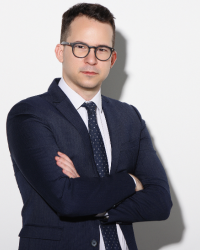
Drašković Popović & Partners (D2P) is a leading full-service business law firm that provides legal services in both Serbia and Montenegro. The firm was founded in January 2013. Its partners are locally and internationally educated and qualified and it specialises in specific industry sectors to provide expert advice to the most demanding clients in relation to the most complex transactions. The firm is a trusted partner in navigating the complexities of aircraft purchase and sale, leasing and debt finance transactions. With a team of seasoned aviation lawyers, it provides comprehensive legal support tailored to the specific needs of regional aviation businesses, operators, lessors and financiers. The firm handles the needs of foreign and domestic clients in all commercially relevant areas of law, including: general corporate counselling; financial consulting; aviation finance and leasing; commercial agreements; dispute resolution; competition issues; data protection; employment; ESG; energy; tax; capital markets; public private partnerships; M&A; real estate; and intellectual property.
Introduction
Located at the intersection of major European regions, Serbia has long served as a link between Central, Eastern and Southern Europe.
While we now live in a globalised world with an increasingly interconnected aviation market, geography still matters. With that in mind, Serbia’s position gives it a unique opportunity to play a larger role in regional and international air transport networks.
In that respect, the Serbian aviation market has experienced strong expansion in recent years, with growth driven by tourism recovery, the significant expansion of Air Serbia (which has grown to become the region's largest airline), increasing regional connectivity, and rising demand for low-cost travel.
While Serbia operates three commercial airports, the Belgrade-based Nikola Tesla Airport is by far the most significant one.
The Belgrade Nikola Tesla Airport has continued to set passenger records in 2025, handling nearly 8.9 million passengers, up 6.5% year-over-year, while aircraft movements increased by almost 4%. As a result, the airport is increasingly solidifying its position as a regional hub for air travel.
While there are several smaller local air carriers present on the market, by far the biggest and most significant is Air Serbia. Air Serbia is a legal successor to Jat Airways, the state-owned airline that operated when Serbia was part of Yugoslavia. For that reason, Air Serbia has inherited a lot of know-how and operational capability, which has facilitated its quick development from 2014 until the present day.
Apart from Air Serbia, low-cost carriers are becoming increasingly important and are operating from all three national airports.
Such development has naturally resulted in a growing number of aircraft lease, sale and financing transactions involving Serbian operators and aircraft registered and operating in Serbia.
Unfortunately, Serbian rules and regulations related to aviation matters are not keeping up with global developments and are, to a large extent, based on regulation dating back to 1982, when Serbia had a completely different economical and organisational system. The current regulation can therefore, unfortunately, be viewed as obsolete and incompatible with contemporary market needs.
Namely, as discussed further in the following section, the main challenges related to the current legal regime are twofold:
- it does not regulate most of the relevant issues pertaining to the lease of aircraft, sale of aircraft, or establishment of security in significant detail; and
- it entails overcomplicated and outdated mechanisms, most notably court proceedings as the default option for registering any changes in the Aircraft Registry maintained by the civil aviation authority.
Despite a somewhat outdated legal regime, Serbia does have an independent agency, the Civil Aviation Directorate of the Republic of Serbia (CAA). The CAA is a state institution which, thus far, has responded to most of the challenges posed by new market conditions.
The adaptability of the CAA and other institutions to respond to the needs of the market illustrates one of the main characteristics of the Serbian aviation regime, namely that it is largely driven by market practice and not statutory norms. The following sections present a practical guide to the most relevant aspects of that practice and the direction in which it is evolving.
Lease of Aircraft
Serbian law provides for the possibility of leasing an aircraft, with such lease being registered in the Aircraft Registry maintained by the CAA. While registration of the lease is optional, it is highly advisable, since, if registered, it will be deemed that all third parties are acquainted with the existence of the lease.
If the lease is registered in the Aircraft Registry, the lessor is also registered as an owner of the aircraft, while the lessee is registered as its operator. Serbia recognises both temporary and permanent registration. In practice, an aircraft is typically registered temporarily (up to 12 months) following which the permanent registration is organised.
The process of registering aircraft with the Aircraft Registry (and corresponding registration of the lease) entails the following two phases:
- applying to the Commercial Court for a resolution on registration of aircraft; and
- filling out an application form and submitting it to the Directorate, along with the obtained Court Resolution.
Regarding the subject matter of the lease, local authorities have acknowledged and allowed the registration of leases that were drafted on templates from various other jurisdictions. This is relevant since these agreements have introduced to the local market legal concepts which are not envisaged under Serbian law (such as, for example, the Officer Certificate). Moreover, although the legality/enforceability of such provisions under Serbian law remains debatable, Serbian courts have in practice also recognised lease agreement clauses designating foreign law as the governing law of the agreement, as well as foreign courts or arbitral institutions as the forum for dispute resolution under such agreements.
Namely, pursuant to Serbian law, while aircraft are considered as movable assets, they fall under the legal regime of immovable assets where the location of the aircraft registry is considered to be the residence of the respective aircraft. With that in mind, transactions involving immovable assets, in principle, are to be governed by Serbian law when such immovable asset is located in Serbia. Serbian courts, as a general rule, have exclusive jurisdiction to resolve any dispute stemming from such transactions.
That said and as noted above, Serbian courts have recognised (through the registration process) foreign law as the governing law and foreign legal forum as valid legal forum for resolution of any dispute stemming from lease arrangements.
It should be noted that, in practice, parties typically choose whether the agreement is governed by English or New York law. Regarding dispute resolution clauses, popular choices include the courts of England and New York or the LCIA. Dispute resolution clauses also often entail concurrent jurisdictions whereby the lessor is given an option to pick a forum before the dispute is initiated (which is a clause that has also been recognised by the Serbian courts via the registration process).
One issue on which Serbian courts (and other institutions) have taken a strict position is that rent stemming from the lease may only be paid to the lessor and not to any third party. This position is based on the Serbian foreign exchange regulation, and thus far we have not encountered any transaction in which this interpretation has not been applied.
Change of lessor (even when such a change involves the transfer of the aircraft to affiliate of the lessor) is treated as a change of ownership, following which a novation agreement must be concluded and the change of ownership must be registered via the mechanism related to sale of aircraft as described below.
These few exceptions aside the court and the CAA have shown a great deal of flexibility and willingness to understand modern trends and to allow their implementation at local level.
Consequence of Serbia Not Being a Party to the Cape Town Convention
Serbia has not, and there is no indication that it will, ratify the Convention on International Interests in Mobile Equipment, ie, the Cape Town Convention.
Serbian rules and regulations also do not recognise the legal institutes as existent under the Cape Town Convention and, accordingly, the parties are obliged to rely on local equivalents.
In practical terms this issue mostly affects the form of the deregistration power of attorney and the need that it is issued pursuant to local regulation.
Under the rules applicable in Serbia, the aviation regime allows the lessee to issue the reregistration power of attorney. While notarisation of the reregistration power of attorney is not obligatory, it is still recommended since in the case of notarisation the lessor may deregister the aircraft without any assistance from the lessee. On the other hand, if the deregistration power of attorney is not notarised, the consent of the lessee is needed for deregistration purposes.
Sale of Aircraft Registered in Serbia
As noted above, Serbian law perceives aircraft as a movable asset that is subject to regulation related to the immovable assets. However, unlike in the case of a lease, in the case of the sale of the aircraft, authorities follow the local legal regime related to immovable assets much more closely and with significantly less flexibility.
With that in mind, for any transfer of ownership over the aircraft registered in the Serbian registry to take effect, the sale and purchase agreement must be signed before the local notary public and notarised in a form identical to the one related to immovable assets. Agreements on the transfer of ownership concluded between the seller and the buyer directly (without involvement of the local notary public) do not produce any immediate legal effect in Serbia.
However, the local sale and purchase agreements can, and are in practice, rudimentary and do not regulate the rights and regulations of the parties in great detail (subject matter being regulated by a “master” sale and purchase agreement concluded between the parties directly).
The local sale and purchase agreement must contain only the following mandatory elements:
- identification of the parties;
- identification of the aircraft;
- price of the aircraft; (therefore it must be disclosed to the notary public);
- clausula intabulandi (statement of one party to the other that the ownership over the asset is transferred); and
- delivery timing, or when the aircraft will be handed over.
Once the local sale and purchase agreement is notarised, in order for the new owner to be registered, it must go through the same two-stage process as in case of the lease: the documentation should be submitted to the court and, once the court adopts the decision on registration, the request for registration is submitted to the CAA. The entire process from start to finish usually lasts three to four weeks.
Establishment of Security in Serbia
Serbian regulation provides for the possibility that security may be established over the aircraft registered in Serbia. It is also envisaged that the subject security may be registered in the aircraft registry maintained by the CAA.
In practice, the only relevant security in this respect is the mortgage over the aircraft. In such situation the mortgage is registered in favour of the mortgage creditor over the aircraft.
The mortgage, however, does have a different meaning locally as compared to common law countries. More specifically, the mortgage under the Serbian legal regime is not equivalent to the concept of “lien”.
In Serbia, a mortgage primarily serves as security, ensuring that the mortgage creditor has priority in settlement from the sale of the mortgaged asset. The sale of the mortgaged asset may be executed through either an out-of-court sale or a sale conducted through enforcement proceedings. In both cases, the mortgage creditor has limited control over determination of the value of the asset.
A mortgage may be registered on the basis of one of three following grounds:
- a unilateral locally notarised statement of mortgage debtor on registration of the mortgage;
- a locally notarised pledge agreement concluded between the mortgage creditor and the mortgage debtor; or
- a decision rendered by a local court.
Once the relevant ground for registration is obtained, the request for registration of the mortgage is again obtained via the two-part process.
Firstly, the request is submitted to the Commercial Court. If the Commercial Court renders a decision, the request for registration of the mortgage is subsequently submitted to the CAA.
As in the case of the sale of an aircraft, the entire process lasts approximately three to four weeks.
Possible Future Legislative Developments
As Serbia is a candidate for EU membership and is slowly aligning its rules and regulations with the acquis communautaire, there have already been several initiatives aimed at modernising Serbian aviation law. However, the situation remains unchanged to this day.
The main proposal arising from these initiatives has been the removal of the court from the registration process and, as in other European countries, giving full authority in this respect to the local aviation authority, the CAA.
While such an amendment would be welcomed, it is yet to be implemented.
Drašković Popović & Partners
Francuska Street, No 27
11000
Belgrade
Serbia
+381 117 850 337
+381 117 850 337
office@d2plaw.com www.d2plaw.com
Law and Practice
Authors
Drašković Popović & Partners (D2P) is a leading full-service business law firm that provides legal services in both Serbia and Montenegro. The firm was founded in January 2013. Its partners are locally and internationally educated and qualified and it specialises in specific industry sectors to provide expert advice to the most demanding clients in relation to the most complex transactions. The firm is a trusted partner in navigating the complexities of aircraft purchase and sale, leasing and debt finance transactions. With a team of seasoned aviation lawyers, it provides comprehensive legal support tailored to the specific needs of regional aviation businesses, operators, lessors and financiers. The firm handles the needs of foreign and domestic clients in all commercially relevant areas of law, including: general corporate counselling; financial consulting; aviation finance and leasing; commercial agreements; dispute resolution; competition issues; data protection; employment; ESG; energy; tax; capital markets; public private partnerships; M&A; real estate; and intellectual property.
Trends and Developments
Authors
Drašković Popović & Partners (D2P) is a leading full-service business law firm that provides legal services in both Serbia and Montenegro. The firm was founded in January 2013. Its partners are locally and internationally educated and qualified and it specialises in specific industry sectors to provide expert advice to the most demanding clients in relation to the most complex transactions. The firm is a trusted partner in navigating the complexities of aircraft purchase and sale, leasing and debt finance transactions. With a team of seasoned aviation lawyers, it provides comprehensive legal support tailored to the specific needs of regional aviation businesses, operators, lessors and financiers. The firm handles the needs of foreign and domestic clients in all commercially relevant areas of law, including: general corporate counselling; financial consulting; aviation finance and leasing; commercial agreements; dispute resolution; competition issues; data protection; employment; ESG; energy; tax; capital markets; public private partnerships; M&A; real estate; and intellectual property.
