Sanctions 2026 Comparisons
Contributed By Accura
Law and Practice
Authors

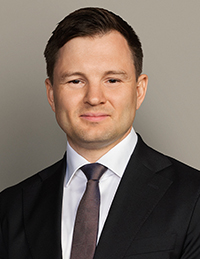

Accura is one of Denmark’s leading law firms, with more than 475 employees and offices in Copenhagen, Aarhus, Singapore, Boston, Tokyo, Melbourne and Seoul. Accura’s competition and regulatory team advises Danish and international corporations within several regulated areas, including export controls, sanctions, foreign direct investment (FDI), the Danish War Material Act, etc, as well as merger controls, state aid, foreign subsidies regulation and competition/antitrust. It combines deep regulatory expertise with practical experience gained from within Danish authorities, including the Danish Business Authority, the Danish Competition and Consumer Authority, as well as the European Commission. Among other areas, the team assists clients with all sanctions-related matters, including sanctions compliance programmes, risk assessments and due diligence in transactions, licensing and derogation applications, and internal investigations and voluntary disclosures. Accura’s competition and regulatory team comprises approximately 27 people.
1. Trends and Overview
1.1 Sanctions Market
The Danish sanctions sector continues to be particularly influenced by sanctions relating to the war in Ukraine. EU sanctions have continued to expand over the last 12 months as a result of sanctions packages (the 18th, 19th, 20th and 21st packages) imposed by the EU in the context of the war in Ukraine.
The 20th sanctions package in particular was rather broad, and extended the EU’s Russia sanctions regime through a further 120 designations, with particular emphasis on the energy sector, military-industrial actors and third-country intermediaries. The package also broadened measures targeting Russia’s shadow fleet, imposing service prohibitions on a further 46 vessels. New energy-related restrictions were introduced, including prohibitions on certain services supplied to Russian liquefied natural gas (LNG) projects. The package further tightened anti-circumvention measures, marking – rather significantly – the first use of the EU’s anti-circumvention instrument, directed at Kyrgyzstan.
On 15 June 2026, a separate “mini” listing package was adopted, followed later that month by a 12-month renewal of existing sanctions, while the 21st sanctions package was still being negotiated. This may suggest a different approach to adopting sanctions being on the table for future sanctions – enabling swifter actions and making it more difficult to stall an entire package due to special interests.
The latest sanctions package – the 21st – was adopted on 23 July 2026. The package targets Russia and Belarus, as well as circumvention via Kazakhstan, Kyrgyzstan, China, Turkey, the United Arab Emirates (UAE) and India, across energy, finance/crypto, trade, maritime transport and fisheries. Key measures include:
- bank and crypto transaction bans;
- an oil price cap freeze;
- expanded shadow-fleet vessel listings;
- new export and import restrictions;
- first-ever fisheries sanctions; and
- the basis for a future entry ban for former Russian combatants.
1.2 Key Trends
Sanctions remain a priority for the Danish government, as particularly evidenced by the introduction of new legislative measures as well as by statements from officials.
Thus, in the past year, Denmark has increased the statutory penalty framework applicable to breaches of sanctions, specifically the increase in the penalty ceiling under Section 110c(2) of the Danish Criminal Code introduced by Act No 731 of 20 June 2025 amending the Criminal Code, which entered into force on 21 June 2025. Prior to the amendment, the ordinary maximum penalty for breaching sanctions regulations was four months’ imprisonment, rising to four years’ imprisonment where particularly aggravating circumstances were present. The new provision raises these ceilings to five years’ imprisonment for ordinary violations and eight years’ imprisonment under particularly aggravating circumstances.
On 25 June 2026, the Danish government proposed an act requiring companies whose owners become sanctioned to safeguard against situations in which said owner or controlling party becomes subject to EU restrictive measures, with the aim of preserving business continuity and jobs while barring any sanctioned party from exercising control or deriving economic benefit. Dubbed the “Firewall Act”, its core mechanism obliges companies to implement necessary measures creating a barrier (firewall) between the sanctioned person or entity and the company, replacing the current regime under which sanctioned ownership effectively halts business operations due to the prohibition to make economic resources, including labour, available to sanctioned parties. Under the proposed act, the sanctioned party’s managerial, economic and voting rights are automatically suspended, with the remaining shareholders’ voting rights increased proportionately. As of now, the act has only been proposed and has still to pass through the ordinary legislative process before final adoption, which is expected this year.
Furthermore, over the past year, the EU’s sanctions regime against Russia has matured considerably, and enforcement activity has intensified as the framework has now crossed the four-year mark since the full-scale invasion of Ukraine. As the regime has broadened in scope, covering an ever-wider range of sectors and goods, attention has somewhat shifted towards closing the gaps through which sanctioned goods continue to reach Russia. Under the EU’s rules, it is prohibited, whether directly or indirectly, to sell, supply, transfer or export dual-use items and other restricted goods to Russia or for use within Russia, with a comparable prohibition applying to Belarus. These provisions are designed to prevent goods from being rerouted through third countries, and jurisdictions situated near Russia or maintaining long-standing historical ties to it are treated as carrying a particularly elevated circumvention risk.
The anti-circumvention focus reached a decisive moment in April 2026, when the Council of the European Union activated the EU’s dedicated “anti-circumvention tool” for the first time, targeting Kyrgyzstan. Originally established under the 11th sanctions package, the tool allows the EU to restrict the sale, supply, transfer or exportation of specified high-risk goods and technology to third countries exhibiting a continued and particularly high risk of circumvention. On 23 April 2026, as part of the 20th sanctions package, the tool was activated on the grounds of the Kyrgyz Republic’s “systematic and persistent failure” to prevent the sale, supply, transfer or exportation to Russia of certain machine tools and telecommunications equipment imported from the EU and used in the manufacture of drones and missiles. This followed a thorough analysis of trade data showing a significant surge in the re-exportation of common high-priority items through Kyrgyzstan to Russia. In practical terms, the EU banned the exportation of computer numerical control machine tools and radios to Kyrgyzstan, as confirmed by Reuters on 24 April 2026, and Council Regulation (EU) 2026/506 gave legal effect to these measures within the broader 20th package framework. In parallel, the EU extended its transaction ban to banks in Kyrgyzstan, Laos and Azerbaijan for assisting the Russian war effort by frustrating sanctions or connecting to Russia’s SPFS financial messaging network.
This trend broadened further in the 21st sanctions package of 23 July 2026, which added 51 new entities to Annex IV, including three in Kyrgyzstan, 14 in China (four in Hong Kong), four in Turkey, two in India, two in Kazakhstan and two in the UAE, for contributing to Russia’s circumvention of export restrictions on microelectronics, computer numerical control (CNC) machine tools, and semiconductor processing equipment. This mirrors earlier designations in the 16th and 17th packages, where Chinese, Serbian, Emirati, Turkish, Vietnamese and Uzbek entities were listed for supplying machine tools and UAV components to Russia’s military-industrial complex.
For businesses, these developments signal materially heightened circumvention, including diversion as well as risk in cross-border structures involving Central Asia, the UAE and Turkey, warranting enhanced due diligence on re-export pathways and third-country counterparties.
1.3 Key Industries
The sectors affected by sanctions vary depending on the specific sanctions regime imposed by the EU. As Denmark is a small and open economy with a great deal of exports, companies from many important sectors are involved in international business and thus may be affected by sanctions. However, some sectors tend to be more frequently targeted by the EU sanctions than others. The following are examples of sectors particularly affected in Denmark:
- the financial sector and financial services;
- companies exporting dual-use and/or military items;
- the defence sector;
- the energy sector;
- the luxury goods industries; and
- the shipping sector.
1.4 Overview
1.4.1 Types of Sanctions
The EU sanctions regime comprises sanctions that can be applied to countries, individuals, groups, entities and vessels, depending on what the EU seeks to achieve. The EU adopts sanctions by the following.
- Implementing UN sanctions: implementing sanctions adopted by the UN Security Council into EU law.
- Reinforcing UN sanctions: the EU may choose to reinforce UN sanctions by applying stricter measures in addition to those set out by the UN Security Council.
- Autonomous EU sanctions: the Council of the European Union may adopt sanctions on its own initiative (autonomous). These sanctions are typically adopted for a period of 12 months at a time.
The various sanctions can be divided into two categories: targeted sanctions and sectoral sanctions. Targeted sanctions prohibit all transactions or other dealings with specific individuals and entities. These types of sanctions typically include asset freezes and travel bans. Sectoral sanctions apply restrictions to certain types of transactions affecting a broader category of targets, including embargoes and restrictions on trading with certain goods in targeted territories. Sectoral sanctions also include economic and financial sanctions and prohibitions on trade with specific designated persons or entities in a particular sector.
1.4.2 Scope of Sanctions
Denmark implements EU sanctions, which apply:
- within the territories of EU member states;
- aboard vessels or aircraft flying the flag or registration of an EU member state;
- to any individual holding EU member state nationality, regardless of whether that individual is located within or outside the EU; and
- to any legal person, organisation or entity established under EU member state law or conducting commercial activity within an EU member state.
In practice, this means for example that a Danish national resident outside the EU remains bound by the EU sanctions regimes by virtue of their nationality, just as a company incorporated in Denmark remains bound even where its day-to-day operations are conducted from a third country.
EU sanctions are not formally exterritorial in nature, as seen with US secondary sanctions for example. However, certain provisions do have extraterritorial effects, including, for instance, Regulation (EU) 833/2014 Article 8a, which contains a best-efforts obligation, requiring EU operators to ensure that entities they own or control in third countries do not engage in activities that undermine EU sanctions. Another example of the same regulation is its Article 12g, which carries an obligation to contractually prohibit the re-exportation of certain items to Russia.
1.4.3 Domestic and/or Supranational Measures
In theory, Denmark could adopt independent national sanctions; however, in practice, sanctions are imposed by the EU and the UN.
2. Overview of Regulatory Field
2.1 Primary Regulators
Denmark operates a decentralised model within sanctions. The Danish Ministry of Foreign Affairs is responsible for general questions, and each sector authority has responsibilities within their separate areas of expertise.
Some of the main regulators/authorities include:
- the Danish Business Authority;
- the Danish Customs Agency;
- the Danish Maritime Authority;
- the Danish Financial Supervisory Authority; and
- the Danish Civil Aviation and Railway Authority.
2.2 Enforcement
2.2.1 Enforcement Responsibilities
Civil enforcement is generally not available under Danish law, although the legal basis can vary from authority to authority. Where a legal basis for civil enforcement does exist, the relevant sector authorities are each responsible within their areas; see 2.1 Primary Regulators. Cases regarding potential breaches of sanctions commonly begin at the sector authorities, who may then choose to file a police report, handing over the case to criminal enforcement.
Criminal enforcement is initially handled by the Danish Security and Intelligence Service (Politiets Efterretningstjeneste, PET). If the PET chooses not to pursue the case, it is then delivered to the National Special Crime Unit (National Enhed for Særlig Kriminalitet, NSK).
2.2.2 Breaching Sanctions
Breaching sanctions is considered a criminal offence pursuant to Section 110c of the Danish Criminal Code, which is located within the chapter of the code concerning treason and other offences against the independence and security of the State.
Breaches may result in fines or imprisonment of up to five years or eight years under aggravating circumstances, following Act No 731 of 20 June 2025 amending the Danish Criminal Code, which increased these penalties; see 1.2 Key Trends. Negligent sanctions breaches may lead to fines or imprisonment for up to three years.
2.2.3 Civil Enforcement Action
There are no known civil enforcement actions in respect of sanctions breaches.
2.2.4 Criminal Enforcement Action
In October 2025, Alfa Laval Denmark (a subsidiary in the Alfa Laval group) pleaded guilty to having attempted, on two occasions in 2022, to export centrifuge parts to Russia that could “contribute to strengthening Russian industrial capacity”. The products were classified as dual-use and comprised spare parts for a centrifuge valued at just over DKK500,000, which had been sold to a sister company in Russia.
Alfa Laval Denmark was fined DKK100,000, marking the first time a Danish company has been penalised for breaching the EU sanctions against Russia since they were adopted in 2022. The case was heard as a confession case.
2.2.5 Mitigation
Prior to any breach, organisations at risk should adopt, and regularly update, compliance programmes, including creating robust risk assessments and due diligence processes. Besides reducing the risk of inadvertently breaching sanctions, it may also serve to demonstrate the absence of intent or gross negligence if sanctions are breached. If a breach has occurred, voluntary disclosure, commitment to rectifying the issue, and co-operating with authorities may serve as mitigating factors.
2.2.6 Strict Liability
The Danish sanctions regime does not operate on the basis of strict liability but rather requires that a breach be committed either intentionally or through negligence.
2.3 Licensing
2.3.1 Derogation
It is possible to obtain authorisations and derogations from sanctions, but only on the specific grounds set out in the applicable EU regulation. Typical grounds include:
- the release of frozen funds to cover basic needs;
- reasonable professional fees;
- extraordinary expenses;
- the satisfaction of pre-existing contractual obligations; and
- humanitarian purposes.
Applications are made to the relevant Danish competent authority, such as the Danish Business Authority or the Danish Financial Supervisory Authority, depending on the measure concerned. The authority assesses each application against the conditions in the regulation, and derogations cannot be granted beyond what EU law permits.
2.3.2 Provision of Legal Services
There is no general licence for the provision of legal services to designated persons, but certain exemptions apply, including derogations intended to safeguard a designated person’s right to an effective remedy and to a fair trial, such as the payment of reasonable professional fees and reimbursement of incurred expenses associated with the provision of such legal services.
2.4 Reporting
There are several reporting obligations in the EU regulations, most notably the obligation on natural and legal persons to report, without delay, any funds or economic resources frozen or any information that would facilitate compliance with the applicable EU regulation. Such reports must generally be made to the relevant Danish competent authority (in most cases, the Danish Business Authority).
3. Recent and Future Legal Developments
3.1 Significant Court Decisions or Legal Developments
Overall, the picture emerging seems to be that enforcement is intensifying in Denmark, albeit from modest levels.
In October 2025, Alfa Laval Denmark (a subsidiary in the Alfa Laval group) pleaded guilty to having attempted, on two occasions in 2022, to export centrifuge parts to Russia that could “contribute to strengthening Russian industrial capacity”; see 2.2.4 Criminal Enforcement Action. Furthermore, a much-awaited case regarding the Danish paint group Flügger, accused of having continued to sell paint to Russian customers via distributors in third countries in breach of sanctions, is expected to be heard in the near future. Flügger, the company’s CEO as well as their CFO have all been charged with sanctions breaches. More recently, on 8 July 2026, the NSK, in co-operation with the PET, arrested and charged two men in a case concerning breaches of trade sanctions against Russia.
The increased focus on enforcement also seems to be reflected in the (heightened) media attention within this area. In recent years, Danish media has placed greater focus on possible sanctions breaches among Danish companies that have previously traded with Russia, in turn creating more pressure on companies to ensure sanctions compliance.
As an example, the Danish electronics company Bang & Olufsen (B&O) has recently been mentioned in media coverage in connection with sanctioned products that could still be found on the Russian market. In April 2026, it was thus revealed that brand-new, sanctioned B&O speakers and headphones were being sold openly in both physical stores and online in Russia. B&O subsequently acknowledged “challenges” with the continued sales and distanced itself from the situation, while a government minister publicly seemed to reprimand the company. B&O has stated that the company has no dealer agreements in Russia and has required its authorised dealers to comply with EU sanctions.
On 1 May 2026, the Danish company FLSmidth published a press release disclosing that it is investigating a potential breach of the Russia sanctions regime. According to the company, findings from an internal review indicate that an infringement may have occurred. The matter relates, inter alia, to the fact that “certain draft pre-contractual tender materials were provided to individuals in Russia in connection with a limited number of prospective projects in Kazakhstan”, as well as to services falling within the scope of the applicable sanctions regulations. Further, the company announcement stated that FLSmidth intends to notify the relevant authorities and co-operate fully in any subsequent proceedings.
Another significant legal development happened on 31 May 2026, when an executive order entered into force transposing sanctions packages up to and including the 16th package of Russia sanctions in Greenland, with some local amendments, highlighting the resolve to keep sanctions up to date in Greenland as much as possible.
Lastly, new legislation regarding penalties and firewalls has been introduced regarding sanctions; see 1.2 Key Trends.
3.2 Future Developments
As mentioned in 1.2 Key Trends, an act, as well as an executive order, has been proposed aiming to protect Danish businesses, jobs and production by ensuring that companies directly or indirectly owned or controlled by natural or legal persons who are subject to sanctions can continue their operations in the event that their owner becomes sanctioned. While the operations continue, the sanctioned party may not control the company – nor benefit from its profit and dividend distributions.
The reason such rules are necessary is that, should a natural or legal person who directly or indirectly owns or controls a Danish company become subject to sanctions, the company’s employees would in effect be prohibited from working for the company, thus making it unable to continue its operations. The act is expected to be adopted in the near future.
4. Delisting Challenges
4.1 Process
Denmark does not maintain an independent national sanctions regime. Sanctions designations are made at EU level by the Council of the European Union. Any request for delisting or challenge of the designation must be directed to the Council. Natural and legal persons included on a sanctions list may request delisting if they consider that they do not meet the criteria for designation. To this end, the designated person must submit a request to the General Secretariat of the Council of the European Union, accompanied by supporting evidence as to why the designation criteria are no longer met.
The Council must periodically reassess its listing decisions, doing so at intervals of no more than 12 months. If a delisting request is turned down, the Council’s decision can be contested through general proceedings against the sanctions act heard at the General Court of the European Union. Any such action must be filed within two months of the decision being notified, in line with the requirements laid down in Article 263(4) and (6) and Article 275(2) of the Treaty on the Functioning of the European Union (TFEU). Should either party wish to appeal a General Court judgment, that appeal is decided by the Court of Justice of the European Union (CJEU).
For sanctions imposed by the UN, a request for delisting must be submitted to either the UN Office of the Ombudsperson to the ISIL (Da’esh) and Al-Qaida Sanctions Committee or the UN Focal Point for De-listing, depending on which sanctions list the person or entity seeks to be removed from.
4.2 Remedies
Following a successful delisting challenge, the person or entity will be removed from the sanctions list. As a consequence, the person or entity will no longer be subject to the sanctions – eg, the asset freeze or travel ban will be lifted.
The costs related to the delisting challenge in successful delisting cases will be paid by the Council of the European Union, as the General Court of the European Union orders the losing institution to pay the successful challenger’s costs.
4.3 Timing
The timeline of a delisting under the EU sanctions regime varies depending on the case and how long it takes for the EU litigation to be completed. Furthermore, additional time must be considered for the potential proceedings before the General Court of the European Union and the potential appeal at the European Court of Justice. The timeline depends on the circumstances of the case as well as the potential appeal.
5. Trade and Export Restrictions
5.1 Services
The EU sanctions regimes contain multiple import and export bans on services to or from countries such as Russia, Belarus, Iran, North Korea and Myanmar. The EU lifted the majority of its economic sanctions against Syria in May 2025, retaining only targeted security-related restrictions, such as the arms embargo and controls on internal-repression equipment.
The nature of the banned services varies depending on the sanctions regime, and on the aim the EU has with the specific sanction. However, the following services are among others represented in current sanctions regimes adopted by the EU:
- credit rating services;
- services related to LNG projects;
- accounting, tax consulting, bookkeeping and auditing services;
- IT consultancy services;
- banking services;
- market research and public opinion polling services;
- reloading services to certain ships;
- legal advisory services;
- construction, architectural and engineering services;
- business and management consulting services;
- services related to specialised financial messaging;
- investment services; and
- financing or financial assistance, technical assistance or brokering services related to prohibited exports of goods.
Furthermore, the EU sanctions regime prohibits transactions with, and requires the freezing of assets belonging to, persons or entities that are subject to transaction bans under the different EU sanctions regimes.
5.2 Goods
The EU sanctions regimes contain multiple import and export bans on goods to or from countries such as Afghanistan, Haiti, Russia, Belarus, Iran, North Korea, Venezuela and DR Congo. The EU lifted the majority of its economic sanctions against Syria in May 2025, retaining only targeted security-related restrictions on goods such as arms, internal-repression equipment and cultural property.
Similar to bans on services, the nature of the banned goods varies depending on the sanctions regime and the aim that the EU has with the specific sanction. However, the following goods are among others represented in current sanctions regimes adopted by the EU:
- aviation and space goods and technologies;
- crude oil and petroleum products;
- LNG;
- oil and gas goods, technologies and products;
- arms and dual-use items, as well as advanced goods and technologies;
- iron and steel products;
- luxury goods, gold, diamonds and jewellery; and
- cultural properties.
6. Civil Litigation and Arbitration
6.1 Force Majeure
There are no publicly available Danish court decisions that address compliance with sanctions as a bar to the performance of contractual obligations.
6.2 Enforcement
Enforcement issues have not been dealt with by the Danish courts.
7. Designation, Compliance and Circumvention
7.1 Executive Body
Denmark does not have a dedicated national body responsible for making autonomous sanctions designation decisions. At the EU level, the Council of the European Union is the decision-making body. The Council adopts restrictive measures through Council Decisions under the Common Foreign and Security Policy (CFSP), typically on the basis of proposals from member states or the High Representative of the Union for Foreign Affairs and Security Policy. These decisions are then implemented through directly applicable Council Regulations, which are binding on all EU member states, including Denmark.
It should be noted that many EU sanctions originate from UN Security Council resolutions. These resolutions are given legal effect in Denmark through EU regulations that implement them. Alternatively, UN resolutions may be implemented in Danish law through a royal order issued after consultation with the Foreign Policy Committee.
7.2 Scope of Designation
The EU restrictive measures contain provisions stating that entities that are “owned or controlled” by designated persons or entities may themselves be subject to restrictions. When addressing whether a legal person or entity is owned by another person or entity, the following criteria for “ownership” apply:
- the “owning” person or entity possesses 50% or more of the proprietary rights of the other person or entity; or
- the “owning” person or entity has a majority interest in the other person or entity (see Regulation 2580/2001, Article 1) – if this criterion is satisfied, it is considered that the legal person or entity is owned by another person or entity.
In the scenario where two or more designated “owning” persons or entities collectively own 50% or more, the entity will be considered as owned by designated persons by aggregation. For example, if one designated entity owns 35% of the entity and another designated person owns 20% of the entity, the entity will be considered as owned by designated persons.
When addressing whether a legal person or entity is controlled by a designated person or entity, the analysis is more complex, as control may exist without ownership. The European Commission has provided guidance on this matter, and the following factors may indicate control, if a sanctioned entity:
- holds the right, or is able in practice, to appoint or dismiss a majority of the members of that legal person’s or entity’s administrative, management or supervisory body;
- has, purely through exercising its own voting rights, secured the appointment of a majority of the members of that body who were in office during the current and the preceding financial year;
- single-handedly controls a majority of the voting rights held by shareholders or members of the legal person or entity, by virtue of an arrangement made with other shareholders or members;
- is entitled, under an agreement with the legal person or entity or under a provision of its constitutional documents (such as its memorandum or articles of association), to exert a dominant influence over it, provided the law governing that legal person or entity allows it to be bound by such an agreement or provision;
- is able, in practice, to exert the dominant influence described above without formally holding the right to do so;
- is entitled to use all or part of that legal person’s or entity’s assets;
- directs the legal person’s or entity’s business as a single economic unit and prepares consolidated accounts in respect of it; or
- bears joint and several responsibilities for that legal person’s or entity’s financial liabilities or has guaranteed them.
If any of the mentioned criteria is present, this could indicate that the entity might be controlled by a designated person or entity. However, this must be assessed on a case-by-case basis, including whether the contrary can be established. It is worth noting that the presumption of control can be rebutted.
Where ownership or control as described is present, funds or economic resources made available to a non-listed entity owned or controlled by a listed person or entity will generally be treated as indirectly made available to that listed person or entity.
7.3 Circumvention
7.3.1 Prohibiting Provisions
The violations of EU sanctions are prohibited in Denmark. This also includes the circumvention of sanctions regulations. EU sanctions regimes generally include provisions that prohibit any form of activities that circumvent the sanctions regulations. The prohibition on circumvention is essential to the enforcement of sanctions regimes, as it closes loopholes and prevents the undermining of the objectives of the sanctions.
The CJEU has defined circumvention as “activities in respect of which it appears, on the basis of objective factors, that, under cover of a formal appearance which enables them to avoid the constituent elements of an infringement of [...], none the less they have, as such or by reason of their possible link to other activities, the aim or result, direct or indirect, of frustrating the prohibition […]” (judgment of the CJEU, 21 December 2011, C-72/11, Afrasiabi, EU:C:2011:874, paragraphs 60 and 62).
The aim of anti-circumvention provisions is to prevent persons and entities from intentionally, knowingly or negligently undermining the objectives of the sanctions regimes by participating in activities that the sanctions regimes are made to avoid.
As an example of a circumvention prohibition, the EU sanctions regime against Russia includes in Article 12 of Regulation 833/2014 a prohibition to participate, knowingly and intentionally, in activities the object or effect of which is to circumvent prohibitions in the Regulation, including by participating in such activities without deliberately seeking that object or effect but being aware that the participation may have that object or effect and accepting that possibility.
Specifically for EU sanctions directed at Russia, the European Commission published a list of countries with a higher risk of diversion to Russia. The list includes countries such as Armenia, Kazakhstan and Kyrgyzstan.
As the prohibition also applies in cases of negligent circumvention, businesses are required to conduct a risk assessment and appropriate due diligence on business to ensure that they do not participate in circumvention.
7.3.2 Criminal Penalties
Circumvention of EU sanctions is considered a breach of sanctions and therefore a criminal offence under Danish law. Under Section 110c(3), subsection (2) of the Danish Criminal Code, violations of EU sanctions may be punished with a fine or imprisonment of up to five years, or, in cases with particularly aggravating circumstances, with up to eight years’ imprisonment. Section 110c(6) of the Danish Criminal Code further provides that negligent breaches of EU sanctions are also punishable and may result in a fine or imprisonment of up to three years.
Accura
Accura Advokatpartnerselskab
Alexandriagade 8
2150 Nordhavn
Denmark
+45 3945 2800
INFO@ACCURA.dk www.accura.dk
Law and Practice in Denmark
Authors
Accura is one of Denmark’s leading law firms, with more than 475 employees and offices in Copenhagen, Aarhus, Singapore, Boston, Tokyo, Melbourne and Seoul. Accura’s competition and regulatory team advises Danish and international corporations within several regulated areas, including export controls, sanctions, foreign direct investment (FDI), the Danish War Material Act, etc, as well as merger controls, state aid, foreign subsidies regulation and competition/antitrust. It combines deep regulatory expertise with practical experience gained from within Danish authorities, including the Danish Business Authority, the Danish Competition and Consumer Authority, as well as the European Commission. Among other areas, the team assists clients with all sanctions-related matters, including sanctions compliance programmes, risk assessments and due diligence in transactions, licensing and derogation applications, and internal investigations and voluntary disclosures. Accura’s competition and regulatory team comprises approximately 27 people.