Power Generation, Transmission & Distribution 2026 Comparisons
Contributed By act legal Slovakia
Law and Practice
Authors
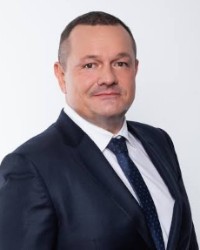

act legal Slovakia combines over 20 years of local market experience, building a strong reputation among leading Slovak and international clients. Regularly recognised in independent legal rankings, the firm is known for combining technical excellence, commercial awareness and a practical approach to complex legal matters. Forming part of act legal, the integrated international law firm with offices across Europe, act legal Slovakia provides comprehensive legal services supported by cross-border capabilities and specialised sector expertise. The firm holds a particularly strong position in the energy sector, advising clients across electricity, natural gas, renewable energy, utilities, e-mobility, environmental regulation and natural resources. Its lawyers regularly assist with regulatory and licensing matters, energy trading and supply, PPAs, infrastructure development, project financing, compliance and regulatory investigations. The firm’s continued recognition reflects the depth of its expertise, its forward-looking approach and its commitment to delivering effective results in energy matters, while maintaining consistently high standards across all areas of legal practice.
1. Structure and Ownership of the Power Industry
1.1 Law Governing the Structure and Ownership of the Power Industry
The Slovak electricity sector is organised into five separate activities: generation, storage, transmission, distribution and supply. Generation, storage and supply are open to competition, while transmission and regional distribution operate as regulated network monopolies. Ownership is mixed. The State wholly owns the transmission system operator and holds interests in major generation and regional energy companies, alongside private strategic investors and independent market participants.
Principal Legislation
Act No 251/2012 Coll on Energy is the central sector statute. It governs authorisations, market roles, unbundling, access to electricity systems and the rights and duties of market participants. Act No 250/2012 Coll on Regulation in Network Industries establishes the powers of the Regulatory Office for Network Industries and the framework for price regulation.
Act No 309/2009 Coll regulates support for renewable electricity and high efficiency cogeneration. Nuclear facilities are additionally governed by Act No 541/2004 Coll, the Atomic Act. Regulation (EU) 2019/943 and Directive (EU) 2019/944, each as amended, form the core European framework. Act No 259/2025 Coll implemented parts of the 2024 European electricity market reform, with further national amendments taking effect in 2026.
Generation
Electricity generation is open to competition and generally requires authorisation, subject to exemptions for smaller facilities. Slovenské elektrárne remains the largest producer and operates Slovakia’s nuclear plants and a substantial hydroelectric portfolio. It is 66%-owned by Slovak Power Holding, which has been fully controlled by EPH since May 2025, and the Slovak Republic holds 34%. The State also holds a contractual option to acquire a further 17%, which is described in 1.6.
The Nováky and Vojany coal plants ceased generation in December 2023 and March 2024, respectively. Commissioning of Mochovce Unit 4 began in June 2026 after the relevant permit became final and the first fuel assembly was loaded. The unit is not yet in ordinary commercial operation. Other producers operate gas, cogeneration, solar, hydro and bioenergy facilities.
Storage
Electricity storage is recognised as a separate activity under the Energy Act and may require an authorisation or notification. The sector includes pumped hydro facilities and an increasing number of battery systems operated by generators, commercial users and independent investors. Transmission and distribution system operators may generally own or operate storage only in the limited circumstances permitted by the Energy Act and approved by the Regulatory Office.
Transmission
SEPS is the sole transmission system operator. It operates the national transmission system, maintains system balance and coordinates cross-border operation within the European electricity system. SEPS is wholly owned by the Slovak Republic, represented by the Ministry of Finance, and is subject to ownership unbundling from generation and supply interests.
Distribution
Most of Slovakia is served by three regional distribution system operators. These are Západoslovenská distribučná in western Slovakia, Stredoslovenská distribučná in central Slovakia and Východoslovenská distribučná in eastern Slovakia. They operate territorial networks and are legally and functionally separated from competitive supply activities. Numerous local distribution systems also serve industrial parks and other defined sites.
Supply
Electricity supply is open to competition, and customers may choose their supplier. Major suppliers include Energetika Slovensko, Stredoslovenská energetika and SPP, alongside other independent names.
Suppliers require authorisation from the Regulatory Office. Market prices apply outside the regulated segment, while maximum supply prices continue to apply to households and other customers meeting the statutory definition of a vulnerable customer. Eligible households also receive targeted energy assistance during 2026.
1.2 Principal State-Owned or Investor-Owned Entities
The principal State-owned and investor-owned entities are described in 1.1 Law Governing the Structure and Ownership of the Power Industry. In summary, SEPS is the State-owned transmission system operator and Slovenské elektrárne is the largest generator. Západoslovenská distribučná, Stredoslovenská distribučná and Východoslovenská distribučná operate the three regional networks. Energetika Slovensko, Stredoslovenská energetika and SPP are among the principal suppliers to end users.
1.3 Foreign Investment Review Process
Access to the Slovak Market
Foreign investors may enter the Slovak power sector subject to the ordinary authorisation requirements. Investors from other Member States benefit from freedom of establishment and free movement of capital. The screening regime is aimed mainly at investors from outside the European Union (EU), but it can also catch an investor established in the EU where the investment is financed or controlled from a third country.
Screening process and thresholds
Act No 497/2022 Coll on the Screening of Foreign Investments has applied since 1 March 2023 and implements Regulation (EU) 2019/452. The Ministry of the Economy is the screening authority and consults other ministries, the Police Force and the intelligence services.
Prior clearance is mandatory only where the transaction is a critical foreign investment under Government Regulation No 61/2023 Coll, which covers energy infrastructure and operators of critical infrastructure or essential services. Not every investment in the sector qualifies. For critical investments the relevant shareholding thresholds are 10, 20, 33 and 50%, and for other foreign investments, the threshold is 25%. Acquisition of the target or of control over it may be caught irrespective of the percentage. Other investments may be notified voluntarily, and the Ministry may open a review on its own initiative for up to two years after completion. Screening may take up to 130 days, and the clock stops while the Ministry waits for requested information.
Review outcomes
The Ministry may approve the investment, approve it subject to conditions, or prohibit it. Conditions may concern the conduct, ownership structure or organisational structure of the investor or the target entity. They may also require the investor to preserve or dispose of certain rights or assets. A prohibition requires the agreement of the Slovak government.
Investor protection
Foreign investors have access to the Slovak courts. Article 20 of the Constitution protects property and allows expropriation only to the necessary extent, in the public interest, under a law and for adequate compensation. Eligible investors may also rely on applicable bilateral investment treaties and on the Energy Charter Treaty, to which Slovakia is a Contracting Party, and some of these instruments provide access to investor state arbitration.
Investment incentives
No incentive is reserved for foreign investors as such. A foreign owned company established in Slovakia may apply for generally available support on the same terms as anyone else. Regional investment aid under Act No 57/2018 Coll is not normally available for generation, storage, networks or energy infrastructure, but separate schemes exist for eligible clean energy and environmental projects.
1.4 Sale of Power Industry Assets
There is no sector specific approval regime for selling a generation, storage, distribution or supply business, so transactions are governed by general company, competition and investment law. The Commercial Code (Act No 513/1991 Coll) governs share and asset transfers and the sale of an enterprise or part of it. Act No 309/2023 Coll on transformations of companies and cooperatives, in force since 1 March 2024, covers mergers, divisions and changes of legal form, including cross border ones. Act No 187/2021 Coll on the protection of competition provides the merger control and standstill rules, and transactions may also be subject to screening under Act No 497/2022 Coll, which applies as described in 1.3 Foreign Investment Review Process. Two sector statutes overlay that framework. The Energy Act, as amended by Act No 259/2025 Coll, determines who may hold authorisations and sets the unbundling rules. The Atomic Act applies where the target operates nuclear installations, since a change affecting the operator requires nuclear regulatory consent. Where the State is the seller, a government decision is required, and the shareholder agreements in the regional energy groups contain pre-emption rights.
Regulatory Review
Merger control lies with the Antimonopoly Office, or with the European Commission where the EU thresholds are met. Phase one ends within 25 working days of a complete notification and phase two within 90 working days, both extendable by up to 30 working days at the request of the parties or with their consent. Remedies arise only in the few problematic cases and are usually divestments or commitments concerning network access or supply. Investments potentially falling within Act No 497/2022 Coll are assessed under the screening regime described in 1.3 Foreign Investment Review Process,for which several months should be allowed. Very large transactions may also require notification under the Foreign Subsidies Regulation (EU) 2022/2560.
Requirements for Purchasers
Buying shares in a Slovak energy company carries no general financial or technical qualification test. The requirements attach to the authorised activity instead, because authorisations issued by the Regulatory Office for Network Industries do not pass with the assets. An acquirer of a business must therefore obtain its own authorisation, demonstrate technical competence, appoint a responsible representative and, for supply, show financial capability. Network level rules are stricter. Ownership of the transmission system operator is reserved to the State, and undertakings active in generation or supply may not control it. A change of control over a certified operator triggers certification review under Article 52 of Directive (EU) 2019/944 in conjunction with Article 51 of Regulation (EU) 2019/943, including an opinion of the European Commission. Where the acquirer is controlled from a third country, Article 53 of the Directive applies, including the security of supply test.
1.5 Central Planning Authorities
There is no single planning authority. The functions are divided between the Ministry of Economy, the transmission system operator SEPS, the Regulatory Office for Network Industries and the regional distribution system operators. The Ministry owns national energy policy and security of supply. It prepares the strategic energy documents and the national resource adequacy assessment, and it issues the certificate confirming that a proposed energy facility matches energy policy.
SEPS runs the transmission system, balances it, procures ancillary services and administers connection. Every two years, it prepares a ten-year development plan reflecting expected generation, storage, consumption and cross border flows as well as the European and regional plans. The plan goes to the Ministry and to the Regulatory Office, which consults system users, may require changes and monitors implementation.
Distribution operators prepare their own five- to ten-year plans, submitted to the Ministry and the Office after public consultation. Generation itself is not planned centrally. New capacity is market driven and subject to ordinary permitting, while the Ministry assesses overall adequacy using data from SEPS.
1.6 Recent Changes in Law or Regulation
The past year brought the largest rewrite of Slovak energy legislation in more than a decade, a new model of household support, and visible movement on nuclear power and grid capacity.
The Energy Package of 2025
Act No 259/2025 Coll comprehensively amended the Energy Act, the Regulation Act and the renewables legislation, transposing European rules on the internal electricity market, renewables, hydrogen and methane emissions. It has applied in stages: certain provisions took effect on 1 November 2025, the main package on 1 January 2026, and further technical provisions are due to take effect on 1 September 2026. The changes that matter most in practice are as follows.
- Energy sharing between active customers and within energy communities, with the new role of sharing organiser, for which the Regulatory Office had confirmed only a handful of entities by mid-2026.
- Flexible connection, which lets generation and storage connect where firm capacity is unavailable, subject to curtailment without compensation and to equipment allowing remote control of output.
- A broader definition of the active customer and clearer rules for energy communities, aggregators, flexibility providers and storage operators.
- Fixed-price, fixed-term supply contracts with stronger consumer protection and faster supplier switching.
- Amended rules on smart metering, on ancillary and flexibility services and on the duties of network operators.
The Shift to Targeted Energy Assistance
Act No 260/2025 Coll took effect on 10 October 2025, although no assistance was paid under it in that year. From 1 January 2026, the previous across-the-board compensation model and the crisis regulation mechanism ceased to apply. This did not end price regulation: maximum regulated supply prices continue for households and other vulnerable customers, but those prices now apply without the former blanket compensation. Separate targeted assistance is provided to qualifying households according to income and household size, with the detailed parameters set by government regulation.
Permitting and Secondary Legislation
The new Building Act, Act No 25/2025 Coll, in force since 1 April 2025, merged the former zoning and building permit procedures into a single procedure on the construction intention. Act No 269/2025 Coll then reshaped permitting for renewables from 1 November 2025 by introducing unified permitting and making the Slovak Environmental Inspectorate the single point of contact. The Regulatory Office followed, with a large package of amended decrees effective 1 July 2026 covering price regulation, distribution tariffs, connection rules and protection of vulnerable customers.
Nuclear Programme
Nuclear power remains the backbone of the system. The Nuclear Regulatory Authority authorised the commissioning of Mochovce Unit 4 on 22 May 2026; the decision became final on 24 June 2026, and fuel loading began on 29 June 2026. The 471 MW unit should cover around 13% of national consumption. Trial commissioning does not itself trigger the State’s option to acquire a further 17% of Slovenské elektrárne. The six-month option period is linked to full completion of Units 3 and 4 and the final permits required for their permanent operation. Separately, the State company JESS is preparing a new large unit at Jaslovské Bohunice, but by mid-2026 neither the technology nor the supplier had been chosen, with sitting and supplier selection targeted around the end of 2026, construction from 2032, and fuel loading in 2038, at an estimated cost of EUR13 to EUR15 billion.
Grid Capacity and Flexibility
Connection queues have become the main practical barrier to new renewable and storage projects. SEPS and the distribution operators have repeatedly released additional capacity, and flexible connection is meant to unlock projects in constrained areas. A related open issue is the designation of acceleration zones for wind, for which the Ministry of Economy missed the February 2026 deadline, and which must reach the European Commission by the end of August 2026.
Climate and Consumer Policy
The updated Integrated National Energy and Climate Plan, approved in early 2025, sets 25% renewables share in gross final energy consumption by 2030 and a 22.7% cut in emissions outside the emissions trading system. This is below the 35% recommended by the European Commission, which the government justified by the needs of industry and the risk of energy poverty.
1.7 Announcements Regarding New Policies
The principal policy announcements are described in 1.6 Recent Changes in Law or Regulation. They concern implementation of the 2025 energy package, the shift to targeted energy assistance, the nuclear programme, measures to release grid capacity through flexible connection, and the planned designation of renewable acceleration zones.
1.8 Unique Aspects of the Power Industry
Slovakia relies on nuclear power to an unusual degree. In 2025, nuclear plants produced roughly two thirds of domestic electricity, and low carbon sources together produced well over 80%. The Nováky and Vojany coal plants stopped generating in December 2023 and March 2024, respectively. Since Mochovce Unit 3 came online, Slovakia has been a net exporter by a relatively small margin, while a substantial part of the gross export flow remains transit electricity.
The system is small and concentrated. Generation is dominated by Slovenské elektrárne, SEPS is the sole transmission system operator, and three regional distribution operators serve most of the country alongside a number of local distribution systems.
Households may choose their supplier, although supplies to households and certain other vulnerable customers remain subject to maximum prices set by the Regulatory Office. For 2026, eligible households also receive targeted assistance under Act No 260/2025 Coll and Government Regulation No 353/2025 Coll, delivered for electricity as a reduction of the regulated maximum supply price and assessed on household composition and income.
2. Market Structure, Supply and Pricing
2.1 The Wholesale Electricity Market
Wholesale Market and Price Formation
The wholesale market is liberalised, and prices are formed by competitive bids and offers, rather than set administratively. OKTE operates the organised short-term market, comprising a day-ahead market, a continuous intraday market and intraday auctions, and the Slovak bidding zone participates in the single day-ahead and single intraday coupling. Since 1 October 2025, short-term trading has used 15-minute market time units. Electricity is also traded bilaterally, including under power purchase agreements.
Energy and Capacity Markets
Slovakia runs an energy-only market with no general capacity mechanism or strategic reserve. The law allows the Ministry of the Economy to introduce a capacity mechanism subject to the applicable conditions, but none is operating as at July 2026. SEPS separately procures balancing capacity and ancillary services, which is not a capacity market, and balancing energy from automatic and manual frequency restoration reserves is exchanged through the European PICASSO and MARI platforms. The country forms a single bidding zone and uses zonal rather than nodal pricing, so each trading period produces one clearing price.
High-Load Consumers
Data centres and similar loads have no separate market regime. Depending on load and technical solution they connect to the transmission or a distribution system, and connection turns on available capacity, compliance with the operator’s technical and commercial conditions and payment of the connection charge. They may buy from a supplier or bilaterally, including under power purchase agreements, and may offer demand flexibility through an aggregator. Individual regulated system tariffs exist for certain qualifying industrial consumers, but they are subject to specific statutory conditions and were not designed with data centres in mind.
2.2 Electricity Imports and Exports
Freedom to Trade
Cross-border trade is fully liberalised and requires no separate authorisation. As part of the internal market, trade with other Member States is governed by Regulation (EU) 2019/943 and cannot be restricted for commercial reasons. What limits it in practice is physical interconnector capacity, allocated through market-based mechanisms.
Interconnections and trading partners
The transmission system is connected at 400 kV to four neighbouring systems. The Czech profile is historically the strongest and the largest source of imports. Poland is connected through the double line from Lemešany to Krosno. Hungary was reinforced in spring 2021 by two new double-circuit lines, Gabčíkovo–Gönyű and Rimavská Sobota–Sajóivánka, which roughly doubled export capacity southwards. Ukraine is connected by the single line from Veľké Kapušany to Mukachevo. There is no direct transmission level line to Austria. Electricity typically enters from the Czech Republic and Poland and leaves towards Hungary and Ukraine, so a large part of the gross export volume is transit. Slovakia was nevertheless a net exporter by about 2.3 TWh in 2025: exports were 18.3 TWh and imports 16.0 TWh, while generation was 29.8 TWh and consumption 27.5 TWh.
Approvals and access to capacity
Trading requires no individual authorisation, only the standard contractual arrangements, namely a framework contract with SEPS on transmission through the interconnectors, a contract with OKTE on imbalance settlement or the use of a balance responsible party, and cross-border capacity for the relevant profile and direction. Capacity is allocated by market rather than by decision, with yearly and monthly capacity auctioned explicitly through the Joint Allocation Office and day-ahead and intraday capacity allocated implicitly within the couplings. A perimeter fee applies under the inter transmission system operator compensation mechanism to flows to and from countries outside it.
When trade occurs and how it is priced
Flows follow price differences rather than any import or export programme, so electricity moves to the market where it is scarcer at that hour. Because the Slovak day-ahead market is coupled with its neighbours, prices converge whenever interconnection capacity suffices, and volumes settle at the day-ahead price of the relevant zone. Where capacity is insufficient, the coupling algorithm produces different prices on either side of the border and the difference accrues to the transmission system operators as congestion income, used mainly to maintain and increase cross border capacity. Bilateral and forward trades are priced by the parties but track the same references.
The special position of Ukraine
Capacity on the Ukrainian profile is allocated under arrangements between SEPS and Ukrenergo rather than through the European coupling, and Slovakia has also provided emergency assistance outside the commercial market after attacks on Ukrainian infrastructure. In February 2026, the government instructed SEPS to terminate that emergency assistance agreement in response to the interruption of Russian oil transit through the Druzhba pipeline. Commercial flows continued, since only the out-of-market assistance was affected, which illustrates how exposed this profile is to political developments compared with trade inside the internal market.
2.3 Supply Mix of Electricity
Generation Mix
Slovakia has one of the least carbon-intensive systems in the EU, resting on nuclear power supported by hydro. According to the national energy mix published by OKTE for 2025, nuclear accounted for 67.4% of electricity supplied to the grid, gas for 11.8% and hydro for 10.7%, with biomass at 4.4% and solar at 3.1%. Working from gross generation of about 30 TWh, the regulator puts the nuclear share at 64.4% and renewables at 19.9%, with the gap reflecting a different measurement basis. On either basis, well over 80% of domestic generation is low carbon.
Supply Mix
What reaches end customers looks quite different, because suppliers buy on a regional market and guarantees of origin are traded separately from the physical electricity. In 2025, the supply mix was roughly 26.9% nuclear, 21.5% gas, 16.3% hydro and 13.4% hard coal, with other renewables making up the rest. The residual mix, used for electricity not covered by guarantees of origin, was dominated by fossil sources at 52.4%, followed by nuclear at 35.7% and renewables at 11.9%. The difference matters for customers who want to demonstrate the origin of their electricity, which can only be done through guarantees of origin.
Trends and Renewables
Domestic coal-fired generation ended with Nováky at the close of 2023 and Vojany in early 2024, and the support scheme for electricity from domestic lignite was discontinued. Total generation is around 30 TWh a year and fell slightly in 2025, while consumption stayed essentially flat. Mochovce Unit 3, connected in 2023, increased nuclear output and created a small net export position, although much of the gross export flow is transit. Unit 4 is being commissioned during 2026. Renewables are growing from a low base and unevenly. The share of renewables in gross final energy consumption was around 17% in 2023, the latest confirmed figure, against the 2030 target of 25%. Growth is concentrated in solar and, increasingly, in battery storage, supported by the Recovery and Resilience Plan and the Modernisation Fund, while wind deployment remains marginal because of permitting and spatial planning constraints.
2.4 Market Concentration Limits
Slovak law sets no percentage cap on the generation capacity, supply volume or number of customers one undertaking may control. A high market share or a dominant position is not unlawful in itself. Concentration is assessed under general competition law, and it is the abuse of dominance that is prohibited.
Act No 187/2021 Coll governs the protection of competition, alongside Articles 101 and 102 of the Treaty on the Functioning of the EU where trade between Member States may be affected, and Council Regulation No 139/2004 for concentrations with an EU dimension. The Antimonopoly Office reviews concentrations meeting the national thresholds. The Regulatory Office supervises the sector-specific requirements, including unbundling and network access, but does not impose market-share caps.
A concentration is generally notifiable where the parties have a combined Slovak turnover of at least EUR46 million and at least two of them each have Slovak turnover of at least EUR14 million. An alternative threshold applies, depending on the form of the transaction, where the relevant party has Slovak turnover of at least EUR14 million and another party has worldwide turnover of at least EUR46 million. Notification must precede implementation. The Antimonopoly Office assesses whether effective competition would be significantly impeded, in particular through the creation or strengthening of a dominant position, and may clear the transaction, clear it with conditions, or prohibit it. The investigative powers, sanctions and judicial review applicable to anticompetitive conduct are described in 2.5 Surveillance to Detect Anti-Competitive Behaviour.
2.5 Surveillance to Detect Anti-Competitive Behaviour
Surveillance is split between the Antimonopoly Office, which applies general competition law across all sectors, and the Regulatory Office for Network Industries, which acts as the national regulatory authority under REMIT. The Regulatory Office investigates suspected insider dealing, unlawful disclosure of inside information and market manipulation on the Slovak wholesale energy markets and maintains the national register of market participants. ACER collects and analyses transaction and order data at EU level, informs national regulators of suspected infringements and may investigate qualifying cross border cases, but enforcement and fines remain primarily national.
The substantive rules are Act No 187/2021 Coll and Articles 101 and 102 of the Treaty on the Functioning of the European Union for competition, and Regulation (EU) No 1227/2011 as amended by Regulation (EU) 2024/1106 for market integrity, with the national supervisory and sanctioning powers in Act No 250/2012 Coll and related duties in the Energy Act.
Investigative Powers
The Antimonopoly Office may act on its own initiative or on a complaint, require information and documents, take explanations and inspect business premises, copying electronic and written records and securing evidence. Inspection of premises not used for business requires prior court authorisation. The Regulatory Office may request documents, records, information and statements, and its authorised employees may enter business premises and take originals where necessary to secure evidence, but these powers do not extend to a dwelling. Suspected criminal conduct found during an inspection must be reported to the criminal law enforcement authorities.
Enforcement and Sanctions
Proceedings before both authorities are administrative. The Antimonopoly Office may order an infringement to end, impose behavioural or structural remedies and fine up to 10% of worldwide turnover for the preceding accounting period, with leniency available for qualifying cartel conduct and a reduction available through settlement. The Regulatory Office may order deficiencies to be remedied and impose fines, and under Act No 250/2012 Coll a breach of REMIT carries a fine between EUR500 and EUR10 million, with the repetition, duration and consequences of the conduct and the benefit obtained taken into account. Appeals against decisions of the Regulatory Office are decided within the Office, with price decisions going to the Regulatory Board, and final administrative decisions of both authorities are subject to judicial review.
3. Generation Facilities
3.1 Constructing and Operating Generation Facilities
The construction and operation of electricity generation facilities are governed by energy, construction and environmental legislation. The applicable requirements depend mainly on the capacity, technology and location of the facility.
Energy Regulation
Act No 251/2012 Coll on Energy is the principal sector legislation. It governs the construction of energy facilities, authorisation or notification requirements, connection to the electricity system and the rights and duties of electricity producers. Act No 250/2012 Coll on Regulation in Network Industries establishes the regulatory framework and the powers of the Regulatory Office for Network Industries. Act No 309/2009 Coll applies to support for renewable energy and high efficiency cogeneration.
Construction and Environmental Rules
Act No 200/2022 Coll on Spatial Planning and Act No 25/2025 Coll, the Building Act, govern land use compatibility, approval of the construction intention, project verification and the use of completed facilities. Environmental impact assessment is governed by Act No 24/2006 Coll. Act No 39/2013 Coll governs integrated permitting and also provides a unified permitting procedure for certain non-hydro renewable generation facilities.
Depending on the project, further requirements may arise under legislation on air protection, water, nature protection, waste and agricultural land. Nuclear generation facilities are additionally subject to Act No 541/2004 Coll, the Atomic Act, and to authorisation and supervision by the Nuclear Regulatory Authority.
3.2 Obtaining Approvals to Construct and Operate Generation Facilities
A commercial generation facility is authorised through several connected procedures rather than a single authorisation. The precise route depends on the technology, installed capacity, location and expected environmental effects.
Where required under the Energy Act, the developer must obtain a certificate from the Ministry of Economy confirming that the proposed energy facility complies with national energy policy. The certificate is not required for solar or wind facilities with an installed capacity of up to 5 MW or for other generation facilities with a capacity of up to 1 MW. The developer must also agree the connection terms with the relevant transmission or distribution system operator.
Environmental and Construction Approval
Depending on its type and scale, the project may undergo either screening or a full environmental impact assessment under Act No 24/2006 Coll. The outcome must be respected in the later permitting process. A project that has received a negative final EIA opinion cannot be authorised.
The developer must discuss the construction intention with the spatial planning authority, the relevant public authorities and affected infrastructure operators. The competent building authority then decides on the construction intention and verifies the construction project. These two steps may be completed together if the complete project is submitted and no further changes are required. The municipality is generally the building authority, although a regional or special building authority may be competent for certain projects. After completion, the facility normally requires a certificate of final approval for use (kolaudácia) before it can be permanently used.
Certain non-hydro renewable facilities may be authorised through a unified procedure conducted by the Slovak Environmental Inspectorate. This procedure combines the EIA with selected construction, environmental, public health and agricultural approvals. It does not apply to every renewable generation project.
The public may submit comments during the EIA process. Persons and organisations qualifying as the concerned public may become parties to the EIA proceeding and the subsequent permitting proceeding. A public hearing is not mandatory in every case. During a full EIA, the affected municipality may arrange one. An oral hearing in the construction proceeding is normally held only where unresolved issues require it.
Before commercial operation, the producer must obtain an electricity generation authorisation from the Regulatory Office for Network Industries. For generation facilities with an installed capacity of up to 1 MW, a notification procedure generally applies instead. Each competent authority issues its own binding decision and does not merely make a recommendation to a government ministry.
3.3 Approvals to Construct and Operate Generation Facilities
The conditions imposed depend on the technology, capacity, location and environmental effects of the facility. Construction approvals usually specify the approved design, site layout, construction period and requirements arising from environmental, fire safety, public health and infrastructure authorities.
Where an environmental assessment is required, its mitigation and monitoring conditions must be reflected in the later permits. Integrated permits may also regulate emissions, water use, waste management and the use of best available techniques. The electricity generation authorisation specifies the activity, location, scope, duration and applicable technical conditions.
An amendment must generally be obtained from the authority that issued the relevant approval. Changes to the design may require verification of an amended construction project or a new approval where the original construction intention is materially affected. A project change may also require environmental screening if it could have significant adverse effects.
A change affecting the electricity generation authorisation must be notified to the Regulatory Office and may require an amendment of that authorisation. Changes to connection capacity or technical parameters must also be agreed with the relevant system operator.
3.4 Eminent Domain, Condemnation and Expropriation Rights to Construct and Operate Generation Facilities
Land Rights and Expropriation
A generation developer does not have an automatic right to expropriate the site of a power plant. Land is normally secured through purchase, lease or a contractual easement.
Expropriation under Act No 282/2015 Coll is possible only to the necessary extent, for a statutory purpose and in the public interest, where the required rights cannot be obtained by agreement. This may apply where a facility is designated as a public benefit structure or is approved under a special strategic or significant investment regime. Connection lines and other network infrastructure may also benefit from statutory access and easement rights under the Energy Act.
Compensation
Expropriation requires adequate compensation. It is normally paid in money and must not be lower than the general value established by an expert report that is no more than two years old. Substitute land or a substitute structure may be provided where the statutory conditions are met, and the owner agrees.
For a statutory easement under the Energy Act, the owner is entitled to appropriate one-off compensation based on the extent to which the use of the property is restricted. If the parties cannot agree on the amount, it may be determined by a court.
3.5 Decommissioning a Generation Facility
General Requirements
Decommissioning of a conventional generation facility is treated as removal of a structure under the Building Act and requires applicable approval from the building authority. The operator must ensure safe dismantling, manage waste under Act No 79/2015 Coll and remediate environmental damage under Act No 359/2007 Coll. Where the site is contaminated, the environmental burden rules apply. Restoration of agricultural or forest land may also be required under the conditions governing the project site.
Nuclear installations
Nuclear installations are subject to a distinct and considerably stricter regime under the Atomic Act. Decommissioning requires authorisation by the Nuclear Regulatory Authority based on a decommissioning plan and is carried out in practice by Jadrová a vyraďovacia spoločnosť, a.s. (JAVYS).
Funding
For nuclear facilities, funding is accumulated over the operating life rather than at the end of it. Operators make annual contributions to the National Nuclear Fund under Act No 308/2018 Coll, calculated by reference to installed capacity and the fixed charges determined for each facility, and end users pay a nuclear levy through regulated charges. Conventional and renewable facilities have no statutory decommissioning fund. The operator bears the cost when it arises. Financial security is nevertheless often imposed contractually, particularly in land leases for solar and wind projects and in project finance documents, and site restoration provisions are recognised under the general accounting rules.
4. Transmission Lines and Associated Facilities
4.1 Constructing and Operating Transmission Lines and Associated Facilities
Transmission is principally governed by Act No 251/2012 Coll on Energy and Act No 250/2012 Coll on Regulation in Network Industries. Regulation (EU) 2019/943, Directive (EU) 2019/944 and the European network codes also apply. Transmission requires an authorisation and may be performed only by a certified transmission system operator. SEPS is the transmission system operator for Slovakia and is wholly owned by the Slovak Republic.
Electricity storage is a separate market activity. A transmission system operator may own or operate storage only in limited circumstances and with the approval of the Regulatory Office for Network Industries.
Construction is governed by Act No 25/2025 Coll, the Building Act, and Act No 200/2022 Coll on Spatial Planning. Environmental assessment is governed by Act No 24/2006 Coll. Depending on its voltage, length and location, a new overhead line may require screening or a full environmental impact assessment. A Natura 2000 assessment is also required where significant effects on a protected site cannot be excluded.
4.2 Obtaining Approvals to Construct and Operate Transmission Lines and Associated Facilities
Major transmission investments are normally reflected in the ten-year network-development plan prepared by SEPS. The Regulatory Office reviews the plan, may require amendments, and monitors its implementation. It does not issue a formal approval of the plan.
For an individual project, the developer may need a certificate from the Ministry of Economy under the Energy Act. The project must also comply with spatial planning documentation and complete the applicable environmental procedure. Construction generally requires a decision on the construction intention, verification of the construction project and a certificate of final approval for use before permanent use.
The public may comment during environmental assessment and spatial planning. The concerned public may obtain party status in the environmental and subsequent permitting proceedings where the statutory conditions are met. A public hearing is held during a full environmental impact assessment, but is not required in every screening or construction proceeding.
Each competent authority issues its own decision. The environmental authority, building authority, Ministry of Economy and Regulatory Office do not merely make recommendations to another ministry.
4.3 Terms and Conditions Imposed on Approvals to Construct and Operate a Transmission Line and Associated Facilities
Conditions usually address the approved route, voltage and technical design, construction deadlines, safety requirements, crossings with other infrastructure and restoration of affected land. They may also include environmental mitigation and monitoring measures relating to nature protection, noise, water, forests and protected species.
The operation of the system is additionally governed by the technical conditions of SEPS and its operating rules, which are approved by the Regulatory Office.
An amendment must generally be requested from the authority that issued the relevant approval. Minor deviations may be dealt with through verification of an amended construction project if they remain consistent with the approved construction intention and binding opinions. A material change to the route, capacity or design may require a new or amended construction decision and further environmental screening.
4.4 Eminent Domain, Condemnation and Expropriation Rights to Construct and Operate Transmission Lines and Associated Facilities
Land Rights
The holder of a transmission authorisation has statutory rights under the Energy Act to place, operate, access and maintain lines on third party land, subject to the applicable permitting conditions. These rights constitute statutory easements and are recorded in the cadastre. Protection zones around transmission facilities also arise by law.
Where these rights are insufficient and agreement with the owner cannot be reached, expropriation may be available under Act No 282/2015 Coll. It is permitted only to the necessary extent, for a statutory purpose and in the public interest, and only where the required rights cannot reasonably be obtained by agreement.
Compensation
An owner affected by a statutory easement is entitled to appropriate one-off compensation based on the extent of the restriction. The operator must also restore the property after carrying out works or compensate the resulting damage.
Expropriation requires adequate compensation. It is generally paid in money and must not be lower than the general value established by an expert report that is no more than two years old. Substitute land or a substitute structure may be provided where the statutory conditions are met and the owner agrees.
4.5 Monopoly Rights to Provide Transmission Services
Single-Transmission-System Operator
Transmission is operated as a national natural monopoly. SEPS is the only designated and certified transmission system operator for the territory of Slovakia. The transmission system is not divided into competing geographical territories.
Its exclusive position results from the authorisation, designation and certification requirements under the Energy Act and European law. SEPS is subject to ownership unbundling and may not be controlled by an electricity producer or supplier.
4.6 Transmission Charges and Terms of Service
Transmission charges are regulated rather than individually negotiated. SEPS submits a price proposal containing the relevant cost, asset, investment and volume data. The Regulatory Office reviews the proposal and sets the applicable charges in a binding price decision under Act No 250/2012 Coll and the relevant price regulation decree.
The main commercial and technical terms are contained in the electricity market rules, the technical conditions of SEPS and its operating rules approved by the Regulatory Office. Individual connection and transmission agreements must comply with these instruments.
4.7 Open-Access and Non-Discriminatory Transmission
SEPS must provide access to the transmission system on transparent and non-discriminatory terms and at regulated charges. Connection or access may be refused only on statutory or technical grounds, including insufficient capacity or a risk to the safe and reliable operation of the system. The refusal must be justified.
Where full connection capacity is unavailable, the Energy Act permits a flexible connection agreement. This allows a generation or storage facility to be connected subject to temporary output limitations. Curtailment may take place without compensation under the agreed conditions, and the facility may be required to install remote control equipment.
Rights of Users
A user acquires contractual rights under the connection agreement and the agreement on access to and transmission of electricity. These rights are subject to the available capacity, technical conditions and operating rules of SEPS. Disputes concerning regulated access fall within the supervisory powers of the Regulatory Office.
5. Distribution
5.1 Constructing and Operating Electricity Distribution Facilities
Electricity distribution is principally governed by Act No 251/2012 Coll on Energy and Act No 250/2012 Coll on Regulation in Network Industries. The detailed market and operating rules are contained in Decree No 207/2023 Coll and in the operating rules of each distribution system operator approved by the Regulatory Office for Network Industries. Distribution requires an authorisation from the Office. Legal and functional unbundling generally applies where the operator forms part of a vertically integrated undertaking serving at least 100,000 connected customers.
Electricity storage is a separate authorised activity, subject to exemptions for certain smaller facilities and active customers. A distribution system operator may own or operate storage only in the limited circumstances permitted by the Energy Act and with the approval of the Regulatory Office.
Slovak law does not recognise microgrids as a separate legal category. Comparable arrangements may operate as local distribution systems, which require their own authorisation and operating rules. Construction is also governed by Act No 25/2025 Coll, the Building Act, Act No 200/2022 Coll on Spatial Planning and, where applicable, Act No 24/2006 Coll on environmental impact assessment.
5.2 Regulatory Process for Obtaining Approvals to Construct and Operate Electricity Distribution Facilities
The required approvals depend on the scale, voltage and location of the project. Construction normally requires compliance with spatial planning documentation, consultation with the relevant authorities, a decision on the construction intention and verification of the construction project. A simplified procedure may apply to minor works. A certificate of final approval for use may be required before use under the Building Act.
The operator must also hold a distribution authorisation and approved operating rules. Environmental screening or a full assessment is required only where the project falls within the statutory thresholds or may significantly affect a protected site.
The public may participate in environmental assessment and in the preparation of spatial planning documentation. Affected landowners may participate in the construction proceeding. A public hearing is not required for every distribution project.
Each authority issues its own decision rather than merely advising a ministry. There is no single overall statutory deadline for the complete process. Routine works without environmental or planning complications may be authorised considerably faster than projects requiring an environmental assessment, new land rights or an amendment to spatial planning documentation.
5.3 Terms and Conditions Imposed in Approvals to Construct and Operate Electric Distribution Facilities
Conditions normally specify the location, voltage, capacity and technical design of the lines and substations. They may also address protection zones, safety, crossings with other infrastructure, environmental measures, construction deadlines and restoration of affected land.
The authorisation from the Regulatory Office defines the authorised activity and territory. Operation must comply with the approved operating rules and the applicable technical and market conditions.
An amendment must generally be requested from the authority that issued the relevant approval. Minor design deviations may be incorporated into an amended construction project. Material changes to the route, capacity or design may require an amended construction decision and further environmental screening.
Changes to the authorised territory or scope of distribution require an amendment of the authorisation. Changes to regulated commercial conditions may also require approval of amended operating rules
5.4 Eminent Domain, Condemnation or Expropriation Rights to Construct and Operate Electricity Distribution Facilities
Land Rights
A distribution authorisation gives its holder statutory rights to place, operate, access and maintain electricity facilities on third party land. These rights constitute statutory easements and are recorded in the cadastre. Statutory protection zones also restrict certain activities around distribution facilities.
Where the necessary rights cannot be obtained by agreement and the statutory easement is insufficient, expropriation may be available under Act No 282/2015 Coll. It is permitted only to the necessary extent, for a statutory purpose and in the public interest, and where the required rights cannot be obtained by agreement or another less intrusive method.
Compensation
An owner affected by a statutory easement is entitled to appropriate one-off compensation based on the extent of the restriction. The operator must also restore affected property or compensate any resulting damage. If the amount cannot be agreed, it may be determined by a court.
Expropriation requires adequate compensation, normally in money. The compensation must not be lower than the general value established by an expert report that is no more than two years old.
5.5 Monopoly Rights for Electricity Distribution Entities
Territorial Operation
Regional distribution operators have de facto territorial monopolies within their respective network areas. Their position results from their authorisations, which define the relevant territory, and from their ownership and operation of the existing networks. It is not an absolute statutory monopoly, since local distribution systems may operate within the same wider region.
The regional operators must provide connection and access on transparent and non-discriminatory terms where the technical and commercial conditions are met. Local distribution system operators require separate authorisations and operating rules and are subject to regulated access and pricing requirements, with certain exemptions available to smaller systems.
5.6 Electricity Distribution System Charges and Terms of Service
Charges and Methodology
Distribution charges are regulated by the Regulatory Office under Act No 250/2012 Coll and Decree No 154/2024 Coll, as amended, including by Decree No 161/2026 Coll with effect from 1 July 2026. Each operator submits a price proposal, and the Office sets the charges and their conditions of application in a binding price decision.
The methodology takes account of efficiently incurred costs, depreciation, necessary investments and a reasonable return. Charges must be transparent and non-discriminatory for comparable users. The applicable technical and commercial terms are contained in Decree No 207/2023 Coll and in the approved operating rules of the relevant operator.
Appeals and Complaints
A price decision may be appealed to the Regulatory Board. An appeal in price proceedings does not suspend the decision. The final administrative decision may subsequently be reviewed by the administrative courts.
Customers may submit complaints concerning prices, connection, distribution services or compliance with approved conditions to the Regulatory Office. Following the operator’s internal complaint procedure, eligible customers may also use the Office’s alternative dispute resolution procedure. Access to the courts remains available.
act legal Slovakia
act legal s.r.o.
Twin City Tower
Mlynske Nivy 10
821 09 Bratislava
Slovak Republic
(+421) 2 321 130 31
office@actlegal-slovakia.com www.actlegal.com
Law and Practice in Slovakia
Authors
act legal Slovakia combines over 20 years of local market experience, building a strong reputation among leading Slovak and international clients. Regularly recognised in independent legal rankings, the firm is known for combining technical excellence, commercial awareness and a practical approach to complex legal matters. Forming part of act legal, the integrated international law firm with offices across Europe, act legal Slovakia provides comprehensive legal services supported by cross-border capabilities and specialised sector expertise. The firm holds a particularly strong position in the energy sector, advising clients across electricity, natural gas, renewable energy, utilities, e-mobility, environmental regulation and natural resources. Its lawyers regularly assist with regulatory and licensing matters, energy trading and supply, PPAs, infrastructure development, project financing, compliance and regulatory investigations. The firm’s continued recognition reflects the depth of its expertise, its forward-looking approach and its commitment to delivering effective results in energy matters, while maintaining consistently high standards across all areas of legal practice.