Art & Cultural Property Law 2026 Comparisons
Contributed By SCHMIDT-GABAIN
Law and Practice
Authors
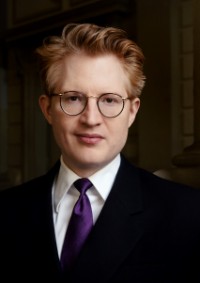

SCHMIDT-GABAIN is a Swiss law firm focusing on art law, entertainment law, foundation law and strategic estate planning. In art law, SCHMIDT-GABAIN advises clients across the full spectrum of art market transactions – from contract drafting and provenance disputes, to forgery cases and import/export matters – and represents collectors, artists, institutions, foundations, estates and dealers. Its entertainment law practice covers copyright enforcement, contract work for musicians, labels, publishers and event organisers. SCHMIDT-GABAIN advises foundations on donation and foster agreements, the interpretation of foundation deeds, corporate governance and related matters. A particular strength lies in strategic estate planning for artistic legacies across fine arts, music, literature, film, and architecture, where SCHMIDT-GABAIN combines legal expertise with economic and artistic perspectives to develop bespoke long-term structures. SCHMIDT-GABAIN handles both contentious and non-contentious matters, offering clients integrated advice that bridges transactional work, litigation and forward-looking estate strategy. SCHMIDT-GABAIN runs offices in Zurich and Basel.
1. Art Law Framework
1.1 Relevant Authorities and Legislation
Legislation
The legal framework governing art law consists, on the one hand, of general legislation, including:
- the Swiss Civil Code;
- the Swiss Code of Obligations;
- the Swiss Customs Act; and
- tax law (federal and cantonal).
On the other hand, specific legislation governs the following areas:
- cultural property transfer: the Federal Act on the International Transfer of Cultural Property (Cultural Property Transfer Act (CPTA)) and its ordinance (Cultural Property Transfer Ordinance (CPTO));
- copyright: the Federal Act on Copyright and Related Rights (Copyright Act);
- film: the Federal Act on Film Production and Film Culture (Film Act); and
- museums: the Federal Act on Federal Museums and Collections (Museums Act).
Switzerland has ratified the following international treaties, each of which forms part of domestic Swiss law:
- the UNESCO Convention of 14 November 1970 on the Means of Prohibiting and Preventing the Illicit Import, Export and Transfer of Ownership of Cultural Property (1970 UNESCO Convention);
- the UNESCO Convention of 2 November 2001 on the Protection of the Underwater Cultural Heritage (2001 UNESCO Convention);
- international treaties regarding copyright such as the Berne Convention for the Protection of Literary and Artistic Works or the WTO Agreement on Trade-Related Aspects of Intellectual Property Rights (TRIPS); and
- several bilateral treaties regarding the import and export of cultural property (with Italy, Greece, Colombia, Egypt, Cyprus, China, Peru (12 July 2016), Mexico, Turkey, Bolivia and Côte d'Ivoire).
Authorities
The most important Swiss authorities in the field of art are:
- the Federal Office for Customs and Border Security (FOCBS) which controls the import (including freeports), export and transit of goods, including art and cultural property;
- the prosecutors of the 26 Cantons since they handle almost all criminal procedures relating to art, cultural property and intellectual property;
- the Federal Prosecutor, especially regarding war crimes against cultural property;
- the Federal Office of Culture (Bundesamt für Kultur, BAK) which especially plays an important role in the field of cultural property;
- the Commission for Historically Problematic Cultural Heritage, which began its work in March 2026 and will issue non-binding recommendations for just and fair solutions for cultural property with a “burdened” past (such as Nazi-confiscated artworks and cultural property removed from former colonies); and
- the Swiss Federal Institute of Intellectual Property (IPI), the authority responsible for trademark, patent and design protection.
2. Rights to Artworks
2.1 Artists’ Rights Over Their Art
Property Rights
Until the artist has transferred the title of the work to a third party, they remain its owner. They have the right to reclaim it from anyone, to withhold it from them and to protect it against any interference.
Copyright
Under Swiss law, works are literary and artistic intellectual creations with individual character, irrespective of their value or purpose. Individuality is established where the creation stands out from the commonplace.
Under Swiss law, an artist’s copyrights fall into two distinct categories:
Economic rights
As the author of their work, the artist has the exclusive right to decide whether, when and how their work is used. In particular, they have the right to produce copies of the work, to distribute copies of the work, to recite, perform or present their work and to alter their work. Economic rights can not only be subject to a licence, but can be transferred to third parties, so that they become the owner of the economic rights.
Moral rights
The moral rights give the author the right to recognition of their authorship and to decide whether, when, how and under what author’s designation their work is published for the first time. Moral rights also give the author the possibility to oppose any alteration of their work which qualifies as a distortion. Moral rights, according to the prevailing view, may not be subject to a licence and may not be transferred.
2.2 Copyright in Collaborative Artworks
Where two or more persons have contributed as authors to the creation of a work, copyright belongs to all such persons jointly. As a general rule, they may only use the work with the consent of all authors; however, consent may not be withheld for reasons contrary to the principles of good faith. If a part of a joint work was created by only one of the co-authors and can be exploited independently, they may exploit this part without consent as long as the exploitation of the part does not harm the exploitation of the work as a whole.
Each joint author may independently bring an action for infringement but may only ask for relief for the benefit of all.
For a contributor to the creation of a work to be qualified as co-author, two requirements must be fulfilled:
- there must be a will to collectively create a work with others; and
- the contribution must shape the work in some way. A contributor who makes only a minor contribution, acting merely as a technical or administrative assistant, does not qualify as a co-author. In practice, artists working with studios and craftsmen should enter into agreements regarding a possible joint authorship.
3. Protection Against Plagiarism
3.1 Legal Consequences of Copyright Infringement
Under Swiss law, copyright infringement triggers civil and criminal remedies.
Civil Law
Any person whose copyright or related right is infringed or threatened may apply to the court for an order prohibiting imminent infringements or remedying existing ones. The rightsholder may further request disclosure of the origin and quantity of infringing items, as well as the identity of their owners and purchasers. Where the infringer has acted willfully or negligently, the rightsholder may also claim damages — though quantifying the loss and establishing fault can in practice pose considerable challenges.
Interim measures are of a particular importance in copyright disputes, as infringements can cause harm to the applicant that is not easy reparable — such as the unauthorised publication or distribution of a work.
An exclusive licensee is entitled to bring legal action against any infringer in their own name.
Criminal Law
Wilful copyright infringement is a criminal offence, prosecuted on the complaint of the person whose rights have been infringed and punishable by a custodial sentence of up to one year or a monetary penalty. Where the infringement is committed for commercial gain, prosecution is initiated ex officio and the offence is punishable by a custodial sentence of up to five years or a monetary penalty.
3.2 Registering Artwork
Switzerland does not have a copyright register. Copyright originates with the creation of a physical work (be it ephemeral).
3.3 Resale Right
In Switzerland, there is no droit de suite.
3.4 Using Copyrighted Images
Purchase of a Licence
The basic rule that applies to every protected work also applies to protected images: anyone who wishes to use a copyrighted image must, as a general rule, obtain permission from the rightsholder. In many instances, the collecting society ProLitteris is the rightsholder for the reproduction of images of artworks. There is an online search tool to find out if ProLitteris administers reproduction rights. If ProLitteris does not administer the rights, in some cases it may be difficult to find out who the rightsholder is.
For some images published on the internet, Creative Commons licences may be available.
Uses Permitted by Law
In some cases, the use of copyrighted images is permitted by law. Of particular importance is permitted private use: anyone may use published works for private purposes, that is, in their personal sphere and among people with whom they have a close relationship. This includes relatives and closest friends (not, for example, friends or contacts on social media).
4. Authentication of Artworks
4.1 Posthumous Rights to Authenticate Artwork
In Switzerland, no person is legally entitled to “officially” authenticate the artworks of a deceased artist. It is the market that decides which figures they accept as the leading authorities regarding an artist’s oeuvre.
4.2 Art Authentication
The inclusion of an artwork in a catalogue raisonné is of great significance for the recognition of its authenticity. If the authors of a catalogue raisonné deny including an artwork, the owner of an artwork may try to invoke competition law (for example, by alleging an abuse of a dominant market position) or laws against unfair competition to force the authors to include the work. In Switzerland, however, there are no precedents testing the fitness of those approaches against unwilling authors of a catalogue raisonné.
Another possible way of action by an owner of a denied artwork against the authors of a catalogue raisonné is a claim for damages. The owner may claim that the denial of entry of their artwork caused a loss of the artwork’s value. Such a claim would face several difficulties (eg, proving the authenticity of the artwork, proving that the authors were under an obligation to include the artwork and proving that they culpably violated that obligation). There are no precedents in Switzerland regarding claims for damages because of the denial to include an artwork in a catalogue raisonné.
4.3 Legal Remedies Following a Declaration of Inauthenticity
The rights of a buyer of a non-authentic artwork depend on whether the sale is governed by the UN Convention on Contracts for the International Sale of Goods (CISG) or the Swiss Code of Obligations (CO).
Sale Under CISG
Under the CISG, the buyer may terminate the sales agreement and claim a refund of the purchase price if there has been a fundamental breach of contract. Where a sold artwork proves to be non-authentic, a fundamental breach will generally be established. The Swiss Federal Supreme Court has rejected the concurrent application of the CISG and the CO’s provisions on error.
Sale Under Swiss Code of Obligations
Under the CO, a buyer of a non-authentic artwork may either assert contractual warranty claims or rescind the sales agreement on grounds of error — specifically, an essential error. Unlike under the CISG, Swiss courts allow the buyer to choose between these two routes, though once the election is made, it is final.
- A buyer pursuing warranty claims under the CO must give notice of the defect immediately upon discovering the lack of authenticity (within approximately one week). Failure to meet this deadline results in the forfeiture of all warranty rights. Where warranty rights are successfully asserted, the buyer is entitled to reimbursement of the purchase price against restitution of the artwork. Warranty claims for defects are subject to a limitation period of two years from delivery of the object of sale to the buyer. In the case of cultural property, the limitation period is one year from the buyer’s discovery of the defect, but in any event thirty years from the conclusion of the contract.
- A buyer seeking rescission for error regarding authenticity must notify the seller within one year of discovering the error. No specific form is required.
Because warranty claims are subject to stricter requirements, rescission for error is generally the more favourable option. However, each case needs an individual assessment.
Burden of Proof
Where judicial recovery of the purchase price is sought — regardless of the legal basis — the central issue is whether the buyer can prove that the artwork is non-authentic. The burden of proof generally rests with the buyer, who is free to choose the means of evidence. Expert opinions ordered by the court frequently play a decisive role here. The fact that an artist or their estate does not recognise a work as authentic, or that a work has been removed from the catalogue raisonné, does not automatically lead a court to conclude that the work is non-authentic; the seller retains the opportunity to adduce counter-evidence.
It is also conceivable that a buyer may claim reimbursement of the purchase price even without being able to prove non-authenticity outright, provided they can demonstrate that authenticity is at least genuinely in doubt. In that scenario, the claim will succeed if delivery of a work of dubious authenticity already constitutes a fundamental breach of contract (under the CISG), or if the absence of any doubt as to authenticity objectively formed an essential basis for entering into the agreement (under the CO). There are no precedents regarding remedies for dubious authenticity.
5. Cultural Heritage
5.1 Defining Cultural Heritage
Swiss law distinguishes between two types of cultural heritage: cultural property and cultural heritage in the narrow sense.
Cultural Property
According to Art. 2 (1) of the Cultural Property Transfer Act (CPTA), cultural property is defined as property that is significant for archaeology, prehistory, history, literature, art or science, whether for religious or secular reasons, and that falls under one of the categories listed in Article 1 of the 1970 UNESCO Convention. Since this illustrative list is very broad, the classification as cultural property depends largely on whether the object is deemed to be “significant” within the meaning of the CPTA. This assessment must be made on a case-by-case basis. There are no precedents by the Federal High Court and lower instance courts, and scholars are heavily divided on the definition of significance. One (extreme) side argues, for example, that it is sufficient for a good to be significant if it is exhibited (or worthy to be exhibited) in a museum, or if it is mentioned in specialist literature. The other (extreme) side argues, for example, that a good is significant if it is the last “surviving” specimen of its kind.
Cultural property includes underwater cultural heritage, as defined in Article 1(a) of the 2001 UNESCO Convention.
Cultural Heritage
According to Art. 2 (2) CPTA, cultural heritage refers to the totality of cultural property falling within one of the categories listed in Article 4 of the 1970 UNESCO Convention.
Therefore, property which belongs to the following categories forms part of the cultural heritage of each State:
- cultural property created by the individual or collective genius of nationals of the State concerned, and cultural property of importance to the State concerned created within the territory of that State by foreign nationals or stateless persons resident within such territory;
- cultural property found within the national territory;
- cultural property acquired by archaeological, ethnological or natural science missions, with the consent of the competent authorities of the country of origin of such property;
- cultural property which has been the subject of a freely agreed exchange; and
- cultural property received as a gift or purchased legally with the consent of the competent authorities of the country of origin of such property.
For a cultural property to be included in the Swiss Federal List of Protected Cultural Property (which entails prohibition of export, etc) a cultural property needs to be of significance for Swiss cultural heritage. This significance must not be confused with the significance of a good for it to be deemed a cultural property.
5.2 Cultural Heritage and Adverse Possession
In Switzerland, the same general rules apply to transfer of title to artworks and to good faith acquisition of artworks as to all other goods. The peculiarities regarding cultural property are longer periods of possession to acquire good faith title and stricter requirements regarding provenance research.
The general rule in Switzerland regarding transfer of title is the nemo dat rule. No one can transfer more rights than they have (ie, only the owner can transfer title to a cultural property to a third party). However, there are three exceptions to this:
- if the owner entrusted the cultural property to a third party (eg, a borrower, a lessee or a restorer) and the third party embezzles the cultural property by alienating it to a good faith acquirer, the latter acquires the title to the cultural property if there is a valid cause for acquisition (like a valid sales agreement);
- if the cultural property is stolen and subsequently alienated to a good faith acquirer, the latter acquires the title to the cultural property 30 years after the theft took place if there is a valid cause for acquisition (like a valid sales agreement); and
- if the cultural property is stolen and subsequently alienated to a good faith acquirer, and if there is no valid cause for acquisition (eg, if an heir possesses a cultural property that was not owned by the deceased as owner), then the acquirer acquires title to the cultural property 30 years after they started possessing the cultural property (how long ago the theft took place is not important).
Good faith acquisition is excluded for objects of scientific value excavated on Swiss territory (res extra commercium, see 5.3 State Rights to Cultural Heritage).
The general rule under Swiss law is that good faith is presumed. However, a person may not invoke good faith if they have failed to exercise the diligence required by the circumstances in vetting the cultural property’s provenance. Failing to exercise sufficient due diligence is equal to being in bad faith.
According to the Swiss Federal Supreme Court, there is no general obligation to verify a seller’s authority to dispose of property. However, specific grounds for suspicion trigger a duty to investigate. In sectors that are particularly exposed to goods of dubious origin — such as the second-hand goods trade — a heightened duty of care applies: in that context, an obligation to investigate arises not only upon concrete suspicion of a defect in title, but whenever the circumstances give cause for distrust (eg, the questionable credibility of a seller). This elevated standard is not limited to commercial dealers; what is decisive is their familiarity with the sector in question.
The Federal Supreme Court has confirmed that transactions involving antiques as well as used luxury cars require special attention regarding the alienator’s authority to dispose of a good. The Federal Supreme Court has not yet decided whether artworks and cultural property require an elevated level of attention too. However, the prevailing view in Swiss legal doctrine, is favourable to a higher level of due diligence regarding transactions of artworks and cultural property.
By legal statute, higher standards of due diligence apply in any case, if the acquirer or the acquirer’s agent is a professional dealer and if the object of the transaction is a cultural property.
5.3 State Rights to Cultural Heritage
The Swiss Civil Code governs the acquisition of ownership of “objects of scientific value”.
Under Article 724 of the Swiss Civil Code, the following conditions must be met for ownership to be acquired:
- a physical object must be found;
- the object must be ownerless; and
- the object must be a natural object (eg, mammoth bones or fossils) or an antiquity of scientific value.
If these three conditions are met, the canton in whose territory the respective object of scientific value was found becomes the owner. Good faith acquisition is excluded (res extra commercium).
The law doesn’t define the term “antiquities”. It can be assumed that an object classified as a cultural property under the CPTA is also an object of scientific value pursuant to Art. 724 CC.
6. Sale of Art Objects Domestically and Abroad
6.1 Key Clauses in Art Sale Contracts
According to Swiss law, a contract of sale is a contract whereby the seller undertakes to deliver the item sold and to transfer ownership of it to the buyer in return for the sale price, which the buyer undertakes to pay to the seller.
It is advisable to address the following points in an art sale contract:
- description of the artwork;
- price and payment method;
- time of payment, especially if payment is due before delivery;
- transfer of risk: by statutory law, risk of accidental loss of the artwork passes to the buyer at the moment the contract is concluded (ie, if the artwork is destroyed accidentally after the sale contract was concluded, but before the artwork was delivered, payment must be made even without the delivery of the artwork);
- seller’s warranties or clauses excluding or limiting the warranty, especially regarding title and authenticity; and
- applicable law and jurisdiction: arbitration clauses in art sale contracts are not commonly used.
In recent years, resale clauses (ie, all sorts of contractual provisions that restrict the resale of a work of art in some way) are becoming increasingly common also in Switzerland. They are primarily found in the primary market, in the sale of works by young, emerging artists. In its simplest form, a resale clause prohibits the resale of the artwork. The prohibition is often limited to a period of three to five years. Art dealers also regularly secure a right of first refusal in the event that their contracting party should put the artwork back on the market.
6.2 Issues in Cross-Border Art Sales
Jurisdiction and Applicable Law
In cross-border art sales, it is first and foremost important to determine the jurisdiction and the applicable law. Where agreements concerning artworks lack explicit choice-of-court or choice-of-law clauses, these questions are governed by the Swiss Federal Act on Private International Law (PILA). Of particular relevance is also the Lugano Convention (LuCo) given its application across EU member states and EFTA countries as well as the CISG.
Jurisdiction ordinarily follows the place of performance; in consumer matters, the courts at the consumer’s domicile are additionally competent. As regards applicable law, the law of the seller’s domicile is presumed to apply in the absence of agreement — including where the seller is based abroad — subject to exceptions for consumer transactions. Whether a collector qualifies as a consumer remains a contested question, including whether the value of the artwork is a relevant criterion for that classification.
CISG will be applicable if both parties reside in CISG states or if PILA provides for the application of Swiss law, the CISG being regarded as Swiss law. CISG does not apply in cases of a consumer sale or of sales at auction.
In cross-border art sales, special attention should be made to the question of transfer of title, since transfer of title may be subject to a different applicable law than the underlying sales agreement.
Import and Export of Artworks
The import and export of artworks classified as cultural property under the CPTA are subject to specific declaration requirements covering provenance and, for archaeological objects, place of discovery. Where Switzerland has concluded a bilateral agreement with the country of origin (see 1.1 Relevant Authorities and Legislation), a valid export licence must be presented to Swiss customs. Non-compliance constitutes a criminal offence.
Artworks imported into Switzerland are subject to import tax of 8.1% (as of 1 January 2024) on their market value. Exemptions are possible for some temporary imports. Imports by the artist who created the artwork are exempt from import tax. No import tax arises where artworks are placed in a Swiss freeport. However, the said declaration requirements apply in that case of importing a work to a freeport too.
6.3 Gallery and Auction House Liability for Fake Art
Under Swiss law, there are no special rules for galleries and auction houses regarding the liability for selling fake art.
The general rule under the Swiss Code of Obligations is that the seller is liable to the buyer for any asserted quality of the artwork as well as for any quality of the artwork that reasonably may be expected to be present. If an artwork is sold for the price of an authentic artwork but it proves to be a fake the seller is liable. It is of no significance if the seller know about the defect or if they were unaware of it. Parties are allowed to agree on an exclusion of warranty.
Under the Swiss Code of Obligations, it is permitted that an auction house excludes warranty for authenticity in its General Terms and Conditions.
Where the contract is governed by the CISG, the sale of a fake artwork will generally constitute a fundamental breach. As under the Code of Obligations, the seller’s lack of knowledge is equally irrelevant under the CISG. Liability attaches irrespective of fault.
As for the buyer’s remedies see 4.3 Legal Remedies Following a Declaration of Inauthenticity.
6.4 Pre-Sale Checks for Auction Houses and Galleries
Regarding the authenticity and condition of the artwork, there are no formal obligations of auction houses and galleries to make checks and verifications. However, failing to do proper checks and verifications may result in an obligation to reimburse the buyer if the artwork sold proves to be fake or in a deficient condition.
Regarding provenance of cultural property, there are specific rules which auction houses and galleries must follow. Failing to do so may not only result in civil liability but also constitutes a criminal offense. Said rules stipulate that an auction house or gallery must:
- establish the identity of the consignor or seller at first contact (eg, their first name, their surname, their date of birth, their residential address and their nationality for natural persons, or their company name and registered address for legal entities);
- verify those particulars by means of a probative document where there is reason to doubt their accuracy;
- obtain a written declaration from the consignor or seller confirming their right to dispose of the cultural property;
- inform their clients of applicable import and export regulations of states party to the 1970 UNESCO Convention; and
- keep records of the acquisition of cultural property (eg, descriptions and provenance of the cultural property, the date of transfer, the purchase price or estimated value, as well as the identity particulars and the declaration of right to dispose). Documentation relating to a cultural property must be retained for thirty years.
6.5 Role and Responsibilities of an Art Adviser
Under Swiss law, the relationship between a collector and an art adviser is typically governed by the rules on mandate. The art adviser is obliged to carry out the mandate personally, diligently and in the client’s best interests. This duty of care requires the adviser to conduct adequate due diligence on proposed acquisitions, including as to authenticity, provenance, condition and market value.
Advisory mandates may be terminated by either side without notice at anytime with no requirement for a special reason to terminate the mandate. It is prohibited to set minimum durations or periods of notice.
Sometimes the lines between acting as an adviser or as a seller may be blurred. To avoid discussions, it is recommended to declare in writing whether a person acts as an adviser or as a seller.
An adviser must not act on both sides of a transaction. Especially, they must not act for their client’s seller or buyer at the same time. Transactions tainted by an adviser’s conflict of interests may be void and give rise to claims for damages against the adviser.
6.6 Anti-Money Laundering Regulations and the Art Market
In Switzerland, the art trade per se is not subject to anti-money laundering regulations. Art dealers and auction houses are therefore not required to follow a strict anti-money laundering protocol.
Although auction houses and galleries are not formally required to adhere to the anti-money laundering code, they are subject to the Swiss Criminal Code which punishes money laundering as a criminal offence. It is sufficient to commit money laundering if the launderer condones to the possibility that monies came from an illegal source. Certain knowledge is not required. Thus, if an auction house or gallery has doubts about the legality of the source of a payment, they should conduct research as to the origins of the monies for the payment. If the doubts can’t be dispelled, the auction house or gallery should renounce the transaction to avoid risk of committing money laundering.
Auction houses and galleries are not obliged to inform the competent authorities of suspicious requests for transactions but they are free to do so.
An exception applies to cash payments: if an art dealer accepts a cash amount exceeding CHF100,000, the Swiss Anti-Money Laundering Act applies.
In such cases, auction houses and galleries must perform the following actions:
- verify the identity of the customer;
- establish the identity of the beneficial owner;
- keep records; and
- clarify the economic background and purpose of a transaction if it appears unusual or if there are indications that the assets involved are the proceeds of certain crimes.
Art dealers are subject to those duties even if the cash payment is made in two or more instalments and the individual instalments are less than CHF100,000.
A revision of the Swiss Anti-Money Laundering Act, adopted by Parliament on 26 September 2025 and expected to enter into force in the second half of 2026, introduces a federal transparency register for beneficial owners and extends anti-money laundering obligations to certain advisory activities. The art trade, however, remains outside the scope of the revised act.
7. Collections
7.1 Legal Status of Collections
A collection is not a legal entity in itself. Title to the individual objects comprising a collection can be with many different owners, including a private collector, a company, a joint heirship, a trustee, a foundation, an association or the state. There is no concept of a “collection” as an independent legal subject under Swiss law.
Collections may qualify for federal support provided they maintain an established collection policy: the Federal Act on the Promotion of Culture (Culture Promotion Act (CPA)) provides that museums, collections and third-party networks engaged in the preservation of cultural heritage may be supported by the Confederation, in particular by means of financial assistance towards operating and project costs. The Confederation may also contribute to insurance premiums for loans in connection with exhibitions of national significance.
The Federal Office of Culture (FOC) has, since 2016, supported public and private museums with financial assistance for the investigation and publication of the provenance of artworks. While the initial focus was on Nazi-looted art, support has, since 2018, been extended to provenance research projects addressing archaeological and colonial contexts.
8. Photography
8.1 When Are Photographs Protected as Art?
Since 1 April 2020, almost every single photograph is deemed a copyright protected work even if it lacks any individuality in Switzerland. Thus, every iPhone snapshot is copyright protected.
Only photographs of two-dimensional objects (eg, paintings) are not protected by copyright.
8.2 Legal Protection for Different Types of Photographs
There are two different kinds of copyright protection for photographs:
- photographs of individual character are protected for a period of 70 years after the photographers passing; and
- protected photographs of no individual character are protected for a period of 50 years after their creation.
9. Artworks and New Technologies
9.1 NFTs
Non-fungible tokens (NFTs) are digital certificates of ownership created and stored on a blockchain — most commonly Ethereum. Unlike cryptocurrencies such as Bitcoin, which are fungible and interchangeable, each NFT has its own distinct identity that sets it apart from all others.
An NFT can be linked to any type of digital content: images, videos, music, animations or text. What the buyer acquires, however, is not necessarily the work itself, but often merely a link to it — typically hosted on an external server — together with a record of ownership associated with that link.
9.2 Counterfeit NFTs
The blockchain guarantees the existence of a specific token and the identity of its owner. It does not guarantee the legitimacy of what was linked to that token at the point of minting (ie, of the process of creating the NFT). Buyers of counterfeit NFTs have the same remedies as a buyer of a traditional artwork proving to be fake.
10. Gifts, Donations, Trusts and Inheritance
10.1 Planning for Generational Transfer of Artworks
The transfer of an artwork or an art collection to the next generation requires careful planning. The most important general advice is not to wait too long to start the process of planning and to speak to the heirs about the wishes and expectations of the testator but also about their own wishes and expectations. Often, it makes more sense to execute the estate planning during the lifetime of the testator than to execute estate planning via a will or an inheritance contract. It is important that the testator takes the necessary measure to transfer information and documentation regarding the artwork to the heirs.
A crucial instrument of estate planning is the valuation of the estate.
From a legal point of view, in Switzerland, forced heirship is of major importance. In Switzerland, if a deceased leaves behind children or a spouse, the statutory share is 50% of the deceased’s estate. This means that the deceased may only freely dispose of 50% of their estate. The other 50% must be left to the heirs protected by forced heirship. Violating the heir’s statutory share is illegal and the heir’s can take action to secure their statutory share. Violations of forced heirship may occur both during the deceased’s lifetime (eg, by donations) and by provisions in their will. If the value of an art collection of a collector or the value of the oeuvre of an artist exceed 50% of the estate extra careful planning is needed. It is possible that heirs renounce to their statutory share in an inheritance agreement.
If a testator leaves behind more than one heir, they form a joint heirship which must make every decision unanimously (eg, if there are artworks in the estate, a sale of the artwork can only take place if all heirs agree). If no agreement regarding the separation of the joint inheritance can be agreed, only the court can separate the heirs.
A problem that is difficult to avoid is the inherent inaccuracy of an estimates of an artwork. If the heirs cannot agree on the value of an artwork and if they cannot agree to sell it, only the court can decide the artwork’s value.
It may make sense to place certain or all artworks in a foundation or trust. However, a foundation or trust should only be established after a thorough evaluation. Often, a foundation or trust is not an adequate means of achieving the testator’s goals.
10.2 Legal and Fiscal Issues in Artwork Succession
For legal issues see 10.1 Planning for Generational Transfer of Artworks.
Since there is (almost) no inheritance tax in Switzerland, there are relatively few fiscal issues in artwork successions if an estate is inherited by the descendants or spouse of the deceased.
If artworks are passed to an heir who is subject to inheritance tax, the most frequent issue is the valuation of the artworks. To convince the tax authorities of a particular value, it is advisable to obtain an appraisal from an expert. Heirs who are not related to the deceased may pay more than 40% of the inheritance as taxes, depending on the canton.
If the deceased omitted to declare artworks as part of their wealth (there is a wealth tax in Switzerland), it is advisable that the heirs inform the tax authorities about it as soon as possible, since they will benefit from lower subsequent taxes.
10.3 Tax Implications of Artwork Gifts and Donations
There is no federal tax on gifts and donations, but the cantons tax some gifts and donations.
Gifts and donations to descendants and spouses are (almost) always tax exempt.
Gifts and donations to tax exempt charities are tax exempt.
Gifts and donations to persons who are not related to the donor may pay more than 40% of the gift or donation as taxes, depending on the canton.
In some cantons, taxes can be paid by donating artworks to the canton.
10.4 Artworks Exempt from Inheritance/Donation Taxes
See 10.3 Tax Implications of Artwork Gifts and Donations.
10.5 Trusts
Switzerland does not have its own trust law but recognises trusts created under foreign laws.
SCHMIDT-GABAIN
Office Zurich:
Dufourstrasse 48
8008
Zurich
Switzerland
Office Basel:
Hirzbodenweg 103
4052
Basel
Switzerland
+41 43 243 61 14
info@schmidt-gabain.ch www.schmidt-gabain.ch
Law and Practice in Switzerland
Authors
SCHMIDT-GABAIN is a Swiss law firm focusing on art law, entertainment law, foundation law and strategic estate planning. In art law, SCHMIDT-GABAIN advises clients across the full spectrum of art market transactions – from contract drafting and provenance disputes, to forgery cases and import/export matters – and represents collectors, artists, institutions, foundations, estates and dealers. Its entertainment law practice covers copyright enforcement, contract work for musicians, labels, publishers and event organisers. SCHMIDT-GABAIN advises foundations on donation and foster agreements, the interpretation of foundation deeds, corporate governance and related matters. A particular strength lies in strategic estate planning for artistic legacies across fine arts, music, literature, film, and architecture, where SCHMIDT-GABAIN combines legal expertise with economic and artistic perspectives to develop bespoke long-term structures. SCHMIDT-GABAIN handles both contentious and non-contentious matters, offering clients integrated advice that bridges transactional work, litigation and forward-looking estate strategy. SCHMIDT-GABAIN runs offices in Zurich and Basel.