Financial Crime 2026 Comparisons
Contributed By Charles Russell Speechlys Switzerland
Law and Practice
Authors
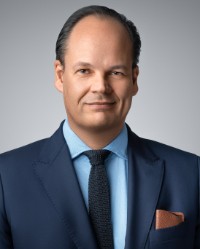

Charles Russell Speechlys Switzerland advises individuals and companies on avoiding and resolving disputes through its offices in Geneva, Zurich and Zug. Its litigation and dispute resolution practice spans commercial and banking litigation, investment and shareholder disputes, private wealth disputes, professional liability, asset recovery and mutual legal assistance. Its white-collar crime practice encompasses all areas of business crime, including fraud, money laundering, disloyal management and corruption. The Swiss team represents clients’ best interests before a wide range of authorities and courts across all Swiss jurisdictions at both cantonal and federal levels. Operating efficiently from Switzerland, the team never loses sight of international implications, collaborating closely with other Charles Russell Speechlys offices in the United Kingdom, Europe, the Middle East and Asia and the United States. This combination of Swiss legal expertise and international support across all key jurisdictions allows the team to deliver tailored, effective solutions, positioning it as a trusted adviser in sophisticated white-collar crime and regulatory matters.
1. Legal Framework and General Principles
1.1 Scope of Financial Crime and General Criminal Law Principles
Swiss law does not contain a statutory definition of financial crime. The term is used as a descriptive umbrella covering a broad range of offences, including fraud (Article 146 of the Swiss Criminal Code, SCC), criminal mismanagement (Article 158 SCC), bribery (Article 322ter et seq SCC), money laundering (Article 305bis SCC), insider trading and market manipulation (Articles 154 and 155 Financial Market Infrastructure Act, FINMIA), tax fraud (Article 186 Direct Federal Tax Act, DFTA) and sanctions violations.
Swiss criminal liability requires both an objective and a subjective element. Most financial crime offences require wilful intent, though some accept eventual intent. Negligence is only punishable where specifically provided by law, which is rare in the financial crime context. Swiss law recognises attempt, punishable where the offender has begun execution of an offence but not completed it. Conspiracy is not a standalone offence, though participation in a criminal organisation is criminalised.
Corporate criminal liability exists under Article 102 SCC. A company may be held liable for offences committed within its business activity where the offence cannot be attributed to any specific individual due to inadequate organisation. For money laundering and bribery, the company may be held liable independently of any individual prosecution where it has failed to take all reasonable organisational measures to prevent the offence (Article 102(2) SCC).
1.2 Burden and Standard of Proof
The burden of proof rests entirely on the prosecution. The accused benefits from the presumption of innocence. The applicable standard is proof beyond reasonable doubt. Swiss criminal law does not generally employ reverse burdens or strict liability in the financial crime context.
However, in confiscation proceedings concerning criminal organisations, there is a rebuttable presumption that assets controlled by such an organisation are subject to confiscation, effectively shifting the burden to the affected party.
1.3 Aiding and Abetting
Swiss law provides for secondary liability through instigation and complicity. An instigator intentionally causes another to commit an offence and faces the same penalty as the principal offender. An accomplice assists the principal offender; the penalty is subject to mandatory mitigation. Complicity requires intent and a causal contribution to the offence. Swiss law does not recognise a general offence of conspiracy. However, participation in a criminal organisation is a standalone offence under Article 260ter SCC, punishable by imprisonment of up to ten years.
1.4 Limitation Periods
Limitation periods depend on the maximum penalty applicable (Article 97 SCC). For offences carrying a maximum custodial sentence of more than three years, such as Fraud (Article 146 SCC), aggravated mismanagement (Article 158(1)(3) SCC, aggravated money laundering (Article 305bis(2) SCC) or forgery (Article 251 SCC), the limitation period is 15 years.
For offences carrying a custodial sentence of three years maximum, such as mismanagement (Article 158(1) SCC) or money laundering (Article 305bis(1) SCC), the limitation period is ten years.
For minor offences with a maximum custodial sentence under three years, the limitation period is seven years.
The period runs from the date of the offence. For continuing offences, the limitation period begins once criminal activity has ceased. Swiss law does not provide specific rules for concealed offences that would toll or extend the period. The limitation period ceases to run once a first-instance judgment has been rendered before its expiry and does not resume during appeal. Civil recovery actions are subject to general prescription periods under Article 60 of the Swiss Code of Obligations, CO: three years from awareness of the damage and the liable person, subject to an absolute limit of ten years from the harmful act (or 20 years for bodily harm). However, where the harmful act also constitutes a criminal offence subject to a longer limitation period under criminal law, the longer criminal limitation period applies to the civil claim as well.
1.5 Extraterritorial Reach and Cross-Border Co-Operation
Swiss criminal law applies primarily to offences committed on Swiss territory (Article 3 SCC). A felony or misdemeanour is considered to be committed at the place where the person concerned commits it and at the place where the offence has taken effect (Article 8 SCC).
When the offence is committed on foreign soil, Swiss criminal law may exceptionally apply when the offence is done against the Swiss state or its national security (Article 4 SCC) or when Switzerland is obliged to prosecute in terms of an international convention provided the act is also liable to prosecution at the place of commission or no criminal law jurisdiction applies at the place of the commission, and the person remains in Switzerland and is not extradited to the foreign country (Article 6 SCC). Some specific cases of impossible extradition are detailed under Article 7 SCC.
For bribery of foreign public officials (Article 322ter and seq. SCC) or private individuals (Article 322octies and seq. SCC), Switzerland exercises jurisdiction regardless of where the offence occurred. For natural people, the rules above stated apply. For legal persons, additional conditions of Article 102 SCC may provide a subsidiary liability (i) if the offence was done in Switzerland and the company within which it was perpetrated is located in Switzerland, (ii) if the company is located in Switzerland but the offence was done abroad through a branch of the Swiss company, or (iii) if the company has a foreign seat but the offence was committed in Switzerland through a branch or a daughter company.
Switzerland has signed numerous international treaties. International co-operation in criminal matters is principally governed by the Federal Act on International Mutual Assistance in Criminal Matters, IMAC. It provides co-operation measures including the service of documents, taking of evidence, search and seizure, and the freezing and handing over of assets. Switzerland also co-operates through INTERPOL and the Egmont Group of financial intelligence units.
1.6 Extradition and Prohibited Destinations
Extradition is governed by IMAC and applicable treaties, including the European Convention on Extradition. The Federal Office of Justice (FOJ) is the central authority, and decisions are subject to judicial review by the Federal Criminal Court and the Federal Supreme Court. Switzerland does not extradite its own citizens. Where extradition is refused, Switzerland may prosecute the person domestically. Key bars to extradition include the political offence exception, risk of persecution, risk of violation of fundamental rights (including the death penalty prohibition) and double criminality. Switzerland does not maintain a list of prohibited destination countries, but extradition will be refused where the requesting state cannot guarantee fair treatment and proceedings
2. Enforcement Architecture
2.1 Investigative and Enforcement Authorities
Financial crime investigation and prosecution operate at both cantonal and federal levels. Cantonal prosecution authorities have primary jurisdiction over most offences. The Office of the Attorney General (OAG) handles federal matters, including organised crime, terrorism financing, complex money laundering and corruption of federal officials. The Swiss Financial Market Supervisory Authority (FINMA) exercises administrative enforcement in the financial sector, conducting enforcement proceedings. The Money Laundering Reporting Office Switzerland (MROS) serves as the national financial intelligence unit, receiving and analysing suspicious activity reports. FINMA has a statutory duty to report suspected offences to the prosecution authorities, though proceedings remain formally separate.
2.2 Initiation of Investigations
Investigations are typically initiated through Suspicious Activity Reports filed by financial intermediaries with MROS, criminal complaints by victims, regulatory referrals from FINMA and reports by other authorities. Prosecution authorities also act ex officio since they must open proceedings whenever there are sufficient grounds to suspect a criminal offence. Swiss law provides that some offences require the filing of a criminal complaint, but this is rarely the case for financial crime offences.
2.3 Investigatory Powers
Prosecution authorities may issue compulsory production orders for documents and information, as well as searches of premises, persons and records (including electronic data). Suspects have the right to counsel at all stages. In urgent cases, the police may conduct searches without a prior order, subject to subsequent validation.
Prosecution authorities may also order seizure of assets likely subject to confiscation, including bank accounts, real estate and digital/crypto-assets. FINMA may also freeze assets in enforcement proceedings. In international cases, assets abroad may be traced and frozen through mutual legal assistance under IMAC.
2.4 Use of Technology and Data
Swiss authorities increasingly use data analytics and blockchain analysis in financial crime investigations. Specialised units within prosecution authorities and the federal police handle complex digital evidence. Surveillance measures, including telecommunications monitoring, are governed by the Federal Act on the Surveillance of Postal and Telecommunications Traffic, SPTA, and require judicial authorisation. The use of AI tools is not specifically regulated but must comply with proportionality and data protection principles under the Federal Act on Data Protection, FADP.
2.5 Internal Investigations and Co-Operation
Internal investigations play a significant role in Swiss financial crime enforcement. Supervised entities must investigate compliance breaches and report findings to FINMA. Companies frequently engage external counsel, particularly where criminal liability is at stake. Attorney-client privilege protects communications in the context of internal investigations, provided the work falls within typical lawyer activities (not compliance or business management tasks). The Swiss Federal Court has confirmed that internal investigation reports prepared in connection with ongoing or anticipated litigation are protected. However, privilege does not extend to third parties to whom documents are voluntarily disclosed, including FINMA. Voluntary co-operation is generally a mitigating factor in sentencing, but supervised entities face a tension between the duty to co-operate with FINMA and the risk that disclosed information may be shared with prosecution authorities.
2.6 Right to Not Co-Operate or Self-Incriminate
Investigations may involve arrests where there is a risk of flight, collusion or repetition. Suspects have the right to defence counsel at all times. The suspect has a fundamental right to remain silent (nemo tenetur principle). No adverse inferences may be drawn from the exercise of this right, although in practice, this may have a psychological effect on the prosecution authorities.
In the regulatory context, supervised entities are subject to a broad duty to co-operate with FINMA. However, the Swiss Federal Court decision 7B_45/2022 of 21 July 2025 clarified that the nemo tenetur principle prevails over this duty whenever there is a risk of criminal prosecution. Evidence collected by FINMA without informing the person of their right not to be self-incriminated is inadmissible in criminal proceedings. Providing false information to FINMA is a criminal offence.
2.7 Pre-Charge Powers
Under Article 263 of the Swiss Code of Criminal Procedure (CrimPC) prosecution authorities may order seizure of assets likely subject to confiscation, needed for procedural costs or intended to satisfy damage claims. The threshold is sufficient grounds to suspect the assets are connected to an offence.
Seizure may be ordered without prior judicial authorisation, though it may be challenged before the compulsory measures court. The CrimPC and SCC confiscation provisions (Articles 69-72 SCC) govern these powers. In international matters, assets may be frozen through mutual legal assistance under IMAC.
These powers extend to third parties, including nominees and beneficial owners, where there are grounds to believe their assets are connected to the offence.
3. Core Financial Crime Offences
3.1 Fraud and Dishonesty Offences
The principal offence is fraud (Article 146 SCC), requiring (i) deceit, (ii) a false impression, (iii) an act of disposition by the victim and (iv) financial damage. The deception must go beyond mere lies; the perpetrator must employ particular cunning or exploit a relationship of trust. Fraud carries imprisonment of up to five years, but up to ten years if fraud is committed for commercial gain, which may be the case for asset managers, financial intermediaries and the like.
Other key offences include criminal mismanagement (Article 158 SCC), penalising breach of a duty of care causing financial damage, commonly relied upon against disloyal directors or officers. The penalty is imprisonment of up to three years, increased to five years where the offender acts with the intention of securing an unlawful financial gain. Misappropriation (Article 138 SCC) covers unlawful appropriation of entrusted assets and carries up to five years’ imprisonment, extended to ten years if the offence is committed in the context of a specific professional capacity. Forgery of documents (Article 251 SCC) is also frequently relevant.
3.2 Bribery and Corruption
Swiss law criminalises bribery in both public and private sectors. Active bribery of public officials (Article 322ter SCC) and passive bribery (Article 322quater SCC) carry imprisonment of up to five years. The giving and accepting of advantages in connection with official duties is also criminalised with imprisonment of up to three years (Articles 322quinquies and 322sexies SCC). Bribery of foreign public officials (Article 322septies SCC) carries a custodial sentence of up to five years. This provision applies when the offender is located in Switzerland or when the advantage is received in Switzerland. Active bribery of private individuals (Articles 322octies) and passive bribery (322novies SCC) carries a custodial sentence of up to three years.
Swiss law does not provide for a standalone “failure to prevent” bribery offence, but companies may incur primary liability under Article 102(2) SCC where they failed to take reasonable organisational measures to prevent bribery. This liability applies for participation in a criminal organisation (Article 260ter SCC), money laundering (Article 305bis SCC) and bribery (Articles 322ter, 322quinquies, 322septies and 322octies SCC).
3.3 Money Laundering
Money laundering (Article 305bis SCC) criminalises any act apt to frustrate the identification, tracing or confiscation of assets derived from a felony. The offence carries up to three years’ imprisonment, increased to five years in aggravated cases (eg, criminal or terrorist organisation involvement, or significant amounts). All felonies may serve as predicate offences; qualified tax offences were added in 2016. Financial intermediaries are subject to AML obligations under the Federal Act on Combating Money Laundering and Terrorist Financing (AMLA), including customer due diligence, beneficial owner identification, ongoing monitoring and suspicious activity reporting to MROS. Failure to comply may result in administrative sanctions by FINMA (including licence withdrawal) and criminal liability under Article 37 AMLA for wilful violations of reporting duties (fines up to CHF500,000).
3.4 Financial Services Crime
Insider trading (Article 154 FINMIA) and market manipulation (Article 155 FINMIA) are punishable by up to three years’ imprisonment or monetary penalties. Aggravated offences (Articles 154(2) and 155(2) FINMIA) carry a custodial sentence of up to five years when the gain exceeds one million Swiss francs. Market manipulation covers transactions giving false or misleading signals regarding the supply, demand or price of securities.
Unauthorised financial services activity is a criminal offence under Article 44 Financial Market Supervision Act (FINMASA) (with imprisonment up to three years). Misleading disclosures may be prosecuted under fraud provisions (Article 146 SCC) or the Unfair Competition Act (UCA).
3.5 Tax Evasion and Financial Reporting
Swiss law distinguishes between tax evasion and tax fraud. Simple tax evasion is an administrative offence subject to fines. Tax fraud, involving forged or falsified documents to deceive tax authorities (Article 186 DFTA), is a criminal offence carrying up to three years’ imprisonment. False accounting is addressed through forgery of documents (Article 251 SCC). Swiss law does not provide for a specific corporate offence of failure to prevent tax evasion, but companies may incur liability under Article 102 SCC where tax fraud cannot be attributed to a specific individual due to organisational deficiencies.
3.6 Cartels and Anti-Competitive Offences
Swiss competition law is governed by the Federal Act on Cartels and other Restraints of Competition, CartA. Illegal cartels (price-fixing, market allocation, bid-rigging) are subject to administrative sanctions by the Swiss Competition Commission (COMCO), with fines up to 10% of Swiss turnover in the preceding three years (Article 49a CartA). Criminal sanctions are limited. Individuals may be prosecuted for violating COMCO orders or cartel behaviour in public procurement (Article 54 CartA). Bid-rigging may also constitute fraud under Article 146 SCC. Switzerland operates a leniency programmed granting immunity to the first participant reporting a cartel infringement.
3.7 Counterfeiting
Counterfeiting of money is criminalised under Articles 240-249 SCC, covering the production, importation and circulation of counterfeit banknotes and coins (up to five years’ imprisonment). Intellectual property infringement is addressed under the Trademark Protection Act (TmPA) and the Copyright Act (CopA). Trade mark counterfeiting carries up to one year’s imprisonment, increased to five years in commercial cases (Article 61 TmPA). Customs authorities may seize counterfeit goods at the border.
3.8 Greenwashing and Environmental Pollution Violations
Environmental pollution is primarily addressed through the Environmental Protection Act (EPA) with criminal sanctions of up to three years imprisonment for serious offences (Article 60 EPA). Greenwashing is not a standalone criminal offence. However, misleading environmental claims may be prosecuted under the UCA. Listed companies are subject to non-financial reporting obligations under Article 964a et seq CO, including environmental disclosures. FINMA has signalled increased scrutiny of sustainability-related claims in the financial sector. Enforcement is generally through administrative proceedings, with criminal prosecution reserved for serious or wilful violations. Civil claims may be brought under the EPA and general tort law.
4. Prosecution and Trial Process
4.1 Initiating a Prosecution
In Switzerland, financial crime prosecutions are typically initiated by the public prosecutor opening an investigation upon learning of a suspected offence, whether through police reports, reports from the MROS, complaints from regulatory bodies such as FINMA or private complaints. Proceedings begin with investigatory activity by police or the formal opening of an investigation by the prosecutor (Article 300 CrimPC); for offences prosecuted only upon complaint, a complaint must first be filed (Article 303 CrimPC). Prosecutions need not follow arrest – cases are commonly initiated through summary penalty orders issued by post, and accused persons may be summoned to proceedings without prior arrest. In practice, many financial crime suspects are first heard as witnesses or persons providing information, and formal charges may follow later once the investigation gives rise to sufficient suspicion.
The decision to prosecute rests with the public prosecutor – either a cantonal Public Prosecutor's Office or the OAG for matters under federal jurisdiction such as money laundering, corruption of foreign public officials, and certain organised crime-related offences. Administrative criminal proceedings in areas such as tax offences or financial market violations may also be initiated by the relevant department such as the Federal Department of Finance (FDF).
Prosecutors are obliged to prosecute offences ex officio when there is sufficient suspicion; Swiss law follows the principle of mandatory prosecution, with little exception. Both companies (under Article 102 SCC) and individuals may be prosecuted, and in cases of primary corporate liability, they can be prosecuted in parallel.
The governing legal framework includes the Swiss Criminal Code (SCC), the Swiss Code of Criminal Procedure (CrimPC), the Administrative Criminal Law Act (ACLA) and the Financial Market Supervision Act (FINMASA).
4.2 Due Process and Bail
Financial crime cases in Switzerland generally take significantly longer to prosecute than other offences. Key reasons include first the complexity of financial transactions requiring specialist analysis, the volume of documentary evidence such as bank record and the need for expert financial and forensic evidence. Second, most financial crime cases have a cross-border dimension, requiring international mutual legal assistance requests, which typically take months or even years to execute, particularly where multiple jurisdictions are involved.
Regarding custody, defendants in financial crime cases more commonly remain at liberty during proceedings. Remand detention requires both a strong suspicion of a felony or misdemeanour and a specific ground such as flight risk, risk of evidence tampering or danger of reoffending (Article 221 CrimPC). In practice, pre-trial detention is less common in financial crime matters; defendants are more often released subject to conditions (surrender of travel documents, reporting obligations and/or the provision of a security deposit).
Swiss law does not impose a strict maximum duration for pre-trial custody. However, detention must be reviewed periodically (typically every three months) by the compulsory measures court and is subject to the constitutional principle of proportionality – it must not exceed the anticipated sentence (Article 212 CrimPC). The accused may challenge detention orders before the Compulsory Measures Court (Article 222 CrimPC). Additionally, authorities are bound by the principle of expeditiousness under Article 29(1) of the Federal Constitution, requiring proceedings to be completed within a reasonable time.
4.3 Public or State Funding
Public funding is available in Switzerland. Under Article 29(3) of the Swiss Federal Constitution, every person who lacks the necessary means has a right to free legal assistance, provided their case is not without any chance of success. In criminal proceedings, the state provides free legal assistance for indigent persons charged with crimes punishable by imprisonment.
Eligibility involves both a means test and a merits test: the applicant must demonstrate insufficient financial resources and must show that the case does not appear devoid of any chance of success. The applicant must disclose income, assets and their position on the merits. The court decides the application in summary proceedings.
Additionally, under Article 130 SCC, mandatory defence counsel must be appointed where the accused faces a potential custodial sentence exceeding one year or is in pre-trial detention, irrespective of any means and/or merits test. The state bears the costs if the accused is indigent.
Legal aid is not free of charge – it constitutes a reimbursable advance. A recipient must reimburse the legal aid received as soon as they can do so, and the canton’s claim prescribes ten years after the close of proceedings. Legal aid may be revoked if the conditions are no longer met or were never fulfilled. If the accused is acquitted, the costs are borne by the state.
4.4 Venue and Specialisation
Switzerland has a dual-level court structure for criminal matters, with cantonal courts handling most prosecutions and the Federal Criminal Court in Bellinzona handling cases falling under federal jurisdiction. Financial crime cases prosecuted by the OAG – which primarily involve financial crime offences such as money laundering, corruption and organised crime – are tried before the Federal Criminal Court, which has developed expertise in complex financial crimes.
At the cantonal level, larger cantons such as Zurich and Geneva have established specialised divisions or units with dedicated prosecutors, financial analysts and police officers handling only financial crime cases. In other smaller cantons, financial crime cases are generally heard by ordinary criminal courts.
The suspect does not have a right to choose the court or venue. Jurisdiction is determined by law – principally based on federal versus cantonal competence and the place of commission of the offence. The Confederation has exclusive jurisdiction over certain financial crime offences, while residual jurisdiction lies with the cantons.
4.5 Trial by Jury
Switzerland abolished jury trials with the entry into force of the unified Swiss Criminal Procedure Code (CrimPC) in January 2011, so there is no election as to mode of trial.
Criminal cases, including financial crime matters, are decided by professional judges sitting either as a single judge or as a panel, depending on the severity of the offence and the applicable procedural rules.
At the Federal Criminal Court, cases are typically heard by a three-judge panel of the Criminal Chamber. At the cantonal level, serious offences are likewise tried before a panel of judges, while minor offences may be adjudicated by a single judge.
There are no proposals to reintroduce jury trials in financial crime cases, nor are there ongoing discussions about alternative forms of lay participation. The professional judge model is largely considered well suited to the complexity of financial crime cases, which often require detailed analysis of financial documentation and sophisticated legal reasoning.
5. Corporate Liability, Compliance and Defences
5.1 Corporate and Individual Liability
Under Swiss law, companies and individuals can be prosecuted concurrently, but the framework depends on which type of corporate liability applies. Article 102 SCC establishes two forms of corporate criminal liability. Under the subsidiary liability regime (Article 102(1), a company can only be held liable if no individual perpetrator can be identified due to the company's deficient internal organisation. This effectively precludes concurrent prosecution of the company and the individual for the same offence. However, under the primary liability regime (Article 102(2), which applies to a specific catalogue of financial offences – including corruption, bribery, money laundering and financing of terrorism – a company can be prosecuted irrespective of whether an individual is also identified and prosecuted. In these cases, concurrent prosecution of both the company and responsible individuals is possible, meaning that a company may face criminal proceedings alongside its directors, officers or employees who are alleged to have committed the underlying offence.
Regarding corporate group liability, Swiss criminal law does not automatically extend liability from a subsidiary to a parent company or vice versa. Each legal entity is treated independently. In practice, the OAG has faced criticism for failing to pursue parent company liability even where subsidiaries were convicted, as seen in cases where the OAG declined to prosecute parent entities on the basis that operations were “completely independent and autonomous”. On successor liability, however, the OAG has taken a proactive approach, enforcing Article 102 SCC against successor companies that assumed the operations of entities implicated in criminal conduct. Swiss law otherwise lacks a comprehensive statutory framework for attributing criminal liability across corporate groups or through corporate restructuring.
5.2 Compliance Programmes
Swiss law does not impose a general statutory obligation on all companies to maintain financial crime compliance programmes. However, companies operating in regulated sectors – particularly financial institutions – are subject to specific compliance requirements under the AMLA, which mandates customer due diligence, suspicious transaction reporting and related controls. Additionally, Article 716a CO requires boards of directors to ensure overall management, organisation and compliance of the company, establishing a broad corporate governance duty that implicitly encompasses compliance systems. FINMA further imposes regulatory expectations on supervised entities to maintain robust risk and compliance management frameworks.
Regarding the role of compliance programmes as a defence, under Article 102(2) SCC – which governs primary corporate liability for offences such as bribery and money laundering – a company is criminally liable only if it failed to take “all reasonable organisational measures” to prevent the offence. An effective compliance programme can therefore serve as a complete defence, eliminating corporate criminal liability entirely if the company demonstrates it had adequate organisational measures in place. Even where a programme falls short of fully exonerating the company, it can function as a mitigating factor in sentencing, as the level of organisational deficiency is a key criterion for determining the amount of any fine. Courts and prosecutors may also reduce sanctions where the company has taken post-offence remedial steps, including improving compliance procedures, enhancing employee training and increasing supervision. Notably, however, compliance measures have no bearing on asset forfeiture – criminal authorities can seize proceeds of crime regardless of the company’s compliance efforts.
5.3 Defences and Exceptions
Swiss financial crime offences generally require intent (dolus), meaning the prosecution must prove the defendant acted wilfully. Absence of requisite intent is therefore a fundamental defence; however, courts frequently infer intent from objective circumstances when direct evidence is unavailable. A defendant may also invoke error of law under Article 21 SCC, arguing they were unaware their conduct was unlawful, though this defence is rarely successful as courts set a very high threshold for what a person should reasonably know. Error of fact (Article 13 SCC) is similarly available, allowing a defendant to assert ignorance of the factual circumstances constituting the offence. General justifications such as necessity and legitimate self-defence (Articles 17–18 SCC) exist but play a marginal role in financial crime cases. The statute of limitations also serves as a procedural defence that must always be considered.
Regarding de minimis thresholds, Article 322decies of the SCC excludes liability for bribery where the advantage is of minor value and conforms to social customs, and Article 52 SCC allows courts to refrain from prosecution where the offender’s guilt and the consequences of the act are minor. Under the AMLA, professional dealers are subject to due diligence obligations only when they accept more than CHF100,000 in cash in a commercial transaction. As for safe harbours, insider dealing provisions recognise exceptions for transactions executed in preparation for public tenders and for price stabilisation or share repurchase programmes, reflecting the principle that “no one can be his own insider”. There are no sector-specific exemptions from bribery or corruption offences. Swiss law also contains no formal amnesty or safe harbour programme, although self-reporting and co-operation may be considered in mitigation at sentencing.
5.4 Whistle-Blower Protection
Switzerland currently lacks comprehensive legislation protecting whistle-blowers in the private sector. Multiple legislative proposals have been rejected by Parliament, most recently in 2024 when the National Council again voted against a new whistle-blower proposal. As a result, the measures whistle-blowers may take to report misconduct and the circumstances under which they may report externally have been established primarily through case law. Under Articles 321a(1) and 321a(4) CO, employees owe a duty of loyalty and confidentiality to their employer, meaning they must generally report misconduct internally first. Only if internal reporting is exhausted and a public interest concern exists may an employee escalate to authorities, and disclosure to the media is permitted only as a last resort. Whistle-blowers who breach these obligations risk criminal prosecution – for example, under Article 162 SCC (business secrecy) or Article 47 of the Banking Act (banking secrecy) – as well as dismissal. While termination solely for lodging a complaint may constitute unfair dismissal, the remedy is limited to compensation of up to six months’ salary, with no right of reinstatement.
Switzerland offers no financial incentives for whistle-blowers comparable to programmes in the United States. However, anonymous reporting mechanisms do exist. In 2015, the Swiss Federal Audit Office launched an anonymous electronic reporting platform allowing the public to report suspicions of corruption, or fraud with guaranteed anonymity. Private entities are not legally required to establish whistle-blowing systems, though doing so is considered best practice and may be implicitly expected under corporate governance obligations. The OECD has repeatedly urged Switzerland to adopt stronger protections for private-sector whistle-blowers.
6. Resolutions, Sanctions and Remedies
6.1 Prosecution and Resolution Mechanisms
Swiss financial crime cases are predominantly resolved through summary penalty orders, which are written penal orders issued by the prosecutor rather than through a full trial. Under this procedure (Articles 352 et seq. CrimPC), the prosecutor may issue a summary penalty order if the accused admits responsibility or it has been sufficiently established, and the sentence does not exceed six months’ imprisonment, 180 daily penalty units or a fine. The accused may accept the order or challenge it, by filing an objection within ten days, which triggers ordinary trial proceedings. In practice, the OAG has used this mechanism in virtually all corporate cases, including major bribery matters such as Gunvor (2019 and 2024) and Glencore (2024). The contents of these orders are typically negotiated between the prosecutor and the accused, covering both charges and sanctions.
Abbreviated proceedings (Article 358 et seq. CrimPC) offer another path, whereby the accused admits the essential facts and accepts a proposed sentence, subject to court confirmation. Proceedings may also be dismissed under the reparation provision (Article 53 SCC) if the offender compensates for the harm caused. Full trials remain rare but are used selectively, as in the 2025 Trafigura case – the first reasoned corporate bribery judgment by the Federal Criminal Court.
Critically, Switzerland does not have deferred prosecution agreements (DPAs) or non-prosecution agreements (NPAs) under its domestic law. Although the OAG proposed introducing a DPA-like mechanism during the 2022 revision of the Criminal Procedure Code, the Federal Council rejected the proposal. Prosecutorial discretion is narrow: Swiss law follows a mandatory prosecution principle, meaning prosecutors must bring charges where grounds for suspicion are sufficient. There is no statutory framework allowing prosecutors to enter into negotiated settlement agreements with companies or individuals in exchange for compliance undertakings or monitorship arrangements. Exceptions allowing waiver of prosecution are limited to cases where culpability and consequences are negligible (Article 52 SCC), reparation has been made (Article 53 SCC) or the offender has already been sufficiently affected by their own conduct (Article 54 SCC).
6.2 Sanctions and Sentencing
Under Swiss criminal law, individuals face three main types of penalties: custodial sentences (imprisonment), monetary penalties (day-fines) and fines. Imprisonment ranges from three days up to 20 years, or life for the most serious offences such as murder. Monetary penalties are set in daily units (3 to 180 days), each valued between CHF30 and CHF3,000 based on the offender’s financial situation. For financial crimes, custodian sentences of up to five years apply to most financial crimes’ offences under the SCC, including fraud (Article 146 SCC), criminal mismanagement (Article 158 SCC) and money laundering (Article 305bis SCC). Aggravated forms of certain offences, such as money laundering committed as a member of a criminal organisation, carry higher maximum penalties. Monetary penalties expressed in day-fine units are commonly imposed for less serious offences or as an alternative to short custodial sentences. Fines may be imposed in addition to or instead of other penalties. Courts may also order asset confiscation, compensation claims, and activity prohibitions (eg, bans from working in the financial sector).
Legal entities may be fined up to CHF5 million under Article 102 SCC, whether liability is primary (for specified offences like money laundering and bribery) or subsidiary (where the offence cannot be attributed to a specific individual due to organisational deficiencies). Authorities may also confiscate proceeds of crime from legal entities regardless of whether the entity was directly involved in wrongdoing. Swiss law does not provide for formal monitorships or deferred prosecution agreements.
Regarding sentencing and mitigation, courts assess the offender’s culpability by examining the seriousness of harm, reprehensibility of conduct, motives, prior conduct, personal circumstances and the sentence's impact on the individual’s life (Article 47 SCC). Genuine remorse and reparation of damage are recognised mitigating factors under Article 48 SCC. In the financial crime context, the amount of the financial gain, the sophistication of the scheme, the duration of the offending conduct and the harm caused to victims are all relevant factors.
Self-reporting and full co-operation can facilitate plea negotiations and potentially reduce sanctions. For legal entities, the adequacy of compliance procedures at the time of the offence is a key factor in determining both liability and the quantum of any fine.
6.3 Proceeds of Crime Recovery
Swiss law provides robust mechanisms for recovering the proceeds of crime following a conviction, as well as independent confiscation proceedings.
Article 70 SCC mandates the confiscation of assets that are the result of a criminal offence or were intended for use in the commission of an offence, unless the assets are to be restored to the victim. Bona fide third parties who acquired assets for fair value are protected from confiscation.
Article 71 SCC provides for a compensatory claim where the proceeds of crime are no longer available for confiscation – for example, because they have been spent or transferred. In such cases, the court may order the payment of an equivalent amount form the convicted person’s lawful assets.
The governing legislation is the Swiss Criminal Code (Articles 70–72 SCC) supplemented by the provisions of the Swiss Criminal Procedure Code (CrimPC) governing the execution of confiscation orders. Confiscation does not strictly require a criminal conviction. Under Article 70 SCC, assets may be confiscated even if no person can be prosecuted, for instance because the accused could not be identified, has absconded or died. The standard of proof for confiscation is the balance of probabilities, which is lower that the criminal standard of proof beyond reasonable doubt (“intimate conviction”).
Confiscation is ordered as part of the criminal judgement or, in the absence of a prosecution, through a standalone confiscation order. The court determines the recoverable amount based on the financial benefit obtained through the offence and assert their rights. Gain and profits released on invested criminal proceeds are treated as part of the proceeds subject to confiscation under Article 70 SCC.
6.4 Victim Compensation and Asset Recovery
Swiss law provides several mechanisms for compensating victims of financial crime. The primary avenue is the adhesion procedure under Articles 122–126 CrimPC, which allows victims to assert civil claims for damages directly within the criminal proceedings. The criminal court may adjudicate these claims alongside the criminal case, provided the facts are sufficiently established and the claim does not unduly complicate the proceedings. If the court considers the civil claim too complex, it may refer the victim to pursue separate civil proceedings.
Under Article 73 SCC, where assets are confiscated from the offender, the court must allocate the confiscated assets first to the satisfaction of the victim’s claims before any surplus is forfeited to the state. This provision gives victims a degree of priority over the state’s confiscation interest.
Victims may assert proprietary rights over misappropriated assets under Swiss civil and commercial law. Where assets have been directly misappropriated, the victim may bring a claim for restitution under Article 641 of the Swiss Civil Code (CC) or under the law of unjust enrichment (Article 62 CO). Swiss law recognises the right to trace misappropriated assets into substitute assets (eg, proceeds reinvested in real estate), provided the victim can establish a sufficient causal link between the original asset and its substitute.
In cases involving mixed funds, Swiss law applies the principles of proportional tracing. However, the tracing rules are less developed than in common law jurisdictions and may not extend to all forms of commingled assets. In practice, victims in complex financial crime cases often rely on a combination of criminal confiscation proceedings, civil claims, and provisional measures (such as asset freezing orders under Article 261 of the Swiss Civil Procedure Code) to maximise recovery. International asset tracing is facilitated through mutual legal assistance, and Switzerland has a well-established framework for cooperating with foreign jurisdictions in the identification, freezing and repatriation of criminal proceeds.
7. Enforcement Priorities and Case Law Developments
7.1 Enforcement Priorities
Switzerland’s current enforcement priorities in financial crime reflect a sustained focus on AML, corruption, fraud and sanctions compliance, driven by Switzerland’s role as a major international financial centre and the heightened expectations of the Financial Action Task Force (FATF).
AML enforcement remains the foremost priority, particularly those involving foreign predicate offences and cross-border fund flows. FINMA continues to pursue enforcement actions against banks and financial institutions for violations of due diligence and reporting obligations under the AMLA. In 2024 alone, FINMA conducted 733 investigations and concluded 38 enforcement proceedings against companies and individuals. Notable actions included findings of serious AML breaches at multiple banks, with remedies ranging from disgorgement of unlawfully obtained profits to restrictions on onboarding high-risk clients. The MBaer case in early 2026 – where FINMA withdrew the bank’s licence and ordered liquidation after finding “serious, systematic shortcomings” in AML and sanctions compliance – demonstrates the regulator’s willingness to take the most severe measures available.
A major reform of Switzerland’s AML framework is underway. In September 2025, Parliament adopted the Federal Act on the Transparency of Legal Entities and the Identification of Beneficial Owners (LETA), establishing a central federal Transparency Register for beneficial ownership information, expected to enter into force in the second half of 2026. This register applies to most Swiss legal entities – including corporations, limited liability companies, and co-operatives – as well as foreign entities with a Swiss branch, effective administration, or Swiss real estate holdings. The reform also extends AML due diligence obligations to legal advisors involved in activities such as the formation or structuring of legal entities. These measures are designed to address deficiencies identified in Switzerland’s 2016 FATF mutual evaluation and to prepare for the next FATF evaluation scheduled for 2027.
The OAG continues to prioritise international corruption and bribery cases. The long-running Operation Lava Jato investigations remain active, with over CHF365 million repaid to Brazilian authorities. In January 2025, the Federal Criminal Court achieved a landmark conviction of a multinational commodities trading company for failing to prevent bribery of a foreign public official – the first such prosecution of a multinational in Switzerland. The OAG has also formed an international prosecutorial alliance with British and French authorities to enhance cross-border anti-corruption co-operation.
The growing importance of digital assets and crypto-related financial services has led to increased scrutiny of crypto-asset service providers for compliance with anti-money laundering obligations.
Additionally, sanctions compliance has grown in prominence, particularly in the context of Russia-related measures. FINMA continues to pursue individual accountability, including industry bans of up to five years for bankers involved in compliance failures, and has opened proceedings against individuals in several high-profile cases. The OAG reported significant outcomes in 2025 in cybercrime, money laundering and fraud, including convictions for hacking and bank-related fraud schemes. Overall, authorities are trending towards higher fines, longer custodial sentences and more assertive enforcement across all categories of business crime.
7.2 Recent Case Law and Latest Developments
Switzerland has undertaken several significant legislative and reform initiatives in financial crime. The revision of the AMLA, which has been under discussion for several years, and is expected to enter into force in the second half of 2026, aims to extend AML obligations to certain non-financial sector activities, including the real estate sector and the advisory services of lawyers. The proposed amendments also seek to strengthen beneficial ownership transparency requirements. The reform process has generated considerable debate within the legal profession, particularly regarding the balance between transparency objectives and professional secrecy.
The modernisation of the Federal Act on Administrative Criminal Law is another ongoing reform effort. A Working Group appointed by the Federal Office of Justice has been reviewing the existing framework with a view to adapting it to contemporary enforcement needs, including the interaction between administrative and criminal proceedings.
Recent case law from the Swiss Federal Supreme Court (FSC) has had a substantial impact on financial crime practice. In its decision 7B_45/2022 of 21 July 2025, the FSC addressed the admissibility of evidence collected by FINMA in subsequent criminal proceedings. The court held that evidence obtained by FINMA from supervised entities without informing them of their right not to self-incriminate (nemo tenetur) is inadmissible in criminal proceedings. This ruling represents a significant departure from earlier case law, which had generally permitted the use of evidence gathered in administrative proceedings, provided no improper compulsion had been applied. The FSC expressly stated that the nemo tenetur principle applies not only to individuals but also to legal entities facing the risk of criminal prosecution. This decision is expected to have far-reaching implications. FINMA will likely be required to proactively inform persons and entities of their right not to incriminate themselves when seeking co-operation, particularly where there is a risk of criminal exposure. Pending criminal proceedings that rely on evidence collected by FINMA in breach of the nemo tenetur principle may also be significantly affected.
In a landmark ruling dated January 2025, the Federal Criminal Court convicted Trafigura of failing to prevent bribery of a foreign public official under Article 102 SCC – the first time a multinational was tried and convicted at trial (as opposed to summary penalty order) in Switzerland for foreign bribery. The court imposed a CHF3 million fine and ordered USD145.6 million in compensation, citing “organisational failures” that allowed corrupt payments to an Angolan official between 2009 and 2011. Former COO was sentenced to 32 months’ imprisonment, of which 12 must be served – a rare instance of a senior trading executive being personally convicted. An appeal is pending.
In the area of attorney-client privilege, the FSC issued two important decisions on 6 August 2024. In FSC 150 IV 470, the court affirmed that attorney-client privilege generally covers internal investigation reports prepared by lawyers, including the process of review, analysis and selection of documents, which qualifies as privileged work product. The court confirmed that fact-finding linked to ongoing or potential litigation is a typical activity of a lawyer and thus warrants privilege protection. However, the court also clarified that privilege does not extend to compliance-related tasks that are part of a supervised entity’s core regulatory duties, such as AML compliance work.
In the companion case 7B_874/2023, the FSC ruled that attorney-client privilege does not extend to third parties to whom privileged information has been voluntarily disclosed. Where a bank voluntarily provided its internal investigation report to FINMA, the privilege was not maintained vis-à-vis the prosecution authorities who obtained the information from FINMA. The court reasoned that the voluntary disclosure caused the information to leave the protected attorney-client relationship.
These decisions highlight the tension between the duty of supervised entities to cooperate with FINMA and the preservation of fundamental procedural rights in criminal proceedings. The case law underscores the importance of carefully managing the documentation and disclosure of internal investigation findings, particularly where parallel criminal proceedings are anticipated or ongoing.
Charles Russell Speechlys
5, rue de la Confédération
1204 Geneva
Switzerland
+41 225 911 847
Bruno.ledrappier@crsblaw.com www.charlesrussellspeechlys.com
Law and Practice in Switzerland
Authors
Charles Russell Speechlys Switzerland advises individuals and companies on avoiding and resolving disputes through its offices in Geneva, Zurich and Zug. Its litigation and dispute resolution practice spans commercial and banking litigation, investment and shareholder disputes, private wealth disputes, professional liability, asset recovery and mutual legal assistance. Its white-collar crime practice encompasses all areas of business crime, including fraud, money laundering, disloyal management and corruption. The Swiss team represents clients’ best interests before a wide range of authorities and courts across all Swiss jurisdictions at both cantonal and federal levels. Operating efficiently from Switzerland, the team never loses sight of international implications, collaborating closely with other Charles Russell Speechlys offices in the United Kingdom, Europe, the Middle East and Asia and the United States. This combination of Swiss legal expertise and international support across all key jurisdictions allows the team to deliver tailored, effective solutions, positioning it as a trusted adviser in sophisticated white-collar crime and regulatory matters.