AI & Intellectual Property 2026 Comparisons
Contributed By Al Tamimi & Company
Law and Practice
Authors
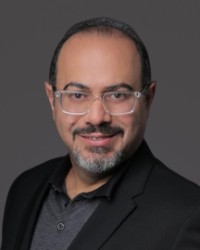



Al Tamimi & Company has an Innovation, Patents & Industrial Property (3IP) practice which is recognised as one of the foremost innovation and IP practices focusing on technology and innovation in the MENA region and ranked Tier 1 by Chambers. With a multidisciplinary team of lawyers, patent attorneys, scientists, technical experts and business consultants, the firm provides comprehensive IP, innovation and commercial advice to clients across more than 60 countries. Led by Ahmad Salah, its Innovation, Patents & Industrial Property (3IP) practice delivers an integrated service model that combines legal, technical and commercial expertise to support the full innovation lifecycle. The team is widely recognised for managing complex trade mark portfolios, advising on high-value patent matters, and leading IP enforcement and anti-counterfeiting actions across the region. Supported by the Middle East’s largest regional legal network, it leverages technology and deep regulatory relationships to deliver strategic, efficient and commercially focused solutions.
1. Legal Framework for AI and IP
1.1 AI-Specific or Sui Generis IP Rules
There are no specific AI laws in the UAE with respect to IP protection – the existing IP law is considered sufficient to handle matters regarding either AI-derived inventions or inventions directed towards AI technology. With respect to the former, AI cannot be recognised as an inventor; the natural person(s) who used the AI to arrive at the invention would be considered the inventor(s). For the latter, the UAE legislates that computer programs and mental acts are exceptions from patentability. In practice, so long as there is a tangible technical output from the AI invention, the likelihood of falling foul of the subject matter exclusion is relatively low.
In Saudi Arabia, there is no explicit exclusion to the patentability of software.
Generally, if the subject matter is found not excluded in the USA or Europe, it will most likely be found not excluded in the UAE or Saudi Arabia.
1.2 International and Regional Frameworks
There is a memorandum of understanding (MoU) between the UAE and the United States Patent and Trademark Office (USPTO), which was signed by H.E. Dr Abdulrahman Hassan Al Muaini, Assistant Undersecretary for Intellectual Property Sector at the Ministry of Economy; and Kathi Vidal, Under Secretary of Commerce for Intellectual Property and Director of the USPTO, in the presence of H.E. Abdulla Bin Touq Al Marri, Minister of Economy, on 22 May 2024. This MoU supports applicants that hold US patents having the equivalent rights granted in the UAE. As such, a patent directed towards an AI invention that is indicated as allowable in the USA should have its corresponding UAE patent granted.
1.3 Definitions and Classification
There are not yet specific legal definitions enshrined in law or regulatory guidance for AI systems, generative AI, foundation models, general-purpose AI models, computer-generated works, AI-assisted inventions, training data, weights, prompts or outputs defined for IP purposes.
1.4 Courts, IP Offices and Regulators
The UAE recently established the new Artificial Intelligence and Data Authority. This consolidates under a single federal mandate the functions previously carried out by three separate entities: the Office of Artificial Intelligence, Digital Economy and Remote Work Applications; the Digital Government Sector at the Telecommunications and Digital Government Regulatory Authority (TDRA); and the UAE Data Office. The Artificial Intelligence and Data Authority will not be responsible for enforcing the law, but will be tasked with shaping national policy, legislation and strategy relating to AI. Nevertheless, the existence of a personal data protection law (Federal Decree-Law No. 45 of 2021 on the Protection of Personal Data) indicates support for the protection of personal data, which would include protection against non-consensual AI usage. At the time of writing, the Executive Regulations thereof have not yet been issued, which leaves a degree of uncertainty.
For the enforcement of IP rights (which would include AI-related IP rights), civil litigation can take place in either the local civil court of the respective Emirate, or in an applicable free-zone court such as those of the Dubai International Financial Centre (DIFC) or Abu Dhabi Global Market (ADGM). In the absence of one of those, the Federal Civil Court will have jurisdiction. These courts will typically not test patent validity, which would be separately assessed by the Federal Courts in Abu Dhabi. There is also a potential criminal angle to IP infringement, which would be processed initially at the Court of First Instance.
2. Protecting AI Systems, Models and Data
2.1 Protectable Elements of AI Systems
As is typical with most jurisdictions, any AI code (and other literary or artistic works such as prompts or architecture) itself will be protected automatically by copyright. It is also possible to register copyright in the UAE, which, although it does not grant additional protections to the work itself, does make potential enforcement easier by having a documented work and lodge date.
The UAE does not have explicit database rights (as in some European countries for example); however, compilations of data would be protected under existing copyright law provided that the selection or arrangement is as a result of an author’s intellectual creation.
Aspects of AI systems are generally patentable so long as they result in a technical improvement in a field of technology. This might include model architecture, specific model weights/parameters, specific processing of training data, configurations, orchestration layers or fine-tuning materials, for example. So long as the framing of the technology is such that a technical improvement is demonstrated (more accurate AI, faster AI, better prediction, etc), the barrier to eligibility should be relatively low. While there are no explicit lists or guidance on this, our experience is that the UAE is more lenient when compared with Europe or the USPTO.
2.2 Copyright in Software and Model-Related Materials
Federal Decree-Law No. 38 of 2021 on Copyrights and Neighbouring Rights (“Copyright Decree-Law”) explicitly provides protection for “written Works”, “smart applications, software and software applications, databases and similar Works”, where “Work” is defined as any creative product in the field of letters, arts or science, of whatever type, expression method, significance or purpose.
Examples such as model architecture descriptions, prompts, prompt libraries, system instructions, model weights, or outputs of intermediate computational processes would fall within this category. One should be wary of intermediate computational outputs since copyright works require a human author – some human involvement in arriving at the intermediate work would be needed to fulfil the authorship requirement and thus be eligible for copyright protection.
2.3 Patent Protection for AI Technologies
See 1.1 AI-Specific or Sui Generis IP Rules, 1.2 International and Regional Frameworks and 2.1 Protectable Elements of AI Systems.
As in most jurisdictions, patents in the UAE have to be sufficiently disclosed to enable the person skilled in the art to put the claimed invention into practice. The level of disclosure required will naturally be contingent on what is being claimed. For example, if a specific data structure or dataset is required, some degree of disclosure that would enable the skilled person to arrive at an appropriate dataset should be made. It is not essential to disclose the data itself in the patent application.
2.4 Trade Secrets and Confidential Information
The approach to trade secrets in the UAE is generally quite similar to the approach in Europe. The three criteria for information to be classified as “undisclosed information” (aka trade secrets) are:
- the information must be secret;
- it must have commercial value because it is secret; and
- reasonable steps must have been taken to maintain its secrecy.
Examples of reasonable steps include secure locations, restricting access on a “need to know” basis, physical access control including visitor access policy, employee training and contracts, third-party contracts, and digital security such as encryption.
AI models, weights, datasets, prompts, system instructions, evaluation data and deployment know-how, including agent workflows, tool permissions and memory stores, could be considered for trade secret protection so long as the criteria are fulfilled.
Specifically with software inventions, there is a risk of reverse engineering, which would cause aspects of AI models such as workflows or algorithms to become derived and no longer secret. Technical safeguards such as rate limiting or bot detection to prevent scraping could be used to combat this. Additionally, it may be possible to insert a “no reverse engineering” clause into software user agreements, in combination with software/data encryption, which could demonstrate deliberate breach of agreement if the information is then derived by a third party.
When disclosure to the government is necessary – for regulatory or market approvals, for example – government authorities that receive the undisclosed information must protect it against disclosure and unfair commercial use, for the period from the date of its submission until it is no longer confidential, or for a period not exceeding five years, whichever is shorter.
2.5 Data, Database and Dataset Protection
See 2.1 Protectable Elements of AI Systems, 2.2 Copyright in Software and Model-Related Materials and 2.4 Trade Secrets and Confidential Information.
3. Training Data and Model Development
3.1 Use of Copyright Works for Training
The UAE does not have explicit legislation that deals with the use of copyright works for AI training.
The main source of legislation that would currently govern this is the Copyright Decree-Law. Article 7 states that only the Author may authorise the Work to be used in “any manner whatsoever”, and the list of uses includes “downloading, electronic storage” and “making the same available via computers, information networks, communication networks and other means”. This means that, on the face of it, use of copyright works for AI training would be in breach of copyright.
Recently, Saudi Arabia issued Royal Decree No. (M/169) Approving the Copyright Law, which does legislate specifically on the use of copyrighted material for AI training. More specifically, Article 26(4) clarifies that reproduction of the original work for the purposes of developing AI products and algorithms may be done without the author’s consent or compensation. This is provided that the work has been lawfully published, that the acquisition of the original copy is lawful, and that the reproduction is solely limited for this purpose.
Potential exceptions are discussed in 3.2 Text and Data Mining and Other Exceptions.
3.2 Text and Data Mining and Other Exceptions
There is no legislation in the UAE that provides a specific exception to copyright for AI training.
The Copyright Decree-Law does provide exceptions and limits to copyright protection in Article 22. However, this Article is caveated with the stipulation that the author may not prevent use unless that use would be in contradiction to the normal utilisation of the work or would cause harm to lawful interests.
Additionally, single copies are permitted for personal and non-commercial/professional use. Single copies are also allowed with acknowledgement of a documentation or preservation house, libraries or documentation centres, which do not seek direct or indirect profit, and only when used for preserving/recovering or upon request of a natural person for use in research or study.
3.3 Licensing of Training Content
Training content may be licensed in the usual manner to models so long as the rights of the authors are not breached (ie, they consent directly or indirectly by registering their work with a licensing house).
A compulsory licence may be requested by any person, without the author’s consent. However, the licence would be issued based on a reasoned decision by the Ministry of Economy indicating a time and place of utilisation and the fair consideration payable to the author. The licence would also only be issued if the purpose of granting such licence is limited to meeting the needs of education or the needs of public libraries/archiving houses. It is unlikely that use as training data would be granted a compulsory licence under the current law.
3.4 Rights Reservations and Opt-Outs
See 1.4 Courts, IP Offices and Regulators.
Any data that may be considered to be “Personal Data” is forbidden from “processing” without the consent of the owner. Processing is defined as any operation or set of operations performed on Personal Data using any electronic means. There are exceptions to this; however, the exceptions are limited to processing for protection of the person, public health or public interest. Requirement of consent of the Personal Data owner is the default.
Given that the default position for copyright holders is that use for training would be in breach of copyright, opt-outs or machine-readable notices would not be required (see 3.1 Use of Copyright Works for Training to 3.3 Licensing of Training Content). You may still use them to strengthen your legal position, to demonstrate deliberate copying despite notice.
3.5 Provenance, Transparency and Cross-Border Training
See 2.4 Trade Secrets and Confidential Information and 3.1 Use of Copyright Works for Training to 3.4 Rights Reservations and Opt-Outs.
Typically, the place of infringement is determined by the location of the developer or the location of the server/company that is scraping and processing the data.
4. Infringement by Model Developers and Model Providers
4.1 Direct Infringement in Training and Development
To prove direct infringement, a claimant must show that the developer or provider carried out one or more “restricted acts” – actions that only the rights-holder is allowed to do – without the rights-holder’s permission. There is no AI-specific legislation in any GCC jurisdiction, so the analysis falls under existing copyright and IP statutes.
Direct infringement occurs when someone carries out a restricted act without the rights-holder’s consent. In the AI context, the relevant acts are:
- Copying/reproduction: Training an AI model typically involves copying protected works into a dataset. This act of reproduction is a restricted act under copyright laws.
- Adaptation: If training transforms a work in a way that creates a derivative version (for example, translating or substantially reworking it), this may constitute adaptation.
- Fine-tuning: This involves further copying and processing of works, which again constitutes reproduction under the law.
- Communication to the public: If the AI system’s outputs incorporate protected material and are made available online to the public, this may infringe the communication right.
- Extraction (database rights): Under UAE law, compilations that constitute intellectual creations are protected. Extracting substantial parts of a protected database for AI training could infringe the compiler’s rights.
Under the law, an AI system has no legal personality – it cannot be sued or held legally responsible. The developer or operator who sets the AI system in motion is the person likely to bear liability for any infringing acts the system performs automatically. This includes AI agents that autonomously retrieve, copy or process protected content. The UAE operates a civil law system where courts rely on statutory text and scholarly commentary rather than binding precedent, meaning future cases will be decided on first principles rather than established case law.
4.2 Model Weights, Memorisation and Substantial Similarity
Model weights (also called parameters) are numerical values learned during the training process. They encode statistical patterns derived from training data but are not human-readable reproductions of any particular work. Embeddings are similar numerical representations that capture relationships between words or concepts.
Under the Copyright Decree-Law, a “copy” or “reproduction” generally requires fixation of a work in a material form that allows the work to be perceived – in other words, a person must be able to read, see or hear the work in the copy. Model weights are vast arrays of numbers that do not, on their own, allow anyone to perceive the original work.
If an AI model’s output reproduces text, images or other content that is substantially similar to a protected work, that output could constitute infringement (unauthorised reproduction or adaptation). This is sometimes called “regurgitation” – where the model effectively memorises and replays portions of its training data.
The key question would be: does the output reproduce the essential or distinctive elements of the original work? If so, it is likely infringing regardless of how the model internally stores the information.
“Substantial similarity” is not a formal legal term in UAE civil law (unlike in US copyright law), but courts apply an equivalent concept. They assess whether the essential or distinctive creative elements of a work have been taken. The focus is on qualitative similarity – ie, has the creative expression been reproduced? – rather than a purely quantitative measure such as a word count.
UAE courts may consider whether the portion taken from a work is qualitatively or quantitatively significant. There is no bright-line rule (eg, no fixed percentage threshold). A small but qualitatively important extract – such as the recognisable “hook” of a song or a distinctive passage from a text – could still constitute infringement.
4.3 Secondary, Authorisation and Intermediary Liability
UAE civil-law jurisdictions do not have the common-law doctrines of “authorisation liability” or “vicarious liability” as standalone concepts. Instead, secondary liability is based on general tort principles found in civil codes.
A model provider may face liability if:
- they knew or should have known their system would be used for infringing purposes (knowledge requirement);
- they failed to implement reasonable safeguards to prevent infringement (fault through omission);
- they actively induced or encouraged users to infringe (procurement or inducement); or
- they exercised control over the infringing activity and benefited from it.
For AI agents or applications that autonomously select tools, retrieve content or publish outputs without human approval, the model provider is the most likely party to bear responsibility. Under UAE law, the system itself has no legal personality, so liability flows to the entity that deployed it and could have prevented the infringement.
4.4 Trade Secret and Confidential Data Misuse
Trade secrets – commercially valuable information kept secret through reasonable protective measures – are protected in all GCC jurisdictions.
- Training on confidential data: If confidential materials are used to train or fine-tune an AI model without authorisation, this could constitute misappropriation of trade secrets.
- Memorisation and output disclosure: If an AI model reproduces or reveals confidential information when prompted (for example, outputting proprietary code or business data it encountered during training), this could be a further act of unauthorised disclosure.
- Confidential documents from a connected database: If an AI system retrieves confidential documents from a connected database and includes them in outputs, the operator may be liable for unauthorised disclosure.
- Confidential information from memory: If an AI agent retrieves confidential information via tool calls or from memory/cache and discloses it to unauthorised parties, the developer or operator may be liable.
Non-disclosure agreements and confidentiality clauses are widely used and strictly enforced. Using confidential data to train AI in breach of a contractual obligation may give rise to breach of contract claims.
4.5 Defences and Limitations
GCC jurisdictions do not have a “fair use” defence (as in US law) or “fair dealing” defence (as in UK or Australian law). There is no broad, flexible defence that allows copying for transformative or socially beneficial purposes. This means the defences available in the GCC countries are significantly narrower than those in other major jurisdictions.
The Copyright Decree-Law (Article 22) provides a limited, exhaustive list of exceptions:
- Personal use: Copying for private, non-commercial use. This is unlikely to apply to commercial AI training operations.
- Quotation for criticism or review: Permits limited quotation with attribution. Unlikely to cover bulk copying for training.
- Educational use: Narrowly construed. Commercial AI development would not qualify.
- News reporting: Limited to current events reporting.
- Incidental inclusion: Where a work appears incidentally in another work.
Claims must be brought within statutory time limits. In the UAE, copyright infringement claims generally have a three-year limitation period under Civil Code tort provisions. After these periods expire, claims become time-barred regardless of their merit.
5. AI Outputs, User Liability and Deployment Risk
5.1 Copyright Infringement in Outputs
The UAE’s copyright regime is governed by the Copyright Decree-Law, which protects “any original work in the areas of literature, arts or science, whatever its description, form of expression, significance or purpose”. The UAE does not have a specific IP law for AI, but its extensive IP legislation applies to AI-related activities, including the protection of outputs and use of third-party IP in AI systems.
- An AI output that reproduces a substantial part of a UAE-protected work would infringe the economic rights of the copyright holder under the Copyright Decree-Law. The rights-holder may file a lawsuit upon infringement and seek compensation.
- If a user inputs protected expression into an AI tool and the tool reproduces it in the output, this would fall squarely within the UAE’s prohibition against unlawful reproduction.
- As with the broader GCC position, mere imitation of style without literal copying of protected expression is unlikely to infringe UAE copyright, as the law protects original expression rather than ideas or methods. The UAE has no case law directly addressing AI-generated stylistic imitation.
In the USA, an AI output that is “substantially similar” to a copyrighted work used in training can constitute infringement, regardless of whether the copying was intentional. The user who prompts the AI may be directly liable, and the AI company may face vicarious infringement claims. In the EU, reproduction of the whole or a substantial part of a work requires authorisation from the rights-holder. Research confirms that generative AI systems can memorise and reproduce portions of training data verbatim.
Where the user supplies copyrighted material as a prompt, this is a clear case of directed copying. The user is likely directly liable as the person who caused the infringing reproduction.
5.2 Unwitting User Infringement and Prompting
UAE copyright law generally treats infringement as a strict-liability matter with respect to the act of copying – meaning that intent is not a prerequisite for a finding of infringement itself, though it may be relevant to criminal penalties and damages.
- Intent and knowledge: Knowledge or intent typically affects the level of criminal penalty rather than the question of whether infringement has occurred.
- Prompt design: A user who designs prompts specifically to replicate a known work bears greater culpability, but even a user who unknowingly generates an infringing output could face civil liability for its use or commercialisation.
- Human review: GCC laws do not currently impose a formal duty to review AI outputs for potential infringement, but failure to exercise due diligence may affect damages or equitable relief.
- Degree of similarity: A closer resemblance to a known work strengthens the case for infringement and may create an inference of derivation.
Contractual indemnities from an AI provider would not create a defence to infringement under GCC law but could allocate financial liability between the parties. Large-scale commercial use of infringing material may attract heightened penalties and damages under GCC IP enforcement regimes.
5.3 Trade Mark, Passing Off and Brand-Related Outputs
Federal Decree-Law No. 36 of 2021 on Trademarks (“Trademarks Decree-Law”) protects distinctive marks including names, logos, figures, sounds and smells.
- AI-generated outputs using third-party marks: If an AI tool generates marketing materials, logos or content that incorporates UAE-registered marks without authorisation, the user deploying those outputs commercially could face liability under the Trademarks Decree-Law.
- False endorsement and advertising: Federal Decree-Law No. 34 of 2021 on Combating Rumours and Cybercrimes (“Anti-Cybercrime Decree-Law”) mandates that IT systems prevent the spread of false information. AI-generated content that falsely suggests celebrity endorsement or brand association could engage both trade mark and cybercrime provisions.
- Well-known marks: The UAE provides enhanced protection for well-known marks, extending the protection against their use to use on dissimilar goods.
Trade mark infringement arises when use of a mark in commerce creates a likelihood of confusion as to origin, sponsorship or affiliation. AI platforms can generate logos, slogans and marketing materials that are confusingly similar to existing marks – creating infringement risk for the user even without intent.
- Dilution risks: Even where there is no likelihood of confusion, AI-generated content may dilute famous marks through blurring (weakening distinctiveness) or tarnishment (harming reputation). Unlike infringement, dilution does not require a likelihood of confusion.
- Passing off and unfair competition: In common-law jurisdictions, passing off requires misrepresentation, goodwill and damage. AI-generated content that misleadingly suggests association with a third party’s brand could ground such claims. In civil-law systems, unfair competition doctrines serve a similar function.
- Character merchandising and personality rights: Where AI outputs replicate celebrity likenesses, voices or other personal indicia, claims may arise under personality rights, right of publicity (USA), image rights (EU/civil law) or unfair competition laws.
5.4 Patent, Design and Product-Related Infringement
GCC states protect industrial property under national patent and design laws (in the UAE, Federal Law No. 11 of 2021 on the Regulation and Protection of Industrial Property Rights (“Industrial Property Law”)). Patents are granted for inventions meeting the requirements of novelty, inventive step and industrial applicability. Industrial designs are also registrable.
- Product designs: If an AI system generates a product design that falls within the claims of a registered design or patent, manufacturing or commercialising that design could constitute infringement.
- Technical instructions and processes: AI-generated manufacturing parameters or technical processes that practise a patented method could give rise to direct infringement by the user who implements them. The AI developer could face indirect infringement claims if their tool is designed to facilitate practising the patented method.
- Software code: Software as such may have limited patent protection in GCC states, but where software implements a patented process, its generation and deployment could infringe.
- Chemical/biological candidates: If an AI system proposes a compound or sequence covered by an existing patent, synthesising or using it commercially could infringe.
Under the Industrial Property Law, patent holders enjoy exclusive rights for 20 years from filing. The UAE recently entered into an Accelerated Patent Grant Agreement with the USPTO (July 2025), enhancing patent protection for innovators.
- Direct infringement: A user who manufactures, sells or uses a product embodying a patented invention – even if that product was designed by an AI – commits direct infringement.
- Indirect infringement: While the Industrial Property Law does not have as developed a doctrine of contributory or indirect infringement as common-law jurisdictions, liability for providing false documents or counterfeiting protected inventions is established.
- AI as inventor: The UAE (consistent with global trends following the DABUS decisions) does not recognise AI as an inventor for patent purposes. Only natural persons can be named as inventors.
5.5 Agentic AI, Tool Use and Autonomous Acts
GCC legal systems do not currently recognise AI as possessing legal personality, meaning the AI itself cannot bear liability. Liability for harm must be traced to a natural or legal person – whether the developer, deployer or user.
- Who bears liability: Under UAE civil codes (which are broadly based on civil-law principles of fault-based liability and, in some cases, strict liability for things under one’s custody), the deployer or operator of an AI system that causes harm would likely bear primary responsibility, as the person exercising control over the system.
- Scraping and retrieval: An AI agent that autonomously scrapes or retrieves copyright-protected content from the internet would expose its deployer to infringement liability under applicable UAE copyright laws (the Copyright Decree-Law).
- Tool and API use: If an AI agent uses third-party software tools or application programming interfaces (APIs) in ways that exceed the licence terms, the deployer who authorised the agent’s activities would bear contractual and potentially tortious liability.
- Publishing code or content: The deployer who releases an AI-generated work to the public without verifying clearance takes on the risk of infringement claims.
The UAE’s Civil Transactions Law establishes liability for harm caused by negligence, which could apply to AI systems whose design or oversight is deemed negligent.
- Deployer liability: Under UAE law, the entity that deploys an agentic AI system retains responsibility for that system’s actions. The system is treated as a tool or instrument under the deployer’s control, not as a separate legal person.
- Developer liability: If the AI system’s design is inherently prone to causing IP infringement (eg, it systematically scrapes protected content without authorisation), the developer may face product liability or negligence claims under general civil-law principles.
6. Creation, Authorship, Invention and Ownership
6.1 Human Authorship and Copyright Protection
UAE copyright protection is built around an “author” and an “innovative” work in the fields of literature, arts or science, rather than around machine output as such. The UAE rules protect expression, but they do not protect mere ideas, procedures, working methods, mathematical concepts, abstract principles or facts, except where those things are expressed in an innovative form.
For AI-assisted outputs, the safest view is that copyright can protect the human-created parts of the work, but not the parts that are generated by AI without meaningful human creative control. A simple prompt such as “make a futuristic city image” is likely closer to an idea or instruction than protected expression, because UAE law does not protect ideas or working methods as such. A detailed prompt may itself be protected as a literary work if it is sufficiently original or innovative, but that does not automatically mean the AI output is fully protected as the user’s expression.
Selection and arrangement can matter under UAE law, because compilations, arrangements and comparable effort can be protected where the selection or arrangement is innovative. Therefore, a person who reviews many AI outputs, selects particular outputs for creative reasons, arranges them into a coherent article, image set, video, database or campaign, and adds original structure may have protection in that human selection, arrangement and added expression.
Editing is usually stronger evidence of human authorship than merely pressing “generate”, because the edited wording, composition, sequencing, visual choices or other expressive changes are human contributions. Iterative direction can also support human authorship where the human uses the AI as a tool and makes the expressive decisions, but it is weaker where the human merely accepts whatever the system produces.
Using reference materials is not automatically unlawful, but copying protected expressive elements from existing works, or making an adaptation of them, can require permission from the relevant rights-holder. Using unprotected ideas, facts, styles or general concepts is different, because UAE copyright does not protect ideas, procedures, working methods, abstract principles or facts as such.
For agentic systems, the key question is still whether a human made creative choices that appear in the final output. Human-designed prompt chaining, prompt decomposition or iterative instructions may help show human contribution if they determine the expressive form of the final work. Automated prompt chaining, autonomous task planning or automated selection of intermediate outputs may reduce the scope of human authorship if the system, rather than the human, made the material expressive choices.
6.2 Computer-Generated or AI-Generated Works
The UAE does not currently recognise a clear separate copyright-style right for purely computer-generated or AI-generated works where there is no human author. Current commentary on UAE law notes that the Copyright Decree-Law is human-centred and that works created solely by AI may not qualify for copyright protection.
If a work is protected because there is sufficient human or legally recognised authorship, ordinary UAE copyright rules apply. For a natural-person author, economic rights generally last for the author’s life plus 50 years from the first day of the calendar year after death. For joint works, the 50-year period runs after the death of the last surviving author. For certain collective works where the author is a legal person, protection can run for 50 years from the first publication.
The unresolved issue is what happens when an AI output is commercially valuable but the human input is minimal. In that case, UAE law does not yet provide detailed AI-specific guidance, so businesses should document human contributions, contractual ownership and licences rather than assume that the AI output itself is protected.
6.3 Joint Authorship, Derivative Works and Adaptations
If more than one person contributes to a joint work and the shares cannot be separated, UAE law treats them as equal joint authors unless they agree otherwise in writing. In that situation, no joint author may exercise the copyright individually without prior agreement. An AI system should not be treated as a joint author under the current human-centred copyright approach.
Derivative works can be protected in the UAE, but that protection does not prejudice the rights in the original work from which the derivative work was made. This means that if an AI output closely adapts or transforms a protected image, text, song, codebase or dataset, the person using the output may still need permission from the owner of the earlier work.
If the AI output uses only unprotected ideas, facts, methods or general concepts, copyright permission is less likely to be needed for those elements alone. If the output reproduces protected expression, selection, arrangement or an innovative compilation from existing material, permission may be required.
Ownership shares should be determined first by written contract. UAE law allows an author to transfer or license economic rights, but the transfer or licence should be in writing and should specify the relevant right, purpose, duration and place of use. Rights not expressly assigned remain with the author.
For employment and commissioned-work situations, UAE law can allocate rights to the person for whose benefit the work was created or to the employer in relevant circumstances, unless otherwise agreed. If an employee creates a work unrelated to the employer’s business and does not use the employer’s experience, information, tools or materials, the employee may retain the copyright.
6.4 Registration, Disclosure and Enforcement of AI-Assisted Works
Copyright arises automatically in the UAE, and registration is not required for copyright to exist. Registration with the Ministry of Economy is available and is commonly used as evidence of ownership. The copyright registration request may be submitted by the author, the rights-holder or an authorised agent with the required documents.
The UAE does not seem to put forward a specific rule requiring applicants to disclose that AI was used in creating a copyright work. However, the applicant must still identify the correct author or rights-holder and provide accurate supporting information. If required copyright registration data or supporting documents are not completed within 60 days after notification, the application may be automatically cancelled.
For patents, the application must identify the applicant, inventor and registration agent, if any. A patent or utility certificate application may be filed by the inventor, a registration agent or an assignee of invention rights. If the applicant is not the inventor, UAE practice requires assignment documentation.
There is no specific rule requiring disclosure that AI assisted the invention process. Even so, AI involvement should be disclosed where it affects inventorship, entitlement, enablement, prior art, grace-period reliance or the accuracy of the application record. If a person who is not entitled files for a patent or utility certificate, the rights-holder may ask the Ministry to transfer the application, patent or utility certificate.
For designs, UAE industrial design applications are filed through the relevant UAE system and undergo examination under the industrial property framework. The sources reviewed do not identify any UAE-specific AI disclosure requirement for industrial designs.
6.5 Patent Inventorship and Entitlement
An AI system should not be named as an inventor under the current UAE patent framework. Commentary focused on UAE law states that the UAE legislature has not addressed AI-created inventions and that it is legally inconceivable under current law for an AI system to qualify as an inventor or patent holder.
Under UAE patent law, an invention is an innovative idea conceived by an inventor in a technical field, relating to a product, a manufacturing method or both, and leading to a new addition or solution to a technical problem. A patent is granted for a new invention arising from an innovative idea or innovative improvement that involves an inventive step and is industrially applicable.
- For AI-assisted inventions, the named human inventor should be the person who made a real inventive contribution to the claimed technical solution. UAE law states that a person is not a joint inventor if their effort is limited to assisting execution of the invention without contributing to an inventive step. Therefore, merely running an AI tool or following an AI-generated instruction may be insufficient if the human did not contribute to the inventive step.
- If an AI agent proposes experiments, selects parameters or generates candidate solutions, the human inventorship analysis should focus on who identified the technical problem, made the inventive technical choices, selected or modified the candidate for technical reasons, interpreted the results and contributed to the claimed solution. If the human contribution is only administrative or mechanical, inventorship may be vulnerable.
Entitlement generally starts with the inventor or the inventor’s legal successor, and joint inventors own the right jointly. If two or more persons independently make the same invention, the patent or utility certificate belongs to the first to file or first to claim priority, if the legal requirements are met. If an invention is made in execution of an employment contract or similar arrangement, the right to the patent belongs to the employer unless the contract says otherwise. A patent application filed by an employee within two years after leaving employment is deemed to have been made during employment.
For contractors, researchers and collaborators, the practical answer is to use clear written IP ownership and assignment terms before the AI-assisted R&D work begins. This is especially important because UAE practice requires assignment documents where the patent applicant is not the inventor.
6.6 Inventive Step, Prior Art and AI-Assisted R&D
UAE law does not currently state that using AI changes the legal test for inventive step. The UAE test remains whether the invention is new, involves an inventive step and is industrially applicable. An invention involves an inventive step if it is not obvious to a person with ordinary skills in the art in light of the prior art.
The availability of AI tools may become relevant as evidence of what was routine or obvious in a technical field, but there still does not exist a UAE rule automatically treating AI-generated solutions as obvious. Applicants should therefore focus on the concrete technical contribution, rather than stating only that AI was used. If the claimed invention is merely the obvious use of AI for a known task, it may face inventive-step objections.
AI-assisted R&D does not remove the need for an enabling patent disclosure. A UAE patent application should include claims, an abstract, drawings if applicable and a detailed description enabling a skilled person to reproduce the invention. Synthetic datasets, AI-generated experimental results or automatically generated technical documents should therefore be supported by sufficient technical detail for the skilled person to understand and reproduce the invention.
Prior art in the UAE includes public disclosure before the filing or priority date, whether by writing, oral disclosure, use or another means by which knowledge of the invention is made available. Public AI-generated disclosures, synthetic datasets or automatically generated technical documents can therefore be prior art if they publicly disclose the relevant technical information before the filing or priority date.
The UAE has a 12-month grace period for disclosures made by the inventor or by someone who obtained the information from the inventor. An unrelated AI-generated publication or automatically generated disclosure by a third party would not necessarily fall within that grace period unless it came from the inventor’s information.
7. Other IP and Related Rights
7.1 Designs, Trade Dress and Product Appearance
AI-generated product designs, graphical user interfaces (GUIs) and icons may in principle be registered as industrial designs, provided that they satisfy the novelty requirement.
Protection grants the owner the right to prevent third parties from using the industrial design in making any product, importing any product related to it, possessing it for commercial use, or offering it for sale. Any 3D trade mark – and by analogy any design – consisting of a shape that results from the nature of the commodities or is required for achieving a technical result, where there are no particular distinguishing elements, is excluded from protection.
For GUIs, icons, avatars and virtual goods, copyright protection is available if the work meets the innovation threshold. Works protected under the Copyright Decree-Law include smart applications, software, databases and similar works, provided that the author has created a work with a sense of authenticity and distinctiveness. The law defines an “Author” as a person who creates a work, and “Innovation” as the attribute that grants the work authenticity and distinctiveness. Purely AI-generated outputs – in the absence of meaningful human creative choices – are unlikely to satisfy the authorship requirement. Where an employee uses the employer’s tools or expertise to create a work mandated by the employer, the author’s economic rights are attributed to the employer, which is the most likely basis for corporate ownership of AI-assisted designs.
7.2 Trade Mark Registration and AI-Created Brand Assets
Under the Trademarks Decree-Law, a trade mark may consist of names, words, signatures, letters, symbols, figures, addresses, stamps, drawings, photos, inscriptions, packaging, figurative elements, shapes, a colour, a set of colours, or any combination thereof, as well as 3D marks, hologram marks, or any other mark used to distinguish the commodities or services of a particular organisation; objects related to sound and smell may also be classified as a trade mark. This broad definition means that AI-generated names, logos, slogans, sounds and motion marks are legally capable of registration, as the law places no requirement on human authorship of the mark itself – distinctiveness is the operative test.
A mark that lacks any distinctive feature, or that is made up of details that are merely the designation commonly given to commodities and services, familiar drawings, or normal images of commodities and services, may not be registered. Marks that involve copying, imitation, translation or vocal translation of a third party’s famous trade mark, intended for identical or similar goods or services, are also excluded. These absolute grounds for refusal apply equally to AI-generated brand assets.
Any natural or legal person is entitled to have a trade mark registered. Where a company directs an AI system to generate brand assets and then selects and refines the output for commercial use, it may apply for registration in its own name. Whoever registers a trade mark is considered its owner.
7.3 Moral Rights, Attribution and Integrity
For AI-assisted works where a human author makes meaningful creative contributions, that human retains full moral rights. The AI tool should be treated as an instrument, not a co-author.
Where AI outputs merely replicate a living creator’s style, UAE copyright law offers no direct protection – ideas, procedures, mathematical concepts and principles are expressly excluded from protection, meaning style per se is not protectable. However, if consumers are misled into believing that an AI-generated work originated from a named human creator, claims under consumer protection or unfair competition law may arise independently of copyright.
Performers and their universal successors enjoy moral rights that are not subject to assignment or prescription, including the right to ascribe the performance to themselves, whether live or recorded, and the right to prevent any change, distortion, mutilation or modification in their performance that would damage their reputation. Where an AI system generates a synthetic performance or voice clone attributed to a real performer, or modifies a genuine performance in a reputationally harmful manner, these provisions provide a direct cause of action.
7.4 Personality, Publicity, Performers’ and Neighbouring Rights
The UAE does not have a standalone publicity rights statute. Protection against unauthorised AI use of a person’s name, image, likeness, voice or digital replica is achieved through a combination of overlapping frameworks. Performers enjoy exclusive economic rights, including the rights to transmit and communicate their unfixed performance to the public, to fix their performance on a phonogram or audiovisual fixation, to copy their fixed performance, and to make their phonograms available to the public via wired or wireless means. Recording a live performance on a phonogram, renting it out for commercial returns, or transmitting the performance without consent of the rights-holder constitutes a prohibited utilisation.
Where an agreement is made with a person to capture a photo or make audio or video recordings, that person may not keep, show or publish the original or copies without authorisation; and the publication or circulation of photos must not offend the person’s honour or reputation. AI-generated deepfakes or synthetic likenesses distributed without consent may engage these provisions. These rights are treated as a combination of IP rights (performers’ neighbouring rights), privacy/dignitary rights and, where technology is used to infringe privacy, criminal law protections under the Anti-Cybercrime Decree-Law. There is no single unified right of publicity; claimants must typically plead across multiple legal bases.
8. Enforcement, Evidence and Remedies
8.1 Venue
Judicial Courts
AI and IP disputes in the UAE are handled through the existing court hierarchy rather than a specialist AI tribunal. The “Competent Court” under the Copyright Decree-Law is the Federal Court of Appeal, while the “Civil Court” is the federal or local court of first instance. The ADGMDIFC each operate independent common-law court systems with jurisdiction over disputes arising in those free zones. Their English-language proceedings and common-law jurisprudence make them particularly suited for complex AI and IP disputes. Arbitration under Federal Law No. 6 of 2018 on Arbitration is also available, and the courts of the UAE, as a member of the New York Convention, will recognise and enforce foreign arbitral awards subject to standard procedural requirements.
Administrative Enforcement Authorities
Pursuant to the Copyright Decree-Law (Article 47) and the Trademarks Decree-Law (Article 55), the Ministry of Economy supervises and controls the implementation of those Decree-Laws and detects crimes and violations that occur in violation of their provisions; by virtue of a resolution of the Cabinet, at the proposal of the Minister of Economy, such functions may be delegated to any competent local authorities.
For industrial property, the Ministry of Economy’s employees designated by a resolution of the Minister of Justice, in agreement with the Minister of Economy, act as law enforcement officers to identify violations of the Industrial Property Law and its Executive Regulations and resolutions issued in implementation thereof, within their respective competence.
Administrative Grievance Committees
Pursuant to the Copyright Decree-Law, the Trademarks Decree-Law and the Industrial Property Law, three dedicated grievance committees are established respectively for copyright and neighbouring rights, trade mark rights and industrial property rights. The Grievance Committee of Copyright and Neighbouring Rights and the Trademark Grievance Committee are both created at the Ministry of Economy. The industrial property rights grievance committee is formed by a decision of the Cabinet and chaired by a judge nominated by the Minister of Justice.
8.2 Evidence, Disclosure and Confidentiality
UAE civil procedure does not provide a US-style pre-trial discovery mechanism. Courts regularly appoint independent technical experts to assess complex AI-related questions such as training data provenance, model similarity and source code analysis.
Under the Trademarks Decree-Law, a rights-holder may apply for precautionary measures from the judge of summary matters, including conducting a detailed description of the infringement and the goods involved, imposing attachment over materials and tools used, and preserving any evidence related to the infringement. Equivalent evidence preservation powers exist under the Copyright Decree-Law and Industrial Property Law.
Where parties assert that training data, model weights, source code or evaluation results constitute trade secrets, UAE law affords protection provided that the information meets established criteria. Undisclosed information is protected if it is secret (not generally known or readily accessible), has commercial value because it is secret, and has been subject to reasonable steps by the person in control to keep it secret. There are no UAE-specific rules governing disclosure of AI training data or model logs in IP proceedings; parties must rely on general civil procedure and court discretion. The ADGM and DIFC courts, applying common-law disclosure rules, offer a more structured framework for such evidence.
8.3 Interim and Final Injunctive Relief
- Copyright: Under copyright law, the judge of summary proceedings may order suspension of publication or manufacture, seizure of the original work or copies, and attachment of revenues generated from the infringing publication or show.
- Trade marks: In the event of an actual or potential infringement of any trade mark rights, the rights-holder may apply for a writ on petition from the judge of summary matters at the civil court having jurisdiction. Available measures include a detailed description of the infringement, attachment over materials, tools and proceeds, prevention of infringing goods from entering commercial channels or being exported, and preservation of any evidence related to the infringement.
- Industrial property: In the event of an act of infringement, the owner of the protection title or their licensee may request the court to issue a precautionary seizure order for the invention, industrial design or integrated circuit design, or the establishment or the part thereof using or exploiting any kind of the industrial property in question.
The judge of summary matters may issue an ex parte order without summoning the other party if the delay in issuing the order would likely cause irreparable harm or if there is a risk that evidence will be lost or destroyed; the other party must be notified without delay after the order is issued. UAE law contains no express provision for AI-specific orders such as “stop training”, “delete model weights” or “disable AI outputs”, but the general precautionary framework is adaptable: suspension of infringing AI-generated content, attachment of proceeds, evidence preservation extending to training datasets and server logs, and customs suspension of products incorporating infringing AI-generated designs are all available in principle.
8.4 Monetary Remedies and Cross-Border Enforcement
An author or rights-holder may claim compensation in the event that their moral and economic rights are infringed, in accordance with the general rules. A trade mark owner may, if they sustain harm resulting from the infringement of their rights, file a lawsuit with the Civil Court to claim compensation in accordance with the general rules. UAE law does not establish a statutory damages regime; courts assess compensation on a compensatory basis requiring proof of actual loss. Calculating damages for AI-related infringement – where training may involve millions of works but per-claimant harm is difficult to quantify – presents significant practical challenges. UAE civil-law principles also permit unjust enrichment claims where a defendant profits without legal basis.
Criminal penalties complement civil remedies. Any person infringing moral or economic rights without written permission is liable to imprisonment for not less than two months and/or a fine of not less than AED10,000 and not more than AED100,000. For trade mark offences, a fine of not less than AED100,000 and not more than AED 1 million applies, with potential imprisonment. Industrial property infringement carries a fine of not less than AED100,000 and not more than AED1 million, also with potential imprisonment. The court must order confiscation and destruction of counterfeit copies involved in the crime, confiscate equipment and tools, and may order closure of the establishment for up to six months and publication of the judgment at the convict’s expense.
Industrial property obtained in the UAE is independent of industrial property obtained for the same invention in other states. UAE courts apply UAE law to infringements occurring within the UAE. Foreign judgments may be recognised and enforced in UAE courts subject to the conditions in the UAE Civil Procedure Law and the GCC Convention on Judicial Cooperation, including reciprocity, procedural fairness, public policy compliance and finality. Enforcement through the DIFC or ADGM “gateway” mechanism has become a practical route for cross-border IP enforcement against UAE-based assets.
9. Transactions, Licensing and Commercialisation
9.1 Training Data and Content Licensing
There is no UAE-specific legislative framework for licensing content for AI training, fine-tuning, evaluation or retrieval-augmented generation. Licences must therefore be carefully structured under existing IP and contract law. The author or successor in title may transfer or license economic rights to third parties; for such action to take effect it must be in writing, specifying the right in question, along with the purpose of the utilisation and its duration and place. The author is the owner of all rights not expressly assigned. Licences should therefore enumerate precisely which AI-related activities are covered – initial training, fine-tuning, evaluation, retrieval-augmented generation and agent-generated downstream uses – as any omission reserves those rights to the licensor.
Key commercial terms to address include: scope (specifying permitted models and model versions); exclusivity and remuneration (the author or successor may receive cash or in-kind consideration on the basis of proportional revenue sharing and/or a lump sum); sublicensing; audit rights enabling the licensor to verify compliance with scope restrictions through inspection of training logs and API access records; opt-out and deletion obligations (including commitments to remove content from training datasets and maintain deletion records); and the ownership and permissible uses of downstream AI-generated outputs. Without prejudice to the author’s moral rights, the author may not carry out any action that would impair the utilisation of the right in question.
For software and database content, the licence is governed by the terms and conditions mentioned in or labelled on the software, whether appearing on the package or when the software is installed. Where the AI system operates as an agentic system capable of autonomous content retrieval, the licence should also address permitted tools, logging requirements for tool-call histories, and restrictions on autonomous publication or transaction functions.
10. Emerging Issues and Reform
10.1 Pending Legislation, Regulation and Policy
The UAE has positioned itself as a global leader in AI adoption through the UAE National AI Strategy 2031, which sets out the UAE’s ambition to become the the world’s best-prepared country for AI across all economic sectors. While primarily a policy document, it has driven regulatory activity across multiple sector-specific regulators. As of mid-2026, no comprehensive federal AI law directly addressing AI and IP interaction has been enacted, though the Ministry of Economy has signalled awareness of the tension between existing copyright frameworks and AI-generated content, and amendments or supplementary guidance are anticipated.
The DIFC free zone in Dubai enacted AI-focused data protection regulations in 2023 and tabled corresponding amendments in 2026 governing AI processing activities within its jurisdiction, delivering enhanced regulatory clarity for enterprises operating in the free zone.
For rights-holders, the current legal uncertainty strongly favours proactive contractual management of AI training uses and a careful audit of existing licence agreements to determine whether AI training uses are expressly permitted. For AI developers and users, building comprehensive training data documentation systems now – in anticipation of potential mandatory disclosure requirements – is sound practice regardless of whether such requirements are ultimately introduced.
10.2 International Harmonisation and Divergence
The UAE acceded to the World Intellectual Property Organization (WIPO) in 1975 and participates in WIPO’s ongoing intergovernmental discussions on AI and IP, including questions of AI inventorship, authorship of AI-generated works, and remuneration for AI training uses. The UAE has also acceded to the Paris Convention for the Protection of Industrial Property and is a member of the WTO, ensuring its IP laws conform to TRIPS Agreement minimum standards. The UAE is additionally party to the Beijing Treaty on Audiovisual Performances, which is directly relevant to AI-generated synthetic performances and digital replicas of performers.
The main points of divergence with major jurisdictions are: first, unlike Hong Kong and the UK, which protect computer-generated works even in the absence of a human author, the UAE has not enacted such provisions, creating a protection gap for purely autonomous AI outputs. Second, the UAE has no equivalent of the EU AI Act’s mandatory training data disclosure obligations for providers of general-purpose AI models. Third, the Copyright Decree-Law’s limited exceptions do not provide a text and data mining safe harbour comparable to those in the EU Digital Single Market Directive. Fourth, the UAE has no AI-specific liability framework analogous to the EU’s evolving AI Liability Directive. These divergences will require careful management by multinational AI developers and rights-holders operating across jurisdictions.
Al Tamimi & Company
Level 7, Central Park Towers
Dubai International Financial Centre
PO Box 9275, Dubai
UAE
+971 436 415 55
Ah.Saleh@tamimi.com www.tamimi.com
Law and Practice in UAE
Authors
Al Tamimi & Company has an Innovation, Patents & Industrial Property (3IP) practice which is recognised as one of the foremost innovation and IP practices focusing on technology and innovation in the MENA region and ranked Tier 1 by Chambers. With a multidisciplinary team of lawyers, patent attorneys, scientists, technical experts and business consultants, the firm provides comprehensive IP, innovation and commercial advice to clients across more than 60 countries. Led by Ahmad Salah, its Innovation, Patents & Industrial Property (3IP) practice delivers an integrated service model that combines legal, technical and commercial expertise to support the full innovation lifecycle. The team is widely recognised for managing complex trade mark portfolios, advising on high-value patent matters, and leading IP enforcement and anti-counterfeiting actions across the region. Supported by the Middle East’s largest regional legal network, it leverages technology and deep regulatory relationships to deliver strategic, efficient and commercially focused solutions.