Corporate & Commercial 2026
Latin America-Wide
Trends and Developments
Authors

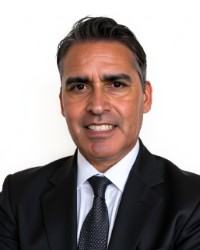
DeForest Abogados is a Mexican law firm with 100+ lawyers and offices in Mexico City, Guadalajara, Querétaro, Puebla and León, as well as in New York and Texas. Its corporate and commercial practice advises Mexican and foreign companies on company formation, corporate governance, commercial contracts, M&A, corporate restructuring and foreign investment, and works closely with the firm’s tax, labour, compliance and due diligence, anti-money laundering, intellectual property, data protection and dispute resolution teams. DeForest Abogados has particular experience in the automotive and auto parts, construction and real estate, and technology sectors, and serves international clients through a US practice and German, Chinese, Japanese and French desks. Recent work includes corporate restructure and plant and asset sale of an Italian Company with LATAM HQ in Querétaro, México and selling its manufacturing plant and assets in the Midwest region of the USA. Likewise, the firm assisted its client in Mexico to deploy a USD25 million investment into a commercial property portfolio in the USA worth over USD90 million.
Trading With the United States: The New Compliance Agenda for Latin American Business
Introduction
For Latin American exporters, access to the United States market used to depend mainly on tariffs and rules of origin. In 2026 it depends just as much on compliance. The duty a product pays, and in some cases whether it can enter at all, now turns on what a country and a company can prove about labour conditions, origin, ownership and the parties they pay.
The rules come from two directions. The United States has built its new tariff measures around compliance conditions and is enforcing customs law as a matter of fraud. Latin American governments are adopting rules of their own to keep or improve their access: import bans on goods made with forced labour, tighter customs controls, investment screening and stricter anti-money laundering duties.
This article describes that pattern across the region and uses Mexico, the region’s largest exporter to the United States, as the main example. It reflects the position in early October 2026, and several of the measures discussed are still moving.
Tariffs now depend on compliance
The legal basis of US tariffs changed during 2026. On 20 February, the US Supreme Court struck down the tariffs that had been imposed under emergency powers. A temporary 10% surcharge followed and expired on 24 July. On the same day, new duties took effect under Section 301 of the Trade Act of 1974 on goods from 60 economies, after an investigation into whether each of them prohibits imports of goods made with forced labour.
The rate depends on the answer. Countries that have such a prohibition, or have committed to adopt and enforce one, pay 10%. Countries without one pay 12.5%. In Latin America, the 10% group is Argentina, Ecuador, El Salvador, Guatemala, Honduras and Mexico. The 12.5% group includes Brazil, Chile, Colombia, Costa Rica, the Dominican Republic, Nicaragua, Peru, Uruguay and Venezuela, among them several countries that have free trade agreements with the United States.
Three further points complete the picture.
- Goods that qualify under the United States–Mexico–Canada Agreement (USMCA) are exempt. According to Mexico’s Economy Ministry, more than 80% of the country’s exports to the United States are therefore not affected. Textiles and apparel that qualify under the free trade agreement with Central America and the Dominican Republic (CAFTA-DR) are also exempt.
- Products already subject to sector duties under Section 232, such as steel, aluminium and cars, are outside the new duties but continue to pay their own.
- Brazil has faced a separate 25% duty on a wide range of goods since 22 July 2026, following a different investigation into its trade practices.
These measures are not settled. Importers have challenged the Section 301 duties before the US Court of International Trade. A second investigation, into industrial overcapacity in 16 economies including Mexico, had not produced findings at the time of writing and could add further duties. Section 301 measures also lapse after four years unless they are renewed. The rates may therefore change, but the compliance conditions attached to them are now written into trade agreements and domestic law.
Forced labour: from US rule to regional standard
The United States has long prohibited imports of goods made with forced labour. What is new is that it expects its trading partners to do the same. The reciprocal trade agreements signed in 2026 with El Salvador (29 January), Guatemala (30 January), Argentina (5 February) and Ecuador (13 March) each include a commitment to prohibit the import of goods produced with forced or compulsory labour.
Mexico shows how such a prohibition works and where it can fall short. To comply with Article 23.6 of the USMCA, Mexico issued a ministerial resolution, in force since 18 May 2023, that allows the Labour Ministry to investigate goods on its own initiative or at the request of any person legally established in Mexico, and to bar their import if forced labour is found. In its June 2026 report, however, the US Trade Representative concluded that Mexico was not enforcing the prohibition effectively. The 10% duty on Mexican goods that do not qualify under the USMCA will remain until the United States is satisfied that it is.
Under the Mexican rules, goods are presumed to be free of forced labour unless the Labour Ministry has issued a resolution against them. Importers into Mexico should therefore check the ministry’s resolutions as part of their routine, and should expect more of them.
For business, the consequence is that proof of a clean supply chain is becoming a condition of trade in both directions. More governments in the region can be expected to adopt import prohibitions, because doing so can lower the duty their exporters pay, and to enforce the ones they already have. Companies should:
- map their suppliers beyond the first tier for products and inputs sourced from higher-risk regions;
- obtain written undertakings and audit rights from suppliers; and
- keep the documents that show where inputs come from, because authorities on both sides of the border may ask for them.
Origin and customs: evasion is now treated as fraud
Higher and more varied duties increase the reward for declaring the wrong origin, value or classification, and US enforcement has changed in response. The Department of Justice and the Department of Homeland Security created a Trade Fraud Task Force in August 2025. By July 2026 it reported more than USD1 billion in penalties, forfeitures and charged losses, and the Department of Justice set up a dedicated section to prosecute customs offences.
The main tool is the False Claims Act, which allows the government to recover three times the duties evaded and rewards whistle-blowers who report violations. The conduct targeted includes:
- false declarations of origin;
- undervaluation;
- misclassification;
- misuse of free trade agreement preferences; and
- fraud involving customs brokers.
US authorities have also said that they will look beyond the importer of record to other participants in the supply chain, and they are using data analysis to find suspicious origin claims. A Latin American supplier that issues an inaccurate origin certificate may therefore find itself in an investigation alongside its US customer.
Governments in the region are being asked to help. The reciprocal trade agreements commit the Latin American parties to co-operate with the United States against duty evasion, and those with Argentina and El Salvador provide for specific co-operation agreements on the subject.
Mexico has tightened its own customs regime in the same direction. A reform of the Customs Law, published on 19 November 2025 and in force since 1 January 2026, requires importers and exporters to keep an electronic file for every operation, with invoices, contracts, proof of payment and transport costs. It removes the defences that customs brokers previously had when the information supplied by their client was inaccurate, extends their joint liability for duties and raises fines. Since the same date, Mexico has applied duties of between 5% and 50% to 1,463 tariff lines of goods from countries with which it has no trade agreement, a measure aimed largely at Asian imports.
In practical terms, the following apply.
- Treat every origin claim as a legal statement. The company should hold the bill of materials, supplier declarations and cost data that support each USMCA or other preference claim.
- Choose and supervise customs brokers with care. In Mexico they now share more of the liability, and in US enforcement they are a known point of risk.
- Allocate tariff and customs risk in contracts, including rights to information and audit, and who pays if a preference is denied.
- Review past customs entries before a transaction. Unpaid duties and penalties can remain with the business after a sale.
The USMCA: preferential access under annual review
For Mexico, the value of compliance is concentrated in one agreement. At the first joint review of the USMCA on 1 July 2026, the United States declined to extend it for a new 16-year term. The agreement remains in force until 1 July 2036, but it will now be reviewed every year. Bilateral talks with Mexico are continuing and cover rules of origin for vehicles, steel and aluminium, economic security, labour and agriculture. In the meantime, Section 232 duties of up to 25% on cars and 50% on steel and aluminium continue to apply to Mexican products.
Labour compliance is already enforced plant by plant. Under the agreement’s facility-specific labour mechanism, the United States has asked Mexico more than 40 times to review alleged denials of workers’ rights at individual plants, most often in the automotive sector. While a review is pending, the United States can suspend the final settlement of customs entries for that plant’s goods. A labour dispute at a single site can therefore put the preferential treatment of its products at risk.
Companies that rely on the USMCA should keep their origin calculations up to date and follow the talks on regional content closely. They should also treat freedom of association and collective bargaining at their Mexican plants as a trade compliance matter as well as a labour one.
Investment screening and export controls
The United States is also asking its partners to control who invests in their economies and where sensitive goods end up. The reciprocal trade agreements provide for co-operation on investment security and export controls. El Salvador, for example, agreed to restrict the unauthorised export or re-export of items that are subject to US export control rules.
Mexico is again the clearest example. On 30 August 2026, the government sent Congress a bill to amend the Foreign Investment Law and create a national security review. As drafted, prior approval would be required where foreign investors would hold more than 49% of a Mexican company that is active in a sensitive area, such as strategic infrastructure, critical technologies or sensitive data, and that exceeds an asset threshold still to be set. A transaction that needs approval could not close without it, and investors from USMCA countries would not be exempt. The bill follows a memorandum of intent with the United States on investment reviews and had not been passed at the time of writing.
For transactions, this would add a filing alongside merger control. Mexico’s new competition authority, in operation since October 2025, already applies lower notification thresholds. Buyers should identify early whether a target operates in a sensitive sector, who ultimately owns the target and its main suppliers, and whether it handles technology that is subject to US controls.
Payments, cartels and corruption
The compliance agenda extends to the parties a company pays. Since February 2025, the United States has designated at least 20 Latin American and Caribbean criminal organisations as foreign terrorist organisations. Payments or services that reach a designated group can expose a company to liability for providing material support, in addition to liability under sanctions and anti-corruption rules.
Anti-bribery enforcement follows the same priority. Guidelines issued by the US Department of Justice in June 2025 give priority, among other things, to bribery that helps cartels and transnational criminal groups operate.
Two cases show how this affects ordinary trade. In June 2025, the US Treasury used a new power to prohibit US financial institutions from making certain transfers involving three Mexican financial institutions that it linked to money laundering for cartels, and Mexico’s banking regulator intervened in them. In July 2026, the US Department of Justice announced a settlement under the Foreign Corrupt Practices Act with a US agricultural company over payments made through customs brokers to Mexican officials. According to the Department, part of the money benefited people linked to a cartel, although the company did not know it.
Mexico has responded with stricter rules of its own. A reform of its anti-money laundering law, in force since 17 July 2025, lowered the threshold for identifying a company’s beneficial owner to 25% and requires companies to identify their beneficial owners and keep the supporting records. The implementing regulation was updated in March 2026.
The lessons are practical.
- Third parties are the main source of exposure. Customs brokers, carriers, security contractors and local agents need due diligence that goes beyond a sanctions list check.
- Anti-corruption, sanctions, anti-money laundering and customs controls should be run together because a single payment can raise all four issues.
- Banking relationships are part of the risk. A company should know which institutions process its cross-border payments and have an alternative.
- Records matter. A company should be able to show who was paid, for what and with whose approval.
Beyond Mexico: the same demands across the region
Mexico is the most advanced case, but the same demands are reaching the rest of the region by different routes.
- Central America – Under the agreements with El Salvador and Guatemala, the United States exempts certain goods from its duties, including textiles and apparel that qualify under CAFTA-DR. In return, both countries committed to prohibit imports made with forced labour, strengthen the enforcement of their labour laws and remove specified non-tariff barriers.
- Argentina and Ecuador – Both agreements combine tariff relief for selected products with commitments on forced labour, duty evasion, export controls and investment screening. Argentina also undertook to address intellectual property issues raised by the United States.
- Chile, Colombia and Peru – All three pay the 12.5% rate although they have free trade agreements with the United States. The US Trade Representative has indicated that the rate can fall to 10% for a country that adopts a forced labour import prohibition it regards as effective.
- Brazil – The separate 25% duty followed an investigation that covered digital trade, intellectual property and deforestation, among other matters. Brazil’s government has disputed the measures and said it would respond under its reciprocity law.
For companies with operations in several countries, the lesson is that a compliance standard built for Mexico will be needed elsewhere. It is more efficient to design one programme for the region than to add country rules one at a time.
What companies should do now
The measures described above differ in detail, but they ask the same of a company: to know its supply chain, its counterparties and its owners, and to be able to prove what it knows. The priorities are as follows.
- Give one person or team responsibility for trade compliance across customs, labour, sanctions and anti-corruption.
- Review standard contracts. Supply, distribution and logistics agreements should include origin warranties, forced labour undertakings, audit rights, an allocation of tariff risk and a right to terminate for compliance breaches.
- Test the records. Take a sample of recent exports to the United States and confirm that the origin, value and supplier documents would satisfy an audit.
- Include trade compliance in due diligence for acquisitions and joint ventures, covering past customs entries, labour complaints and ownership.
- Follow the calendar: the pending US overcapacity findings, the court challenge to the Section 301 duties, Mexico’s investment screening bill and the next USMCA review in July 2027.
Outlook
Tariff rates will continue to move, and some of the measures described here may be struck down or renegotiated. The underlying direction is clearer. Access to the US market is being tied to conduct that can be verified, and Latin American governments are writing those conditions into their own law. Mexico’s experience suggests that the companies best placed to benefit are those that can show, with documents, that their products are what they say they are.
DeForest Abogados
Boulevard de las Ciencias 3015
Piso 2, Despacho 205
The Village Corporativo
Colonia Juriquilla Santa Fe
Querétaro
Mexico
+52 442 214 4654
marquezr@deforest.mx; vasquezm@deforest.mx www.deforest.mx
Trends and Developments
Authors
DeForest Abogados is a Mexican law firm with 100+ lawyers and offices in Mexico City, Guadalajara, Querétaro, Puebla and León, as well as in New York and Texas. Its corporate and commercial practice advises Mexican and foreign companies on company formation, corporate governance, commercial contracts, M&A, corporate restructuring and foreign investment, and works closely with the firm’s tax, labour, compliance and due diligence, anti-money laundering, intellectual property, data protection and dispute resolution teams. DeForest Abogados has particular experience in the automotive and auto parts, construction and real estate, and technology sectors, and serves international clients through a US practice and German, Chinese, Japanese and French desks. Recent work includes corporate restructure and plant and asset sale of an Italian Company with LATAM HQ in Querétaro, México and selling its manufacturing plant and assets in the Midwest region of the USA. Likewise, the firm assisted its client in Mexico to deploy a USD25 million investment into a commercial property portfolio in the USA worth over USD90 million.
