Corporate & Commercial 2026
Singapore
Trends and Developments
Authors
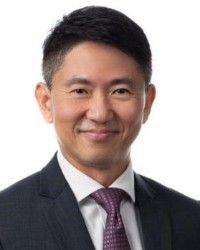

DBS Bank Limited is the third-largest private bank in Asia and the bank of choice for wealthy clients all over the world given its bespoke, comprehensive solutions. With a presence in 19 markets globally, the firm is recognised for providing the world’s best in wealth management and connecting clients with opportunities in Asia through its dual booking centres in Singapore and Hong Kong. As Singapore’s leading family office practice, the firm offers a comprehensive suite of bespoke wealth management solutions, which includes investment advisory, portfolio management, trust, liquidity and estate planning, and family office solutions. In 2023, the firm launched the DBS Multi Family Office Foundry Variable Capital Company, the first bank-backed multi-family office leveraging Singapore’s VCC structure, as an attractive alternative for affluent families to manage their wealth without having to establish their own single-family office. It also leverages the strengths of the broader DBS Group to service the full spectrum of clients’ wealth management and business needs.
Introduction
Singapore, Asia’s leading global hub for business, investment and private wealth management, consistently ranks near the top of global ease-of-doing-business indices and competitiveness rankings, and is a preferred regional headquarters (RHQ) for multinational corporations (MNCs) looking to access Association of Southeast Asian Nations (ASEAN) markets. It acts as a premier cross-border wealth hub, with a strong inflow of investments and a vast concentration of single-family offices and ultra high net worth individuals.
The city state’s business-friendly environment, robust regulatory framework, political stability, skilled workforce, global connectivity, and evolving governance frameworks for sustainability and artificial intelligence (AI) help it to continue to attract businesses and private wealth.
As corporate regulation gets more complex and private capital becomes increasingly important to growth and succession, families owning businesses must consider corporate, personal wealth and succession issues holistically. Corporate and wealth planning are therefore becoming increasingly interconnected.
Singapore RHQ and International Headquarters (IHQ) Incentives
Singapore offers concessionary corporate tax rates (ranging from 5% to 15%) to encourage MNCs to set up or expand their regional or IHQ activities in Singapore to manage, co-ordinate and control business activities for a group of companies. While these headquarters awards can lower the tax burden on qualifying income, they require substantive commitments relating to minimum thresholds for local employment, total expenditure and high-value operational activities.
In practice, RHQ and IHQ incentives are not granted to corporations that merely maintain a registered address. These incentives are economic-development measures designed to attract substantive business activities, skilled employment, regional decision-making, treasury functions and value creation to Singapore. Multinational groups should therefore first determine the commercial rationale and operational substance of their Singapore presence before structuring the associated tax model. The incentives are best viewed as supporting a genuine headquarters or regional management strategy rather than as standalone tax-planning tools.
The Development and Expansion Incentive (DEI) is the main framework for headquarters entities performing regional management and co-ordination functions. Approved companies may receive concessionary tax rates of 5%, 10% or 15% on qualifying income for fixed, renewable periods. The concessionary rate and duration depend on employment creation, business spending and the strategic importance of regional decision-making in Singapore.
The Pioneer Certificate Incentive (PCI) supports high-value, innovation-led activities that advance Singapore’s economy, including capability-driven regional leadership and advanced co-ordination functions. Approved entities may receive full or partial tax exemption on qualifying income for up to 15 years. Traditional headquarters structures are less likely to qualify and typically are required to have significant investment, technology transfer or capability development in Singapore.
The Finance and Treasury Centre (FTC) regime supports centralised treasury functions, including intercompany financing, cash pooling and foreign exchange risk management. Qualifying income may be taxed at 8% or 10% for fixed periods, subject to operational commitments such as dedicated treasury staff and minimum business spending.
The Global Trader Programme (GTP) is intended to reinforce Singapore’s position as a leading global trading hub, with an expansion of qualifying commodities to include environmental attribute certificates, with effect from 13 February 2026.
In the Budget 2026, the FTC and GTP incentives were extended to 31 December 2031, providing greater certainty for multinational groups planning long-term regional operations. The FTC regime was also enhanced through expanded withholding tax exemptions on certain borrowing costs, while the GTP was broadened to support emerging trading activities, including selected sustainability-related commodities. Together with Singapore’s extensive treaty network, political stability, strong legal framework and deep talent pool, these incentives reinforce Singapore’s attractiveness as a location for RHQ, treasury centres, trading platforms, supply-chain co-ordination and strategic decision-making across ASEAN and the wider Asia-Pacific region.
Accelerating ASEAN’s Next Decade of Growth
As global operations span multiple markets, regional co-ordination, capital flows and risk boundaries need a clear centre of gravity. Singapore connects ASEAN markets while supporting cross-border operations and long-term planning. Among these, the Johor–Singapore Special Economic Zone (JS-SEZ) stands out as a leading example of how targeted economic corridors are reshaping ASEAN’s investment landscape. By pairing Singapore’s global financial ecosystem with Johor’s scale and resource capacity, the JS-SEZ provides a practical model of cross-border integration, particularly for decision-makers evaluating where and how to expand within ASEAN.
The China plus one strategy continues to shape investment flows as companies seek stable, future-ready locations across Southeast Asia. Site selection now extends beyond cost to power reliability, access to green energy and efficient cross-border logistics. For supply chain–dependent sectors, dependable connectivity and lower border risk are essential.
Increased Vibrancy in Singapore’s Capital Markets and Funds Sector
The city state has continued to strengthen its position as a regional capital-markets hub. A key development is the Global Listing Board (GLB), the Singapore Exchange (SGX)-Nasdaq dual-listing framework that became operational in June 2026. The framework provides eligible companies with a streamlined pathway to list concurrently in Singapore and the United States, including the use of a single set of offering documents and a simplified Singapore review process. This is intended to reduce regulatory duplication while giving growth companies access to both Asian and US capital markets.
The GLB forms part of a broader effort to deepen Singapore’s equity markets. Measures include:
- expansion of the Equity Market Development Programme, which is a major SGD6.5 billion initiative launched by the Monetary Authority of Singapore (MAS) and the Financial Sector Development Fund (FSDF) to revitalise Singapore’s public equity market;
- additional support for the Anchor Fund, a co-investment fund established to support high-growth enterprises and market leaders in their public fundraising and listing journeys in Singapore; and
- initiatives aimed at increasing institutional participation, liquidity and the pipeline of companies seeking public-market financing.
Taken together, these measures seek to strengthen the pathway from private growth capital to public fundraising and secondary-market participation.
For companies and their controlling shareholders, broader access to capital also brings greater governance and operational expectations. Businesses considering a dual listing will need to assess their readiness for enhanced disclosure, financial reporting, internal controls, cybersecurity and investor relations. A listing may also have wider implications for ownership concentration, shareholder governance and succession. The GLB should therefore be viewed not simply as a new listing route, but as part of Singapore’s broader strategy to connect private capital, public markets and international growth opportunities.
Singapore’s Mergers and Acquisitions (M&A) Landscape
Singapore's M&A landscape saw two significant regulatory developments in 2026. Firstly, the revised Singapore Code on Take-overs and Mergers (the “Takeover Code”), which took effect on 16 July 2026, introduced measures aimed at improving deal certainty, enhancing shareholder disclosures and preserving competitive bidding processes. Notably, the revisions impose greater discipline on deal protection measures, including requiring the aggregate value of multiple break fees to remain within the existing 1% cap and requiring boards and financial advisers to justify why any break fee is in shareholders' interests. For schemes of arrangement, the revised Takeover Code introduces greater execution certainty by requiring shareholder meetings to be convened within six months of the scheme announcement and obliging parties to take prompt steps to implement an approved scheme. The reforms also strengthen disclosure standards, including requirements relating to offeror statements and information provided to shareholders, reflecting a broader regulatory objective of ensuring that shareholders are able to make informed decisions on takeover proposals.
Secondly, the revised Competition and Consumer Commission of Singapore (CCCS) Merger Guidelines, which took effect on 1 May 2026, seek to make merger control reviews more efficient and commercially predictable. The revisions streamline the assessment of transactions that present limited competition concerns, allowing routine transactions to progress more quickly, while signalling increased scrutiny of transactions involving sensitive sectors, strategic assets or broader public-interest considerations.
Both the Takeover Code and CCCS reforms demonstrate a regulatory preference for facilitating legitimate deal activity through greater certainty, clearer procedural expectations and improved timelines, while maintaining robust safeguards for shareholders, competition and market integrity. For acquirers and investors, this places greater emphasis on early transaction planning, disclosure strategy and regulatory assessment when structuring acquisitions, privatisations and strategic investments.
Evolution of Family Offices in Singapore
The family-office market in Singapore is entering a more mature phase, moving beyond rapid expansion towards greater institutionalisation and operational substance. Family offices are increasingly expected to operate as genuine platforms with sound investment governance, local capabilities, banking relationships and compliance frameworks, rather than merely as vehicles for holding and managing family assets.
A key development is the revised licensing exemption framework for single family offices, effective from 15 June 2026. Its structure-neutral approach provides a straight-through class exemption from licensing for qualifying single-family offices held through either a trust, foundation or other legal structure, so long as the funding originates exclusively from members of the same family, whether directly or indirectly, and key employees are permitted to own a non-controlling stake of up to 10%. The licensing exemption remains separate from the Section 13O and 13U fund tax incentive schemes, which impose their own requirements, including in relation to assets under management, investment professionals and local business spending.
The broader ecosystem is also expanding beyond standalone single-family offices. Depending on the desired level of control and operational infrastructure, families may adopt structures and service models involving variable capital companies (VCCs), multi-family offices, external asset managers, private banks and trustees. This reflects the family office’s evolution from an investment vehicle into a platform for investment management, governance, succession, philanthropy and intergenerational wealth stewardship. The key commercial question is therefore not simply whether to establish a family office, but how its structure, governance and operating model can support the family’s long-term objectives.
Corporate Governance: From Compliance to Stewardship
Corporate governance standards continue to strengthen across the city state without compromising its business-friendly environment. The 2026 corporate law reforms enhance directors’ accountability, shareholder protection and safeguards against the misuse of corporate structures, reinforcing the broader shift from procedural compliance towards responsible stewardship. This direction reflects Singapore’s emphasis on maintaining confidence in its corporate ecosystem as businesses become more complex – and capital flows more international – and as investors place greater weight on transparency, internal controls and effective board oversight. Governance is therefore increasingly viewed not merely as a legal obligation, but as part of the infrastructure that supports credible management, sustainable growth and market integrity.
A significant recent development is the phased implementation of mandatory corporate sustainability and climate-related disclosure reports that are to be prepared in accordance with the standards issued by the International Sustainability Standards Board (ISSB).
Starting in FY 2025, all companies listed on the SGX are required to measure and report their direct and indirect carbon emissions (Scopes 1 and 2).
For larger companies, such as those on the Straits Times Index (STI), more comprehensive reporting, including wider supply chain emissions (Scope 3), is required starting in FY 2026. These detailed environmental disclosure standards will then be gradually extended to all other listed companies, phased in for larger issuers by FY 2028 and smaller issuers by FY 2030.
These developments illustrate a broader shift towards integrating sustainability, climate-related risks and operational resilience into corporate reporting and board oversight frameworks. The incorporation of ISSB standards into SGX's reporting regime from FY 2025 also moves Singapore closer to internationally comparable sustainability reporting standards.
From a corporate and commercial perspective, these changes are increasingly relevant to financing, capital raising and transaction activity. Investors, lenders and strategic counterparties are placing greater scrutiny on sustainability disclosures, governance frameworks and risk-management processes during due diligence exercises, particularly in M&A transactions, joint ventures and public listings. As a result, companies are increasingly required to consider disclosure readiness, internal controls and board oversight as part of broader commercial planning rather than as standalone compliance matters.
Singapore’s Position as a Regional Hub for Insurance Innovation
In July 2026, the MAS issued a consultation paper proposing a protected cell company (PCC) framework for captive insurance, insurance-linked securities (ILS) and sovereign risk pools. The proposed structure would introduce a new corporate structure allowing multiple insurance programmes to operate within a single legal entity while maintaining legal segregation of assets and liabilities between individual cells.
The initiative seeks to eliminate the administrative and financial friction of establishing individual entities or special purpose vehicles for every separate risk or issuance, thereby lowering structuring, operating costs and improving flexibility, and supporting growth of captive insurance and ILS activity in Singapore.
The PCC framework would seek to reinforce Singapore’s position as a premier, highly competitive regional hub for alternative risk transfer and advanced risk-financing solutions.
AI and Technology: From Experimentation to Accountable Deployment
AI has emerged as a strategic priority in Singapore’s digital economy. The 2026 refresh of the National AI Strategy reaffirmed the focus on accelerating adoption across key sectors, including financial services, advanced manufacturing, connectivity and healthcare, while promoting trusted and responsible deployment. This direction is relevant across the corporate life cycle. Established businesses are incorporating AI into customer service, compliance, forecasting, supply-chain management and product development, while start-ups and technology providers are building new commercial models around data, automation and AI-enabled services. As adoption broadens, decisions concerning technology investment, procurement and deployment are increasingly becoming core commercial matters rather than standalone information-technology projects.
For corporates, the conversation has moved beyond experimentation to implementation, governance and risk allocation. As organisations embed AI into business operations, greater attention is being paid to cybersecurity, confidentiality, intellectual property ownership, data governance, model reliability and oversight of third-party technology providers. Singapore’s evolving AI governance frameworks, including guidance on agentic AI systems, signal increasing expectations around accountability, human oversight and the management of AI-related risks. These expectations have direct implications for commercial contracting: agreements with developers, cloud providers, data vendors and implementation partners may need to address permitted data use, ownership of inputs and outputs, service standards, audit and monitoring rights, regulatory co-operation, incident response, liability and termination support. Businesses will also need internal approval processes that distinguish lower-risk productivity tools from systems used in customer-facing, employment, credit, investment or other consequential decisions.
The trend also affects corporate transactions and long-term value creation. In mergers, acquisitions, joint ventures and technology investments, due diligence increasingly needs to examine the provenance and quality of training data, rights to use third-party content, ownership and transferability of models and outputs, dependencies on key technology providers, cybersecurity controls and potential regulatory exposure. Representations, warranties, indemnities and post-completion integration plans may need to be calibrated to these risks.
Boards and senior management should also assess whether AI use aligns with directors’ oversight responsibilities, internal policies and the organisation’s risk appetite, and whether employees receive adequate guidance on confidentiality, accuracy and human review. These considerations also apply to family businesses and family offices using AI for research, analytics and operational efficiency. As data, software and digitally generated assets increasingly drive enterprise value, their ownership, control, valuation and succession require closer scrutiny. AI governance is therefore becoming integral not only to operational resilience and regulatory compliance, but also to commercial strategy, transaction readiness, business continuity and the preservation of long-term family wealth.
Talent and Workforce: Selective Openness
Access to senior and specialist talent remains a key factor in Singapore’s appeal as an RHQ, innovation and investment hub. Its policy of selective openness welcomes global expertise that complements the local workforce, builds capabilities and supports productivity-led growth. Accordingly, the work-pass framework provides a targeted pathway for exceptional leaders and technical specialists while progressively raising qualifying thresholds for mainstream professional and skilled roles. Businesses must therefore align international recruitment with local workforce development and sustained operational substance.
From January 2027, the new ONE Pass (AI and Tech) track will replace the Tech Pass and provide a dedicated pathway for leading AI and technology founders, C-suite executives and senior technical specialists. Applicants must generally have earned at least SGD30,000 a month for 12 consecutive months before applying, including a fixed monthly salary of at least SGD22,500; importantly, vested non-cash remuneration, such as employee stock options and employee share ownership awards, may count towards the balance. This is a significant change because it better reflects compensation practices in start-ups and high-growth technology companies, where equity may form a substantial part of senior remuneration.
Applicants must also have at least five cumulative years of relevant founder, C-suite or technical experience within the preceding ten years, and their current or most recent employer must satisfy prescribed technology-sector and scale criteria. As part of the broader ONE Pass framework, the new track offers validity of up to five years and greater employment flexibility than an employer-specific pass, enabling holders to work across businesses, establish or operate companies and contribute to multiple ventures, subject to the applicable conditions.
The change has wider corporate and commercial significance. By making it easier for qualifying technology businesses to structure senior remuneration through a combination of cash and vested equity, the new track can support the recruitment of founders, product leaders, engineers and other specialists needed to establish regional technology teams, commercialise intellectual property, scale digital products and lead AI transformation. Its longer duration and individual mobility may also encourage experienced talent to undertake entrepreneurial, advisory and investment activities across the ecosystem, strengthening connections among corporates, start-ups, venture-capital firms, research institutions and family offices.
Businesses may therefore factor the regime into broader decisions on headquarters location, research and development, acquisitions, joint ventures and regional expansion. Employers will, however, need robust evidence of remuneration, equity vesting, relevant experience and qualifying corporate metrics, supported by careful planning of tax, employment, intellectual-property and incentive arrangements.
Sustainability, ESG and the Development of Carbon Markets
The sustainability agenda is moving from policy commitments towards market-based implementation, with carbon pricing, climate disclosure and transition finance increasingly influencing corporate decisions. The carbon tax rose to SGD45 per tonne of carbon dioxide equivalent for 2026 and 2027, strengthening incentives to reduce emissions. Tax-liable facilities may also offset up to 5% of taxable emissions using eligible international carbon credits, subject to Singapore’s requirements. Together, these measures encourage businesses to embed emissions management and climate considerations into their wider business and investment strategies.
At the same time, Singapore is developing as a regional hub for carbon services and transition finance, supported by an ecosystem spanning carbon project development, financing, trading and eligible international carbon credits. For businesses, increased carbon-market activity also brings greater scrutiny of environmental claims. Rigorous due diligence on carbon credits, reliable emissions data and clear climate disclosures is becoming essential as investors and regulators focus more closely on greenwashing and the credibility of sustainability claims.
For private investors and family offices, these developments are broadening opportunities beyond conventional sustainable investment products to include transition infrastructure, energy efficiency, carbon services and nature-based solutions. This wider opportunity also heightens the need to distinguish financial returns from environmental impact. As private capital plays a greater role in financing Asia’s transition, clear sustainability mandates, robust due diligence and credible impact measurement will be essential.
Conclusion
Singapore’s corporate and commercial landscape continues to evolve through a model of selective openness that combines a business-friendly environment with stronger expectations of economic substance, accountability and long-term value creation.
The developments from headquarters incentives and ASEAN connectivity to capital-market reform, AI governance, skilled immigration and sustainability point to a consistent policy direction. Singapore continues to welcome international businesses, capital and talent, while increasingly expecting companies to establish substantive functions, local decision-making capabilities and skilled employment. The emphasis is therefore shifting from the volume of inward investment to the quality, resilience and economic contribution of activities conducted in Singapore.
Companies establishing, expanding or managing regional operations from Singapore should address these developments through an integrated commercial strategy rather than separate regulatory workstreams:
- corporate structure and governance should support operational substance;
- workforce and immigration planning should strengthen local capabilities;
- technology adoption requires effective oversight of data, cybersecurity and intellectual property; and
- capital-raising plans must reflect evolving sustainability and disclosure expectations.
The increasing institutionalisation of family offices and family-owned businesses further highlights the connections among corporate governance, succession and private capital. Boards and senior management should therefore engage legal, tax, finance, human resources, technology and sustainability teams early in strategic planning. Decisions on RHQ, treasury operations, financing, talent deployment and digital transformation are interdependent and may affect regulatory exposure, operating costs, governance obligations and organisational reputation.
Businesses that combine sound governance with substantive operations will be best placed to manage regulatory change and capture opportunities across the ASEAN region. By aligning commercial objectives with local capabilities, responsible innovation and long-term value creation, they can strengthen resilience and maintain the confidence of regulators, investors and business partners. Singapore would therefore remain a credible and enduring platform for sustainable growth, innovation and capital deployment across Asia.
DBS Bank Limited
12 Marina Boulevard
Level 6, DBS Asia Central
Marina Bay Financial Centre Tower 3
Singapore 018982
+65 9021 5130
catherineks@dbs.com www.dbs.com.sg
Trends and Developments
Authors
DBS Bank Limited is the third-largest private bank in Asia and the bank of choice for wealthy clients all over the world given its bespoke, comprehensive solutions. With a presence in 19 markets globally, the firm is recognised for providing the world’s best in wealth management and connecting clients with opportunities in Asia through its dual booking centres in Singapore and Hong Kong. As Singapore’s leading family office practice, the firm offers a comprehensive suite of bespoke wealth management solutions, which includes investment advisory, portfolio management, trust, liquidity and estate planning, and family office solutions. In 2023, the firm launched the DBS Multi Family Office Foundry Variable Capital Company, the first bank-backed multi-family office leveraging Singapore’s VCC structure, as an attractive alternative for affluent families to manage their wealth without having to establish their own single-family office. It also leverages the strengths of the broader DBS Group to service the full spectrum of clients’ wealth management and business needs.