Corporate Tax 2026
Liechtenstein
Authors
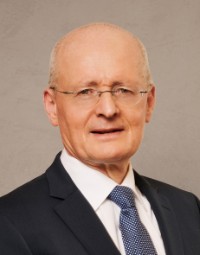

Schurti Partners Attorneys at Law Ltd is a Liechtenstein-based full-service law firm with a strong focus on international matters. Its lawyers are trained and qualified in several jurisdictions (Liechtenstein, New York, California, England and Wales, Ireland, Switzerland, Germany and Austria), and have gained work experience abroad in some of the most prestigious international law firms. The firm was founded in 1991 as a partnership and incorporated in 2015, and has become one of the largest and most renowned law firms in Liechtenstein. It started as a traditional Liechtenstein law office and evolved into a modern full-service law firm with a strong focus on corporate, commercial, tax, trust and foundation law, providing transactional and litigation services. It can count on the support of its affiliated trust companies in the administration of trusts and legal entities and for accounting work and tax filings.
1. Corporate Structures, Residence and Tax Treatment
1.1 Corporate Forms and Their Tax Treatment
Liechtenstein Incorporated
In Liechtenstein, most businesses adopt a corporate form, which is always taxed on its profits as a separate legal entity. The most frequently used corporate forms are:
- the company limited by shares (Aktiengesellschaft);
- the establishment (Anstalt);
- the trust enterprise (Treuunternehmen); and
- the limited liability company (Gesellschaft mit beschränkter Haftung).
The company limited by shares and the limited liability company are subject to and fully compliant with the European rules and regulations. The establishment and the trust enterprise are more flexible and less severely regulated, and are therefore less costly to administer.
Due to Liechtenstein’s membership of the EEA, European companies (Europäische Aktiengesellschaft) and European co-operatives (Europäische Genossenschaft) can also be established in Liechtenstein.
Foundation
One of the most common types of legal entities in Liechtenstein is the foundation (Stiftung). Foundations are not established to run businesses, but rather for estate planning in general, as well as for passing businesses and specific assets on to the next generation. Foundations also serve as holding entities and voting trusts. They are taxed as all other legal entities.
Taxation
All businesses incorporated in Liechtenstein are subject to corporate income tax on their entire taxable income. The corporate income tax rate is 12.5%.
Trusts
The (common law type) trust serves similar needs as the foundation. It is subject to an annual minimum tax of CHF1,800 only, and is not subject to (tax) filing duties.
Transparent Partnerships
In addition to legal entities, there are legal forms of sole proprietorships (Einzelunternehmen) and partnerships (Personengesellschaften). These undertakings are transparent and are not taxed, but their income is attributed to their owner(s) or partners, respectively.
Transparent entities have their seat in Liechtenstein if:
- they are governed by Liechtenstein law;
- they have their main place of management in Liechtenstein;
- they conduct an important part of their business in Liechtenstein; or
- at least half of the partners are residing in Liechtenstein.
1.2 Use and Taxation of Transparent Business Structures
Transparent entities are rare in practice. The most commonly used transparent entities are sole proprietorships (Einzelunternehmen) for small businesses, and simple partnerships (einfache Gesellschaft) and general partnerships (Kollektivgesellschaft) for professionals. The limited partnership (Kommanditgesellschaft) is used for investment purposes where non-Liechtenstein (tax and other) rules put non-transparent legal entities at a disadvantage. In general, transparent entities are not heavily used.
1.3 Tests for Determining Tax Residence
Incorporated businesses (legal entities) are considered to reside in Liechtenstein if their statutory seat or their place of effective management is in Liechtenstein. The statutory seat is where the entity is registered, while the place of effective management is where the strategic management decisions are taken.
1.4 Applicable Corporate and Individual Tax Rates
12.5% Corporate Rate
Corporations in Liechtenstein are taxed at a rate of 12.5%. However, apart from some small businesses, every incorporated business has to pay a minimum tax of CHF1,800 per year. Transparent companies, however, are taxed proportionally at owner level. If the owner of a transparent entity is a corporation, the proportional profit is subject to corporate income tax by the corporation.
Progressive Rates up to 22.4% for Individual’s Business
Businesses owned by an individual directly or through a transparent entity are taxed solely on the level of the individuals or the partners. The personal income tax rate of such individual or partner depends on their income, wealth, deductibles and place of residency (municipality) within Liechtenstein. The progressive income tax rates can reach 22.4%.
2. Corporate Tax Regime
2.1 Taxable Profits
Accrual Basis
The Persons and Companies Act (Personen- und Gesellschaftsrecht) requires incorporated businesses to maintain proper accounting records using the accrual basis.
Taxable Income
Taxable income is the accounting profit minus tax-free income (ie, income from dividends and capital gains from the sale of shares in legal entities, foreign real estate, and permanent establishments abroad) and minus the notional interest deduction on equity. Taxable income is taxed at a rate of 12.5%. In addition, positive taxable net income for the year can be reduced by the loss brought forward by a maximum of 70% of the taxable net income.
Notional Interest Deduction on Equity
All ordinary taxed companies can claim a deduction for notional interest on equity of 4% of modified equity. The equity interest deduction cannot result in a current loss or increase a current loss.
2.2 Technology Investments
Patent Box
Currently, there are no tax incentives or benefits for R&D expenditures in Liechtenstein, such as a patent box. As technology tax incentives can be a potential tool for profit shifting, all tax incentives for technology investments have been abolished in Liechtenstein.
2.3 Special Incentives
Private Asset Structure
Any legal entity (domestic or foreign) that is resident for tax purposes in Liechtenstein can apply for treatment as a Private Asset Structure if it does not pursue active commercial activities but just invests its assets as a passive investor.
Benefits
Private Asset Structures do not have to file accounts and tax returns; they just have to pay the minimum tax of CHF1,800 per year.
Activities
Private Asset Structures may not conduct commercial activities. Typically, they hold “bankable assets” on their own behalf, real estate for their owners or beneficiaries, and art collections, liquid funds or participations.
Participations held by Private Asset Structures
Private Asset Structures or their shareholders or beneficiaries must not exert actual control over the management of participations by means of direct or indirect influence. However, the mere use of the shareholder’s voting rights is not harmful. The shares or ownership interests (if any) of a Private Asset Structure may not be publicly placed or traded. Private Asset Structures are often used as top holdings of companies that are not run by members of the family of the founder and beneficiaries.
Typical use
Private Asset Structures are frequently used by passive private investors/wealthy individuals. They can also benefit from the lack of withholding taxes on any kind of distributions (dividends from companies limited by shares, distributions from foundations, establishments, etc).
EFTA Surveillance Authority approval
The favourable taxation of Private Asset Structures was approved by the EFTA Surveillance Authority as being compliant with European competition law.
Trusts
Liechtenstein trusts are subject to the minimum corporate income tax of CHF1,800. As opposed to Private Asset Structures, trusts do not have to fulfil certain prerequisites and are not subject to certain restrictions, including in relation to the holding of participations.
2.4 Loss Relief
Loss Carried Forward
Losses carried forward from (all) former years can be set off against 70% of the profits of the respective current year. Losses carried forward are not subject to a time limit and can therefore be carried forward without restriction.
Losses from activities that are not subject to taxation, such as the sale of participations in legal entities, cannot be set off against taxable income.
Loss Carried Back
Liechtenstein does not provide for carried back loss.
2.5 Deduction of Interest
Imposed Limits on Deduction of Interest
There are no specific thin capitalisation rules in Liechtenstein. However, interest payments to related parties must be at arm’s length. In the event of over-indebtedness, interest charged by affiliated companies on the amount of excessive debt is not tax deductible. The Liechtenstein tax authority issues safe harbour interest rates for various currencies annually, in relation to related parties.
Due to the fact that a 4% notional interest deduction can be applied and because there are no thin capitalisation rules, there is no great incentive to pay high interest rates.
2.6 Consolidated Tax Grouping
Group Taxation
Upon application, affiliated legal entities can form a group of entities for tax purposes and offset the losses incurred within one year against the profits of other group members generated in the same year. The compensation takes place by way of the losses from the group members being attributed to the group parent or – if there is a loss after offsetting any attributable losses against the taxable net income of the group parent – the losses from the group parent being attributed to a group member that is fully taxable in Liechtenstein.
The following conditions apply to group taxation, among others:
- the parent entity must reside in Liechtenstein for tax purposes (either because it is registered in Liechtenstein or because it is managed out of Liechtenstein); and
- the parent entity must hold at least 50% of the voting rights and the capital of the (domestic or foreign) subsidiaries as of the beginning of the respective year.
2.7 Capital Gains
Capital Gains on Legal Entities
Capital gains from the sale of or the liquidation of interest in legal entities are tax-exempt, provided the anti-avoidance rules do not apply.
Anti-Avoidance Rules
In order to be tax-exempt, the anti-avoidance rules require – in relation to holdings of foreign entities – either that the total gross revenue of the respective foreign entity derived from passive sources is less than 50% of the overall income or that the net profits of the respective foreign entity are not subject to overall low taxation (considering potential foreign taxes). Low taxation is assumed if the total tax burden abroad is less than half of that which would result from a comparable situation in Liechtenstein. In practice, the anti-avoidance rules disadvantage participations in typical (Caribbean) offshore jurisdictions where there is hardly any taxation (less than 6.25%).
Real Estate
Profits earned on the sale of domestic real estate are subject to a special tax, with a maximum rate of 24%. Foreign real estate is not subject to taxation in Liechtenstein.
2.8 Other Taxes on Transactions
Stamp Duties
On the basis of the Swiss–Liechtenstein Customs Treaty, Swiss stamp duties are levied in Liechtenstein. Stamp duties are payable on the issue and transfer of certain securities.
2.9 Other Notable Taxes
Value Added Tax
Due to the Swiss–Liechtenstein Customs Treaty, a value added tax has been implemented in Liechtenstein, which is identical to the Swiss value added tax and is levied on goods and services and their import. The standard rate is 8.1%, with reduced rates of 3.8% applying to hotel accommodations and 2.6% applying to basic goods.
3. Corporations and Non-Corporate Businesses
3.1 Form of Closely Held Local Businesses
Closely Held Local Businesses
Most closely held local businesses operate in a corporate form. Only micro-enterprises operate in a non-corporate form.
3.2 Individual and Corporate Rates
There are no specific rules to prevent individual professionals such as architects, doctors, engineers, consultants, accountants and lawyers from earning income at the corporate rate. However, if they are residing or domiciled in Liechtenstein, they are subject to taxation on their respective worldwide net assets, which include their corporate entity.
Professionals who have not incorporated their businesses are generally taxed as self-employed persons and are subject to income and wealth tax.
3.3 Restrictions on Retention of Earnings by Closely Held Corporations
There are no regulations or restrictions prohibiting the accumulation of earnings for investment purposes. The accumulation of the profits increases the value of the entity, thereby also increasing the basis for the wealth tax of the individual as owner of the entity.
3.4 Taxation of Individuals on Shares in Closely Held Corporations
Investments in legal entities are subject to wealth tax. According to Liechtenstein tax law, any income derived from assets subject to wealth tax is not considered taxable income. Therefore, dividends and gains from the sale of shares in closely held Liechtenstein and foreign corporations are tax-free for individuals residing in Liechtenstein.
3.5 Taxation of Individuals on Shares in Public Corporations
For income from publicly traded companies, the same rule applies. Dividends and gains from the sale of shares in Liechtenstein and foreign companies are tax-free for individuals in Liechtenstein.
4. Taxation of Inbound Investments
4.1 Application of Withholding Taxes
Liechtenstein does not levy withholding taxes on dividends, interest or royalties.
4.2 Key Treaty Jurisdictions for Inbound Investment
Since Liechtenstein does not levy withholding taxes, investors’ country of residence is not a factor.
4.3 Tax Authority Scrutiny of “Treaty Shopping” Practices
Liechtenstein does not levy withholding taxes, so this is not relevant.
4.4 Transfer Pricing Issues for Inbound Investors
Liechtenstein law does not provide for any specific rules or regulations governing transfer pricing; there is only a general rule that transfer prices between related parties must be in line with arm’s length principles. Liechtenstein applies the OECD guidelines on transfer pricing issues and has fully implemented BEPS Action 13.
Inbound investors operating through a local entity must document the appropriateness of the transfer prices of significant transactions with related parties and permanent establishments.
4.5 Challenges to Related-Party Limited Risk Distribution Arrangements
There are no specific rules with respect to the use of related-party limited risk distribution arrangements in Liechtenstein law. However, the Liechtenstein tax authority can review and challenge such an arrangement based on the arm’s length principle.
4.6 Local Transfer Pricing Rules and OECD Standards
Liechtenstein has modelled its local transfer pricing rules and enforcement on the OECD standards for transfer pricing issues.
4.7 Transfer Pricing Disputes and Mutual Agreement Procedures
Focus on Transfer Pricing
Although the tax authority has placed greater focus on transfer pricing in recent years, it has not adopted an aggressive approach. Providing appropriate documentation is still an effective way to prove that prices are in line with market conditions.
Number of Disputes
Normally, fewer than ten cases per year require the initiation of a mutual agreement procedure based on a double taxation treaty due to transfer pricing issues.
Tax Authority’s View
The tax authority considers mutual agreement procedures to be a useful tool in discussing double taxation issues with the respective partner state. In most cases, an agreement with the partner state can be reached.
5. Taxation of Non-Local Corporations
5.1 Compensating Adjustments
The tax assessment is adjusted according to the outcome of the mutual agreement procedure.
5.2 Local Branches and Local Subsidiaries
The profits of both the local subsidiaries of non-local corporations and the local branches of non-local corporations are subject to the same corporate income tax rules, and are therefore taxed similarly.
5.3 Capital Gains of Non-Residents
Capital gains of non-residents on the sale of stock in local corporations are not subject to any taxation in Liechtenstein. Liechtenstein does not levy withholding taxes on dividends and capital gains from the sale of shares in legal entities.
5.4 Tax Implications of Change of Control
In Liechtenstein, there are no change of control provisions triggering tax or duty charges. However, it should be noted that Swiss stamp duty may be payable on the sale of shares in legal entities.
5.5 Formula-Based Income Attribution
There are no specific formulas to determine the income of foreign-owned local affiliates.
5.6 Deductibility of Intra-Group Management and Administrative Charges
Payments by local affiliates for management and administrative expenses incurred by a non-local affiliate are deductible to the extent that they are economically related to the domestic income of the paying domestic affiliate.
Management and administrative services must be charged at arm’s length.
5.7 Restraints on Related-Party Borrowing
Interest Barrier
Apart from the arm’s length test, there are no restrictions regarding borrowings between related parties in relation to payable interest. However, if a company is over-indebted, interest expenses up to the amount of the over-indebtedness are not deductible for tax purposes.
Safe Harbour Rules
The tax authority issues safe harbour interest rates for interest rates applied between related parties.
6. Taxation of Foreign Income of Local Corporations
6.1 Foreign Income Exemptions
Resident corporations are subject to unlimited tax liability on their worldwide income, except for income generated by foreign permanent establishments, income from the management of foreign real estate, and distributions and capital gains from foreign participations (see 2.7 Capital Gains).
6.2 Non-Deductible Local Expenses
Expenses that are proportionally attributable to foreign income that is not subject to tax in Liechtenstein are not deductible. However, losses from foreign permanent establishments can be taken into account under certain circumstances.
6.3 Dividends From Foreign Subsidiaries
In general, dividends from the foreign subsidiaries of local corporations are not taxed. However, following the implementation of BEPS Action 5, dividends are taxable if the foreign subsidiary is subject to no or low taxation and generates mainly passive income (see 2.7 Capital Gains).
6.4 Taxation of Intangibles Developed by Local Corporations
There are no specific regulations governing the taxation of income from intangible assets, so income from intangible assets is subject to normal income tax.
Non-local subsidiaries are not subject to Liechtenstein taxation, including in relation to the intangibles developed by local entities. However, based on the arm’s length rule, the tax authority could tax the local entity that developed the intangible, and attribute a respective royalty fee to its profits.
6.5 Controlled Foreign Corporation-Type Rules
CFC Rules
Liechtenstein has not implemented BEPS Action 3 and therefore has not established CFC-type rules. Earnings from foreign subsidiaries are not attributed to the Liechtenstein entity. Instead, dividends and capital gains from foreign low-taxed companies with income derived primarily from passive income are taxable (see 2.7 Capital Gains).
Place of Management
Entities that are registered abroad but are effectively managed in Liechtenstein are subject to Liechtenstein income tax.
Branches
Non-local branches are treated the same as non-local subsidiaries.
6.6 The Substance of Non-Local Affiliates
There are no rules regarding substance for affiliated companies.
6.7 The Sale of Shares in Non-Local Affiliates
Dividends and profits from the sale of non-local affiliates are tax-free, provided that anti-avoidance rules do not apply (see 2.7. Capital Gains).
7. Anti-Avoidance Provisions
7.1 Overarching Provisions
General Rules
Legal or factual arrangements are deemed to be abusive if they appear to be inappropriate in the economic circumstances and if their sole economic purpose is to obtain tax advantages. If there is an abuse, the inappropriate arrangement is disregarded for tax purposes and taxes are levied as if the inappropriate arrangement would not exist.
Arm’s Length Principle
The arm’s length principle must be observed in all transactions between related parties. If a taxpayer’s income or expenses from a business relationship with related parties or with a permanent establishment are changed by applying different terms and conditions to those with unrelated parties, such different terms and conditions are not acceptable for tax purposes.
Documentation
Taxpayers must document that the transfer prices of material transactions with related parties and permanent establishments are reasonable.
8. Audit Cycles
8.1 Regular Routine Audit Cycle
Income Tax
Tax returns, including annual financial statements and various details, are submitted online. The tax authority checks each tax return based on the submitted documents and requests further documents if necessary. In-person tax inspections are very rare compared to regular audits. If there are no reasons or indications for the assumption of irregularities, there might be no in-person tax audit for decades.
Value Added Tax
Regular audits are conducted in relation to the value added tax. In practice, there is a cycle of about five years.
Private Asset Structures
The tax authority verifies whether the conditions for the granting of the status of Private Asset Structure are fulfilled ie, no commercial activities (see 2.3 Special Incentives). There is currently a cycle of about three to five years.
Rules of Tax Audits
Liechtenstein law does not outline the specifics and frequency of the audit process.
Entities must complete a tax return annually and are obliged to provide the tax authority with the requested information and documents. The tax authority’s assessment is based on these documents and information, and on any other subsequently requested documents or explanations. The tax authority may also call in experts, carry out inspections, request information or certificates from the entities, and inspect their books. The assessment is concluded with a decision of the tax authority, which can be appealed to the Tax Commission and the Administrative Court.
9. BEPS
9.1 Adoption of BEPS Recommendations
Multilateral Instrument
On 7 June 2017, Liechtenstein signed the Multilateral Convention to Implement Tax Treaty Measures to Prevent Base Erosion and Profit Shifting (MLI).
Implemented BEPS Standards
Liechtenstein has implemented the minimum standards and amended double taxation agreements to counter treaty abuse. In accordance with the MLI, Liechtenstein has implemented the following:
- BEPS Action 5 (Counter Harmful Tax Practices and Patent Boxes);
- BEPS Action 6 (Prevention of Treaty Abuse);
- BEPS Action 13 (Country-by-Country Reporting); and
- BEPS Action 14 (Dispute Resolution Mechanism).
Liechtenstein has implemented the Global Anti-Base Erosion (GloBE) minimum taxation of 15% (Pillar Two) as of 1 January 2024. The implementation will take place through the Liechtenstein GloBE Act, which follows the OECD standards and provides the legal basis for the levying of the top-up tax.
Non-Implemented BEPS Standards
However, Liechtenstein has reserved the right not to apply the following MLI articles:
- Article 3 (Transparent Entities);
- Article 4 (Dual Resident Entities);
- Article 8 (Dividend Transfer Transactions);
- Article 9 (Capital Gains from Alienation of Shares or Interests of Entities Deriving their Value Principally from Immovable Property);
- Article 10 (Anti-abuse Rule for Permanent Establishments Situated in Third Jurisdictions);
- Article 11 (Application of Tax Agreements to Restrict a Party’s Right to Tax its Own Residents);
- Article 12 (Artificial Avoidance of Permanent Establishment Status through Commissionnaire Arrangements and Similar Strategies);
- Article 13 (Artificial Avoidance of Permanent Establishment Status through the Specific Activity Exemptions);
- Article 14 (Splitting-up of Contracts); and
- Article 15 (Definition of a Person Closely Related to an Enterprise) in its entirety.
9.2 Government Policy and Objectives Approach
Government Policy
Liechtenstein fully supports the BEPS project, which essentially provides for the taxation of profits in the jurisdiction where the value was generated, and has implemented the MLI and the minimum standards accordingly (BEPS Actions 5, 6, 13 and 14). The government focuses on Pillar One and Pillar Two, and the following issues in particular:
- patent boxes (abolished as of 1 January 2017);
- the prevention of treaty abuse;
- country-by-country reporting;
- dispute resolution mechanisms; and
- implementation of the global minimum taxation.
Impact
The new tax law, introduced in 2011, was designed to be in line with international and European standards. Therefore, for example, the Liechtenstein government was keen to get the approval of the EFTA Surveillance Authority in relation to Private Asset Structures. At the same time, it was possible to adopt attractive and competitive rules and a reasonable tax rate of 12.5%.
The new Liechtenstein tax rules essentially fulfil all OECD requirements, so only the following few changes had to be made for the implementation of BEPS:
- the abolition of the IP Box;
- the abolition of the asymmetric treatment of capital gains and losses from participations;
- the introduction of an anti-abuse provision; and
- implementation of the GloBE Act with effect from 1 January 2024 to ensure the minimum taxation of 15%.
9.3 International Tax
Political System
Given Liechtenstein’s highly international orientation, international taxation has a significant impact. Due to Liechtenstein’s grass roots democracy (referendum and initiative), people are interested in and are monitoring the new tax legislation. This has triggered a cautious approach by the government, with international taxation earning public attention. International tax rules could potentially undermine the (direct) democracy.
Economics
Nevertheless, the Liechtenstein people know that their country is embedded in an international system, with the manufacturing industry accounting for about 39% of all jobs, and almost 100% of what is produced in Liechtenstein being exported. Likewise, the Liechtenstein financial industry – supported by the Swiss franc as the national currency – attracts clients from most parts of the world. Therefore, it is understood and accepted that compliance with international standards is key.
9.4 Competitive Tax Policy Objectives
Liechtenstein is aware of the necessity to implement international standards (BEPS), and will continue to implement them in the future.
Nevertheless, Liechtenstein is an extremely attractive place in terms of tax and corporate law: it has modern, new and attractive tax rules that are adjusted regularly to international standards, and it has no debts, despite a reasonable corporate tax rate of 12.5% and progressive tax rates for individuals of up to 22.4%. Liechtenstein has no need to increase taxes. If it should be forced to increase the level of taxation, it would keep its competitive edge as long as there is a level playing field.
9.5 The Competitive Tax System
The income tax rate of 12.5% in Liechtenstein is below the minimum tax rate under Pillar Two. With the implementation of Pillar Two from 1 January 2024, companies that are members of a group with a consolidated revenue of at least EUR750 million are subject to a minimum tax rate of 15%.
9.6 Hybrid Instruments and BEPS Implementation
Hybrid instruments are of minor importance in Liechtenstein. To avoid tax structuring with these instruments, dividend payments from affiliated companies are taxable if they can claim the distribution as an expense for tax purposes.
9.7 Interest Deductibility and Territorial Tax Regime
In principle, Liechtenstein applies a worldwide tax regime. Territoriality applies only in certain areas, such as foreign branches, subsidiaries or real estate. Currently, no interest deduction restrictions in line with BEPS Action 4 have been implemented, nor are any expected to be implemented.
9.8 Controlled Foreign Corporation Reform
Liechtenstein does not have CFC legislation, as Liechtenstein residents are not taxed on profits earned by foreign legal entities. Dividends from foreign legal entities are not tax-exempt if the foreign entity is low taxed and sustainably earns more than 50% passive income (see 2.7 Capital Gains).
9.9 Anti-Avoidance Rules
Double Taxation Agreements
Private Asset Structures (see 2.3 Special Incentives), which are subject only to the minimum corporate income tax of CHF1,800, cannot benefit from the double tax treaties – eg, with Switzerland, Austria, the Czech Republic, Germany and the United Kingdom.
MLI
Furthermore, the MLI (to which Liechtenstein is a party) includes the principal purpose test, which hinders the use of layered structures based on the provisions of multiple tax treaties.
9.10 Transfer Pricing and IP Taxation
Liechtenstein abolished the IP Box regulation with effect from 1 January 2017, as it did not comply with the OECD standard (BEPS Action 5) (see 2.2 Technology Investments).
9.11 Country-by-Country Reporting and Transparency Provisions
Group parent entities residing in Liechtenstein with a consolidated revenue of more than CHF900 million or surrogate parent entities must comply with country-by-country reporting. The reports must be submitted to the Liechtenstein tax authority.
9.12 Digital Economy Businesses
Liechtenstein has not yet taken any action with regards to the taxation of digital economy businesses.
9.13 Approach to Digital Services Taxation
Liechtenstein has not yet taken any action with regards to digital services taxation.
9.14 Offshore IP Provisions
There is no special taxation of offshore intellectual property deployed to Liechtenstein. However, royalties are considered passive income in Liechtenstein, meaning that dividends from foreign companies in low-tax jurisdictions are taxable if the passive income of the foreign company accounts for more than 50% of its total income.
Schurti Partners Attorneys at Law Ltd
Zollstrasse 2
9490 Vaduz
Liechtenstein
+41 44 244 2000
+41 44 244 2100
andreas.schurti@schurtipartners.com www.schurtipartners.com
Law and Practice
Authors
Schurti Partners Attorneys at Law Ltd is a Liechtenstein-based full-service law firm with a strong focus on international matters. Its lawyers are trained and qualified in several jurisdictions (Liechtenstein, New York, California, England and Wales, Ireland, Switzerland, Germany and Austria), and have gained work experience abroad in some of the most prestigious international law firms. The firm was founded in 1991 as a partnership and incorporated in 2015, and has become one of the largest and most renowned law firms in Liechtenstein. It started as a traditional Liechtenstein law office and evolved into a modern full-service law firm with a strong focus on corporate, commercial, tax, trust and foundation law, providing transactional and litigation services. It can count on the support of its affiliated trust companies in the administration of trusts and legal entities and for accounting work and tax filings.
