Crisis Management 2026
Latin America
Trends and Developments
Authors
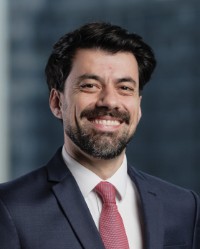

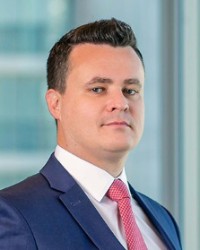

Machado Meyer is recognised for pioneering crisis management as a formal legal discipline in Brazil, offering agile, business-focused solutions in high-stakes scenarios. With 22 partners and 108 qualified lawyers across offices in São Paulo, Rio de Janeiro, Brasília and Belo Horizonte, the team combines legal intelligence, corporate insight and crisis response expertise to deliver tailored strategies. Notable recent work includes advising on matters related to the fatal Voepass aircraft crash, assisting Braskem in a Senate CPI regarding soil subsidence in Maceió and advising Samarco in negotiating a historic BRL170 billion settlement for the Fundão dam collapse. These cases highlight the team’s ability to mitigate civil, administrative and criminal liability in complex, high-profile crises.
Latin America 2026: Crisis Management in a Time of Political Complexity
Those who work in crisis management know that a crisis is never just a legal problem, or just a technical problem, or just a communications problem. Crises are inherently multidimensional, involving technical, social, legal and political layers that overlap, interact and feed back into one another. It is with this perspective that this chapter of the guide addresses the current moment in Latin America and how it is reshaping crisis management across the region.
An election year, in itself, already adds significant complexity to crisis management, and Latin America is currently in the midst of a particularly intense electoral cycle. Brazil will hold general elections, for president, 27 governors and the full Congress, in October 2026. Colombia will elect its next president and parliament in May of the same year. Peru heads to the polls in 2026 amid successive political crises.
The connection between electoral cycles and crisis management is not merely theoretical. It is structural. During election periods, regulators face pressure to demonstrate toughness, legislators see opportunities for visibility, and prosecutors are aware that high-profile enforcement actions attract public attention. Media outlets dedicate more airtime to stories that resonate with voters, and corporate crises – particularly those involving environmental damage, public health or consumer harm – are precisely the kind of stories that do. The result is that a crisis, which in a non-electoral year might be managed through quiet negotiation and technical remediation, can, in an election year, escalate rapidly into a public spectacle with consequences that far exceed the underlying event.
The dynamic is well known to crisis practitioners: crises generate coverage, coverage generates visibility, visibility influences votes – and this chain operates simultaneously across multiple countries, multiplying the exposure of companies with a regional presence.
The geopolitical landscape does not merely form the backdrop to corporate crises. It can amplify, distort and complicate them, particularly when they involve multinational companies or strategic sectors. The current United States government has adopted an increasingly assertive posture towards the region, with aggressive tariff policies, intensified sanctions, immigration pressure, and efforts to expand its influence over Latin American governments. This posture evokes, in many respects, the so-called Big Stick policy formulated by Theodore Roosevelt, which held that the United States reserved the right to intervene in Western Hemisphere nations to protect its strategic interests. The intervention in Venezuela, the use of tariffs as instruments of political pressure, and the conditioning of diplomatic relations on unilateral concessions are contemporary manifestations of this logic.
Nor is it only events within the region that reverberate in Latin American crisis management. For example, the European Union, through the Corporate Sustainability Due Diligence Directive (CS3D), the Deforestation Regulation (EUDR) and the Forced Labour Regulation, is constructing a regulatory framework that imposes extraterritorial obligations on companies with supply chains reaching into Latin America, with the potential to transform a local crisis into transatlantic litigation before European courts.
Amid these political sensitivities, there is a further development that changes the practical landscape of crisis management: the global growth of third-party litigation funding. The financing of litigation by specialised investment funds is now an established reality worldwide, and its effects are increasingly present in Latin America. In practice, litigation funding means that a local crisis can more easily acquire an international dimension, as claimants who would not previously have had the resources to pursue claims in foreign jurisdictions now gain the financial capacity to do so. This was far less common in the past, and it changes the calculus of crisis management significantly.
Against this backdrop, this chapter of the guide examines the current particularities of crisis management in the region, and what practitioners and companies operating in Latin America can do to prepare.
The anatomy of a crisis
Experience shows that corporate crises unfold in overlapping layers, each with its own logic, actors and timeline. Understanding these layers and how they interact is the first step in navigating the complexity.
An important caveat: although this chapter of the guide addresses Latin America as a region, the countries within it differ significantly in their legal systems, political cultures, degree of institutional development, and integration into the global economy. Within each country, distinct realities coexist, and a crisis in a metropolitan area may have entirely different dynamics from a crisis in a rural zone or on indigenous territory. The reflections that follow identify regional trends and patterns, but their application will always require attention to the particularities of the country and context at hand.
The technical layer
The immediate technical response is, as a rule, the first front of action: engineering assessments, environmental remediation, operational shutdowns or restarts, and containment of physical damage. This is the layer in which sector specialists (engineers, environmental scientists, safety professionals) take the lead. Although it is often the most objective of the layers, the technical response conditions all the others: the speed and quality of technical containment define the perimeter of the damage and, consequently, the scope of the social, legal and political exposure that will follow.
The social layer
Corporate crises frequently affect communities whose livelihoods, homes or health depend directly on the impacted environment. Social mobilisation is rapid and sophisticated: civil society organisations, social movements and digital activism networks can project a local crisis onto the national and international stage within hours.
In Latin America, this layer acquires a specificity that distinguishes the region from others: the indigenous and originary community dimension is frequently central, particularly in countries such as Peru, Ecuador, Colombia and Chile. ILO Convention 169 (free, prior and informed consultation), ratified by the majority of countries in the region, is invoked regularly and can paralyse entire operations. The absence or deficiency of the consultation process can result in the annulment of concessions and environmental licences, as established by consolidated jurisprudence in national constitutional courts and the Inter-American Court of Human Rights. For indigenous communities, territory is not merely an economic resource but a constitutive element of cultural and spiritual identity, meaning environmental crises on indigenous lands are perceived as existential threats, exponentially increasing the intensity of the response. For companies in the mining, energy and infrastructure sectors, the indigenous dimension is frequently the epicentre of the crisis.
The legal layer
Crises attract litigation from multiple directions simultaneously. Individual lawsuits, class actions, prosecutorial investigations, administrative proceedings and criminal inquiries proceed in parallel, each with its own deadlines, rules and risks.
With respect to collective litigation, Brazil appears to be the most advanced jurisdiction, with a consolidated system of public civil actions and class actions developed since the mid-1980s. However, this is not an isolated phenomenon. The Ibero-American Model Code for Collective Proceedings (2004) established a tripartite classification (diffuse rights, collective rights and homogeneous individual rights) that has influenced legislation across the region. The regional trend is towards expansion of these mechanisms, meaning collective litigation is a growing, not diminishing, risk for companies operating in Latin America.
The political layer
Corporate crises in Latin America invariably acquire a political dimension. Governors, mayors, ministers and regulators are compelled to take public positions, frequently shaped by electoral calculations. In certain countries, the State’s response may include direct administrative interventions, revocation of concessions or coercive measures.
To this domestic political dimension, a geopolitical dimension is increasingly being added. The posture of the United States government creates specific risks: sanctions can generate sudden crises for companies maintaining commercial relationships with sanctioned entities; tariffs can be imposed as instruments of political pressure; and the oscillation between US deregulation and European regulatory pressure places companies before difficult strategic dilemmas. Corporate crises involving multinationals or strategic sectors can be captured by geopolitical narratives entirely beyond the company’s control.
At the same time, it is worth noting that, at the time of publication of the guide (24 March 2026), Latin America is currently distant from the major armed conflicts shaping the global landscape. This gives the region a differentiated position as an investment destination, but requires companies to understand and manage the sources of complexity particular to it.
The cross-border dimension: sovereignty, litigation and regulation
Latin America is a region historically shaped by the colonial experience and by the long struggle of its nations for self-determination and sovereignty. This inheritance manifests itself in the contemporary management of corporate crises. There is a growing tension between the sovereign right of Latin American states to regulate their economies and resolve their crises on their own terms and, on the other, the claim of foreign jurisdictions, particularly European and North American, to set standards, judge conduct, and ultimately substitute local jurisdiction when they deem it insufficient.
This tension has found concrete expression in what practitioners call the “second wave” of international litigation. The pattern is recognisable: a major corporate crisis occurs in a Latin American country; the company engages with local authorities, negotiates settlements, submits to domestic judicial proceedings, and reaches agreements intended to provide comprehensive resolution. Then, months or years later, a second front opens: lawsuits filed in European courts challenging the adequacy of those very agreements. Claimants, often supported by international NGOs and litigation funders, argue that the local resolution was insufficient or that the process did not meet international standards.
The implications are profound. For the company, a crisis believed resolved is reopened in a foreign jurisdiction, under different procedural rules and potentially different outcomes. For the Latin American legal system, the implicit message is that its courts and institutions are not reliable, a presumption that evokes dynamics the region has known since the colonial period. And, for future crisis resolution, the effect is corrosive: if companies cannot rely on the finality of local agreements, the incentive to invest in comprehensive domestic settlements is diminished, which ultimately harms the communities the foreign litigation purports to protect.
For companies operating in Latin America, this creates a dual risk: that solutions negotiated locally will be disregarded in foreign fora, and that the attempt at local resolution will be perceived as a strategy to avoid scrutiny abroad. Crisis management in the region must now be conducted with one eye on the domestic resolution and another on how that resolution will be perceived and potentially challenged in jurisdictions thousands of miles away.
A significant factor in this equation is the role of third-party litigation funding. Litigation funding is not, in itself, a new or objectionable phenomenon – it is a legitimate and increasingly established feature of the global legal landscape. What has changed is its practical effect: until recently, the cost of pursuing claims in European or US courts was prohibitive for most claimants, meaning the “second wave” remained largely theoretical. Today, litigation funding has removed that economic barrier, enabling lawsuits to be sustained in foreign jurisdictions regardless of the claimants’ own financial capacity. In a region with broad standing to bring collective claims, the availability of funding makes it considerably more likely that a crisis resolved locally will face renewed challenge abroad.
Why narrative matters: the speed of information and disinformation
The temptation for many companies is to focus primarily on the legal layer and assume that prevailing in court will resolve the crisis. This is an illusion. Crises are rarely decided in courtrooms alone. They are resolved through a combination of legal defence, negotiation with public authorities, engagement with affected communities, and careful management of public perception. In Latin America, where so many fronts are active simultaneously, communication strategy is central to crisis management.
Any corporate crisis will be amplified in real time. With so many simultaneous fronts, communication during a crisis requires unity of message. A company will be communicating with affected individuals, the press, regulators, investors and government officials, often all at once. These messages must be coherent, or the company risks undermining its own position.
The first communication, or the absence of one, defines the framing of the public narrative, and recovering control of the narrative once lost is exponentially more difficult than maintaining it from the outset. What a company says, or fails to say, in the initial hours can set the tone for everything that follows. A poorly calibrated initial response can create difficulties in future litigation, damage relationships with regulators, and erode public trust. Conversely, a well-crafted first message can open doors to negotiated solutions and demonstrate good faith to authorities and stakeholders. The speed of social media compresses this window to near zero: a crisis that decades ago would have allowed hours or days for assessment before a public statement now demands a response within minutes. The company’s first message will be captured, clipped and used. In an electoral environment, candidates and political actors will incorporate crisis-related content into their own communications. The window for shaping the narrative is extraordinarily short.
This demands preparation. Companies should have communication protocols in place before any crisis occurs, including pre-approved messaging frameworks that can be rapidly adapted. The ability to respond quickly and coherently is a competitive advantage.
Disinformation, fake news and artificial intelligence
To this challenge of speed is added a challenge of veracity. The electoral environment, in particular, is fertile ground for disinformation. False information may circulate about the causes of an incident, the parties responsible, the number of victims or compensation amounts. In an election year, fake news spreads even faster and may be instrumentalised politically. A false claim that gains traction can complicate negotiations, inflame public sentiment, and create pressure on authorities to take actions that may not be warranted by the facts.
Generative AI tools have raised this risk to a new level. Deepfakes of audio and video, including false statements attributed to executives, fabricated images of environmental damage and forged recordings, can now be produced at minimal cost and with remarkable realism. AI-generated content can reach millions before any denial is possible, and the tools are becoming more accessible. The combination of traditional disinformation with AI-generated fabrication creates a threat environment fundamentally different from what crisis practitioners faced even a few years ago.
Companies must be prepared to monitor information flows and respond rapidly to false content. This requires active social media monitoring, established official communication channels, prior relationships with credible media outlets, and judicial measures to remove demonstrably false content. Crisis management now demands protocols for identifying and responding to fabricated content – a competence that did not form part of the traditional crisis practitioner’s repertoire.
Navigating the complexity: what makes the difference
What distinguishes companies that navigate crises successfully in Latin America from those consumed by them? Experience suggests a set of practices that, while not guaranteeing outcomes, significantly improve the prospects for adequate resolution.
Accept the complexity
The temptation to reduce a crisis to a single problem – whether legal, technical or communicational – and to designate a single point of contact is understandable but counterproductive. Multidimensional crises demand multidimensional responses. In Latin America, the geopolitical dimension is an additional layer that cannot be ignored, one that demands a capacity for political analysis and international relations that goes beyond the traditional legal repertoire.
Engage the right stakeholders early
The speed of engagement is decisive. In Latin America, the relevant stakeholders include not only national authorities (regulators, prosecutors’ offices, the executive branch) but, where applicable, indigenous communities – respecting their own governance structures – and diplomatic representations. The imposition of dialogue mechanisms that are incompatible with the governance structures of affected communities is, in itself, a normative violation and a strategic error.
Select multi-jurisdictional and multidisciplinary advisers
Choose advisers who understand not only the local jurisdiction, but who can co-ordinate responses across multiple countries and, where necessary, in international jurisdictions.
Monitor the geopolitical environment
Tracking sanctions, regional tensions and electoral calendars should be a permanent component of crisis planning, not a reaction to events that have already occurred. Companies with operations across multiple Latin American countries should develop scenarios that contemplate changes in the political and regulatory environment of their countries of operation.
Prepare for cross-border litigation
Develop strategies that anticipate the possibility of litigation in multiple jurisdictions, whether domestic, regional or international. Agreements and judgments should be structured with this reality in mind.
Pursue creative solutions beyond traditional litigation
The regional experience offers examples of resolution mechanisms that go beyond conventional courtroom proceedings as models for resolving crises in contexts of particular social complexity:
- extrajudicial compensation chambers;
- dialogue roundtables between companies, communities and government;
- mediation by specialised public bodies; and
- transitional justice mechanisms.
These mechanisms demonstrate that traditional litigation is not always the most effective path – and that creative solutions, adapted to the context of each country, can deliver faster, more comprehensive and more durable results. More than that: solutions negotiated and built locally are, in principle, the best defence against the “second wave” of litigation in foreign jurisdictions – because they demonstrate that the local system is capable of providing adequate redress.
Prepare executives for exposure
The criminalisation of corporate conduct is a consolidated trend in the region – individual criminal liability in environmental crises, anti-corruption matters and consumer protection. Executives may be called to testify before parliamentary commissions, face criminal investigations, and, in extreme scenarios, detention. Personal preparation, including testimony simulations, crisis communication protocols and contingency plans for personal risk scenarios, is a component of crisis management that, although sensitive, is essential.
Integrate government relations into crisis management
Close co-ordination between legal, communications and government relations teams is indispensable. In an electoral context, dialogue with authorities must be conducted with heightened attention to the political calendar of each country of operation – which requires not only legal competence but sophisticated political awareness and the ability to anticipate how government actors may respond to a crisis as a function of their own electoral incentives.
Recommendations for companies operating in Latin America
The current electoral calendar across several countries, combined with the geopolitical and regulatory dynamics described above, adds layers of complexity to crisis management that companies cannot afford to ignore. For those operating in Latin America, whether as established local businesses or as international investors, several practical recommendations emerge from the analysis above.
First, understand that crisis management in Latin America requires reading the political environment, and, in many cases, reading it across multiple countries simultaneously. Monitor electoral developments in each jurisdiction where you operate. Understand which officials are seeking election or re-election and how that may influence their posture towards your sector or your company. Anticipate how crisis-related events may be instrumentalised in political campaigns, not just in one country, but across the region.
Second, invest in preparation before a crisis occurs. Develop crisis governance structures that account for the multi-jurisdictional reality of the region. Map your stakeholders, including political stakeholders, indigenous communities, regulators and prosecutors’ offices, in each country of operation. Create contingency communication plans that can be activated across borders and in multiple languages. The time to build these capabilities is before you need them.
Third, select advisers who understand the multidimensional nature of crisis management. Look for demonstrated experience in managing the legal, political, social and communication dimensions simultaneously. Ask about their experience with negotiated and creative solutions, not just litigation victories. In a region where the indigenous dimension, the geopolitical environment and the cross-border litigation landscape all demand specialist knowledge, the composition of the advisory team can be the difference between resolution and escalation.
Finally, recognise that crisis resolution in Latin America often requires engagement rather than pure defence. The institutions, communities and stakeholders involved in crises across the region are not going away. Building constructive relationships with them, while protecting your legitimate interests, is typically the path to sustainable resolution. In a world where local settlements can be challenged in foreign courts, the quality and comprehensiveness of that engagement may ultimately prove to be your strongest argument, wherever the dispute is heard.
Machado Meyer Advogados
Av. Brig. Faria Lima, 3200
5th floor
Itaim Bibi
São Paulo - SP
01453-050
Brazil
+55 113 150 7000
comunicacao@machadomeyer.com.br www.machadomeyer.com.br
Trends and Developments
Authors
Machado Meyer is recognised for pioneering crisis management as a formal legal discipline in Brazil, offering agile, business-focused solutions in high-stakes scenarios. With 22 partners and 108 qualified lawyers across offices in São Paulo, Rio de Janeiro, Brasília and Belo Horizonte, the team combines legal intelligence, corporate insight and crisis response expertise to deliver tailored strategies. Notable recent work includes advising on matters related to the fatal Voepass aircraft crash, assisting Braskem in a Senate CPI regarding soil subsidence in Maceió and advising Samarco in negotiating a historic BRL170 billion settlement for the Fundão dam collapse. These cases highlight the team’s ability to mitigate civil, administrative and criminal liability in complex, high-profile crises.
