Debt Finance 2026
Netherlands
Authors

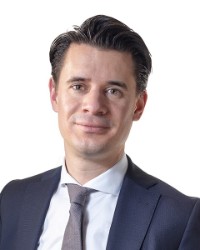

CMS is a global, future-facing law firm with offices in more than 45 countries and over 7,200 legal professionals. The firm’s full-service Banking and Finance department in Amsterdam comprises more than 20 lawyers and is part of the CMS International Banking and Finance Group, which consists of over 550 lawyers globally. CMS’s lawyers provide local and international expertise across the full spectrum of banking and finance, including asset finance, leveraged finance, structured finance, debt capital markets (including high-yield debt offerings), financial restructurings, acquisition finance and project finance. The firm offers pragmatic business solutions, based on an in-depth understanding of the industries of its clients, be they banks or corporations, financial service providers or other regulated operators, investment funds or public institutions. In addition, CMS has deep-rooted expertise in key sectors including funds, capital markets, real estate, energy and mobility. The firm’s team members are regularly recognised as leaders in their field.
1. Market
1.1 Debt Finance Market Performance
The Dutch debt financing market has performed strongly over the past year. As of March 2025, Dutch banks had EUR277 billion in outstanding corporate loans, reflecting 5% year-on-year growth – well above the euro area average of 2.3%. Since mid-2024, Dutch corporate lending growth has almost consistently outperformed the rest of the euro area, reversing a decade-long trend of underperformance. This upturn has been supported by European Central Bank (ECB) rate cuts since mid-2024 and relatively less stringent lending criteria applied by Dutch banks compared to their euro area peers.
Meanwhile, a decline in debt securities issuance by Dutch corporates has driven borrowers back to bank lending. For international lenders, the Netherlands remains highly attractive: multinationals channel substantial intra-group financing through Dutch captive financial institutions, with over EUR154 billion in outstanding loans to Dutch companies, and with approximately 85% originating from outside the EU. Risks to this outlook include geopolitical tensions and trade policy uncertainty, which continue to weigh on business confidence.
1.2 Market Players
The Dutch debt financing market is highly concentrated, with a small number of large domestic banks – ING, Rabobank, ABN AMRO and de Volksbank – dominating corporate and mortgage lending, together accounting for almost 80% of sector balance-sheet assets. The share of foreign banks in the Dutch market remains limited compared to other European countries. International banks nevertheless play a significant role in larger syndicated and cross-border transactions, while the Dutch banking sector itself is globally active, with international activities having represented up to 52% of total assets at their peak.
Alongside traditional bank lending, alternative providers are gaining ground: fintech lending platforms more than doubled their outstanding loans to EUR4.4 billion by 2024, with a growing share of SME financing reaching 2.8%. Institutional investors – pension funds, insurers and investment funds – have become the second-largest mortgage lenders, with over EUR174 billion on their balance sheets. Additionally, captive financial institutions of multinationals extended over EUR154 billion in intra-group loans to Dutch companies, representing roughly 13% of GDP. Private credit markets are also expanding, with increasing interconnectedness between banks and non-bank financial intermediaries noted by De Nederlandsche Bank (DNB) as a financial stability consideration. Banks are expected to remain the dominant providers of finance for EU strategic priorities such as the green transition and digitalisation, though deeper capital markets and non-bank sources will also be needed.
1.3 Geopolitical Considerations
The Dutch debt financing market has been materially affected by successive geopolitical and macroeconomic shocks. The war in Ukraine triggered sharp energy price rises – oil up 30% and gas up over 250% – prompting the ECB to raise interest rates aggressively, which increased borrowing costs and dampened credit demand. The escalating Middle East conflict has compounded this, with oil prices rising a further 45% and gas doubling, pushing Dutch GDP growth down to 0.8% in 2026 and inflation to 2.7%. Firms are postponing investment due to uncertainty, rising energy costs and higher interest rates. Meanwhile, US trade tariffs have added further pressure; despite the EU–US trade agreement capping tariffs at 15%, uncertainty remains significantly elevated, weighing on business sentiment and slowing global trade growth.
DNB notes that higher risk premia on credit and equity reflect financial market unrest, while the Authority for the Financial Markets (AFM) reports increased volatility and liquidity risks for financial undertakings. For both national and international lenders, this environment has required enhanced sanctions and supply-chain diligence, more conservative underwriting, and wider credit spreads. Transaction timelines have lengthened as parties navigate geopolitical risk provisions and heightened regulatory scrutiny. DNB stress tests confirm that Dutch banks remain resilient – with core capital ratios staying above 15.7% even under adverse scenarios – but credit risks are rising. The structural shift towards greater geopolitical risk awareness and tighter diligence requirements is expected to persist, with DNB characterising the current environment as “code amber” for financial stability.
2. Types of Transactions
2.1 Debt Finance Transactions
The Dutch debt financing market features a broad range of transaction types. Traditional corporate lending remains the core activity, with banks having lent a total of EUR340 billion to the Dutch business sector as of March 2026, of which real estate finance alone accounts for approximately EUR149 billion. For larger or more complex financing needs, syndicated loans and project finance – sometimes combined with public guarantees – are commonly used by both national and international lenders.
Securitisation is a well-established funding tool: although traditionally dominated by residential mortgage-backed securities, the Dutch securitisation market has diversified significantly, with non-mortgage loans (car loans, consumer credit, SME equipment leases) rising from 12% to 29% of the market between 2020 and 2025. Covered bonds backed by residential mortgages represent another significant bank funding instrument, with outstanding volumes reaching EUR218 billion.
Leveraged and acquisition finance also features in the market, particularly through syndicated structures arranged by banking syndicates with distribution to institutional investors and collateralised loan obligations (CLOs). The growing private credit market – corporate loans provided by non-bank institutions such as pension funds and insurers – is increasingly important, with total private credit exposures of the largest Dutch insurers exceeding EUR16 billion. Non-bank entities including finance companies and fintech platforms further broaden the landscape of available financing.
3. Structure
3.1 Debt Finance Transaction Structure
How Are Debt Finance Transactions Typically Structured?
Dutch debt finance transactions are predominantly bank-led, reflecting the concentrated nature of the banking sector where four major banks account for almost 80% of sector assets. Traditional corporate lending forms the backbone, with EUR340 billion extended to Dutch businesses as of March 2026. For straightforward, low-to-moderate risk projects, bilateral term loans are common. Larger or more complex transactions are structured as syndicated loans or project finance, sometimes combined with public guarantees.
Securitisation is used for balance-sheet management and risk transfer, increasingly extending beyond residential mortgages to car loans, consumer credit and SME equipment leases. Covered bonds backed by residential mortgages (EUR218 billion outstanding) provide a further important bank funding channel. Interest rates average around 3.4% across corporate lending, with real estate borrowers paying lower rates due to property collateral.
Most Common Forms of Bank Loan Facilities
The most common bank loan facilities in the Netherlands include bilateral term loans and revolving credit facilities for corporate borrowers, syndicated loan facilities for larger transactions, and mortgage loans for both residential and commercial real estate. Real estate finance is the single largest segment, with approximately EUR149 billion extended to companies in that sector. SME lending is also significant, representing almost half of total corporate lending. Banks offer overdraft facilities and cash pooling arrangements, which DNB tracks, both including and excluding notional cash pooling. For complex financing needs, syndicated facilities and project finance structures – potentially combined with public guarantees – are used. The private credit market is growing alongside traditional bank facilities, with direct lending and structured finance as its most common forms.
Advantages and Disadvantages of Syndicated Bank Loans Versus Debt Securities
Syndicated bank loans
These have highly customisable terms, with the ability to amend and restructure through direct lender relationships. They have faster execution for established banking relationships; terms remain private.
Interest rates reflect bilateral credit risk assessment; SMEs pay 3.6% versus 3.1% for larger firms.
They are dominant in the Netherlands given the bank-oriented financial system; capital market financing remains relatively limited in the EU. Securitisation allows banks to transfer risk and free up capital for new lending.
Debt securities
For these securities, standardised terms are less amenable to amendment; changes require bondholder consent. There is also a longer lead time due to prospectus requirements and public disclosure obligations.
Such securities can achieve tighter pricing for investment-grade issuers accessing deep capital markets. They require sufficient credit standing and scale; Dutch institutional investors hold over EUR1,383 billion in debt securities.
Direct capital market access diversifies funding sources beyond bank dependency.
Types of Investors in Bank Loan and Debt Securities Financings
In bank loan markets, the four major Dutch banks (ING, Rabobank, ABN AMRO and de Volksbank) are the primary lenders, complemented by international banks participating in syndicated facilities. Non-bank lenders are growing in importance: Dutch fintech platforms have reached EUR4.4 billion in outstanding loans, while private credit provided by insurers and pension funds reached a combined approximately EUR30 billion by 2025. In debt securities markets, institutional investors – investment funds, insurers and pension funds – hold over 68% of total Dutch securities holdings. Dutch pension funds purchased EUR27 billion in European debt securities in 2025 alone, favouring sovereign bonds. Insurers invest mainly in bonds (36% of assets), investment funds (26%) and mortgage loans (29%). CLO investors and asset managers also participate in structured credit, though Dutch banks’ combined share of the global leveraged loan market stands at roughly 1.5%.
4. Documentation
4.1 Transaction Documentation
Dutch debt finance transactions typically involve two layers of documentation: the facility documentation and the security documentation. For syndicated and bilateral loans, the market standard is the LMA (Loan Market Association) facility agreement, frequently governed by English law for cross-border transactions or Dutch law for domestic deals.
Security over Dutch assets requires Dutch-law documents governed by the Dutch Civil Code (Burgerlijk Wetboek). A mortgage (hypotheek) over registered property must be created by notarial deed and registered in the public registers, specifying the secured claim and the maximum recoverable amount. Pledges (pandrecht) over movable assets and receivables can be established by authentic deed or registered private deed – either as a disclosed or undisclosed pledge, with the latter not requiring notice to debtors provided the receivable already exists or arises from an existing legal relationship.
For securitisations, additional documentation includes mortgage receivables purchase agreements, issuer rights pledge agreements, trust deeds, liquidity facility agreements and swap confirmations. Financial collateral arrangements under Book 7 of the Dutch Civil Code may permit the collateral taker to use or sell pledged assets and retain proceeds. Both national and international lenders must navigate these Dutch-law formalities alongside their facility agreements.
4.2 Impact of Types of Investors
The types of investors participating in a Dutch bank loan facility materially influence its terms, pricing and structure. In the concentrated Dutch market – where the four major banks (ING, Rabobank, ABN AMRO and de Volksbank) dominate – bilateral facilities from relationship banks tend to offer greater flexibility in terms of covenants, waivers and amendments, as the borrower negotiates directly with a single counterparty. Where syndicated facilities involve international banks alongside Dutch lenders, documentation typically follows LMA standards, and terms may become more standardised to accommodate a broader lender group.
The growing presence of institutional investors and private credit funds introduces different dynamics. Dutch insurers and pension funds – with combined private credit exposures of approximately EUR30 billion by 2025 – favour direct lending and structured finance with longer maturities matching their liability profiles, but typically require stronger information rights and more conservative credit protections. Private credit providers may accept higher leverage or more bespoke structures than traditional banks, but at a pricing premium reflecting their higher cost of capital and the illiquidity of their investments.
For SME borrowers, investor type directly affects pricing: banks charge SMEs an average interest rate of approximately 3.6%, compared to around 3.1% for larger corporates, partly due to the information asymmetry banks face with smaller companies. Fintech lenders offer faster, more automated processes with more lenient requirements regarding financial history, but at correspondingly higher rates. When securitisation vehicles or covered bond investors are part of the funding chain, loan terms must comply with eligibility criteria – including requirements around homogeneity of assets, true sale structures and reporting obligations – which can constrain the flexibility of underlying loan documentation.
4.3 Jurisdiction-Specific Terms
Cross-border loan documentation involving Dutch borrowers or Dutch-law security requires several jurisdiction-specific provisions. Where security is taken over Dutch registered property, a mortgage (hypotheek) must be created by notarial deed executed before a Dutch civil-law notary and registered in the public registers, with the mortgagee electing domicile in the Netherlands. Pledges over receivables can be structured as undisclosed (stil pandrecht) by authentic or registered private deed without notice to debtors, but only where the receivable exists or arises from an existing legal relationship at the time of creation. Cross-border lenders frequently use a parallel debt or similar structure to enable a security agent – typically not the direct creditor under the facility – to hold and enforce Dutch-law security, as Dutch law requires the pledgee to be the creditor of the secured claim.
Financial collateral arrangements under Book 7 of the Dutch Civil Code permit contractual appropriation and use rights over pledged securities. For cross-border use of credit claims as collateral, DNB’s framework requires specific deeds of transfer and additional terms and conditions. Additionally, the EU Securitisation Regulation imposes transparency, risk-retention and due diligence requirements on transactions qualifying as securitisations under Dutch supervision. International lenders should also account for Dutch anti-money laundering (AML) obligations under the Anti-Money Laundering and Anti-Terrorist Financing Act (Wwft) and sanctions compliance requirements under the Sanctions Act 1977, which apply to all financial institutions operating in the Netherlands.
5. Guarantees and Security
5.1 Guarantee and Security Packages
Types of Assets
The assets typically available as collateral to lenders include registered property (registergoederen), movable assets (roerende zaken), receivables (vorderingen) and shares.
Types of Security
Dutch law does not recognise the concepts of floating and fixed charges as known in common law jurisdictions. Instead, security interests are categorised as either collateral security (such as mortgages and pledges) or personal security (including joint and several debtorship, suretyship and guarantees). Collateral security is established through a right of mortgage – applicable to registered property such as real estate, land, aircraft or ships – or a right of pledge, which covers all other types of collateral.
Pledges can be created in advance over future movable assets and receivables. When the pledgor acquires such assets or when receivables arise, these are automatically encumbered. However, for undisclosed pledges over future receivables, only those arising from existing legal relationships at the time of the pledge are covered; new relationships require new pledges.
To streamline the process, Dutch banks use a collective deed of pledge, allowing them to register undisclosed pledges over all (future) receivables without the debtor’s ongoing involvement. This system, which involves frequent registration with the Dutch tax authorities, is somewhat similar to an English floating charge but differs in that it requires repeated registrations and cannot cover registered property or shares, which must be pledged by separate notarial deeds. Other assets can be pledged through omnibus agreements, subject to certain limitations.
Formalities and Perfection Requirements
The formalities and perfection requirements depend on the specific type of security.
A mortgage must be executed as a notarial deed and must thereafter be registered with the relevant register of the Dutch public land registry.
The method of perfecting the rights of the pledge depends on the collateral that is purported to be pledged and whether this collateral is pledged by way of a disclosed or an undisclosed right of the pledge.
- A pledge over shares must be executed using a notarial deed.
- A pledge over movable assets can be perfected:
- without bringing the movable asset under the pledgee's control, by execution of an authentic (notarial) deed or by execution of a private deed that is thereafter registered with the Dutch tax authorities; or
- by bringing the movable assets under the pledgee’s control.
- A pledge over receivables can be created by way of a disclosed or an undisclosed pledge:
- disclosed – the right of pledge should be perfected by notification thereof from the pledgor to the relevant debtor; and
- undisclosed – the right of pledge should be perfected by execution of an authentic (notarial deed) or by execution of a private deed that is thereafter registered with the Dutch tax authorities.
A pledge over shares is registered in the shareholder’s register of the company whose shares are being pledged. Such registration is not a requirement for perfection of the right of pledge. The shareholder’s register is a hard copy of the register, which is kept by the company.
5.2 Key Considerations for Security and Guarantees
Agent and Trust Concepts/Parallel Debt
The concept of a “trust”, as it exists in common law jurisdictions, does not have a direct equivalent under Dutch law. Instead, syndicated lending transactions under Dutch law typically rely on a structure known as a parallel debt arrangement. Under this mechanism, each obligor undertakes to pay the security agent an amount equal to the amounts it owes to the finance parties under the finance documents (commonly referred to as the “underlying liabilities”). The security granted then secures the parallel debt obligations, rather than the underlying liabilities directly.
In the event of enforcement, the security agent is contractually required to apply the proceeds towards repayment of the underlying liabilities, following the distribution order agreed upon by the finance parties. The parallel debt agreement provides that when an underlying liability is repaid (in whole or in part) the corresponding parallel debt is automatically considered repaid to the same extent – and vice versa.
An alternative approach is to grant security rights to multiple beneficiaries on a joint estate basis, as contemplated by Section 3:166 and following provisions of the Dutch Civil Code. Under this structure, each beneficiary holds a share in the security right (as defined in Section 3:166(2) of the Dutch Civil Code) that corresponds proportionally to its share of the total secured obligations.
Where this approach is adopted, the beneficiaries should conclude an intercreditor agreement that governs the conditions for enforcement of the security. The agreement should also provide for the appointment of an administrator to act on behalf of the beneficiaries in connection with any enforcement action. One of the beneficiaries may itself be appointed as administrator. It should be noted that any change in the composition of the lending group will require appropriate amendments to the security documentation to ensure that incoming lenders are properly included as beneficiaries under the security arrangements.
Restrictions on Upstream Guarantees
Whether or not restrictions apply to the provision of related company guarantees depends on the type of company providing the guarantee. Private companies with limited liability (BVs) are, in principle, not restricted in providing guarantees to related companies, as long as the granting of a guarantee is in the corporate interest of the grantor.
Public companies limited by shares (NVs) are subject to Dutch regulations on financial assistance. Therefore, an NV and its subsidiaries may not grant security or guarantee the obligations of a related company if such security or guarantee is granted to subscribe for or acquire shares in its capital or depositary receipts for those shares.
Under Dutch law, there are no limitations on the ability of non-Dutch, related companies to provide guarantees.
Financial Assistance
Under Dutch law, strict financial assistance rules apply to NVs and their subsidiaries. NVs are prohibited from providing security, guarantees or otherwise binding themselves (jointly or otherwise) to support the subscription or acquisition of their own shares or depositary receipts. Additionally, NVs and their subsidiaries face restrictions on granting loans to related companies for such purposes. These loans are only permitted if a board resolution is adopted and pre-approved by the general meeting of shareholders. Further conditions include that:
- the loan must be on arm’s length terms;
- the company’s net assets, after the loan, must not fall below the statutory minimum;
- the creditworthiness of the borrower must be carefully assessed; and
- if the loan is for acquiring shares, the acquisition price must be fair.
Transactions in breach of these rules, especially if deemed fraudulent conveyances, can be nullified.
In contrast, BVs are not subject to specific financial assistance prohibitions. However, BV directors must ensure that:
- any such transaction is in the company’s corporate interest;
- the company can continue to meet its obligations; and
- all potential conflicts of interest are disclosed.
The works council and supervisory board, if present, should also be informed.
6. Intercreditor Issues
6.1 Role of Intercreditor Arrangements
Under Dutch law, creditors generally share equally (pari passu) in the proceeds of a debtor’s assets, though Dutch law permits intercreditor arrangements based on both lien and claim subordination.
Lien priority is determined by the order of perfection, and certain creditors – such as those with rights of retention, the Dutch tax authority and the bankruptcy trustee – enjoy statutory preference.
Creditors may also contractually agree to subordinate their claims below the ranking they would otherwise hold by law, typically through intercreditor or subordination agreements. These agreements serve to rank creditors’ debt and entitlements to enforcement proceeds, and to regulate creditor conduct – for example, governing when security may be enforced and when payments may be made to a particular class of creditor.
Dutch intercreditor arrangements are broadly comparable to those used in the EU, with documentation ranging from short-form priority arrangements to full-length intercreditor agreements based on the relevant LMA templates.
6.2 Contractual v Legal Subordination
The priority of liens depends on the time the relevant lien is created. However, secured creditors may agree on the application of enforcement proceeds among themselves. Such contractual arrangements are usually contained in the intercreditor agreement, requiring the security agent or trustee to enforce the transaction security and distribute the enforcement proceeds to the various secured creditors in accordance with their ranking. Usually, senior and junior lenders share a single security package, and junior claims are subordinated on a contractual basis.
Article 3:277(2) of the Dutch Civil Code provides the statutory basis for contractual subordination (achterstelling). A creditor may agree with its debtor that its claim shall rank lower than the ranking conferred by law, either in respect of all other creditors or only certain specified creditors. A subordination agreement will be interpreted in accordance with the intentions of the parties, and its meaning is primarily determined with reference to the terms of the agreement.
Structural subordination relies on corporate structure rather than contract: the junior lender lends to the parent company while the senior lender lends to the group, with funds only flowing upstream to repay the junior loan after the senior debt is satisfied, typically reinforced by restrictions in the senior loan documentation preventing cash leakage.
7. Enforcement
7.1 Process for Enforcement of Security
A security interest under Dutch law, such as a right of mortgage or a right of pledge, may only be enforced upon the occurrence of a default (verzuim) in respect of the secured payment obligation. The enforcement process is governed by the Dutch Civil Code and the Dutch Code of Civil Procedure, with the specific route depending on the type of security and specific arrangements as agreed between the parties.
Mortgage Over Registered Assets
The standard enforcement of a mortgage over registered assets is through a public auction, following statutory procedures. Alternatively, a court-approved private sale may be requested if more efficient. Sale proceeds are used to repay the outstanding mortgage debt, accrued interest and enforcement costs, with any surplus returned to the borrower or other entitled parties.
Pledge Over Registered Shares
Dutch law provides two main methods for enforcing a pledge over registered shares.
Public sale (auction)
The default method is a public sale (veiling) of the pledged shares. The sale must be announced in accordance with statutory requirements, typically through a public notice. The sale is usually conducted by a civil law notary, and the proceeds are used to satisfy the secured obligations, with any surplus returned to the pledgor.
Private sale (negotiated sale)
A private sale is possible if the court grants permission or if all interested parties (including the pledgor and any other secured creditors) consent. This method is often preferred for practical reasons, as it may achieve a better price and is less cumbersome than a public auction.
The transfer of shares must comply with the articles of association of the company and any applicable regulatory requirements. Restrictions on enforcement are typically removed before the pledge is granted.
Pledge Over Movable Assets
Generally, enforcement follows the same procedures as described above under a pledge over registered shares.
Pledge Over Receivables
Enforcement is typically by collection of the receivables, with the proceeds used to satisfy the secured debt. For a disclosed pledge, the debtor must be notified of the default and/or enforcement. For an undisclosed pledge, the existence of the pledge must first be notified to the debtor before enforcement. Once notified, the debtor can only discharge the receivables by paying the pledgee. Generally, enforcement follows the same procedures as described above under a pledge over registered shares.
Pledge Over Intellectual Property Rights
Generally, enforcement follows the same procedures as described above under a pledge over registered shares. However, certain intellectual property rights may be subject to specific statutory rules regarding enforcement, such as the Patents Act 1995 (Rijksoctrooiwet 1995).
Security Over Financial Collateral
The Collateral Directive (2002/47/EC) has been transposed into Dutch law, allowing security interests over securities (effecten), cash in bank accounts, and credit claims to be created through either a title transfer or a security financial collateral arrangement. There are no formalities required for establishing such security, except that the arrangement must be evidenced in writing (or an equivalent form) and the collateral must be delivered, transferred, held, registered or otherwise designated so that it is in the possession or under the control of the party taking the security.
7.2 Enforcement of Foreign Judgments
Dutch courts recognise and enforce civil and commercial judgments from other EU member states in accordance with Regulation (EU) No 1215/2012 (Brussels I) and, in the case of uncontested claims, the European Enforcement Order Regulation. For certain non-EU countries – such as Switzerland, Norway, Iceland, Mexico, Singapore and Montenegro – judgments may be recognised if the relevant treaty conditions are fulfilled.
For judgments from countries without an applicable treaty, enforcement in the Netherlands generally requires re-litigation. However, Dutch courts may, under specific circumstances, issue a judgment that mirrors the foreign ruling. The extent to which this applies to default judgments remains unclear.
Arbitral awards are enforceable in the Netherlands if the award originates from a country that is a party to the 1958 New York Convention on the Recognition and Enforcement of Foreign Arbitral Awards. Enforcement is subject to the Convention’s provisions and the relevant rules in the Dutch Code of Civil Procedure.
8. Lenders’ Rights in Insolvency
8.1 Rescue and Reorganisation Procedures
In the Netherlands, there are several mechanisms available for companies facing financial distress that allow for rescue or reorganisation outside formal insolvency proceedings. These procedures are designed to help companies restructure their debts, operations or corporate structure without the stigma and consequences of formal bankruptcy (faillissement) or suspension of payments (surseance van betaling).
WHOA (Wet Homologatie Onderhands Akkoord) – the Dutch Scheme
The most significant development in recent years is the introduction of the WHOA, which came into effect on 1 January 2021. The WHOA provides a legal framework for companies to restructure their debts through a court-sanctioned private composition (agreement) with creditors and shareholders, without entering into formal insolvency proceedings.
Key features include the following:
- the debtor remains in control of the business (debtor-in-possession);
- the procedure can be initiated by the company or, in some cases, by creditors;
- the company can propose a restructuring plan to (some or all) creditors and shareholders;
- the plan can be made binding on dissenting creditors and shareholders if approved by the court (cram-down);
- the process is flexible and can be conducted publicly or privately; and
- the company can request a temporary stay of enforcement actions (moratorium) during negotiations.
Out-of-Court Workouts
Informal out-of-court workouts were present before the introduction of the WHOA, and are still commonly used. These are private negotiations between the company and its creditors to restructure debts or agree on new payment terms.
Key features include the following:
- no formal legal framework – based on voluntary agreement;
- typically used for smaller companies or where there are only a few creditors;
- no court involvement, so no ability to bind dissenting creditors; and
- often facilitated by financial advisers or mediators.
Lenders’ Rights
See 8.2 Main Insolvency Law Considerations.
8.2 Main Insolvency Law Considerations
When a Dutch borrower, security provider or guarantor becomes insolvent, several risk areas arise for lenders. These risks stem from Dutch insolvency law, the practicalities of enforcement, and the potential for challenges to security interests or guarantees. The following is a detailed overview of the key risk areas.
Risk of Claw-Back (Actio Pauliana)
Dutch insolvency law allows an insolvency administrator (curator) to challenge and potentially unwind transactions that were prejudicial to creditors. This includes the granting of security or guarantees shortly before insolvency, especially if the lender was aware of the debtor’s financial difficulties. Transactions can be set aside if they were not at arm’s length or if they unfairly favoured one creditor over others.
Moratorium on Enforcement
Upon the opening of insolvency proceedings (faillissement), a general stay is imposed on enforcement actions. Lenders may be prevented from enforcing their security or guarantees, except in limited circumstances (eg, certain financial collateral arrangements). This can delay or reduce recoveries.
Ranking and Priority Issues
Secured creditors generally have priority over unsecured creditors, but certain claims (such as preferential claims for employee wages or tax authorities) may rank ahead of or pari passu with secured claims. The value of the secured assets may also be insufficient to cover the outstanding debt, especially after costs of the insolvency estate are deducted.
Limitations on Guarantees and Security
Guarantees and security provided by Dutch entities may be subject to limitations, such as corporate benefit, financial assistance and ultra vires rules. If a guarantee or security is found to be outside the corporate purpose or not in the best interest of the company, it may be invalidated or limited in scope.
Set-Off Restrictions
Set-off rights may be restricted in insolvency. While Dutch law generally allows set-off, there are exceptions, particularly if the claim and counterclaim did not exist before the insolvency or if the set-off would prejudice other creditors.
Equitable Subordination
There is no Dutch law statutory provision pursuant to which shareholder loans are subordinated to the claims of other creditors. This means that, in principle, claims of shareholders shall not be subordinated and shall rank pari passu with other unsecured debt, unless there is a contractual subordination of shareholder claims.
Practical Enforcement Challenges and Cross-Border Complications
Enforcing security over certain assets (such as shares, intellectual property or receivables) can be complex and time-consuming in Dutch insolvency. If the borrower, security provider or guarantor has assets or operations outside the Netherlands, cross-border insolvency issues may arise, potentially complicating enforcement and recovery.
Order of Payment
Secured creditors are generally unaffected by bankruptcy, and a secured claim is paid out of the enforcement proceeds of the security right (ie, not out of the bankruptcy estate).
A bankruptcy trustee will first pay “estate claims” and thereafter the pre-insolvency claims, being preferential claims (the majority of which tend to be held by the tax authorities and social security board) and unsecured claims.
Pre-insolvency creditors must submit their claims to the bankruptcy trustee. Payments to pre-insolvency creditors can only take place on a pro rata basis.
Estate claims are generally claims incurred by the bankruptcy trustee in performing their duties, which, just like insolvency costs, have priority over the unsecured (ordinary) and preferred claims against the debtor.
In principle, the bankruptcy trustee may make payments to estate creditors and critical vendors. In the context of a bankruptcy, critical vendors are creditors that have a strong position because the estate requires their services (for example, a supplier whose products or services are essential to continue the business).
9. Tax and Regulatory Considerations
9.1 Tax Considerations
Withholding Taxes
The Netherlands generally does not impose withholding tax on interest payments made by Dutch resident entities to domestic and foreign third-party lenders. However, the Dutch Conditional Withholding Tax Act, which entered into force on 1 January 2021, introduced a conditional withholding tax on interest payments made to related entities established in designated low-tax jurisdictions as well as jurisdictions on the EU list of non-cooperative jurisdictions, and in certain abusive situations. The rate of this conditional withholding tax is aligned with the highest Dutch corporate income tax rate, which currently is 25.8%.
Accordingly, while most arm’s length interest payments to third-party lenders remain free of withholding tax, careful consideration must be given to the relationship between the borrower and lender (especially in an event of default) and the lender’s jurisdiction of residence. The facility agreement caters generally for the allocation of the risk of the conditional withholding tax.
In third-party financing situations, Dutch dividend withholding tax (at a rate of 15%) should in principle not be applicable, except if the debt is reclassified for tax purposes as equity because the terms and conditions are such that the lender effectively participates in the Dutch borrower as a shareholder. Based on case law, this is the case if:
- the remuneration on the loan is almost entirely dependent on the profits of the borrower;
- the loan is subordinated to all other creditors; and
- the loan has no fixed maturity date or a maturity exceeding 50 years.
Stamp Duty
Other than Dutch real estate transfer tax on the acquisition of (a right over) real estate in the Netherlands (or shares in a qualifying real estate company), the Netherlands does not levy stamp duty or similar duty on the execution, issuance or transfer of debt instruments, including loan agreements, promissory notes and bonds.
Other Taxes
Interest expenses incurred by a Dutch borrower are generally deductible for corporate income tax purposes, subject to a number of limitations. In particular, the generic interest deduction limitation under the Dutch earnings-stripping rule restricts the deductibility of net borrowing costs to the greater of 24.5% of tax EBITDA or EUR1 million. In addition, specific anti-avoidance provisions may apply to deny interest deductions in related-party financing scenarios, such as where the debt is linked to certain tainted transactions, including acquisitions of related-party shares or the distribution of profits to shareholders funded by related-party debt (or, in certain cases, third-party debt guaranteed by a related party).
Dutch value-added tax (VAT) is generally not charged on the provision of credit or the payment of interest, as financial services are exempt from VAT under Dutch law, though this exemption may limit the lender’s ability to recover input VAT on related costs.
9.2 Regulatory Considerations
Attracting Funds From the Public
Under Dutch law, it is prohibited to attract repayable funds from the public in the Netherlands. Dutch law currently defines “public” as parties other than professional market parties and parties that do not belong to a restricted circle in relation to the entity receiving the repayable funds. Qualified investors and persons from whom a party attracts repayable funds with a minimum amount of EUR100,000 per person are considered professional market parties for these purposes. Changes are expected as a result of the implementation of Capital Requirements Directive (CRD) VI (Directive 2024/1619).
Lending to Businesses
Lending to businesses (non-consumers) is currently not regulated in the Netherlands, and it is not necessary for lenders to businesses (non-consumers) to be licensed, qualified or otherwise entitled to carry on business in the Netherlands by reason only of entering into a loan agreement or acting as agent or security agent and enforcing their rights thereunder. Changes are expected as a result of the implementation of CRD VI.
10. Jurisdiction-Specific or Cross-Border Issues
10.1 Additional Issues to Highlight
Works Council Consent
A Dutch company with 50 or more employees must establish a works council. If the company plans to grant security or guarantees for another entity’s significant debt, the works council must be consulted. For important board resolutions, the works council is entitled to give advice before the decision is adopted. If the board proceeds against the council’s advice, implementation must be suspended for one month, during which the council may appeal to the Netherlands Enterprise Court.
The Dutch Abolition of Pledge Prohibitions Act (Wet Opheffing Verpandingsverboden)
The Abolition of Pledge Prohibitions Act came into effect on 1 July 2025. The legislation aims to improve access to financing for companies by ensuring that trade receivables can be used as security, notwithstanding any contractual prohibitions.
Any contractual provision that restricts or prevents the assignment or pledging of commercial monetary claims (zakelijke geldvorderingen) is rendered wholly or partially ineffective. This includes indirect restrictions, such as penalty clauses. To protect the debtor’s interests, the legislation imposes a written notification requirement: a debtor’s payment obligation to an assignee or pledgee only arises once written notice of the relevant assignment or pledge has been delivered to the debtor.
From the perspective of lenders, this Act has significant advantages; however, it also has consequences for broader commercial arrangements, which require careful consideration. Assignment restrictions frequently appear in sale and purchase agreements, particularly if deferred payment arrangements are in place as protection for warranty obligations. Commercial parties should note that such restrictions no longer have legal effect in respect of commercial monetary claims. Although the Dutch Civil Code provides certain protections through set-off mechanisms, these may prove insufficient in certain circumstances.
Certain categories of monetary claims fall outside the Act’s scope. Claims relating to payment or savings accounts, for instance, remain governed by pre-existing pledge restrictions. Consequently, establishing valid security over bank accounts continues to require consent from the account bank. This remains a practical difficulty, given that Dutch banks are generally reluctant to permit the pledging of accounts in favour of external financiers.
CMS Derks Star Busmann
CMS Derks Star Busmann
Atrium – Parnassusweg 737
1077 DG Amsterdam
PO Box 94700
1090 GS Amsterdam
Netherlands
+31 20 3016 301
+31 20 3016 333
Eduard.scheenstra@cms-dsb.com cms.law/en/nld/
Trends and Developments
Authors

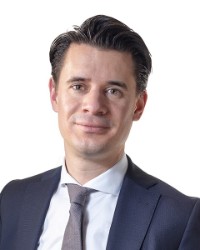

CMS is a global, future-facing law firm with offices in more than 45 countries and over 7,200 legal professionals. The firm’s full-service Banking and Finance department in Amsterdam comprises more than 20 lawyers and is part of the CMS International Banking and Finance Group, which consists of over 550 lawyers globally. CMS’s lawyers provide local and international expertise across the full spectrum of banking and finance, including asset finance, leveraged finance, structured finance, debt capital markets (including high-yield debt offerings), financial restructurings, acquisition finance and project finance. The firm offers pragmatic business solutions, based on an in-depth understanding of the industries of its clients, be they banks or corporations, financial service providers or other regulated operators, investment funds or public institutions. In addition, CMS has deep-rooted expertise in key sectors including funds, capital markets, real estate, energy and mobility. The firm’s team members are regularly recognised as leaders in their field.
Introduction
The Dutch lending and borrowing market is going through a period of significant change. Interest rates have come down meaningfully since a few years ago, which has made it cheaper for companies to borrow money and has boosted deal activity. At the same time, the broader picture remains uncertain, resulting in an increase of interest rates in 2026. Trade disputes – particularly those driven by tariffs imposed by the United States – and military conflicts around the world continue to create risks for businesses and investors alike.
Private equity firms (investment funds that buy and sell companies) have become much more active, especially in deals involving mid-sized and smaller businesses. Mergers and acquisitions (where companies buy or merge with other companies) have also picked up. Alongside traditional bank lending, newer forms of financing from specialist lenders (often called “private credit” or “direct lending”) have become increasingly important in the Dutch market.
The bigger economic picture
The Dutch economy has steadied itself, helped by lower interest rates, improving business confidence and continued consumer spending. The job market remains strong, and rising wages are giving households more spending power. However, because the Netherlands depends heavily on international trade, it is especially exposed to disruptions in the global economy.
The sharp interest rate increases by the European Central Bank (ECB) in 2022 and 2023 did their job. Price inflation – the rate at which everyday costs rise – has fallen back close to the ECB’s target of 2%. That said, energy costs and the knock-on effects of trade tariffs still pose a risk of pushing prices higher again.
The ECB began steadily cutting its key interest rate from mid-2024 onwards, bringing it down significantly from its peak of 4%. These lower rates have flowed through to the lending market, meaning businesses can now borrow more cheaply. This has encouraged more deal making, more competitive offers from lenders, and greater willingness on both sides to get transactions done.
However, more recently, the rate environment has shifted again. In early 2026, the ECB flagged that the war in the Middle East had made the outlook significantly more uncertain, creating upside risks for inflation through higher energy prices and downside risks for growth. From mid-2026, the ECB began raising rates; for the Dutch lending market, this means that the period of steadily declining borrowing costs has come to an end. While rates remain well below their 2023–2024 peaks, businesses are now operating in an environment of renewed rate uncertainty, which may temper deal-making appetite and lender competitiveness compared with the more favourable conditions seen in the first half of 2025.
Following the interest rate hiking cycle, heightened attention is being paid to interest rate hedging and the structuring of hedging instruments. Refinancing activity fluctuates with the interest rate environment.
Trade tensions and geopolitical risks
Trade disputes are one of the biggest sources of uncertainty right now. The United States has introduced wide-ranging tariff increases targeting many countries and industries, including European exports. For the Netherlands, which relies heavily on trade, this has squeezed profit margins for export-focused businesses, increased the cost of hedging against currency and commodity risks, and made lenders more cautious in certain sectors. That said, the broader Dutch economy has held up better than many feared.
Geopolitical risks also remain front of mind. The war between Russia and Ukraine continues, and military tensions between the United States and Israel on one side and Iran on the other have escalated. Iran sits along critical oil shipping routes, including the Strait of Hormuz, so any further escalation could push up energy prices and increase costs for businesses that rely on commodities. European governments, including the Netherlands, are also spending significantly more on defence, which is creating new business opportunities in that sector but also redirecting government resources.
Business failures and restructuring
The number of businesses defaulting on their debts remains higher than normal, particularly among companies with loans tied to floating (variable) interest rates or those in industries hit hard by trade disruptions. However, there are signs that the worst may be over, as lower interest rates take the pressure off struggling borrowers. The focus is also shifting: rather than restructuring to survive, more companies are now restructuring to position themselves for growth.
What the market looks like now
The interest rate increases seen in 2026 have tempered the wave of borrowing and deal making that characterised the previous year, when pent-up demand from quieter years drove a surge in activity. While lenders remain open for business, the higher cost of debt has made both borrowers and lenders more selective, with thorough due diligence and tighter credit assessments becoming the norm once again.
Some borrowers are turning to creative financing arrangements such as vendor loans (where the seller of a business lends part of the purchase price to the buyer), subordinated debt (lower-priority loans that sit behind senior debt) and private credit to bridge the gap left by higher borrowing costs.
Competition between banks and specialist lenders continues, with borrowers placing greater emphasis on flexibility and certainty of funding over headline margins.
Who is lending?
The Dutch lending market is traditionally split into three categories by loan size:
- small (up to EUR30 million);
- medium (EUR30 million to EUR250 million); and
- large (over EUR250 million).
Private credit – lending by specialist non-bank firms rather than traditional banks – has grown enormously. In Europe, private lending to companies has reached roughly USD500 billion in assets under management, making up nearly 30% of the global private credit market. These specialist lenders have become the go-to source of funding for mid-sized deals backed by private equity firms in the Netherlands. They now also offer working capital financing, stretched senior loans and lending based on recurring revenues, and are increasingly moving into larger deals and investment-grade borrowers.
In response, traditional banks have fought back by matching the products offered by specialist lenders, often at lower interest rates. This competition has driven down costs and improved terms right across the Dutch lending market.
Key Trends
Sustainability and green finance
Environmental, social and governance (ESG) considerations continue to grow in importance across the lending market. Investors increasingly factor in sustainability criteria when making decisions, driving strong demand for green bonds (debt instruments used to fund environmentally beneficial projects) and sustainability-linked loans (where the interest rate may vary depending on whether the borrower meets certain sustainability targets).
Dutch lenders have responded by building ESG criteria into their lending decisions. Industry bodies have published guidelines for green and sustainability-linked loans, and EU regulations (including the Corporate Sustainability Reporting Directive (CSRD) and the EU Green Bond Standard) have introduced stricter reporting and labelling requirements. These developments are expected to make sustainability an even more central part of the Dutch debt finance market going forward.
New law making it easier to use receivables as security
A new Dutch law, the Abolition of Pledge Prohibitions Act, came into force on 1 July 2025. Previously, contracts sometimes contained clauses preventing a business from using its outstanding invoices (trade receivables) as collateral when borrowing. This new law overrides those restrictions, meaning businesses can now pledge or assign their trade receivables to a lender as security, even if their contracts with customers say otherwise.
To protect the customer, there is a safeguard: the customer only has to pay the lender (instead of the original business) once it has received written notice.
For lenders, this is a significant positive development as it increases the pool of assets available as collateral. However, it also has broader consequences. For example, restrictions on transferring payment obligations are common in sale and purchase agreements, especially where deferred payments are used to back warranty claims. Those restrictions no longer hold up for commercial monetary claims under the new law.
Some types of claims are excluded from the new law, including those relating to bank accounts. Getting security over bank accounts still requires the consent of the bank where the account is held.
Proposed changes to the rules on security and transferring claims
The Dutch government has published draft legislation proposing important changes to the rules on how security interests (such as pledges) are created and how claims can be transferred.
One key change involves introducing a concept called a “fixed date”. Under the proposal, a private document used to create a pledge or transfer a claim would need to record both the date and time it was signed, and it must be possible to independently verify this. This opens the door to using modern technology to prove when a transaction took place, rather than relying solely on traditional methods such as notarial deeds.
Another important change would remove the current requirement that a business must already have an existing relationship with a debtor before it can pledge or assign future receivables from that debtor. Removing this requirement would reduce administrative burdens for businesses, potentially increase the assets available as collateral, and help level the playing field between banks and non-bank lenders.
Defence sector financing
There is growing interest in lending to defence and security companies. European governments, including the Netherlands’, have committed to substantially higher defence budgets. Defence companies are seeking loans to expand production, fund research and development, and strengthen their supply chains.
In the past, some lenders avoided the defence sector due to ESG concerns. However, the changed political and security environment has prompted many to reconsider. Specialist financing products for the defence industry have become an established and expanding part of the Dutch lending market.
New rules for non-European lenders and issuers (CRD VI)
New EU banking rules, transposed into Dutch law on 18 June 2026, have introduced requirements for non-European parties operating in the Dutch market.
For non-European parties issuing debt securities (such as notes) in the Netherlands, previously, if the notes had a face value of at least EUR100,000, these issuers were largely exempt from Dutch regulation. Under the new rules, they may now be required to set up a branch office in the Netherlands and, in some cases, obtain a licence.
For non-European parties lending to Dutch businesses, lending to businesses (as opposed to consumers) was previously unregulated in the Netherlands. Under the new rules, non-European lenders may, under certain conditions, also need to establish a branch and obtain a licence, although exemptions may be available. The Dutch government has clarified that simply making a loan does not automatically mean the lender is considered to be taking in deposits, which would trigger a different set of regulations.
Outlook
Despite the ongoing challenges, the outlook for the remainder of 2026 and into 2027 is cautiously positive. Although borrowing costs fell markedly during the ECB’s easing cycle, the rate increase in the second half of 2026 has moderated this trend, creating a more nuanced environment for deal making and new borrowing.
The ECB’s earlier rate-cutting cycle brought down the cost of debt significantly, fuelling strong appetite among lenders (particularly specialist and private credit firms) to put money to work. However, the ECB’s decision to raise rates in 2026 has tempered this momentum, increasing borrowing costs and introducing fresh uncertainty for leveraged transactions. The Dutch market for acquisition finance, while still active, is adjusting to this shift in monetary policy.
However, significant risks remain. Trade tariffs, geopolitical instability, potential inflation spikes from supply chain disruptions, the impact of renewed ECB tightening on debt service costs, and evolving regulations all require careful monitoring. Upcoming debt maturities will continue to drive refinancing activity alongside growing volumes of acquisition finance. Specialist lenders will remain key providers of funding, though banks are competing hard to win back market share.
Sustainability and green finance will remain important themes, defence financing is expected to keep growing, and the practical effects of the new law on pledge prohibitions will become clearer as the market adjusts.
CMS Derks Star Busmann
CMS Derks Star Busmann
Atrium – Parnassusweg 737
1077 DG Amsterdam
PO Box 94700
1090 GS Amsterdam
Netherlands
+31 20 3016 301
+31 20 3016 333
Eduard.scheenstra@cms-dsb.com cms.law/en/nld/
Law and Practice
Authors
CMS is a global, future-facing law firm with offices in more than 45 countries and over 7,200 legal professionals. The firm’s full-service Banking and Finance department in Amsterdam comprises more than 20 lawyers and is part of the CMS International Banking and Finance Group, which consists of over 550 lawyers globally. CMS’s lawyers provide local and international expertise across the full spectrum of banking and finance, including asset finance, leveraged finance, structured finance, debt capital markets (including high-yield debt offerings), financial restructurings, acquisition finance and project finance. The firm offers pragmatic business solutions, based on an in-depth understanding of the industries of its clients, be they banks or corporations, financial service providers or other regulated operators, investment funds or public institutions. In addition, CMS has deep-rooted expertise in key sectors including funds, capital markets, real estate, energy and mobility. The firm’s team members are regularly recognised as leaders in their field.
Trends and Developments
Authors
CMS is a global, future-facing law firm with offices in more than 45 countries and over 7,200 legal professionals. The firm’s full-service Banking and Finance department in Amsterdam comprises more than 20 lawyers and is part of the CMS International Banking and Finance Group, which consists of over 550 lawyers globally. CMS’s lawyers provide local and international expertise across the full spectrum of banking and finance, including asset finance, leveraged finance, structured finance, debt capital markets (including high-yield debt offerings), financial restructurings, acquisition finance and project finance. The firm offers pragmatic business solutions, based on an in-depth understanding of the industries of its clients, be they banks or corporations, financial service providers or other regulated operators, investment funds or public institutions. In addition, CMS has deep-rooted expertise in key sectors including funds, capital markets, real estate, energy and mobility. The firm’s team members are regularly recognised as leaders in their field.
