Dispute Resolution 2026
USA – California
Trends and Developments
Authors

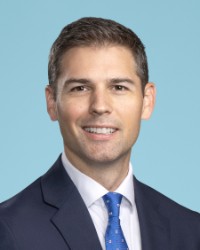
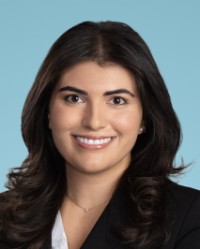

Pillsbury Winthrop Shaw Pittman LLP is a global full-service law firm with approximately 700 lawyers across 20 offices in the United States, Europe, and Asia, including major offices in New York, Washington, DC, London, Los Angeles, and San Francisco. The firm advises clients ranging from emerging companies to the largest public and private corporations on complex legal, regulatory, transactional, and dispute matters across key sectors such as technology, energy and infrastructure, financial services, real estate and construction, media and entertainment, life sciences, and digital health. Pillsbury lawyers are known for their multidisciplinary approach and deep industry insight, delivering tailored solutions that align with clients’ strategic objectives. The firm’s market-leading practices span corporate transactions, intellectual property, litigation and enforcement defence, regulatory compliance, and public policy advocacy, and its work is consistently recognised for excellence by Chambers and Partners, and others. Pillsbury’s integrated platform supports clients with innovative, commercially driven legal services around the world.
Strategic Dispute Resolution in California: Insights from Recent Trust Cases
A greatly increasing volume of disputes in California reflects the need for lawyers who are skilled in the relevant subject matter of the litigation, as well as the technical requirements of dispute resolution.
Notably, litigants are increasingly benefiting from retaining attorneys who are skilled in the underlying subject matter, for example, trust administration and federal estate tax, as well as the technicalities of litigation, including motion practice, filing requirements, deadlines, and other technical aspects of discovery.
This article will discuss recent developments in dispute resolution, as well as themes currently being considered by the California courts, and will highlight opportunities and potential pitfalls for litigants involved in disputes in California.
The recent case of the Estate of Franklin Antonio illustrates the importance of having both subject matter expertise and strong litigation experience in the lawyers who represent beneficiaries. Franklin Antonio was a founder of QUALCOMM, a successful company in San Diego, California. At his death, he owned approximately USD1.2 billion worth of QUALCOMM stock and other assets. Initially, it was thought that he died intestate, and numerous cousins, nieces, and nephews retained counsel as potential beneficiaries of his estate. Subsequently, a holograph was located, being a handwritten will signed and dated by the testator. A holograph is valid in California, but using one instead of a will prepared by a professional trusts and estates attorney can lead to disputes, as this case demonstrates.
The holograph named specific individuals as well as charities to receive shares of the estate. However, because it was written by a non-expert, it was unclear how estate tax should be apportioned among the beneficiaries, particularly as some beneficiaries were charities that are typically exempt from paying estate tax. Fortunately, some of the beneficiaries retained experienced counsel. These lawyers produced detailed calculations, including complex circular calculations, showing the different amounts beneficiaries would receive depending on how estate tax was allocated.
This became a significant issue because, under California law, charitable organisations generally do not have to pay a share of estate tax. If that rule were applied strictly, the charities would receive substantially more than the proportions specified in the holograph. The matter involved approximately 25 law firms, yet the lawyers remained patient and respectful, allowing for an efficient resolution through mediation. Negotiations continued throughout the night, and the settlement agreement was drafted the same evening, leading to a positive outcome without prolonged litigation.
The calculations provided clarity on the stakes involved, facilitating the resolution. With perseverance, mutual respect, subject matter expertise, and technical proficiency, the lawyers were able to guide the parties towards a fair and timely settlement. Technical tax matters, including the possibility of a future tax audit, were addressed in the agreement alongside the professional personal representative appointed by the court. This case demonstrates the importance of engaging not only an experienced litigator but one who also possesses relevant subject matter expertise.
Another observation arising from the Antonio case was the importance of respect and patience among lawyers during contested disputes. Given the involvement of approximately 25 litigants and their respective counsel, reaching a settlement was a considerable achievement. The mediation judge played an important role in focusing the parties on the broader context of the dispute, while the trial judge later commended the parties on reaching agreement.
This approach required an awareness that the dispute was highly emotional, involved substantial financial stakes, and included technical matters not fully understood by all parties. A respectful approach enabled parties to consider technical calculations more carefully and maintain perspective. Although settlement outcomes varied depending on minor details, all beneficiaries were still set to receive substantial amounts.
Litigation often continues because it is difficult to understand the perspectives of other parties. In this case, particular care was taken to ensure that all parties could appreciate differing viewpoints. Patient dialogue allowed opposing lawyers to explain their concerns and areas of difficulty, which is especially important where technical misunderstandings arise.
In another case, the importance of analysing the law in light of the tribunal making the determination became evident. A County Commission was asked to vacate easements in a housing development. Relying on Daniels v Area Plan Commission of Allen County, the opposing litigants successfully argued that removing private property rights and transferring them to another private party would constitute an unconstitutional taking under the Fifth and Fourteenth Amendments. While the government may exercise eminent domain for public purposes with compensation, doing so for private benefit is impermissible.
The key factor was that the County Commission constituted a governmental body, making the action unconstitutional. By contrast, where a court is determining whether such rights exist in the first instance, the takings argument may not succeed. However, a due process argument may still arise, as suggested in Stop the Beach Renourishment, Inc. v Florida Department of Environmental Protection. Accordingly, legal arguments must always be analysed in the context of the tribunal deciding the matter.
Building on this, another important aspect of recent California disputes is the choice of forum for dispute resolution.
Tribunal: where should you resolve your dispute?
Trust disputes are inherently sensitive. Many individuals prefer not to have family or business disagreements aired publicly, and therefore opt for settlement or arbitration instead of court proceedings.
Arbitration
Arbitration is often more private, and less formal, expensive, and invasive than litigation. Litigation can go on for many years, involves lengthy discovery inquiries, and multiple public court hearings.
In the past three months of 2026, 428 cases have been filed in California through the Financial Industry Regulatory Authority (FINRA) arbitration resolution, 92% of which have been successfully resolved. Between 2021–2025, an average of 2,802 cases (annually) were filed in California through FINRA. Although FINRA manages arbitrations between individuals and corporate entities, these statistics demonstrate that arbitration is a common means for many parties seeking to resolve disputes.
Arbitration does have some limitations. Arbitration agreements must be in writing to be enforced. (See California Code of Civil Procedure, Section 1281.) Furthermore, the arbitrators are given significant deference to the outcome, even if it is not to the satisfaction of either party. (See Bols, LLC v Levine, No. D084595, 2025 WL 31648, at *1 (12 November 2025) (finding the arbitrator did not exceed his power to refuse to hear material evidence, and substantial evidence supports the trial court’s alter ego findings); Singh v Reedy Mechanical Inc., No. CD100084, 2025 WL 3294023, at *1 (26 November 2025) (defendant appealed the award to plaintiff, arguing that the arbitrator (i) was biased; (ii) exceeded her powers in declaring a lease void and invalid; and (iii) should not have been decided by the arbitrator, but the court affirmed).)
Arbitration may still result in litigation
According to the Judicial Council of California, a total of 41,985 trust, estate, and other matters were filed in California superior courts in the 2024–25 fiscal year. (Court Statistics, Judicial Council of California.) That number has remained steady since the pandemic. (See id.) About half are resolved. (See id.)
Further, arbitration agreements are only enforceable and binding against their signatories. (See McArthur v McArthur, 224 Cal. App. 4th 651, 653 (11 March 2014) (holding that the arbitration clause could not be invoked by a beneficiary because she was not a signatory to the arbitration agreement); see also NNN Capital Fund I, LLC, Plaintiff and Respondent, v Todd A. Mikles et al., Defendants and Appellants, No. G064487, 2026 WL 787598, at *1 (20 March 2026) (finding on appeal that the plaintiff trust fund representatives lacked standing to bring their breach of fiduciary duty claims, thereby vacating the arbitrator’s decision and remanding the case to the Superior Court).) The arbitration agreement may also be limited in scope. In Browne v Falk, No. A163049, 2023 WL 164606, at *1 (12 January 2023), the defendant was unable to enforce the arbitration agreement because the scope of the plaintiff’s original claim was not encompassed in the arbitration agreement.
Settlement
As demonstrated in the above Antonio case, settlement may ultimately be the most cost-effective and private way to resolve a trust dispute.
Data Reflecting Comparative Results From Trial, Arbitration, and Mediation In California: a helpful article – see David Horton, Reid Kress Weisbord & Christopher J. Ryan, Jr., Trust Litigation, 104 Wash. U. L. Rev. (forthcoming 2026), manuscript at 1, 43–53) – that analyses data collected from 640 contested trust petitions filed in the San Francisco Superior Court between 2014 and 2020 to assess the effectiveness and trends related to no-contest clauses, mandatory arbitration provisions, and mediation. The findings highlight: (i) a paradox related to no-contest clauses: although 80% of trusts in litigated cases included one, it was only invoked in about 1% of cases; (ii) the limited role of arbitration clauses – they were present in about 5% of trusts, with only a single motion to compel arbitration, and are generally limited to “internal” disputes (eg, trustee–beneficiary conflicts over administration) rather than validity claims; and (iii) mediation’s strong foothold in trust dispute resolution – 85% of cases with mediation resulted in settlement, as opposed to only 46% of cases without.
This article is important because it analyses information that is difficult to obtain. Because trusts are often resolved outside the judicial system – as opposed to Wills, which typically proceed through probate – there is comparatively less data available. Thus, the trends identified in this article provide a valuable insight into the world of trust dispute resolution and can help shape actions and strategies for parties moving forward.
In California Office of Tax Appeals 2025 WL 4641563, the court highlights the tax implications of an arbitration award, holding that while the division of a legal claim may qualify as a transfer “incident to divorce”, in this case the subsequent receipt of income from that claim was separately taxable and did not receive non-recognition treatment. As such, the tax effects of an award should be part of negotiations.
In this case, while still married, the employee-spouse entered an arbitration proceeding against their employer for lost income. After the spouses divorced, an arbitration award was granted in favour of the employee-spouse. The non-employee-spouse sought one-half, arguing that the income was community property.
The court found that the non-employee-spouse was entitled to half. Further, the court held that while the division of the underlying claim qualified as a transfer “incident to divorce” under IRC, Section 1041, it distinguished between the claim and the later award. During the marriage, the spouses owned only the claim, not the award. Thus, the non-employee-spouse received the award based on that retained interest. Because the recovery was taxable and there was no offsetting basis, the full amount was includable in the non-employee-spouse’s gross income the year of receipt. Under IRC, Section 451, income is recognised upon actual or constructive receipt. Because the marriage had already dissolved when the employee-spouse received the award, the non-employee-spouse lacked control over the funds, and their rights were subject to legal restrictions. Accordingly, the non-employee-spouse recognised the income upon actual receipt.
The Hang v RG Legacy I, LLC, 88 Cal. App. 5th 1243 (2023) case demonstrates how economic factors are considered by the court when determining whether to allow or deny arbitration.
In this case, the plaintiff (the successor in interest to his father, the decedent) filed an action alleging elder abuse and negligent hiring and supervision against the defendant (the nursing facility where the decedent resided). As part of the decedent’s residency, the plaintiff executed arbitration agreements on the decedent’s behalf with the defendant. In response, the defendant filed a petition to compel arbitration. The estimated total cost of the arbitration was USD33,000. The plaintiff argued that the decedent was unable to pay their share of the arbitration fees, and submitted several pieces of evidence demonstrating this, including that the decedent’s only source of income was USD826 per month in Social Security benefits and the USD7,000 in his trust account was allocated to funeral and burial expenses. Accordingly, the trial court gave the defendant a choice: to pay all arbitration fees or waive their right to arbitrate the matter. The appellate court affirmed the ruling, holding that there was substantial evidence that the estate was indigent and the choice was appropriate.
Overall, this case shows the court’s willingness to consider the economic realities of parties when deciding whether to allow arbitration to proceed, and upholds the “long-standing public policy of ensuring that all litigants have access to the justice system for resolution of their grievances, without regard to their financial means.”
The Hofer v Boladian Court of Appeal, Second District, Division 5, California, 9 May 2025, 111 Cal. App. 5th 1 case demonstrates the court’s “use it or lose it” approach to the contractual right to arbitrate.
In this case, the party seeking to compel arbitration engaged in six months of litigation prior to filing their motion to compel arbitration. They initiated the lawsuit by filing a complaint, sought two forms of preliminary injunctive relief, opposed a demurrer, propounded more than 700 discovery requests, demanded a jury trial, represented that they would be litigating substantive motions, and posted jury fees. It was not until the opposing party filed a cross-complaint that the litigants filed the motion to compel arbitration.
The court found that their behaviour constituted a waiver of their right to arbitrate, meaning, “the party opposing enforcement of a contractual agreement [proved] by clear and convincing evidence that the waiving party [(i)] knew of the contractual right and [(ii)] intentionally relinquished or abandoned it.”
This case highlights that if a party is aware of a contractual right to engage in arbitration and intends to utilise it in their dispute, he or she must not engage in actions to the contrary or will risk losing the right to do so.
Recent California trust dispute cases
Recent California cases demonstrate the courts’ ongoing effort to balance settlor intent, beneficiary rights, and the integrity of the probate system in trust litigation.
In Haggerty v Thornton, the California Supreme Court clarified when statutory revocation procedures may be used to modify a trust. Unless a trust explicitly requires an exclusive method of amendment, statutory methods may still be used.
In Packard v Packard, the court held that a petition to reform a trust to correct a mistake does not constitute a contest subject to statutory limitation periods. The court emphasised that the settlor’s intent remains paramount and that extrinsic evidence may be used to establish that intent where clear and convincing evidence of mistake exists.
In Halperin v Halperin, the court reinforced that claims for intentional interference with an expected inheritance are only available where no adequate remedy exists in probate. Parties must therefore utilise probate remedies where available rather than recasting disputes as tort claims.
Finally, in Amundson v Catello, the court held that prospective heirs lack standing to bring partition actions before their ownership interests have been confirmed through probate. Only the personal representative has authority to act on behalf of the estate prior to final distribution.
Pillsbury Winthrop Shaw Pittman LLP
2400 Hanover Street
Palo Alto
CA 94304
USA
+1 650 233 4500
+1 650 233 4545
jmccall@pillsburylaw.com www.pillsburylaw.com/en/
Trends and Developments
Authors
Pillsbury Winthrop Shaw Pittman LLP is a global full-service law firm with approximately 700 lawyers across 20 offices in the United States, Europe, and Asia, including major offices in New York, Washington, DC, London, Los Angeles, and San Francisco. The firm advises clients ranging from emerging companies to the largest public and private corporations on complex legal, regulatory, transactional, and dispute matters across key sectors such as technology, energy and infrastructure, financial services, real estate and construction, media and entertainment, life sciences, and digital health. Pillsbury lawyers are known for their multidisciplinary approach and deep industry insight, delivering tailored solutions that align with clients’ strategic objectives. The firm’s market-leading practices span corporate transactions, intellectual property, litigation and enforcement defence, regulatory compliance, and public policy advocacy, and its work is consistently recognised for excellence by Chambers and Partners, and others. Pillsbury’s integrated platform supports clients with innovative, commercially driven legal services around the world.
