Equity Finance 2026
Switzerland
Authors


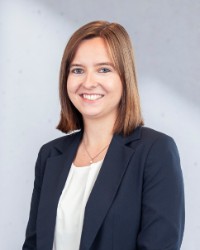
Walder Wyss Ltd is one of the most successful Swiss commercial law firms. With a dynamic presence in the market, the firm specialises in corporate and commercial law, banking and finance, intellectual property and competition law, dispute resolution and tax law. With more than 300 legal experts and six locations, Walder Wyss provides its clients with a seamless one-stop shop, personalised and high-quality services in all language regions of Switzerland. With a team of around 40 senior lawyers (including partners) regularly advising on capital market matters and transactions, Walder Wyss holds a leading position in this area.
1. Equity Finance Techniques and Structures
1.1 Early-Stage Venture Capital Financing
Early-stage (start-up) Swiss companies would typically raise funds from venture capital firms or other investors through traditional fundraising rounds or the issuance of convertible debt. While fundraising rounds are common, they tend to be more complex as investors and the company/existing shareholders would typically engage in extensive negotiations on investment terms and shareholder governance. In addition, the implementation process is time-consuming and costly, as the issuance of new shares in Switzerland requires a formalised process, including the involvement of notaries and commercial registries.
Convertible loans, on the other hand, are quicker and easier to implement, making them a popular choice for fundraising by early-stage companies that have not yet secured sufficient commitments to justify the additional effort and cost of a financing round. Convertible loans allow start-ups and investors to defer discussions about valuation and governance until a larger round with a lead investor takes place, which is often seen as another major advantage. In return for taking the risk of investing early and agreeing to defer negotiation of shareholder rights to the later lead investor(s), lenders are often rewarded with discounts on the share price applicable in a subsequent financing round.
1.2 Growth and Private Equity Financing
Traditional private equity (PE) investors target more mature companies that already have revenues and stable cash flows. They aim to increase the valuation of a company by scaling or otherwise maximising its operations, and to sell the company after a period of time (typically three to seven years) and have thus a rather short-term investment horizon. PE investors usually take a majority stake in the company and seek control or at least significant influence over the company’s management. A PE financing arrangement would typically be structured as a sale of all or the majority of existing shares, whereby it is not uncommon that a reinvestment structure (rollover participation) is agreed with the previous owners. This differs significantly from venture financing, where the funds go to the company rather than the existing/prior shareholders and where investors typically only hold a minority stake in the company following implementation.
1.3 Public Equity Markets
SIX Swiss Exchange (SIX), the larger of the two stock exchanges in Switzerland (with the smaller being BX Swiss), is a major player in the European stock market, ranking as the fourth largest (based on market capitalisation). It lists over 250 domestic and international companies, including some of the world’s most valuable companies such as Nestlé and Novartis. SIX offers various market segments, such as blue chip shares, mid-/small-cap shares, spark shares (for small and medium-sized enterprises), and global depositary receipts.
Listing equity in Switzerland involves the following key steps:
- Preparation: The company prepares a prospectus, a listing application and the required financial statements. This includes obtaining necessary audit reports and adapting the corporate governance structure to meet the standards for listed companies and adapting the capital structure to meet listing requirements (if needed).
- Prospectus filing: The prospectus is then filed with one of the two prospectus offices licensed by the Swiss Financial Market Supervisory Authority (SIX Exchange Regulation Ltd or BX Swiss Ltd).
- Approval and publication: Once the prospectus is approved by the respective prospectus office, it is published to inform potential investors.
- Listing and trading: After the prospectus is published and the listing application approved, the company’s shares are listed on the exchange and trading can commence.
Several factors typically influence a company’s decision whether or not to list its shares. A listing provides access to a broad investor base, which can be crucial for raising funds to support growth and expansion, and enhances market visibility and prestige. Switzerland’s stable regulatory environment and high market liquidity offer additional advantages. Companies need to weigh these advantages against the costs and regulatory requirements of a listing. Ultimately, the decision depends on the alignment of the listing with the company’s long-term objectives.
1.4 Equity Restructurings
Under Swiss law, the board of directors of a company in financial distress has several obligations, including taking appropriate measures to restructure the balance sheet and secure additional liquidity. The measures taken often include equity restructuring such as debt-to-equity swaps or down rounds. Debt-to-equity swaps are a useful means of restructuring the balance sheet because they help to eliminate potential over-indebtedness and are permitted, even if the debt to be set off is not collectible, which is often the case when the company is not in good financial health. Cash injections (capital increases), on the other hand, help the company secure additional liquidity. However, both debt-to-equity swaps and cash injections (capital increases) result in a dilution of the shareholding of the existing shareholders, which can lead to frustration and loss of confidence, especially if it occurs at a low valuation (down-round).
1.5 Corporate Governance
Swiss corporate law requires the existence of three corporate bodies: the general meeting of shareholders, the board of directors, and external auditors (with the possibility of an opt-out for small companies). The law provides for a basic framework for corporate governance, including roles, responsibilities, and voting rights. Shareholders of non-listed companies and groups of shareholders of listed companies often enter into a shareholder’s agreement to detail specific governance arrangements. These agreements can supplement and/or modify the legal provisions to better suit the needs of the respective shareholders. The shareholders agreements typically include provisions related to corporate governance, such as board appointments, and exercise of voting rights (including veto rights) as well as restrictions on share transfers, including drag-along and tag-along rights. Additionally, such agreements may also cover pre-emptive subscription rights, sale and liquidation preferences, down-round protection mechanisms as well as non-compete and non-solicitation undertakings.
1.6 Mix of Debt and Equity Financing
Investors can provide both equity and debt to the same company. This approach is often used to balance the risk and return profile of their investment. However, there are several commercial and legal considerations to keep in mind. Equity investors typically have voting rights and can influence company decisions, whereas debt investors do not. Debt provides regular interest payments, while equity offers capital gains and dividend payments (if any). Investors need to consider their cash flow needs and return expectations. Recent revisions in Swiss corporate law require the disclosure of the identity of investors converting debt into equity. This could be a concern for investors who prefer anonymity. In situations where a company faces financial distress, shareholders providing debt will often be asked to subordinate their debt to other creditors, impacting the recovery of their investment. Proper structuring of debt and equity investments can mitigate risks. The use of convertible bonds can provide additional flexibility.
2. The Equity Finance Market
2.1 Types of Equity Finance
Equity finance in Switzerland involves raising capital through the sale of shares, including private placements and public offerings. Companies may also use option rights issues, convertible securities, and preferred shares to attract investors. The market is well-developed, supported by a strong financial infrastructure and regulatory framework.
Hybrid financing forms like mezzanine capital and convertible bonds are common, offering flexible options for companies. The venture capital ecosystem is vibrant, especially in sectors like biotech and fintech, providing early-stage funding to start-ups. Growth equity focuses on mature companies with high growth potential.
Private equity is well-established, with firms investing across various industries to improve and sell companies for profit.
The IPO market is robust. Companies frequently list on the SIX Swiss Exchange. The market’s regulatory environment ensures transparency and investor protection.
Overall, Switzerland offers diverse and sophisticated equity financing options for companies at different growth stages.
2.2 Equity Finance Providers and Potential Restrictions on Them
In Switzerland, equity financing is typically provided by private equity firms, venture capitalists, institutional investors and crowdfunding platforms. Recent changes to Swiss corporate law, effective from January 2023, have introduced greater flexibility in equity financing. These changes include the introduction of a capital band and the allowance of virtual shareholder meetings.
There are no specific limits on shareholdings, but companies may set their own limits in their articles of association. Furthermore, there are transparency obligations regarding shareholdings in listed companies.
Qualitative restrictions do not generally limit foreign shareholding, with the exception of certain real estate companies. There are no general restrictions on who can become a shareholder, but companies may impose specific qualifications in their articles of association. Certain qualitative requirements also apply with regard to shareholdings in regulated sectors (eg, banking or gambling), and the granting of a permit for the company in question is conditional upon these requirements being met.
Overall, the landscape for equity financing in Switzerland is diverse and evolving, with recent reforms aimed at further increasing flexibility and participation.
2.3 Equity Finance Seekers
In Switzerland, the decision to raise capital through debt or equity depends on factors such as company size, age, shareholder composition and industry. Larger, older companies often prefer debt to avoid dilution of ownership, while smaller, younger companies may opt for equity due to limited collateral. Companies with diverse shareholders may choose equity to spread risk, while family-owned businesses often favour debt to maintain control. Technology and biotechnology sectors tend to favour equity due to their high growth potential and significant upfront investment requirements. Manufacturing and real estate sectors prefer debt due to stable cash flows and tangible assets. Common debt financing methods include bank loans, bonds and convertible debt. Equity financing options include venture capital, IPOs and private placements. The technology and biotechnology sectors are the most active in raising capital, driven by innovation and high returns. These sectors attract significant venture capital and private equity investment.
2.4 Deal Flow and Size
The equity finance market in Switzerland is well-established, with a strong presence of both domestic and international investors. In 2025, the market saw a significant number of equity financing deals, although exact numbers and deal sizes vary across sources. Switzerland’s stable economy and predicable legal and regulatory framework make it an attractive investment destination. The market has remained robust in 2026, with continued growth, in particular, in technology, biotech and digital, scalable wealth, and asset management platforms. Economic stability and favourable regulations will keep attracting investors.
2.5 Private Equity Versus Public Equity
In terms of market capitalisation, the public equity market in Switzerland is significantly larger than the private equity market. The public equity market has recently faced some challenges due to economic uncertainties and market volatility, resulting in fewer companies choosing to go public. However, the public equity market remains an important avenue for companies seeking to raise significant capital and gain public visibility.
Private equity is also important in Switzerland. This segment provides companies with the necessary capital and strategic support to grow without the pressure of public market scrutiny. While the technology sector remains an important growth factor, there has recently been a shift in investor interest to sectors such as industrials, energy, logistics and infrastructure. Driven by trends of higher inflation, rising interest rates abroad and geopolitical tensions, the market has seen a decline in the number of transactions in recent years. Despite the still-challenging environment, transaction volume increased in 2025 compared to 2024. In particular, there was an increase in so-called mega-deals (ie, deal volume was heavily concentrated on a few large transactions).
2.6 Deal Sourcing and Market Players
Deal sourcing in Switzerland involves networking, advisory services and market research. Investors and companies connect through industry events, professional networks and platforms. Investment banks, financial advisers and consulting firms play a crucial role in identifying and facilitating deals. This well-established adviser and investor community provides investors with access to quality deals, expertise and networking opportunities. Companies can benefit from easy access to capital, strategic advice and increased visibility within a connected ecosystem.
2.7 Exit Considerations and Realisations
Investors can realise the value of their equity investments primarily through two typical exit paths: trade sales and initial public offerings (IPOs). Compared to trade sale exits, IPOs are relatively rare in Switzerland, with only a handful of IPOs typically taking place on a Swiss stock exchange each year.
2.8 Equity Finance Versus Debt Finance
Both equity and debt finance play a crucial role in Switzerland’s financial landscape, but their importance can vary depending on the economic climate and the specific needs of the company. Equity financing is particularly important for start-ups and high-growth companies that need substantial capital without the burden of repayment. Debt finance is often preferred by established companies with steady cash flows. Recently, there has been a noticeable shift towards debt financing due to the still relatively low interest rate environment in Switzerland. At the same time, economic uncertainties and market volatility have made equity financing less attractive, as investors are more cautious about taking equity stakes in uncertain times.
2.9 Time Required for Equity Finance
Raising equity finance in Switzerland can vary significantly in length, typically ranging from four weeks to over a year. The timeframe depends on several factors, including the stage of development of the company, the complexity of the financing structure and market conditions. Common techniques include IPOs, venture capital, private equity, equity crowdfunding and convertible loans. IPOs can take six to 12 months due to extensive regulatory requirements. Venture capital rounds typically take three to six months and focus on start-ups and early stage companies. Private equity deals typically take four to nine months and involve significant ownership stakes in more mature companies. Equity crowdfunding takes three to six months and involves raising small amounts from many investors. Convertible loans are often faster, taking one to three months and converting to equity later. Key challenges include regulatory compliance, market conditions and investor relations. Valuation and operational maturity are also significant hurdles. Each method has its own complexities and timeframes.
3. Regulation and Related Legal Issues
3.1 Investment Restrictions
Controls over foreign investments have been debated in Switzerland time and again with the Swiss Federal Council consistently opposing respective proposals (excluding certain real estate transactions). However, in December 2025, the Swiss Parliament adopted a new Investment Screening Act (“the ISA”) introducing governmental control of takeovers of Swiss companies in certain critical sectors by foreign state-controlled investors to protect public order, security and access to essential commodities in Switzerland. Entry into force of the ISA is expected in 2027. Apart from this, Switzerland participates in international sanctions regimes which might impact foreign investments in the country.
3.2 Repatriation of Money and Limitations on Capital Flows
Dividend payments of Swiss companies are subject to capital protection provisions and may only be made out of freely distributable funds defined as equity exceeding debt and mandatory reserves (Article 675 Sections 2 and 3 of the Swiss Code of Obligations). According to the case law of the Swiss Federal Supreme Court, the limitations to dividends equally apply to upstream and cross-stream loans within a group of companies, unless the loans stand a rigid at arm’s length test. No further limitations to repatriating capital outside of Switzerland apply.
3.3 AML and Sanctions Regulation
As of 1 October 2026, new legislation on the transparency of legal entities and the identification of beneficial owners (“the Transparency Act”) applies to most Swiss companies (corporations in particular) and to certain foreign entities with a relevant Swiss nexus. Companies listed on a Swiss or equivalent foreign stock exchange, and their direct or indirect subsidiaries (with more than 75% ownership) are exempt. The Transparency Act replaces the previous reporting obligations and the obligation to maintain an internal register of beneficial owners previously required for Swiss corporations not listed on a Swiss or foreign stock exchange. Entities falling within scope of this new legislation must identify their beneficial owners, collect the relevant information and report it to the national transparency register. The transparency register is not publicly accessible but may be accessed by financial intermediaries for KYC purposes, as well as by certain authorities. Non-compliance may result in significant civil and criminal consequences for companies and the responsible individuals. Buyers of shares in a Swiss corporation should therefore ensure that the entry in the transparency register is up to date and should request appropriate representations and warranties.
Furthermore, shareholders and/or beneficial owners of legal entities subject to reporting requirements are required to report the beneficial owners to the relevant legal entity under the Transparency Act. In this respect, no exemptions apply. However, a special reporting regime applies to, inter alia, listed entities regarding subsidiaries (with between 25% and 75% ownership).
Switzerland regularly issues sanctions lists and participates in international sanctions.
3.4 Choice of Law and Jurisdictions
In financing transactions regarding a Swiss company, there is a certain preference for Swiss law, although other choices of law are also seen. Providing for a uniform choice of law throughout most of the relevant documents generally reduces the risk of inconsistencies due to diverging jurisdictions. A control agreement for a share pledge agreement usually follows the law of the custodian bank, subject to the Hague Securities Convention, if applicable.
If Swiss law is chosen, the place of jurisdiction should ideally be Switzerland to ensure the effective enforcement of the chosen law. Swiss courts generally do not appear to be biased vis-à-vis foreign investors. Arbitration is often agreed on in more complex and large transactions. Arbitration has the advantage of being more discreet, involving expert arbitrators and limiting the possibility of a time-consuming appeal to a court, but it tends to be more expensive than court proceedings and deprives the losing party largely of the right to appeal unless the arbitral award is severely flawed.
For corporate claims against a Swiss corporation, its articles of association may provide for an arbitral tribunal (Article 697n of the Swiss Code of Obligations).
3.5 Noteworthy Regulatory Trends
On 1 October 2026, the new Transparency Act entered into force, imposing more extensive reporting requirements on Swiss companies, certain foreign entities and their shareholders and/or beneficial owners. A government-run transparency register was also introduced, replacing the internal beneficial-owner registers previously maintained by companies. Please see 3.3 AML and Sanctions Regulation.
In December 2025, Parliament adopted the ISA (see 3.1 Investment Restrictions), which aims to safeguard public order and security by requiring prior approval for the acquisition of Swiss companies operating in particularly critical sectors by foreign state-controlled investors. Entry into force is expected in 2027.
The Swiss Federal Council is determined to align Swiss mandatory sustainability reporting with international reporting standards, in particular the relevant EU Directives.
Further, the consultation on the revision of the Swiss Financial Market Infrastructure Act has closed, but is not expected to be in parliament before 2027. The purpose of this revision is, inter alia, to transfer the regime of ad hoc publicity and disclosure of management transactions with respect to listed companies from the current self-regulation and enforcement by the stock exchanges to statutory law and the remit of the Swiss Financial Market Supervisory Authority (FINMA). If this revision survives the political debates, it will impact investments in companies listed on a Swiss stock exchange as disclosure breaches will have more severe consequences (now also for directors) and disclosure of management transactions will no longer be on an anonymous basis, just to name a few notable amendments.
Also, in July 2026, the Federal Department of Finance established an external working group to review the Swiss financial market regulation and regulatory supervisory framework with the aim of identifying ways to reduce the administrative burden and eliminate duplication. A report is expected by the end of 2027.
4. Tax
4.1 Withholding/Capital Gains Tax
Dividends and similar distributions (including liquidation proceeds and bonus shares) are subject to 35% withholding tax unless they are repayments of nominal value or from qualifying capital contribution reserves. The company must deduct such withholding tax from the gross amount of the distribution. Listed companies may not repay tax-exempt capital contribution reserves first, but must pay (at least) an equal amount of dividends subject to withholding tax if other reserves from retained earnings are available.
In general, private shareholders resident in Switzerland are not liable for tax on capital gains from the sale of shares if these shares form part of their private assets. Under certain circumstances, capital gains may be recharacterised as taxable dividends, in particular when shares are redeemed by the company. Capital gains may also be recharacterised as taxable income in the case of a so-called indirect partial liquidation.
Swiss resident commercial shareholders must declare gains or losses from the sale of shares in their income statement or tax return and are subject to Swiss federal, cantonal and communal income tax. In certain cases, capital gains may be treated as arising from the sale of real estate, leading to real estate property gains tax being levied by the competent tax authorities in certain cantons.
Corporate taxpayers must include capital gains from the sale of shares in their net taxable income. However, they may be entitled to participation relief (Beteiligungsabzug) if (i) the shares sold represent at least 10% of the company’s capital or entitle the holder to at least 10% of the profits and reserves; and (ii) the shares have been held for at least one year. Such relief applies to the difference between the proceeds of the sale and the original cost of the shareholding, resulting in the taxation of a recovery of previous depreciation.
For individual taxpayers, the federal tax on dividends and similar distributions and on capital gains (if any) is reduced to 70% of the regular tax (Teilbesteuerung), provided that (i) the investment is held in connection with a trade or business or qualifies as an opted business asset (gewillkürtes Geschäftsvermögen); (ii) the participation amounts to at least 10% of the share capital of the company; and (iii) the participation has been held for at least one year. Similar provisions have been introduced at the cantonal and communal level, but the rules may vary depending on the place of residence.
4.2 Other Taxes, Duties, Charges or Tax Considerations
Swiss resident private shareholders must declare their shares as part of their private assets and are subject to cantonal and communal wealth tax. Swiss resident commercial shareholders must declare the shares as part of their taxable capital (in the case of corporate taxpayers) or business assets (in the case of individual taxpayers) and are subject to cantonal and communal annual capital tax or wealth tax.
Issuances of shares are generally subject to a federal issuance stamp duty (Emissionsabgabe) of 1% of the consideration received for the issue of new shares, less certain costs, subject to certain exemptions, in particular a CHF1 million exemption for new companies and capital increases and an exemption for qualifying restructurings.
In addition, Swiss resident and non-resident shareholders are subject to a federal transfer stamp duty (Umsatzabgabe) of 0.15% on the purchase or sale of shares if the transfer is made through or with a Swiss bank or other Swiss securities dealer and no exemption applies.
Various forms of government grants and tax relief are available in Switzerland. Grants often support innovation, research and job creation, while tax incentives include benefits such as R&D super-deductions, patent boxes and tax holidays. Eligibility usually depends on factors such as R&D activities, job creation, and location in designated economic development areas.
4.3 (Double) Tax Treaties
Switzerland has an extensive network of double taxation agreements (DTAs) with, at present, more than 100 countries. These treaties prevent double taxation of income and capital, facilitate cross-border economic activity and provide a stable and predictable tax environment for investors. Switzerland’s DTAs are generally based on OECD standards, ensuring consistency and reliability in international tax matters.
5. Bankruptcy and Insolvency
5.1 Impact of Insolvency Processes on Shareholder Rights
The opening of bankruptcy proceedings has no material effect on shareholders’ rights, but may affect certain outstanding shareholder obligations. For example, the bankruptcy office will request shareholders who have not yet fully met their payment obligations arising from the subscription of their shares (so-called partial contribution) to settle the outstanding amounts. This payment obligation cannot be offset against counterclaims against the bankrupt company in bankruptcy.
The shareholder’s entitlement to dividends and liquidation shares is not restricted by law, nor is the right to information and access to files, provided that the general legal requirements are met. However, in bankruptcy proceedings and also in a debt restructuring agreement with assignment of assets, (liquidation) dividends are hardly ever paid to the shareholders, as in the vast majority of cases the creditors with priority must already expect defaults and incur losses.
In the context of bankruptcy or debt restructuring proceedings, the shareholder has the right to inspect the files, but only has the right to participate, in particular the right to attend and vote at the creditors’ meeting, if he/she is also a creditor of the debtor company.
Finally, it should be borne in mind that the transferability of shares in a bankrupt company is often restricted. However, this restriction does not arise from the declaration of bankruptcy itself but from the legal prohibition against the valid transfer between parties of shares in companies that have no disposable assets, have ceased business operations, and are overindebted.
5.2 Seniority of Investors in Distributions
In the context of bankruptcy proceedings or a debt restructuring agreement with the assignment of assets, all creditors are to be paid in full before any distribution is made to the shareholders. Subsequent to the full satisfaction of all creditors (including default interest), any surplus shall be distributed to the shareholders. In the absence of a stipulation to the contrary in the company’s articles of association, shareholders are to be remunerated in accordance with the amounts paid in, with due consideration of any preferential rights pertaining to specific categories.
In the event that bankruptcy proceedings or a composition agreement with an assignment of assets is required, the bankruptcy trustee or liquidator will claim any outstanding amounts resulting from unpaid share subscriptions from the respective shareholder and distribute them among the creditors, along with the remaining assets of the company. He/she will only refrain from doing so if the creditors’ claims (including default interest) are fully covered and a surplus remains in favour of the shareholders. In the event of bankruptcy, the aforementioned payment obligation cannot be offset against counterclaims against the bankrupt company.
5.3 Length of Insolvency Process and Recoveries
In accordance with the applicable Swiss debt enforcement and bankruptcy law, the duration of bankruptcy proceedings is limited to a period of one year. Nevertheless, the deadline may be extended with the approval of the supervisory authority. In practice, the one-year deadline is typically adhered to in the case of smaller bankruptcy proceedings. Conversely, in the case of larger and more complex proceedings, the deadline is frequently extended, and in some instances, this has occurred on multiple occasions. It is not uncommon for ordinary bankruptcy proceedings, which typically involve the participation of creditors at creditors’ meetings, to span a period of five years or more.
The commencement of debt restructuring proceedings is initiated through the implementation of a provisional debt restructuring moratorium, which may last a maximum of four months in the initial stage. Nevertheless, the provisional moratorium may be extended for a further four months. The subsequent definitive debt-restructuring moratorium may last up to 24 months. In practice, proceedings that are longer than the standard period are not uncommon, particularly in the context of international transactions. In principle, there is no statutory time limit for the execution of the debt restructuring agreement.
5.4 Rescue or Reorganisation Procedures
Out-of-Court Restructuring
Out-of-court restructuring measures – ie, measures outside of statutory insolvency proceedings, represent the mildest form of restructuring since these measures neither interrupt nor adversely affect the operative business of a company. Thus, this type of restructuring ideally preserves the value of the company and is the first choice, if feasible. As such, out-of-court restructuring measures can be considered:
- by the company: operational measures to increase earnings, divestments and release of hidden reserves (re-evaluation of assets);
- by the shareholders: capital increases, capital reductions and contributions to the company without consideration; and
- by the creditors: standstill agreements, bridging loans, subordination of debt, debt/asset swaps, debt/equity swaps and debt waivers (possibly together with the issuance of dividend rights certificates, debtor warrants or options).
Contractual restructuring measures cannot be imposed on creditors but must be agreed with each creditor individually. It is therefore important to ensure that the measures withstand potential clawback claims in the event the company subsequently enters into insolvency proceedings.
Debt Restructuring Proceedings
In addition to bankruptcy proceedings, which focus on the liquidation of assets and the repayment of creditors, Swiss insolvency law also provides for debt restructuring proceedings (also called composition proceedings). Proceedings to reach a creditors’ composition by initiating a debt moratorium aim at accomplishing the work-out, restructuring and survival of a business entity. As opposed to bankruptcy proceedings, creditors’ composition proceedings and the corporate moratorium allow for a (limited) continuation of the debtor’s business activities under the protection of the court and for a more flexible realisation of the debtor’s assets. However, creditors’ composition may also aim at the reduction of claims (cram down) or the efficient realisation of assets.
Creditors’ debt restructuring proceedings under Swiss law can be somewhat similar to the Chapter 11 proceedings provided by US law. Compared to US Chapter 11 proceedings, however, Swiss law focuses more on the rights of the creditors rather than on the continuation of the debtor’s business activities. Nevertheless, in Swiss debt restructuring proceedings too, the debtor (represented by the board of directors) continues to operate the business, but typically under the supervision of a commissioner. In such proceedings, the shareholders generally retain their shareholder rights, namely their voting and information rights.
Pre-pack transactions, in which the composition court approves pre-negotiated sale agreements in the framework of composition proceedings or during a provisional moratorium, are recognised by the Swiss Federal Supreme Court and are increasingly used in practice.
5.5 Risk Areas for Equity Investors
Apart from the capital investment, there are no significant risks for the investor unless they choose to participate in the company’s management, for example by being elected to the board of directors. In accordance with Swiss legislation, any individual or corporate entity (such as a holding company) that exerts a dominant influence over the company’s decisions (eg, the formally elected board of directors) may be regarded as a de facto or shadow director. They are held to the same standard of liability as a formally elected or appointed director or officer.
Should the investor participate in the management of the company (or exert a dominant influence on the decision-making of the elected board of directors to the extent that it qualifies as a de facto director), it may be exposed to potential risks of liability arising from responsibility. Such claims are frequently included in the inventory in the event of bankruptcy, as well as in the event of a composition agreement with assignment of assets. It is not uncommon for the insolvency administrator to refrain from pursuing these claims on behalf of the insolvency estate itself, instead assigning them to creditors who can pursue them independently and at their own risk.
Walder Wyss Ltd
Seefeldstrasse 123
PO Box
8034 Zurich
Switzerland
(+41) 58 658 58 58
(+41) 58 658 59 59
reception@walderwyss.com www.walderwyss.com
Trends and Developments
Authors


Walder Wyss Ltd is one of the most successful Swiss commercial law firms. With a dynamic presence in the market, the firm specialises in corporate and commercial law, banking and finance, intellectual property and competition law, dispute resolution and tax law. With more than 300 legal experts and six locations, Walder Wyss provides its clients with a seamless one-stop shop, personalised and high-quality services in all language regions of Switzerland. With a team of around 40 senior lawyers (including partners) regularly advising on capital market matters and transactions, Walder Wyss holds a leading position in this area.
The equity capital markets have been a crucial component of the Swiss financial system for decades, providing companies with access to capital through the issuance of equity securities such as stocks or shares. This market plays a vital role in the Swiss economy by enabling companies to raise funds for growth, expansion, and other strategic initiatives. Listed companies also benefit from stronger market visibility.
The Swiss equity capital markets are governed by regulatory bodies such as the Swiss Financial Market Supervisory Authority (FINMA) and the regulated stock exchange markets, the SIX Swiss Exchange (SIX) and the BX Swiss, which oversee the issuance and trading of equity securities to ensure transparency, investor protection and market integrity. Companies looking to raise capital through the issuance of equity securities in Switzerland must comply with various legal and regulatory requirements, all of which are based on federal law or (self-regulated) rules set by the stock exchange itself. Companies seeking to list their shares on one of the regulated stock exchanges must meet listing requirements set by the exchange. These requirements include minimum capitalisation thresholds, financial reporting standards, corporate governance guidelines, and other criteria designed to uphold the credibility and transparency of listed companies. FINMA oversees the enforcement of these laws and regulations to protect investors and maintain the integrity of the Swiss financial markets.
Latest Developments
IPO and public M&A activity
In recent years, and despite a challenging market environment, a significant number of Swiss companies have gone public in Switzerland through initial public offerings to raise capital, reflecting the attractiveness of the Swiss equity capital markets as a funding source for companies seeking to finance growth and expansion. Following peak years partly driven by new listings of Chinese GDRs as part of the China–Switzerland Stock Connect, IPO activity has remained selective, although its character has changed. 2024 and 2025 saw a small number of large-cap and sector-specific listings, with Galderma Group Ltd (market cap: CHF18.7 billion) and SMG Swiss Marketplace Group Ltd (market cap CHF4.8 billion), respectively, being the headline transactions. In 2026, the large-cap segment fell away altogether. After a first quarter at a near standstill, the year produced Centiel SA in April, which listed by merging into the listed shell of former Hochdorf dairy group, and Matador Secondary Private Equity AG, which listed without an offering. In October, Infomaniak SA followed the same route, obtaining its listing through a reverse takeover of Perrot Duval Holding SA. Infracore SA was the only conventional IPO of the year. None reached a valuation of CHF1 billion. Several long-expected listings were announced and then deferred, as volatile valuations, tariff uncertainty and broader geopolitical risk continued to weigh on issuers’ willingness to commit to a window. The listing of corporate spin-offs, which had become a route to market in recent years, likewise slowed. Liberty Global’s spin-off of Sunrise Communications Ltd in 2024 (market cap: CHF2.9 billion) and Holcim’s spin-off of its North American business, Amrize Ltd, in 2025 (market cap: CHF26 billion) found no equivalent in 2026. ABB, having previously intended to spin off and list its robotics unit, instead agreed to sell it to SoftBank for USD5.3 billion. Its long-postponed spin-off and listing of the e-mobility division remains suspended. The one route that held up was dual listings. Following Sunrise (SIX and Nasdaq), SoftwareOne (SIX and Oslo Børs) and Amrize (SIX and NYSE), dsm-firmenich established a listing on SIX in May 2026 alongside its existing Euronext Amsterdam listing (no capital increase, market cap: CHF15.9 billion). Public takeover activity also failed to repeat the exceptional volumes of 2025.
Lifted restrictions on dual listings
Swiss-EU dual listings became possible again in 2025. The Swiss protective measure that had restricted trading of Swiss equity securities on EU venues was deactivated with effect from 1 May 2025, following a prior change in the EU’s own trading rules. The restriction had extended to EEA venues also. SoftwareOne’s 2025 dual listing on Oslo Børs was possible only once that venue had been recognised. Dsm-firmenich’s 2026 listing on SIX alongside Euronext Amsterdam (see above) was the first significant transaction to make use of the restored position. Between Switzerland and the UK, full reciprocal mutual recognition of the two jurisdictions’ trading regimes took effect on 1 January 2026.
Share buybacks
Swiss issuers continue to use share buybacks as a tool for flexible capital management and to generate shareholder returns outside of regular dividend distributions. In 2026, several blue-chip firms and prominent SMI/SMIM corporations have announced multi-billion share buybacks, notably UBS (up to USD3 billion), Swiss Re (up to USD1.5 billion) and ABB (up to USD2 billion; approximately 23.2 million shares). In addition, effective 2 March 2026, SIX introduced a major regulatory change by providing a new trading segment for Swiss issuers listed on a recognised foreign stock exchange for executing share buybacks. This new trading segment allows these issuers to execute share buybacks under a separate ISIN on a separate trading line without a formal listing in Switzerland and the related application of the Swiss takeover laws and regular reporting/ad-hoc disclosure requirements of the issuer. It also facilitates the withholding tax deduction and respective reclaims by the selling shareholders. .
Zero interest rates and US tariffs
The Swiss National Bank policy interest rate has remained at 0% since the last cut in June 2025, reflecting continued low inflation in Switzerland and low Swiss GDP growth. Low capital costs, a growing pool of deployable funds and a significant backlog of portfolio companies seeking exits create strong potential for equity market activity. The tariff position, by contrast, has proved unstable. Following the framework agreement with the US in 2025, the rate on most Swiss goods fell from 39% to 15% against commitments by Swiss companies to invest USD200 billion in the US through to 2028. After the US Supreme Court struck down the tariffs imposed under emergency powers, the legal basis shifted in the course of the year. Since July 2026, Swiss goods have been subject to US tariffs of up to 12.5% against a 10% ceiling for EU products. In April 2026, further sector-specific US tariffs of up to 100% were imposed on imports of patented pharmaceuticals and active ingredients into the US. A reduced combined rate of 15% applies to Switzerland and Liechtenstein, and further reduced rates are available to companies entering pricing and onshoring agreements with the US authorities. Generics remain excluded for now. The investment commitments are themselves material, as, in recent months, funds have been deployed by Swiss companies towards US production. This should, in time, bear on their capacity to return capital to shareholders.
ESG integration
While ESG factors remain part of investor due diligence, their prominence in equity-capital-market decision making has declined recently compared to the peak years of 2021–22. Investors are increasingly focused on financial performance, resilience and governance quality versus broad ESG narratives. Regulatory pressure persists through EU measures (CSRD, EU Taxonomy, SFDR) and Swiss ESG reporting and diligence obligations (eg, on child labour and conflict minerals), but issuers are now prioritising material ESG issues rather than broad ESG positioning. Swiss regulation nonetheless continues to evolve on ESG topics. In April 2026, a draft Federal Act on Sustainable Corporate Governance was published as an indirect counterproposal to the Responsible Business Initiative 2.0, a popular initiative calling for stricter human rights and environmental obligations. The draft would consolidate non-financial reporting, disclosure and supply chain due diligence into a single statute, while raising the thresholds such that only around 100 of the largest companies (down from some 200 under current law) would report. Supply chain due diligence would apply to around 30 Swiss companies. The draft also introduces two alternatives for consultation: a express parent liability regime in the statute or reliance on the general liability rules of the Swiss Code of Obligations. The consultation closed in July 2026. The initiative itself will be put to a popular vote unless withdrawn by its committee in light of the counterproposal.
Alternative financing options
In addition to traditional equity capital raising methods, Swiss companies continue to explore alternative financing options such as crowdfunding and peer-to-peer lending. In the context of public equity markets, however, such alternatives remain limited.
Digitalisation and fintech innovation
Digitalisation is reshaping the Swiss capital markets on two fronts: i) the infrastructure on which securities are issued and settled; and ii) the regulatory framework for digital assets. On the infrastructure side, the SIX Digital Exchange (SDX) has moved beyond its pilot stage, with digital bond issuance now an established offering and depository receipt structures enabling private market assets to be held on its platform. Tokenisation of equity instruments remains the next step. On the regulatory front, the Federal Council launched in October 2025 a consultation on amendments to the Financial Institutions Act introducing two new license categories: a payment instrument institution license and a crypto-institution license. The payment instrument institution license would replace the existing fintech license and require client funds to be segregated so that they are excluded from the bankruptcy estate, while removing the current CHF100 million limit on taking client deposits. Institutions holding this license would also be permitted to issue a special type of stablecoins, subject to anti-money laundering and other regulatory requirements. Crypto-institutions would be subject to a crypto-institution license, with eligibility criteria and regulatory requirements similar to those applicable to securities firms. The consultation closed in February 2026. The dispatch to parliament is expected during 2026 or 2027.
Regulatory developments
The Swiss equity capital markets are subject to ongoing regulatory developments, with FINMA and other regulatory bodies implementing measures to enhance market transparency, investor protection and regulatory compliance. The partial revision of the Financial Market Infrastructure Act, covering the disclosure of significant shareholdings, management transactions and ad hoc publicity, along with the tightening of the insider trading regime, has been further delayed and is not expected to be in parliament before 2027. In the wake of the Credit Suisse crisis, the Federal Council opened consultation on a comprehensive package of banking reforms tightening the existing too-big-to-fail regime. It proposes a responsibility regime, mandatory clawback of variable board and executive compensation, and new supervisory instruments for FINMA. Entry into force is not expected before 2029. In parallel, the Federal Council has proposed revising the Banking Act requiring systemically important banks with foreign subsidiaries to fully back their participations with hard core capital (CET1) at the Swiss parent level. As this mainly affects UBS, the proposal has been the subject of a very public debate and remains fast-moving. At the end of August, the parliamentary committee responsible for the act proposed a considerably softer approach allowing 50% of the participations’ value to be backed by AT1 bonds, redesigned to be triggered earlier than in the Credit Suisse case. This would restore a central role to an instrument that fell into dispute when Credit Suisse’s AT1 bonds were written off in 2023. The act is currently being debated in parliament.
In conclusion, the Swiss equity capital markets play a vital role in the Swiss economy, providing companies with access to capital for growth and expansion. Legal aspects such as regulatory compliance and investor protection are crucial considerations for companies looking to raise capital through the issuance of equity securities. Current trends and developments in the Swiss equity capital markets, including selective IPO activity, the resilience of dual-listings, more focused ESG reporting, digitalisation and ongoing regulatory reforms, reflect the evolving nature of capital markets and the changing dynamics of the Swiss financial sector.
Walder Wyss Ltd
Seefeldstrasse 123
PO Box
8034 Zurich
Switzerland
(+41) 58 658 58 58
(+41) 58 658 59 59
reception@walderwyss.com www.walderwyss.com
Law and Practice
Authors
Walder Wyss Ltd is one of the most successful Swiss commercial law firms. With a dynamic presence in the market, the firm specialises in corporate and commercial law, banking and finance, intellectual property and competition law, dispute resolution and tax law. With more than 300 legal experts and six locations, Walder Wyss provides its clients with a seamless one-stop shop, personalised and high-quality services in all language regions of Switzerland. With a team of around 40 senior lawyers (including partners) regularly advising on capital market matters and transactions, Walder Wyss holds a leading position in this area.
Trends and Developments
Authors
Walder Wyss Ltd is one of the most successful Swiss commercial law firms. With a dynamic presence in the market, the firm specialises in corporate and commercial law, banking and finance, intellectual property and competition law, dispute resolution and tax law. With more than 300 legal experts and six locations, Walder Wyss provides its clients with a seamless one-stop shop, personalised and high-quality services in all language regions of Switzerland. With a team of around 40 senior lawyers (including partners) regularly advising on capital market matters and transactions, Walder Wyss holds a leading position in this area.