Financial Crime 2026
USA – New York
Trends and Developments
Author
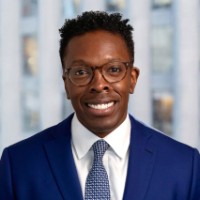
Selendy Gay PLLC is the premier law firm for complex, high-stakes commercial litigation, including trials, appeals, arbitrations and investigations. The firm represents clients across industries in their most consequential financial disputes, thoughtfully deploying its 100+ lawyers with seasoned trial experience, strategic insight and business savvy to every engagement. Selendy Gay has a reputation for showing up battle-ready and aggressive when boldness is called for and to negotiate highly favourable settlements that protect its clients’ interests. Founded in 2018 by veteran trial lawyers, the firm has recovered more than USD40 billion for plaintiffs and secured major dismissals and settlements for defendants. The firm also regularly handles government enforcement actions, internal investigations and disputes involving complex financial transactions across private equity, hedge funds and financial services.
Introduction
New York has always played a distinct role in financial crime. It is where the money, the institutions and the most aggressive prosecutors are. New York’s influence extends beyond its own cases and the government’s actions taken here often reshape how the country polices financial markets.
The past year has been a striking example of that pattern in action. The four developments examined here were not selected because they are exhaustive. They were selected because they are illustrative. Beginning in late 2025, Manhattan prosecutors dusted off a three-decade-old law that treats corporate fraudsters the same way the government treats drug lords and used it against sitting executives. Manhattan prosecutors also unveiled a disclosure programme for companies that come clean about financial crimes, offering new terms. The Justice Department in Washington put out its own version weeks later. Manhattan prosecutors also filed the first-ever criminal case for trading on insider information in a prediction market, a booming industry that had assumed it existed beyond the reach of federal law. And New York’s financial regulators continued to hold the crypto industry to standards demanding enough that global firms must either comply or walk away from one of the world’s most lucrative markets.
Each of these developments tells a story on its own. Taken together, they point to something larger: New York, per usual, is not waiting for Washington to set the agenda on financial crime. It is setting the agenda itself.
New York’s Stick: the Return of the “Financial Kingpin” Statute
For over three decades, one of the federal government’s most powerful weapons against financial crime sat largely unused, gathering dust on the shelf. The Continuing Financial Crimes Enterprise (“CFCE”) statute, enacted in 1990 in the aftermath of the savings and loan crisis and modelled deliberately on the drug-trafficking Kingpin Statute, carries a mandatory minimum of ten years and a maximum of life imprisonment. It was designed to be devastating. And then, for reasons that had more to do with prosecutorial habit than legal obstacles, it was almost never used.
That recently changed in New York. In just six weeks spanning late 2025 and early 2026, the US Attorney’s Office for the Southern District of New York (“USAO-SDNY”) unsealed two separate indictments charging corporate executives under the CFCE – the first such charges in more than a decade. The two cases were strikingly different in industry but identical in structure: executives at the top of organisations who allegedly used their positions to run sophisticated, multi-year fraud schemes involving falsified financial statements, manipulated collateral and teams of subordinates who either participated or looked the other way.
In the first case, former Tricolor Holdings CEO Daniel Chu and former COO David Goodgame were charged with repeatedly defrauding lenders using various schemes, including “double-pledging” collateral to multiple lenders, overstating collateral by approximately USD800 million and causing hundreds of millions in losses. Weeks later, former First Brands Group CEO Patrick James and his brother Edward James, a former senior vice president, were charged with fraudulently inflating invoices, pledging collateral multiple times and falsifying financial statements to trick lenders into giving them billions of dollars.
These are not abstract legal manoeuvres. The CFCE requires prosecutors to prove that a defendant organised, managed or supervised a continuing criminal enterprise and that the fraud was not a lapse or a rogue act, but a systematically run operation. By charging it, New York prosecutors are sending a message that goes far beyond the individual defendants: Executives who treat their organisations as personal fraud vehicles will be treated not as typical white-collar offenders but as criminal kingpins. Further, under the current Administration’s policy of charging the most serious, readily provable offence, the CFCE may frequently be the most serious charge available in major fraud cases and prosecutors can be expected to reach for it. When they do, it will reshape the calculus for every executive who finds themselves in the crosshairs of a financial fraud investigation.
New York’s Carrot: SDNY’s Voluntary Self-Disclosure Programme
Not long after unsealing the above indictments, on 24 February 2026, US Attorney Jay Clayton announced USAO-SDNY’s Corporate Enforcement and Voluntary Self-Disclosure Programme for Financial Crimes, a structured framework under which companies that discover certain categories of financial misconduct, self-report to the USAO-SDNY before receiving a subpoena or learning of a government investigation, cooperate fully, remediate the conduct and pay restitution to victims, receive a declination: no criminal charges, no fines, no monitor. The conditional declination can be expected to arrive shortly after disclosure. At the programme’s launch, SDNY confirmed that it had already issued one conditional declination within a month of a qualifying disclosure.
The programme’s most consequential departure from existing Department of Justice (“DOJ”) practice concerns aggravating circumstances. Under the then-operative DOJ Criminal Division’s own Corporate Enforcement and Voluntary Self-Disclosure Policy, a company can be disqualified from receiving a declination based on factors including:
- the seriousness of the offence;
- the pervasiveness of misconduct within the company;
- the severity of harm caused;
- past criminal history; and
- the involvement of senior leaders.
USAO-SDNY’s programme explicitly excludes all those factors from its definition of aggravating circumstances. A company may self-report a pervasive fraud orchestrated by senior leadership that caused significant investor harm and involved a company with prior criminal history and still receive a declination, provided the disclosure is timely and the cooperation requirements are met. That is a materially more favourable offer than anything previously available under the DOJ’s own framework and it was New York that was again leading the rewriting of the rules.
The USAO-SDNY’s new programme was closely followed by the DOJ’s March 2026 announcement of a department-wide Corporate Enforcement and Voluntary Self-Disclosure Policy, suggesting that the prosecutorial boldness demonstrated in Manhattan had prompted a national recalibration of how the federal government approaches corporate financial crime.
The relationship between the SDNY programme and the DOJ’s 10 March 2026, department-wide Corporate Enforcement and Voluntary Self-Disclosure Policy remains formally unresolved. The DOJ’s CEP states that it supersedes all component-specific and US Attorney’s Office-specific corporate enforcement policies currently in effect, with the sole exception of the Antitrust Division. On 12 April 2026, at a public event, Clayton addressed this directly, stating that the two policies are not in tension and that SDNY’s programme remains active and continues to accept submissions, characterising reports of supersession as, in the words of attendees, “fake news.” It is clear that New York prosecutors still intend to use carrots and sticks, whether Washington keeps up or not.
Prediction Markets: The First Insider Trading Indictment and Its Implications
Even as the DOJ was consolidating its corporate enforcement architecture, the USAO-SDNY was staking out new ground in a different direction, using existing fraud and commodity market statutes to prosecute insider trading in prediction markets for the first time.
Prediction markets have grown from a niche curiosity into a multi-billion-dollar industry, with platforms like Polymarket and Kalshi attracting millions of users wagering on everything from election outcomes to geopolitical events. The sector’s explosive growth has been matched by a persistent legal ambiguity – unlike traditional securities markets, where insider trading prohibitions are well-established, prediction markets have occupied a regulatory grey area, with many participants and commentators questioning whether existing law reaches trading on material nonpublic information in these venues. That uncertainty fueled a widespread belief, sometimes explicit, sometimes assumed, that the normal rules simply did not apply.
In February 2026, Jay Clayton declared that New York prosecutors would bring clarity, stating publicly that insider trading laws apply equally to prediction markets: “Because it’s a prediction market doesn’t insulate you from fraud.” Two months later, he signed the first indictment demonstrating just that.
On 21 April 2026, the USAO-SDNY unsealed an indictment against Gannon Ken Van Dyke, a US Army Special Forces master sergeant, arising from an alleged scheme in which Van Dyke used classified information regarding a military operation to capture Nicolás Maduro to place trades on Polymarket. Between 27 December 2025 and 26 January 2026, Van Dyke placed approximately 13 bets totalling approximately USD33,034 on Venezuela- and Maduro-related contracts and realised gains of approximately USD409,881 following the public announcement of Maduro’s capture on 3 January 2026. This is the first insider trading case involving prediction markets. The CFTC filed a parallel civil enforcement action the same day as the DOJ’s unsealing.
The lasting legal significance of the case lies not in its facts but in the statutory architecture SDNY chose. The indictment charges Van Dyke with three counts of violating the Commodity Exchange Act (“CEA”), one count of wire fraud and one count of making an unlawful monetary transaction. The second CEA count invokes the so-called “Eddie Murphy Rule,” enacted as part of the Dodd–Frank Act and codified as Section 4c(a)(4) of the CEA in 2010. The rule prohibits government employees from using confidential government information to trade futures, options or swaps. This marked the first time this rule was invoked.
The third count charges commodities fraud under a misappropriation theory directly analogous to the theory used in traditional securities insider trading cases: the defendant owed a duty of confidentiality to the source of the information, breached that duty and profited from the breach. The misappropriation theory, as charged, applies to any person who trades a prediction market contract on the basis of material nonpublic information in breach of a duty owed to the source of that information, encompassing potentially corporate executives, lawyers, compliance officers and employees at any organisation that handles sensitive information under nondisclosure obligations. SDNY’s choice of this theory was deliberate; the office was signalling the framework it intends to apply to the prediction market space broadly.
Prediction markets can no longer claim the shelter of regulatory ambiguity. The prosecution of Van Dyke makes plain that USAO-SDNY prosecutors view event contracts as firmly within the reach of federal law and that anyone who exploits confidential information to trade on these platforms does so at serious legal peril. The charging approach in Van Dyke is notably expansive. Rather than defaulting to conventional securities fraud theories, prosecutors assembled a multi-statute case that demonstrates just how wide the net can be cast, extending liability far beyond the financial industry to encompass anyone bound by a duty of confidentiality, regardless of profession.
NYDFS and NYAG: Creating a Crypto Enforcement Ecosystem
The BitLicense was introduced by the New York State Department of Financial Services (“NYDFS”) in 2015 and widely criticised at the time as regulatory overreach. It has become one of the most consequential cryptocurrency regulatory frameworks in the world. Not because of its statutory reach, but because of what it requires in practice: capital standards, custody rules, anti-money laundering controls and approval requirements for token listings. Any global crypto firm seeking direct access to the New York market must either meet those standards or formally exclude New York users. The latter choice is itself a business and compliance decision with material consequences and one that an increasing number of firms have made.
That enforcement power has been on prominent display in recent years. Between 2023 and 2025, NYDFS secured major enforcement actions against several large crypto firms operating within its regulatory perimeter, which include:
- a USD100 million settlement with Coinbase for systemic anti-money laundering and transaction monitoring deficiencies, which also required the installation of an independent monitor;
- a consent order with Genesis Global Trading resulting in its exit from New York and the surrender of its BitLicense; and
- a USD37 million settlement with Gemini Trust Company for compliance failures related to its Earn programme, associated with more than USD1.1 billion in customer recoveries through the Earn programme resolution process.
NYDFS also brought a significant action against Paxos Trust Company, beginning with a 2023 order requiring it to cease minting Binance USD, citing deficiencies in the oversight of its Binance relationship and its broader compliance programme and culminating in a USD48.5 million settlement in 2025. Across these actions, the agency has consistently used the BitLicense framework not merely as a licensing threshold, but as a framework for ongoing prudential supervision, all the while imposing remediation obligations, governance reforms and, in some cases, structural business constraints. NYDFS Superintendent Adrienne Harris has described the BitLicense framework as “a model for the US and the world,” and her office’s engagement with federal legislators on crypto regulation suggests that description reflects an institutional ambition rather than mere rhetoric. For global firms, the lesson is clear: obtaining a BitLicense does not end NYDFS scrutiny; it initiates an ongoing supervisory relationship.
Proposed legislation currently before the New York legislature, the CRYPTO Act, would go further by making unlicensed virtual currency business activity involving USD25,000 or more in 30 days a felony under New York state law. Further, federal registration alone does not satisfy the New York requirement.
Similarly, New York Attorney General Leticia James has also displayed an appetite, armed with a broad blue sky law, to move quickly and aggressively into cryptocurrency enforcement, building a sustained enforcement record. Most recently, her office sued Coinbase and Gemini for illegally running unlicensed gambling operations through their prediction market platforms, seeking:
- forfeiture of profits;
- treble fines; and
- restitution to harmed consumers.
Conclusion
These four developments are not isolated enforcement events. They reflect a coherent, if uncoordinated, institutional posture in which New York’s federal and state enforcement ecosystem is actively defining the outer edges of financial crime law and inviting the rest of the country to catch up.
Selendy Gay PLLC
1290 6th Ave
New York
NY 10104
USA
212 390 9000
212 390 9399
info@selendygay.com www.selendygay.com
Trends and Developments
Author
Selendy Gay PLLC is the premier law firm for complex, high-stakes commercial litigation, including trials, appeals, arbitrations and investigations. The firm represents clients across industries in their most consequential financial disputes, thoughtfully deploying its 100+ lawyers with seasoned trial experience, strategic insight and business savvy to every engagement. Selendy Gay has a reputation for showing up battle-ready and aggressive when boldness is called for and to negotiate highly favourable settlements that protect its clients’ interests. Founded in 2018 by veteran trial lawyers, the firm has recovered more than USD40 billion for plaintiffs and secured major dismissals and settlements for defendants. The firm also regularly handles government enforcement actions, internal investigations and disputes involving complex financial transactions across private equity, hedge funds and financial services.
