Insurance Litigation 2026
Japan
Authors
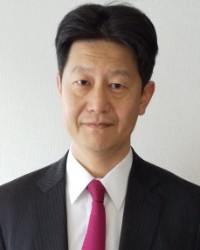

Hiratsuka & Co is a boutique law firm in Tokyo established in 1976, with five lawyers and one academic consultant, providing a full range of domestic and cross-border Japanese legal services. The firm handles various types of insurance, typical and non-typical, and has advised both insurers/reinsurers and insureds/reinsureds on matters such as fire insurance, earthquake insurance, liability insurance, marine insurance, erection insurance, satellite insurance and umbrella insurance. Another area of expertise is recovery actions in Japan based on subrogation. Hiratsuka & Co also advises on Japanese insurance regulations and assists non-Japanese clients in obtaining insurance licences in Japan. The firm has been instructed by insurance companies and law offices from all around the globe, including Japan, the UK, the USA, France, Germany, Switzerland, Italy, Spain, Norway, Russia, Singapore, Australia, Hong Kong, China and Taiwan.
1. Key Drivers and Resolution of Insurance Disputes
1.1 Common Triggers of Insurance Disputes
As legal practitioners, we have a sense that the most frequent causes of insurance dispute are the interpretation and application of insurance policy, but no objective grounds can be found; there are no statistics in Japan that categorise insurance disputes by cause and show the number of cases for each. Furthermore, one insurance claim case sometimes contains several issues of coverage interpretation, policy wording ambiguity, etc.
The area with the highest number of insurance disputes is motor insurance. This trend has not shifted for years.
1.2 Role of Policy Wording and Drafting
Insurance disputes arise for various reasons. Unclear policy wording is one such reason, but it is difficult to state with certain grounds the extent that policy wording issues contribute to insurance disputes. There does not appear to be any recurring clause that typically gives rise to contention that the policy wording is not clear.
1.3 Dispute Resolution Strategy and Outcomes
In disputes between insurers and insureds, negotiation is initially adopted. If negotiation does not work well, mediation may well be used. If agreement is not reached through mediation, litigation or arbitration may be commenced by insureds. This is a cost-effective approach, but the outcome depends on the strength of the argument and evidence rather than the method of approach.
2. Jurisdiction and Choice of Law
2.1 Choice of Law in Insurance Contracts
Under the conflict of law rules of Japan, the applicable law for an insurance or reinsurance contract is the law of the place chosen by the parties at the time of the conclusion of said contract. In the absence of any such explicit choice of law, an insurance or reinsurance contract shall be governed by the law of the place with which the contract is most closely connected at the time of its conclusion, which is presumed to be the law of the place of the habitual residence of the insurer or reinsurer is presumed. The parties may agree to change the governing law otherwise applicable to the insurance or reinsurance contract, but such change may not be asserted against a third party when it prejudices the rights of such third party.
There are special provisions regarding the choice of law for consumer contracts. For example, even when the law applicable to the consumer contract as a result of a choice or a change of governing law is a law other than the law of the consumer’s habitual residence, if the consumer has manifested their intention to the business operator that a specific mandatory provision from within the law of the consumer’s habitual residence should be applied, such mandatory provision shall also apply to the matters stipulated by the mandatory provision with regard to the formation and effect of the consumer contract. Notwithstanding this general rule, in the absence of a choice of law with regard to the formation and effect of a consumer contract, such formation and effect shall be governed by the law of the consumer’s habitual residence.
Party autonomy is generally respected, but it is modified if the insurance contract is a consumer contract.
2.2 Jurisdiction and Forum Selection
Under the Japanese rules regarding international jurisdiction, parties to an insurance contract may agree a country in which they are permitted to file an action with the courts. Such agreement is not valid unless it is made regarding actions that are based on a specific legal relationship, and executed by means of a written document. If the agreement is made by means of electronic or magnetic records, it should be deemed to have been executed by means of a written document.
An agreement that an action may be filed only with the courts of a foreign country may not be invoked if those courts are unable to exercise jurisdiction by law or in fact. A jurisdiction agreement in which the parties agree exclusive jurisdiction of the court that has the jurisdiction over the head office of the defendant is, in principle, valid, unless the agreement is extremely unreasonable and against public policy (Supreme Court judgment of 28 November 1975 Minshu 29.10.1554). As long as these requirements are satisfied, international jurisdiction clauses are upheld in practice. Such clauses are widely seen in business sectors with international elements.
2.3 Cross-Border Disputes and Conflicts Issues
Generally, jurisdiction issues and/or choice of law issues are not raised in cross-border insurance disputes, as the clauses are normally clear. In the area of marine insurance, the following clause is often inserted, which can cause disputes: “English law and practice shall apply as to liability for and settlement of any and all insurance claims. In all other respects, including issues as to the existence and validity of this insurance, this insurance is subject to Japanese law and practice”.
2.4 Anti-Suit Injunctions
If a lawsuit is filed in Japan in which the plaintiff breaches a clause stating the exclusive jurisdiction of a non-Japanese court and the defendant disputes the international jurisdiction of the Japanese court, the lawsuit will be dismissed, upon the petition of the defendant, as long as the exclusive jurisdiction clause is considered valid under the Code of Civil Procedure. If a lawsuit is filed in Japan in which the plaintiff breaches an arbitration clause and the defendant disputes the jurisdiction of the Japanese court, the lawsuit will be dismissed, unless the arbitration agreement is invalid, it is impossible to carry out an arbitration procedure based on the arbitration agreement, or a dismissal petition is filed after the defendant has presented oral arguments concerning the merits or made statements concerning the merits in preparatory proceedings.
Japanese courts may not issue anti-suit relief or anti-arbitration relief.
2.5 AI-Related Dispute Resolution and Jurisdiction
There are no trends or developments in how Japanese courts approach jurisdiction and choice of law in disputes involving AI systems.
3. Arbitration in Insurance Disputes
3.1 Recognition of Arbitration Clauses
in many cases, arbitration clauses in insurance and reinsurance contracts are valid arbitration agreements under the Arbitration Act of Japan. Therefore, Japanese court will recognise and upheld the arbitration clause. However, please see 2.4 Anti-Suit Injunctions regarding exceptions.
3.2 Enforcement of Arbitral Awards
A claimant that intends to process a civil enforcement in Japan based on an arbitral award must obtain an Enforceability Order. This regulation is applied equally to cases where the place of arbitration is in Japan and out of Japan. The requirements for an Enforceability Order are substantially the same as those provided in the New York Convention.
3.3 Practical Use of Arbitration in Insurance Matters
Arbitration clauses are not commonly used in insurance and reinsurance contracts in Japan.
4. Coverage Disputes
4.1 Evolving Trends in Coverage Disputes
In its “Report by the Expert Panel on Structural Issues and Competition in the Non-Life Insurance Industry”, the Financial Services Agency (FSA) calls for improvements in the handling of fraudulent claims. The “Guidelines on Insurance Claims Payments” issued by the General Insurance Association of Japan also set out provisions regarding the handling of fraudulent claims, investigation systems and the use of experts. It can therefore be said that tackling fraudulent claims is becoming a trend.
To address fraudulent claims, insurers may engage experts to contest them, such as loss adjusters. Policyholders may be required to provide objective evidence, such as dashcam footage.
4.2 Policy Wordings and Interpretation Developments
When interpreting insurance policy wordings, Japanese courts tend to take the wording as the starting point in individual cases and to reach a judgment by taking the overall structure of the policy into account, including relevant provisions on insurance payments and exclusions.
In cases of ambiguous insurance policy wording, the so-called “drafter’s disadvantage” principle is not explicitly stipulated in the Insurance Act, but is referred to in a supplementary opinion in Supreme Court judgments. Exclusion clauses are not interpreted particularly strictly, simply because they are exclusions. Endorsements are interpreted in the same way as general clauses, and are not interpreted more strictly simply because they are special clauses.
4.3 Cyber and Technology-Related Coverage Issues
No court judgments are made public in Japan regarding insurance coverage disputes arising in relation to cyber-risks, systemic events and technology failures, so it is impossible to describe how policy terms are responding to these exposures.
4.4 Aggregation and Limits of Liability
There are very few court precedents in Japan, but there was a case involving a solar power station where approximately 100,000 solar panels had been installed, of which approximately 16,000 were damaged. The insured claimed insurance under an assembly insurance policy. The policy terms stipulated that the “amount of loss to be compensated by the insurer shall, for each single accident, be the balance remaining after deducting the insured’s excess, as stated in the insurance policy, from the amount of loss calculated in accordance with the provisions of the preceding clause, subject to the limit of the sum insured”. The preceding clause provided that “[w]here damage for which the insurer is liable to compensate has occurred, the amount of such damage shall be the repair costs directly required to restore the insured subject matter to the condition it was in immediately prior to the occurrence of the damage, together with the costs of any inspections or examinations necessary for such repairs”.
The insured argued that, as there had been a functional decline across the entire power station, a single “accident” had occurred, affecting the entire facility. The insurer argued that damage had occurred during the installation of each individual module; consequently, a “single accident” had occurred for each module, and as the restoration costs for each module were less than the excess, there were no damages to be compensated. The court held, in essence, that:
- the term “a single accident” encompasses a series of accidents arising from a single cause, but it is necessary that the damage caused by each accident has a sufficient causal link to that single cause; and
- in the present case, the cause of the damage to the modules was negligence arising from a breach of the duty of care to ensure that the mounting frame did not come into contact with and damage the back sheet on the rear of the modules during installation.
Consequently, the occurrence of each individual instance of damage constitutes a “single accident” in itself, and the damage to the power station as a whole, as claimed by the insured, cannot be said to have arisen from a single cause according to generally accepted social norms. This appears to be the only published court precedent on this matter.
4.5 Sanctions and Illegality Issues
No Japanese court precedents can be found in which economic sanctions, illegality or public policy considerations have affected claims for insurance payments or an insurers’ ability to pay insurance claims.
A case that comes close to this involved a dispute over the validity (and the lawfulness of the insured interest) of a cargo insurance contract concluded in relation to the export of Iranian-made carpets from Japan to the United States, which was prohibited under United States law. The judgment at first instance held that, as US law carried criminal penalties and the interest in question was contrary to public policy, the insured interest could not be recognised. However, the appeal court ruled that, since the US regulation was a temporary administrative enforcement measure and no criminal penalties had in fact been imposed in relation to the import of the goods in question, the interest was not contrary to public policy under Japanese law, the law of the forum, and the insurance contract was therefore valid.
4.6 Late Payment and Claims Handling Practices
Whilst the FSA has long monitored claims payment management systems of insurers, the “Comprehensive Supervisory Guidelines for Insurance Companies”, which came into effect on 1 June 2026, require the executive in charge of the claims management department at a non-life insurance company to be a different person from the executive in charge of the sales department, and require the claims payment operations to be conducted exclusively under the direction and control of the claims management department. Insurance companies are required to establish systems to ensure that the claims management department is not unduly influenced by the sales department.
There have been no particular new developments recently regarding delays in insurance payments, from either a regulatory or litigation perspective, and published court precedents do not suggest that these developments are having any impact on insurance claims cases.
4.7 ESG and Climate-Related Coverage
As far as can be ascertained from a review of published court cases in Japan, there is no evidence to suggest that ESG risks or climate change-related risks are giving rise to new types of coverage disputes. It is therefore unclear whether, and if so how, insurers are adapting their insurance policies and exclusions in light of such cases.
It should be noted, however, that the development of renewable energy sources – such as solar, wind and biomass power generation – is proceeding with due regard to ESG and climate change risks. Japanese insurance companies are developing and selling insurance products tailored to such operators.
4.8 Delegated Authority and Claims Responsibility
In Japan, managing general agents with broad powers are not appointed. Furthermore, as the assessment and payment of insurance claims are carried out by the insurance companies themselves, third-party administrators are not appointed or utilised. There have been cases in insurance claim litigation where it has been argued that the insurance agent had failed to fulfil their duty to provide information.
4.9 Financial Lines Coverage Trends
A limited number of court precedents are published in Japan, so it is difficult to identify key trends in disputes over insurance coverage relating to directors’ and officers’ insurance, professional indemnity insurance and financial institution insurance. As policyholders present their arguments and evidence to have their claims upheld, whilst insurers put forward counter-arguments to have them dismissed, and the issues at stake vary depending on the specific case, it is difficult to identify any consistent trends.
It can be said that shareholder derivative actions are on the rise in Japan compared to the past, but there is no data clearly showing how this is affecting insurance coverage. Similarly, there is no data clearly demonstrating the relationship between insurance coverage and issues such as strengthened supervision or bankruptcy.
4.10 Casualty Coverage Trends
Whilst the issues at stake in casualty coverage disputes vary widely from case to case, the fundamental issues remain unchanged, such as:
- the interpretation of the insurance policy;
- whether an event constitutes an insured event;
- the application of exclusion clauses;
- breaches of the duty of disclosure;
- causation; and
- the amount of loss.
In terms of risk exposures, should major earthquakes or torrential rain occur, claims under fire and earthquake insurance will increase, and so will the number of disputes. However, no correlation can be identified between an increase in the number of cases (changing risk exposures) and a corresponding impact on coverage positions. In litigation concerning insurance claims, insurers present their arguments and contest the claims based on the facts of each individual case.
With regard to claims patterns, the insured party submits a claim for insurance benefits and, in doing so, must assert and prove the facts constituting the basis of the claim; in this respect, no apparent change in pattern can be observed.
5. Claims Against Insureds
5.1 Key Exposure Areas for Insureds
The principal number of claims being brought against insureds relate to automobile accidents. Legal expense cover is now often added in insurance policies, and insureds utilise the cover once they become involved in a legal dispute.
5.2 Shifting Risk Landscape
Judging from published court judgments, there has been no substantial change in the nature of claims being brought against insureds. In terms of technology, product liability claims against insured may be relevant. However, defects are judged by taking account of the time of delivery of the product by the manufacturer, so the development of technology after the delivery date would not affect the judgment on a defect.
5.3 Defence Costs and Litigation Complexity
Generally, defence costs increase and claims against insureds become complicated if there are multiple claimants, if the case has cross-border elements or if the claim amount is high. In particular, if it is a high-value claim, lots of issues are raised and both parties’ submissions tend to be lengthy, resulting in substantial defence costs and a very complicated case.
5.4 Cost Risk Management and Funding Solutions
Legal expense cover is often added as an endorsement in automobile insurance. In cases of traffic incidents between two automobiles, the insureds may count on the cover to transfer litigation cost risk to the insurer. Third-party funding is not common in Japan, because careful examination of respective funding schemes is required for legitimate operation in relation to the Attorneys Act and the Trust Act.
5.5 AI-Driven Claims Volumes and Complaints
It is unclear whether AI-generated or AI-assisted complaints have yet been used before Japanese courts. The number of litigation cases in Japan is relatively small, compared to other nations. There are various reasons for this, but no academics state that difficulty in drafting complaints is the reason. Therefore, it is not known whether AI-generated or AI-assisted complaints are resulting in increased claim volume.
6. Third-Party Claims and Defence Trends
6.1 Third-Party Claims and Direct Actions
In principle, third parties may neither enforce an insurance contract nor sue an insurer in connection with an insurance contract. However, the first exception is the case where an insurance contract contains a clause that allows a direct claim by a third party against the insurer. In that case, a third party may claim for payment against the insurer to the extent allowed by the clause. The second exception is under the Act on Securing Compensation for Automobile Accidents, which provides for compulsory automobile liability insurance. Under this insurance, a person who puts an automobile into operational use for their own benefit is included as an insured. When the person is liable to compensate for damage to a third party, that third party may directly claim against the insurer for payment of damage up to the amount of the insurance coverage.
The most common disputes are traffic accident cases, where third party victims claim against the liability insurer of the tortfeasor driver.
6.2 Emerging Liability and Defence Trends
A victim’s civil claim against an insured is a claim for compensation for damage in many cases. In the claim, regulatory scrutiny, reputational risk and co-ordinated multi-claimant actions themselves have little effect on the examination of the merits of the claim. Insurers are responding in the usual manner, with no special activity.
7. Geopolitical Factors
7.1 Geopolitical Drivers of Insurance Disputes
No objective evidence has been found to suggest that recent geopolitical developments have had an impact on the volume and nature of insurance and reinsurance disputes in Japan.
7.2 Sanctions and Payment Challenges
Japanese insurance companies may agree to special clauses or endorsement relating to economic sanctions. In such cases, the insurer will not underwrite insurance or make insurance payments that contravene the economic sanctions measures imposed by major countries. It is reasonable to assume that the settlement of insurance claims or claims handling is carried out in accordance with these special clauses or endorsement. On the other hand, no insurance claim disputes in which this point has been contested appear to have been documented in publicly available sources.
7.3 War, Political Risk and Exclusions
Published court precedents indicate no cases in which the war risk exclusions clause, the terrorism risk exclusions clause or the political risk exclusions clause have been directly interpreted. It is therefore extremely difficult to demonstrate, on the basis of objective evidence, how these clauses are being contested or interpreted; it is also difficult to demonstrate whether they have led to notable disputes or uncertainty.
7.4 Supply Chain and Systemic Loss Events
No new categories of loss eligible for insurance cover have arisen in connection with supply chain instability or energy market volatility, nor have any issues relating to aggregation arisen.
7.5 Forward Outlook and Market Response
The underwriting and payment of claims by Japanese insurers is expected to be influenced by trends in reinsurance cover provided by reinsurers. Provided there is a basis in the policy terms and conditions, it is unlikely that an insurer’s refusal to pay a claim would immediately lead to litigation and a ruling by the Japanese courts. Whilst Japanese insurers may amend the wording of their policy terms and conditions as necessary, they do not tend to make frequent changes over a short period.
8. Emerging Risks
8.1 Market Overview of Emerging Risks
Japan is regularly hit by major earthquakes and torrential rain, and fire insurance cover for the resulting damage remains crucial. Whilst it is expected that insurance claims will be assessed and processed in the traditional, established manner, it cannot be ruled out that new issues may arise given the specific characteristics of earthquakes and torrential rain.
The FSA is calling on insurance companies to strengthen their response to cyber-risks, which are also becoming a reality for corporate clients, leading to situations where various types of information are leaked or the smooth running of business operations is impeded. Consequently, insurance claims based on cyber insurance and similar policies are likely to be made, giving rise to various issues regarding insurance coverage. Although no published court precedents regarding insurance claims for cyber-risks have been found, academics have written on the application of war exclusion clauses in cyber insurance policies, which represents a new development.
Another emerging risk concerns the application of war-related business interruption insurance to vessels stranded in the Persian Gulf, but this is not an issue that affects the Japanese insurance market as a whole.
8.2 Impact of ESG on Underwriting and Insurance Litigation
The FSA requires insurance companies to address climate change risks, and places great importance on insurance companies conducting their business operations in a customer-centric manner. It also continues to require insurance companies to maintain compliance. The insurance industry is taking action to respond appropriately to these requirements from the FSA; for example, one insurance company has adopted an internal system to make more careful decisions on underwriting. However, it is unlikely that these factors are influencing the interpretation and application of individual insurance contracts, such as disputes over insurance coverage, exclusions in insurance policies, misrepresentation, or trends in insurance claims.
8.3 Data Protection Laws
In Japan, the Personal Information Protection Act came into full effect in 2005, making it necessary for companies to protect personal data. The amended Act, which came into force in 2017, tightened regulations by requiring security measures for personal data and stipulating that prior consent from the data subject is required when providing personal data to third parties. The amendment enacted in 2022 imposed a reporting obligation in the event of a personal data breach, and explicitly prohibited the improper use of personal data.
Insurance companies are subject to these regulations, under which they are required to strengthen their information management systems. However, it is unlikely they will have an impact on underwriting decisions, the processing of insurance claims or litigation strategy.
Furthermore, commercial enterprises other than insurance companies are also subject to these regulations, which may serve as a basis for commercial enterprises to be held liable for damages to individuals. Insurance companies provide cover to commercial enterprises that have taken out personal data breach insurance or cyber insurance. Underwriting decisions, insurance claims handling and litigation strategies are considered to be the same as for standard insurance. There is no indication in published court precedents or other published materials that personal data breach insurance or cyber insurance are treated differently.
8.4 Data Centres
Risks associated with data centres include the maintenance of power lines and substations, the stable supply of electricity, increased electricity demand due to cooling equipment, and the ability to maintain operations during disasters. Should these risks materialise, they could result in damage such as system downtime, data loss or business interruption.
There have been no specific reports of insurance companies underwriting cover for data centre incidents or paying out claims in such cases. However, it is believed that insurance companies offer products covering system downtime, data recovery costs, incident response costs and business interruption through existing policies such as cyber insurance, error and omission insurance, business property insurance and comprehensive business insurance. Furthermore, should an incident occur, it is expected that claims would be processed in accordance with standard procedures.
8.5 Social Media Risk
It appears that there are no insurance products in Japan that cover the condition of social media addiction itself as a loss. In cases where an individual becomes unable to work due to a mental illness, they may be covered by income protection insurance. In the event of death resulting from a mental illness, a claim may be covered by life insurance; however, the issue of a suicide exclusion clause may arise.
It is unclear whether there are any insurance products in Japan that cover the liability of platform operators who have been sued by individuals suffering from social media addiction and have paid compensation. Comprehensive corporate liability insurance is the most likely option; however, whether it covers personal damages arising from social media addiction requires careful examination of the wording of the respective insurance policies. It may also be possible for such claims to be covered by error and omission insurance for IT operators. Should a company director be sued, there is scope for directors’ and officers’ insurance to apply. Thus, it is possible that insurance cover could be confirmed in relation to existing insurance products. However, no such litigation has been reported, and there are no known cases in which a Japanese court has ruled on this matter.
8.6 Next Generation Nuclear
Whilst next generation nuclear technology should be operated safely, the regulatory framework must be designed with the possibility of accidents in mind. In Japan, compensation for nuclear damage is governed by the Act on Compensation for Nuclear Damage. It is reasonable to assume that this Act will also apply to damage caused by next generation nuclear technology, and there are currently no signs of any moves to enact a special law.
It is expected that insurance products will also be designed on the basis of the compensation system set out in this Act. However, it is not yet clear whether this will give rise to new insurance risks or disputes, nor what form these might take. It is presumed that Japanese insurance companies are currently researching or developing insurance products tailored to next generation nuclear technology, but the extent of their progress has not been made public.
9. Legislative and Regulatory Key Trends
9.1 Regulatory Focus Areas and Supervisory Trends
With regard to regulatory matters, Japanese regulators focus on:
- strengthening the obligations of non-life insurance representatives and life insurance agents to establish appropriate systems;
- strengthening the obligations of insurance companies and similar entities to establish appropriate systems; and
- prohibiting insurance companies and similar entities from providing excessive benefits to policyholders.
The first and the second points are aimed at ensuring customer-centred business practices, whilst the third point is aimed at realising a healthy competitive environment. The Insurance Business Act and its Enforcement Order have been amended, with the amended regulations in force since 1 June 2026 influencing insurers to establish appropriate systems. They relate mainly to internal systems, and it is not yet known whether they are influencing dispute risk.
9.2 Forthcoming Reforms and Market Impact
As far as is known, there are no upcoming legislative or regulatory reforms that are expected to impact insurance coverage, policy wording or claims handling practices.
Hiratsuka & Co
Room 404, Godo Kaikan
3-27, Kioicho
Chiyoda-ku, Tokyo
Japan
+81-3-6666-8811
+81-3-6666-8820
sy@h-ps.co.jp www.h-ps.co.jp
Law and Practice
Authors
Hiratsuka & Co is a boutique law firm in Tokyo established in 1976, with five lawyers and one academic consultant, providing a full range of domestic and cross-border Japanese legal services. The firm handles various types of insurance, typical and non-typical, and has advised both insurers/reinsurers and insureds/reinsureds on matters such as fire insurance, earthquake insurance, liability insurance, marine insurance, erection insurance, satellite insurance and umbrella insurance. Another area of expertise is recovery actions in Japan based on subrogation. Hiratsuka & Co also advises on Japanese insurance regulations and assists non-Japanese clients in obtaining insurance licences in Japan. The firm has been instructed by insurance companies and law offices from all around the globe, including Japan, the UK, the USA, France, Germany, Switzerland, Italy, Spain, Norway, Russia, Singapore, Australia, Hong Kong, China and Taiwan.
