Insurance Litigation 2026
USA – California
Trends and Developments
Authors
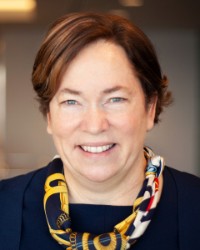
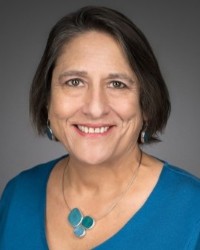
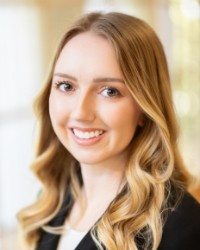
TittmannWeix helps insurance companies resolve coverage disputes through efficient, creative, and results-driven strategies. The firm embraces the network rather than office firm model to allow its team to work from their locations across the country, covering all time zones and offering regional specialties from the ground. TittmannWeix’s coverage litigation team blends incisive legal skill with a cost-conscious, resolution-focused approach. The firm strives to minimise legal spend through early settlement, streamlined discovery, and creative solutions – yet stand ready to litigate aggressively when needed to secure favourable outcomes. That approach led to victory for Certain Underwriters in the Zoom privacy coverage litigation in which TittmannWeix secured summary judgment eliminating any coverage obligation on the USD85 million settlement. That win was affirmed by the California Court of Appeals in May 2026.
California is one of the most closely watched insurance litigation markets in the country following the January 2025 Los Angeles area wildfires. California courts are expected to issue fire and smoke decisions through 2026 on what “direct physical loss” means, how causation and earth movement exclusions apply to post-fire mudslides, and whether insurers can recover payments from the utilities implicated in the fires’ origin.
Alongside that docket, California courts issued three decisions reshaping the timing of bad faith coverage suits and payments. The Supreme Court clarified the pleading standard for bad faith claims against excess insurers in Fox Paine & Co., LLC v Twin City Fire Insurance Co., No S287404 (Cal. July 27, 2026). The Fourth District addressed whether coverage litigation can proceed inside the underlying liability case in City of Riverside v RLI Insurance Co., 119 Cal. App. 5th 405 (2026). And the Second District addressed the effect of an insurer’s eventual payment on a bad faith claim in Bornoff v State Farm General Insurance Co., No B339796 (Cal. Ct. App. May 1, 2026).
Bad Faith Litigation
The Supreme Court’s decision in Fox Paine came as a surprise to many excess insurers. The Court held that an insured may state a claim for declaratory relief and bad faith even where the underlying (lower layer) insurance has not yet been exhausted, removing exhaustion as a threshold pleading barrier and consolidating what would otherwise be serial proceedings against successive excess layers into one case.
Under California law, an insurer’s unreasonable failure to pay a valid claim exposes it to both contract and tort liability, which can expose the insurer to damages beyond the policy limits and to the fees an insured incurs to obtain wrongfully withheld benefits. The covenant of good faith and fair dealing inherent in all contracts prevents a contracting party from engaging in conduct that frustrates the other party’s rights to the benefits of the agreement. Because an excess insurer’s implied covenant not to injure an insured’s right to receive benefits exists from the inception of the contract, the Court explained, wrongful conduct from that point forward can support a bad faith claim, exposing the insurer to liability beyond the policy limits. The failure to plead exhaustion is not, by itself, fatal. At the pleading stage, an insured states a claim by alleging facts such as:
- facts sufficient to show that coverage under a defendant insurer’s excess policy will attach, or that it would attach, if not for the excess insurer’s bad faith conduct, and that the insurer’s misconduct has impaired the insured’s recovery of benefits owed to it under the policy.
Thus, even where exhaustion is a condition precedent to coverage and no benefits are due, the insured can bring an action against its excess insurers.
The practical consequence is that excess carriers may be drawn into coverage discovery before attachment is certain. That development will likely increase early disputes over reserves, communications with lower-layer carriers, and the insured’s proof that the excess layer is reasonably likely to be reached. It also gives policyholders leverage to argue that an excess insurer’s pre-exhaustion conduct, such as refusing to participate in settlement discussions, delaying consent, or taking positions that impede access to underlying limits, can cause present harm even before indemnity is owed.
In a second significant procedural case, City of Riverside v RLI Insurance Co., 119 Cal. App. 5th 405 (2026), the Fourth District reversed a demurrer, allowing an additional insured asserting contractual and bad faith claims to pursue them within the pending underlying wrongful death case. A pedestrian died after being struck by a vehicle, and the decedent’s family sued the City of Riverside. The City cross complained against its contractor and against RLI. The trial court dismissed the cross complaint in reliance on Royal Globe Ins. Co. v Superior Court, 23 Cal. 3d 880 (1979) which bars a plaintiff from suing an insured and its insurer together. The Court of Appeal distinguished Royal Globe as not applying where the party suing the insurer is itself an additional insured with contractual privity, asserting its own first-party rights rather than a third-party stranger’s, meaning such disputes may be maintained inside the pending liability case. Thus, coverage disputes may be maintained inside the pending liability case, impacting how insurers manage joinder and jury-prejudice risk.
Finally, in Bornoff v State Farm General Insurance Co., No 22STCV23104 (Cal. Ct. App. May 1, 2026), the Second District held that an insurer’s eventual payment of benefits does not, by itself, defeat a bad faith claim where unreasonable delay caused separate economic harm. State Farm paid full benefits on a burglary/theft claim only after a four-month delay. Reversing summary judgment, the Court of Appeal held State Farm had not shown the absence of a triable issue as to whether the delay itself caused separate losses. Claims-handling conduct is a distinct source of liability, separate from the coverage decision itself. For insurers, the importance of thorough documentation and a demonstrably reasonable basis for timing decisions will be an important tool to defeat allegations of bad faith.
Fire, Smoke, and Mud
The “direct physical loss” question
The most heavily litigated coverage question in California this year is whether smoke and ash affecting a building that did not itself burn constitute “direct physical loss”. No published decision has yet resolved that question for the January 2025 Los Angeles fires, still at the pleading and discovery stages, but three decisions from earlier wildfires already shape how those claims will be litigated.
A federal court found smoke and ash infiltration could constitute physical loss under a commercial policy in Bottega, LLC v National Surety Corp., No 3:21-cv-03614-JSC (N.D. Cal. Jan. 10, 2025) arising from smoke damage to two San Francisco restaurants in the 2017 North Bay fires. The court denied summary judgment to both sides on whether smoke contamination “seriously impaired or destroyed” the restaurants’ function, though it granted judgment against two affiliated entities that never suspended operations. The court distinguished the case from the COVID-19 property cases cited by the insurer, explaining that “smoke is more like asbestos and gases that physically altered the property”.
A Los Angeles trial court reached a policyholder-favourable result on different grounds in Aliff v California FAIR Plan Association, No 21STCV20095 (L.A. County Super. Ct. June 24, 2025) (order granting partial summary adjudication) arising from the 2020 Mountain View Fire. The court held that policy language issued by the California Fair Access to Insurance Requirements Plan (FAIR Plan) requiring smoke damage to be permanent and visible or detectable by smell provided less coverage than California’s standard form fire policy, and that the FAIR Plan could not lawfully exclude laboratory evidence of contaminants undetectable by the insured’s own senses.
A published Court of Appeal decision reached the opposite result in Gharibian v Wawanesa General Insurance Co., 108 Cal. App. 5th 730 (2025), arising from smoke and ash that reached a Granada Hills home during the 2019 Saddle Ridge Fire without burning it. The court held that “direct physical loss” requires a distinct, demonstrable physical alteration of property that cleanable soot and ash did not meet.
Following Gharibian, the California Department of Insurance issued Bulletin 2025-7 on 7 March 2025, cautioning insurers against summarily denying smoke-damage claims without a thorough investigation. The Bulletin emphasises that coverage depends on the policy language and the specific facts of each claim. It also notes that Gharibian is limited to its facts and points to the California Supreme Court’s 2024 decision in Another Planet Entertainment, LLC v Vigilant Insurance Co., 15 Cal. 5th 1106 (2024), which recognised that physical damage need not be visible or structural to constitute a demonstrable alteration.
Bottega, Aliff, and Gharibian together frame the fight now underway over the Los Angeles fires. A newer decision extends the fight to a different product line. In late December 2025, the Northern District court denied summary judgment on a claim that smoke taint infiltration into wine barrels constituted direct physical loss in Napa Valley Limoncello LLC v Nationwide Agribusiness Insurance Co., No 24-cv-03243-HSG (N.D. Cal. Dec. 31, 2025). The outcome has turned on expert testing and industrial hygiene evidence rather than how a party characterises the loss, a pattern Los Angeles claims are likely to follow.
For claim handlers, these cases suggest that the outcome will rarely turn on the mere presence of smoke or ash. The more important questions will be whether contamination persisted after ordinary cleaning, whether testing identifies combustion byproducts or other particulates at meaningful levels, and whether the property’s intended use was materially impaired. Insurers evaluating Los Angeles-area claims therefore should expect detailed expert battles over sampling methodology, pre-loss conditions, remediation scope, and the distinction between temporary residue and a physical alteration recognised under Another Planet.
Efficient proximate cause
After fire comes rain, and after rain on a burn scar comes the mudslide. The “efficient proximate cause” doctrine, codified at California Insurance Code Section 530, makes an insurer liable for a loss caused by a covered peril even though an excluded peril was a remote cause, but not where the covered peril was itself only remote. The Supreme Court applied the doctrine to first-party property claims in Garvey v State Farm Fire & Casualty Co., 48 Cal. 3d 395 (1989) holding that coverage turns on which peril “set the other in motion”, and declining to extend the broader “concurrent causation” rule to first-party claims. Insurance Code Section 530.5 separately addresses combined peril losses involving landslides.
No California court has yet applied efficient proximate cause to a post-Palisades or Eaton Fire mudslide claim. Litigation over the winter’s debris flows appears stalled at the claims-handling stage. The doctrine’s application is likely to track two competing precedents. In Howell v State Farm Fire & Casualty Co., 218 Cal. App. 3d 1446 (1990), wildfire was held the efficient proximate cause of a subsequent landslide, defeating an earth movement exclusion. In Julian v Hartford Underwriters Insurance Co., 35 Cal. 4th 747 (2005), a rain-triggered mudslide fell within one. Insurers are expected to rely on Julian, policyholders on Howell and Garvey. CDI has already issued guidance anticipating the dispute in California Department of Insurance Bulletin 2025-3, Coverage of Flood, Mudslide, and Earth Movement Claims Relating to Recent Wildfires.
Subrogation and the utility litigation
A large share of the wildfire litigation, by dollar value, involves insurers as subrogating plaintiffs rather than defendants. Insurers are reportedly pursuing as much as USD10 billion in subrogation claims against Southern California Edison (SCE) over the Eaton Fire, while Aon has estimated insured Eaton Fire losses alone at up to USD17.5 billion and Moody’s has estimated combined Eaton and Palisades losses at USD25–USD30 billion. A parallel set of claims targets the City of Los Angeles’s public water utility over the Palisades Fire, framed around infrastructure failure at the Santa Ynez Reservoir and dry hydrants.
These claims are shaped by inverse condemnation, which can hold a utility strictly liable for property damage caused by its infrastructure without proof of negligence. That doctrine has reached privately owned utilities in California since Barham v Southern California Edison Co., 74 Cal. App. 4th 744 (1999), reaffirmed after the 2007 San Diego area wildfires in Pacific Bell Telephone Co. v Southern California Edison Co., 208 Cal. App. 4th 1400 (2012) and clarified as to the “inherent risk” pleading standard in City of Oroville v Superior Court., 7 Cal. 5th 1091 (2019). Simple Avo Paradise Ranch, LLC v Southern California Edison Co., 102 Cal. App. 5th 281 (2024) confirmed the doctrine extends to a privately owned utility operating under an exclusive state granted franchise, a proposition the Eaton Fire litigation now tests.
The Eaton Fire cases, consolidated under Gursey v Southern California Edison Co., No 25STCV00731 (L.A. County Super. Ct.), are generating rulings on threshold liability and allocation. SCE contends inverse condemnation does not apply because the transmission line linked to ignition was disconnected from the grid since 1971. On 11 August 2026, the court tentatively denied the insurers’ summary adjudication motion on that question, sending it toward a bench trial. In a separate June 30 ruling, the same court allowed SCE’s cross-complaint, alleging Los Angeles County created a dangerous condition near the ignition point to proceed.
The Palisades Fire claims against LADWP, consolidated as Grigsby v City of Los Angeles, No 25STCV00731 (L.A. County Super. Ct.), are proceeding similarly. In February 2026, the court overruled a demurrer, allowing infrastructure failure claims to proceed to discovery, with at least one complaint reportedly seeking USD10 billion in damages.
Market conduct claims and the FAIR plan
A newer set of theories targets the industry’s collective conduct rather than any single claim decision. Beginning in April 2025, fire-loss homeowners filed Ferrier v State Farm Fire & Casualty Co. (L.A. County Super. Ct. Apr. 18, 2025) and a related case, Canzoneri v State Farm Group, (L.A. County Super. Ct. Apr. 18, 2025), naming roughly two dozen insurers holding nearly 75% of the California homeowners’ market, alleging an antitrust group boycott and unfair competition violations over co-ordinated non-renewals in fire-prone areas beginning in 2023. In May 2026, the court denied the bulk of the insurers’ motion to dismiss, and on 6 May 2026, the US Department of Justice filed a Statement of Interest arguing that neither the Noerr-Pennington doctrine nor the McCarran-Ferguson Act necessarily shields the alleged conduct, undercutting the insurers’ antitrust immunity defence.
That scrutiny expanded again on 31 August 2026, when Los Angeles County sued State Farm General Insurance Company and related entities, alleging systemic violations of California consumer protection laws in the handling of homeowners’ claims arising from the 2025 Palisades and Eaton fires. The County alleges that State Farm delayed and denied claims, shifted toxic-contamination testing costs to policyholders, and underpaid smoke-damage benefits. It seeks approximately USD160 million in premiums allegedly owed back to policyholders, in addition to withheld benefits and out-of-pocket costs. The suit is part of a broader trend indicating that wildfire coverage litigation is moving beyond individual coverage disputes toward public-enforcement and market-conduct theories focused on claims-handling practices.
The FAIR Plan features throughout this litigation. It is a defendant in disputes like Aliff, a subrogation beneficiary alongside its member insurers, and the alleged destination in the market conduct suits, all while writing far more of the market than intended. In California FAIR Plan Association v Lara, 116 Cal. App. 5th 869 (2025), the Second District held that Insurance Commissioner Lara lacked authority to unilaterally expand the FAIR Plan’s “basic coverage” to include liability insurance, since the 1968 Basic Property Insurance Law authorises only first-party property coverage.
Following the 2025 fires, the FAIR Plan levied its first assessment on member insurers in more than 30 years, up to USD2 billion combined under Commissioner Lara’s Order 2025-1. Member insurers may recoup up to 50% of their assessment (100% above USD1 billion) from policyholders as a temporary surcharge over as long as 24 months. Consumer Watchdog sued to block the surcharges on Proposition 103 grounds, and on 2 July 2026, a Los Angeles County Superior Court judge upheld them.
The assessment litigation also matters beyond the FAIR Plan itself because it shifts part of wildfire insolvency risk back into the admitted market and ultimately to policyholders. That dynamic may affect rate filings, insurer appetite in high-risk zip codes, and settlement strategy in cases where carriers face both indemnity obligations and assessment-related cost pressure. It also gives policyholder advocates a continuing platform to challenge whether emergency market-stabilisation measures are being implemented consistently with Proposition 103’s consumer-protection procedures.
The Year Ahead
Several important questions remain unresolved. No court has yet ruled on “direct physical loss” for the Los Angeles fires, so the split reflected in Aliff and Gharibian will likely be tested directly. The efficient proximate cause mudslide disputes remain at an earlier stage still, with no case yet filed. The Eaton Fire proceeding approaches a bench trial on SCE’s threshold inverse condemnation liability, while the allocation fight with Los Angeles County and the parallel LADWP claims continue in discovery. And the market conduct antitrust case, now backed by a DOJ Statement of Interest, is one of the highest-stakes storylines in the industry for the remainder of the year.
TittmannWeix LLP
350 South Grand Ave.
Suite 1630
Los Angeles
CA 90071
USA
(415) 595-1559
Lweix@tittmannweix.com www.tittmannweix.com
Trends and Developments
Authors
TittmannWeix helps insurance companies resolve coverage disputes through efficient, creative, and results-driven strategies. The firm embraces the network rather than office firm model to allow its team to work from their locations across the country, covering all time zones and offering regional specialties from the ground. TittmannWeix’s coverage litigation team blends incisive legal skill with a cost-conscious, resolution-focused approach. The firm strives to minimise legal spend through early settlement, streamlined discovery, and creative solutions – yet stand ready to litigate aggressively when needed to secure favourable outcomes. That approach led to victory for Certain Underwriters in the Zoom privacy coverage litigation in which TittmannWeix secured summary judgment eliminating any coverage obligation on the USD85 million settlement. That win was affirmed by the California Court of Appeals in May 2026.
