Insurance Litigation 2026
USA – Iowa
Trends and Developments
Authors
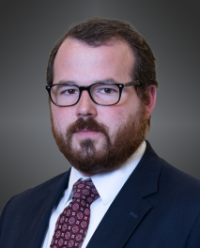


Dickinson, Bradshaw, Fowler & Hagen, P.C. has a rich history deeply rooted in the Midwest and boasts one of the largest Iowa-based teams of attorneys, practising in more than 90 areas of law. The firm’s Des Moines-based Insurance Law and Litigation practice is among the largest in the organisation and consists of more than a dozen attorneys who provide a diverse and broad-based range of legal services. These attorneys serve as members of the board of directors or provide counsel to insurance companies on corporate matters, including mergers and acquisitions, employee issues, licensure with state insurance departments, compliance with regulatory requirements, rate hearings, filings with governmental entities and risk management. In addition, they provide counsel to insurers and insureds regarding issues of general insurance coverage, insurance fraud, property damage, appraisal and complex liability claims. Many attorneys within the practice area also serve as primary litigation counsel for insurers at the local, regional and state levels.
Winds of Change: Recent Developments and Emergence of New Trends in Iowa Insurance Law
Iowa’s insurance industry has been transformed in recent years by the weather. Not everything, however, has been about the weather. This article examines key weather- and non-weather-related insurance developments in Iowa.
Consolidation and coverage changes in the property insurance market
On 10 August 2020, a derecho travelled across Iowa and impacted several other Midwestern states. Derechos are fast-moving bands of thunderstorms with destructive winds akin to an inland hurricane. This record-setting storm resulted in more than 200,000 Iowa insurance claims, with losses ultimately exceeding USD3 billion. Losses across the region totalled USD11 billion, making it, at the time, only the third severe weather-related event to surpass USD10 billion in damage. This derecho highlighted an alarming upward trend of severe convective storm (SCS) events in the Midwest. For example, between 2016 and 2019, there were 1,232 reports of hail in Iowa, with 77 events involving hailstones exceeding two inches. Between 2020 and 2023, the number of reports of hail remained consistent at 1,271, but the number of hailstone events involving hailstones of two inches or more nearly doubled to 145.
The timing of the uptick in inclement weather could not have been worse for Iowa’s insurance industry. Iowa ranked among the five worst states for homeowners insurance profit margins from 2013 to 2022, with an annual ten-year return of -13.2%. Global reinsurers experienced a period of weak or depressed profitability from 2017 to 2020, resulting in a hard market where reinsurance became scarce and expensive. This resulted in a trickle-down effect on regional and then local levels. Farm mutuals were hit the hardest. Grinnell Mutual Reinsurance Company (GMRC), Farmers Mutual Hail (FMH), Wisconsin Reinsurance Company (WRC) and broker Guy Carpenter at one time provided reinsurance for more than 95% of the farm mutual industry. By 2024, FMH exited the reinsurance market, and WRC went out of business. GMRC and Guy Carpenter did not have the capacity to plug the gap, leaving 20% of the market with no coverage for 2024 renewals.
Rising reinsurance rates and the increased frequency of SCS led to a period of market contraction and consolidation. Our firm closed 14 mergers involving Iowa County or State mutuals effective 1 January 2024, and another seven mergers effective on or before 1 January 2025. Six personal lines insurers ceased doing business in Iowa from 2022 to 2024, while several others issued moratoriums or limitations on new business. The insurers continuing to do business in Iowa responded to the reinsurance crisis with a multifaceted approach involving higher premiums, increased wind/hail deductibles, cosmetic damage endorsements, movement towards actual cash value limitations for roofs or even all structures, and underwriting efforts to decrease concentration of risk.
The Insured Homeowner’s Protection Act
The Iowa Insurance Division championed new legislation to address concerns with the handling of insurance claims. The Insured Homeowner's Protection Act, codified at Iowa Code § 515.137A, regulates post-loss assignments by which homeowners transfer their property insurance claim rights to residential contractors for repair or reconstruction work after a covered loss. The Iowa legislature enacted this statute in 2019 and most recently amended it effective 1 July 2025. The statute prohibits residential contractors operating under a post-loss assignment from rebating insurance deductibles, charging administrative fees for cancellation or check processing, acting as unlicensed public adjusters, or receiving insurance payments unrelated to the actual repair work. It also imposes disclosure requirements and creates cancellation rights.
Licensing and regulation of insurance appraisers and umpires
Property insurance policies typically include a provision allowing either the insured or the insurer to demand appraisal if a dispute arises concerning the amount of the loss. In the event of an appraisal, each side designates an appraiser. If the appraisers cannot agree on the amount of the loss, they select and submit their differences to an umpire. Appraisal provisions typically do not specify procedures for conducting the appraisal, and there is a relative dearth of Iowa case law on the topic. This can result in unresolved disputes and delays.
The Iowa legislature responded in 2025 by enacting Iowa Code Chapter 522F, titled “Licensing and Regulation of Appraisers and Umpires”. The Act establishes a comprehensive regulatory framework for insurance appraisers and umpires who participate in property insurance claim disputes in Iowa. Appraisers and umpires must apply for a licence, pass a written examination, and have at least three years of relevant professional experience in fields such as engineering, architecture, insurance claims adjusting, or construction. Both appraisers and umpires must act with due diligence, disclose and withdraw from conflicts of interest, avoid ex parte communications, and exercise independent judgment. Neither may serve in dual roles, such as both adjuster and appraiser, on the same claim.
The Act establishes a procedure for resolving umpire selection disputes. The insured and insurer have a right to raise a “good cause” objection to the umpire selected by the appraisers. Good cause means a legally sufficient reason such as a conflict of interest, lack of independence or competency, or other reason that would reasonably be expected to impair the appraisal. If the appraisers cannot agree on an umpire, the Iowa Insurance Division will randomly select one from its list of licensed umpires. Either appraiser can request judicial review, but the judge shall give deference to the umpire randomly selected by the Division.
The Act also imposes specific deadlines: 20 days to select appraisers, 15 days to agree on an umpire, 45 days for appraisers to submit findings, and 45 days for the umpire to issue a written itemised award. Unless otherwise agreed, the appraisal award is binding and must be paid within 60 calendar days, subject to policy limits and deductibles. Insurers may move to vacate for good cause within 30 days. Although the Act does not address the standard of review, Iowa case law holds a court will overturn an appraisal award only upon a showing of fraud, misfeasance, or mistake. All property insurance policies delivered or renewed in Iowa on or after 1 January 2026 must contain an appraisal clause complying with the chapter.
Post-derecho insurance claims – bulletin from the Commissioner
The Iowa Insurance Commissioner issued several bulletins over the years addressing insurance coverage for catastrophic weather events. On 3 July 2024, the Commissioner used Bulletin 2024-3 to officially rescind Bulletins 19-04 (regarding insurance consumers impacted by severe weather and natural disasters (dated 17 June 2019)) and 21-04 (regarding derecho damage deadlines (dated 26 June 2021)). The Commissioner wrote that the new bulletin’s purpose “is to provide ongoing guidance to individuals and entities regulated by the Iowa Insurance Commissioner when severe weather and natural disasters impact Iowa consumers”. The Commissioner further provided that the “intent of this bulletin is not to have a specific expiration date but to provide guidance so whenever a state disaster proclamation is issued by the Governor, producers and insurers have guidance on actions they should be taking”.
Perhaps most notable is the 2024-3 Bulletin’s purported relaxing of recoverable depreciation deadlines. The Commissioner recognises that many insurance contracts contain certain provisions requiring replacement or repairs to be completed inside a specified time frame – commonly referred to as “recoverable depreciation”. The Bulletin further acknowledges that, given the magnitude of damage resulting from recent catastrophic weather events like the 2020 derecho, policyholders may, through no fault of their own, require extended periods to navigate the typical claims resolution process. On this point, the Commissioner’s guidance sounds a clear warning: the rigid enforcement of contractual deadlines for recoverable depreciation, under circumstances where delays are attributable to the scale of the disaster rather than individual policyholder conduct, may constitute a failure to act in good faith to effectuate a fair and equitable settlement of the claim under Iowa Code sections 507B.3 and 507B.4. The bulletin further underscores that insurance carriers must be diligent and appropriate in applying these provisions as policyholders justifiably request extensions in claims handling. The Commissioner concludes “[h]ardworking Iowans pay premiums diligently and carriers shall work to expedite the payment of claims after a disaster. The Iowa Insurance Division expects carriers, who have a duty to be fair in the claims process, to make certain they continue to support their Iowa policyholders throughout the rebuilding process in its entirety”.
Captive insurance law modernisation
In May 2026, Governor Kim Reynolds signed H.F.2766 into law, enacting comprehensive amendments to Iowa’s captive insurance statutory framework. The updated legislation serves as a signal to captive insurers that the state seeks to remain competitive among other leading domiciles similarly vying for their market share. Among the legislation’s principal amendments are:
- a temporary premium tax waiver intended to incentivise the re-domestication of non-life captive insurers to Iowa;
- the creation of a new statutory subchapter establishing a regulatory framework for life captive reinsurance companies (LCRCs);
- authorisation for special purpose captives to be organised as reciprocal insurers;
- a reduction to USD100,000 in the minimum capital and surplus threshold required for a protected cell captive;
- expanded entity formation options permitting protected cells to be structured either as LLCs or series LLCs;
- explicit permission for a captive insurer to utilise parametric insurance; and
- clarification of tax confidentiality on returns filed by captives.
The LCRC subchapter draws its regulatory architecture from Iowa Code Section 508.33A and associated regulations, governing limited-purpose subsidiary life insurance companies. The legislation does not impose an Iowa domicile requirement on the organising company. Jeff Wilson, Captive Director for the Iowa Insurance Division, reasoned that, “[b]y creating a dedicated framework for life captive reinsurance and reducing capital requirements for protected cells, [Iowa is] providing the flexibility businesses need to manage risk while maintaining the non-negotiable standards for solvency and governance that Iowa is known for”.
The updated captive insurance law took effect on 1 July 2026.
Elder financial exploitation statutory protections
Iowa has enacted new statutory protections aimed at safeguarding vulnerable individuals from financial exploitation in the context of insurance law. House File 2232, signed by Governor Kim Reynolds on 9 April 2026, establishes a new subchapter under Iowa Code Chapter 508 authorising insurers, insurance producers, and other similarly qualified individuals to delay and withhold disbursements and transactions upon their suspicion that an eligible vulnerable adult is suffering financial exploitation.
Arguably most critical to the new statutory scheme is its built-in delay mechanism. Upon forming a reasonable belief that a given solicited transaction or disbursement from an annuity, life insurance policy, or similar account may result in or facilitate the financial exploitation of a qualifying vulnerable adult, the insurer or qualified individual is permitted to initiate an internal review and temporarily withhold the would-be fruits of the suspicious disbursement. The statute defines “disbursement” expansively to encompass any attempt to withdraw funds or otherwise attain some policy benefit, including surrenders, policy loans, withdrawals, partial withdrawals, accelerated benefits, and analogous transactions. The mechanism is structured as a gradual temporal framework. Upon initiation, the insurer or qualified individual may impose first a delay of up to 15 business days while conducting an internal review. If, upon conclusion of that review, the reasonable belief that exploitation has occurred remains substantiated, the invoking party can further extend the delay to 25 business days. In circumstances where indicia of exploitation continue to warrant protective intervention, the delay may be further extended to 55 business days. Judicial oversight remains accessible at any stage to terminate, extend, modify, or direct such other protective measures as the circumstances may require.
The delay authority is accompanied by mandatory notification obligations. Upon initiating a delay, the insurer must provide written notice to all persons authorised to transact on the affected account, specifying both the existence of the delay and the supporting grounds. Such notice must be provided promptly and in no event beyond seven days following commencement of the delay. Concurrently, the insurer must notify the Iowa Insurance Commissioner within the same seven-business-day period, including a report on the status of the internal review. The statute carves out a significant restriction to the notification requirement: where the insurer or qualified individual has formed a reasonable belief that an authorised transacting party has attempted or committed financial exploitation, insurance fraud, or other abuse directed at the eligible adult, notification to that individual is expressly prohibited.
Of particular consequence to industry stakeholders is the statute’s immunity provision. The legislation confers protection from both administrative sanction and civil liability upon insurers and qualified individuals who, acting reasonably and in good faith, elect to delay a transaction, contact the commissioner, or disclose relevant information to permissible third parties.
Insurers should be advised that the statute mandates all supervisors and employees responsible for handling or advising matters regarding complaints, possible fraud, or investigations receive the required training by 30 June 2027.
The bill became effective 1 July 2026.
Iowa insurance law adopts NAIC AI standard
On 7 November 2024, the Iowa Insurance Division issued formal guidance endorsing the National Association of Insurance Commissioners’ Principles of Artificial Intelligence, originally adopted in 2020, as the applicable regulatory framework governing the development and deployment of AI systems by insurers operating within the state.
The Commissioner warns that “Insurers are expected to adopt practices, including governance frameworks and risk management protocols, that are designed to ensure that the use of AI Systems does not result in: a) unfair trade practices or b) unfair claims settlement practices, as defined in Iowa Code section 507B.4 and Iowa Administrative Code chapter 191-15”. The Commissioner further mandates “all Insurers authorized to do business in Iowa are expected to develop, implement, and maintain a written programme (an ‘AIS program’) for the responsible use of AI Systems that make, or support, decisions related to regulated insurance practices”. The scope of the required programme is calibrated to proportionality: the controls an insurer adopts should be commensurate with the degree of potential harm posed to consumers by the particular AIS programme in question.
Conclusion
Iowa’s insurance law is in a period of active and deliberate recalibration as Iowa broadens the scope of its regulatory expectations while simultaneously equipping industry participants with clearer standards against which to measure their own conduct. Insurers operating in Iowa should expect continued regulatory evolution and would be well served to monitor legislative developments, Division bulletins, and judicial interpretations as integral components of their compliance and risk management strategies. The trends surveyed here suggest that Iowa’s regulatory posture will remain dynamic – demanding ongoing vigilance from those who operate within its borders.
Dickinson, Bradshaw, Fowler & Hagen, P.C.
801 Grand Ave. Suite 3700
Des Moines
Iowa 50309-8004
USA
515-243-4191
515-246-5808
info@dickinsonbradshaw.com www.dickinsonbradshaw.com
Trends and Developments
Authors
Dickinson, Bradshaw, Fowler & Hagen, P.C. has a rich history deeply rooted in the Midwest and boasts one of the largest Iowa-based teams of attorneys, practising in more than 90 areas of law. The firm’s Des Moines-based Insurance Law and Litigation practice is among the largest in the organisation and consists of more than a dozen attorneys who provide a diverse and broad-based range of legal services. These attorneys serve as members of the board of directors or provide counsel to insurance companies on corporate matters, including mergers and acquisitions, employee issues, licensure with state insurance departments, compliance with regulatory requirements, rate hearings, filings with governmental entities and risk management. In addition, they provide counsel to insurers and insureds regarding issues of general insurance coverage, insurance fraud, property damage, appraisal and complex liability claims. Many attorneys within the practice area also serve as primary litigation counsel for insurers at the local, regional and state levels.
