Insurance Litigation 2026
USA – Nevada
Trends and Developments
Authors
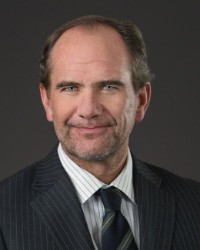
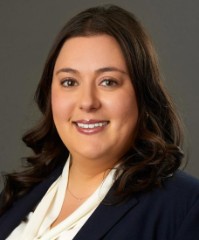
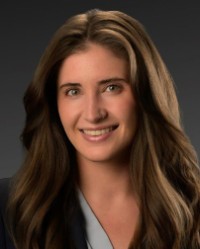
Dickinson Wright PLLC has more than 500 lawyers in 23 offices throughout North America. Across the firm’s 40 practice areas, Dickinson Wright PLLC maintains an unwavering focus on providing unmatched client service and the highest quality legal advice. The firm’s cross-disciplinary team has decades of experience representing national and international clients in a variety of complex litigation matters. The team of seasoned trial attorneys, litigators, and counsellors has successfully represented clients in both federal and state courts and in international arbitrations. Dickinson Wright PLLC excels in providing cost-effective, practical, and superior legal advice, and takes pride in vigilantly protecting its clients’ interests in ever-evolving legal and regulatory environments.
Introduction
Recent developments in Nevada case law signal heightened scrutiny of claims handling and settlement conduct. In the last two years, Nevada has seen hundred-million-dollar jury verdicts against insurers for bad-faith claims handling and/or denial of coverage, suggesting that the Nevada public is likely to award, and appellate courts are likely to uphold, steep punitive damages awards, particularly when the insured has suffered severe and well-documented bodily injuries.
These verdicts coincide with a 29 January 2026 Nevada Supreme Court ruling on equitable subrogation in failure-to-settle scenarios, confirming that an excess insurer may pursue the primary carrier for unreasonable refusal to settle within primary policy limits, notwithstanding subsequent settlement within combined primary and excess policy limits.
Collectively, these outcomes highlight the importance of timely and well-documented claims evaluations, serious settlement engagement when injuries are substantiated, and proactive coordination between primary and excess carriers. Nevada jury verdicts appear to be trending toward insured-friendly findings and substantial punitive damages awards against insurers. This necessarily means that the conduct of the carrier and coverage counsel early in claims handling processes and litigation may have a significant impact later as the case develops.
Jury Verdicts in Insurer Bad-Faith Litigation
Kuhn v Hector Cervantes-Andrade et al.
In early 2025, a Las Vegas jury returned a USD107 million verdict for policyholder Timothy Todd Kuhn on his bad-faith claims against USAA Casualty Insurance Company (USAA) for its handling of his claim under his underinsured motorist (UIM) policy. Mr Kuhn initiated his case in September 2020, alleging that he suffered disabling injuries when another driver rear-ended Mr Kuhn while driving on a Nevada interstate highway. Mr Kuhn’s original complaint named only the rear-ending driver and alleged against him a single claim for negligence.
USAA moved to intervene, asserting an interest in the action on the grounds that it issued the automobile insurance policy to Mr Kuhn’s spouse, under which Mr Kuhn sought UIM benefits for his injuries. Indeed, Nevada recognises a UIM insurer’s right to intervene in an action between its insured and the alleged tortfeasor because of the insurer’s potential liability under the policy at issue to pay any judgment entered in the action in favour of the insured.
Following the court’s decision to grant USAA’s motion to intervene, Mr Kuhn amended his complaint to name USAA as a defendant and allege three causes of action against it: (i) negligence for its failure to reasonably investigate Mr Kuhn’s bodily injury claims and make reasonable payments to Mr Kuhn accordingly; (ii) breach of contract for its failure to make any payment under the operative policy to Mr Kuhn for his bodily injuries; and (iii) bad-faith denial of UIM benefits under the operative policy.
As the parties progressed through discovery, Mr Kuhn produced medical documentation and expert opinion in support of his alleged injuries to his head, neck, spine, and organs, including what he described as symptoms of traumatic brain injury – such as memory loss, headaches, loss of smell, and troubled executive functions. USAA’s initial settlement offer, however, was only USD10,000, which was significantly lower than Mr Kuhn’s medical bills and claimed losses. Days before trial, USAA made a second settlement offer to pay the policy limit of USD250,000 on the operative policy, which Mr Kuhn denied in favour of proceeding in front of a jury at trial.
Mr Kuhn’s decision to proceed to trial paid off. The jury returned a total verdict of USD114 million, consisting of USD7 million against the individual at-fault driver and USD107 million against USAA. Of that USD107 million, USD7 million constituted compensatory damages and the remaining USD100 million was a punitive damages award. The jury ostensibly returned such a large punitive damages verdict based upon Mr Kuhn’s argument that USAA delayed investigation and failed to pay out under the policy despite Mr Kuhn’s obvious and severe injuries. The theory was that this constituted a malicious strategy designed to minimise USAA’s payment under the policy, which was conduct meriting punishment. Indeed, the court remitted the jury’s USD100 million punitive damages award, indicating that Nevada law supports only a “multiplier of 9 for the punitive damages award”, which the jury far exceeded. The press has since noted that the jury’s steep punitive damages award reflects the public’s negative opinion of insurance companies.
This matter is currently pending on appeal with the Nevada Supreme Court. USAA’s appeal, however, does not challenge the jury’s award and, instead, implicates only the trial court’s post-trial orders on Mr Kuhn’s recovery of attorneys’ fees and costs. The jury’s award will therefore stand and serves as a cautionary tale of the risks of proceeding to trial, particularly in front of a jury.
Eskew v Sierra Health and Life Ins. Co.
Mr Kuhn’s windfall victory fell short of a USD200 million verdict awarded by a Las Vegas jury in 2022, in favour of the estate of decedent and policyholder Mr Bill Eskew and against Sierra Health and Life Insurance Company. The claim was based on Sierra Health’s bad-faith denial of Mr Eskew’s claim for proton beam therapy to treat his lung cancer. Mr Eskew and his wife elected to obtain coverage through Sierra Health after ensuring that the policy would, in fact, cover Mr Eskew’s proton beam therapy. The sample policy that Sierra Health provided to the Eskews confirmed that therapeutic radiation therapy, including proton beam therapy, was a covered service under the policy, but only if the therapy was “medically necessary”.
After the Eskews purchased their policy with Sierra Health, Mr Eskew’s thoracic radiation oncologist and his medical team determined that proton beam therapy was the best treatment for him and would give him the greatest chance of recovery with the least risk of serious detrimental side effects. Sierra Health, however, denied the doctors’ request for prior authorisation, instead approving an alternative therapy at half the cost. Mr Eskew underwent the approved alternative treatment, which caused him severe oesophagitis and debilitating physical and emotional side effects of that condition. He ultimately passed away, and his estate brought claims against Sierra Health on his behalf.
At trial, Mr Eskew’s estate presented evidence that the Sierra Health doctor who reviewed Mr Eskew’s claim worked for Sierra Health part-time, in addition to his full-time job as a practising oncologist; did not understand the medical issues involved in Mr Eskew’s claim; did not review the terms of Mr Eskew’s policy with Sierra Health prior to issuing the denial; reviewed 79 claims for Sierra Health in the week that he denied Mr Eskew’s claim; and, that week, spent an average of merely 12 minutes reviewing each claim. The jury awarded USD40 million in compensatory damages for pain and suffering and USD160 million in punitive damages. This, again, indicates the Nevada public’s growing dislike (or even disdain) for insurers in the face of claims handling conduct.
Sierra Health appealed, arguing that the trial court erred by denying its motion for judgment as a matter of law and motion for new trial or remitter. There, Sierra Health argued that it had a reasonable basis to determine that proton therapy was not “medically necessary” to treat lung cancer and, even if the denial was unreasonable, it further claimed that it could not be subject to bad-faith liability because whether the treatment should have been covered under the contract was subject to reasonable disagreement. In 2024, the Nevada Supreme Court rejected Sierra Health’s arguments, affirming the district court’s post-trial orders in their entirety and confirming that the jury was presented with substantial evidence of Sierra Health’s bad faith, claim mishandling, and Mr Eskew’s pain and suffering. In its decision, the Nevada Supreme Court held that “[w]e conclude that the high compensatory and punitive damages award does not evince a verdict based on passion and prejudice; it merely reflects the jury’s valuation of the extensive pain and suffering experienced by Eskew due to the denial of coverage and the level of blameworthiness of SHL’s conduct”.
Two of the Nevada Supreme Court’s justices disagreed, concurring in part and dissenting in part. They found that the jury’s award of USD40 million for pain and suffering was excessive, particularly because it was USD10 million more than the jury was asked to award. These two justices likewise found that the punitive damages award – constituting more than four times the amount of the special damages – was excessive to the point of justifying a new trial.
In November 2026, two Nevada Supreme Court justices – Justice Kristina Pickering and Justice Douglas Herndon – are up for re-election, but they are both running unopposed. Two more will be up for re-election in 2028, followed by three in 2030. In the coming years, as the Nevada Supreme Court’s makeup may change based on election results, its appetite for upholding large jury verdicts could likewise change. But for now, if Kuhn is any indication, substantial jury verdicts – including those for punitive damages – have a decent chance of being affirmed on appeal in Nevada.
Takeaways
- Insurers and their attorneys should avoid “lowball” offers and delayed tenders whenever possible, as both are likely to increase the insurer’s exposure to a finding of bad faith.
- Along the same lines, insurers and their attorneys should undertake serious efforts to settle cases when the insured’s injuries are severe and well-documented.
- Insurers should consider revising policy exclusions regularly to account for developments in medical science and avoid outdated or medically unsupported denials of coverage.
- Nevada juries seem to be trending against insurers and in favour of injured plaintiffs, and the Nevada Supreme Court seems to be upholding these large verdicts, including jury awards for punitive damages.
Nevada Recognises That an Excess Insurer May Seek Equitable Subrogation Against a Primary Insurer for Failure to Settle
The Ninth Circuit Court of Appeals certified a question to the Nevada Supreme Court, presenting the issue of whether, under Nevada law, an excess insurer can state a claim for equitable subrogation against a primary insurer when the underlying lawsuit settles within the combined policy limits of the insurers. The Nevada Supreme Court elected to answer the certified question, holding in its 29 January 2026 opinion that “an excess insurer may seek equitable subrogation against a primary insurer who fails to settle within primary policy limits when the insured, but for the excess insurer’s contribution to the settlement, would have had a claim against the primary insurer for its failure to reasonably settle”.
North River Insurance Company, an excess insurer, and James River Insurance Company, a primary insurer, both issued liability insurance policies to their mutual insured, Alhambra Place. The primary insurer, James River, had a USD1 million policy limit, while North River provided a USD10 million excess policy. A wrongful death lawsuit was filed against Alhambra Place after a fatal shooting at the insured location, Shelter Island Apartments in Las Vegas, Nevada. James River declined three settlement offers that were at or below its policy limit, leading to a final settlement of USD5 million. James River contributed its policy limit of USD1 million, and North River contributed the remaining USD4 million under protest and with a reservation of its rights to seek reimbursement.
North River then sued James River in California federal court for equitable subrogation, seeking reimbursement for the USD4 million it paid. North River argued that James River breached its duty of good faith and fair dealing by not settling within its policy limits. North River contended that Alhambra Place had an existing and assignable cause of action against James River for its failure to settle, to which North River alleged that it was subrogated by virtue of its payment to settle the suit. The federal district court dismissed the case, citing unpublished Nevada case law and finding that North River’s claim was barred because the settlement was within the combined policy limits. North River appealed to the Ninth Circuit, which found no controlling Nevada precedent and certified a question on the issue to the Nevada Supreme Court.
Following the Nevada Supreme Court’s decision, the Ninth Circuit reversed the California district court’s dismissal of the action and remanded the case for further proceedings. On remand, the district court denied James River’s motion to dismiss, finding that North River had sufficiently alleged that James River’s rejection of the insured’s USD975,000 settlement demand, despite warnings that the claim exceeded James River’s USD1 million policy limits, forced North River to contribute USD4 million toward settlement. The action is currently pending in the Central District of California. The Nevada Supreme Court’s decision on this issue aligns Nevada with other jurisdictions throughout the United States, including California, Hawaii, Missouri, Oregon, and Texas.
Takeaways
- Primary insurers should carefully evaluate settlement offers.
- Primary insurers are not automatically relieved of liability if the insured’s claim settles within the combined policy limits of the primary and excess carriers.
- If the primary insurer suspects that the claims may exceed its policy limits, it should communicate early and often with the excess insurer regarding risks, exposure, and settlement offers.
Conclusion
The throughline across Kuhn, Eskew, and North River suggests that insurers and their counsel should shore up the quality, timing, and documentation of their claims handling and settlement conduct. Their strategies may carry amplified consequences in both first-party and third-party contexts. Offers that appear unduly low relative to robust medical evidence of serious injuries or delayed tenders may increase exposure to bad-faith findings and punitive awards. Similarly, claims determinations grounded in cursory review or outdated medical assumptions could invite juror and judicial criticism alike.
Primary insurers confronting well-documented and severe injuries are likely to mitigate the risk of a bad-faith finding down the road by initiating meaningful settlement efforts early, evaluating policy limits demands through the lens of potential excess exposure, and memorialising their analyses with robust documentation. Where claims may exceed policy limits, primary carriers should promptly inform excess insurers of risk, exposure, and settlement posture; excess carriers, in turn, should expect and request frank updates to preserve subrogation positions if reasonable settlements are declined.
These developments are forward-looking markers for coverage counsel: invest in rigorous medical and legal evaluation, document reasoned settlement decisions, coordinate across layers, and modernise policy terms. Doing so will mitigate bad-faith risk, position carriers to defend close calls, and improve outcomes in Nevada’s evolving litigation environment in which juries are tending to issue significant damages awards against insurers.
Dickinson Wright PLLC
500 Woodward Avenue
Suite 4000
Detroit
MI 48226-3425
USA
313-223-3500
844-670-6009
NObrien@dwlaw.com www.dwlaw.com
Trends and Developments
Authors
Dickinson Wright PLLC has more than 500 lawyers in 23 offices throughout North America. Across the firm’s 40 practice areas, Dickinson Wright PLLC maintains an unwavering focus on providing unmatched client service and the highest quality legal advice. The firm’s cross-disciplinary team has decades of experience representing national and international clients in a variety of complex litigation matters. The team of seasoned trial attorneys, litigators, and counsellors has successfully represented clients in both federal and state courts and in international arbitrations. Dickinson Wright PLLC excels in providing cost-effective, practical, and superior legal advice, and takes pride in vigilantly protecting its clients’ interests in ever-evolving legal and regulatory environments.
