Insurance & Reinsurance 2026
USA – California
Trends and Developments
Authors
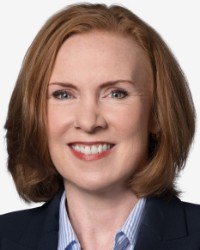
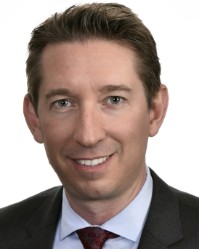
Buchalter LLP is a full-service law firm with over 560 attorneys offering expertise in 35 practice areas. For more than 30 years, the dedicated insurance practice group has delivered comprehensive representation to policyholders, including corporations, public entities and individuals in high-stakes complex insurance matters. The firm provides counsel on scope of coverage and risk transfer – even before a dispute arises – to proactively manage risk. Buchalter’s experience spans general liability, D&O, E&O, EPL, public entity, cyber, excess, umbrella, surplus lines, joint powers and specialty lines coverage. If a dispute arises, the attorneys are skilled at obtaining reconsideration of denials, expanding the scope of any reservation of rights and obtaining a defence. If litigation is unavoidable, the team excels in arbitration, trial and appellate proceedings, successfully resolving coverage and contract disputes involving hundreds of millions of dollars and ensuring clients obtain the maximum amount of contractual and extracontractual benefits available for their claims.
The year 2025 proved to be another of bellwether opinions from California courts addressing a range of insurance coverage issues, from the scope of property coverage for ash damage to the availability of liability coverage for conduct that is both negligent and intentional. Catastrophic events at the beginning of 2025, however, took centre stage in dramatically impacting the California insurance landscape – including immediate legislative changes for the insurance industry and forthcoming judicial interpretations of the scope of coverage for property damage.
California Insurance Case Law Round-Up for 2025
Three of the most noteworthy California insurance decisions of 2025 are summarised below.
Wildfire ash and debris may not be covered in the absence of other direct physical loss under a homeowners insurance policy
Gharibian v Wawanesa General Insurance Company (2025) 108 Cal. App. 5th 730, involved a first-party claim under a homeowner policy for clean-up costs associated with debris and ash falling on the insureds’ property from a wildfire that was half a mile away from their home. The court, relying on COVID-19 caselaw, found the alleged damage due to the presence of debris and ash alone, without other fire damage, did not constitute a covered loss under the policy.
The policy insured against “direct physical loss to property”. It was undisputed that the plaintiffs’ property did not suffer any burn damage. Rather, debris from the wildfire entered the home, and there was a lingering smell of smoke that lasted a few months.
Following the claim, Wawanesa hired an expert to determine what cleaning was necessary and issued payment to the insured for the estimated cost, minus the deductible. Notably, the insureds opted not to hire professional cleaners and instead cleaned their home themselves.
The plaintiffs in turn hired their own experts, one of whom opined that while ash could cause physical damage to certain structures when exposed to water, there was no evidence of such at the home. Another opined that debris could be cleaned, but that the cleaning costs were substantially greater than the estimate prepared by Wawanesa’s expert. The plaintiffs submitted a new repair estimate.
Wawanesa’s expert, in an effort to resolve the matter, revised its estimate to include some but not all of the disputed items, and Wawanesa issued a supplementary payment for its expert’s new estimate amount.
Ultimately, the plaintiffs brought suit alleging breach of contract and bad faith. Following discovery, Wawanesa moved for summary judgment, arguing plaintiffs could not carry their burden of establishing coverage under the policy because there was no evidence of a “physical loss”. Plaintiffs opposed the motion, relying largely on caselaw holding that “particles in the air can cause damage even if they are invisible to the naked eye”. The trial court granted Wawanesa’s motion, and the plaintiffs appealed.
On appeal, the Second District affirmed. In so holding, the court construed the policy to require evidence of “direct physical loss to property” to trigger coverage, and found there was no evidence of the same because the “wildfire debris did not ‘alter the property itself in a lasting and persistent manner’”. The court relied on the California Supreme Court’s recent decision, Another Planet Entertainment, LLC v Vigilant Insurance Company (2024) 15 Cal. 5th 1106, dealing with property claims arising out of the presence of the COVID-19 virus.
Plaintiffs contended Another Planet did not govern, arguing it was limited to claims involving COVID-19, but the court disagreed. The court further disagreed that Wawanesa’s earlier payments created a triable issue of fact regarding the covered nature of plaintiffs’ claim, noting these payments could not be construed as an admission of liability or coverage. Because there was no coverage, the court found there could be no bad faith.
Takeaways
This case, if applied broadly, could potentially weaken an insured’s ability to recover for damage to a dwelling or personal property due to fire debris or smoke, which will no doubt come into play in 2026 as litigation over the Los Angeles wildfires continue. However, it remains to be seen how broadly the case will be applied, as Another Planet acknowledged that physical alteration need not be visible to constitute physical damage. In that vein, the Northern District of California reached a contrary determination and recognised direct physical loss or damage on a summary judgment motion earlier in the year in Bottega, LLC v National Surety Corporation-Chicago, IL (N.D. Cal., Jan. 10, 2025, No 21-CV-03614-JSC) 2025 WL 71989, which involved a business interruption claim arising out of smoke and debris damage from nearby fires.
Perhaps in an effort to temper an overapplication of Gharibian, the California Insurance Commissioner issued a bulletin following the decision making clear that neither Another Planet nor Gharibian remove coverage for smoke damage claims, emphasising that Gharibian was limited to the facts presented in that case. To that end, it is notable that the claim in Gharibian did not involve a fire at the insured’s home, so there was no other “direct physical loss to property” other than the alleged debris and smoke damage, and the insured’s own expert opined the debris could be cleaned. Indeed, in a different case pending in Los Angeles County, the California’s FAIR Plan policy was found not to provide the fire coverage required by Insurance Code Section 2070 because, inter alia, it sought to limit coverage to smoke damage that is visible only to the “unaided human eye” (see Aliff v California FAIR Plan, et al, California Superior Court, County of Los Angeles, Case No 21STCV20095)).
A genuine dispute will not excuse a liability insurer’s defence obligations, and may give rise to bad faith exposure
Bartel v Chicago Title Insurance Company (2025) 111 Cal. App. 5th 655, involved a third-party claim under a title insurance policy. At issue was the title insurer’s denial of its duty to defend a complicated and convoluted underlying claim, for which the carrier asserted there had been a genuine dispute as to coverage. The court rejected the carrier’s contention, finding that the principles governing the duty to defend, along with an insurer’s duties to investigate and consider all potentialities for coverage, precluded application of the genuine dispute doctrine to excuse the carrier’s defence obligations.
A dispute arose between adjacent property owners regarding an easement over the plaintiff’s property. The plaintiff had a title insurance policy with Chicago Title that contained certain exclusions, including one for claims arising out of an agreement among various neighbours in 1970. The adjacent neighbours filed a lawsuit alleging easement rights based on the 1970 agreement, but also attached a 1971 recorded deed as an exhibit. The plaintiff tendered, and the carrier denied a defence. The neighbours ended up dismissing their lawsuit without prejudice, but continued to assert the easement rights. The plaintiff ultimately initiated his own lawsuit, and the neighbours asserted a cross-complaint largely identical to their dismissed complaints.
Following the plaintiff’s tender of the cross-complaint, Chicago Title reopened the claim and again denied coverage, taking the position that the “gravamen” of the neighbours’ dispute arose from the 1970 agreement. The neighbours subsequently sought summary adjudication, which expressly asserted rights under the 1971 deed. In response, Chicago Title for the first time accepted a defence, commencing from the summary adjudication motion. Ultimately, the court found in favour of the neighbours based on the 1971 deed.
A dispute arose regarding the extent of Chicago Title’s defence obligations. The plaintiff contended it arose from his initial tender of the neighbour’s earlier lawsuit, and the carrier contended it did not arise until the summary adjudication motion explicating asserting rights under the 1971 deed. In a bifurcated coverage action, the judge found Chicago Title’s defence obligations commenced from the tender of the neighbour’s initial lawsuit, but that it did not act in bad faith due in part to the convoluted nature of the underlying claim. Both parties appealed.
On appeal, the Sixth District affirmed the court’s ruling on the duty to defend and reversed the ruling on the carrier’s bad faith, finding the carrier acted in bad faith when it unreasonably denied its defence obligations from the initial tender. Of note, the court cautioned that “the complexity of the underlying facts does not shield the insurer from the risk of erroneously denying the tender of defense”. Going further, the court noted the carrier had the obligation to accept the tender unless its investigation demonstrated no possibility of coverage. The court went on to reject the carrier’s reliance on the genuine dispute doctrine as a defence, finding it had no application to a third-party duty to defend case. On these facts, the court found Chicago Title acted in bad faith when it failed to assess the possibility of coverage based on available facts.
Takeaways
The court reaffirmed the breadth of the duty to defend under California law and further noted the ways in which the genuine dispute doctrine is incompatible with a carrier’s defence obligations. Consequently, absent a fulsome and developed investigation in which a carrier correctly determines all possibilities for coverage are precluded, carriers may well open themselves up to bad faith liability for failing to provide a defence, even in the face of a genuine dispute as to the potentiality for coverage.
Where a finding of negligence is based solely on adjudicated intentional conduct, it may not constitute an occurrence under a homeowners insurance policy
State Farm Fire and Casualty Company v Diblin (2025) 114 Cal. App. 5th 1245, involved a third-party claim made under a homeowners policy arising out of violent attack by one housemate against another. At issue was whether the carrier owed indemnification to the insured for a verdict finding liability for the attack under both intentional tort and negligence claims. The court held that, because the attack was found by the underlying jury to be intentional, it did not constitute an “accident” under the policy’s insuring agreement, and the carrier did not owe indemnification.
On a fateful morning, Curtis Diblin attacked his housemate, Monee Gagliardo, with a rubber mallet, striking her over the head multiple times. Diblin was criminally prosecuted and pled guilty to one count of assault with intent to commit a sexual crime. Gagliardo also filed a civil action alleging numerous claims, including sexual assault, sexual battery, gender violence and negligence. Both the original and amended complaint alleged the exact same factual basis for the negligence claim as the other claims.
At trial, Diblin admitted to the attack but denied it was sexual in nature. He explained his plea agreement as an effort to avoid more serious criminal charges. An expert also testified on his behalf that his behaviour was due to a “hypomanic episode attributable to external testosterone” he was taking as part of his treatment for prostate cancer. The matter went to the jury, which declined to find Diblin liable under theories requiring sexual touching or intent, but did find Diblin liable for gender violence and negligence. The jury awarded over USD2.5 million in compensatory damages. The jury also found Diblin acted with malice and oppression, entitling Gagliardo to punitive damages, which she ultimately waived.
State Farm had provided a defence to Diblin in response to the civil action and also agreed to fund an appeal. However, Diblin and Gagliardo reached a settlement of the civil action post-trial, inclusive of an assignment of Diblin’s contractual and bad faith rights under the policy.
Prior to the entry of final judgment, State Farm initiated a coverage action seeking a declaration that it did not owe indemnification for the judgment. The court in the coverage action found that, because the same conduct formed the basis of the gender violence and negligence liability, and that conduct was necessarily intentional under the gender violence claim, there was no “accident” and therefore no coverage under the policy. Diblin and Gagliardo appealed.
On appeal, the Fourth District affirmed. The court reviewed the policy language, jury instructions and verdict form in reaching the conclusion that Diblin’s adjudicated liability for the intentional tort of gender violence demonstrated there was no accident, even if he was separately found liable under a negligence theory. The court observed that the findings were not inconsistent, and the jury was not instructed that a negligence finding could not also be based on the same intentional conduct at issue in the gender violence cause of action. The court further relied on the fact that the jury also found Diblin acted with malice and oppression, even if punitive damages were not ultimately awarded.
Finally, the court disregarded Diblin’s argument that coverage should be afforded under a concurrent independent causation doctrine; specifically, the violent conduct and Diblin’s mismanagement of his medications. The court found the proffered bases were not independent of each other, such that the doctrine was inapplicable. On these facts, the court affirmed.
Takeaways
The mere fact that an insured is found liable under an unintentional theory may be insufficient to trigger coverage where the liability is premised solely on adjudicated intentional conduct. It is also worth noting that the definition of “occurrence” in the policy in question included only an “accident” and did not also include an “event”, unlike many other commercial general liability (CGL) polices. It is unclear whether the same result would have been reached if the “occurrence” definition included both an “accident or event”.
The Immediate and Lasting Impacts of the 2025 Los Angeles Wildfires on the Insurance Landscape
The significance of these court decisions to the California insurance landscape, however, was overshadowed by the devastating wildfires that erupted in the greater Los Angeles area in the first few days of 2025. The fires destroyed thousands of structures, scorched more than 57,000 acres and took over 30 lives.
Within less than a month of the fires, policyholders filed the first lawsuits seeking recovery for these heartbreaking losses from public utilities, public agencies and insurance companies. The wave of wildfire litigation presents unique challenges to the California judicial system due to the number of claimants, the size of the claims and the complex legal issues raised.
With these challenges comes the prospect of new precedential decisions in 2026 addressing significant insurance coverage issues. By way of example, it is anticipated that the courts will be required to examine key policy terms and principles in the context of wildfires such as:
- the scope of “property damage” for loss arising from ash and debris;
- the concurrent causation doctrine; and
- the reasonableness of an insurer’s investigation and claim adjustment of physical property damage claims.
On a practical level, this wildfire litigation will continue – for the next several years – to test the ability of California courts, judicial staff and judicial officers to co-ordinate and manage tens of thousands of claimants and hundreds of thousands of filings.
The litigations filed to date can be grouped into approximately four categories:
- litigation by Altadena property owners against Southern California Edison alleging that the utility caused the fire, including the state court-consolidated litigation captioned Jeremy Gursey v Southern California Edison, et al, Los Angeles Superior Court, Case No 25STCV00731;
- subrogation litigation by insurance carriers against Southern California Edison for claims paid out due to the Altadena Fire, including the state court case-captioned American Modern Home Insurance Co., et al v Southern California Edison Co., et al, Los Angeles Superior Court, Case No 25STCV09753;
- litigation by Palisades property owners against various public entities, including the City of Los Angeles and the Los Angeles Department of Water and Power, alleging those entities caused the Palisades fire by, inter alia, failing to fully extinguish a fire occurring on 1 January, including the state court case-captioned Grigsby, et al v City of Los Angeles acting by and through Los Angeles Department of Water and Power, et al, Los Angeles Superior Court, Case No 25STCV00832 (“Grigsby”); and
- insurance litigation by policyholders against the California FAIR Plan, the state’s insurer of last resort, alleging systematic underinsurance, such as by illegally denying smoke damage coverage, including the state court case-captioned Ronald Barak, et al v California FAIR Plan Association, et al, Los Angeles Superior Court, Case No 25STCV10670.
Not surprisingly, the cases are proceeding slowly. For example, demurrer hearings are scheduled in the Grisgby matter in February. As a result, substantive decisions on insurance coverage issues are not imminent.
California Legislative and Regulatory Update
While the impact of court rulings will trail into late 2026 and years to come, the California General Assembly enacted numerous new laws designed to redress the underinsurance and financial instability of the state’s insurer of last resort – failures that were glaringly revealed in the aftermath of the wildfires.
Of the laws that went into effect on 1 January 2026, several provide direct resources to some homeowners as well as improved transparency and education. Only a few of the nearly dozen new laws, however, increase protections for policyholders and seek to hold the insurance industry more accountable. The laws that appear to be most impactful in terms of the insurance industry, and the relationship between insured and insurer, include the following.
- Eliminate “The List” Act (SB 495), which, inter alia, requires insurance companies to pay 60% of contents coverage limits, capped at USD350,000, to wildfire survivors who experience a total loss without submission of a detailed inventory. The emotional distress of creating an inventory of personal items that previously filled rooms that are now ashes and debris can be debilitating. Eliminating the requirement of the inventory is a very good start, although the cap of 60% and the potential for insurers to argue around the edges remains a significant concern.
- The Business Insurance Protection Act (SB 547), which, inter alia, prohibits non-renewals for commercial policies for one year. This Act, however, simply extends the Wildfire Safety Act of 2018, which provided a one-year moratorium for residential property insurance. As such, the extension of the Act does not expand protections to the majority of policyholders impacted by the 2025 wildfires. A more meaningful legislative move would be expansion of the moratorium from the one year duration given the extended timeline for claims adjustment and rebuilding.
- The FAIR Plan Stability Act (AB 226), which allows the FAIR Plan, upon authority of the Insurance Commissioner, to access catastrophic bonds and provides additional financial support for the FAIR Plan. The financial resources used to prop up the FAIR Plan, however, are ultimately generated by higher premiums. Moreover, the Act does not necessarily achieve more timely payment of claims by the FAIR Plan since the Plan may still engage in extended claim adjustment and unreasonable claims handling.
Conclusion
The year 2025 was marked by monumental impacts to the California insurance industry and California policyholders. The wildfires presented an inflection point for California lawmakers to “right the ship” in terms of ensuring that California policyholders are appropriately protected and the industry is financially viable in the face of disasters.
Whether the enactment of the additional legislation went “far enough” and will bring the stability and fairness sought remains an open question. Further, the ability of the California courts to manage the onslaught of cases while issuing rulings that preserve the “benefit of the bargain” of the insurance contract for both insured and insurer will be tested. California’s long history of groundbreaking insurance jurisprudence, and remaining at the forefront of complex coverage questions, demonstrates that California is up to the challenge.
Buchalter LLP
655 West Broadway,
Suite 1600
San Diego
California 92101-8494
USA
+1 619 219 5335
+1 619 219 5344
cmiller@buchalter.com www.buchalter.com
Trends and Developments
Authors
Buchalter LLP is a full-service law firm with over 560 attorneys offering expertise in 35 practice areas. For more than 30 years, the dedicated insurance practice group has delivered comprehensive representation to policyholders, including corporations, public entities and individuals in high-stakes complex insurance matters. The firm provides counsel on scope of coverage and risk transfer – even before a dispute arises – to proactively manage risk. Buchalter’s experience spans general liability, D&O, E&O, EPL, public entity, cyber, excess, umbrella, surplus lines, joint powers and specialty lines coverage. If a dispute arises, the attorneys are skilled at obtaining reconsideration of denials, expanding the scope of any reservation of rights and obtaining a defence. If litigation is unavoidable, the team excels in arbitration, trial and appellate proceedings, successfully resolving coverage and contract disputes involving hundreds of millions of dollars and ensuring clients obtain the maximum amount of contractual and extracontractual benefits available for their claims.
