Investment Funds 2026
Sweden
Authors
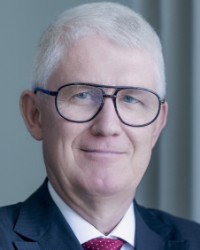
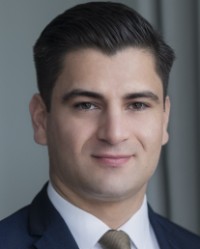
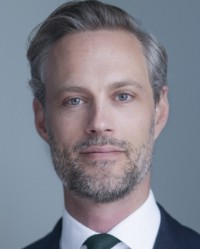

Harvest Advokatbyrå was established in 2016. Located in Stockholm, it is Scandinavia’s largest independent specialist law firm, with a clear focus on advising financial institutions. Its 26-lawyer-strong banking and finance team advises clients ranging from innovative start-ups, payment institutions, banks, fund managers and credit providers to crypto-asset service providers and other companies active in the Swedish financial sector. It advises on a wide range of legal and financial regulatory issues important for the finance industry, including compliance, internal audits, application procedures, AML/CTF, sustainable finance and outsourcing of technology services by financial institutions. The firm maintains frequent and close contact with the Swedish Financial Supervisory Authority (Finansinspektionen; SFSA), and a number of its employees are SFSA alumni. The scope of its services also includes advising companies in the banking and finance sector on corporate matters, such as setting up legal entities, transactional assistance, and preparing and negotiating agreements. The firm also advises on data privacy and data protection issues.
1. Market Overview
1.1 State of the Market
Sweden is a prominent and highly regarded jurisdiction for investment fund formation and management, recognised for its stability, transparency and investor-oriented policies. With a well-established legal framework and governance standards, it offers an environment conducive to both domestic and international fund activities.
The Swedish investment fund market is mature and diverse, with over 80% of fund assets being managed locally. It has evolved to cater to institutional and retail investors, encouraging financial inclusion and supporting economic development. Swedish fund-based saving plays a vital role in household financial planning and pension systems, underscoring its integration into the broader economy.
Sustainability is a hallmark of the Swedish financial sector. Fund managers are at the forefront of incorporating environmental, social and governance (ESG) criteria into their strategies, aligning with Sweden’s strong commitment to green finance and EU-wide sustainability goals. This emphasis has made Sweden an appealing option for investors prioritising ethical and sustainable investment opportunities.
Sweden’s regulatory landscape is designed to balance investor protection with operational flexibility, offering an efficient and reliable platform for fund managers to operate on.
Sweden’s robust domestic investor base, including pension funds, insurers, family offices and private investors, plays a key role in its fundraising landscape. These stakeholders actively support both local and international investment opportunities. Sweden’s stability, regulatory efficiency and focus on innovation provide distinct advantages for many fund managers.
Sweden is a competitive and attractive option for fund formation and investment, offering a supportive environment for sustainable and innovative financial activities.
2. Alternative Investment Funds
2.1 Fund Formation
2.1.1 Fund Structures
Alternative investment funds (AIFs) can take the legal form of a so-called special fund, a common contractual fund or an association, such as a limited liability company, trading partnership or limited partnership (kommanditbolag). Whether an association constitutes an AIF is, however, determined based on the object of the association – ie, if the object meets the criteria of an AIF pursuant to Article 4 of the Alternative Investment Fund Managers Directive (AIFMD; 2011/61/EU).
In Sweden, real estate funds and private equity funds are commonly structured as limited liability companies or limited partnerships.
AIFs are regulated by the Swedish Alternative Investment Fund Managers Act (AIFMA; lag (2013:561) om förvaltare av alternativa investeringsfonder), which primarily governs AIF managers (AIFMs). Additional regulation of AIFs is provided under the regulations of the Swedish Financial Supervisory Authority (SFSA; Finansinspektionen) regarding AIFMS (Finansinspektionens författningssamling (FFFS) 2013:10).
An AIF structured as, for example, a Swedish limited liability company or a limited partnership must also comply with applicable company law. For a special fund that falls within the definition of an AIF, the Swedish Undertakings for Collective Investment in Transferable Securities (UCITS) Act and the SFSA’s regulations regarding Swedish collective investment in transferable securities (UCITS) funds (FFFS 2013:9) apply where relevant.
2.1.2 Common Process for Setting Up Investment Funds
Registration
For a Swedish AIFM, registration with the SFSA is sufficient if the following criteria are met:
- the assets of the AIFs, including those acquired through financial leverage, do not exceed EUR100 million; or
- the assets of the AIFs do not exceed the equivalent of EUR500 million in Swedish krona, provided that the portfolios consist of AIFs that are unleveraged and have no redemption rights exercisable during for a period of five years following the date of initial investment in each AIF.
An application for registration to manage AIFs shall include the following:
- information regarding the AIFM, the AIFs and their investment strategies;
- the information set out in Article 5 (1) and (2) of Delegated Regulation 231/2013/EU regarding AIFMs (Annex IV need not be completed at registration);
- information about the investors’ right to redemption; and
- a description of how marketing to retail investors is prevented.
Authorisation
If the assets of the AIFs exceed the aforementioned thresholds, Swedish AIFMs must apply for authorisation. Compared to the registration process, a licence application requires additional documentation, which is detailed in AIFMA and FFFS 2013:10.
An external AIFM can obtain authorisation for discretionary portfolio management. Additionally, such a manager can apply for authorisation to provide investment advice under the Swedish Securities Market Act and the SFSA’s regulations on investment services and activities (FFFS 2017:2), which implement Markets in Financial Instruments Directive (MiFID) II (2014/65/EU).
Once the application has been filed and the application fee (currently SEK690,000) has been paid, the SFSA begins processing the application. The standard processing time is three months, but the SFSA may extend this by an additional three months under special circumstances. However, applicants should anticipate a handling time of six to nine months due to potential delays.
2.1.3 Limited Liability
As a general principle, an investor in an AIF is only liable for the amount invested. However, exceptions may occur based on the legal structure of the AIFM. For example, in relation to an internal AIFM legally structured as a limited partnership, the general partner and investor (kommanditdelägaren) is personally responsible for the agreements and debts of the limited partnership.
2.1.4 Disclosure Requirements
Disclosure Requirements
A disclosure document (prospectus) is required if an AIF is to be marketed to professional investors within the European Economic Area (EEA), in accordance with the rules in Article 23 of the AIFMD.
A more extensive prospectus is required if an AIF is to be marketed to retail investors. Marketing towards retail investors resident in Sweden is possible if the manager is managing a special fund or has been granted a specific additional licence to market a fund that is a company and has its shares listed on a regulated market.
The prospectus must contain the following minimum information, where applicable:
- general information on the investment fund;
- the investment policy of the investment fund;
- risks and investor profile;
- the manager, depositary and auditor;
- outsourcing;
- the issue, redemption and conversion of units; and
- past performance.
There are also specific minimum information requirements for the prospectus of closed-end public AIFs.
In addition to the prospectus, so-called key investor information must also be provided. The key investor information was supplemented by the key information document (KID) in accordance with the European Packaged Retail and Insurance-based Investment Products (PRIIP) Regulation.
For retail funds, the prospectus shall inform the investors about the “facilities” established for local investors under the EU Directive on cross-border distribution of investment funds (Directive (EU) 2019/1160).
Reporting Requirements
Each AIFM must, within six months from the end of each fiscal year, submit an annual report for:
- each EEA-based AIF managed by the AIFM; and
- each AIF marketed by the AIFM within the EEA.
The annual report must be made available to the AIF’s investors upon request. Additionally, the SFSA and, if applicable, the home country authority of the AIF (if domiciled outside Sweden), must receive the report.
For special funds, an AIFM must submit a quarterly report to the SFSA at the end of each calendar quarter. This report must include:
- a profit and loss account, and a balance sheet with specifications; and
- information on the calculation of own funds and capital requirements.
The quarterly report must reflect the conditions as of the last day of the quarter and be submitted by the following deadlines: 21 April, 21 July, 21 October and 21 January.
In addition, AIFMs must provide regular reports to the SFSA regarding:
- the principal markets where the AIFM operates;
- the financial instruments traded; and
- each fund’s principal exposures and risk concentrations.
AIFMs must provide the SFSA with the following information for each EEA-established AIF they manage, and for each fund they market within the EEA:
- the percentage of the fund’s assets that are illiquid;
- any amendments or new arrangements for liquidity management;
- the fund’s risk profile and the risk management systems used;
- details of the main categories of assets in which the fund invests; and
- the results of stress tests performed on the fund.
Upon request by the SFSA, AIFMs must also provide:
- a detailed list of the AIFs managed, updated at the end of each quarter; and
- annual reports for each fund managed and marketed within the EEA.
2.2 Fund Investment
2.2.1 Types of Investors in Alternative Funds
Alternative funds in Sweden attract capital from institutional investors such as pension schemes, insurance companies, and taxable and tax-exempt pension funds and banks, and from private investors such as family offices and high net worth individuals. Institutional investors typically invest via managed accounts, often as single- or group-investor funds.
2.2.2 Legal Structures Used by Fund Managers
An AIFM can be either internal or external. An internal AIFM administers the AIF itself as part of its legal structure (eg, a limited liability company that constitutes the AIF). An external AIFM, on the other hand, is a separate entity from the AIFs it manages (eg, a Swedish limited liability company authorised to manage AIFs).
2.2.3 Restrictions on Investors
There are restrictions on marketing to retail investors. AIFMs marketing AIFs to professional investors must implement measures to prevent the marketing of units and shares in the AIF to retail investors.
Sweden-Based AIFMs
Swedish AIFMs authorised under AIFMA can market special funds to retail investors resident in Sweden. Other AIFs may also be offered to the public, but only if the AIF has been admitted to trade on a regulated market.
A Swedish AIFM registered under AIFMA may also, with approval from the SFSA, market units to a retail investor who (i) commits to investing a minimum of EUR100,000, and (ii) provides written acknowledgment, in a separate document, of the risks associated with the investment. In that case, however, the investor must lack the right to redemption for at least five years from the first investment, and the fund must – according to its investment policy – generally invest in issuers or unlisted companies to acquire control.
EES-Based and Non-EES-Based AIFMs
The marketing of units or shares in AIFs to retail investors by EES-based and non-EES-based AIFMs requires authorisation from the SFSA. If a foreign AIF is considered equivalent to a special fund, it is possible to apply for authorisation to market the fund to the public, even if it is not admitted to trade on a regulated market. However, in practice, the SFSA rarely approves such applications.
2.3 Regulatory Environment
2.3.1 Regulatory Regime
AIFs are regulated by AIFMA, although AIFMA primarily addresses AIFMs. Further regulation of AIFs is stipulated under the SFSA’s regulations regarding AIFMs (FFFS 2013:10). An AIF structured as, for example, a Swedish limited liability company or a limited partnership must also comply with applicable company law.
For a special fund, which falls within the definition of an AIF, relevant parts of the Swedish UCITS Act and the SFSA’s regulation regarding Swedish UCITS funds (värdepappersfonder) (FFFS 2013:9) apply.
There are generally no investment limitations for AIFs. However, there are investment restrictions with regard to Swedish special funds. A Swedish special fund must adhere to the following requirements:
- the fund’s sole purpose must be to invest in liquid financial assets only (in principle, eligible assets as defined under the UCITS Directive (2009/65/EU), although the SFSA may grant exemptions from the UCITS requirements);
- the fund must apply the principle of risk diversification;
- the fund units are repurchased or redeemed at the unit holder’s request at least once every year; and
- the fund must adhere to specific requirements concerning the acquisition of non-listed companies and issuers.
2.3.2 Requirements for Non-Local Service Providers
In general, there is no registration or regulation requirement for non-local service providers such as administrators, custodians and services providers in Sweden. However, when a Swedish manager outsources portfolio or risk management, the service provider must be authorised or registered in their home country. Additionally, any service provider domiciled outside the EU must appoint a domestic authorised agent to whom notifications and service of process can be directed by the relevant Swedish authority.
An outsourcing partner who provides services falling under MiFID will be subject to a licence requirement under the SFSA regulations.
If Swedish regulatory law requires a depositary for a Swedish AIF, the depositary – or at least a branch thereof – must be domiciled in Sweden.
2.3.3 Local Regulatory Requirements for Non-Local Managers
EU Managers
EU managers are allowed to perform management services in Sweden under the AIFMD passport regime with regard to AIFs. They may also use the AIFMD passport to provide other services and ancillary services (such as MiFID investment advice or discretionary individual portfolio management). EU managers can also apply with the SFSA to manage a Swedish special fund.
Non-EU Managers
Non-EU managers are currently not allowed to manage AIFs in Sweden. This might change in the future with regard to AIFMs in those countries for which the passporting regime under the AIFMD for third-country managers will eventually become effective.
2.3.4 Regulatory Approval Process
The handling time for the application for regulatory approval is three months, but under special circumstances the SFSA can extend the processing time by an additional three months. However, it should be noted that the process can be delayed, and applicants should expect a handling time of six to nine months.
2.3.5 Rules Concerning Pre-Marketing of Alternative Funds
An EEA-based AIFM may engage in preliminary marketing of not-yet-established AIFs under certain conditions – so-called market soundings. This marketing must not enable investors to commit to acquiring fund shares, include subscription forms or provide final versions of key documents like fund rules or company by-laws. Draft documents must clearly state that they are incomplete and not an offer to invest. The EU pre-marketing rules also apply to non-EEA managers.
Managers must ensure that potential investors cannot acquire fund shares through preliminary marketing and must only use marketing methods permitted in Sweden. All such activities must be documented, and the SFSA must be notified within two weeks, detailing the marketing period, strategies and funds involved.
Preliminary marketing can be delegated, but only to certain authorised entities such as investment firms, credit institutions or authorised AIFMs. Delegated parties must also comply with the requirements for documenting and notifying with respect to preliminary marketing activities.
2.3.6 Rules Concerning Marketing of Alternative Funds
In Sweden, marketing is considered to encompass any activities designed to directly or indirectly offer or place units or shares in an investment fund. Reverse solicitation is currently not regarded as marketing, but its scope is limited due to the pre-marketing regime.
Marketing materials must be in line with the European Securities and Markets Authority (ESMA) guidelines on fair and not misleading content of marketing materials and shall also, in relation to Swedish special funds, be in line with the Guidelines for Marketing and Information by Fund Management Companies of the Swedish Investment Fund Association (Fondbolagens Förening).
There are restrictions on marketing to retail investors. AIFMs marketing AIFs to professional investors must take measures to prevent units and shares in the AIF from being marketed to retail investors.
2.3.7 Marketing of Alternative Funds
Sweden-Based AIFMs
Swedish AIFMs authorised under AIFMA can market AIFs to professional investors and AIFs that are special funds to retail investors. Other AIFs can also be offered to the public, but the AIF must have been admitted to trade on a regulated market, and a specific approval must have been granted by the SFSA.
A Swedish AIFM authorised under AIFMA can also, after approval by the SFSA, market units to a retail investor who (i) undertakes to invest a minimum of EUR100,000, and (ii) in writing, in a separate document, confirms their awareness of the risks associated with the investment. In that case, however, the investor must lack the right to redemption for at least five years from the first investment, and the fund must – according to its investment policy – generally invest in issuers or unlisted companies to acquire control.
More information on this matter can be found in 3.3.8 Marketing Authorisation/Notification Process (AIFs Marketed to Retail Investors).
EES-Based AIFMs
An EES-based AIFM can market EEA AIFs to professional investors in Sweden under the AIFMD passport regime. The marketing of non-EEA AIFs towards professional investors requires authorisation from the SFSA. Furthermore, marketing towards retail investors requires authorisation from the SFSA and can be granted if the fund is a special fund, a fund equivalent to a special fund or a fund listed on a regulated market. More information about the application process can be found in 3.3.8 Marketing Authorisation/Notification Process.
Non-EES-Based AIFMs
Non-EU managers that want to market a non-EEA AIF in Sweden towards professional investors must apply for an approval by the SFSA. More information about the application process can be found in 3.3.8 Marketing Authorisation/Notification Process.
2.3.8 Marketing Authorisation/Notification Process
Authorisation or registration is required by the SFSA prior to the marketing of alternative funds. Please see 2.1.2 Common Process concerning the setting-up of investment funds.
2.3.9 Post-Marketing Ongoing Requirements
For Swedish authorised AIFMs, ongoing post-marketing requirements include, inter alia, informing investors of material changes in the information provided to investors in the marketing phase. Furthermore, a licensed AIFM needs to notify the SFSA of material changes in the documents submitted thereto, to obtain approval from the SFSA for the marketing and management of the AIF. The SFSA in principle has one month to decide as to whether it will object to the change, which can be extended by another month. In addition, investors need to be informed of certain types of conflicts of interest before conducting business on their behalf. Finally, investors need to be provided with an AIF report, on an annual basis, which complies with the requirements of Article 22 of the AIFMD.
2.3.10 Investor Protection Rules
For AIFMs authorised in Sweden under the fully licensed regime, the investor protection rules pursuant to the AIFMD apply. Generally speaking, no gold plating of the AIFMD has taken place in Sweden, which means that, inter alia, AIFMD investor protection rules on the following topics should be taken into account:
- operating conditions, including requirements regarding remuneration, conflict of interest and risk management;
- the requirement to appoint a depositary;
- fair treatment of investors; and
- transparency requirements.
2.3.11 Approach of the Regulator
The SFSA generally complies with established deadlines but retains discretion to determine when sufficient material has been submitted in a given case, marking the start of the processing period. As a result, actual processing times may in practice exceed those prescribed by laws and regulations.
The SFSA does include face-to-face meetings in their supervisory activities, as well as during the application process. Such meetings are also possible, but not standard, before an application is filed.
2.4 Operational Requirements
For Swedish-licensed AIFMs, the operational requirements under the AIFMD apply. Sweden does not impose additional requirements beyond the AIFMD. There are no restrictions on the types of activities or investments for the AIF, provided they align with the investment strategy covered by the AIFM’s licence.
Licensed AIFMs must appoint a depositary for each AIF they manage. In Sweden, such depositaries are subject to licensing requirements.
Other relevant operational requirements include customer due diligence measures based on Sweden’s implementation of the Anti-Money Laundering and Terrorist Financing Directive, which applies to AIFs.
AIFMs registered in Sweden are not subject to specific additional operational requirements.
2.5 Fund Finance
In Sweden, the fund finance market for AIFs is well-established and subject to regulatory oversight.
Swedish AIFs can generally access borrowing through banks and other financial institutions. Larger and more established funds, especially those managed by licensed AIFMs, tend to have better access to financing due to their compliance with regulatory standards and market reputation.
Borrowing by AIFs in Sweden is primarily governed by the AIFMD, as implemented in Swedish law. Restrictions depend on the fund’s investment strategy and the agreements with investors. For instance, leveraged funds must disclose their borrowing levels to both investors and regulators, and there are caps on borrowing depending on the fund type.
It is common for lenders to require security when financing funds, such as pledges over fund assets or guarantees from parent companies. Lenders often conduct thorough due diligence to evaluate risks before extending credit, particularly for private equity or venture capital funds.
There are no common issues in relation to fund finance.
2.6 Tax Regime
All Swedish special funds are exempt from taxation and are not liable to pay Swedish income tax. AIFs that do not meet the requirements of special funds are subject to the Swedish corporate tax of 20.6% if domiciled in Sweden.
External and internal AIFMs are taxed based on the applicable tax rules for their specific legal structure. For example, an external AIFM operating as a Swedish limited liability company is subject to a corporate tax rate of 20.6%.
Investors in special funds domiciled in Sweden without an investment savings account (investeringssparkonto) are required to pay tax on a flat annual amount equal to 0.4% of the value of their shares at the beginning of the calendar year. This 0.4% imputed income is then taxed at 30% for individuals and 22% for legal entities. Additionally, dividends from shares or units in the special fund are taxable. Any profit from a transfer initiated by the investor is also subject to taxation, with the calculation varying depending on whether the special fund is listed or unlisted.
Non-residents are generally taxed in their country of residence. Under the Foreign Account Tax Compliance Act (FATCA) and Common Reporting Standard (CRS) agreements, the Swedish Tax Agency is obligated to report information on taxable accounts held by non-residents to the designated foreign competent authority specified in the agreements.
Pension fund investors domiciled in Sweden are exempt from capital gains tax on transfers and pension pay-outs but are subject to tax on the return on capital and income tax on pension disbursements.
3. Retail Funds
3.1 Fund Formation
3.1.1 Fund Structures
Investment funds that can be marketed to retail investors without a marketing licence are either UCITS or special funds.
UCITS and Swedish special funds are common contractual funds and may not acquire rights or assume obligations. Nor shall the fund have legal capacity to sue in, or be brought before, courts of law or any other public authority.
The main advantage of the contractual fund is that it is a well-known structure and not liable to pay any tax. A common criticism is that a Swedish UCITS cannot be established through a limited liability company, for example as a société d’investissement à capital variable (SICAV; investment company with variable capital) or Irish collective asset-management vehicle (ICAV). However, new rules in this regard have been proposed by an inquiry chair. More information regarding this matter can be found in 4.1 Recent Developments and Proposals for Reform.
3.1.2 Common Process for Setting Up Investment Funds
Setting up a retail fund in Sweden, either as a regular UCITS or a special fund, requires approval of the fund rules by the regulator. The fund rules for a new fund shall be approved if the rules are equitable for the fund’s shareholders. An application of approval shall contain:
- information on the board meeting at which the fund rules were adopted, or the minutes of that meeting;
- the fund rules in accordance with Chapter 4, Section 8 of the Swedish UCITS Act (lag (2004:46) om värdepappersfonder) and Chapter 23 of the FFFS 2013:9;
- the fund’s prospectus (informationsbroschyr); and
- a KID according to EU PRIIP Regulation 1286/2014.
When applying for approval to manage a Swedish UCITS for the first time, a foreign management company authorised in its home state to manage foreign UCITS funds, and with authorisation to conduct operations in Sweden, must also include:
- a certificate showing that the management company in its home country is authorised to manage UCITS funds; and
- the agreement with the custodian as well as information about any outsourcing arrangements related to the management or administration of the fund.
The SFSA shall make its decision within 60 days from the day that a complete application was filed.
The application fee has recently increased significantly and is currently SEK52,500 (approximately EUR4,850).
3.1.3 Limited Liability
The fund shareholders are not responsible for obligations relating to the fund. The management company of the fund represents the shareholders in all matters relating to the fund, and the fund cannot acquire rights or assume obligations. Nor does the fund have any legal capacity to sue in, or be brought before, courts of law or any other public authority.
3.1.4 Disclosure Requirements
A fund management company must provide investors with an annual report within four months of the expiry of the financial year and a half-yearly report on the first six months of the financial year within two months following the expiry of the half-year. The annual and half-yearly reports must contain all information necessary to assess the fund’s development and financial position.
A fund management company shall submit a quarterly report for its operations to the SFSA at the end of every quarter. The quarterly report shall contain a profit and loss account and a balance sheet with specifications, as well as information regarding the calculation of own funds and capital requirements. The quarterly report shall relate to the conditions on the last day of every calendar quarter (the report date), and the SFSA shall have received the report no later than 21 April, 21 July, 21 October and 21 January, respectively.
A fund management company must also be able to, at any given time, present a list of each investment fund’s asset holdings (as stated in the Swedish UCITS Act).
3.2 Fund Investment
3.2.1 Types of Investors in Retail Funds
Sweden has a long history of public distribution of investments funds, particularly through the public pension system. Swedish retail investors are therefore generally well informed. Investors are often willing to take risks, but retail funds are considered a good basis for retail investors to build on. It is not uncommon for retail investors to have a monthly automatic purchase of shares.
3.2.2 Legal Structures Used by Fund Managers
As stated in the foregoing, UCITS and special funds can only be common contractual funds.
3.2.3 Restrictions on Investors
While UCITS funds must be distributed to the public, special funds can be restricted to an objectively defined group of investors as long as it is not too small, which would be considered discretionary portfolio management. The target investor group of special funds must be stated in the fund rules of the fund.
Both UCITS and special funds can have different share classes, with different terms for:
- dividends;
- fees;
- the minimum subscription amount;
- the distribution of shares;
- currency hedging; and/or
- the currency in which the units are subscribed and redeemed.
Note that share classes with a minimum subscription of SEK50,000 or more are not considered available to the public, and UCITS must have at least one open share class.
3.3 Regulatory Environment
3.3.1 Regulatory Regime
Swedish UCITS are regulated by the Swedish UCITS Act and the SFSA regulations on UCITS funds (FFFS 2013:9).
Swedish special funds are technically AIFs, regulated by Chapter 12 of AIFMA (SFS 2013:561) and the SFSA regulations on AIFMs (FFFS 2013:10). These provisions refer to the Swedish UCITS Act and the SFSA’s regulations on UCITS funds (FFFS 2013:9), relevant parts of which therefore apply.
Each Swedish UCITS shall maintain a suitable diversification of investments, taking into consideration the spreading of risk associated with the fund’s investment focus pursuant to the fund rules.
Assets of a Swedish UCITS may, subject to the limitations stipulated in the UCITS Directive and regulations issued by the SFSA, be invested in liquid financial assets, which consist of transferable securities, money market instruments, derivative instruments and units in collective investment undertakings. The fund may also include liquid assets necessary for the management of the fund. Assets may also be invested in deposits with Swedish credit institutions and foreign credit institutions having their registered offices within the EEA, and with other foreign credit institutions if they are subject to prudential rules equivalent to those laid down by local law.
The same rules apply to special funds, but the SFSA can authorise special funds to deviate from these investment restrictions if the principle of risk diversification is considered to be upheld. The kind of deviations that the SFSA will approve is decided on a case-by-case basis.
3.3.2 Requirements for Non-Local Service Providers
Non-local service providers are generally not subject to any local regulation or registration requirements, However, when a Swedish manager outsources portfolio or risk management, the service providers must be authorised or registered in their home country. Additionally, any service provider domiciled outside the EU must appoint a domestic authorised agent to whom notifications and service of process can be directed by the relevant Swedish authority.
An outsourcing partner who provides services falling under MiFID will be subject to a licence requirement under the SFSA regulations.
The depositary for a retail fund – or at least a branch of the depositary – must be domiciled in Sweden.
3.3.3 Local Regulatory Requirements for Non-Local Managers
Non-local managers of retail funds in Sweden are obliged to follow the same regulatory requirements as local managers.
3.3.4 Regulatory Approval Process
Setting up a retail fund in Sweden, either as a regular UCITS or a special fund, requires approval of the fund rules by the regulator. The SFSA shall make its decision within 60 days from the day that a complete application was filed. Normally, the regulator will use all 60 days.
3.3.5 Rules Concerning Pre-Marketing of Retail Funds
Pre-marketing of retail funds in Sweden is not regulated.
3.3.6 Rules Concerning Marketing of Retail Funds
The regulatory frameworks that apply to the marketing of public funds in Sweden are:
- the Swedish Marketing Practices Act;
- the Swedish UCITS Act;
- AIFMA; and
- the Guidelines for Marketing and Information by Fund Management Companies of the Swedish Investment Fund Association.
All marketing shall be designed and formulated in accordance with good marketing practice (laws and other ordinances, legal precedents, good business practice, etc). In the marketing of funds to customers, relevant and factual information shall be provided, and the risks associated with the product offered shall be explained. The information shall be expressed clearly.
In the marketing of funds, it shall always be made clear that such investments involve a risk.
3.3.7 Marketing of Retail Funds
Retail funds are free to be marketed to the general public. However, restrictions are stipulated in the so-called target market rules in MiFID II, as implemented in the Swedish Securities Act (SFS 2007:528) and the SFSA regulations regarding investment services and activities (FFFS 2017:2), which are applicable to securities firms as well as AIFMs and fund companies with ancillary authorisation for portfolio management or investment advice.
3.3.8 Marketing Authorisation/Notification Process
UCITS
There is no authorisation required for Swedish fund companies to market Swedish-domiciled UCITS funds in Sweden.
The marketing licence for EEA-domiciled UCITS can be passported into Sweden according to the UCITS Directive, as implemented in the member state of the fund manager.
AIFs Marketed to Retail Investors
Foreign counterparts to special funds (AIFs) established within the EEA
An EEA-based AIFM may, with permission from the SFSA, market units or shares in a foreign EEA-based AIF managed by the AIFM to non-professional investors in Sweden. Permission may only be granted if:
- the fund’s sole purpose is to make collective investments in UCITS assets with capital from the general public or from a certain specified and defined circle of investors;
- the fund applies the principle of risk diversification;
- at the request of the unit or shareholders, the fund’s units or shares are repurchased or redeemed with funds from the fund’s assets;
- the AIFM provides functions in Sweden to (i) process orders to subscribe, repurchase or redeem units or shares and make payments to the unit or shareholder owners; (ii) provide investors with information on how orders can be placed and on payment for the repurchase or redemption of units or shares; (iii) facilitate the handling of information on how investors can exercise the rights arising from their investments in the fund; (iv) provide the information that the fund manager is required to provide; and (v) provide investors with relevant information about the tasks performed by the functions; and
- there is a fact sheet (KID) for the fund.
An EEA-based AIFM may, with permission from the SFSA, market units or shares in a non-EEA-based AIF managed by the AIFM to non-professional investors in Sweden. Permission may only be granted if:
- there is reason to assume that the AIFM will fulfil all requirements according to AIFMA and other statutes that regulate the business;
- the requirements for foreign EEA-based AIFs (as stated in the foregoing) are met;
- there are appropriate co-operation arrangements between the SFSA and the supervisory authority in the country where the fund or recipient fund or its manager is established; and
- the country where the fund or recipient fund, or its AIFM, is established has taken the necessary measures to counter money laundering and terrorist financing.
Permission to market units or shares in a non-EEA-based AIF may also be granted if the requirements regarding depositaries are not fulfilled, and if the AIFM has ensured that one or more entities have been appointed to monitor the AIF’s cash flows; deposit all financial instruments; monitor the ownership rights of other assets; execute the instructions of the AIFM; ensure the accurate sale, issuing, repurchase, redemption and cancellation of units; ensure the correct valuation of units/shares; ensure immediate remuneration of transactions affecting the AIF; and ensure the AIF’s income is used in accordance with the provisions of AIFMA and the AIF’s prospectus or equivalent regulations. The trustee must inform the SFSA regarding who is responsible for these tasks.
Foreign EEA-based AIFMs may also, with permission from the SFSA through the approval of the fund’s rules, manage a Swedish special fund.
AIFs admitted to trading on a regulated market or an equivalent market outside the EEA
An EEA-based AIFM may, with permission from the SFSA, market units or shares in an AIF managed by the AIFM to non-professional investors in Sweden in cases other than those mentioned in the foregoing, if the units or shares in the fund are admitted to trading on a regulated market or an equivalent market outside the EEA and there is a fact sheet (KID) for the fund.
If the marketing concerns units or shares in a non-EEA-based AIF – or in a feeder fund to an AIF whose recipient fund, or its manager, is not EEA-based – the same requirements that apply to non-EEA based AIFs, as detailed in the foregoing, also apply here (except the requirements for foreign EEA-based AIFs).
Other AIFs that may be marketed towards certain non-professional investors
An EEA-based AIFM may, with permission from the SFSA, market units or shares in an EEA-based AIF managed by the AIFM to non-professional investors that commit to investing an amount equivalent to at least EUR100,000 and confirm in writing that they are aware of the risks associated with the commitment or investment (“semi-professional” investors) if the AIF is closed for redemptions, for at least five years from the first investment, and generally invests in companies to acquire control.
Such marketing is also permitted for a non-EEA-based AIF if there are appropriate co-operation arrangements between the SFSA and the supervisory authority in the country where the fund or recipient fund – or its manager – is established, and the country where the fund or recipient fund, or its AIFM, is established has taken the necessary measures to counter money laundering and terrorist financing.
3.3.9 Post-Marketing Ongoing Requirements
Upon request, the full prospectus, the key investor information document, the most recent annual report and, where applicable, the half-yearly report published thereafter shall be provided or sent free of charge to any party intending to purchase units in a UCITS or special fund. An investor shall also, without request, be offered the KID in due time prior to investment in a retail fund.
Upon demand by a unit holder or a party intending to purchase units in a Swedish UCITS or special fund, the management company shall provide supplemental information regarding risk management of the fund, including the quantitative limitations applicable to investments of fund assets, the management methods chosen and the most recent trends in risk levels and yields in the most important categories of assets in which fund assets are invested.
3.3.10 Investor Protection Rules
There are no particular investor protection rules related to certain categories of investors in certain types of retail funds. However, the fund manager must act exclusively in the common interest of the fund unit owners.
UCITS
A fund management company must provide investors with:
- an annual report within four months of the expiry of the financial year; and
- a half-yearly report on the first six months of the financial year within two months following the expiry of the half-year.
The annual and half-yearly report must contain all information necessary to assess the fund’s development and financial position.
A fund management company shall submit a quarterly report for its operations to the SFSA at the end of every quarter. The quarterly report shall contain a profit and loss account and a balance sheet with specifications, as well as information regarding the calculation of own funds and capital requirements. The quarterly report shall relate to the conditions on the last day of every calendar quarter (the report date), and the SFSA shall have received the report no later than 21 April, 21 July, 21 October or 21 January.
A fund management company must also be able to present a list of the asset holdings of each UCITS (as stated in the Swedish UCITS Act) at any time.
Special Funds
Each AIFM shall, within six months of the end of each fiscal year, provide an annual report for each:
- EEA-based AIF managed by the AIFM; and
- AIF marketed by the AIFM within the EEA.
The fund’s investors shall be provided with the annual report on request. The SFSA shall subsequently be provided with the annual report, as well as the home country authority if the fund’s home country is not Sweden.
An AIFM that manages a special fund shall submit a quarterly report for each special fund to the SFSA at the end of every quarter. The quarterly report shall include the same information as the quarterly report for UCITS.
An AIFM shall provide regular reports to the SFSA on:
- the principal markets where the AIFM trades;
- the financial instruments the AIFM trades in; and
- each fund’s principal exposure and concentration of risks.
AIFMs shall, for each EEA-established AIF managed by the AIFM and for each of the funds it markets in the EEA, provide the following information to the SFSA:
- the percentage of the fund’s assets that are illiquid in nature;
- any amendments or new arrangements for managing the liquidity;
- the fund’s risk profile and the risk management systems employed to manage those risks;
- information on the main categories of assets in which the fund invests; and
- the results of stress tests performed for the fund.
AIFMs shall, on the SFSA’s request, provide the following documents:
- a detailed list of the AIFs managed by the AIFM updated at the end of each quarter; and
- the annual reports for each fund managed by the AIFM and marketed in the EEA.
3.3.11 Approach of the Regulator
The SFSA generally complies with established deadlines but retains discretion to determine when sufficient material has been submitted in a case, marking the start of the processing period. As a result, actual processing times may, in practice, exceed those prescribed by laws and regulations.
The SFSA does include face-to-face meetings in their supervisory activities as well as during the application process. Such meetings are also possible before an application is filed.
3.4 Operational Requirements
For fund companies and AIFMs authorised in Sweden, the operational requirements under the AIFMD and the UCITS Directive, respectively, apply, as implemented in Swedish laws and regulations. Sweden does not impose additional requirements beyond these, but EU market abuse rules according to the Market Abuse Regulation and anti-money laundering and terrorist financing rules apply.
Both fund companies and AIFMs need to appoint a depositary for each fund under management. In Sweden, such depositaries are subject to licensing requirements. The depositary for a Swedish UCITS must have its legal seat in Sweden or, if it is a branch established in Sweden, in another country within the EEA. The depositary for an AIF, or at least a branch of the depositary, must be domiciled in Sweden.
3.5 Fund Finance
UCITS
UCITS and Swedish special funds are common contractual funds and may not acquire rights or assume obligations. However, the fund manager may take up loans on behalf of the fund.
AIFs Marketed to Retail Investors
In Sweden, the fund finance market for AIFs is well-established and subject to regulatory oversight. Swedish AIFs can generally access borrowing through banks and other financial institutions. Larger and more established funds, especially those managed by licensed AIFMs, tend to have better access to financing due to their compliance with regulatory standards and market reputation.
Borrowing by AIFs in Sweden is primarily governed by the AIFMD, as implemented in Swedish law. Restrictions depend on the fund’s investment strategy and the agreements with investors. For instance, leveraged funds must disclose their borrowing levels to both investors and regulators, and there are caps on borrowing depending on the fund type.
It is common for lenders to require security when financing funds, such as pledges over fund assets or guarantees from parent companies. Lenders often conduct thorough due diligence to evaluate risks before extending credit.
There are no common issues in relation to fund finance.
3.6 Tax Regime
All Swedish UCITS and special funds are exempt from taxation and are not liable for Swedish income tax. Corporate tax will be 20.6% in 2026, and for individuals, profits are normally taxed through the general capital gains tax, which is 30%.
There is no separate tax regime specifically for investors in retail funds. However, all financial instruments (including units in UCITS or special funds) invested through an investment savings account (investeringssparkonto; ISK) are taxed annually based on the combined value of the assets and deposits (the capital base), regardless of whether a profit or a loss is made. A standard income (schablonintäkt) is used to calculate the tax base, which was 2.96% of the capital base in 2025. This is then taxed at a rate of 30%, which means that the capital base for 2025 is taxed at 0.89% in total.
Importantly, on 1 January 2025, Sweden introduced a tax-free allowance of SEK150,000 per person for the total value held across all investment savings accounts. This means that the standard income tax is only charged on the portion of the capital base above this allowance.
Corporates cannot open investment savings accounts, but they can open an endowment insurance policy.
4. Legal, Regulatory or Tax Changes
4.1 Recent Developments and Proposals for Reform
Regulatory Changes
On 16 May 2025, a government-appointed inquiry chair proposed measures to modernise the fund regulations and thereby strengthen the competitiveness of the Swedish fund market. The proposed legislative amendments adapt Swedish law to the changes in the AIFMD and the UCITS Directive.
The proposals include, among other things, a new transparent fund structure for institutional investors, new opportunities to trade shares in mutual funds on a multilateral trading facility (MTF) platform (so-called exchange-traded funds) and more flexible rules for the redemption of shares in mutual funds.
On 10 December 2025, a proposal for new regulation introducing corporate form funds with variable share capital was published.
Tax Changes
From 2026, the tax-free threshold will be increased for the total savings that a person has in investment savings accounts (and endowment insurances), which, for the income year 2026, is SEK300,000 per person.
Harvest Advokatbyrå AB
Engelbrektsplan 1
Box 7225
103 89 Stockholm
Sweden
+46 0820 4011
info@harvestadvokat.se www.harvestadvokat.se
Trends and Developments
Authors
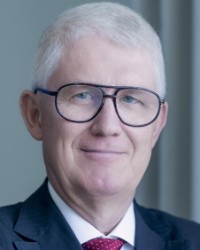
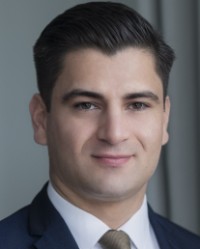
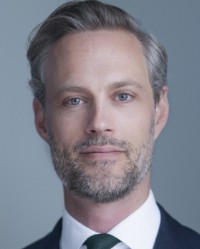

Harvest Advokatbyrå was established in 2016. Located in Stockholm, it is Scandinavia’s largest independent specialist law firm, with a clear focus on advising financial institutions. Its 26-lawyer-strong banking and finance team advises clients ranging from innovative start-ups, payment institutions, banks, fund managers and credit providers to crypto-asset service providers and other companies active in the Swedish financial sector. It advises on a wide range of legal and financial regulatory issues important for the finance industry, including compliance, internal audits, application procedures, AML/CTF, sustainable finance and outsourcing of technology services by financial institutions. The firm maintains frequent and close contact with the Swedish Financial Supervisory Authority (Finansinspektionen; SFSA), and a number of its employees are SFSA alumni. The scope of its services also includes advising companies in the banking and finance sector on corporate matters, such as setting up legal entities, transactional assistance, and preparing and negotiating agreements. The firm also advises on data privacy and data protection issues.
Introduction
Throughout 2025, the Swedish fund market was shaped by significant regulatory reforms, structural changes and ongoing procurement processes aimed at strengthening competitiveness, increasing efficiency and creating a more resilient and investor-friendly fund landscape. Several key developments – in particular the Swedish Fund Market Government Official Report (the “Fund Market Report”; Sv. Fondmarknadsutredningen), including both the interim report published in May 2025 and the final report presented on 10 December, as well as the progress of the premium pension fund procurement process – have dominated the agenda. At the same time, recent capital flows show that Swedish investors continue to favour equity funds, global exposure and low-fee investment options.
In this year’s Trends & Developments chapter, the proposals within the Fund Market Report are examined, and a short status update is given on the Swedish premium pension fund procurement process, and on capital flow and investor trends in the Swedish fund market.
The Swedish Fund Market Government Official Report
Background and mandate
The Fund Market Report is the result of an inquiry committee mandated by the Swedish government in December 2023 to assess and propose amendments to the Swedish fund regulations, to modernise and strengthen the competitiveness of the Swedish fund sector (the “Inquiry”).
The Fund Market Report was published by way of an interim report, SOU 2025:60, in May 2025 and a final report, SOU 2025:117, in December 2025. The interim report’s scope included assessment of how the amendments to the Alternative Investment Fund Managers (AIFM) and Undertakings for Collective Investment in Transferable Securities (UCITS) Directives should be implemented in Swedish law. Beyond EU transposition measures, the interim report also proposed tax-transparent fund structures for institutional investors, the possibility of trading investment fund unit classes on multilateral trading facility (MTF) platforms and more flexible redemption rules for UCITS funds.
The highly anticipated final report, on the other hand, included the long-awaited assessment of new structural solutions for fund vehicles, such as limited companies with variable share capital and related tax reforms thereof – benchmarking the likes of popular société d’investissement à capital variable (SICAV) structures established in Luxembourg. In the following sections, the key legislative proposed measures in the Fund Market Report are elaborated.
Limited fund companies with variable share capital
The final report was published in December 2025 and included the long-awaited and highly anticipated assessment of whether fund vehicles with variable share capital should be proposed or not. As many had hoped, the Inquiry’s final report proposed a highly competitive SICAV-like fund structure with variable share capital, not only allowing umbrella funds but also reforming taxation for the establishment of European long-term investment funds (ELTIFs).
The proposal introduces a new national OEIC Act (Sv. fondandelsbolagslagen), primarily to regulate open-ended companies under statute (open-ended investment companies, or OEICs; Sv. fondandelsbolag). Such a company may be an investment company (Sv. investeringsbolag), qualifying as a UCITS under statute, or an AIF company (Sv. AIF-bolag), qualifying as an AIF under statute. Although terminology may not have been the key consideration, the proposal allows for sub-funds within the same OEIC and generally contributes to Sweden’s competitiveness in the fund sector. Notably, the national regulations implementing the UCITS and AIFM Directives will remain applicable in all material respects for each type of OEIC.
OEICs will be limited to only making collective investments on behalf of investors and will not be permitted to have their own employees or conduct any other activity. OEICs will be required to appoint an external fund manager or AIF manager (corresponding to the OEIC type). The general voting power relation requirement between different share classes in the Swedish Companies Act will not be applicable to OEICs, effectively allowing the manager to remain in full control of the vehicle. Similarly, general meetings or other lengthy processes will not be required to increase or decrease the share capital.
Under the proposal, the same tax rules applicable to regular UCITS funds will also apply to investment companies (OEICs subject to UCITS rules), meaning that returns will not be taxable at the fund level; in practice, they will be exempt from income tax. For an AIF company – ie, an OEIC subject to Alternative Investment Fund Managers Directive (AIFMD) rules – tax rules will apply similarly to regular limited liability companies (Sv. aktiebolag), subject to corporation tax on profits. However, it is proposed that AIF companies will be able to hold business-related shares (Sv. näringsbetingade aktier) on the same terms as regular limited liability companies – ie, where returns are tax-free. This includes all unlisted limited liability company shares. Taxation would also take place at the shareholder level in accordance with the general tax rules for limited liability companies. The Inquiry concludes that AIF companies can thus be used to form a large variety of AIFs whose tax situation will be very competitive in international comparisons.
As AIF OEICs are not taxed on business-related share holdings, they are very well suited for use in the establishment of ELTIFs. Furthermore, to enable Swedish ELTIFs to compete with their foreign counterparts, the Inquiry proposes that certain specific provisions should apply to such funds established as AIF companies and marketed openly to the public, effectively exempting Swedish ELTIFs from taxation on returns from listed shares and on shares in common funds, investment companies and special funds. The proposal allows for smoother liquidity management and is generally expected to facilitate the establishment of ELTIFs in Sweden. As the individual savings account (ISA) (Sv. investeringssparkonto) is a popular savings vehicle in Sweden, whereby tax is drawn on the overall portfolio value and not based on the profits, the Inquiry found that shares or units in ELTIFs must be able to be held in ISAs.
Overall, the final report was not disappointing. The reforms are of substantial structural importance and may lead to a leap forward in Sweden’s competitiveness in the fund sector within the Union in the coming decades.
Tax-transparent fund structures for institutional investors
Investors in a common fund in Sweden are presently not taxed on transactions within the fund but rather on the return on the units at redemption. From a cross-border perspective, certain jurisdictions provide full exemption from taxation at the source of income – eg, dividends in portfolio companies for certain institutional investors, such as pension schemes. To strengthen the competitiveness of the Swedish fund sector, the introduction of a fund structure where the institutional investor is considered to be directly invested in the underlying fund assets may allow such investor to minimise taxation.
Therefore, the Inquiry proposes a new, fiscally transparent fund structure. The proposed fund structure applies to contractual-based UCITS funds but not to AIFs. Moreover, the proposed tax-transparent structure only applies to certain categories of institutional investor, such as states and public institutions, municipalities and pension fund schemes or similar public investment schemes. Effectively, should the proposed changes be adopted by Parliament, the Swedish fund sector would be better positioned to attract international institutional capital on a larger scale than before.
Exchange-traded fund units
In the interim report, the Inquiry included proposals to place MTF platforms on an equal footing with regulated markets by allowing fund units to be traded on MTF platforms. Furthermore, the Inquiry proposes the explicit possibility of having a share class of exchange-traded units for UCITS and non-UCITS funds. As such, a share class where the units are admitted to trading on a regulated market or traded on a MTF platform may be introduced for existing funds rather than establishing a new structure, promoting cost-effectiveness. The proposal aligns with the increased popularity of exchange traded funds in Sweden as of late.
Alignment with the UCITS Directive’s minimum redemption frequency rules
By derogation of Articles 84.1 and 76 of the UCITS Directive, the minimum frequency for redemption in UCITS is twice per month, unless the competent authority grants an exemption to allow for monthly redemption. In Sweden, the minimum requirement for net asset valuation (NAV) of UCITS is weekly. As redemption requires a NAV, the Swedish implementation already gold plates the Directive. In practice, however, fund units in a Swedish UCITS are required to be redeemed daily due to the national implementation of the redemption clause, prescribing units to be redeemed “immediately” upon request.
The Inquiry concludes that merely the fact that Swedish UCITS have been open for redemption on a daily basis shall not prohibit an adjustment to the Directive’s minimum frequency, especially as certain UCITS may trade in less liquid assets and that Swedish “special funds” (Sv. specialfonder; a national fund type, formally an AIF but which adheres to the majority of UCITS-like diversification rules), may have a redemption frequency other than daily.
As the administrators for valuation and distribution, including distributors, are already accustomed to daily redemptions, the Inquiry foresees that a legislative adjustment to the UCITS minimum frequency may not in practice lead to a change in redemption frequency. The interim report concludes its proposal by adjusting the national provisions on UCITS redemption frequency to the Directive’s minimum – requiring UCITS funds to be open for redemption at least twice a month with a reasonable interval between the two occasions. Effectively, the NAV calculation requirement is adjusted according to the days on which the fund is open for subscription and redemption. In terms of the notice period – ie, the time prior to redemption whereby the investor must inform the management company of his or her redemption – the Inquiry proposes a maximum of five banking days.
Loan-originating funds
The amendments to the AIFM Directive, harmonising the rules for loan-originating funds, are proposed to be implemented in the Swedish Alternative Investment Fund Managers Act (2013:561). The new framework includes risk management requirements, and diversification as well as prohibition of lending to closely related persons or entities. A loan-originating fund under the proposed definition is an AIF whose investment strategy is primarily to issue loans, or whose issued loans have a nominal value of at least 50% of the fund NAV. Generally, loan-originating funds must be closed-ended unless the manager can show that the risk management system for liquidity risks is aligned with the investment strategy and the fund’s redemption policy. The proposed limits of financial leverage are 175% for open-ended and 300% for closed-ended loan-originating funds. The Inquiry does not explicitly propose any measures in relation to the option in Article 15.4g of the AIFMD pertaining to whether lending to consumers or servicing consumer credits should be prohibited or not, except that there should be no difference between registered and authorised AIF managers.
A fund manager can provide a wider range of services
As of now, fund management companies under the UCITS Directive and managers under the AIFM Directive may provide services including discretionary portfolio management, investment advice and order execution. However, the manager must first apply for a discretionary portfolio management licence before it may apply for any such additional licence. The proposal in the interim report of the Inquiry removes this gate requirement. As such, a fund manager will not be required to have a licence for discretionary portfolio management before applying for other possible licences.
In addition to the current financial services a fund manager may provide upon additional authorisation, the Inquiry proposes that a wider range of available services could be provided – some without and some with authorisation. Without authorisation, a manager should be able to leverage, for example, IT and risk management systems it has developed and provide them as a service. With additional authorisation, it will be possible to administrate benchmarks under the Benchmark Regulation and provide the “reception and transmission of orders in relation to financial instruments” investment service.
Liquidity management tools
As laid out in last year’s Trends & Developments chapter, the liquidity management tool (LMT) provisions in the amendments to the UCITS and AIFM Directives were expected to be implemented in Swedish legislation without many deviations. Indeed, the interim report did not raise any eyebrows in this regard. However, the implementing proposal includes provisions that the LMTs chosen must be included under the fund rules for UCITS funds and Swedish special funds, subject to Swedish Financial Supervisory Authority (SFSA) approval. The final provision on whether LMTs must be included in the fund terms or can simply be provided in the fund prospectus is under discussion within the Swedish fund sector.
No contractually constructed alternative investment funds
Except for Swedish special funds, AIFs cannot be constructed on a contractual basis as UCITS funds. Instead, AIFs in Sweden are normally created through Swedish limited liability companies. The Inquiry’s final report discussed whether contractual-based alternative investment funds should be possible in Sweden. The report provides that the limited insolvency rights associated with contractual funds do not accord with AIFs due to the possibility of their having a vastly different risk exposure profile than UCITS funds. In addition, both a separate and a common tax framework for AIFs may impose substantial competition risks. Therefore, the Inquiry does not propose any contractual-based structure for AIFs (other than Swedish special funds, as they already have this option).
Swedish Premium Pension Fund Procurement: Status Update
The Swedish Fund Selection Agency (Sv. Fondtorgsnämnden; FTN) is responsible for the procurement, oversight and quality assurance of all funds on the premium pension platform. Having started its procurement processes in 2024 and being part of a multi-year plan that covers a wide range of asset classes, some results of procured fund classes are now being seen.
In 2025, FTN advanced several major procurement rounds, including actively managed Swedish and European small-cap funds in April, allocating approximately SEK46 billion to selected managers. Even higher volumes were procured later in 2025 as contracts were awarded for both active and passive large- and mid-cap Swedish equity funds in August, allocating approximately SEK157 billion to selected managers.
Ongoing and future procurements include, inter alia, the procurement of:
- global technology funds launched in October 2025 with an allocation of approximately SEK153 billion;
- actively managed Swedish small-cap equity funds launched in April 2025with an allocation of approximately SEK40 billion; and
- actively managed global equity funds with an allocation of SEK200 billion (expected awards) in Q1 2026.
Looking ahead to 2026, US equities, healthcare and fixed income will be on the menu for those submitting tenders.
The results clearly show that the procurement process is effective, at least in terms of the management fees under the awarded contracts, as the average fees have fallen significantly, especially for actively managed Swedish equity funds – and with index funds reaching even lower price points. For awarded funds and those that will have to leave the premium pension system, assets have already started flowing between winners and losers, albeit at a controlled pace and with an expected redemption time of several months.
Capital Flow and Investor Trends in the Swedish Fund Market
Looking at capital flow and investor trends, the Swedish fund sector continues to grow stronger, with net flow levels on a par with last year’s record and all-time-high net asset savings. Global and European equity funds dominate net inflow, with equity funds as a group (including both passively and actively managed funds) accounting for around 60% of the total net asset savings in funds (not counting the 11%fund-of-fund exposure, which may add even more equity exposure).
Awareness of fees is also increasing, with the SFSA continuing to campaign for greater consumer fee awareness, reflected in a high fate of inflow in index funds. Looking at investor trends, technology exposure still stands out, but precious metals have also gained some time in the spotlight due to their strong performance. The defence sector is also increasing in popularity somewhat, reflected by European Commission proposals that may allow portfolio companies within the defence sector to be considered sustainable.
Looking at the net flow allocation between distributor types, fast-paced digital platforms continue to take market share from larger banks in fund distribution, both in terms of volume and customers. However, the SFSA’s report in late 2025 confirmed that larger banks distribute far more of their own funds to their customers, and that large bank customers generally pay higher management fees. Unsurprisingly, given the results in the report, the SFSA will carry out further analysis of allocation funds in 2026, to ascertain whether the allocation funds provided by inter alia the larger banks provide value for money or are disguised index funds with disproportionate management fees.
Harvest Advokatbyrå AB
Engelbrektsplan 1
Box 7225
103 89 Stockholm
Sweden
+46 0820 4011
info@harvestadvokat.se www.harvestadvokat.se
Law and Practice
Authors
Harvest Advokatbyrå was established in 2016. Located in Stockholm, it is Scandinavia’s largest independent specialist law firm, with a clear focus on advising financial institutions. Its 26-lawyer-strong banking and finance team advises clients ranging from innovative start-ups, payment institutions, banks, fund managers and credit providers to crypto-asset service providers and other companies active in the Swedish financial sector. It advises on a wide range of legal and financial regulatory issues important for the finance industry, including compliance, internal audits, application procedures, AML/CTF, sustainable finance and outsourcing of technology services by financial institutions. The firm maintains frequent and close contact with the Swedish Financial Supervisory Authority (Finansinspektionen; SFSA), and a number of its employees are SFSA alumni. The scope of its services also includes advising companies in the banking and finance sector on corporate matters, such as setting up legal entities, transactional assistance, and preparing and negotiating agreements. The firm also advises on data privacy and data protection issues.
Trends and Developments
Authors
Harvest Advokatbyrå was established in 2016. Located in Stockholm, it is Scandinavia’s largest independent specialist law firm, with a clear focus on advising financial institutions. Its 26-lawyer-strong banking and finance team advises clients ranging from innovative start-ups, payment institutions, banks, fund managers and credit providers to crypto-asset service providers and other companies active in the Swedish financial sector. It advises on a wide range of legal and financial regulatory issues important for the finance industry, including compliance, internal audits, application procedures, AML/CTF, sustainable finance and outsourcing of technology services by financial institutions. The firm maintains frequent and close contact with the Swedish Financial Supervisory Authority (Finansinspektionen; SFSA), and a number of its employees are SFSA alumni. The scope of its services also includes advising companies in the banking and finance sector on corporate matters, such as setting up legal entities, transactional assistance, and preparing and negotiating agreements. The firm also advises on data privacy and data protection issues.
