Litigation 2026
Cuba
Trends and Developments
Authors

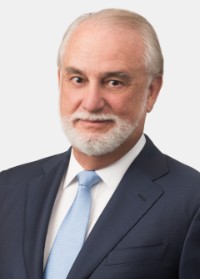



Akerman LLP helps businesses navigate the complexities of the Cuba market and is at the cutting edge of Cuba policy and market-entry strategy. The team has led frontline policy discussions with government and industry leaders regarding US-Cuba relations for more than a decade, with members of the team being described as “very knowledgeable of OFAC regulations and the Helms-Burton Act”. Akerman LLP has developed a comprehensive analysis of the legal risks, potential actions, and defences relating to claims filed as a result of the lifting of the suspension of Title III of the Helms-Burton Act in 2019.
Update on Helms-Burton Act Cuba “Trafficking” Cases
Note: Akerman LLP currently represents several clients in the defence of claims resulting from the lifting of the suspension of Title III of the Helms-Burton Act in 2019. This article should not be considered a reflection of the firm’s position in those cases.
This last year has seen considerable development of Helms-Burton Act case law, as a number of appellate decisions on issues of first impression have come down.
Last time our firm provided an update, the Eleventh Circuit’s decision was awaited in the Havana Docks cases, which were on appeal following the trial court’s entry of judgments of about USD110 million against each of four cruise lines – about USD440 million in total – on claims the cruise lines’ use of the Port of Havana, although duly licensed by the US government, constituted “trafficking” under the Helms-Burton Act. The Eleventh Circuit decided those consolidated appeals this past year, holding that the cruise lines could not have trafficked in the plaintiff’s time-limited and expired property interest, as detailed below. That was followed by the US Supreme Court granting the plaintiff’s petition for writ of certiorari, which means it will decide the case by the end of the current term (approximately July 2026).
The Eleventh Circuit also issued its ruling in North American Sugar Industries, Inc. v Xianjiang Goldwind Science & Technology Co., et al. The appeals court vacated the trial court’s dismissal of the action on personal jurisdiction grounds and remanded to the trial court for an evidentiary hearing on personal jurisdiction. The case is brought against three sets of defendants, each of which had a role in the shipment of wind turbine blades from China to a Cuban port in which the plaintiff, a former sugar company, claims an interest.
In Exxon Mobil Corp. v Corporación CIMEX, S.A., following the split decision by a three-judge panel of the Court of Appeals for the District of Columbia, which ruled that the Foreign Sovereign Immunities Act (FSIA) is the only basis for a court to exercise jurisdiction over a foreign state, and that the Helms-Burton Act does not independently grant such jurisdiction, the US Supreme Court also just granted certiorari, and will decide the case by the end of the current term.
These cases are summarised below, in addition to the following significant case developments:
- In Fernandez v Seaboard Marine Ltd., the Eleventh Circuit affirmed in part and reversed in part a summary final judgment in favour of the defendant. The Court held that shareholders of corporations whose assets had been expropriated by the Cuban government are proper Helms-Burton Act plaintiffs. It also analysed whether the plaintiffs’ evidence was sufficient to create a jury issue on defendant’s alleged trafficking in the specific properties at issue, holding in part that it did, and, in so holding it, expounded upon the breadth of the Act’s definition of trafficking.
- In Regueiro v American Airlines, Inc., the Eleventh Circuit held that a Helms-Burton Act claim is valid even though the confiscated property did not belong to a US national at the time of confiscation and the plaintiff became a US national after acquiring his interest in the property.
- In the consolidated Echevarria v Expedia Group, Inc. cases, after a two-week trial, a Miami-Dade County jury returned a verdict in favour of Echevarria and against each of the four Expedia defendants in the amount of USD29.8 million, inclusive of treble damages. However, the trial court set aside the verdicts and entered judgment as a matter of law in favour of all four defendants, as further explained below.
As a brief reminder, the Act’s civil liability provisions grant a US national the right, subject to various limitations and conditions, to sue and collect substantial money damages from persons that have knowingly and intentionally trafficked in – that is, used or derived economic benefit from – property that the Cuban government expropriated in or after 1959 and in which the US national claims an interest.
Havana Docks
The plaintiff, Havana Docks Corporation, held a 99-year usufructuary concession (essentially a temporally limited, non-exclusive right to use property owned by the Cuban government and to draw profits therefrom) in the Port of Havana that would have expired in 2004 but for the Cuban government’s expropriation of that interest in 1960. In 2019, Havana Docks sued four cruise lines for their alleged trafficking in the Port of Havana between 2016 and 2019 by having their ships dock at the Port and one of its piers, having its passengers embark and disembark there, and using the property as a start and end point for shore excursions.
The district court entered summary judgment for the plaintiff in the sum of about USD110 million against each of the four cruise lines. That amount represented the value of Havana Dock’s property (USD9,179,700.88), as determined by the Foreign Claims Settlement Commission (FCSC) in 1971 pursuant to the Cuban Claims Act of 1964, plus simple interest, plus treble damages.
The main issue on appeal – one of first impression – was whether the cruise lines could “traffic” in Havana Docks’ property where Havana Docks’ concession would have expired in 2004, years before the cruise lines made any use of the Port of Havana. The Eleventh Circuit panel, in a two-to-one decision, held that because the alleged conduct took place years after Havana Docks’ concession would have expired by its own terms, the cruise lines had not engaged in trafficking in that property interest in 2016 through 2019. The dissenting judge disagreed, viewing the Act’s text as not requiring a plaintiff to demonstrate that it would have owned the property at issue during the time of the trafficking, but for the confiscation; and stating that it should be sufficient that the plaintiff owned a claim to the confiscated property when the trafficking occurred.
Havana Docks petitioned the US Supreme Court for a writ of certiorari. The question presented is “whether a plaintiff must prove that the defendant trafficked in property confiscated by the Cuban government as to which the plaintiff owns a claim”, or, instead, that the defendant trafficked in property that the plaintiff would have continued to own at the time of trafficking in a counterfactual world “as if there had been no expropriation”. As noted above, the Supreme Court recently granted the petition and will decide that issue during the current term.
North American Sugar
The plaintiff, North American Sugar, holds a certified claim in excess of USD97 million for the Cuban government’s confiscation of an array of assets used in the sugar-producing business, including a large commercial shipping port its affiliate owned in Puerto Padre, Cuba. In 2020, North American Sugar sued three sets of foreign defendants in Florida – each of which had a role in the shipment of wind turbine blades from China to Puerto Carupano, a Cuban port in which the plaintiff claims an interest. The plaintiff alleged that the court had personal jurisdiction over the defendants because the shipments briefly stopped in Miami, Florida, en route to Cuba, and because the defendants allegedly conspired to violate the Helms-Burton Act.
The defendants moved to dismiss the complaint for lack of personal jurisdiction, which the trial court granted based on extensive declarations and exhibits but without holding an evidentiary hearing. On appeal, the Eleventh Circuit vacated the district court’s order and remanded for further proceedings. The Eleventh Circuit found that the district court read the definition of “traffics” in the Act too narrowly when it found that the alleged Helms-Burton violations occurred only in Cuba, and that it improperly credited the defendants’ evidence over the plaintiff’s conflicting evidence without holding an evidentiary hearing. On remand, to overcome the jurisdictional defences, the plaintiff will need to show that “the Defendants, their agents, or their co-conspirators committed Helms-Burton trafficking while they were physically located in Florida”.
Exxon
Unlike the majority of Helms-Burton Act cases, which are brought against private companies, this case involves claims against Cuba state-owned entities and thus is essentially a lawsuit against the Cuban government. Exxon sued three entities in the DC district court: (i) CIMEX, a conglomerate that, among other things, operates hundreds of service stations, (ii) its Panama affiliate, and (iii) CUPET, Cuba’s state-owned oil company. Exxon alleged that these entities traffic in properties Cuba confiscated from Exxon by using those properties to extract, import, and refine crude oil, and by operating service stations that sell the refined oil products.
All three defendants moved to dismiss under the FSIA, arguing that they are immune from suit because none of the FSIA’s exceptions to immunity applies. The trial court deferred decision as to two of the defendants pending jurisdictional discovery concerning their activities, but denied the motion as to CIMEX. CIMEX appealed and Exxon cross-appealed to the Court of Appeals for the District of Columbia Circuit.
In last’s year’s update, our firm detailed the DC Circuit Court’s decision. Two judges on the panel held that “plaintiffs bringing Title III [Helms-Burton] actions against foreign states must satisfy one of the FSIA’s exceptions, which is the same condition any litigant seeking to sue a foreign sovereign must meet”. The exception applicable to the case, the Court held, was the commercial activity exception, under which the direct effects clause had to be satisfied, which has three requirements: (i) there must be an act outside the US, (ii) in connection with commercial activity by the foreign state elsewhere, and (iii) the act must cause a direct effect in the US. There was no dispute that the first element was met, and the Court found that the second element was likewise satisfied. The case was remanded for the trial court to determine whether CIMEX causes such direct effects in the US to meet the third element of the commercial-activity exception.
The dissenting judge, however, contended that Helms-Burton is itself a grant of jurisdiction which “deprives the Cuban defendants of immunity from suit”. The Act’s text on which the dissenting judge relied states that “any person,” defined to include “any agency or instrumentality of a foreign state,” that traffics in confiscated property “shall be liable” to US nationals with claims to that property.
Exxon filed a petition for a writ of certiorari with the US Supreme Court on the issue of whether the Helms-Burton Act abrogates foreign sovereign immunity in cases against Cuban instrumentalities, or whether parties proceeding under the Act must satisfy an exception under the FSIA. As noted above, the Supreme Court will decide this question during the current term.
Fernandez v Seaboard Marine
Odette Blanco de Fernandez and her four siblings’ heirs and estates sued Seaboard Marine under the Helms-Burton Act for allegedly trafficking in property confiscated from their family’s two companies – Azucarera Mariel, S.A. and Maritima Mariel, S.A. – by shipping frozen chicken to a container terminal on the west side of Mariel Bay, Cuba. The district court entered summary judgment in favour of defendant Seaboard Marine. The plaintiffs appealed.
The Eleventh Circuit held that the district court correctly found that the heirs and estates could not bring a claim because they acquired their claims by inheritance after the statutory bar date of 12 March 1996. With respect to the estates in particular, the Court rejected the argument that, under Florida law, the deceased siblings still retained ownership of the claim. The Court applied the assumption that when Congress enacts a statute, it does not make its application dependent on state law. The Court also interpreted Florida law as vesting the decedent’s intestate property in the estate upon the decedent’s death.
The Eleventh Circuit further held that shareholders of corporations may bring Title III claims where property of the shareholder’s corporation was confiscated. However, as it did in the Havana Docks case, the Court examined the exact contours of the property interests at issue to determine whether the defendant trafficked in that property. It held that Seaboard did not traffic in Maritima’s property – a 1955 concession granting Maritima the right to exploit port facilities in Mariel Bay – because the concession did not afford Maritima the exclusive right to develop all future docks in the bay.
With respect to Azucarera’s property – ownership of thousands of acres of land on the west side of Mariel Bay – the Court reversed, holding that genuine issues of material fact precluded summary judgment in favour of Seaboard. The Act’s definition of traffics includes “engag[ing] in a commercial activity using or otherwise benefitting from confiscated property”. The Court held that a reasonable jury could find that Seaboard “otherwise benefit[ted]” from Azucarera’s confiscated property because, without it, the terminal used by Seaboard could not have been built by the Cuban government. This was so even if Seaboard did not directly encroach upon Azucarera’s confiscated land.
Seaboard argued that, even if it did use or benefit from the confiscated property, there was no evidence that it did so “knowingly and intentionally,” as required by the statute. The Eleventh Circuit disagreed. It held that letters sent by Fernandez warning Seaboard of her claim and of its continued violations put Seaboard on notice and, because it continued the shipments thereafter, a genuine dispute existed as to whether it did so knowingly and intentionally.
Finally, the Court analysed whether Seaboard was entitled to summary judgment on its lawful travel defence. Under the Act, the term “traffics” excludes “transactions and uses of property incident to lawful travel to Cuba, to the extent that such transactions and uses of property are necessary to the conduct of such travel”. The Court found that the Act and federal regulations implementing the Act distinguished between trade and travel, and that the sale of frozen chickens constituted trade with Cuba, not travel to or from Cuba.
Seaboard has filed a petition for writ of certiorari with the US Supreme Court, which will likely be granted or denied before the end of 2025. If granted, this case should also be decided during the current term.
Regueiro v American Airlines
Plaintiff Regueiro sued American Airlines for its alleged trafficking in Cuba’s main airport by operating flights in and out of the airport. Regueiro claimed that the airport previously belonged to a corporation owned his father when the Cuban government confiscated it in 1959. The district court dismissed the case for failure to state a claim because Regueiro’s father was not a US citizen when the airport was confiscated by the Cuban government, and because plaintiff Regueiro became a US citizen only after he inherited an interest in the property.
On appeal, the Eleventh Circuit reversed, finding that the plain text of the Act did not require that the confiscated property belong to a US citizen at the time of confiscation, or that the plaintiff be a US national at the time he inherits the claim to the confiscated property. The Court reasoned that the Act included an amendment to the Cuban Claims Act which allowed the Foreign Claims Settlement Commission to make a factual finding as to the validity and value of a claim “whether or not the United States national qualified as a national of the United States . . . at the time of the action by the Government of Cuba”. This was evidence that the Helms-Burton Act did not require that the confiscated property belong to a US citizen at the time of confiscation, and likewise did not require the plaintiff to be a US citizen when he acquired the claim. The Court also rejected American Airlines’ alternative argument that Regueiro did not own an interest in the confiscated airport, but rather shares of a corporation that owned the airport. Consistent with its Seaboard Marine decision, the Court held that the Helms-Burton Act protects those who had an interest in confiscated property, including shareholders.
Echevarria v Expedia Group, Inc.
This last year saw the first jury trial on a Helms-Burton Act claim in the consolidated Echevarria v Expedia Group, Inc. cases. In those cases, the plaintiff asserted that he owned a claim to the island of Cayo Coco, Cuba, which was confiscated by the Cuban government in 1960 from the plaintiff’s ancestors. The plaintiff alleged that the Expedia defendants had trafficked in that stolen land by facilitating bookings for rooms at three hotels later built on the land.
The case involved numerous complex issues of first impression. For example, the court had to determine, assisted by competing Cuban law experts, how to instruct the jury on Cuban law governing the question of whether the plaintiff’s ancestors ever owned Cayo Coco, beginning with the property’s alleged initial transfer from the Spanish Crown to the plaintiff’s ancestor through various additional alleged transfers by succession up to the time of the Cuban revolution and beyond. The Court also wrestled with the proper methodology under the Act for assessing the current fair market value of property existing in the closed economy of communist Cuba, and whether that value should be limited to the unimproved land as it existed at the time of confiscation or included the improvements made thereafter and the business value of the hotels. The Court also contended with evidentiary objections directed at both (i) the testimony of the plaintiff’s family members, who purported to have information regarding the Echevarria family’s ownership of Cayo Coco from a time when those witnesses were young children, and (ii) the admission in evidence of ancient documents purporting to evidence the long line of property transfers culminating in the plaintiff.
At the conclusion of the two-week trial, a Miami-Dade County jury returned a verdict in favour of Echevarria and against each of the four Expedia defendants in the amount of USD29.8 million, inclusive of treble damages. After the trial, and during a post-trial motion briefing, the Eleventh Circuit decided, in an unpublished decision, the case of Del Valle v Trivago GMBH, No 23-12966, 2025 WL 1443951 (11th Cir. 20 May 2025), holding that the Act’s requirement that trafficking be “knowing and intentional” meant that a defendant must have information giving rise to a “substantial or high likelihood” that the plaintiff was the owner of a claim to confiscated property.
After a hearing, the court granted the Expedia defendants’ motion for judgment as a matter of law, nullifying the jury’s verdict. First, the Court found that defendant Expedia Group, Inc., a holding company, could not be held liable for the acts of its codefendants, Hotels.com GP, LLC, Hotels.com L.P. and Orbitz, LLC, or for the acts of non-party Expedia, Inc., which were separate corporations. The plaintiff’s evidence that Expedia Group communicated with hotels in Cuba, leased office space in Miami, Florida for a group of employees dedicated to overseeing business in Cuba, developed drop-down menus for guests to indicate which authorised exception applies to their Cuba travel, and applied to the United States Office of Foreign Asset Control for a license to conduct business in Cuba was insufficient to establish that Expedia Group trafficked in the plaintiff’s property.
The judge also found, with respect to defendants Hotels.com GP, LLC, Hotels.com L.P. and Orbitz, LLC that the evidence at trial failed to show that those defendants continued to offer booking services at the subject hotels after they received notice from Echevarria in August 2019 that he claimed a right to Cayo Coco, Cuba. To make this determination, the court analysed each defendant’s bookings with respect to each hotel at issue, using the date of bookings as the date of trafficking (rather than the guests’ check-in or check-out date, which the plaintiff argued for). Because the last date of booking at the hotels pre-dated the defendants’ receipt of the plaintiff’s notice, defendants did not knowingly and intentionally traffic in the property. It was insufficient, according to the judge, that prior to receiving the plaintiff’s cease-and-desist notice, defendants were presumed to know about President Clinton’s signing statement when the Helms-Burton Act was enacted, that defendants’ employees believed that all private real property in Cuba had been confiscated by the Cuban government, or that the employees believed the hotels in question were built on confiscated land. These points, even if true, would not have given defendants the requisite knowledge that the plaintiff’s property, in particular, was confiscated, being trafficked, and belonged to a US national holding a claim to it.
Akerman LLP
Akerman LLP
Three Brickell City Centre
98 Southeast Seventh Street
Suite 1100
Miami, FL 33131
USA
+1 305 374 5600
+1 305 374 5095
pedro.freyre@akerman.com www.akerman.com
Trends and Developments
Authors
Akerman LLP helps businesses navigate the complexities of the Cuba market and is at the cutting edge of Cuba policy and market-entry strategy. The team has led frontline policy discussions with government and industry leaders regarding US-Cuba relations for more than a decade, with members of the team being described as “very knowledgeable of OFAC regulations and the Helms-Burton Act”. Akerman LLP has developed a comprehensive analysis of the legal risks, potential actions, and defences relating to claims filed as a result of the lifting of the suspension of Title III of the Helms-Burton Act in 2019.
