Patent Litigation 2026
USA
Authors
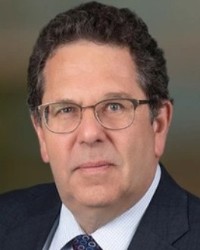


Rothwell, Figg, Ernst & Manbeck PC brings to every patent litigation a team of seasoned, strategic and highly successful litigators who are skilled in the law, have deep technical expertise and consistently prevail when facing off against some of the biggest firms in the country. The firm devotes over half of its work to intricate, multiparty patent litigation involving complex scientific and legal issues in district courts and the US Court of Appeals for the Federal Circuit, and before the International Trade Commission and the Patent Trial and Appeal Board (PTAB). Rothwell Figg sees patent litigation not just as a legal challenge, but also as business and strategic challenges. Through an approach that addresses all three angles, it provides clients with representation that minimises risk, maximises opportunities and firmly represents their interests. In addition to patent litigation, Rothwell Figg provides a comprehensive range of IP, litigation and technology services for US and international clients in jurisdictions across the globe.
1. Intellectual Property Rights and Granting Procedure
1.1 Types of Intellectual Property Rights
The USA offers protection of inventions through the intellectual property rights associated with patents or trade secrets. Patents provide broad, time-limited rights to the patentee in exchange for public disclosure of the invention. In contrast, trade secrets are not publicly known, and have narrower rights and, in principle, an indefinite duration.
Patents arise from federal law. Congress created the US patent system based on its authority in the US Constitution, which grants Congress power “to promote the progress of science and useful arts, by securing for limited times to authors and inventors the exclusive right to their respective writings and discoveries”. Title 35 of the US Code contains the federal laws related to patents.
Trade secret law is primarily based on state law. Specific definitions vary but, generally, a trade secret must not be known to the public and must confer economic benefit on its holder because it is not publicly known, and the trade secret-holder must take reasonable measures to keep such information secret. Most states have adopted the Uniform Trade Secrets Act (1979) as amended, or a variation of it, so there is a measure of uniformity among the state laws. In addition to state law causes of action, the Defend Trade Secrets Act of 2016 provides a federal cause of action for trade secret misappropriation.
The statutory language creates a foundation for patents and trade secrets, but the law continues to evolve through case law as courts interpret legal terms and concepts.
1.2 Grant Procedure
The US Patent and Trademark Office (USPTO) conducts the patent approval process and grants any resulting patents. Applicants file either a provisional or non-provisional patent application with the USPTO.
Provisional applications provide a quick and inexpensive way for inventors to establish a US filing date for their invention, which can be claimed in a non-provisional application that is filed later. A provisional application must contain a description of the invention and may include drawings necessary to understand the invention. A provisional application has fewer requirements than a non-provisional application but cannot develop into a patent without a corresponding non-provisional application filed within 12 months.
A non-provisional patent application must include both a description of the invention and claims describing the scope of the protections sought in the patent. A non-provisional application may be filed without a prior provisional application. However, a non-provisional application may gain the benefit of the earlier filing date of a corresponding provisional application if filed within 12 months of the provisional application.
Non-provisional applications undergo substantive examination by the USPTO to ensure compliance with the legal requirements for a patent. As a preliminary matter, a patent must claim patent-eligible subject matter. At a minimum, the US Supreme Court has stated that laws of nature, natural phenomena and abstract ideas are not patentable. Patents must also describe an invention that is novel and non-obvious with sufficient detail and clarity that a person of ordinary skill in the art of the invention can make and use it without undue experimentation.
Patent Prosecution
The interaction between patent applicants (or their representatives) and the USPTO is called patent prosecution. During patent prosecution, an examiner at the USPTO will review the patent application and information already available to the public to determine whether the application meets the requirements for patenting based on the laws found in Title 35 of the US Code, the regulations listed in Title 37 of the Code of Federal Regulations and the guidance provided in the USPTO Manual of Patent Examining Procedure. If the examiner finds evidence that the invention has already been publicly disclosed or discovers another reason why the application does not comply with the patent requirements, the examiner may issue a rejection describing the deficiencies of the patent application. The applicant has an opportunity to respond to the rejection, which may include amending the claims in the application, having a phone conference with the examiner and presenting arguments that the rejection was improper. This process may be repeated until the examiner issues a final rejection or allows the application. If the patent application is allowed, the USPTO issues a patent creating enforceable rights for the patentee.
Trade Secrets
By their nature, trade secrets are not disclosed publicly or registered with any agency. Information becomes a trade secret when the holder takes affirmative action to keep the information secret. This can include physical protection of the information, use of non-disclosure agreements or lawsuits to recover for misappropriation of the trade secrets.
1.3 Timeline for Grant Procedure
The time required to obtain a patent can vary greatly depending on many factors, including the subject matter of the patent, the number of rejections and appeals during patent prosecution and the type of USPTO examination programme. The USPTO has several patent application initiatives that can expedite patent applications meeting the programme requirements. For example, applications qualifying for Track One prioritised examination reach a final disposition an average of five months from petition grant. According to statistics provided by the USPTO, the average time for a final decision on a patent application is about two years, but some take several years.
Patent applicants are not obliged to be represented by a lawyer. However, the USPTO cautions that the patent application process is an undertaking requiring knowledge of patent law and rules, USPTO practices and procedures, and the scientific or technical matters involved in the particular invention. Because of the complexities involved, most inventors employ the services of registered patent lawyers or patent agents.
The cost associated with obtaining a patent varies based on many factors. Administrative fees imposed by the USPTO depend on the type of entity (large, small or micro), the number of claims in the application, the amount of time taken to respond to USPTO rejections, the use of patent application initiative programmes and other procedural details. Lawyers’ fees in connection to the application may also vary depending on the complexity of the application and patent prosecution.
1.4 Term of Each Intellectual Property Right
Generally, a patent expires 20 years after its filing date, but this term can vary depending on the timing of the patent application and patent prosecution. Patents issued and applications filed before 8 June 1995 expire either 20 years from filing or 17 years from issue, whichever is later.
Patent applications filed after 8 June 1995 expire 20 years after the earliest effective US filing date. This may be earlier than the filing date of the patent application if it claims priority to an earlier non-provisional or international application.
Under limited circumstances, a patent term may be extended to account for administrative delays when acquiring the patent. For example, if the USPTO does not issue a patent within three years after its filing date, the patent holder may obtain an extension of the patent term equal to the period in excess of three years. For certain drug products and medical devices, a patent may be extended for up to five years to account for the regulatory review conducted by the US Food and Drug Administration (FDA).
1.5 Rights and Obligations of Owners of Intellectual Property Rights
The USPTO website provides general information about all US patents. Furthermore, the FDA maintains publications identifying patents applicable to certain approved pharmaceutical products. For drug products, the FDA publication is Approved Drug Products with Therapeutic Equivalence Evaluations (more commonly known as the “Orange Book”). Similarly, the FDA maintains the List of Licensed Biological Products with Reference Product Exclusivity and Biosimilarity or Interchangeability Evaluations (known as the “Purple Book”), which contains information about approved biological products. The FDA also maintains electronic databases on its website holding the information contained in both the Orange Book and the Purple Book.
A patent gives its owner the right to exclude others from making, using, selling and importing the patented invention. To maintain the enforceability of a utility patent, the USPTO must receive maintenance fees for the patent, due 3.5, 7.5 and 11.5 years after the date of issue. Design and plant patents do not require maintenance fees.
The remedies available to the patent holder vary depending on the chosen forum of enforcement. In a district court, a patent holder may seek equitable remedies in the form of a preliminary or permanent injunction and may seek monetary damages for both past and future infringement.
At the US International Trade Commission (ITC), a patent holder may seek cease-and-desist orders and exclusion orders to prevent the importation of patent-infringing goods. The exclusion orders direct US Customs and Border Protection to exclude articles from entry into the USA. A limited exclusion order prevents specified entities from importing the articles, and a general exclusion order prevents any entity from importing the articles. The ITC cease-and-desist orders can direct infringers to stop importing infringing articles and to stop sales of infringing articles in US inventory. The ITC cannot award monetary damages.
Innovator drug companies with Orange Book-listed patents may have additional protections based on the Hatch-Waxman Act, which ties drug marketing approval to the resolution of patent disputes. Under the Hatch-Waxman Act, generic drug manufacturers who file an abbreviated new drug application (ANDA) for a generic version of an FDA-approved drug must submit a certification for each Orange Book-listed patent for the innovator drug product:
- a Paragraph I certification that no patent information has been submitted to the FDA;
- a Paragraph II certification that the patent has expired;
- a Paragraph III certification that the patent will expire before the generic drug product enters the market; or
- a Paragraph IV certification that the patent is invalid, unenforceable or will not be infringed by the generic drug product.
The ANDA filer is required to provide notice to the patent holder upon submission of a Paragraph iv certification. The patent holder then has the option to file a lawsuit for patent infringement within 45 days. Such a filing triggers a regulatory stay of final approval for the ANDA of up to 30 months. Importantly, the first generic manufacturer to file an ANDA with a Paragraph IV certification is entitled to a 180-day period of marketing exclusivity, providing an incentive for generic manufacturers to challenge these patents early.
While the Biologics Price Competition and Innovation Act (BPCIA) provides a framework for innovator biologic companies to assert Purple Book-listed patents against biosimilar manufacturers in a precursor to patent litigation (referred to as the “patent dance”), FDA approval of a Biologics License Application (BLA) for a biosimilar is not dependent on the resolution of disputes over Purple Book-listed patents.
1.6 Further Protection After Lapse of the Maximum Term
The USA allows certain extensions of patent terms for administrative delays. Delays by the USPTO in the issue of patents can lead to patent term compensation for the time of the delay (commonly referred to as “patent term adjustment” or PTA). This extension does not apply to delays resulting from the patent applicant’s actions, including requests for continued examination or appeals. The possible extension for USPTO delays is unlimited.
Certain drug products and medical devices can receive annual patent term extensions (PTEs) if the product is undergoing administrative review by the FDA. These extensions are renewable for up to five years.
1.7 Third-Party Rights to Participate in Grant Proceedings
Any third party may submit patents, published patent applications or other printed publications as part of a third-party preissuance submission. The submission must include a concise description of the asserted relevance of each submitted document. These submissions may be made online at the USPTO website. Submissions must be made before the later of six months after publication of the patent application or the date of a USPTO communication rejecting any claims in the application. However, a notice of allowance for the patent application immediately terminates the timeframe for third-party submissions.
1.8 Remedies Against Refusal to Grant an Intellectual Property Right
During patent prosecution, the USPTO may issue a final rejection of the patent claims. If the applicant wishes to challenge the final rejection, they may request continued examination or may file an appeal to the Patent Trial and Appeal Board (PTAB). The applicant may appeal PTAB decisions to the US Court of Appeals for the Federal Circuit. Further review may be sought from the US Supreme Court through a petition for a writ of certiorari.
1.9 Consequences of Failure to Pay Annual Fees
Patent holders must pay maintenance fees to keep patents in force. The payments are due 3.5, 7.5 and 11.5 years after the date of issue. The USPTO allows payment of each fee six months before the due date but does not allow any other pre-payment of the maintenance fees. Payments that are less than six months past the due date have a surcharge of USD108–540 in addition to the normal fee.
Under some circumstances, a patent can be reinstated after not paying the maintenance fee in a timely manner. The USPTO requires a statement that the delay in payment was unintentional and submission of a petition fee of USD452–2,260 for delays of up to two years, or USD600–3,000 for delays of greater than two years, in addition to the required maintenance fees.
1.10 Post-Grant Proceedings Available to Owners of Intellectual Property Rights
During some post-grant proceedings before the USPTO, the patent holder can amend claims of an issued patent. During ex parte re-examination, the patent holder may amend claims to respond to the USPTO’s findings of substantial new questions of patentability. In an inter partes review (IPR) proceeding, if the challenged claims are determined to be invalid, the patent owner may seek to add substitute claims.
At any time before the expiry of the patent, a patent holder may seek reissue of the patent to correct certain errors, such as errors in the drawings or specification, or errors in the claimed scope of the invention. No new matter can be added during a reissue. If a reissue is sought within two years of the grant of the original patent, the scope of the claims can be narrowed or enlarged. Otherwise, only amendments that narrow the scope of the claims are permitted.
2. Initiating a Lawsuit
2.1 Actions Available Against Infringement
A patent holder has several options when seeking enforcement of patent rights. District court litigation can provide injunctions, monetary remedies for infringement and declaratory judgments. As discussed at 1.5 Rights and Obligations of Owners of Intellectual Property Rights, the ITC can issue exclusion orders and cease-and-desist orders. If an applicable contract provides for alternative dispute resolution proceedings, such as mediation or arbitration, or the parties agree to alternative dispute resolution proceedings, they may be used in lieu of litigation. Alternative dispute resolution proceedings can allow more flexible solutions, and a final resolution can often be reached faster and less expensively. Additionally, the ITC and many courts offer mediation programmes.
2.2 Third-Party Remedies to Remove the Effects of Intellectual Property
A third party may challenge the validity of an issued patent through district court litigation or through post-grant proceedings at the USPTO. A party with standing may seek a declaratory judgment of patent invalidity in a district court. As a defendant in a patent infringement lawsuit, a party may argue patent invalidity as a counterclaim or affirmative defence. Patent invalidity may also be raised as a defence in an ITC investigation.
Challenges to patent validity at the USPTO take the form of post-grant review (PGR), IPR and ex parte re-examination. The timing and type of patent affect which of these proceedings is available to a third party.
PGR
PGR is available during the first nine months after the issue of a patent. Any party that is not the patent holder and has not challenged the patent validity in a civil action may request PGR. PGR allows the broadest grounds for challenging patent validity.
IPR
After the nine-month window of PGR, a third party may challenge validity through an IPR proceeding. As is the case with PGR, the IPR petitioner must not be the patent holder and must not have challenged the patent in civil litigation. There is an additional requirement that the petitioner must not have been served with a complaint alleging infringement more than one year prior to the IPR petition. The IPR also has more limited grounds to challenge patent invalidity, only allowing arguments of obviousness and lack of novelty based on patents and printed publications.
There are no actions available in the USA for a compulsory licence.
2.3 Courts With Jurisdiction
Federal district courts have original jurisdiction over patent matters. Parties may appeal district court decisions to the US Court of Appeals for the Federal Circuit. Decisions of the Federal Circuit are subject to discretionary appeal to the US Supreme Court through a petition for certiorari.
In certain circumstances involving importation of patent-infringing articles, the ITC may have jurisdiction. In an ITC investigation, an administrative law judge makes an initial determination on liability. A party may petition the ITC to review the administrative law judge’s initial determination. After the ITC’s final decision, a party may appeal the decision to the Federal Circuit, with further discretionary appeal to the US Supreme Court.
2.4 Specialised Bodies/Organisations for the Resolution of Disputes
Two administrative agencies provide a review of patents before administrative law judges. The USPTO has the PTAB, which provides a review of patent application rejections and several post-grant proceedings discussed in the foregoing. The ITC conducts investigations related to the importation of patent-infringing articles. Both PTAB and ITC decisions may be appealed to the US Court of Appeals for the Federal Circuit, with further review available from the US Supreme Court.
2.5 Prerequisites to Filing a Lawsuit
There are no prerequisites to filing a lawsuit in a district court (other than a reasonable pre-filing investigation), unless the parties’ contract provides otherwise. Lack of pre-filing notice may, however, limit recovery of monetary damages in certain instances.
2.6 Legal Representation
While individuals are not required to be represented by a lawyer, all federal courts require corporations to have legal representation. It is generally viewed as exceedingly unwise for an individual to pursue patent litigation without experienced counsel. In proceedings before the PTAB, at least one representative of each party must be a registered practitioner of the USPTO.
2.7 Interim Injunctions
A patent holder may seek a preliminary injunction to protect the rights of the parties while litigation is pending. Preliminary injunctions require demonstration:
- of a reasonable likelihood of success on the merits;
- of irreparable harm to the party if the preliminary injunction is denied;
- that the balance of the hardships favours issuing a preliminary injunction; and
- that the impact on the public interest favours the party bringing the motion.
If a court determines that a preliminary injunction is appropriate, such an order will only be issued if the party seeking it posts a bond in an amount that the court considers proper to compensate the other party should the injunction be determined to have been improperly granted.
Although rarely granted, a patent holder could seek earlier relief through a temporary restraining order. In addition to meeting the requirements for a preliminary injunction, the patent holder must demonstrate that immediate and irreparable injury will result to the movant before the adverse party can be heard in opposition, and certify in writing any efforts made to give notice and the reasons why it should not be required. An ex parte temporary restraining order may be granted only in the very limited circumstances where providing notice will itself prevent, or interfere with, the ability to obtain relief.
2.8 Protection for Potential Opponents
The potential opponent may oppose the preliminary injunction by arguing against the factors described in the foregoing for granting a preliminary injunction – most particularly that monetary relief at the end of the case will adequately compensate the plaintiff for any injury it incurs. Alternatively, a potential infringer could seek a declaratory judgment of patent invalidity or non-infringement in a federal district court. A party could also seek to challenge patent validity through one of the post-grant proceedings available through the USPTO.
2.9 Special Limitation Provisions
US law limits patent infringement damages to six years prior to the filing of the complaint or counterclaim for infringement. Additionally, the patent holder cannot recover damages for infringement prior to the point the infringer had notice thereof. Filing the lawsuit is notice of infringement, but the infringer could have earlier notice based on communications from the patent holder detailing the infringement, or from constructive notice by marking the patented articles with their patent numbers. Injunctive relief is available for any period the court finds appropriate up to the expiry of the patent rights.
2.10 Mechanisms to Obtain Evidence and Information
In general, a party cannot obtain relevant information and evidence from another party or any third parties before commencing a proceeding in a district court. However, once a lawsuit has commenced, the Federal Rules of Civil Procedure require the parties to exchange initial disclosures of information, including:
- the identity of each individual likely to have discoverable information;
- copies of all documents a party may use to support its case;
- a computation of claimed damages; and
- any insurance agreement that may satisfy all or part of a judgment.
Parties may then obtain non-privileged information that is relevant to any party’s claim or defence and is proportional to the needs of the case, considering:
- the importance of the issues at stake in the action;
- the amount in controversy;
- the parties’ relative access to relevant information;
- the parties’ resources;
- the importance of the discovery in resolving the issues; and
- whether the burden or expense of the proposed discovery outweighs its likely benefit.
Parties may obtain discoverable information through depositions, requests for production of documents, written interrogatories or requests for admission.
Parties may subpoena third parties to provide discoverable information in the form of depositions or the production of documents. Procedures are also available to obtain discovery from third parties located outside the USA through applicable treaties or letters rogatory (formal requests for assistance sent to foreign courts).
A party or any person from whom discoverable information is sought may seek a protective order from the court to limit the scope or use of the information.
2.11 Initial Pleading Standards
Patent litigation follows the same pleading standards as other civil cases. A complaint filed in district court must allege facts that state a claim to relief that is plausible on its face. At a minimum, a patent infringement complaint should identify the patent holder, the relevant patent(s), the accused infringer and the requested relief sought. For claims of indirect infringement, more details are typically required. Preferably, the complaint will provide additional information about the accused infringement, including the claims and elements infringed.
The Federal Rules of Civil Procedure govern amended and supplemental pleadings. A party may amend its pleadings once as a matter of course within 21 days of serving. Other amendments require the opposing party’s written consent or the court’s permission. To account for occurrences after a pleading, a party may supplement its pleadings with the court’s permission.
2.12 Representative or Collective Action
There are no class actions available in intellectual property cases. However, a patent holder may join multiple accused infringers in a single federal lawsuit if the actions arise out of the same transaction, occurrence or series of transactions. It is not sufficient to have unrelated defendants infringe the same patent.
In situations where joining all defendants in a single case is not possible, there are other options to gain the advantages of consolidated actions. Cases across several districts that share a common question of fact may be co-ordinated for pre-trial proceedings before the Judicial Panel on Multidistrict Litigation. Similarly, multiple cases in the same district may be consolidated to promote judicial efficiency when there is a common question of law or fact.
ITC investigations of patent-infringing articles often involve multiple respondents. Because the ITC only needs jurisdiction over the imported articles and not the infringers, it can be easier for a patent holder to proceed against multiple infringers simultaneously.
2.13 Restrictions on Assertion of an Intellectual Property Right
Some patent holder actions can limit the ability to enforce a patent against others. Under patent exhaustion – also referred to as the first-sale doctrine – the patent holder’s right to control an individual article ends after an authorised sale. If the patent was procured through improper conduct before the USPTO, it could be unenforceable under the doctrine of inequitable conduct. A patent holder that expands its rights beyond the statutory patent grant may commit patent misuse. Finally, when the patent holder uses its patent impermissibly to gain market share or engages in other anti-competitive behaviour, antitrust laws may limit the enforceability of the patent.
3. Infringement
3.1 Necessary Parties to an Action for Infringement
Generally, the party bringing an infringement action must be the patent holder, although an exclusive licensee that owns “all substantial rights” in the patent may bring an infringement action in its own name without joining the patent holder. An ITC investigation requires the party filing the petition to have an interest in the patent and an injury to a domestic industry.
3.2 Direct and Indirect Infringement
Direct infringement occurs when a person makes, uses, offers to sell, sells or imports in the USA a patented invention without authority. Usually, the patent holder demonstrates this by showing every claim element, or its equivalent, is present in the accused article. When more than one party infringes the patent, there can still be direct infringement if one party directs or controls the actions of another.
A party induces infringement when it actively and knowingly aids and abets another’s direct infringement. The inducer must have knowledge of the patent and actively encourage the acts that result in direct infringement. Induced infringement can result in both parties being jointly and severally liable for the infringement.
Contributory infringement involves supplying a component of a patented invention to another party that performs the direct infringement. The component must not be a staple article or commodity of commerce suitable for non-infringing use, nor can it have substantial non-infringing uses.
There are also rules primarily directed towards the pharmaceutical industry. A party may engage in activities (such as testing) to support an ANDA for a generic version of an FDA-approved drug or a BLA for a biosimilar of an FDA-approved biologic – even if that drug or biologic is patented – without incurring patent infringement liability. However, filing an ANDA or BLA is considered an act of “artificial” infringement if the ANDA or BLA applicant seeks approval to engage in commercial manufacture, use or sale before patent expiry.
The available remedies for patent infringement are discussed in 6. Remedies.
3.3 Process Patents
An additional potential form of infringement applies to process patents. If a person makes, uses, offers to sell, sells or imports in the USA a product made by a process patented in the USA during the term of the patent, the person commits infringement under 35 U.S.C. § 271(g). This includes instances where the patented process occurs outside of the USA.
3.4 Scope of Protection for an Intellectual Property Right
The scope of protection of a patent is determined by its claims, which describe the extent of the protection sought in a patent application. Often, significant dispute arises when determining the precise meaning of terms or phrases in the patent claims.
In 2018, the standard for claim interpretation became more uniform, whether in a district court, the ITC or in a post-grant proceeding at the USPTO. The Phillips standard seeks to interpret the claims from the perspective of a person having skill in the relevant art of the invention based on intrinsic and extrinsic evidence. Intrinsic evidence includes the patent’s description of the invention, including the claims themselves, and the patent prosecution history. This means arguments and statements made to the USPTO during patent prosecution may limit how claims are interpreted later. Extrinsic evidence includes dictionaries, treatises and expert testimony. Extrinsic evidence can aid the decision-maker’s understanding of how a skilled person would have understood the claims at the time of the invention.
During patent prosecution, the USPTO uses a slightly different standard for analysing patent application claims. Generally, the USPTO uses the same types of information described in the foregoing, but seeks to determine the “broadest reasonable interpretation” of the claims for the purposes of issuing patents.
3.5 Defences Against Infringement
An accused patent infringer may seek to avoid liability by proving that no infringement occurred, or that the patent is invalid or unenforceable.
Several defences to patent infringement do not require challenging the patent itself, either by showing the accused article does not infringe or the use of the patent was lawful. For example, direct infringement requires all the elements of the patent claim be present, so demonstrating missing elements in the article can avoid liability by direct infringement. Showing an implied or express licence can negate the infringement requirement of unauthorised use of a patented invention. In the medical field, gathering data to support an ANDA for a generic version of a patented and FDA-approved drug does not create patent infringement liability – although the filing of the ANDA may. The courts also recognise a more general experimental use exception to liability, but it is a very narrow exception, requiring no business motive in the experimental use. Under certain circumstances, prior commercial use of an invention occurring more than a year before the patent application can avoid infringement liability. Finally, infringement damages are limited by law to the six years prior to the filing of the complaint, so infringement before this period would not incur liability.
The accused infringer may also challenge the validity of the patent because there will be no liability for an invalid patent. The grounds for challenging the patent may include lack of patent-eligible subject matter, lack of novelty, lack of enablement or written disclosure, obviousness of the invention, public knowledge or prior offers to sell.
The patent holder’s actions can also be the basis of a defence against infringement. Inequitable conduct can result from improper conduct before the USPTO. Relying on a patent holder’s conduct and representations may create equitable estoppel if the patent holder later acts inconsistently with the reliance. A patent holder that impermissibly expands its rights beyond the statutory patent grant may commit patent misuse. Under patent exhaustion – also referred to as the first sale doctrine – the patent holder’s right to control an individual article ends after an authorised sale. In some circumstances, a patent holder’s failure to keep patents together that are subject to a terminal disclaimer may be used as a defence to patent infringement.
That an accused infringer has its own patent does not, by itself, provide a defence to an infringement claim.
Standard-Essential Patents
Some patent holders may have standard-essential patents (SEPs). An SEP is a patent that covers technology that is considered essential to an industry standard. These SEP holders generally have an obligation to license these patents on fair, reasonable and non-discriminatory (FRAND) terms. If the SEP holder fails to offer a potential infringer FRAND terms, the accused infringer can assert the breach of FRAND obligations as an affirmative defence in a subsequent infringement action.
3.6 Role of Experts
Parties may submit expert reports in connection with the claim construction process to assist the court in construing disputed terms. Parties almost always rely on expert reports and expert testimony in connection with infringement, invalidity and damages issues. Experts are especially effective when a case involves a jury because a good expert can explain complicated information in a clear and understandable fashion.
Under the Federal Rules of Evidence, the court has authority to appoint an expert witness. However, this rule is rarely invoked. Generally, a party relying on expert testimony chooses and retains its own expert. In rare cases, a district court judge faced with a technology with which they are unfamiliar may appoint their own expert (the cost of which is typically split between the parties) to assist the court in understanding the technology. When this happens, it is often in the context of claim construction proceedings.
3.7 Procedure for Construing the Terms of the Patent’s Claim
Courts use specialised claim construction hearings called Markman hearings to examine evidence from the parties on the appropriate meaning of the relevant terms in a patent claim. In a district court, patent claim interpretation is performed by the judge, even if there is a jury trial.
3.8 Procedure for Third-Party Opinions
Amicus briefs are very rarely submitted at the trial court (district court) level. District court judges rarely solicit amicus participation in a patent case, but some judges will, in a technically complex case, ask the parties to pay for a technical expert who will advise the court on technical issues. Amicus briefs are often filed in cases of industry-wide importance when the case is at the Federal Circuit level. In such instances, it is not unusual for the parties to reach out to a potential amici (typically academics, public interest groups or industry associations who have an interest in the issues) and solicit supporting briefs. A third party may seek permission from the court to submit an amicus brief, and such permission is typically granted. For example, in Amarin Pharma, Inc. v Hikma Pharms USA Inc., No 2023-1169 (Fed. Cir. 2024), which addressed whether generic drug products with “skinny labels” carving out patented uses could create induced infringement patent liability, a number of amicus briefs were filed.
Once a patent case reaches the US Supreme Court, amicus participation is the rule rather than the exception. In addition, the Supreme Court will often ask the Office of the Solicitor General (which represents the interests of the US government before the Supreme Court) to file a brief with its views as to whether the Supreme Court should hear the appeal at all or, if the Supreme Court has already accepted the case for appeal, on the merits. For example, following the Federal Circuit’s decision in the aforementioned case, Hikma Pharmaceuticals filed a petition for a writ of certiorari to the Supreme Court (No 24-889). During the petition’s pendency, amicus briefs were filed by the Association for Accessible Medicines, “30 Scholars of Law, Economics, and Medicine”, and the Solicitor General.
4. Revocation/Cancellation
4.1 Reasons and Remedies for Revocation/Cancellation
In the federal court system, a final judgment of invalidity effectively revokes the invalidated claims of the patent. A decision that the patent holder committed some other actions that prevent liability for patent infringement, such as equitable estoppel or antitrust violations, may make a patent unenforceable.
The ITC makes similar decisions about patents, but its decisions are not binding on district courts. For example, an ITC decision of patent invalidity does not require a district court to treat the patent as invalid, but the district court may reach the same decision based on the persuasive influence of the ITC decision.
In post-grant proceedings, the USPTO may cancel some or all of the claims of a patent. A party challenging a patent in a post-grant proceeding does not need to have the necessary standing in a federal court. However, the ability to appeal the USPTO’s decision to the Federal Circuit may be limited by a lack of standing.
4.2 Partial Revocation/Cancellation
Patent invalidity is examined on a claim-by-claim basis. The remaining claims of a patent remain valid, even if some claims are found invalid.
4.3 Amendments in Revocation/Cancellation Proceedings
During some post-grant proceedings before the USPTO, the patent holder can amend claims but may not enlarge their scope. During ex parte re-examination, the patent holder may amend claims to respond to the USPTO’s findings of substantial new questions of patentability. In adversarial proceedings – IPR and PGR – the patent owner may file a motion to amend claims.
4.4 Revocation/Cancellation and Infringement
In district court actions, patent infringement claims and defences may be heard together. Courts have broad discretion to control proceedings to promote judicial efficiency and avoid prejudice to the parties, so some issues may be “stayed”. Typically, a judge rather than a jury will determine equitable defences such as inequitable conduct or laches.
ITC investigations hear all infringement and defences together. The ITC has a shorter timeline than district courts and no juries to consider.
Proceedings challenging patent validity must be heard separately from infringement claims at the USPTO because the USPTO does not determine infringement. Often, there is a related district court case claiming infringement during post-grant proceedings at the USPTO. The district court may stay its proceeding to await the patent invalidity decision of the USPTO.
5. Trial and Settlement
5.1 Special Procedural Provisions for Intellectual Property Rights
In district court proceedings, patent litigation is subject to the same rules as other civil litigation: the Federal Rules of Civil Procedure and the Federal Rules of Evidence. Most district courts (and some individual judges) that hear a large number of patent cases, such as the District of Delaware or the Northern District of California, have their own supplemental procedures that apply in patent cases.
The time to resolve patent litigation in district court varies widely and may take several years. Courts that are unusually efficient in getting cases to trial are often referred to as having “rocket dockets”. Examples of such courts are the Eastern and Western Districts of Texas, the Eastern District of Virginia and the Western District of Wisconsin. Courts have broad discretion to control proceedings to promote judicial efficiency and avoid prejudice to the parties, and a case may be presented as a single trial or be bifurcated or staged to have successive trials on issues such as infringement, wilfulness or damages. However, it is extremely rare for a patent case in front of a jury (almost always a patent case involving claims for money damages) to be bifurcated. Witnesses (fact and expert) presenting testimony in a hearing (eg, on claim construction or preliminary injunction motions) are subject to questioning by the judge and cross-examination by the opposing party.
Unless the issue of damages has been bifurcated by the court (which is rare), infringement, validity and damages are typically decided at the end of a single trial by the jury or by the judge (in a bench trial). Injunctive relief is typically determined later, and that issue is always decided by the judge.
ITC
ITC investigations have their own procedures, but many of the rules are similar to those in district courts. One notable exception is the right to a jury. Unlike district court proceedings, there is no jury at the ITC or the USPTO. ITC investigations are almost always faster than district court proceedings, with trial-like evidentiary hearings taking place within nine to twelve months from the filing of a complaint. Witnesses at an ITC trial are subject to cross-examination by the opposing party, and by the judge.
IPR
IPR proceedings are quicker than district court litigation and follow a more regimented schedule. The process begins with the filing of a petition that includes the patent claims challenged and the supporting evidence. Once the petition receives a filing date, the patent owner may optionally file:
- a brief requesting discretionary denial of institution within two months; and/or
- a preliminary response addressing the merits of the petition within three months.
The petitioner may file an opposition within one month of the filing of a discretionary denial brief. While previously decided by a panel of PTAB judges, as of 20 October 2025, the USPTO Director makes the decision on whether to institute the IPR, taking into account discretionary considerations, the merits of the petition and non-discretionary considerations. Instead of a decision, the Director issues a summary notice either granting or denying institution.
If instituted, the IPR goes to a panel of PTAB judges, and the patent owner has three months to file its response and any motion to amend the patent claims. The petitioner has three months to reply to the patent owner response and oppose the claim amendments. The patent owner has an additional month to file a sur-reply. Following briefing, the PTAB schedules an oral hearing and issues a final written decision no more than 12 months after the institution decision (although the time may be extended by up to an additional six months for good cause).
In an IPR proceeding, direct witness testimony, including expert testimony, is presented in the form of an affidavit or declaration. The party presenting the witness will need to make the witness available for cross-examination by the opposing side, usually in the form of a deposition. Live testimony during the oral hearing is exceedingly rare, but the PTAB may permit it when the demeanour of the witness is critical to assessing credibility.
5.2 Decision-Makers
With respect to federal district court litigation, beyond choosing the particular forum in which to file suit, parties have little ability to influence who will be the decision-maker – unless they agree to waive their rights to a jury trial (which patentees almost never do). In a district court, unless a judge decides an issue in a pre-trial (eg, a summary judgment) or post-trial motion, issues of infringement, invalidity and damages are decided by a jury. Juries do not have technical expertise. There is no requirement that a judge have a technical background to preside over a patent case in district court, and most district court judges do not have technical backgrounds.
In 2011, 14 district courts began a ten-year Patent Pilot Program (the “Program”) to enhance expertise in patent cases. New patent cases in those districts were assigned to a random judge. If the randomly assigned judge was not a designated judge in the Program, the judge could transfer the case to a participating judge in the district. The Program concluded in July 2021.
ITC investigations proceed before an administrative law judge. Because a large proportion of ITC investigations involve patents, many administrative law judges have developed substantial experience with patent cases, and many also have technical expertise. The ITC randomly assigns an administrative law judge to new investigations, and assignment is not based on any particular technical background of the judge.
The USPTO has administrative patent judges. These judges are typically experienced patent lawyers with technical backgrounds. If possible, the USPTO assigns cases to judges based on their technical background.
Appeals from all patent cases at the district courts, ITC or USPTO go to the US Court of Appeals for the Federal Circuit. The judges in the Federal Circuit have significant patent law experience from the many patent-related appeals, but do not necessarily have a technical background.
5.3 Settling the Case
Settlement of patent disputes is quite common (except in certain types of pharmaceutical patent cases, where antitrust consideration can make settlement difficult or impossible). Parties may reach a settlement through a variety of possibilities, such as negotiation, alternative dispute resolution or mediation. Some courts require parties to attempt a resolution before proceeding with a trial. Settlement agreements can terminate the proceedings in a district court, usually without disclosure of the settlement details to the court.
The ITC has a non-mandatory mediation programme to aid resolution of disputes before pursuing a full investigation. After the investigation begins, parties may request termination of the investigation upon reaching a settlement, but a copy of any agreement will be submitted to the ITC in the process. Procedures are available to protect information within the settlement from public disclosure.
Post-grant proceedings before the USPTO follow similar settlement disclosure procedures as the ITC when seeking termination of a trial. The USPTO may continue a proceeding despite the parties’ settlement agreement. This is more likely if the proceeding is nearly completed when the settlement occurs.
5.4 Other Court Proceedings
Federal courts have inherent authority to control their dockets, including the power to stay proceedings when there are co-pending matters in another forum. The courts may consider several factors when deciding to stay, including the progress of the court proceeding, whether the stay will simplify issues before the court or whether a stay would unduly prejudice a party. When there is a co-pending post-grant proceeding (such as an IPR), courts are more likely to stay proceedings if the USPTO proceeding has been instituted.
Generally, decisions reached in different fora are not binding on each other, except when a patent has been cancelled by the PTO in a post-grant proceeding or where a final, non-appealable judgment of invalidity has been entered in the district court litigation. This means a district court is not obliged to agree with a USPTO decision on patent validity, but the court may find the USPTO decision very persuasive because of its perceived expertise on patents. Similarly, the USPTO may consider the progress and findings of district court litigation or ITC investigations in its own proceedings. The law regarding the effect of a foreign anti-suit injunction is still unsettled, and the decision in a particular case is likely to turn on the particular facts (and timing) involved.
6. Remedies
6.1 Remedies for the Patentee
In federal district courts, the patent holder may seek damages for patent infringement and injunctions to prevent ongoing infringement. By statute, damages for infringement should be adequate to compensate for the infringement, but not less than a reasonable royalty. A jury verdict will typically include a damages award, which is then reviewed by the district court judge (if a party files a motion requesting such a review) for compliance with certain legal standards regarding damages. Patent damages are limited to no more than six years before commencement of the lawsuit. In cases of wilful infringement, the courts may award three times the damages. Generally, each party pays its own lawyers’ fees, but in “exceptional” cases, courts may impose fee shifting to the losing party. In addition to monetary damages, a party may seek an injunction to prevent continued infringement.
Primary responsibility for enforcing a district court judgment lies with the patent owner, who has at its disposal a wide array of enforcement mechanisms including seeking to execute the judgment against the debtor’s assets. If a party fails to comply with an injunction, the other party may seek sanctions from the district court originally ordering the injunction.
The ITC cannot impose monetary damages for infringement, but it can issue exclusion and cease-and-desist orders. The exclusion orders direct US Customs and Border Protection to exclude infringing articles from entry into the USA. ITC cease-and-desist orders can direct infringers to stop importing infringing articles and to stop sales of infringing articles in US inventory. The ITC retains broad authority to enforce any of its orders, and a complainant in the original investigation can request a formal enforcement proceeding.
6.2 Rights of Prevailing Defendants
In the US legal system, each party typically pays its own lawyers’ fees and costs. Similar to the description in 6.1 Remedies for the Patentee for successful patent holders, a prevailing defendant may request lawyers’ fees and costs if the case is determined to be “exceptional”. Under US Supreme Court precedent, “an ‘exceptional’ case is simply one that stands out from others with respect to the substantive strength of a party’s litigating position (considering both the governing law and the facts of the case) or the unreasonable manner in which the case was litigated”.
6.3 Types of Remedies
The available remedies do not vary based on the technical area of a patent.
6.4 Injunctions Pending Appeal
A successful patent holder in an infringement proceeding does not automatically get an injunction against the infringing party. Similarly, if the district court issues an injunction, its effect is not automatically stayed during appeal. Ordinarily, a permanent injunction is effective upon issue, but a court has broad equitable authority to modify relief. The defendant may seek a stay of the injunction by filing a motion with the issuing court or the appellate court – the US Court of Appeals for the Federal Circuit. In the absence of a stay, the injunction is enforceable pending appeal. When deciding to stay an injunction, the courts balance the likelihood of success on the merits against the equities of the parties and the public.
7. Appeal
7.1 Special Provisions for Intellectual Property Proceedings
The appellate procedure for patent litigation is the same as for other civil litigation, except that all appeals in patent cases from district courts, ITC investigations and USPTO proceedings go to the US Court of Appeals for the Federal Circuit.
7.2 Type of Review
The Federal Circuit can review factual and legal determinations of the proceedings in a lower court, if the errors were properly preserved in its record. The level of deference given to the decision-maker in a lower court varies depending on the type of error. For purely legal issues, such as statutory interpretations and judgments as a matter of law, the Federal Circuit applies a de novo standard where the court examines the record to form its own opinion, with no deference to the previous decision-maker. Factual determinations receive more deference – “clearly erroneous” if the judge made factual determinations or “substantial evidence” if the jury was the fact-finder. Equitable determinations, such as inequitable conduct, injunctions or lawyers’ fees, are left to the discretion of the trial court judge, so a review of these decisions gets the highest deference, only being reversed for “abuse of discretion”.
8. Costs
8.1 Costs Before Filing a Lawsuit
Pre-litigation costs vary depending on the complexity of the issues and the amount in controversy between the parties. A patent holder may require legal and technical research for claim charts, warning letters to potential infringers and analysis of potential enforcement options. An accused infringer may accrue legal fees to weigh its options for challenging the alleged infringement through an affirmative defence in a lawsuit, a declaratory judgment of invalidity or non-infringement, or a USPTO proceeding challenging patent validity.
8.2 Calculation of Court Fees
In district courts, the fee for filing a federal civil complaint is fixed by statute, but the Judicial Conference of the United States may prescribe additional fees. Currently, the filing fee is USD405, plus a USD55 administrative fee.
The fee to request an IPR (including up to 20 claims) at the USPTO is USD23,750, and a PGR request (including up to 20 claims) is USD25,000.
8.3 Responsibility for Paying the Costs of Litigation
The traditional rule in the USA is that each party bears its own costs, but there are limited exceptions to this default rule. The Federal Rules of Civil Procedure allow a party to seek reasonable expenses, including lawyers’ fees, incurred when an opposing party makes improper representations to the court or commits discovery misconduct. These sanctions do not award all costs and lawyers’ fees, only the expenses associated with the violation. In patent litigation, a court may award all costs and reasonable lawyers’ fees to the prevailing party if the case is determined to be “exceptional”; that is, “one that stands out from others with respect to the substantive strength of a party’s litigating position (considering both the governing law and the facts of the case) or the unreasonable manner in which the case was litigated”.
9. Alternative Dispute Resolution
9.1 Type of Actions for Intellectual Property
Alternative dispute resolution is common in civil cases, and its use in intellectual property disputes is becoming increasingly common. Parties may use alternative dispute resolution as an alternative to litigation by mutual agreement, contractual agreement or court order (although a court cannot force the parties to agree to a mediator’s ruling). Some courts offer mediation or special masters for settlement purposes. Parties may prefer alternative dispute resolution to take advantage of its greater flexibility, confidentiality and cost-effectiveness. Additionally, a patent owner can avoid the risk of a court’s judgment of patent invalidity.
10. Assignment and Licensing
10.1 Requirements or Restrictions for Assignment of Intellectual Property Rights
Assignment of all or part of the rights in a patent must be in writing. The assignee or assignor may record the assignment with the USPTO, but recordation is not required to enforce the assignment.
10.2 Procedure for Assigning an Intellectual Property Right
Generally, the procedure to assign patent rights involves the same type of negotiations as other contract rights. The parties negotiate the terms of the agreement and execute a written assignment contract. An employer’s employment contract may require its employees to assign rights to the employer for inventions developed during employment. Although not required, any assignments should be recorded with the USPTO.
10.3 Requirements or Restrictions to License an Intellectual Property Right
Generally, the procedure to assign patent rights involves the same type of negotiations as other contract rights. The parties negotiate the terms of the agreement and execute a written assignment contract. An employer’s employment contract may require its employees to assign rights to the employer for inventions developed during employment. Although not required, any assignments should be recorded with the USPTO.
10.4 Procedure for Licensing an Intellectual Property Right
Licence agreements are contractual rights; the parties agree to the terms and execute the agreement in writing. Unlike an assignment of a patent, the rights assigned by licence revert to the licensor after the agreed time period.
Rothwell, Figg, Ernst & Manbeck PC
901 New York Avenue NW
Suite 900 East
Washington, DC 20001
USA
+1 202 783 6040
+1 202 783 6031
slieberman@rfem.com www.rothwellfigg.com
Trends and Developments
Authors
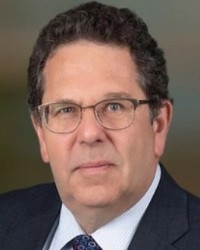

Rothwell, Figg, Ernst & Manbeck PC brings to every patent litigation a team of seasoned, strategic and highly successful litigators who are skilled in the law, have deep technical expertise and consistently prevail when facing off against some of the biggest firms in the country. The firm devotes over half of its work to intricate, multiparty patent litigation involving complex scientific and legal issues in district courts and the US Court of Appeals for the Federal Circuit, and before the International Trade Commission and the Patent Trial and Appeal Board (PTAB). Rothwell Figg sees patent litigation not just as a legal challenge, but also as business and strategic challenges. Through an approach that addresses all three angles, it provides clients with representation that minimises risk, maximises opportunities and firmly represents their interests. In addition to patent litigation, Rothwell Figg provides a comprehensive range of IP, litigation and technology services for US and international clients in jurisdictions across the globe.
USPTO Overhauled the Discretionary Denial Process in PTAB Proceedings
In 2025, US patent litigators saw proceedings before the US Patent Trial and Appeal Board (PTAB) turned on their head. Denials of inter partes review (IPR) and post-grant review (PGR) petitions hit a record high compared to the last several years, largely due to massive changes occurring in both leadership and procedures at the US Patent and Trademark Office (USPTO). From 1 October 2024 to 30 September 2025, the denial rate rose from 32% to 50%, and the overall institution rate dropped from 68% to 50% compared to the previous year. Of the 619 petitions denied during that period, nearly half were based on discretionary grounds.
Prior to 2025, when determining whether to deny a petition when a parallel district court litigation was pending, a panel of three PTAB judges would ordinarily evaluate the six factors set forth in Apple Inc. v Fintiv, Inc., IPR2020-00019, Paper 11 (Mar. 20, 2020). The PTAB had also provided petitioners with a way to avoid discretionary denial in Sotera Wireless, Inc. v Masimo Corp., IPR2020-01019, Paper 12 (Dec. 1, 2020), by filing a stipulation in the district court proceeding that states that if the PTAB grants institution then the petitioner agrees not to pursue in district court proceedings any ground raised or that could have been reasonably raised in its IPR/PGR petition. However, new leadership at the USPTO in 2025 set off a chain reaction of changes to USPTO policy and a complete overhaul of the discretionary denial process.
Rescission of USPTO Director Kathi Vidal’s June 2022 memorandum
The initial wave of changes came on 28 February 2025, when the USPTO rescinded former Director Kathi Vidal’s 21 June 2022 memorandum. Former Director Vidal’s memorandum entitled “Interim Procedure for Discretionary Denials in AIA Post-Grant Proceedings with Parallel District Court Litigation”, had provided additional guidance on the Fintiv factors and formally adopted Sotera stipulations as PTAB policy. With the rescission of that memorandum, petitioners were forced to once again navigate the uncertainties underlying the Fintiv factors.
Subsequently, on 24 March 2025, former Chief Administrative Patent Judge Scott R Boalick issued a memorandum titled “Guidance on USPTO’s recissions of ‘Interim Procedure for Discretionary Denials in AIA Post-Grant Proceedings with Parallel District Court Litigation”. The memorandum re-embraced the PTAB’s earlier application of the Fintiv factors and signalled a return to broader PTAB discretion when determining whether to grant institution. The memorandum provided that:
- Sotera stipulations would no longer be dispositive of the discretionary denial question by itself but would instead be “highly relevant” to the analysis;
- the “merits” factor is no longer at the forefront of the discretionary denial analysis, and instead the Fintiv factors are “part of a balanced assessment of all the relevant circumstances in the case”, which includes the merits; and
- the PTAB has the ability to consider the schedules of the district court and International Trade Commission (ITC) when examining the proximity of the trial date to the PTAB’s projected deadline for a final written decision.
New processes for PTAB institution determinations
The second wave of changes began on 26 March 2025, when acting USPTO Director Coke Morgan Stewart issued a memorandum to all PTAB judges on the new interim processes for PTAB workload management. USPTO Director John Squires further modified these new processes in a 17 October 2025 memorandum, entitled “Director Institution of AIA Trial Proceedings”. The USPTO provided further clarification on these new processes in detailed “FAQs for Interim Processes for PTAB Workload Management” (FAQs).
There were four new interim processes. First, the Director, in consultation with at least three PTAB judges, will make the determination whether to institute trials in all IPR and PGR proceedings. The Director will make the determination upon review of discretionary considerations, the merits and non-discretionary considerations. Second, institution decisions will be limited to summary notices rather than formal opinions. Once they determine whether institution is appropriate, the Director issues a summary notice either granting or denying institution. If the Director determines that detailed treatment of the issues raised in the petition is necessary, they may refer the decision on whether to institute review to a PTAB judge. Third, the Director introduced new procedures for separate expedited briefing on requests for discretionary denial. Patent owners now have the ability to file a separate brief outlining the bases for discretionary denial within two months of the notice of filing date accorded to the petition, and the petitioner then has one month from the patent owner’s deadline to file a brief in opposition. Fourth, parties may address any relevant discretionary considerations in their briefing, which, according to the Director, may include:
- “Whether the PTAB or another forum has already adjudicated the validity or patentability of the challenged patent claims”;
- “Whether there have been changes in the law or new judicial precedent issued since issuance of the claims that may affect patentability”;
- “The strength of the unpatentability challenge”;
- “The extent of the petition’s reliance on expert testimony”;
- “Settled expectations of the parties, such as the length of time the claims have been in force”;
- “Compelling economic, public health, or national security interests”; and
- “Any other considerations bearing on the Director’s discretion”.
The USPTO’s FAQs provide further clarification on these considerations. For example, while the PTAB may consider expert testimony, “extensive reliance on expert testimony and/or reasonable disputes between experts on dispositive issues may suggest that the questions are better resolved in an Article III court”. The FAQs also make clear that petitions should not address discretionary issues, so petitioners should no longer utilise space in their petitions to anticipate and address a patent owner’s potential discretionary arguments.
USPTO’s 17 October 2025 proposed rules
In a 17 October 2025 Federal Register notice signed by Director Squires, the USPTO proposed new revisions to the rules of practice for IPR proceedings, with the aim of focusing IPRs “on patent claims that have not previously been challenged in litigation or where prior litigation was resolved at any early stage”. Under the proposed rule revisions, the PTAB will not institute an IPR unless the petitioner files a stipulation stating that if its IPR petition is granted, the petitioner will not challenge the patent’s invalidity under 35 U.S.C. §§ 102 or 103 in any other proceeding. In other words, the proposed rules would require a petitioner to disclaim reliance in a district court litigation not only on those defences that were raised or could have been raised in an IPR, but any and all prior art-based invalidity defences (such as prior public uses). The proposed revisions will also prohibit the PTAB from instituting review of patents that have already had their validity adjudicated or when another forum would reach a validity decision on the patent before the PTAB. The comment period on the proposed rules closed on 17 November 2025.
Key takeaways of USPTO’s recent changes
It remains to be seen whether the PTAB’s new institution procedures are temporary or are the start of a new reality, and whether the USPTO’s proposed new rules will become final. However, two things are relatively clear. First, the US Court of Appeals for the Federal Circuit (the “Federal Circuit”) likely will not interfere with the USPTO’s discretionary denial procedures or the Director’s authority on these issues. Earlier this year, the Federal Circuit issued a precedential decision in In re Motorola Sols., Inc., rejecting petitions for mandamus relief claiming that the USPTO Director violated the parties’ due process rights by modifying institution practices at the PTAB. The Federal Circuit found “no due process violation by the Acting Director applying the recission of the Vidal Memorandum to the petitions” (see In re Motorola Sols., Inc., 159 F.4th 30, 37 (Fed. Cir. Nov. 6, 2025)).
Second, these changes have already led to a sharp increase in discretionary denials by the Director. From 1 January 2025 to 23 March 2025, before the new interim procedures, the PTAB issued 212 institution decisions. Of those decisions, the PTAB granted institution in 145 cases and denied institution in 67 cases. Of those 67 cases, only about ten were denied based on discretionary grounds. By contrast, from 24 March 2025 to 17 September 2025, the PTAB made decisions on about 688 IPR petitions, granting institution in around 216 cases and denying institution in about 448 cases.
Of the 448 cases where the PTAB denied institution, about 229 denials were based on discretionary grounds. Additionally, from when Director Squires took over all institution decisions on 17 October 2025, through the end of 2025, he granted institution in only 13 cases and denied institution on discretionary grounds in over 100 cases.
The new changes to PTAB procedure and the reimplementation of the Fintiv factors have created a heightened hurdle for petitioners and new ways for patent owners to obtain discretionary denial, even where the merits of the petition are strong. The Director’s changes have made it extremely difficult for a petitioner to get a petition instituted once a parallel district court or ITC proceeding has begun. To have the best chance at avoiding a discretionary denial based on trial timing, petitioners should file petitions as soon as possible. If petitioners anticipate a district court litigation down the line, they should consider filing their petitions before the patent owner files suit in the district court. Petitioners should expect that any petition will be met with a request for discretionary denial from the patent owner and should be prepared to promptly submit a brief addressing those considerations. Petitioners should also carefully consider their strategies regarding Sotera stipulations. While the USPTO’s proposed rules would make such stipulations mandatory, in the interim, petitioners should carefully consider the pros and cons of such stipulations.
Latest Developments in Patent Eligibility of AI-Related Inventions
The US patent world saw a shifting landscape this year for patent eligibility of artificial intelligence (AI) inventions, with new changes to USPTO guidance and a case of first impression at the Federal Circuit.
To determine patent eligibility under 35 U.S.C. § 101, the USPTO and courts have typically applied the two-step framework in Alice Corp. Pty. Ltd. v CLS Bank Int’l, 573 U.S. 208 (2014). Under Alice step one, the analysis focuses on whether the claims are directed to one of the patent-ineligible concepts. In the software context, the analysis looks at “whether the claims focus on ‘the specific asserted improvement in computer capabilities... or, instead, on a process that qualifies as an abstract idea for which computers are invoked merely as a tool’” (Koninklijke KPN N.V. v Gemalto M2M GmbH, 942 F.3d 1143, 1149 (Fed. Cir. 2019) (quoting Enfish, LLC v Microsoft Corp., 822 F.3d 1327, 1335–36 (Fed. Cir. 2016))). Under Alice step two, the analysis addresses whether the inventive concept or additional elements of the claim transform the claim into something “significantly more” than a claim on the abstract idea itself (see 573 U.S. at 217–218).
USPTO’s new eligibility approach to AI-related patent claims
Largely motivated by political pressures and a January 2025 executive order mandating agencies to revise policies to “enhance America’s global AI dominance”, the USPTO underwent a dramatic shift in its approach to patent eligibility of AI-related applications. Since taking over, USPTO Director Squires has issued new guidance and decisions aimed at “making sure the door to the patent office is wide open to transformative technologies”.
For example, on 26 September 2025, the Director issued a precedential Appeals Review Panel (ARP) decision in Ex Parte DeJjardins, Appeal No 2024-000567 (Decision on Request for Rehearing, Sept. 26, 2025), vacating the PTAB’s sua sponte eligibility rejection of claims directed to training a machine learning model on multiple tasks. The Director determined that the claims satisfied Alice step two because the claims improve how the machine learning model functions (id at 8–9). In the decision, the Director warned against broad patent eligibility rejections because “[c]ategorically excluding AI innovations from patent protection in the United States jeopardizes America’s leadership in [] critical emerging technolog[ies]” (id at 9).
In line with that decision, on 28 November 2025, the Director published guidance titled “Revised Inventorship Guidance for AI-Assisted Inventions” that rescinded the USPTO’s 13 February 2024 guidance titled “Inventorship Guidance for AI-Assisted Inventions” and provided that no separate eligibility standard applies to applications for AI-related inventions. The guidance agreed with Federal Circuit precedent that AI cannot be named as an inventor on a patent application but noted that AI can be used as a tool for inventors.
The Director subsequently published two memoranda on 4 December 2025, reminding applicants that they can file subject matter eligibility declarations and that examiners need to consider them as record evidence. As reflected in the memoranda, applicants may voluntarily submit a separate subject matter eligibility declaration under Rule 132 to attempt to overcome Section 101 rejections. The Director emphasised that such declarations “may be helpful in demonstrating patent eligibility that may not be readily apparent”, “can be used to clarify the record” and can “lead to stronger issued patents”.
The Director’s guidance makes clear that the USPTO intends to take an expansive view of patent eligibility in AI cases going forward, meaning that it is likely that more AI-related inventions will be granted patents. Of course, this has nothing to do with whether an issued patent will be upheld when challenged in a district court litigation. This may be the first time that patent applicants and their lawyers are seeing political considerations “put their thumb on the scale” during the patent prosecution process.
The Federal Circuit’s decision in Recentive Analytics, Inc. v Fox Corp.
The question of patent eligibility reverberated through the courts as well. The Federal Circuit addressed the issue of eligibility of patents directed to the use of machine learning in Recentive Analytics, Inc. v Fox Corp., 134 F.4th 1205 (Fed. Cir. Apr. 18, 2025).
This issue arose from a district court proceeding where the court had granted Fox’s motion to dismiss, concluding that the two sets of patents-at-issue were ineligible under the Alice inquiry. One set of patents-at-issue (US Patent Nos 11,386,367 and 11,537,960) were directed towards using a machine learning model to solve problems in the entertainment industry with respect to optimising schedules for television broadcasts and live events. The second set of patents (US Patent Nos 10,911,811 and 10,958,957) were directed to the use of machine learning models to automatically generate a network map for broadcasters that outlines which content will be displayed on which channel at a certain time.
On appeal, the case presented a novel question for the Federal Circuit: “whether claims that do no more than apply established methods of machine learning to a new data environment are patent eligible” (id at 1212). The Federal Circuit determined that they are not.
Under Alice step one, the Federal Circuit held that the district court had correctly concluded that both sets of patents are directed to abstract ideas. The Federal Circuit noted that Recentive conceded that the claims are not directed to machine learning itself and do not claim a method for improving the algorithm or machine learning model (id 1212–13). The Federal Circuit found that neither the specification nor the claims delineate how the machine learning technology achieves an improvement and the fact that the model must be “iteratively trained” does not represent a technological improvement (id). According to the Federal Circuit, merely because the claims apply machine learning to a new field of use or perform a human task with greater speed and efficiency does not make them patent eligible (id at 1213–14).
Under Alice step two, the Federal Circuit concluded that there was nothing in the claims that would transform the patents into “something significantly more” than the abstract idea of applying machine learning to generate event schedules and network maps (id at 1215). Recentive’s inventive concept in the patents of “using machine learning to dynamically generate optimized maps and schedules based on real-time data and update them based on changing conditions” amounted to nothing more than claiming the abstract idea itself (id).
While it recognised that “[m]achine learning is a burgeoning and increasingly important field”, the Federal Circuit made clear that “patents that do no more than claim the application of generic machine learning to new data environments, without disclosing improvements to the machine learning models to be applied, are patent ineligible” (id at 1215–16).
Key takeaways
Uncertainty remains as to whether the Federal Circuit and USPTO are on the same page concerning the patent eligibility of AI-related inventions. The Federal Circuit appears to adopt a narrower view on patent eligibility, whereas the USPTO Director seeks to have examiners grant more and more patents on AI-related inventions. However, both the USPTO and Federal Circuit appear to agree that to be patent eligible, claims directed to AI-based models need to recite how the model’s algorithm is a technological improvement. This means that patent applicants should draft their claims to focus on the algorithm itself rather than the result achieved by using AI. Patent applicants should also draft claims to include specificity about the improvements made to the machine learning model and should keep in mind that merely using a machine learning model in a new environment will likely not be enough to make the invention patent eligible
Rothwell, Figg, Ernst & Manbeck PC
901 New York Avenue NW
Suite 900 East
Washington, DC 20001
USA
+1 202 783 6040
+1 202 783 6031
slieberman@rfem.com www.rothwellfigg.com
Law and Practice
Authors
Rothwell, Figg, Ernst & Manbeck PC brings to every patent litigation a team of seasoned, strategic and highly successful litigators who are skilled in the law, have deep technical expertise and consistently prevail when facing off against some of the biggest firms in the country. The firm devotes over half of its work to intricate, multiparty patent litigation involving complex scientific and legal issues in district courts and the US Court of Appeals for the Federal Circuit, and before the International Trade Commission and the Patent Trial and Appeal Board (PTAB). Rothwell Figg sees patent litigation not just as a legal challenge, but also as business and strategic challenges. Through an approach that addresses all three angles, it provides clients with representation that minimises risk, maximises opportunities and firmly represents their interests. In addition to patent litigation, Rothwell Figg provides a comprehensive range of IP, litigation and technology services for US and international clients in jurisdictions across the globe.
Trends and Developments
Authors
Rothwell, Figg, Ernst & Manbeck PC brings to every patent litigation a team of seasoned, strategic and highly successful litigators who are skilled in the law, have deep technical expertise and consistently prevail when facing off against some of the biggest firms in the country. The firm devotes over half of its work to intricate, multiparty patent litigation involving complex scientific and legal issues in district courts and the US Court of Appeals for the Federal Circuit, and before the International Trade Commission and the Patent Trial and Appeal Board (PTAB). Rothwell Figg sees patent litigation not just as a legal challenge, but also as business and strategic challenges. Through an approach that addresses all three angles, it provides clients with representation that minimises risk, maximises opportunities and firmly represents their interests. In addition to patent litigation, Rothwell Figg provides a comprehensive range of IP, litigation and technology services for US and international clients in jurisdictions across the globe.
