Private Wealth 2026
Asia Pacific-Wide
Trends and Developments
Authors
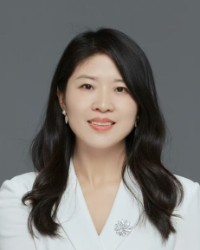
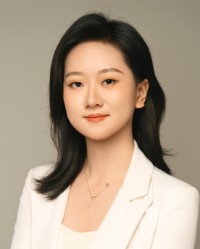

Xuxiaoping Law Firm was established in Xi’an City, Shaanxi Province in 1995. As a local partnership law firm adopting specialised division of labour, it has set up multiple practice departments including marriage and family affairs and wealth succession, corporate finance, and criminal defence. Its marriage and family affairs team consists of numerous seasoned family law practitioners with years of practical experience. Having focused on regional family legal services for over a decade, the team handles the full spectrum of matters, including marriage and family dispute resolution, family wealth succession planning and foreign-related family legal services. In recent years, it has represented a wide range of foreign-related family cases involving Canada, France, Singapore, Vietnam and other jurisdictions, and is capable of delivering full-process cross-border family legal support to clients.
Introduction
The Asia-Pacific region stands at the forefront of profound shifts in demographic and wealth structures. As the world’s most dynamic region for wealth growth, it is home to two thirds of the global population and has accumulated unprecedented private wealth over the past half-century. According to UBS Global Wealth Report 2026, by the end of 2025, the Asia-Pacific region accounted for roughly one third of total global wealth. Aggregate personal wealth expanded by nearly 6%, with more than 100,000 new US-dollar millionaires. Yet, as wealth accumulation enters a critical phase of intergenerational transfer, the region also faces a structural challenge: population ageing advancing far more rapidly than in Europe and the United States. Data from the United Nations Economic and Social Commission for Asia and the Pacific (ESCAP) indicates that the region is already home to over 630 million people aged 60 and above, representing more than 60% of the world’s elderly population. This figure is projected to rise to 1.3 billion by 2050, meaning one in every four people will be aged 60 or older. The convergence of massive intergenerational wealth transfer and an unprecedented wave of population ageing is fundamentally reshaping the underlying logic of legal services for private wealth.
For lawyers and wealth management institutions operating across jurisdictions in the Asia-Pacific region, understanding this macro trend and keeping abreast of cutting-edge institutional innovations in various jurisdictions has become a core competency to identify market opportunities and serve cross-border high net worth (HNW) clients. Analysis will be conducted from three dimensions below, and practical cases under Chinese law will be incorporated to deliver valuable references for business deployment within the region.
Surging Demand for Cross-Border Wealth Management: Complex Legal Challenges Amid Transnational Family Structures
The wealth landscape of the Asia-Pacific region forms an intricate network woven by cross-border population mobility, multi-jurisdictional asset allocation and diversified identity planning. As international financial hubs, Hong Kong and Singapore attract affluent capital from Mainland China, South-East Asia and across the globe. Boasting high-quality education and living environments, Australia and New Zealand draw numerous Asia-Pacific HNW families for children’s education and retirement arrangements. Such transnational family structures mean wealth succession is no longer a domestic matter within a single jurisdiction. Instead, it has evolved into a multifaceted legal issue involving conflicts of succession laws across multiple countries, disparities in cross-border tax regimes, foreign exchange controls, and the recognition of cross-border guardianship.
Taking China as an example, this trend is particularly prominent. Wealth creators who accumulated fortunes during the reform and opening-up era are collectively entering retirement and wealth succession phases, while their children often reside overseas, pursue studies abroad or hold foreign citizenship. Within such family structures, clients’ core concerns have undergone a fundamental shift. They no longer focus merely on “who the wealth will be distributed to”, but raise more profound questions: “If I lose legal capacity in China, can my children living overseas assume guardianship in a timely manner?” and “How can my assets be disbursed lawfully to care institutions or beneficiaries?”
The complexity of these questions lies in the fundamental divergences across jurisdictions concerning the determination of legal capacity, commencement of guardianship proceedings, validity of trusts, and recognition of tax residency status. For instance, how can a voluntary guardianship agreement concluded under China’s Civil Code be recognised and enforced in common law jurisdictions? Will the asset segregation feature of family trusts established in Singapore or Hong Kong be upheld by courts in Mainland China? Such issues cannot be resolved by a single legal instrument; instead, multi-jurisdictional collaborative thinking must be embedded at the stage of structure design.
For lawyers and wealth management institutions aiming to expand business across the Asia-Pacific region, capabilities in two key areas must be strengthened. First, they need to build foundational knowledge of succession law, trust law and guardianship regimes in major jurisdictions, including Mainland China, Hong Kong, Singapore and Australia, so as to identify potential legal conflicts within cross-border structures. Second, they should establish efficient collaborative networks with overseas legal practitioners. When designing structures, provisions enabling cross-border enforcement must be embedded in advance. Examples include clarifying remote authorisation mechanisms for overseas guardians in voluntary guardianship agreements, stipulating operational procedures for multi-currency disbursements and cross-border remittances in trust deeds, and setting separate governing law clauses for overseas real estate assets within wills.
Evolving Client Needs: From Standalone Instruments to Full Life Cycle Solutions
Risks facing Asia-Pacific HNW families can no longer be addressed by traditional standalone instruments such as wills or insurance policies. A typical case involves a settlor aged over 70 with one son and one daughter. The son lacks civil capacity due to congenital illness, while the daughter resides overseas and has a minor daughter who is under the de facto care of the settlor. Within this family, the settlor faces four overlapping risks concerning the elderly, illness, minor and person with disabilities:
- decisions relating to her own retirement and medical treatment;
- asset management upon loss of capacity;
- lifelong care for the incapacitated son; and
- the upbringing and education of the minor grand-daughter.
All these arrangements must continue to operate in scenarios where the settlor may subsequently lose capacity to make decisions.
Structures of such “vulnerable composite families” are widely prevalent across the Asia-Pacific region. The “8050 Problem” (where octogenarian parents care for unemployed 50-year-old children) in Japan, the sharp surge in elderly single households in South Korea, and more than ten million “elderly supporting disabled dependants” households in China all illustrate that demographic shifts have rendered this challenge a shared regional issue. Clients no longer require disjointed individual instruments, but an integrated solution spanning five dimensions:
- people;
- assets;
- medical care;
- elderly support; and
- education.
In respect of people, clear guardianship arrangements and mechanisms for personal care decision-making are essential; in respect of assets, asset segregation, preservation and growth, as well as targeted disbursements need to be realised; in respect of medical care, safeguards must be put in place to ensure medical treatment decisions align with the settlor’s prior wishes and that funding is readily available; in respect of elderly support, a sustainable and stable system for providing elderly care services should be established; in respect of education, provisions must guarantee that educational expenses for minors or dependants remain unaffected if the settlor loses capacity.
This evolution in client demands imposes higher requirements on the delivery of legal services. The siloed model under which clients instruct separate lawyers to draft wills, trust deeds and guardianship agreements can no longer satisfy their needs. These standalone instruments lack internal consistency and mechanisms for resolving conflicts, and will face severe interoperability hurdles when implemented in practice.
Key Practical Considerations When Constructing Integrated Cross-Border Wealth Management Solutions
Co-ordinated guardianship-disbursement mechanism
Voluntary guardianship agreements and trust deeds shall be drafted concurrently to establish a co-ordinated “guardianship-disbursement” mechanism. It ensures that after the settlor loses legal capacity, arrangements for personal care and asset disbursement instructions are implemented strictly in accordance with the settlor’s prior wishes. The core risk is that if the two instruments are prepared separately, conflicts may arise between the exercise of powers by the guardian and the disbursement instructions under the trust (for instance, where the guardian objects to a proposed trust disbursement), which could directly disrupt care arrangements or block disbursements. To address this risk, reciprocal cross-references and uniform dispute resolution clauses should be included in both documents, specifying the adjudication mechanism and order of priority in the event of discrepancies between the guardian’s views and the disbursement criteria set out in the trust deed.
Appointment, replacement, scope of authority and supervision of trust manager
The next consideration is identifying candidates and scope of authority for the “voluntary manager of trust assets” and establishing a triangular check-and-balance mechanism covering “implementation-supervision-reporting”. It is advisable to specify in detail in the trust deed the appointment procedure, replacement conditions, scope of authority and supervision regime applicable to the manager. Even where the voluntary manager and the voluntary guardian are the same person, an independent third-party supervisor (who may be a lawyer, a notarial institution or a professional family office) must be appointed to conduct compliance reviews on the manager’s disbursement instructions and regularly report the utilisation of funds to beneficiaries. The introduction of an independent supervision mechanism can effectively guard against moral hazard and abuse of powers.
Specific and actionable permitted purposes of trust assets
The permitted purposes of trust assets shall be specific and actionable. The authorised uses of trust funds shall be explicitly enumerated in the trust deed (such as elderly care service fees, medical expenses, emergency treatment costs and funeral expenses), with pre-established review procedures, documentary requirements and payment timeframes for each category of disbursement.
Institutional Innovations in China: Replicable Legal Structure Models for the Asia-Pacific Region
Driven by the aforesaid trends, China has achieved groundbreaking progress in legislation and judicial practice concerning guardianship regimes, trust frameworks and wealth succession in recent years. These institutional innovations cater not only to the enormous market demand within Mainland China. The underlying legal logic – separating personal care authority from asset management powers, fulfilling succession intentions via trust mechanisms, and establishing fallback safeguards through governmental and social resources – offers a valuable institutional reference for Asia-Pacific jurisdictions grappling with accelerated ageing, shrinking household sizes and increasingly complex cross-border succession matters.
Implementation and expansion of the voluntary guardianship regime
Article 33 of the Civil Code of the People’s Republic of China first established the voluntary guardianship regime. It permits an adult with full civil capacity to appoint a guardian in writing, who shall perform guardianship duties upon the adult’s total or partial loss of civil capacity. The introduction of this regime provides a legal basis for HNW individuals to make arrangements for personal care decision-making in the event of future incapacity. In cross-border scenarios, a key focus lies in how a voluntary guardianship agreement can secure recognition in overseas jurisdictions.
Innovative practice of special needs trusts
The person-asset separation structure represented by China’s model of “trust administering assets, guardianship handling personal matters and supervisors exercising oversight” stands among the most original institutional explorations emerging across the Asia-Pacific region in recent years. Marked by the country’s first full-circle protection arrangement combining voluntary guardianship and a special needs trust, established by an 81-year-old resident in Shanghai, China has developed a sophisticated five-in-one framework encompassing asset segregation, implementation of the settlor’s intentions, fiduciary services, dual oversight and age-friendly services.
Holistic solutions for typical family structures
Take a representative family as an example: a 75-year-old married individual has one 40-year-old son lacking civil capacity and an adopted 16-year-old minor grand-daughter. The settlor intends to contribute cash, insurance policies and other assets to establish a trust to advance wealth succession planning amid intertwined circumstances involving the elderly, illness, minor and person with disabilities. A comprehensive solution can be structured within China’s existing legal framework.
- Guardianship arrangements – Establishing a three-tier priority regime. The first tier shall comprise natural persons trusted by the settlor (such as relatives or friends), who shall be responsible for decisions on day-to-day personal care and medical treatment options. The second tier consists of professional social organisations (including disability care centres or elderly care service providers), who shall step in if the natural-person guardian is unable to perform duties. The third tier lies with residents’ committees or civil affairs authorities, acting as fallback guardians.
- Asset management structure – Establishing a special needs family trust into which cash, insurance claim entitlements and other realisable assets are contributed. The settlor shall specify in the trust deed that, while possessing capacity, the settlor shall act as the instruction-giver to issue disbursement directions. Upon the settlor’s loss of capacity, the guardian in priority sequence shall succeed as the instruction-giver. The trustee shall review disbursement applications against the Statement of Wishes and, once satisfied that the proposed use complies with the settlor’s pre-set criteria, make direct payments to service providers (such as elderly care facilities, hospitals and educational institutions). This delivers secure asset segregation under a model whereby “persons administer disbursements without funds flowing into personal bank accounts”.
- Minor protection – A dedicated educational sub-account shall be established under the trust deed. It stipulates that tuition fees, living expenses, extracurricular training fees and other costs for the grand-daughter shall be disbursed in priority from the trust assets, with payments made to the educational institutions or an account designated by the guardian.
- Oversight and dispute resolution – Engaging a notarial institution or law firm to act as an independent supervisor, who shall conduct regular reviews of trust accounts and the guardian’s performance of duties.
The core of this solution lies in three dimensions: separating ownership, management powers and beneficial interests over assets via trust mechanisms; enabling orderly operation of personal care decision-making through the voluntary guardianship regime; and establishing ultimate fallback safeguards supported by governmental and social resources. The closed-loop framework covering “people, assets, medical care, elderly support and education” effectively addresses the contemporary challenge concerning who shall take charge of personal care, who shall administer assets, and who shall provide fallback protection.
Conclusion: from tool providers to architects of certainty
Against the profound transformations unfolding across the Asia-Pacific private wealth market, clients no longer merely purchase discrete legal documents. What they seek is a holistic, lifelong solution capable of transcending time and jurisdictions and withstanding uncertainties. Such arrangements concern not only the secure and orderly transfer of wealth, but also personal dignity upon incapacity, lifelong support for children with special needs, and protection for minor descendants – fundamental concerns that cannot be measured by monetary value alone.
Looking ahead, the professional value of private wealth lawyers is undergoing a comprehensive upgrade from “document drafters” to “family governance architects”. This demands not only a sophisticated knowledge base spanning trust law, succession law, guardianship regimes, taxation law and cross-border private international law, but also empathy to comprehend clients’ genuine family needs and underlying anxieties. Lawyers shall devise innovative pathways within the existing legal frameworks and, with systematic thinking, integrate discrete legal tools into enforceable, cross-cycle holistic solutions.
The large-scale institutional experiment underway in China – deeply integrating trust mechanisms originating from the West with indigenous guardianship concepts – offers an observational sample and practical reference for addressing complex social demands of a society with over 300 million elderly people and millions of families with members living with disabilities. Where stable certainty can be structured for vulnerable families facing intertwined challenges of ageing, illness, minority dependants, disability and wealth succession, the frameworks designed will undoubtedly be capable of accommodating the succession needs of any complex cross-border HNW household. This may well represent the ultimate future direction for private wealth legal services across the Asia-Pacific region: addressing the contemporary challenge through institutional innovation, safeguarding human dignity with professional expertise, and settling clients’ deepest anxieties through compassion and forward planning.
Xuxiaoping Law Firm
7th Floor, Block B, Kaiai Mansion
No 1 Xihua Gate
Lianhu District
Xi’an City
Shaanxi Province
China
+86 298 720 1100
yintongxin@xuxiaoping.com.cn www.xuxiaoping.com.cn/
Trends and Developments
Authors
Xuxiaoping Law Firm was established in Xi’an City, Shaanxi Province in 1995. As a local partnership law firm adopting specialised division of labour, it has set up multiple practice departments including marriage and family affairs and wealth succession, corporate finance, and criminal defence. Its marriage and family affairs team consists of numerous seasoned family law practitioners with years of practical experience. Having focused on regional family legal services for over a decade, the team handles the full spectrum of matters, including marriage and family dispute resolution, family wealth succession planning and foreign-related family legal services. In recent years, it has represented a wide range of foreign-related family cases involving Canada, France, Singapore, Vietnam and other jurisdictions, and is capable of delivering full-process cross-border family legal support to clients.
