Private Wealth 2026
USA – California
Authors
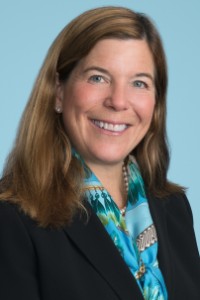


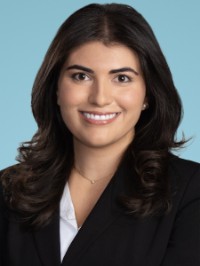
Pillsbury Winthrop Shaw Pittman LLP is an international law firm with a particular focus on the technology & life sciences, energy, financial, and real estate & construction sectors. Recognised as one of the most innovative law firms by the Financial Times and as one of the top firms for client service by BTI Consulting, Pillsbury and its lawyers are highly regarded for their forward-thinking approach, their enthusiasm for collaborating across disciplines, and their authoritative commercial awareness.
1. Tax
1.1 Tax Regimes
Individual Taxation
The United States imposes an income tax on citizens and residents and certain income of non-resident “aliens”. California imposes an annual income tax based on California residency and based on certain other contacts with the state. In 2026, California income tax rates ranged from 1% to 12.3%. An individual is a California resident if he or she is present in California for other than a temporary or transitory purpose, or is domiciled in California, but is outside of California for a temporary or transitory purpose. Residents are taxed on all income, including income which has its source outside of California. Non-residents are taxed only on income which has its source in California, while part-year residents are taxed on all worldwide income received during the portion of the year they were California residents and on California-source income during the portion of the year they were non-residents. California’s residency scheme poses special challenges related to “declared” and “factual” intent to establish residence when clients desire to sever ties with California. The California Franchise Tax Board conducts residency audits regularly.
The US annual income tax rates range from 10% to 37%. In addition, there are add-on rates in certain investments. Long-term capital gains and qualified dividends may be subject to an additional net investment income tax of 3.8% when net investment income or the excess of the modified adjusted gross income exceeds USD250,000 (married filing jointly), USD200,000 (single), or USD125,000 (married filing separately). Net investment income includes gross income from interest, dividends, non-qualified annuities, royalties, and rents that are not derived from the ordinary course of a trade or business, plus net gain from the disposition of property not used in a trade or business. Gross income and net gain (or loss) from a trade or business may be included in net investment income if it is a passive activity or its source is from trading financial instruments or commodities. The net investment income tax is also known as the Medicare contribution tax.
California imposes a tax on all income to a decedent’s estate if the decedent was a California resident at the time of death. The rule applies regardless of the residence status of the fiduciary or beneficiary. (California Revenue and Taxation Code, Section 17742.)
Alternative Minimum Tax
California residents are also subject to the 7% California alternative minimum tax on the calculated alternative minimum tax income which exceeds an exempt amount, before credit reductions. The California alternative minimum tax income is calculated starting with the taxpayer’s federal taxable income, then adds back certain deductions which are typically itemised, and adjustments. The existence of long-term capital gains and qualified dividends increases the likelihood that the California alternative minimum tax will apply. There are no exemptions and no phase-outs. (California Revenue and Taxation Code, Section 17062(b)(3)(A)(iv). See 1.2 Exemptions.)
US taxpayers are subject to federal alternative minimum tax of 26% or 28%. The US alternative minimum tax income is calculated starting with adjusted gross income, then adds back tax preference items and deductions, then is reduced by the alternative minimum tax exemption up to a phase-out amount. The federal alternative minimum tax income includes income from incentive stock options that were exercised and state and local tax refunds. (26 USC, Section 55(b)(1)(A).)
Mental Health Services Tax
California imposes a 1% Mental Health Service tax on taxable income more than USD1 million. There is no equivalent federal tax. The California Mental Health Services Act of 2020, in which Section 17043 is added to the California Revenue and Taxation Code. (See 1.2 Exemptions.)
Estate Taxation
The US does not have an inheritance tax, but imposes an estate tax on the assets of a decedent’s estate. The US federal estate tax is calculated based on the fair market value of the assets owned by the decedent at death, net of any debts and applicable deductions and exclusions. It is payable by the decedent’s estate. (See the discussion on exclusions in 1.2 Exemptions.)
California does not have an inheritance tax or an estate tax.
Trust Taxation
California requires that a trust pay California income tax on all income of the trust if the fiduciary or beneficiary, except for a contingent beneficiary, is a California resident. The rule applies regardless of the residence status of the settlor. The residence of a corporate fiduciary is where the corporation transacts the major portion of its administration of the trust. (California Revenue and Taxation Code, Section 17742.) California trust tax rates are the same as individual taxation rates. Distributions from a trust are generally considered taxable income to the beneficiary and would be taxed in the state where the beneficiary resides. However, capital gains are not included in the distributable net income (DNI) of the trust, and therefore would not be “carried out” to a trust beneficiary with a distribution. Accordingly, capital gains would be taxed at the trust level, and subject to California income tax if for example, the trustee resides in California. Note, however, trust capital gains may be added to DNI in the trustee’s discretion, if done consistently, which may alleviate this issue. On the other hand, distributing all the capital gains may not be in the best long-term interests of the trust beneficiaries.
Foundation Taxation
California state law governs the establishment of nonprofit corporations either as a non-profit public-benefit corporation, non-profit religious corporation, or a charitable trust. There are two categories of non-profit corporations: private foundations and organisations which have a charitable purpose. Once established, the entity applies for tax exemption with the Internal Revenue Service and the California Franchise Tax Board for a determination that the entity is tax-exempt. Federal tax-exempt status under the Internal Revenue Code (IRC), Section 501(c)(3) permits a charitable organisation to pay no tax on the income from its investments, subject to certain parameters (such as prohibitions on self-dealing and unrelated business taxable income) and permits donors to claim a charitable deduction for their contributions. The charitable contribution deduction for donors to a private foundation is limited to a lower percentage of adjusted gross income than for a public charity and may restrict the value of the asset being contributed which can qualify for the deduction.
Gift Tax
California does not impose a gift tax. However, all US citizens and residents are subject to US federal gift and estate taxation. However, the United States federal annual gift tax exclusion allows the taxpayer to transfer tax-free gifts to any number of individuals up to USD19,000 in 2026 per individual recipient. Married spouses may “split” a gift and thereby utilise the annual exclusion or exemption(s) of the non-donor spouse. If the donor gives more than the exclusion amount, the excess is charged against the lifetime gift and estate tax exemption of USD15 million in 2026. The tax rate on gifts exceeding the lifetime gift and estate tax exemption is between 18% and 40%.
Generation-Skipping Transfer Tax
The federal transfer tax system imposes a wealth transfer tax at each generation. This is known as the gift tax for transfers during life, the estate tax for transfers at death and the generation-skipping transfer tax (GST) for transfers of property at death or during life to persons two or more generations below the transferor. It applies to trusts when trust distributions are made to the grantor’s grandchildren (or subsequent generation) or when the beneficial interest passes to the grantor’s grandchildren (or subsequent generation). California currently does not impose a generation-skipping transfer tax on any generation-skipping transfers made after 31 December 2004.
Capital Gains Taxation
California imposes a tax on net capital gains, regardless of the holding period, at the same rates as the taxpayer’s ordinary income. The US taxes short-term capital gains as ordinary income, and long-term capital gains are subject to tax at between 0% and 20%.
1.2 Exemptions
Federal Estate Tax Exclusion and Spousal Portability
The US federal estate exemption limit is USD15 million in 2026. The federal estate tax is imposed only on amounts which exceed the exemption and rates range from 18% – 40% plus a base tax between USD0 and USD345,800. The unused portion of a deceased spouse’s or registered domestic partner’s federal exemption is portable to the survivor, the deceased spouse unused exemption (DSUE) amount. The survivor elects portability by reporting the value of the deceased spouse’s or partner’s estate on the date of death, less taxable gifts, on IRS Form 706.
Alternative Minimum Tax Exemption
The federal AMT exemption amount for tax year 2026 starts at USD90,100 for unmarried individuals, USD70,100 for married individuals filing separately, and USD140,200 for married couples filing jointly) and begins to phase out at USD500,000 for unmarried individuals and married individuals filing separately, and USD1,000,000 for married couples filing jointly. The exemption is fully phased out at USD680,200 for unmarried individuals, USD640,200 for married individuals filing separately, and USD1,280,400 for married couples filing jointly and surviving spouses. The federal AMT exemption amount for tax year 2026 starts at USD31,400 for estates and trusts and begins to phase out at USD104,800. The exemption is fully phased out for estates and trusts at USD167,600.
California imposes a 7% alternative minimum tax on individuals, subject to ongoing change.
Annual Gift and Estate Tax Exclusion
California does not impose a gift tax. However, there is a substantial federal gift tax. The United States federal annual gift tax exclusion allows the taxpayer to transfer tax-free gifts to any number of individuals up to USD19,000 in 2026 as per individual recipient. If the recipient receives more than the exclusion, the excess is charged against the lifetime gift and estate tax exemption of USD15 million in 2026. Gifts are reported on IRS Form 709, United States Gift (and Generation-Skipping Transfer) Tax Return. The tax rate on gifts exceeding the lifetime gift and estate tax exemption is between 18% and 40%. The lifetime gift exemption and the estate tax have a single combined exclusion. Accordingly, lifetime gifts will reduce the exemption remaining to be applied against estate taxes at death.
1.3 Income Tax Planning
California Capital Gain or Loss Adjustment
California capital gains are taxed at ordinary income tax rates. Appreciated assets receive a step up in basis to their fair market value at the time of death. In California, a special planning opportunity exists that property held as community property will receive a full step up on the entire property upon the death of the first spouse to die, even though that spouse is only deemed to own one-half of the community property assets. (IRC Section 1014(b)(6).)
1.4 Pre-Immigration and Exit Planning
Pre-Immigration Planning
Pre-immigration planning is available and should be completed before the individual becomes a US income tax resident, transfer-tax domiciliary, or California resident. US income tax residence generally arises under the green card test or substantial presence test, while California taxes residents on all income regardless of source.
Common planning includes accelerating income, gains, trust distributions, foreign pension distributions, equity vesting, or deferred compensation before US or California residency begins. Foreign retirement plans and deferred compensation arrangements should be reviewed before the individual performs US services, particularly for potential issues under IRC Sections 409A and 457A.
Pre-immigration gift planning may also be useful. Community property and California estate tax rules may apply to non-citizens. For example, if at least one spouse is a California citizen, community property rules (ie, a 50% division of property) apply to both spouses. While California expressly prohibits state or local taxes on gifts (Rev. and Tax. Code section 13301), the US does impose federal taxes on gifts of certain US-situs real and tangible personal property, not on most intangible property. For 2026, the federal estate, gift and GST exemption is USD15 million per individual; the annual gift tax exclusion is USD19,000; and the annual exclusion for gifts to a non-citizen spouse is USD194,000.
Exit Planning
Exit planning should address federal expatriation tax, immigration status, transfer-tax domicile, and state residency. US citizens and certain long-term green card holders who expatriate may be subject to IRC sections 877 and 877A. For 2026, covered expatriate status may arise if the average annual net income tax liability threshold exceeds USD211,000, and the mark-to-market exclusion amount is USD910,000.
Planning should also consider the tax consequences to US recipients of gifts or bequests from covered expatriates under IRC section 2801. Final section 2801 regulations became effective in 2025, making this a current consideration for 2026 planning.
Consider creating a formal will or trust for any California property. Under California Probate Code Section 6402, non-citizen estates are subject to California probate rules if the decedent died before making a will. For those who have assets in other countries, it is especially important to have dual-compliant estate plans prepared.
For California exits, clients should establish a new domicile and reduce California contacts before major income events. California residency is determined by facts and circumstances, so formal steps alone are not controlling.
1.5 Taxation of Real Estate Owned by Non-Residents and Non-Citizens
Taxation of Real Estate Owned by Non-Residents
Non-resident aliens and non-citizens are subject to United States and California income tax on income generated by real property located in the US, or California, respectively. The US tax is a flat 30% flat rate, or lower treaty rate of the resident country, if the property is not effectively connected with a US trade or business. Non-resident aliens can elect to treat all income from US real property as effectively connected income with a trade or business, which then allows deductions related to the property to be used to reduce taxable income. At sale, capital gains are taxed in the same manner as if it were sold by a US citizen. Non-residents are also subject to a 15% non-resident withholding tax on the gross sales proceeds unless the non-resident seller is exempt from the withholding, either because it is a low-value sale (under USD300,000) or if withholding is reduced or eliminated under a treaty between the non-resident jurisdiction and the US. To request a reduction or dispensation from withholding on dispositions of US real property use IRS Form 8288-B.
In California, non-resident aliens and non-citizens are taxed on real estate income and may take advantage of deductions, exemptions and other rules to reduce taxable income from real property in the same manner as US citizens.
1.6 Stability of Tax Laws
In 2021, 2022, and 2023, California lawmakers proposed a bill (most recently, California AB 259) that would impose a 1% annual wealth tax on households with a net worth of more than USD50 million and 1.5% on households worth more than USD1 billion. A version of the bill seeking to tax extreme wealth has been introduced multiple times. Some versions include an “exit tax”, seeking to collect the wealth tax even after a taxpayer relocates to a new residence outside California. This has caused some uncertainty, and may be one factor for private wealth clients to establish residency outside California. More recently, a 2026 California ballot initiative, the “2026 Billionaire Tax Act”, has been proposed that would impose a one-time tax of up to 5% on taxpayers and trusts with covered assets valued over USD1 billion. Another factor is the very high state income tax rates in California compared with other states, such as Nevada, Wyoming and Florida, which have a zero income tax rate.
1.7 Transparency and Increased Global Reporting
The United States is not a signatory to the OECD’s CRS.
California-based entities with business units that engage in multinational tax arrangements between any EU country and the US must comply with the EU DAC 6.
FATCA and FinCEN
Under FATCA US/California entities, individuals, institutions, and trusts who hold financial assets outside the US and meet the income tax reporting threshold are required to report the assets on IRS Form 8938. In 2026, the reporting threshold ranges from USD50,000 to USD150,000 for individuals living in the US and USD200,000 to USD600,000 for individuals living outside the US.
In addition, if a US person, resident alien, trust, estate, or domestic entity has a financial interest in or signatory authority over an offshore financial account, the account must be reported on FinCEN Form 114, Report of Foreign Bank and Financial Accounts, or FBAR. The information requested on each form is different, thus due to the different rules and differences in the definition of “financial account”, not every taxpayer will need to file both forms or report the same foreign financial accounts. Reporting is required if the aggregate value of any one or more financial accounts exceeds USD10,000 at any time during the calendar year. Notably, residents of US territories are not included in the definition of “United States” for Form 8938 reporting, while resident aliens of US territories and US territory entities are subject to FBAR reporting.
The United States Corporate Transparency Act
The Corporate Transparency Act (CTA) originally required many corporations, limited liability companies and similar entities created or registered to do business in the United States to report beneficial ownership information to FinCEN, unless an exemption applied. A beneficial owner generally included any individual who, directly or indirectly, exercised substantial control over the entity or owned or controlled at least 25% of its ownership interests.
However, FinCEN issued an interim final rule, published on 26 March 2025, substantially narrowing the CTA reporting regime. Domestic reporting companies, including California corporations and limited liability companies, are exempt from BOI reporting requirements and are not required to file, update or correct BOI reports. The reporting regime now applies principally to foreign entities that are formed under non-US law and registered to do business in a US state or Tribal jurisdiction. Foreign reporting companies are not required to report BOI for beneficial owners who are US persons.
Accordingly, for most California private wealth structures involving domestic family entities, the CTA is currently far less burdensome than originally anticipated. Cross-border structures involving foreign companies registered to do business in the US should still be reviewed for potential CTA reporting obligations.
2. Succession
2.1 Cultural Considerations in Succession Planning
In the US and California, high net worth families often engage in strategies with skilled advisers to seek to reduce the high transfer tax, which can decimate their family’s often hard-earned assets. Many such strategies, when correctly implemented, can be very effective. Additionally, younger generations may become disincentivised to work if they receive too much gratuitous wealth, and trusts are often used to limit unfettered access to inherited wealth, while also protecting assets from potential attacks from third-party creditors or others seeking to obtain the assets. As the cost of living, education, and taxes continues to escalate, many families in the US tend to have fewer children than was historically the case.
2.2 International Planning
Individuals and entities subject to California law routinely have businesses and families in multiple other jurisdictions. Planning for succession and wealth transfer for these family members is done in compliance with the laws of the relevant jurisdictions, and in consultation with local counsel as required.
2.3 Forced Heirship Laws
California does not have a forced heirship regime, however, in some cases, California courts may apply the law of another jurisdiction to an estate administered in California which may include a forced heirship regime. For example, the State of Louisiana has rules to prevent a testator from disinheriting his or her children. Texas, New York, Florida, and California laws force heirship between the decedent and their surviving spouse.
2.4 Marital Property
California Community Property
In California, all property earned by either spouse during the marriage is presumed to be community property, owned 50/50 by each spouse. The presumption is rebuttable. The spouses may agree in writing to transmute separate property to community property or vice-versa. Separate property includes property acquired before the marriage and separate during the marriage, gifts and bequests made to only one spouse, and a portion of personal injury settlements. Separate property that has been comingled with marital assets can become community property.
In California one spouse cannot transfer marital property outside the community without the consent of the other spouse.
California Prenuptial Agreements
California prenuptial and postnuptial agreements are governed by the California Uniform Prenuptial Agreement Act. This prescribes the requirements for how such agreements may be created and addresses what can and cannot be set forth the contract. If the parties have drafted and executed their prenuptial agreement in compliance with the Act, and a California court finds no fraud, duress, non-disclosure of assets, or unconscionable terms, then the prenuptial agreement is enforceable upon marriage. (Cal. Fam. Code Sections 1613 and 1615.) A California matrimonial attorney should be consulted before entering into such an agreement, as certain terms are advisable to include, to ensure the agreement is enforceable and not deemed to be unconscionable.
2.5 Transfer of Property
Reassessment on Transfer Taxes
In California, real property is reassessed at its fair market value when it is sold, transferred by gift, or inherited at death. It may be deemed to be sold and therefore subject to being re-assessed upon transfer of a certain percentage of ownership if held in certain entities and under certain fact patters. Complex rules apply to such transfers and to requirements for filing various informational returns such as the Form BOE100-B with the California Board of Equalization.
Spousal Exclusion
All transfers of real property between spouses, whether by gift, sale, inheritance, or pursuant to divorce, are exempt from reassessment.
Parent–Child and Grandparent–Grandchild Exclusion
California real property owners may avoid the property tax increases for certain transfers to children. However, after Proposition 19 passed in 2021, transfer exclusions between parents and family members became significantly limited. Following implementation of Proposition 19, transfers of a primary residence between parents and children are exempt from reassessment, but only up to the property’s factored base-year value plus USD1,044,586. In the case of transfers by trust qualify for the exclusion when beneficial ownership changes from parent to child.
2.6 Transfer of Assets: Vehicle and Planning Mechanisms
California public policy is designed to prevent trusts from existing indefinitely to encourage money to be used and to circulate in commerce rather than remain in a trust. A California trust is subject to the Rule Against Perpetuities, and therefore exists for the lifespan of the youngest individual alive at the time the trust is established, plus an additional 21 years, which results in a trust duration of approximately 90 to 100 years. (California Probate Code, Section 21205.) At the end of the period, the trust assets must be distributed and the trust ends. State laws differ regarding the permissible duration of an irrevocable trust, for example, Wyoming allows an irrevocable trust to last for 1,000 years (Wyoming Statute, Section 34-1-139(b)), and in Delaware personal property may be held in trust indefinitely (25 Delaware Code, Section 503). California families often opt for Wyoming and Delaware trusts to take advantage of this, combined with zero state income tax rates there.
2.7 Transfer of Assets: Digital Assets
Transfer of Digital Assets
California and most states have adopted the Revised Uniform Fiduciary Access to Digital Assets Act (RUFADAA) (2015), which applies to wills executed and trusts created before, on, or after 1 January 2017. Under the rules, a custodian of the digital asset may disclose information in a decedent’s (a “user’s”) account to the decedent’s fiduciary or settlor, in other words, the personal representative or trustee. The fiduciary has the right of access to any digital asset in which the decedent or settlor had an interest and is an authorised user. A digital asset is defined as an electronic record in which an individual has a right or interest, and generally does not include the underlying asset or liability. The disclosure may include the content or a catalogue of the user’s electronic communications but does not include digital assets deleted by the user. A fiduciary, the custodian, or the ultimate recipient of the digital asset may obtain an order limiting the custodian from disclosing all or part of the decedent’s asset if the user directs it, or if it is provided in a trust to limit disclosure. The fiduciary may request an in-camera review of the digital asset. The fiduciary is subject to the same duties as are imposed on fiduciaries when they manage tangible property: the duty of care, duty of loyalty, and the duty of confidentiality. California does not explicitly address the transfer of cryptocurrency for purposes of succession. For detailed information see California Probate Code, Sections 870–884.
3. Trusts, Foundations and Similar Entities
3.1 Types of Trusts, Foundations or Similar Entities
A wide variety of trusts are recognised and respected in California including revocable trusts, irrevocable trusts, and Foundations. In 2018, California enacted the California Uniform Trust Decanting Act (2018) (California Probate Code, Section 19501), which allows trustees and authorised fiduciaries to modify the terms of certain California trusts without the consent of the beneficiaries (provided the beneficiaries receive notice of the decanting and have an opportunity to object), and of revocable trusts where revocation requires the consent of a trustee or third person with a right contrary to the interest of the settlor. Most California residents whose assets indicate the need for estate planning utilise a revocable trust, to avoid the need for probate which can be costly and burdensome.
3.2 Recognition of Trusts
Trusts often used in California for estate and tax planning purposes include intentionally defective grantor trusts (IDGT), a qualified personal residence trust (QPRT), a grantor retained annuity trust (GRAT) and a spousal lifetime access trust (SLAT).
3.3 Taxation of Trusts, Foundations and Similar Entities Located in Other Jurisdictions
California imposes an income tax on a trust where a trustee or non-contingent beneficiary is a resident of California. (Cal. Code Regs Tit. 18, Section 17744.) Thus, for settlors who do not reside in California, care is often taken to ensure the fiduciary is not a resident of California. Conversely, California resident settlors often establish non-grantor trusts in other states, such as Wyoming or Delaware, to take advantage of the zero income tax rate in those states on the income of the trust. Similarly, planning may be done, with an experienced California tax advice, for a business owner to relocate to another state prior to the sale of a business.
3.4 Tax Consequences of Fiduciary and Beneficiary Roles
California does not currently impose a separate estate tax filing requirement for decedents dying on or after 1 January 2005, and its GST tax does not apply to transfers after 31 December 2004, so the state’s planning generally focuses on federal transfer tax and income tax consequences. Trust income used to satisfy a settlor’s legal support obligation can be taxable to the settlor to that extent under the federal grantor trust rules.
A beneficiary may serve as trustee, but tax issues arise if the beneficiary can make distributions to himself or herself. Such unlimited distribution power may subject the beneficiary to estate tax (while California has no estate tax, the threshold under the One Big Beautiful Bill is USD15 million per individual, or USD30 million per married couple). This is commonly avoided by limiting distributions to health, education, maintenance and support, or by requiring an independent co-trustee to make discretionary distributions to the beneficiary.
A settlor serving as trustee is more sensitive. In a revocable trust, grantor trust treatment and estate inclusion are expected. In an irrevocable trust intended to remove assets from the settlor’s estate, retained dispositive powers may result in estate inclusion under IRC Sections 2036 or 2038, grantor trust treatment under Sections 671–679, or an incomplete gift if the settlor retains sufficient control.
In practice, settlors are often excluded from serving as trustee of irrevocable wealth-transfer trusts, or their powers are limited to administrative powers. Broad distribution powers are usually given to an independent trustee.
Private foundations raise separate issues. Substantial contributors, foundation managers and related parties may be “disqualified persons”, and self-dealing between a private foundation and a disqualified person can trigger excise taxes on the self-dealer and, in some cases, on foundation managers.
4. Family Business Planning
4.1 Asset Protection
In California, trusts are a popular and effective mechanism for protecting assets from unforeseen creditors of the beneficiaries.
In California, selection of the situs for asset protection is a critical strategy in establishing a trust. Generally, assets transferred to a trust are exempt from the creditor of the beneficiary, except to the extent the beneficiary has the “right” to receive them. Accordingly, discretion for a trustee as to how much, if any, to distribute is often preferred, compared to giving the beneficiary the “right” to receive trust assets for his or her health, education, maintenance or support (HEMS). Certain states, such as Wyoming and Delaware, have self-settled trust laws providing that an individual may transfer assets in trust for himself or herself and avoid creditors. In general, a transfer to a trust will not provide protection against the claims of an existing creditor. This dates back to the English Statute of Elizabeth (“A transfer to evade, defraud, or delay a [known] creditor is void”.) as a fraudulent transfer. Once the situs of a trust is established, the creation of an entity, such as a private trust company or a family office, to manage family holdings is an effective tool for asset management and planning. The office can be used to manage and administer financial matters, attend to administrative matters relating to tangible assets, and manage who uses shared assets. A family office creates a clear framework for managing the complexities of owning, maintaining and growing a diversity of assets, as well as attending to succession planning.
4.2 Succession Planning
A limited liability company (LLC) is often used to own a business; membership interests in the LLC can then be transferred to a trust to reduce income and transfer tax. Trusts can be tailored to accommodate family goals, in terms of decision making, distributions and investments. The family office or a private trust company is often used for extremely valuable family enterprises or assets.
4.3 Transfer of Partial Interest
Transfers of partial interests in an entity such as a partnership or an LLC are often discounted to reflect lack of marketability and lack of control, which can result in transfer tax savings.
5. Wealth Disputes
5.1 Trends Driving Disputes
The high concentration of wealth in California often leads to trust disputes and will contests. Trust lawsuits encompass claims against a trustee regarding the administration of a trust, lack of capacity of a testator, violation of trust terms, and undue influence. More frequently, litigants sometimes assert exaggerated (or unfounded) claims, seeking a settlement, or aggressively use tactics such as bringing a conservatorship action to gain control over the person and property of another person.
California’s heightened court involvement makes the probate process arduous. This process typically ranges from 12–24 months.
5.2 Mechanism for Compensation
Mechanisms for compensating aggrieved parties include:
- compelling trustee to perform specified duties;
- seeking a court order to prevent the trustee from furthering a breach of trust;
- appointing a temporary trustee;
- removing the trustee; and
- imposing an equitable lien or a constructive trust on trust property.
The basic objective of damages is compensation, and the theory is that the party injured by breach should receive the equivalent of the benefits of performance. A petitioner can seek the disgorgement of the trustee’s profits through a money judgment against the trustee or seek to establish a rightful claim to specific assets. Punitive damages are awarded to discourage oppression, fraud or malice, further punishing the wrongdoer on top of the actual damages that were suffered. Ultimately, compensation hinges on a loss stemming from a recognised breach.
6. Roles and Responsibilities of Fiduciaries
6.1 Prevalence of Corporate Fiduciaries
The prevalence of corporate fiduciaries in California is directly related to the concentration of wealth. It is common for a grantor of a trust with substantial capital and assets to involve these corporate fiduciaries. These entities often possess specialised expertise and can help shield trustees from personal liability. When considering what constitutes ordinary care and diligence, a professional representative (corporate fiduciary) is held to a higher standard of care based on their presumed expertise. This higher standard of care applies to all professional personal representatives, whether individual or corporate. Note that, in 2024, California enacted both a California Uniform Directed Trust Act statute, California Probate Code, Section 16600, and a Professional Fiduciaries Act, CA AB-1262, providing much needed guidance.
6.2 Fiduciary Liabilities
When a personal representative, including a trustee of a trust or a foundation, breaches his or her fiduciary duty, he or she may:
- be responsible for any resulting loss incurred by the omission;
- be forced to disgorge profits or compensation; and/or
- be responsible for profit that would have accrued in the absence of this negligence.
The fiduciary may avoid or minimise these liabilities by acting reasonably and in good faith given the circumstances. A trustee may delegate investment functions as prudent under the circumstances. A trustee that properly selects an agent, establishes the scope of delegation, and periodically reviews the agent’s performance will not be liable to the beneficiaries for actions/decisions of the agent. Many trusts include exculpatory clauses, providing for no trustee liability except for fraud or wilful misconduct, and the trustee may obtain directors’ and officers’ liability insurance. Self-dealing can result in the fiduciary ensuring a positive outcome in the related investment (becoming personally liable for any loss).
6.3 Fiduciary Regulation
California law provides that a trustee shall invest and manage trust assets as a prudent investor would. The trustee must exercise reasonable care, skill, and caution. A single investment or action is not inherently prudent or imprudent. Rather, the whole portfolio is considered a part of an overall investment strategy with a relative risk and return objective. In general, the obligation to diversify assets is a tenet of prudent investment.
6.4 Fiduciary Investment
The trustee has a duty to diversify the investments unless, under the circumstances, it is prudent not to do so. Investments should be guided by the following criteria:
- economic conditions;
- risk management practices;
- possible effect of inflation or deflation;
- tax consequences;
- expected total return of income and appreciation of capital;
- needs for liquidity; and
- other resources of the beneficiaries.
The trustee can operate a business within the trust property, and he or she can change its structure (ie, incorporation or dissolution). However, this is only permitted if the trust document or court allows it.
7. Citizenship and Residency
7.1 Requirements for Domicile, Residency and Citizenship
Someone is a resident of CA if they are (i) present in CA for other than a temporary purpose or (ii) domiciled in CA, but outside CA for a temporary purpose. Factors used to determine the strength of one’s ties to CA include, but are not limited to, the:
- amount of time spent in CA versus other states;
- location of spouse and children;
- location of principal residence;
- state of issued driver’s licence;
- state where one is registered to vote;
- location of banks where accounts are maintained; and
- permanence of one’s work assignments in CA.
Rather than relying on a single factor or a fixed number of ties, CA considers the strength of connections to the state. (State of California – Franchise Tax Board).
7.2 Expeditious Citizenship
There is a specified process for gaining US citizenship. An immigration attorney should be consulted.
It is relatively easy to become a resident in California. For example, buying or renting a permanent residence in California, combined with being employed in California and sending children to school in California should suffice. Conversely, it can be difficult to cease to be treated as a California resident. To effectively do so, as many of the domicile factors listed as possible should be established in the desired new state of residence and a California state tax attorney should be consulted.
8. Planning for Minors, Adults with Disabilities and Elders
8.1 Special Planning Mechanisms
In California, a special needs trust may be established if:
- the incompetent person has a disability that substantially impairs their ability to care for themselves;
- the incompetent person has special needs that will not be met without the trust; and
- the assets transferred to the trust do not exceed the amount reasonably necessary to meet the special needs.
A special needs trust (SNT) is designed to preserve public assistance benefits for a disabled beneficiary. A first party SNT is funded with assets that belong to the beneficiary or which the beneficiary is legally entitled. A third party SNT is funded with the assets of anyone other than the disabled beneficiary or their spouse.
Ultimately the trust enables the special needs beneficiary to receive assets while also staying eligible for supplemental security income, Medi-Cal, and other government benefits.
8.2 Appointment of a Guardian
California requires a court proceeding to oversee the appointment of a guardian. The goal of this procedure is to ensure that the guardian is suitable to maintain the best interests of the person under guardianship.
Guardians are required to annually submit a status report to the court, providing information regarding the guardianship. This includes details such as the guardian’s address, the child’s current residence location, reasons for changes, and other factors. If this report is not submitted by the guardian, the court may order the guardian to make themselves available for purposes of investigation of the guardianship.
Six months after the appointment of a conservator, a court investigator must visit the conservatee and assess the appropriateness of the conservatorship. The investigator then reports to the court on the conservatee’s placement, quality of care, and finances. This procedure occurs annually thereafter. The court will consistently review if less restrictive alternatives or terminating the conservatorship is appropriate. The court, on its own motion or by request of interested parties, may schedule a hearing or request an accounting for further review. A spouse ceases to have standing to bring a conservatorship proceeding if a divorce is pending. This mitigates against the risk of the conservatorship proceeding being used as an offensive weapon in a divorce, where the moving party wishes to gain control of the other person’s property or “personal protection” for their own benefit, rather than for the benefit of the proposed conservatee.
8.3 Planning for Incapacity
In practice, a California incapacity plan typically includes a funded revocable trust, durable financial power of attorney, advance healthcare directive, HIPAA authorisation, conservator nomination, and updated beneficiary designations.
- A revocable trust is commonly used to allow a successor trustee to manage trust assets if the settlor becomes incapacitated, avoiding or reducing the need for court intervention. Because a trustee can act only over trust assets, the trust is usually paired with a financial power of attorney.
- A durable power of attorney authorises an agent to handle financial and property matters. In California, a power of attorney is durable if it states that it is not affected by the principal’s later incapacity, becomes effective upon incapacity, or uses similar language. Powers may be immediately effective or springing, but immediately effective powers are often preferred in practice to avoid delays in proving incapacity.
- An advance healthcare directive allows an individual to give healthcare instructions and appoint an agent for medical decisions. California’s statutory form permits both functions and may also address organ donation and designation of a primary physician. California also permits an advance directive to nominate a conservator if protective proceedings later become necessary.
- If planning documents are unavailable or inadequate, a conservatorship may be required. California allows a proposed conservatee to nominate a conservator in a signed writing, and the court generally appoints the nominee unless doing so is not in the proposed conservatee’s best interests.
For 2026 California planning, practitioners should also account for less restrictive alternatives, including supported decision-making for adults with disabilities and older adults. California law recognises supported decision-making as a way for an adult with a disability to make life decisions with assistance while preserving autonomy.
8.4 Elder Law
California’s Department of Aging has set forth the Master Plan for Aging (MPA) initiative. One of the goals is entitled “Affording Aging”. California is currently analysing the impact of job loss on older workers’ employment, retirement, and health. Additionally, the state has implemented CalSavers, a state sponsored retirement plan, to help employees prepare for the future. MPA has also invested in programmes to address issues of hunger and homelessness among aging adults. The presence of an initiative displays that financial preparation for longer lives is topical and will continue to be addressed.
9. Planning for Non-Traditional Families
9.1 Children
For purposes of intestate succession, a parent-child relationship exists if that child is:
- a natural child; or
- an adopted child.
Adopted Children
Adoption severs the relationship between an adopted person and their natural parents unless:
- the natural parent and adopted person lived together as parent and child, or the natural parent was married to or cohabitating with the other natural parent at the time the person was conceived and died before the person’s birth; and
- the adoption was by the spouse of either natural parents or after the death of either natural parent.
Children Born Out of Wedlock
The marital status of one’s parents does not affect the child’s classification. A child born out of wedlock is considered a natural child.
Posthumously Conceived Children
These children are eligible for any of the deceased parent’s property if:
- the father, in a signed and dated writing, makes the specified birth of the child clear; and
- the conceived child is in utero within two years after the father’s death.
Surrogacy
In California, intended parents may establish their legal parental rights before the birth of the child without formal adoption proceedings. Upon birth of the child, the intended parents are encouraged to secure a parentage order from the court. This establishes the legal parental rights and terminates rights of the surrogate.
9.2 Same-Sex Marriage
Same-sex marriage is recognised in California. Currently, legislators in California are seeking to include the right to marriage equality in the California Constitution. Domestic partners may file a Declaration of Domestic Partnership with the Secretary of the State. Registered domestic partners are afforded the same rights, protections, and benefits as a married couple in the State of California.
9.3 Cohabitation and Unmarried Couples
California’s intestacy statute gives rights to a surviving spouse or California-registered domestic partner. Otherwise, unmarried partners generally have no automatic intestate inheritance rights unless they are named in estate-planning documents. Unmarried partners should register their domestic partnership, or consider drafting an express agreement – such as a will or revocable trust, beneficiary designation, power of attorney, advance health care directive or HIPAA authorisation, or title plan.
Registered Domestic Partners
California registered domestic partners have the same California-law rights and obligations as spouses, including surviving-partner rights. They also generally have the same community-property rights as spouses. Registered domestic partners should also review estate-planning documents after termination of the partnership, because California has statutory revocation rules for former domestic partners similar to those for former spouses.
Unregistered and Unmarried Partners
Unregistered unmarried partners do not create community property merely by cohabiting. However, California recognises cohabitation/property agreements between unmarried partners. Under Marvin v Marvin, express agreements between non-marital partners may be enforceable unless based on sexual services, and courts may consider implied contract or equitable theories in appropriate cases.
.
10. Charitable Planning
10.1 Charitable Giving
Federal tax law limits charitable contributions of cash to a public charity to 60% of the donor’s federal adjusted gross income (AGI). California limits contributions of cash to a public charity to 50% of the donor’s federal AGI. The federal and California limit on non-cash contributions, such as stocks, to a public charity is 30% of AGI. The federal and California limit on contributions of cash to a private foundation is 30% of AGI. The federal and California limit on noncash contributions to a private foundation is 20% of AGI. If a person has insufficient income in a given year to maximise the contribution, the person has five additional years to apply any unused portion of the deduction as a carry-forward. Deductions for charitable giving is designed to encourage individuals to support goals which benefit the public good. Given California’s high state income tax and the concentration of wealthy individuals there, charitable giving is an important component of estate planning for wealthy Californians.
10.2 Common Charitable Structures
Charitable Trusts
A charitable remainder trust (CRT) allows the beneficiary of the trust to receive payments for a set number of years or for the remainder of their life. At the end of the term, the remaining assets are transferred to the public charity of the donor’s choice.
A charitable lead trust (CLT) enables the charity to receive income from the trust for a set term, after which the remaining assets are distributed to the non-charitable beneficiaries.
Charitable trusts offer immediate tax deductions on the assets contributed. Additionally, highly appreciated assets can be transferred to a trust and diversified, while deferring some of the capital gain tax.
Donor-Advised Funds (DAFs)
DAFs provide donors with an investment account solely for the goal of charitable giving. This irrevocable charitable gift is tax deductible and any investment growth within the account is tax free. Unlike private foundations which are required to distribute a minimum of 5% of their assets each year under Internal Revenue Code Section 4942, a DAF may continue indefinitely, despite the charitable contribution deduction having been received upon transfer of assets to the DAF.
Pillsbury Winthrop Shaw Pittman LLP
2550 Hanover Street,
Palo Alto,
CA 94304-1115
USA
+1 650 233 4046
jmccall@pillsburylaw.com www.pillsburylaw.com
Trends and Developments
Authors
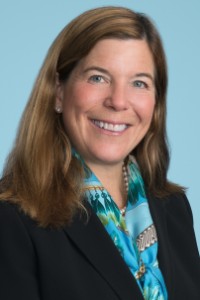
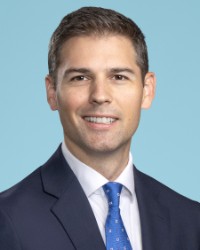

Pillsbury Winthrop Shaw Pittman LLP is an international law firm with a particular focus on the technology & life sciences, energy, financial, and real estate & construction sectors. Recognised as one of the most innovative law firms by the Financial Times and as one of the top firms for client service by BTI Consulting, Pillsbury and its lawyers are highly regarded for their forward-thinking approach, their enthusiasm for collaborating across disciplines, and their authoritative commercial awareness.
Strategic Issues in High Net Worth Litigation and Dispute Resolution
Recent legislative developments
The One Big Beautiful Bill Act (OBBBA)
The One Big Beautiful Bill Act, enacted in 2025, has started to generate litigation in 2026. In Juggler Dave and Friends, LLC v United States, --- Fed. Cl. ---- (2026), the Court of Federal Claims upheld the OBBBA’s retroactive deadline for claiming employee retention credits, finding it had a curative and remedial purpose consistent with due process. The OBBBA also amended various tax provisions, and the IRS released 2026 inflation adjustments incorporating OBBBA amendments, including the annual gift tax exclusion of USD19,000 per donee for 2026. The OBBBA’s impact on the estate and gift tax exemption – and whether it permanently extended or modified the elevated TCJA exemption levels – remains a critical planning consideration for private wealth practitioners. Note that California has not adopted all provisions of the OBBBA, such as bonus depreciation, so care must be exercised in planning. See Form FTB 3885F, page 2.
California SB 1288 – property: nonprobate transfer of ownership
This bill, introduced on 20 February 2026 and amended on 8 June 2026, will amend California Probate Code Section 5507 and add Section 5510.5 regarding nonprobate transfer of securities, including notice to beneficiaries and limits on what a registering entity may require before securities transfer. It will also specify that nonprofit corporations, charitable trusts and 501(c)(3) entities may be beneficiaries under the relevant beneficiary-form statute.
Federal S.4196 – Strengthen Social Security by Taxing Dynastic Wealth Act
Introduced on 25 March 2026, the Senate Finance Committee will return estate, gift, and generation-skipping transfer tax rules to 2009 levels, including reducing the estate tax basic exclusion amount to USD3.5 million. It will also use estate and gift tax revenue as part of the Social Security Trust Fund funding structure beginning after 1 January 2027.
Federal H.R. 1/P.L. 119-21 – estate and gift tax exemption changes effective in 2026
Although enacted before the six-month window, the 2026 effective change is significant: the statute sets the federal estate and gift tax exemption at USD15 million for 2026, indexed for inflation thereafter. The relevant H.R. 1 text amended IRC Section 2010(c)(3) to substitute USD15 million and made the change applicable to estates of decedents dying and gifts made after 31 December 2025.
California AB 565 – representation of trust beneficiaries
AB 565 was chaptered on 14 July 2025 and became effective on 1 January 2026. It rewrites Probate Code Section 15804 to permit broader virtual representation in trust matters, including representation by certain fiduciaries and persons with substantially identical interests, subject to conflict-of-interest limits. This is a major California trust-administration change because notice to an authorised representative can bind represented persons, including minors, incapacitated persons, unborn persons, and persons whose identity or location is not reasonably ascertainable.
California AB 1521 – probate notice requirements
AB 1521 was chaptered on 1 October 2025 and its Probate Code Section 9202 changes apply to estates for which letters are first issued on or after 1 January 2026. The bill adds a probate notice requirement to the Director of the California Department of Child Support Services when the personal representative or estate attorney knows or has reason to believe the decedent had a child support obligation.
California SB 822 – unclaimed property and digital financial assets
SB 822 was chaptered on 11 October 2025 and clarifies that digital financial assets are intangible property subject to California’s Unclaimed Property Law. It prescribes notice requirements before digital financial assets escheat, rules for transferring those assets to the Controller, custody standards, and claimant rights to receive the digital asset or net sale proceeds if converted. This is relevant to estate administration and fiduciaries because digital financial assets can be property distributable to beneficiaries, estates, heirs, trusts, or custodial funds.
Tax
Tax planning – family limited partnerships and IRC Section 2036(a)
The Fifth Circuit’s decision in Estate of Fields v Commissioner of Internal Revenue, No 25-60403, 2026 WL 1642415 (5th Cir. 8 June 2026) is the most consequential 2026 ruling for family limited partnership (FLP) estate planning. The court affirmed the Tax Court’s holding that the full value of assets transferred to a family limited partnership must be included in the decedent’s gross estate under IRC Section 2036(a) where the transfer lacked a substantial non-tax purpose. The facts were particularly unfavourable: the decedent’s agent formed AM Fields LP and transferred approximately USD17 million of assets into it within a single month, and the decedent died only ten days after the funding was complete. The Fifth Circuit applied the well-established three-part test for Section 2036(a) inclusion – (i) a pre-death transfer; (ii) retained interest relinquished only at death; and (iii) absence of a bona fide sale for adequate and full consideration – and held that the bona fide sale exception requires objective evidence of a real, actual, or genuine non-tax motivation. The court rejected all three of the estate’s proffered non-tax justifications (POA limitations, asset consolidation, and elder abuse protection) as post-hoc rationalisations rather than actual motivations, and affirmed a 20% accuracy-related penalty because a USD6 million reduction in reportable assets should have struck a reasonable person as too good to be true.
Relatedly, in Otay Project LP v Commissioner of Internal Revenue, T.C. Memo. 2026-21 (2026), the Tax Court disallowed basis deductions and partnership adjustments arising from a complex restructuring of tiered limited partnerships on two independent grounds: first, the partnership incorrectly calculated its section 743(b) basis adjustment by failing to account for the partner’s negative capital account and obligation to restore deficit balances; and second, alternatively, the restructuring lacked economic substance and constituted a sham transaction engineered principally to create an inside-outside basis disparity without any business purpose other than tax avoidance.
Together, these decisions reinforce that FLP structures formed or restructured close to death, or primarily for tax-reduction purposes, face significant risk of IRS challenge and judicial disallowance.
Tax planning – limited partnerself-employment tax exception
In a landmark ruling with broad implications for private equity, hedge funds, and family limited partnerships, the Fifth Circuit in Sirius Solutions, L.L.L.P. v Commissioner of Internal Revenue, 165 F.4th 374 (2026) vacated the Tax Court’s decision and held that a limited partner within the meaning of IRC Section 1402(a)(13) is simply a partner in a state-law limited partnership who has limited liability – not merely a passive investor. The IRS had argued, and the Tax Court had accepted under Soroban Capital Partners LP v Commissioner that the limited partner exception applies only to partners who function as passive investors and does not extend to partners who actively provide services to the partnership. The Fifth Circuit rejected this passive investor rule as inconsistent with the statutory text, contemporaneous dictionary definitions, and the IRS’s own 40-year history of defining limited partner by reference to limited liability alone. The court further noted that the guaranteed payments clause in Section 1402(a)(13) itself contemplates that limited partners may provide services, making a strict passive investor interpretation textually incoherent. The decision creates a circuit split with the Tax Court’s Soroban framework and is expected to have significant implications for self-employment tax planning in limited partnerships.
Estate tax – committed intimate relationships and Washington State
In Matter of Estate of Franks, 36 Wash. App.2d 307 (2026), the Washington Court of Appeals held that the surviving partner’s one-half interest in community-like property acquired during the 40-year committed relationship was not part of the decedent’s taxable estate at the time of death, applying the Washington Supreme Court’s Olver doctrine that each partner in a committed intimate relationship owns an undivided one-half interest in jointly acquired property from the time of acquisition, even though all property was titled solely in the decedent’s name. This avoided an additional USD824,000 of Washington estate tax.
Trusts
Trust administration and fiduciary duty
The 2026 term produced a rich body of trust administration decisions. In Geisenfeld v Geisenfeld, 277 N.E.3d 761 (2026), the Ohio Court of Appeals affirmed that a trustee-attorney who acted vindictively against a beneficiary sibling – including stating that she wanted to make sure he had no access to personal property – breached her fiduciary duties and was liable for attorney fees for the entire litigation, including fees incurred after a settlement agreement, because the trustee had fraudulently induced the settlement. The court’s finding that the trustee had stooped to punking and gaslighting the beneficiary underscored that fiduciary obligations demand neutrality and good faith, not self-interested conduct.
In Marshall v Marshall, No 14-25-00322-CV, 2026 WL 585157 (Tex. App. 3 March 2026), the Texas Court of Appeals confirmed that trust beneficiaries retain standing to challenge unilateral trustee modifications of governing law.
In Matter of Trusts Created by Will of Damiano, 245 A.D.3d 1092 (2026), the New York Appellate Division reaffirmed that courts should remove a trustee only if the trustee has negatively impacted the trust or failed to serve its purpose.
The Eighth Circuit in In re Elijah and Mary Stiny Trusts, 167 F.4th 1019 (2026) addressed trust modification under California Probate Code Section 15403, holding that the requirement that all named beneficiaries consent to modification is not satisfied by mere failure to object after notice; affirmative consent from all named beneficiaries is required. The court also affirmed the district court’s discretionary refusal to modify the trust on the ground that the reasons for modification did not outweigh the interest in accomplishing the trust’s material purpose.
In Fulks v Fulks, 87 Va. App. 685, 929 S.E.2d 467 (2026), the Virginia Court of Appeals held that breach of trust claims are governed by the five-year general limitations period under Virginia’s Uniform Trust Code, not the shorter one-year period applicable to a trustee’s report.
In In re Tung Trust, B243197 (6 June 2026) the California Court of Appeals held that a trust’s 30-day deemed-predeceased provision did not clearly override California’s anti-lapse statute, Probate Code Section 21110, because the trust lacked explicit language disinheriting the predeceased beneficiary’s children. The court reversed the probate court’s summary adjudication and directed that the predeceased beneficiary’s children be allowed to benefit under the trust. This is a useful drafting and litigation case on survival clauses, anti-lapse, failed transfers, and whether boilerplate language supplies a “contrary intention”.
Spendthrift trusts and asset protection
The 2026 term produced important decisions on the limits of spendthrift protection.In In re Samatas, No AP 21 A 00237, 2026 WL 612553 (Bankr. N.D. Ill. 2 Mar. 2026), the Bankruptcy Court for the Northern District of Illinois found that the debtor’s discretionary trust was not a valid spendthrift trust because the debtor exercised effective dominion and control over the trust corpus, and alternatively held that the trust was an alter ego of the debtor, considering the conduct of trust beneficiaries, trustees, and investment advisors.
In Anthone v Carlo, 248 A.D.3d 1779, 1780 (N.Y. App. Div 2026), the New York Appellate Division held that, while a self-settled trust was void as against creditors under EPTL Section 7-3.1(a), a genuine issue of material fact existed regarding the applicability of the homestead exemption.
Powers of attorney, guardianship, and elder financial abuse
In Fern v Baker, 106 Mass. App. Ct. 624 (2026), the Massachusetts Appeals Court upheld gifts to themselves by sons acting under a power of attorney spurred by anticipated reductions in federal gift and estate tax exemptions as a proper exercise of their gifting authority.
In Guardianship of R., 355 A.3d 747 (2026), the Maine Supreme Judicial Court held, as a matter of first impression, that individuals subject to guardianship or conservatorship proceedings are entitled to the effective assistance of counsel at all stages of those proceedings, and adopted the Strickland test as the metric for evaluating whether counsel provided effective representation. (Guardianship of R., 355 A.3d 747 (2026).) In Haun v Pagano, 118 Cal.App.5th 667 (2026), the California Court of Appeal held that California’s financial elder abuse statute’s unilateral fee-shifting provision did not bar a trustee from recovering attorney fees incurred in defending claims that were inextricably intertwined with his successful prosecution of his own financial elder abuse claim against the decedent’s former caretakers. (Haun v Pagano, 118 Cal.App.5th 667 (2026).) In Rittenmeyer v Wells Fargo, N.A., 822 F.Supp.3d 1113 (2026), the Eastern District of California held that a bank does not commit financial abuse of an elder person under California’s Elder Abuse Act when it simply processes a transaction involving a third party.
i. Conservatorship proceedings
In Herren v George S., 109 Cal. App. 5th 410, 416, 330 Cal. Rptr. 3d 458, 460 (2025), rehearing denied (21 March, 2025), review denied (11 June 2025), the court found that an elder abuse restraining order (EARO) may issue without adjudication of the elder’s capacity, and an attorney’s fee agreement constitutes a property right the deprivation of which constitutes financial elder abuse.
An attorney met with a prospective client, an 86-year-old man who had been declared incapacitated by his doctors. During the meeting, after the attorney concluded that the elder had capacity to retain her, the elder signed a fee agreement with the attorney that called for a USD100,000 retainer. The attorney sent a letter to the co-trustees of the elder’s trust requesting payment of the USD100,000 retainer. The co-trustees, one of whom was the elder’s daughter, declined to make the payment, and the daughter, acting as the elder’s attorney-in-fact, filed a petition for an elder abuse restraining order (EARO) against the attorney. The attorney opposed on several grounds, including that no one had rebutted the presumption of the elder’s competence and that the court could not issue an EARO without first adjudicating the elder’s capacity. The trial court issued the EARO, and the attorney appealed.
The appellate court affirmed. It rejected the attorney’s contention that an elder’s capacity must be determined before an EARO may issue as no such determination is required under the Elder Abuse Act. Additionally, it concluded the fee agreement represented a property right, and there was substantial evidence that the attorney committed financial elder abuse by exerting undue influence to obtain the property right from the elder.
As illustrated by the above case, the past year has shown increased attempts by self interested parties to take advantage of financially vulnerable clients by seeking to be appointed as the conservator under the state law proceeding. Once appointed, the conservator can control or sell the assets of the client and even receive a brokerage commission. A client can guard against this vulnerability by naming the person who the client would want as his or her conservator in a specific document or as an addendum to a power of attorney.
ii. Elder abuse restraining order
In Newman v Casey, 99 Cal. App. 5th 359, 368, 317 Cal. Rptr. 3d 706, 709 (2024), the court found that the probate court exceeded its statutory authority under Welfare and Institutions Code section 15657.03 by issuing order declaring deed void ab initio in elder abuse restraining order proceeding.
Gracia filed a request for elder abuse restraining orders (EAROs) against her daughter, Marina. Gracia alleged that Marina misled Gracia to sign a deed transferring title of her home to Marina. In her request for EAROs, Gracia also requested an order requiring Marina to sign a rescission deed. The probate court found that Gracia met her burden of demonstrating financial abuse and issued EAROs with an expiration date of two years. The probate court further ordered that the transfer deed was void ab initio. Marina appealed.
The appellate court affirmed in part and reversed in part. Pursuant to the summary procedure set forth in Welfare and Institutions Code section 15657.03, trial courts may issue any of the specifically enumerated restraining orders in subdivision (b)(5) for a specified duration of time not to exceed five years. The purpose of the statute is to secure the immediate safety of an elder to prevent further acts of abuse, but it does not supplant other provisions of the Elder Abuse and Dependent Adult Civil Protection Act (the Act). The order declaring the transfer deed void ab initio is not among the specifically enumerated restraining orders and violates the statute’s durational provisions. Permanent remedies, including the return of property, may be secured through a civil action under other provisions of the Act.
iii. Advanced healthcare directive
In Harrod v Country Oaks Partners, LLC, 15 Cal. 5th 939, 946, cert. denied, 145 S. Ct. 175, 220 L. Ed. 2d 31 (2024), the California Supreme Court held a skilled nursing facility cannot compel arbitration of claims arising from a principal’s alleged maltreatment, pursuant to a contract signed by a health care agent.
Charles Logan (“Logan”) executed a power of attorney for healthcare naming his nephew, Mark Harrod (“Harrod”), as his agent, using the California Medical Association form which is patterned on the Health Care Decisions Law. Logan was admitted to Country Oaks Care Center (“Country Oaks”), a skilled nursing facility, to obtain living assistance and rehabilitative treatment. Harrod signed two contracts, one admitting Logan to the facility, and another agreeing to arbitration. The arbitration agreement was optional. Harrod, acting as Logan’s guardian ad litem, filed a lawsuit against Country Oaks, alleging negligence, elder abuse, and other causes of action. Country Oaks moved to compel arbitration. The trial court denied the motion reasoning that Harrod’s power to make health care decisions for Logan as his healthcare agent did not include the power to sign the optional arbitration agreement. The appellate court affirmed.
The California Supreme Court affirmed. The meaning of a “health care decision” as provided by statutory authority, does not include the power to enter optional, separate dispute resolution agreements. Examples of a healthcare decision directly pertain to who provides healthcare and what may be done to a principal’s body in health, sickness, or death. There is no catch-all provision, no express delegation of power to make decisions that serve other purposes, and no grant of power to waive access to the courts by agreeing to arbitration.
Cautionary notes for planning and protection of beneficiaries
The importance of clear communication
As discussed in last year’s Chambers Global Practice Guide for Private Wealth 2025 co-authored by Jennifer Jordan McCall, the recent year has continued to highlight the importance of discussing financial planning openly within the family. This prepares children to receive and protect their inheritance, creates a solid foundation for a healthy marriage, and can help to protect elderly and cognitively vulnerable elderly clients from abuse and undue influence.
Trusts and protective mechanisms
Trusts can help to protect beneficiaries from potentially predatory third parties.
Prenuptials to promote clarity
A prenuptial agreement provides a good context for frank discussions of money and how it will affect the relationship. Developing self-esteem through employment and working on healthy relationships can empower a person with wealth to maintain interpersonal boundaries, which can support the person’s physical, emotional and financial health.
Tips for successful litigation
When and if family litigation arises, open and direct communication, such as through mediation, may help a great deal. If court is unavoidable, honesty and candour, combined with diplomacy, patience and respect for the other parties, are likely to enhance the likelihood of success. Frequently, the issues discussed above can lead to an actual court case. When this happens, it is essential that the client obtain skilled advice not just from litigators but also from savvy trust and estate lawyers, who can offer strategic advice as early as possible in the proceeding.
Pillsbury Winthrop Shaw Pittman LLP
2550 Hanover Street,
Palo Alto,
CA 94304-1115
USA
+1 650 233 4046
jmccall@pillsburylaw.com www.pillsburylaw.com
Law and Practice
Authors
Pillsbury Winthrop Shaw Pittman LLP is an international law firm with a particular focus on the technology & life sciences, energy, financial, and real estate & construction sectors. Recognised as one of the most innovative law firms by the Financial Times and as one of the top firms for client service by BTI Consulting, Pillsbury and its lawyers are highly regarded for their forward-thinking approach, their enthusiasm for collaborating across disciplines, and their authoritative commercial awareness.
Trends and Developments
Authors
Pillsbury Winthrop Shaw Pittman LLP is an international law firm with a particular focus on the technology & life sciences, energy, financial, and real estate & construction sectors. Recognised as one of the most innovative law firms by the Financial Times and as one of the top firms for client service by BTI Consulting, Pillsbury and its lawyers are highly regarded for their forward-thinking approach, their enthusiasm for collaborating across disciplines, and their authoritative commercial awareness.
