Sports Law 2026
Spain
Author
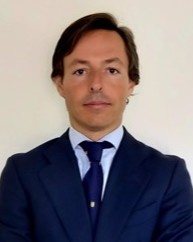
Jofre Sports Law is a boutique law firm that specialises in providing comprehensive legal advice in the sports industry, with a particular focus on professional football but also covering other sports such as golf, basketball, tennis, etc. The firm is led by Joaquín Jofre, former legal director of Málaga CF, and brings together a dedicated team of specialised sports lawyers based in Spain. The practice covers contractual, employment, tax and disciplinary matters, as well as club management mandates and regulatory issues before national and international bodies. The team regularly advises clubs, players, agents, coaches and sports executives on transfer agreements, employment contracts, sponsorship and image rights structures, training compensation and solidarity contribution claims. Jofre Sports Law represents clients in complex disputes before FIFA, the CAS and national federations, and has significant experience in acting for top-tier Spanish clubs and other stakeholders in high-profile contentious and non-contentious matters.
1. Athlete Conduct, Integrity and Enforcement
1.1 Anti-Doping Regimes
In Spain, doping is not a criminal offence for the athlete (the consumer), though it is a serious crime for the suppliers.
Under Article 362 quinquies of the Spanish Penal Code, it is a criminal offence to:
- prescribe, provide, dispense or administer prohibited substances to athletes;
- facilitate the use of banned methods (such as blood transfusions); and
- encourage or incite the use of these substances.
These crimes are punishable by prison sentence (typically six months to two years), fines and professional disqualification. The law targets “facilitators” – doctors, trainers and traffickers – rather than the athletes themselves, unless the athlete is involved in the distribution.
Status of WADA Prohibited Substances
While the World Anti-Doping Agency (WADA) list primarily concerns sports eligibility, Spanish criminal law treats many of these substances as controlled pharmaceuticals or illegal drugs. Prohibited substances include the following:
- anabolic steroids (eg, stanozolol, nandrolone) are heavily restricted, are illegal to distribute or sell without a medical licence, and are linked to “public health” crimes;
- hormones (EPO, HGH) are restricted for medical use, trafficking or administration to athletes; and
- stimulants (eg, cocaine, amphetamines) are regulated under general narcotics laws, and possession for sale is a criminal offence.
CELAD
The national anti-doping organisation in Spain is CELAD (Comisión Española para la Lucha Antidopaje en el Deporte), formerly known as AEPSAD:
- CELAD’s purpose is to protect the health of athletes and ensure clean competition;
- its roles include conducting testing (in and out of competition), managing therapeutic use exemptions (TUEs), overseeing education programmes and investigating anti-doping rule violations (ADRVs); and
- regarding enforcement, CELAD collaborates with the Guardia Civil and the National Police when a sports investigation uncovers evidence of criminal trafficking.
Implementation of the World Anti-Doping Code
Spain implements the World Anti-Doping Code through Organic Law 11/2021. This law ensures that Spanish regulations are harmonised with international standards regarding:
- strict liability – athletes are responsible for any substance found in their body;
- whereabouts – elite athletes must provide location data for random testing; and
- sanctions – standardised bans for first-time major offences.
Punishments by Individual Leagues
Individual leagues and federations (such as La Liga or the Spanish Basketball Federation) do not create the rules but are bound by CELAD and WADA. If a player in a professional league tests positive, the league/federation enforces a suspension (the athlete cannot play matches); clubs often include “anti-doping clauses” in contracts, allowing them to terminate a player’s contract or stop paying their salary during a ban.
Recent Noteworthy Cases (2024–2026)
CELAD leadership crisis (2024)
A major institutional “case” involved the dismissal of the previous director, José Luis Terreros, following allegations of irregularities in how positive tests were handled, and leading to a major overhaul to regain WADA’s trust.
Sydney Fokou Takam (2025)
A Spanish para-athletics athlete tested positive for brinzolamide at the Paris 2024 Paralympic Games. The case was unique because it was ruled unintentional – caused by inadvertent contamination from another person’s eye drops. While the athlete’s results were disqualified, her provisional suspension was lifted because she proved “no fault”.
Oucif Houssem (2026)
This recent case involved a provisional suspension (starting in January 2026) for the presence of stanozolol (an anabolic steroid), demonstrating the ongoing surveillance of high-level individual athletes in the region.
1.2 Misconduct and Match-Fixing
In Spain, the legal framework for sports integrity has evolved significantly to address the modernisation of match-fixing and illegal gambling. These offences are treated as serious crimes against both public health and the socio-economic order.
Key Legislation in Spain
The primary legal tools used to combat athlete misconduct, fraud and match-fixing are as follows.
- The Spanish Penal Code (Article 286 bis 4) – this is the cornerstone of sports integrity law. Introduced in 2010 and reinforced in 2015, it specifically criminalises “sports corruption”.
- The crime determines the punishment for directors, administrators, athletes and referees who seek to deliberately predetermine or alter the result of a match or competition. Regarding penalties, prison sentences range from six months to four years, fines up to three times the profit obtained, and professional disqualification up to six years.
- The Gambling Act (Law 13/2011) – this regulates both land-based and online betting. It strictly prohibits athletes, referees and team-owners from betting on events within their own sport.
- The Sports Law (Law 39/2022) – this modernises the administrative side of sports, requiring federations to have specific integrity protocols and whistle-blower channels to report suspicious behaviour.
Steps Taken by Governing Bodies
Spanish sports entities (such as LaLiga and the Royal Spanish Football Federation (RFEF)) take proactive measures that often go beyond the requirements of the Penal Code:
- SIGMA (National Protection Network) – managed by the Spanish Gambling Regulator (Dirección General de Ordenación del Juego, DGOJ), this is a co-operative network where betting operators must immediately report irregular or suspicious betting patterns to the police and sports federations;
- whistle-blower portals – LaLiga maintains a dedicated integrity channel (integridad@laliga.es) where players or the public can anonymously report match-fixing attempts;
- integrity workshops – professional leagues conduct mandatory annual seminars for all players, from youth academies to the first division, to educate them on the legal risks of “third-party bonuses” (payments to win or lose); and
- software monitoring – organisations such as Sportradar are hired to monitor global betting markets 24/7 for any fluctuations that might suggest a fixed match.
Recent Noteworthy Cases
The Osasuna case (final rulings 2023–2024)
This landmark case involved former executives of CA Osasuna paying players from other teams to win against certain opponents and lose against Osasuna to avoid relegation. It was the first case in Spain where directors were sentenced to prison specifically for “sporting corruption”. In 2024, UEFA also enforced a ban on the club from European competitions based on these historical integrity violations.
The Negreira case (ongoing 2024–2026)
While not a “match fix” in the traditional sense of a specific score, this ongoing investigation involves FC Barcelona making payments to a company owned by José María Enríquez Negreira, the former vice-president of the Technical Committee of Referees. The courts are investigating whether these payments constituted “continued sports corruption” aimed at influencing refereeing decisions.
1.3 Betting-Related Offences
Betting is legal and strictly regulated in Spain. The legal framework differentiates between the general public and relevant individuals in the sporting world, for whom betting on their own sport is a serious offence.
Legislation Governing Betting
The primary piece of legislation is Law 13/2011 of May 27th on the regulation of gambling:
- at a national level, the DGOJ, under the Ministry of Consumer Affairs, regulates online betting and state-wide lotteries;
- at a regional level, the 17 autonomous communities regulate land-based betting shops, casinos and bingo halls; and
- regarding licensing, operators must hold both a general licence and a singular licence for specific activities (eg, fixed-odds sports-betting). Operating without these is a very serious infringement, often resulting in multimillion-euro fines.
Betting-Related Offences for Relevant Individuals
Under Article 6 of Law 13/2011, there is a strict subjective prohibition on gambling for certain individuals, to ensure integrity. It is illegal for the following people to place bets on events in which they participate:
- athletes, coaches and referees;
- managers and directors of the participating sports clubs; and
- personnel of the organising entities (eg, league employees).
Consequences include the following:
- administrative – fines and temporary or permanent loss of their sports licence; and
- criminal – if the betting is linked to match-fixing, it falls under Article 286 bis of the Penal Code (Sports Corruption), punishable by up to four years in prison.
Information Sharing and Integrity Systems
Spain uses a sophisticated co-operative network to monitor markets and share data between betting operators and sports bodies.
- SIGMA (Service for the Investigation of the Betting Market): launched and fully integrated by the DGOJ in 2024–2025, SIGMA is a centralised database. All licensed betting operators are mandated by law to report irregular or suspicious betting patterns immediately to this service.
- Stakeholders: information is shared in real time between the DGOJ, National Police, Guardia Civil and sports bodies such as LaLiga and the RFEF.
- LaLiga's TYCHE tool: a proprietary software used by LaLiga to monitor global betting markets for Spanish matches. If TYCHE detects an anomaly (eg, a sudden surge of bets on a specific corner kick in a low-stakes game), LaLiga reports it to the police via the SIGMA network.
Recent Noteworthy Cases
Aurore Fleury (2024–25)
This involved a champion runner who bet EUR2,000 on a teammate to win at the European Athletics Championships, and was uncovered after she posted about the win on social media. The sanction was six months suspension and a EUR3,000 fine (AIU).
Janssen and Richter (2025)
This involved two track athletes who placed small bets (EUR40 to EUR100) on teammates at the World Championships in Tokyo. The sanction was a three-month suspension (reduced due to confession).
1.4 Disciplinary Framework
In Spain, disciplinary proceedings against athletes follow a structured administrative path governed by the Sports Law (Law 39/2022) and, specifically for doping, Organic Law 11/2021. These proceedings are designed to ensure due process while maintaining the integrity of competition.
The Disciplinary Process: Step-by-Step
Whether for doping, match-fixing or betting, the process generally adheres to the following hierarchy.
Investigation and opening of the file
- Trigger: a positive drug test, a report from a whistle-blower (via LaLiga or RFEF portals), or suspicious betting alerts from the SIGMA network.
- Notification: the athlete is formally notified that a disciplinary file has been opened. In doping cases, a provisional suspension is usually mandatory from this point.
Instruction phase
- Evidence gathering: an instructor (appointed by the federation or CELAD) gathers evidence. For betting/integrity, this includes bank statements and IP logs; for doping, it involves a second sample analysis.
- The proposal: the instructor issues a document outlining the specific rules broken and the proposed penalty.
Right to defence
- The athlete has a set period to submit a defence. They can present evidence of “no fault” or medical prescriptions, or prove that they were coerced in match-fixing cases.
Resolution
- The relevant body (the RFEF’s Disciplinary Committee or CELAD’s Sanctions Committee) issues a final administrative ruling.
- Sanctions: these can range from fines (up to EUR100,000 for betting) to permanent bans (for repeat doping or severe corruption).
Appeals: the Role of the TAD
If the athlete disagrees with the federation’s ruling, they move to the final administrative phase.
- The TAD (Tribunal Administrativo del Deporte): this is an independent body attached to the Higher Sports Council (CSD). It is the supreme administrative authority for sports in Spain.
- Ordinary justice: once the TAD rules, the administrative route is exhausted. The athlete’s only remaining option is to take the case to the Contentious-Administrative Courts (civilian courts), which can take years.
Examples of Proceedings in Practice
Doping: the Celestino Fernández case (2024–2025)
- Process: the Spanish duathlon champion was handed a five-year ban by CELAD after a positive test.
- Development: the athlete maintained his innocence, claiming the sample was not his. After exhausting the sports disciplinary route (TAD), he went to ordinary justice.
- Outcome: in early 2025, a judge ordered a DNA test of the urine sample. The DNA did not match the athlete, proving a chain-of-custody failure. The court annulled the ban, forcing CELAD to reinstate him.
Betting: RFEF disciplinary actions
- Process: the RFEF regularly monitors the lower tiers (Segunda and Tercera Federación).
- Action: when a player is flagged for betting on their own league (even if not their own match), the RFEF Disciplinary Committee opens a Very Serious Infraction file under Article 6 of the Gambling Act.
- Outcome: these cases often result in two- to five-year bans from all federated sports and immediate contract termination by the club.
Match-fixing: Operation Conífera (2023–2024)
- Process: this involved several players in the Spanish lower leagues. Because the misconduct was linked to a criminal betting ring, the sports disciplinary proceedings were paused while the criminal court investigation took priority.
- Outcome: once the criminal evidence was established, the RFEF used those court findings to issue lifetime bans to the involved players without needing to redo the investigation.
2. Commercial Rights
2.1 Sports-Related Rights
In Spain, the commercialisation of sports extends beyond TV and sponsors into a highly regulated ecosystem of experiential and physical rights. These are governed by a mix of civil, administrative and consumer protection laws.
Notable Commercial Rights
Merchandising and licensing
Rights-holders (clubs and athletes) exploit their intellectual property through trade marks. Under the Spanish Trade Mark Act (Law 17/2001), clubs aggressively protect their logos. A unique feature in Spain is the protection of image rights, which are often separate from employment contracts, allowing athletes to license their likeness for video games, stickers and apparel.
Hospitality and VIP packages
This is the fastest-growing sector. These rights include “experiential” services.
Naming rights
These apply not just for stadiums but also increasingly for training grounds and even youth academies. These are contractual “service” agreements rather than property rights.
Ticketing and Secondary Sales
Ticketing in Spain is a complex area where national and regional laws often overlap.
Legal status of secondary sales
- The “street sale” ban: Royal Decree 2816/1982 technically prohibits the “street” resale of tickets.
- Digital resale: Law 13/2011 (the Gambling Act) and the General Law for the Defence of Consumers mandate that reselling above face value is only permitted if the event organiser explicitly allows it.
- The 2024–2026 shift: under the EU Digital Services Act (DSA), now fully active in Spain, platforms are legally responsible for verifying the identity of professional resellers and must remove fraudulent listings immediately upon notification.
Combating illegal sales
Sports bodies and the government use a three-pillar defence.
- Nominated tickets: for high-risk matches, tickets are linked to a national ID or passport. Law 19/2007 against violence in sport mandates this for “high-risk” events.
- Technological barriers: most clubs have shifted to dynamic QR codes in their official apps, which refresh every few seconds to prevent screenshots or PDF sharing.
- Administrative fines: regional governments can issue fines of up to EUR30,000 for unauthorised mass resale.
Recent Noteworthy Case (2025)
The “ticket bot” crackdown
In early 2025, Spanish authorities, in co-ordination with LaLiga, successfully dismantled a network that used automated “bots” to harvest thousands of tickets for the 2024 UEFA Champions League matches played in Spain. The investigation led to the cancellation of over 1,200 tickets and the first significant application of the DSA’s “know your business customer” (KYBC) rules against an online marketplace that failed to verify its sellers.
2.2 Sponsorship Terms
How Sponsors Use Sport to Promote Their Brand
In Spain, brands utilise sports properties to achieve several key objectives.
Values alignment and CSR
Sponsors increasingly focus on environmental, social and governance (ESG) goals. For example, Iberdrola’s sponsorship of the Spanish women’s football league (Liga F) is heavily promoted as a commitment to gender equality.
Access to fan data
Sponsors seek access to the rights-holders’ first-party data (via official club apps and loyalty programmes). Under Organic Law 3/2018 (LOPDGDD), this must be handled with explicit consent, but it allows sponsors to deliver hyper-personalised offers directly to a fan’s smartphone.
B2B and hospitality
Many Spanish sponsors (especially in banking and telecommunications) use experiences to entertain corporate clients and close business deals.
Digital and social activations
Brands move beyond the 90 minutes of a football match, using content such as behind-the-scenes featuring players to reach audiences.
How Rights-Holders Attract Investment
Rights-holders (clubs, federations and event organisers) use sophisticated strategies to market themselves:
- segmented rights packages – instead of one global sponsor, rights are sliced into different categories;
- proven ROI reporting – rights-holders now use AI-driven tools to provide sponsors with real-time data on their brand exposure across TV, social media and in-stadium signage; and
- the “innovation” pitch – organisations such as Barça Innovation Hub attract sponsors (including Google Cloud or Globant) by offering their club as a living lab to test new technologies, from athlete performance sensors to stadium connectivity.
Key Terms of a Standard Sponsorship Contract
A standard Spanish sports sponsorship agreement typically includes these core pillars.
- Grant of rights: precise definition of the marks (logos), images and player likenesses that the sponsor can use, and in which territories (eg, “worldwide” versus “Spain only”). Provides exclusivity, and prevents the rights-holder from signing a competitor.
- Fee and value-in-kind: the financial payment schedule. Many Spanish deals include a VIK component (eg, CUPRA providing cars to players as part of the fee).
- Performance bonuses: extra payments triggered by sporting success (eg, winning LaLiga or qualifying for the Champions League).
- Morality/reputation: allows the sponsor to terminate the deal if the athlete or club is involved in a scandal (doping, match-fixing or legal issues).
- Data sharing and the General Data Protection Regulation (GDPR): outlines how fan data can be used for co-marketing, ensuring compliance with Spanish and EU data protection laws.
- Force majeure and substitution: terms for what happens if an event is cancelled or played behind closed doors, often including “make-good” digital inventory.
- Jurisdiction.
2.3 Broadcasting Rights
In Spain, the broadcasting of sports is a highly commercialised and legally protected sector, primarily regulated by the General Law on Audiovisual Communication (Law 13/2022).
How Broadcasters Profit From Rights
Broadcasters in Spain utilise a “dual-revenue” model to offset the high costs of sports rights.
Subscription models (Pay-TV/OTT)
Providers charge monthly fees. Live sports are the primary driver for customer retention.
Advertising and sponsorship
Broadcasters sell commercial spots during half-time and pre-/post-match shows. They also use virtual advertising, where the digital overlays on stadium boards are customised for the Spanish audience regardless of what is physically shown in the stadium.
B2B/hospitality sales
A significant revenue stream involves selling specific “public exhibition” licences to bars, restaurants and hotels (eg, through the LaLigaTV Bar service).
Packaging and sales by rights-holders
Rights-holders (such as LaLiga) package rights to maximise competition among bidders and ensure long-term stability.
Tender process
Rights are sold through a formal, transparent auction.
Exclusivity versus co-exclusivity
While rights were traditionally exclusive to one broadcaster (Movistar), the current model (2022–2027 and 2027–2032) uses a split-exclusivity approach.
Free-to-air (FTA) “must-offer”
Spanish law requires one match per matchday to be broadcast for free. For the 2025/26 season, the public broadcaster RTVE acquired this package to ensure universal access to “events of general interest”.
Venue Access and Intellectual Property
Access licences
Broadcasters do not have an automatic right to enter a stadium. They must sign a Venue Access Agreement. This contract grants the “host broadcaster” the right to install cameras, utilise “technical zones”, and access the mixed zone for interviews. In exchange, the broadcaster must follow the league’s strict Production Handbook to ensure a consistent visual “brand”.
Intellectual property rights
The “broadcaster’s right”
Under the Spanish Intellectual Property Act, the broadcaster owns the copyright to the “fixation” of the broadcast (the specific camera angles, replays and commentary they produce).
The “event right”
The sports organiser (LaLiga) owns the underlying commercial rights to the event itself.
Enforcement
Spain is a leader in anti-piracy. Courts now grant “dynamic injunctions”, allowing ISPs to block illegal streaming sites in real time during a match without needing a new court order for every individual URL.
Notable Example: LaLiga 2027–2032 Deal
In late 2025, LaLiga concluded its largest-ever domestic tender:
- the deal – EUR5.25 billion over five seasons (approximately EUR1.05 billion/season);
- the players – Telefónica (Movistar) and DAZN retained the core rights; and
- key shift – the new deal eliminated the “three exclusive matchdays” previously held by Movistar, moving to a perfectly even 5/5 split to satisfy competition regulators and increase the value for the streaming partner (DAZN).
3. Sports Events
3.1 Proprietary Rights and Event Management
In Spain, the legal concept of “proprietary rights” in a sports event is not explicitly defined as a single property right (like a patent). Instead, it is a “bundle of rights” derived from various laws that allow organisers to control and monetise their events.
Proprietary Rights and “House Rights”
While Spanish law does not grant “ownership” of the game itself, organisers exercise “house rights” (derecho de admisión y exclusividad en el recinto).
Venue control
Most events occur in private or state-leased venues. The organiser’s right to control access allows them to set contractual conditions for entry.
Contractual leverage
By purchasing a ticket or receiving accreditation, individuals enter a contract that prohibits unauthorised recording or commercial exploitation of the event.
Broadcasting exclusivity
Under Royal Decree-Law 5/2015, the rights to audiovisual exploitation of professional football are centralised, recognising the competition organiser (LaLiga) as the entity with the power to manage these commercial “proprietary” interests.
Controlling Rights: Access and Footage
Organisers use a “layered” approach to prevent unauthorised footage.
The 90-second rule (right to information)
Under Article 19 of the General Law on Audiovisual Communication (Law 13/2022), broadcasters have a right to access venues to record “short news summaries” (max 90 seconds) for general news programmes without paying.
Accreditation agreements
Any media outlet entering beyond the “short news” exception must sign an agreement that strictly dictates how footage can be used, often requiring “rights back” to the organiser for certain uses.
Anti-piracy legislation
Spain has some of the EU’s strictest anti-piracy measures. Organisers can obtain “dynamic injunctions” from courts, allowing them to block illegal streaming servers in real time during a match.
Applicable Legislation: Consumer Protection
The relationship between a sports event organiser and a fan is governed by the General Law for the Defence of Consumers (LGDCU).
Right to refund
If an event is cancelled or significantly rescheduled, consumers have a non-waivable right to a refund.
Abusive clauses
Terms on a ticket that state “no refunds under any circumstances” or that allow the organiser to change the venue without notice are often deemed “abusive” and void under Spanish consumer law.
Safety and security
Law 19/2007 (against violence, racism and xenophobia in sport) mandates that organisers provide a safe environment. Failure to do so can lead to massive administrative fines and civil liability for any damages to spectators.
Organisation, Management and Participation
How events are managed
Federative structure
Professional events are typically co-managed by the relevant national sport federation (eg, RFEF) and the professional league (eg, LaLiga).
Public-private co-operation
For major events (such as the GP in Madrid or the America’s Cup), a “consortium” is often formed between the government and private entities to manage logistics, security (Police/Guardia Civil) and tax incentives.
How participation is governed
Licensing
To participate in federated events, athletes must hold a licencia federativa (federative licence). This licence acts as a contract where the athlete agrees to abide by the federation’s disciplinary, anti-doping and ethical rules.
The “right to sport”
The new Sports Law (Law 39/2022) explicitly recognises sport as a “right”, ensuring that participation cannot be denied based on discriminatory factors, and providing better legal protection for professional and “high-level” athletes (Deportistas de Alto Nivel).
3.2 Duty of Care and Liability
In Spain, the duty of care in sports is a combination of general civil liability, consumer protection and specific anti-violence legislation.
Duty of Care and Relevant Legislation
Organisers owe a “diligent protection” duty to both participants and spectators. This is grounded in:
- the Spanish Civil Code (Article 1902) – the general principle of extracontractual liability, stating that anyone who causes damage to another through fault or negligence is obliged to repair it;
- the Sports Law (Law 39/2022) – establishes sport as a right and mandates that public and private entities guarantee safe conditions for its practice;
- Law 19/2007 (against violence, racism, xenophobia and intolerance in sport) – specifically mandates that organisers are responsible for public order and safety within the venue and its immediate surroundings; and
- the General Law for the Defence of Consumers (LGDCU) – treats spectators as consumers, requiring organisers to provide services that do not pose risks to health or safety.
Limitation and Exclusion of Liability
Liability can be limited, but it is never absolute.
How it can be limited
- Assumption of risk: for athletes, liability is often limited by the “sporting risk” doctrine. Accidental injuries occurring during the normal course of play (following rules) generally do not lead to liability.
- Compliance with regulations: organisers can limit liability by proving that they met all administrative safety requirements (eg, CCTV, capacity limits, security personnel).
- Insurance: organisers must carry Compulsory Sports Insurance (Seguro Obligatorio Deportivo) and general civil liability insurance to cover damages.
What cannot be excluded
- Gross negligence or intent (dolo): under Spanish law, clauses in tickets or contracts that waive liability for physical injury or death caused by negligence are considered abusive and void.
- Health and safety standards: minimum safety requirements set by Law 19/2007 cannot be contracted away.
Liability of Athletes to Spectators
While rare, athletes can be held liable to spectators in specific scenarios:
- extraneous actions – if an athlete intentionally throws an object (such as a ball or racket) into the stands out of frustration and injures a fan, they are liable because the action is outside the “normal risk” of the game; and
- recklessness – if an athlete engages in a celebration or stunt that violates safety protocols and leads to spectator injury, they (and potentially their club) face civil liability.
Prevention of Violence and Disorder
Spain has one of the most rigorous systems in Europe for stadium safety, managed by the State Commission against Violence, Racism, Xenophobia and Intolerance in Sport.
Security co-ordinator
Every professional match has a police officer (National Police or Guardia Civil) assigned as the “security co-ordinator”, with the power to suspend the match.
CCTV and biometrics
High-risk venues must have comprehensive CCTV. Some stadiums use advanced facial recognition to enforce entry bans.
Prohibited items
Law 19/2007 strictly bans flares, alcohol and symbols that incite hatred or violence. Spectators must submit to searches and “biometric” or ID verification if required.
Sanctions
Fines for fans can reach EUR60,000, with stadium bans of up to five years. Clubs can be fined up to EUR650,000 or be forced to play behind closed doors for failing to prevent disorder.
4. Corporate Structures
4.1 Legal Forms of Sporting Bodies
Sporting bodies in Spain typically adopt legal forms based on their professional status. Professional clubs often use the sociedad anónima deportiva (SAD), a specialised limited liability company, while non-professional clubs are usually organised as clubes deportivos (non-profit sports associations). Sports governing bodies (federations) operate as private entities with public functions. These structures are chosen to facilitate financial transparency or investment, or to prioritise reinvestment of profits into sporting activities rather than shareholder dividends.
Legal Structures
SADs
Under Act 39/2022 and previous regulations, most top-tier football and basketball clubs are SADs. This corporate form is designed for profit-oriented entities to allow for external investment and financial regulation. Four football clubs were allowed to remain non-profit as they showed financial solvency when the law entered into force: Real Madrid, FC Barcelona, Athletic Club and CA Osasuna.
Non-professional sports clubs (clubes deportivos)
These are generally non-profit associations focused on promoting sports, regulated under the Law 10/1990 and subsequent updates. They are owned by their members and typically reinvest all profits into the club’s development, sporting infrastructure or community programmes.
Sports governing bodies (federaciones deportivas)
These are private associations with legal personality and public functions, regulated by the Spanish National Sports Act (Law 10/1990 and 39/2022).
Reasons for Choosing Specific Corporate Structures
Reinvesting profits (non-profit clubs)
Non-professional clubs choose the club deportivo structure because it prevents the distribution of profits to owners. This allows all income to be reinvested into the club – a requirement for obtaining certain tax benefits and grants.
Attracting investment (SADs)
The SAD structure allows clubs to attract capital investment, which is essential for competing in professional leagues with high costs.
Liability limitation
Both SADs and non-profit associations (when properly incorporated) provide limited liability for their members, protecting them from the financial risks associated with running a sports club.
Compliance with regulations
The choice of structure is heavily influenced by the legal requirements to participate in professional competitions (eg, LaLiga) versus amateur leagues.
4.2 Corporate Governance Codes
Spanish sports bodies are required by Act 39/2022 to adopt specific Good Governance Codes focusing on transparency, democracy and integrity. These apply to Spanish sports federations and professional leagues, primarily to improve management, compliance and internal controls. Non-compliance can lead to disciplinary measures under sports regulations.
Key Governance Details in Spain
Applicable entities
The regulations apply to all members and participants within the Spanish sports system, including federations, leagues and professional sports companies (SADs).
Consequences of non-compliance
Violations can lead to penalties under the Spanish Sports Discipline Regulations, which can include fines, suspension of members or other sanctions determined by the Consejo Superior de Deportes (CSD).
Other relevant rules and director duties
- Management duties: directors of SADs are held to a strict standard of liability under the Spanish Companies Act.
- Specific responsibilities: managers, employees and athletes are subject to specific Criminal Code provisions regarding corruption and match-fixing.
- General duties: officers of sports organisations must act with diligence, loyalty and in accordance with the law.
- Insolvency penalties: while general company law applies to insolvencies, sporting regulations may impose specific disciplinary actions, including points deductions for failing to meet financial requirements set by governing bodies or leagues.
Key Regulatory Bodies
The CSD is the primary government agency responsible for promoting these standards and overseeing the Spanish sports system.
4.3 Sport Funding
Sport in Spain is primarily funded through a combination of public funds, largely directed by the Council of Ministers and the CSD, alongside private investment, sponsorship and local government (municipality) contributions. With over EUR2.1 billion allocated to the sports sector since 2018, the funding structure supports high-performance athletes, federations and infrastructure development, with a growing focus on women’s sport and inclusivity.
Key Funding Sources and Streams
Central government (CSD)
The CSD is the main body, providing direct subsidies to federations, funding high-performance centres, and implementing the “Team España” strategy for elite athletes.
Autonomous communities and local councils
Regional governments and municipalities have a strong role in financing local sports infrastructure, grassroots initiatives and regional clubs.
Private funding
Sponsorship, media rights (especially in football), and individual member fees are significant, with a reported 78,690 sports clubs in 2024, many of which are partially self-funded.
Lottery and gaming
A smaller portion of funding is derived from levies on lotteries (quiniela) and betting, contributing to the broader sports budget.
Distribution Mechanisms
Elite sport and federations
The CSD provides direct grants to Spanish sports federations for operating costs and training.
“Team España” elite strategy
Substantial funding goes to specialised programmes targeting Olympic/Paralympic success and retaining technical talent.
Specialised aid (ADO)
The ADO programme (Association of Olympic Sports) is supported by the CSD to fund scholarships for athletes in international competitions.
Local sport
Local authorities manage funding for local clubs, schools and community facilities, focusing on participation.
Infrastructure and innovation
The government invests directly in new infrastructure.
Key Strategic Priorities
Women’s sports
Direct grants are increasingly directed towards female competitions.
Inclusivity
This includes support for the Spanish Paralympic Committee and specialised health centres.
Data and technology
Funding is directed towards scientific research in sports performance.
5. Intellectual Property, Data and Data Protection
5.1 Trade Marks
In Spain, trade mark registration is managed by the Spanish Patent and Trade Mark Office (OEPM), granting exclusive rights to distinctive signs that identify goods or services.
How to Register a Trade Mark
The process can be completed online or in person.
- Search – verify availability using the OEPM Trade Mark Locator to avoid conflicts with existing marks.
- Application – submit applicant details, a representation of the sign (logo, word, sound), and a list of goods/services categorised by the Nice Classification.
- Examination and publication – the OEPM conducts formal and legality checks. If cleared, the application is published in the Official Intellectual Property Gazette, allowing third parties two months to file oppositions.
- Grant – if no successful oppositions occur, the mark is registered for ten years, renewable indefinitely.
What Cannot Be Registered
Under the Spanish Trade Mark Act (Law 17/2001), the following are prohibited:
- lack of distinctiveness – generic terms or purely descriptive words;
- misleading signs – marks that deceive the public about the nature or origin of the product;
- official emblems – state flags, coats of arms, or protected symbols without authorisation;
- public order – signs contrary to law, public order or morality; and
- prior rights – marks identical or confusingly similar to previously registered trade marks or trade names.
Advantages of Registration
These include:
- exclusivity – grants the sole right to use the mark and prevents competitors from using similar signs for related goods;
- enforcement – enables legal action against infringement, including customs protection to seize counterfeit goods; and
- commercial asset – a registered mark can be licensed, franchised or used as collateral for loans.
Registration Without Use
Spain follows a “first-to-file” system, meaning it is possible to register a mark before using it. However, the following should be noted:
- grace period – once registered, the owner has five years to begin effective and genuine use in Spain; and
- vulnerability – after five years, if the mark remains unused without a valid reason, it becomes vulnerable to cancellation by third parties for non-use.
Notable Sports Examples
Lionel Messi Successfully registered “MESSI” as a European trade mark (protecting him in Spain) after a long legal battle proving that his fame overrode confusion with the brand “Massi”.
Kylian Mbappé owns trade marks for his crossed-arms celebration, protecting his likeness and brand across the EU.
Juventus FC successfully sued a company in court for using their trade-marked logos on NFT digital playing cards without permission.
Adidas has defended its three-band mark in Spanish courts, such as against a bank whose logo was deemed too similar.
5.2 Copyright/Database Rights
The Spanish jurisdiction recognises a robust system of copyright (referred to as Propiedad Intelectual), primarily governed by the Intellectual Property Act (IPA), enacted via Royal Legislative Decree 1/1996.
Legal Basis and Requirements
Source
Copyright is derived from statute, not common law. As a civil law jurisdiction, Spain relies on the consolidated Intellectual Property Act and EU Directives.
Basic requirements
To qualify for protection, a work must be:
- original – an intellectual creation of the author;
- expressed – protection applies to the expression of an idea, not the idea itself; and
- fixed – it must be represented in some form (literary, artistic or scientific).
Registration
Copyright is automatic upon the creation of the work; registration is not mandatory for protection. However, authors can register works at the Spanish Intellectual Property Registry.
In terms of benefits, copyright provides prima facie evidence of the existence of the work and its ownership, shifting the burden of proof in legal disputes.
Defences to Infringement
Common defences include:
- private copying – reproduction by a natural person for exclusive private use without commercial intent;
- independent creation – proof that the work was created without copying the original;
- fair use – using parts of a work for teaching or research purposes; and
- statute of limitations – claims must generally be filed within five years of the infringement being known (some specific actions differ).
Database Rights
Spain recognises a sui generis database right. It protects the substantial investment made in obtaining, verifying or presenting the contents of the database, rather than the originality of the content itself.
Sports Example
High-profile cases often involve LaLiga or other sports leagues protecting their fixture lists or real-time data feeds, where the investment in compiling accurate match data is the basis for claiming protection against unauthorised scraping by betting sites or media outlets.
5.3 Recognising Personality/Image Rights
Spain has a very strong and well-developed legal framework for image rights (known in Spain as Derecho a la propia imagen). Unlike some jurisdictions where these rights are purely commercial, in Spain they are considered a fundamental right.
Legal Recognition and Source
Image rights in Spain are derived strictly from statutory and constitutional law, not common law. The recognition is dual-layered:
- constitutional level – Article 18.1 of the Spanish Constitution protects the right to honour, personal and family privacy, and one’s own image as fundamental human rights; and
- statutory level – the primary governing statute is Organic Law 1/1982.
5.4 Protecting Personality/Image Rights
In Spain, an athlete’s image rights are protected primarily as a publicity right through the Spanish Constitution (Article 18) and Organic Act 1/1982, allowing control over commercial exploitation. Unfair competition laws, rather than common law, apply to prevent unauthorised use by competitors, enabling actions for cessation, rectification or damages.
Application of Legal Doctrines in Spain
While “passing off” is a common law concept not directly applied in Spain, its functional equivalent is handled through the Unfair Competition Law (Law 3/1991) and intellectual property frameworks.
Protection of image rights
The right to self-image enables athletes to control and monetise their image, treating it as a “publicity right” rather than just a fundamental right.
Unfair competition actions
Athletes can bring actions against third parties for acts of confusion, imitation, exploitation of reputation, or unfair business practices that falsely imply endorsement.
Specific legal recourses
Remedies against third-party exploitation include:
- declaratory action of unfairness;
- action for cessation of the unauthorised use;
- action for damages (if fraud or negligence is proven); and
- action for unjust enrichment.
Key Aspects of Protection
Distinction from merchandising
As indicated by similar European jurisprudence, simple merchandising may not be unfair, but using an athlete’s image to imply a false endorsement is actionable.
Scope of control
Athletes can control how their image is used by brands, sponsors or media, restricting unauthorised third-party commercial exploitation.
Limitations
While image rights are strong, they cannot generally be used to prohibit, or require remuneration for, the lawful, authorised audiovisual coverage of sports events, which are primarily managed by event organisers or clubs.
5.5 Licensing
Sports bodies, teams and athletes in Spain exploit their intellectual property primarily through the commercialisation of trade marks, audiovisual rights and image rights. The Spanish legal framework is governed by Law 39/2022 on sports and specific regulations such as Royal Decree-Law 5/2015 for audiovisual exploitation.
Professional Sports Bodies and Teams
Professional entities leverage their intellectual property through high-value collective licensing and branding.
- Audiovisual rights: in professional football, rights are managed collectively (eg, by LaLiga). Revenue is generated through the sale of broadcasting licences to domestic and international networks.
- Trade marks and merchandising: clubs register names, shields and distinctive signs as trade marks with the Spanish Patent and Trade Mark Office (OEPM).
- Sponsorship agreements: teams license their brand to sponsors. These contracts often include “ambush marketing” protections to ensure exclusivity for official partners.
Professional Athletes
Professional athletes in Spain exploit their publicity rights under Organic Law 1/1982. Regarding personal branding, high-profile athletes register personal trade marks for names or signature poses to monetise merchandise and endorse products.
Non-Professional
In Spain, the college sports model differs significantly from the US NIL (name, image and likeness) system.
Federated versus collegiate
Most Spanish non-professional athletes compete through federations rather than university-owned programmes. While there are over 4.2 million federated licences in Spain, the commercial exploitation of collegiate intellectual property is minimal compared to the USA.
Limited commercialisation
Spanish university athletes (non-professionals) rarely have individual licensing deals. Their image rights are protected by general law (LO 1/1982), but the market for collegiate intellectual property licensing is not yet developed like in the USA.
High-performance status
Student-athletes may obtain “High-Level Athlete” (Deportistas de Alto Nivel, DAN) status from the CSD, which provides academic support and certain public grants rather than direct intellectual property licensing revenue.
5.6 Assignment of IP Rights
In Spain, the assignment of intellectual property and image rights is subject to several legal and tax-related restrictions designed to protect the human element of the creator or athlete.
Inalienability of Moral Rights
Under the Spanish Intellectual Property Act (LPI), moral rights (such as the right to be recognised as the author and the right to the integrity of the work) are inalienable and cannot be waived or assigned. Only economic rights (exploitation rights such as reproduction and distribution) can be assigned to third parties.
Formalities and Presumptions
Written form
All assignments of exploitation rights must be formalised in writing. If not, the author may terminate the agreement.
Temporal and territorial limits
If a contract does not specify a duration, the assignment is legally limited to five years and restricted to the country where the transfer took place.
Future works
Spanish law prohibits the global assignment of all works that an author may create in the future; such clauses are considered null.
Restrictions on Athlete Image Rights
Professional athletes in Spain face unique restrictions when assigning their image rights to third parties.
The 85/15 rule
To prevent tax evasion, Spanish law mandates that at least 85% of an athlete’s total income from their club must be treated as employment salary. Only a maximum of 15% can be paid to a third-party company for image rights. Nevertheless, the Spanish Tax Agency sanctioned several athletes that implemented the 85/15 rule, questioning whether the image rights company provides a real service or whether it is merely an instrument to avoid taxes.
Express consent
Under Organic Law 1/1982, image rights are considered fundamental rights. Any commercial use by a third party requires express, specific consent, which can generally be revoked by the athlete at any time, subject to potential damages.
Professional and Non-Professional Sports
Federation restrictions
The Sports Law (Law 39/2022) expressly prohibits the establishment of commercial relationships (such as direct intellectual property/image licensing deals) between a sports federation and any athlete likely to participate in its official competitions to avoid conflicts of interest.
Collective licensing
In professional football, individual clubs cannot independently license their audiovisual rights; these must be assigned to and managed collectively by the league (eg, LaLiga) under Royal Decree-Law 5/2015.
5.7 Data in Sport
In Spain, sports data has evolved from a niche tactical tool into a multi-million euro strategic pillar, driven largely by elite football and the growing SportTech ecosystem.
Common Data Uses in Spain
Athlete performance
Elite clubs use tracking and analysis platforms. This data is used by coaches to adjust tactics and by medical staff to monitor GPS-based metrics (workload, heart-rate variability) to prevent injuries.
Spectator engagement
Spanish clubs use customer relationship management (CRM) systems to analyse fan spending habits and digital footprints.
Equipment and public policy
The Spanish government, through the CSD, leverages the DEPORTEData portal. This open-data initiative tracks sports habits and facility usage to guide public investment in infrastructure and equipment.
Commercial Opportunities
The sports analytics market in Spain is a primary driver of the digital economy, presenting several high-growth avenues.
Hyper-personalised sponsorships
Data allows brands to move beyond generic logos. By analysing fan segments, sponsors can deliver targeted digital campaigns, increasing ROI for brands.
Scouting and asset valuation
Data-driven scouting (using platforms such as Stats Perform) allows smaller Spanish clubs to find undervalued talent globally, creating a “buy low, sell high” commercial model that sustains their financial health.
Betting and media rights
High-speed data feeds are sold to betting operators and broadcasters to create real-time infographics and interactive betting markets, which are massive revenue streams in the Spanish market.
Fitness and health tech
There is a booming B2B market for start-ups providing Software as a Service (SaaS) solutions to local gyms and amateur academies that want to replicate professional-grade data tracking for the general public.
5.8 Data Protection
In Spain, the legal framework for sports data is a combination of EU regulation and specific national adaptations.
Core Legal Framework
GDPR
As an EU member, Spain applies the GDPR directly, governing any data processing involving EU citizens.
Organic Law 3/2018
This Spanish law adapts and supplements the GDPR. It is crucial because it clarifies specific scenarios, such as the mandatory appointment of a Data Protection Officer (DPO) for sports federations and entities that handle data of minors or large-scale processing.
The Sports Law (Law 39/2022)
This updated national law integrates data protection principles into the management of professional and amateur sports, particularly regarding the rights of athletes.
How the GDPR Affected the Spanish Sports Sector
The shift to the GDPR necessitated a move from “reactive” to “proactive” compliance. Key impacts include the following.
Special category data
Information regarding an athlete’s health, injuries and biometric performance is treated with the highest level of protection. Use of this data now requires explicit, granular consent or a clear “public interest” justification (eg, anti-doping).
Transparency requirements
Clubs and leagues must provide detailed Privacy Policies explaining exactly who has access to performance data and how long it is stored.
Sanctioning power
The Spanish Data Protection Agency (AEPD) has become one of the most active in Europe, frequently auditing sports organisations.
Interesting Examples and Case Law
The LaLiga App
In a landmark case, the AEPD fined LaLiga EUR250,000. Its official mobile app used the microphone and GPS of users’ phones to detect whether they were in a bar broadcasting pirated football matches. The AEPD ruled that users were not adequately informed that their microphones would be activated for this specific purpose.
Facial recognition in stadiums
The AEPD recently fined LaLiga EUR1 million for failing to conduct a proper Data Protection Impact Assessment (DPIA) before attempting to implement biometric access control (facial recognition) in stadiums, citing it as “disproportionate”.
6. Dispute Resolution
6.1 Role of National Court Systems
In Spain, the role of national courts is defined by a strict separation between public/administrative sports law and private/commercial sports law, a distinction sharpened by Law 39/2022 on sports.
The Competence of National Courts
National courts are divided into three main branches.
- Civil courts handle disputes over private contracts, intellectual property licensing, and debt claims between clubs or athletes. Since 2022, they also review private disciplinary matters that were previously handled by administrative bodies.
- Administrative courts review decisions made by the TAD concerning public functions, such as doping, election disputes and high-level athlete status.
- Social/labour courts have exclusive jurisdiction over employment disputes.
Exhaustion of Internal Remedies
Administrative path
For matters involving federative public functions, one must appeal through the federation’s internal committees and finally to the TAD. Only after a TAD ruling is the administrative route exhausted, allowing one to file a lawsuit in the National High Court (Audiencia Nacional).
Private/disciplinary path
Under the Sports Law, federations must offer alternative dispute resolution (ADR) such as conciliation or arbitration. While athletes can choose to go to civil courts, they must usually complete the federation’s internal disciplinary steps first.
Arbitration clauses
If an athlete or club has signed a contract containing an arbitration clause, they waive their right to national civil courts. The dispute must go to a body such as the Court of Arbitration for Sport (CAS) or a domestic equivalent. National courts can only intervene to annul an award on very narrow procedural grounds.
Summary of Procedural Flow
- Internal committees: (federation/league level) – mandatory.
- TAD or ADR: (administrative or private arbitration) – mandatory to exhaust administrative route.
- National courts: (civil/administrative) – final review.
6.2 ADR Mechanisms
In Spain, ADR for sports disputes has evolved into a mandatory or highly encouraged prerequisite for parties before reaching national courts. This framework is designed to provide specialised faster, and more cost-effective solutions for the sporting community.
Key ADR Mechanisms
Parties can resolve disputes through several specialised bodies, depending on whether the issue is administrative, disciplinary or contractual.
Federation-based systems
Under current law, Spanish sports federations and professional leagues are required to maintain internal systems for out-of-court dispute resolution. These systems are typically voluntary and free of charge for athletes.
TAD
The TAD is the final administrative authority for disciplinary matters, anti-doping violations and election disputes. Its decisions exhaust administrative remedies, meaning they can only be appealed thereafter to the Spanish ordinary administrative courts.
Governing Legislation
The process is governed by a blend of specialised sports law and general procedural reforms.
Law 39/2022
This is the foundational law for modern Spanish sport. It mandates that federations offer ADR channels and defines the competencies of the TAD.
Organic Law 1/2025
This recent reform makes attempting an ADR mechanism (such as mediation or conciliation) a mandatory prerequisite before filing most civil lawsuits.
Law 60/2003
This provides the legal framework for all private arbitration in Spain, ensuring that arbitral awards have the same legal weight as a court judgment (res judicata).
Law 5/2012 on mediation
This regulates the mediation process, focusing on neutrality, confidentiality and the voluntary nature of the agreement.
6.3 Sanctions, Remedies and Challenges
In Spain, the power of sports governing bodies to enforce sanctions – and the pathways to challenging them – was significantly restructured by the Sports Act (Law 39/2022).
Powers of Sports Governing Bodies
Spanish sports governing bodies (federations and professional leagues) have the authority to impose and enforce sanctions based on their own statutes and regulations, which act as a private contract between the body and its members.
Sanctioning scope
Sports governing bodies can issue sporting sanctions (eg, bans, point deductions, relegation) and financial sanctions (eg, fines for breaches of internal financial fair play or disciplinary codes).
Enforcement mechanism
Under Law 39/2022, federations and leagues are required to implement specific enforcement procedures for disciplinary matters.
Administrative delegation
When national federations exercise public administrative functions, their decisions carry administrative weight, though the 2022 law has moved many purely private or commercial disputes towards civil jurisdiction.
Remedies for Challenging Decisions
Parties wishing to challenge a sanction must follow a specific hierarchy of remedies.
- Internal appeal: most sports governing bodies require an internal appeal to a disciplinary committee (eg, Comité de Apelación) before external action.
- Administrative appeal before the TAD (Administrative Court of Sport): the final administrative instance for disciplinary, doping and electoral matters. Its decisions exhaust administrative remedies.
- Judicial review before ordinary courts – depending on the nature of the dispute:
- civil courts for purely private, commercial or contractual disputes; or
- administrative courts to challenge final decisions made by the TAD.
7. Employment Contracts and Rights
7.1 Sports-Related Employment Contracts
In Spain, the legal bond between professional athletes and their clubs is unique, blending strict labour protections with specific sporting requirements.
Employment Status and Contracts
Special employment relationship
Professional athletes are considered employees, but they do not fall under the general Workers’ Statute. Instead, they are governed by Royal Decree 1006/1985. This law acknowledges the special nature of sports, allowing for fixed-term contracts and specific termination rules.
Collective bargaining
While contracts are individual, they must comply with Collective Bargaining Agreements (CBAs) negotiated between unions such as the AFE (football) or ABP (basketball) and the respective leagues. These CBAs set minimum salaries, vacation days and insurance requirements.
Salary Caps and Economic Control
LaLiga’s squad cost limit
This is a proactive financial control system. Rather than a flat tax, LaLiga calculates a maximum budget for each club based on their specific income, debts and structural expenses. Clubs cannot register new players if they exceed this limit.
ACB (basketball)
This implements a financial equilibrium model that sets minimum budgets and monitors debt levels to ensure sustainability.
Restraint of Trade and Competition Issues
Buy-out clauses
Under RD 1006, every professional athlete has a statutory right to terminate their contract early by paying an indemnity. If the amount is not pre-agreed in the contract, a labour court determines it based on salary and remaining years.
Non-compete clauses
Agreements preventing a player from joining a rival after their contract ends are generally disfavoured. They are only valid if:
- the club has a legitimate interest; and
- the player is paid a specific compensation for the restriction.
7.2 Employer/Employee Rights
In Spain, the application of employer/employee rights to sports governing bodies and professional athletes is dual-layered, combining the special labour relationship of athletes with their clubs and the administrative/regulatory relationship with federations.
Application of Labour Rules
Sports organisations in Spain act as employers under the following primary frameworks.
Royal Decree 1006/1985
This is the lex specialis for professional athletes, taking precedence over general labour law. It mandates that contracts must be fixed-term and grants athletes the unique right to unilaterally terminate their contract by paying a buy-out clause.
Spanish Workers’ Statute
This applies subsidiarily to athletes for matters not covered by RD 1006/1985 and as the primary law for non-athlete employees of sports governing bodies (eg, administrative staff).
Collective bargaining agreements (CBAs)
In professional sports such as football and basketball, specific CBAs further refine rights such as minimum wages and holiday entitlements.
Noteworthy Disputes and Case Law
Breaches of these labour and regulatory rules have led to significant legal battles in Spain.
Unjustified dismissal in football
The Madrid High Court recently ruled a professional player’s dismissal by their club to be unjustified, ordering the club to pay the full salary remaining for the seasons stipulated in the contract.
The Rubiales case and women’s national team
This dispute highlighted systemic issues in the RFEF regarding workplace conditions, harassment and gender equality.
Severance pay for fixed-term contracts
The Spanish Supreme Court confirmed that even elite athletes on high-salary fixed-term contracts are entitled to statutory severance pay upon the contract’s natural expiry, applying the general Workers’ Statute when RD 1006/1985 is silent.
Joint liability in player loans
Under Spanish law, if a player is loaned, both the parent club and the loaning club remain jointly and severally liable for labour and social security obligations. Disputes frequently arise when one club fails to pay its share of social security.
7.3 Free Movement of Athletes
In 2026, the rules governing foreign athlete participation in Spain continue to be shaped by a combination of EU mandates and specialised national labour laws.
Foreign Athlete Quotas
Spanish law distinguishes between athletes based on their nationality and specific international treaties.
EU athletes
Under the principle of free movement of labour, athletes from EU member states are treated as domestic players. There are no legal limits on the number of EU athletes a Spanish club can sign or field.
Non-EU athletes
Sports governing bodies have the power to impose quotas on players from outside the EU. Nevertheless, there are those that allow athletes from African, Caribbean and Pacific countries to be exempt from non-EU quotas due to the Cotonou Agreement (and its 2024–2026 successors), which grants them equal treatment in labour conditions once they are legally employed in Spain.
National team obligations
Under Law 39/2022, any athlete with Spanish nationality is legally obliged to participate in the national team if called upon; refusal is considered a very serious offence.
Visa and Residency Requirements
Professional athletes from non-EU/EEA/Swiss regions must obtain specific authorisations to live and work in Spain.
Professional athlete residence permit
This specialised permit allows athletes and coaches to reside and work legally. Key requirements include:
- employment contract – a signed contract with an authorised sports entity specifying salary and duration;
- criminal record – a clean record certificate from the athlete’s home country for the last five years; and
- process – the hiring organisation initiates the process at the Foreigners Office in Spain, and once approved the athlete must apply for the visa at a Spanish consulate in their home country.
8. Women’s Sport
8.1 Development and Growth of Women’s Sport
Women’s sport in Spain has transitioned from a developing niche to a professionalised, commercially significant movement, catalysed by the official professionalisation of Liga F (the women’s football league) in 2022.
Recent Trends and Professionalisation
Spanish sports are increasingly separating women’s commercial assets from men’s. LaLiga acts as the exclusive commercial agent for Liga F, securing dedicated deals such as the EUR42 million minimum guarantee over five years for marketing assets.
Professional status
Beyond football, basketball and other disciplines have seen a surge in federated licences; in 2023, female sports licences in Spain surpassed one million for the first time, representing 25% of all national sports licences.
Notable statistics (2024–2025 season)
The 2024/2025 season marked a historic peak for women’s football in Spain.
- Viewership: total TV audiences for Liga F exceeded 6.7 million viewers, a staggering 90% increase from the previous campaign.
- Attendance: match attendance grew by 7% year-on-year and has risen 120% since the pre-professional 2021/22 era. The game between FC Barcelona and Real Madrid alone attracted over 540,000 television viewers.
Major Commercial and Media Deals
Title sponsorship
Liga F signed a major deal with the energy company Moeve for the 2024/25 season, which includes the creation of a technical office for environmental sustainability.
Media rights
DAZN holds the global rights for Liga F through the 2026/27 season in a deal valued at approximately EUR35 million. Additionally, RTVE (the Spanish public broadcaster) secured free-to-air rights for the 2026 World Cup in a deal worth roughly EUR55 million.
Long-term support
Iberdrola, a pioneer in Spanish women’s sport, renewed its partnership with the RFEF through 2030, supporting over 800,000 female athletes across 35 federations.
8.2 Organisations and Initiatives to Promote Women’s Sport
In Spain, the growth of women’s sport is driven by a sophisticated network of government initiatives, private sponsorships and labour advocacy groups focused on structural professionalisation.
Key Organisations
The Association of Women in Professional Sport (AMDP)
This is a leading advocacy group that lobbies for gender equality in sports leadership and media visibility. The AMDP was instrumental in the legislative push for the 2022 Sports Act.
Liga F
As the first fully professionalised women’s league in Spain, Liga F functions as an autonomous commercial entity, managing its own broadcasting and sponsorship assets independently of men’s structures.
FUTPRO
The first specialised union exclusively for female football players in Spain, FUTPRO gained international prominence for its role in negotiating the historic first collective bargaining agreement for professional women footballers.
Major Developmental Initiatives
Universo Mujer (CSD)
Managed by the CSD, this is a comprehensive programme classified as an “event of exceptional public interest”. It offers private companies tax incentives of up to 90% for investing in women’s sports projects, funding everything from grassroots clinics to elite competitions.
Women and Sport Programme (CSD)
This initiative provides direct grants to national federations specifically for the training of female coaches and referees, ensuring that the growth of women’s sport is supported by a robust technical infrastructure.
Plan ADOP (paralympic support)
This is a specialised programme that ensures female paralympic athletes receive equal financial aid and training resources, contributing to Spain’s high success rate in international para-sports.
Institutional Progress
The 2022 Ley del Deporte now mandates that all sports federations must have a balanced gender representation on their boards (minimum 40%) and requires them to implement specific protocols for pregnancy and nursing for professional athletes.
9. Esports
9.1 Development and Growth of Esports
In 2026, Spain remains one of Europe’s most vibrant esports markets, characterised by a massive audience of nearly 19 million consumers and a shifting professional landscape. The industry has evolved from a niche activity into a mainstream entertainment sector worth approximately EUR150 million as of late 2023, with continued growth projected into the late 2020s.
Market Evolution and Recent Trends
Professionalisation
Esports is no longer just “gaming” but a multidisciplinary sector impacting the labour market and integrating technologies such as VR and 5G. Professionalisation has led to dedicated educational programmes, which train students in industry management.
Virtual sports integration
Traditional sports clubs are increasingly establishing “virtual” sections.
9.2 Key Trends and Notable Deals in Esports
A major shift occurred in 2026 when the management of League of Legends, the cornerstone of Spanish esports, moved from LVP (Mediapro) to a joint venture between LastLap and Cabal Esports. The league was reduced to eight elite teams to ensure financial stability for participants.
10. NFTs, AI and the Metaverse
10.1 Non-Fungible Tokens (NFTs)
In 2026, the NFT market in Spain has shifted from speculative digital art towards utility-based assets and fan engagement tools. While the initial hype has cooled, sports organisations have integrated blockchain technology into their core commercial strategies to create deeper connections with global fanbases.
How Sports Organisations are Using NFTs
Smart ticketing
Leading clubs in LaLiga use NFTs to replace traditional tickets. These Smart NFTs prevent fraud, facilitate secure secondary market resales, and transform into digital collectibles (containing match highlights or stats) once the game ends.
Fantasy sports and licensing
Sorare remains a dominant partner for Spanish football. Clubs monetise player image rights through digital “cards” that fans use in play-to-earn fantasy leagues. This creates a recurring revenue stream through secondary market transaction fees.
Metaverse merchandising
Clubs such as FC Barcelona and Real Madrid have launched digital kits and “wearables” for avatars in virtual worlds. This allows sponsors (eg, Nike, Adidas) to sell digital-only apparel, bypassing physical manufacturing costs.
Opportunities
Global monetisation
NFTs allow Spanish clubs to monetise their international fans who may never visit Spain, providing them with a sense of “ownership” and exclusive digital access. Regarding historical archive monetisation, organisations can sell “iconic moments” (video clips of historic goals or trophies) as limited-edition NFTs, turning digital archives into liquid assets.
Data and personalisation
Blockchain technology allows clubs to track fan behaviour and preferences more accurately, enabling highly personalised sponsorship activations.
Risks and Challenges
Regulatory scrutiny
In 2026, the EU’s Markets in Crypto-Assets (MiCA) Regulation is fully active. Spanish clubs must comply with strict transparency and consumer protection rules, as NFTs marketed as “investments” can lead to heavy fines if they lack proper disclosures.
Market volatility
The crash of several high-profile NFT projects in previous years has left many fans wary. If a club-backed NFT loses significant value, it can lead to reputational damage and accusations of exploiting loyal fans.
ESG concerns
Despite the move to “proof of stake” networks, the perceived environmental impact of blockchain remains a hurdle for brands with strict ESG policies.
Complexity
The technical barrier for the average fan (setting up wallets, managing private keys) remains a significant hurdle for mass adoption.
10.2 AI
In 2026, the intersection of AI and sports in Spain is primarily governed by a pioneering EU legal framework, while sports entities have moved from experimental pilots to integrating AI as a core pillar of their operational and commercial strategies.
Key AI Legislation and Regulation
The regulatory landscape is dominated by the EU AI Act and its specific implementation within Spanish law.
EU AI Act (Regulation (EU) 2024/1689)
This is the foundational law, becoming fully applicable on 2 August 2026. It classifies AI systems by risk (unacceptable, high, limited or minimal).
- High-risk systems: AI used in recruitment, biometric identification (stadium access) or performance assessment may be classified as “high-risk”, requiring strict data governance and human oversight.
- Prohibited practices: remote biometric identification (facial recognition) in public spaces is generally prohibited, with very narrow exceptions – a rule already impacting Spanish stadiums.
Spanish Agency for AI Supervision (AESIA)
Spain is the first EU country to establish a dedicated agency (AESIA) to oversee AI compliance and enforce the AI Act.
Spanish Data Protection Agency (AEPD)
The AEPD actively monitors AI’s use of biometric data. For example, in late 2024, it fined CA Osasuna EUR200,000 for unauthorised facial recognition at El Sadar stadium.
How AI is Used in Spanish Sport
Sports organisations and brands in Spain are leveraging AI to optimise three main areas.
Performance and injury prevention
Clubs such as Valencia CF and Getafe CF use AI to analyse real-time biometric data (heart rate, muscle fatigue) to predict injury risks before they occur.
Scouting and recruitments
LaLiga and its clubs utilise machine learning to evaluate global player metrics, market value and tactical fit, reducing subjectivity in high-value transfers.
Fan engagement and monetisation
Brands and broadcasters use AI for automated highlight generation, personalised commentary styles, and targeted advertising that delivers real-time offers during match breaks.
10.3 The Metaverse
The metaverse in Spain has transitioned from purely speculative “land grabs” to experiential fan zones and digital twins of iconic sports infrastructure. It serves as a bridge for clubs to connect with younger, global audiences who consume sports through interactive platforms rather than linear TV.
Practical Applications in Spain
Stadium digital twins
Major clubs such as Real Madrid and Atlético de Madrid have launched 1:1 digital replicas of their stadiums. These allow global fans to visit the dressing rooms and trophy rooms and sit in the stands using VR headsets or browsers.
Virtual ticketing
Organisations are experimenting with virtual VIP seats, where fans pay for a premium 360-degree immersive view of a live match from a perspective (such as the dugout) that is not available on traditional broadcast.
Immersive training
High-performance centres in Spain use the metaverse for tactical visualisation, allowing players to “walk through” set-piece strategies in a simulated environment before executing them on grass.
Use by Organisations and Sponsors
Branded mini-games
Sponsors are moving away from static logos. Brands create interactive challenges within a club’s virtual world, rewarding winners with discounts on physical merchandise or real-world tickets.
Phygital merchandising
Through partnerships with platforms, Spanish clubs sell “phygital” items – digital jerseys for avatars that come with a discount code for the physical version of the shirt.
Jofre Sports Law
Alameda Principal 6
29005 Málaga
Spain
+34 672 265 558
joaquinjofre@jofresportslaw.com www.jofresportslaw.com
Trends and Developments
Author
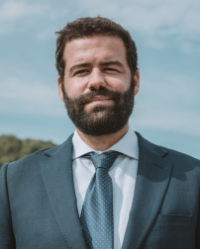
Jofre Sports Law is a boutique law firm that specialises in providing comprehensive legal advice in the sports industry, with a particular focus on professional football but also covering other sports such as golf, basketball, tennis, etc. The firm is led by Joaquín Jofre, former legal director of Málaga CF, and brings together a dedicated team of specialised sports lawyers based in Spain. The practice covers contractual, employment, tax and disciplinary matters, as well as club management mandates and regulatory issues before national and international bodies. The team regularly advises clubs, players, agents, coaches and sports executives on transfer agreements, employment contracts, sponsorship and image rights structures, training compensation and solidarity contribution claims. Jofre Sports Law represents clients in complex disputes before FIFA, the CAS and national federations, and has significant experience in acting for top-tier Spanish clubs and other stakeholders in high-profile contentious and non-contentious matters.
Taxation of Player Transfers and LaLiga Financial Fair Play: Recent Spanish Developments
Spain as a key transfer market
Spain remains one of the main destinations for international football transfers, particularly for players coming from South America and other emerging markets. The combination of high media exposure, competitive salaries and the prestige of LaLiga means that Spanish clubs are regularly involved in cross border deals, either as buyers of promising talent or as sellers of established players to other European leagues. This constant flow of transactions has turned Spain into a reference jurisdiction for tax authorities, regulators and investors seeking to understand how legal frameworks adapt to the realities of the football business.
In recent years, two trends have come to the forefront. First, Spanish tax authorities and courts have been refining their approach to capital gains arising from the transfer of federative rights when a foreign club sells a player to a Spanish club. Second, LaLiga’s financial control regime, often referred to as the league’s financial fair play, has continued to evolve, with frequent adjustments to its squad cost limit methodology and to the flexibility mechanisms available to clubs. For international stakeholders, these developments are not isolated: together, they determine whether a deal is fiscally efficient and whether it can actually be executed within the economic control parameters imposed on Spanish clubs.
The Racing case: federative rights “exercised in Spain”
The Audiencia Nacional’s (National High Court) decision in the Racing Club de Avellaneda case is a cornerstone in understanding Spain’s current doctrine on the taxation of transfer gains. The dispute stemmed from the transfers of Rodrigo de Paul to Valencia CF and Luciano Vietto to Villarreal CF, which generated significant capital gains for Racing as their former club. The Spanish tax authorities argued that, despite Racing being resident in Argentina, Spain was entitled to tax a portion of the gains because the federative rights were ultimately acquired by Spanish clubs and had to be exercised within Spanish territory.
Racing challenged this position, relying on the double taxation convention between Spain and Argentina and claiming that the gains should only be taxed in Argentina as the club’s state of residence. The Audiencia Nacional dismissed this argument and confirmed a tax bill of around EUR2.8 million, effectively endorsing the tax authority’s interpretation. The judgment includes an emphatic statement that there is “no doubt” that the federative rights transferred are rights that must be exercised in Spain, which allows Spain to assert taxing rights over the corresponding capital gains. That phrase, now widely quoted in commentary on the case, signals a clear willingness to apply a source based logic to transfers that result in the player performing in LaLiga.
Accounting treatment of federative rights and extraordinary income
The legal reasoning in the Racing case is intertwined with the way Spanish law treats federative rights from an accounting and corporate perspective. Under the Spanish Accounting General Plan for sports public limited companies, the cost of acquiring a player’s federative rights is capitalised as an intangible fixed asset on the balance sheet. The asset is then amortised over the duration of the player’s contract, reflecting the consumption of the economic benefits expected from the player’s services.
When the player is transferred, the difference between the transfer fee and the net book value of the federative rights is recorded as extraordinary income, which from a tax point of view is treated as a capital gain. This approach emphasises that the rights are “located” in the club’s balance sheet and that their economic realisation occurs when the rights are transferred or expire. In the Racing case, even though Racing was the selling club and the accounting rules in Argentina were not identical, the Spanish authorities argued that the economic value of the rights was ultimately linked to their exercise in Spain, since the players were joining Spanish teams. The court considered this argument compatible with the logic of the Spanish accounting framework and the concept of extraordinary income from the disposal of fixed assets.
Source of the gain: interaction with double taxation treaties
The double taxation convention between Spain and Argentina was central to the legal debate. Unlike some treaties that explicitly allocate taxing rights on capital gains from the sale of shares or immovable property, the Spain–Argentina convention leaves greater residual power to the domestic law of each country for gains that are not expressly mentioned. The Spanish tax authorities took the view that, under this wording, Spain could treat the gain as arising from an asset economically connected with its territory, given that the federative rights had to be exercised in Spain and were necessary for the player to be registered with the Spanish federation.
Spanish economic administrative tribunals had already shown an inclination to consider that the added value of a transfer is generated in the jurisdiction where the player will provide services and where the sporting rights will be exploited. The Audiencia Nacional effectively consolidated this line of reasoning, confirming that Spain may tax the gain alongside the seller’s home country, subject to the operation of domestic rules on double taxation relief. For clubs in other countries with similar treaty clauses, the case is a warning that Spain might claim taxing rights even when the seller is clearly non resident and the negotiation and signing of the transfer agreement occur outside Spain.
Practical impact on foreign clubs and risk of double taxation
For foreign clubs transferring players to LaLiga, the Racing decision changes the risk calculus. The possibility that Spain may issue an assessment several years after a transfer obliges clubs to consider long term exposure when they negotiate the price and structure of deals. If the club’s home jurisdiction does not fully recognise the Spanish tax as creditable, or if practical obstacles prevent the full utilisation of foreign tax credits, the result may be economic double taxation.
In addition, the administrative burden associated with audits, document requests and potential litigation in Spain can be significant, especially for clubs that do not have a permanent presence in the country. Accounting teams may need to keep detailed records of past transfers involving Spanish clubs to answer queries from the Spanish authorities many years later. From a cash flow perspective, the prospect of having to fund an unexpected tax bill in Spain may force clubs to adopt more conservative distribution policies and delay investments that depend on transfer proceeds.
It is also likely that market behaviour will adapt. Foreign clubs may gradually incorporate a “Spain premium” into their transfer valuations, increasing the requested fee or adjusting bonus structures to compensate for the potential Spanish tax. In competitive bidding scenarios where several European leagues are interested in the same player, the additional friction created by the Spanish tax position might influence the seller’s preference towards other destinations, especially where tax outcomes appear more predictable.
Contractual safeguards and negotiating dynamics
In this context, detailed drafting becomes a critical tool to allocate tax risks between the parties. Transfer agreements may include gross up clauses, under which the buyer agrees to increase payments to keep the seller whole if a particular tax is triggered, or tax indemnity provisions that specify which party bears any additional assessments arising from a given transaction. These clauses can be heavily negotiated because Spanish clubs, already constrained by LaLiga’s squad cost limit, are wary of assuming open ended obligations that could crystallise years later.
The Racing case also encourages parties to address co-operation and information sharing obligations explicitly. A selling club that receives a notice from the Spanish authorities may need documents held by the Spanish club, such as the contract filed with the league or internal calculations of amortisation, to support its position. Conversely, Spanish clubs may wish to ensure that the selling club provides timely information about its own tax audits or appeals that could have consequences for future cross border dealings. In more sophisticated structures involving investment funds, third party ownership restrictions and sell on percentages, the allocation of Spanish tax risk becomes even more complex, requiring careful alignment of interests among multiple stakeholders.
LaLiga’s financial control and the squad cost limit
While tax authorities and courts focus on public revenues, LaLiga’s economic control regulations seek to protect the financial sustainability of clubs and the integrity of competition. The core concept is the squad cost limit, which caps how much each club can spend on its sporting workforce each season. The calculation starts from the club’s projected recurring revenue, including broadcasting income, sponsorship, ticketing and commercial activities, to which certain extraordinary items can be added or from which adjustments are made. Non sporting operating expenses, financial costs, historic losses and debt servicing commitments are deducted to determine the “available” amount that can be spent on player and coaching staff salaries and on the amortisation of transfer fees.
LaLiga reviews the submitted budgets, may challenge clubs’ projections and ultimately sets an official limit that is binding for registration purposes. If a club exceeds its limit or attempts to register contracts that would push it beyond the authorised figure, LaLiga can block registrations or impose corrective measures. The system is more detailed and prescriptive than UEFA’s historical financial fair play model, with real time implications for transfer activity, as clubs must constantly monitor the impact of new signings and renewals on their available margin.
Current pressures, disparities and recent reforms
Published squad cost limits reveal stark inequalities between clubs competing in the same division. In one recent season, Real Madrid and Barcelona enjoyed limits of roughly EUR754 million and EUR463 million respectively, reflecting their strong revenue base and, in the case of Barcelona, the impact of extraordinary asset transactions.
At the other end of the spectrum, clubs such as Sevilla have faced limits below EUR1 million, a level that barely allows the registration of a professional squad and has been described as unsustainable in the medium term. Such disparities create a challenging environment for sporting competitiveness and increase pressure on smaller clubs to generate transfer profits and reduce wage bills.
In response to both clubs’ demands and market realities, LaLiga has approved a series of reforms aimed at refining the balance between discipline and flexibility. One of the most significant changes concerns how capital injections by shareholders are treated: instead of being limited to a flat EUR4 million per season for the purpose of improving the squad cost limit, qualifying injections can now reach up to 25% of the club’s net turnover, allowing larger clubs with solid fan bases to strengthen their balance sheets more meaningfully. There have also been adjustments to the variable margins applied to certain clubs, tightening control in the first division while providing slightly more room in lower categories.
Flexibility mechanisms, youth investment and “wild cards”
The regulatory trend is not purely restrictive. LaLiga recognises that strategic investment in youth academies and women’s football can improve the long term sustainability and brand value of the competition. Accordingly, recent changes have clarified that certain expenditures on these areas may be treated more favourably in the calculation of the squad cost limit, effectively encouraging clubs to allocate resources to development projects that do not immediately translate into first team salaries.
At the same time, LaLiga has introduced specific flexibility mechanisms to deal with contract renewals and the dynamics of the winter transfer window. One such mechanism, sometimes described as a “wild card”, allows clubs to renew one player’s contract under conditions that are slightly more lenient for economic control purposes, provided that certain criteria are met and that the club’s overall financial trajectory remains acceptable. The goal is to prevent situations where a key player must be sold purely for regulatory reasons, undermining sporting continuity and potentially reducing the value of the competition. However, the scope of these mechanisms is deliberately narrow, and clubs cannot rely on them as a substitute for prudent financial management.
Interaction between tax doctrine and financial fair play
When considered together, the Spanish tax doctrine on federative rights and LaLiga’s financial control rules create a tightly interwoven framework for transfer operations. A higher gross transfer fee negotiated to compensate a foreign club for potential Spanish taxation will increase the buying club’s amortisation charge and may quickly consume its available squad cost limit. Conversely, a Spanish club that needs to comply with a strict limit may push for lower fixed fees and higher performance related add ons or sell on clauses, which can affect when and where the selling club recognises income and may influence the tax analysis in both jurisdictions.
The timing of cash flows is also crucial. LaLiga’s regulations often differentiate between payments made within the season and deferred instalments, while tax authorities focus on when the right to receive the income arises and whether it should be recognised on an accrual basis. Complex arrangements such as loans with mandatory purchase options, conditional obligations depending on appearances or survival in the division, and multi club ownership structures further complicate the interaction between accounting, tax and regulatory considerations. In practice, clubs and their advisers must simulate various scenarios to ensure that a transfer not only complies with the letter of the regulations but also retains economic sense once all tax and financial control effects are taken into account.
Implications for investors, funds and multi club ownership
The modern football industry increasingly involves investment funds, private equity vehicles and multi club ownership groups that hold stakes in several entities across different jurisdictions. For these actors, Spain’s evolving tax and regulatory environment carries both risks and opportunities. On the risk side, past transfers involving Spanish clubs may give rise to contingent liabilities if Spain decides to apply the doctrine confirmed in the Racing case to transactions that were not originally conceived with this tax outcome in mind. Investors acquiring a shareholding in a foreign club that has historically sold players to LaLiga may need to conduct specific tax due diligence on those operations, reviewing whether any exposure exists and how it has been provisioned.
On the opportunity side, a deep understanding of LaLiga’s economic control rules can allow financially disciplined investors to identify undervalued assets. Clubs that are structurally constrained by low squad cost limits may be open to innovative deals, such as profit sharing arrangements, option structures or co investment in player development, as long as they comply with league rules and international transfer regulations. However, these structures must be designed carefully to avoid prohibited third party influence, conflicts of interest and regulatory breaches at both domestic and international level.
Key takeaways for international stakeholders
For non Spanish clubs, agents and investors, three main messages emerge from these developments:
- first, any transfer involving a Spanish club should be analysed from a bilateral tax perspective, with particular attention paid to how the relevant double taxation treaty may allow or restrict Spain’s ability to tax capital gains from federative rights;
- second, LaLiga’s squad cost limit must be treated as a hard constraint that can determine not only whether a deal is feasible but also how it must be structured in terms of timing, fixed and variable components, and wage commitments; and
- third, the interaction between both frameworks means that apparent short term advantages – such as a higher headline fee or a heavily deferred payment schedule – may carry long term costs in the form of unexpected tax assessments or regulatory tensions.
Those who anticipate these issues, build them into negotiations and document them carefully will be better placed to avoid disputes and to operate successfully in the increasingly sophisticated ecosystem of Spanish football.
Jofre Sports Law
Alameda Principal 6
29005 Málaga
Spain
+34 672 265 558
gv@jofresportslaw.com www.jofresportslaw.com
Law and Practice
Author
Jofre Sports Law is a boutique law firm that specialises in providing comprehensive legal advice in the sports industry, with a particular focus on professional football but also covering other sports such as golf, basketball, tennis, etc. The firm is led by Joaquín Jofre, former legal director of Málaga CF, and brings together a dedicated team of specialised sports lawyers based in Spain. The practice covers contractual, employment, tax and disciplinary matters, as well as club management mandates and regulatory issues before national and international bodies. The team regularly advises clubs, players, agents, coaches and sports executives on transfer agreements, employment contracts, sponsorship and image rights structures, training compensation and solidarity contribution claims. Jofre Sports Law represents clients in complex disputes before FIFA, the CAS and national federations, and has significant experience in acting for top-tier Spanish clubs and other stakeholders in high-profile contentious and non-contentious matters.
Trends and Developments
Author
Jofre Sports Law is a boutique law firm that specialises in providing comprehensive legal advice in the sports industry, with a particular focus on professional football but also covering other sports such as golf, basketball, tennis, etc. The firm is led by Joaquín Jofre, former legal director of Málaga CF, and brings together a dedicated team of specialised sports lawyers based in Spain. The practice covers contractual, employment, tax and disciplinary matters, as well as club management mandates and regulatory issues before national and international bodies. The team regularly advises clubs, players, agents, coaches and sports executives on transfer agreements, employment contracts, sponsorship and image rights structures, training compensation and solidarity contribution claims. Jofre Sports Law represents clients in complex disputes before FIFA, the CAS and national federations, and has significant experience in acting for top-tier Spanish clubs and other stakeholders in high-profile contentious and non-contentious matters.
