Succession & Estate Planning 2026
Bahamas
Author
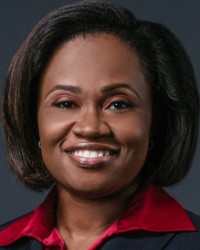
Higgs & Johnson has over 50 years of experience advising on offshore and onshore trusts and foundations. The firm is a recognised leader in private trust companies (PTCs), purpose trusts and foundations, serving families, high net worth individuals and fiduciaries. The team of highly qualified trust and estate practitioners (TEPs) provides expert guidance in estate planning, asset protection and trust litigation, having played an integral role in legislative updates such as the abolition of the rule against perpetuities. The lawyers regularly collaborate with international legal advisers to ensure tax‑efficient structures and comprehensive solutions. The firm also offers services in wills and probate, having assisted thousands of estates and contributed to the drafting of the Probate and Administration of Estates Act, 2011. In addition, the immigration practice advises on citizenship, residence and work permits. Higgs & Johnson delivers trusted counsel across generations with a commitment to excellence.
1. Contemporary Cultural Considerations in Succession Planning
1.1 Social and Cultural Attitudes
Succession planning in The Bahamas is significantly influenced by a desire to ensure family wealth created by earlier generations is sustained and used to maintain successive descendants. The current family representatives who are growing and maintaining family businesses are also focused on ensuring the businesses are retained by and transferred to lineal descendants.
Younger clients are also focused on charitable ventures to extend international opportunities to local recipients, introducing exciting and innovative prospects for engagement and development.
1.2 Wealth Profiles and Industry Influences
There is a well-established second home sector in The Bahamas, which has in recent times influenced local wealth planning and client expectations in the jurisdiction as well as the more traditional low-tax aspects for international planning.
2. Residency and Domicile for Purposes of Wealth and Estate Planning
2.1 Determining Domicile
Statutory provisions in The Bahamas that relate to the law of succession do not define “domicile” or provide legislative guidance concerning any standards for determining domicile. However, in the matters before it (eg, Masselle v Masselle [1994] BHS J. No 104 and Kohlrautz v Kohlrautz [1999] BHS J. 104), the Bahamian Supreme Court has considered the issue of domicile. The court, relying upon English case law, has determined that domicile is established by reference to the intention of a person to permanently reside in The Bahamas. Such intention to reside is assessed having regard to the expression of the intent of the person and the factual matrix regarding the place where they are ordinarily resident. The Bahamian court also takes into consideration any formal immigration status obtained by a person from the Department of Immigration in The Bahamas in its assessment.
Irrespective of the residence or domicile of persons, the statutory right of a person to make a will governed by the law of The Bahamas does not arise from the domicile of such person. Specifically, Section 7 of the Wills Act, Chapter 115, Statute Law of The Bahamas, permits testators domiciled outside The Bahamas to make valid wills governed by the law of The Bahamas where such testator has assets within The Bahamas. Additionally, the Bahamian court has recognised the intention and wishes of testators concerning moveable property while acknowledging that the disposition of real property is subject to the law of the place where such property is situated. Accordingly, a determination of Bahamian domicile of a testator would support the application of Bahamian law to the moveable property contained in the worldwide estate but is not a precondition to the valid creation of a will governed by the law of The Bahamas.
The residency and domicile of a person do not give rise to any estate, death or inheritance tax assessment in, or payable to, The Bahamas as, in the current tax system in the jurisdiction, such taxes are inapplicable. Taxation in The Bahamas arises through the imposition of stamp, customs and excise duties, real property taxes and value added taxes.
The domicile or residency of a person does not restrict such person’s entitlement to inherit or obtain any share of an estate in The Bahamas of a deceased person. Where an entitlement to inherit arises through a valid will, the law of The Bahamas does not prevent such disposition. To the extent the entitlement arises in an intestate estate, the recipient beneficiary would be required to fall within one of the categories established under Section 4 of the Inheritance Act, Chapter 116, Statute Law of The Bahamas.
A person’s domicile or residency is a statutory requirement to permit an application under the provisions of the Matrimonial Causes Act, Chapter 125, Statute Law of The Bahamas.
2.2 Income Tax Residency
Income tax does not form a part of the current system of taxation utilised in The Bahamas. Consequently, there are at present no rules and standards regarding income tax residency that impact, or are impacted by, domicile.
3. Intestacy and Forced Heirship Laws
3.1 Intestate Succession
In circumstances where a person dies without having created a will, the Inheritance Act, Chapter 116, Statute Law of The Bahamas, directs the distribution of the estate among certain categories of recipients; principally among a spouse, descendants or antecedents and remoter relatives surviving the person. In particular, Section 4 of the Inheritance Act equally divides the estate among the surviving spouse and children, allocating 50% of the estate to the spouse and dividing the remaining 50% equally among the children. If there is no surviving spouse, the intestate person’s estate is shared equally among any surviving children. Where there is neither spouse nor children, but there are grandchildren, the estate is shared equally among the grandchildren.
In the event the deceased person is not survived by a spouse or descendants, the Inheritance Act provides that the estate be paid out to any parents surviving the intestate person. In circumstances where there is neither a spouse nor descendants or ascendants, the statute enables the estate to be distributed among siblings, nieces and nephews, grandparents and ultimately next of kin in alternative provisions.
Similarly, if any provision or gift under a will fails, or if the entirety of a will fails and an asset or part of (or the entire) estate is or comes within the scope of intestacy provisions, the foregoing beneficiary designation imposed by the Inheritance Act is applicable.
3.2 Forced Heirship
Pursuant to the Wills Act, Chapter 115 of the Statute Law of The Bahamas, the testamentary freedom of every person is recognised in The Bahamas. The legislation expressly provides that a person may dispose of all real estate and personal property that is personally owned by them at the time such person dies. Consequently, forced heirship or family rights do not form a part of the law of The Bahamas.
4. Marital Property and Succession
4.1 Property Regimes During Life and Deathtime Rights and Protections
Generally, having regard to testamentary freedom in The Bahamas, spouses may gift or dispose of their personal property without restrictions. However, if by the will of one spouse, such spouse fails to make “reasonable financial provision” for the surviving spouse, or if the surviving spouse considers insufficient provision has been made in the deceased spouse’s will, an application to court may be made seeking to have some part of the net estate appropriated for the maintenance of the surviving spouse, provided the deceased spouse was domiciled in The Bahamas (see Part III of the Inheritance Act, Chapter 116, Statute Law of The Bahamas).
There are a few exceptions that limit the freedom of disposition under the law of The Bahamas.
- If property is jointly owned by spouses and the right of survivorship applies, on the death of the first of the spouses to die, the surviving spouse becomes the owner of the whole property by operation of law. The jointly held asset would not form any part of the estate of the deceased spouse or be subject to the probate process.
- Additionally, under Section 24 of the Inheritance Act, Chapter 116, Statute Law of The Bahamas, a surviving spouse, who does not have an entitlement to occupy the home that served as the marital residence during the lifetime of the spouse, is given conditional protection against eviction from the residence. Specifically, the surviving spouse’s right to reside in the marital home continues until the death, remarriage or an order varying the right to reside.
One spouse has no legal entitlement to deal with or dispose of assets that are jointly owned with the other spouse. Where one spouse purports to dispose of or transfer any part of marital property that is owned with the other spouse without the consent of that spouse, such disposition or transfer is liable to be invalidated or set aside under provisions like those contained in the Fraudulent Dispositions Act, Chapter 78, Statute Law of The Bahamas, or the Trusts (Choice of Governing Law) Act, Chapter 170, Statute Law of The Bahamas, as applicable.
Lifetime transfers, which result in a change of ownership, would likely attract transfer taxes while transfers to surviving spouses, arising through the probate process, are not subject to estate or inheritance taxes.
4.2 Prenuptial and Postnuptial Agreements
While there is presently no legislation in The Bahamas that recognises and enforces nuptial agreements, M v F [2011] 2 BHS J. No 13, relying on English case law, held that prenuptial and postnuptial agreements may be considered in the exercise of the court’s discretionary jurisdiction contained in the Matrimonial Causes Act, Chapter 125, Statute Law of The Bahamas.
5. Tax Treatment of Lifetime Transfers and Testamentary Dispositions
5.1 Lifetime Transfers
There are no gift taxes and no capital gains taxes applicable in The Bahamas. In the context of lifetime dispositions, transfer taxes arise where such dispositions result in a change of beneficial ownership. Recent legislative changes brought into force in 2024 removed certain tax exemptions in respect of trusts established enabling the transfer of Bahamian real property among the lineal descendants of a settlor/owner.
5.2 Testamentary Dispositions
There are no estate taxes or inheritance taxes assessed in The Bahamas on the disposition of assets out of a deceased person’s estate.
6. Lifetime Succession Planning Mechanisms
6.1 Common Planning Techniques
Common succession planning mechanisms used in The Bahamas to transfer wealth include the creation of trusts, foundations, family entities and wills.
6.2 Tax and Regulatory Constraints
When considering succession planning techniques, there are no anti-avoidance rules, estate or income tax rules in The Bahamas that would influence the availability or desirability of one mechanism over another.
However, The Bahamas has adopted various tax information exchange agreements, and enacted legislation to facilitate reporting under the Common Reporting Standard and the US Foreign Account Tax Compliance Act. As such, The Bahamas is required to provide applicable disclosure and reporting in accordance with the obligations it has assumed.
Recent legislative changes concerning the transfer into trusts of Bahamian real property, which limit and/or restrict exemptions on such transfers, has impacted, to an extent, the desirability of holding such assets in trust structures. Depending on the family’s objective, the change in legislation has resulted in other mechanisms being adopted in preference to the trust, like incorporated vehicles or wills.
7. Succession of Digital Assets
7.1 Legal Framework
While the Digital Assets and Registered Exchanges Act, 2024 has been enacted and replaces the original Digital Assets and Registered Exchanges Act, 2020, the legislation is focused primarily on the regulation of the sector. As such, the legislation does not specifically address the disposition of digital assets like email accounts, social media accounts and cryptocurrency at the individual level. The disposition of such assets, together with access information, remain topics for discussion and specific instruction in the initial phases to prepare succession and estate planning documents.
7.2 Planning Considerations
Details regarding the digital assets held, and how such assets are held and accessed, should be specifically considered in the initial planning stage. A joint plan should be agreed with the client-owner to address the particular asset and the intended disposition or transfer, and the plan should communicate necessary access information.
8. Family Business Succession Planning
8.1 Succession Strategies
Common strategies used in family business succession planning in The Bahamas include:
- the use of voting shares versus ownership shares;
- the joint ownership of ownership shares with rights of survivorship;
- the use of purpose trusts to hold the ownership of operating entities;
- the use of foundations to hold operating entities and facilitate succession exclusively among descendants; and
- the appointment of next-generation individuals as directors in the lifetime of the settlor, founder primary owner.
8.2 Legal and Tax Considerations
Business entities that undertake operations and activities within scope of the Business Licence Act, 2023 are required to be licensed under that legislation in The Bahamas. While there are no estate taxes or income taxes, so termed, applicable to business entities, in respect of its business undertaking such entities are subject to business licence tax on their turnover. The rate of such tax is pegged by the legislation to the level of turnover earned by the entity.
9. Trusts, Foundations and Related Entities
9.1 Choice of Planning Vehicle
There is a long history of trust creation and use in The Bahamas, arising from the jurisdiction’s common law heritage. In particular, discretionary trusts, directed powers trusts, settlor reserved powers trusts and purpose trusts are commonly used forms of trust instrument. Asset protection trusts are also available in The Bahamas.
Foundations, both private family and charitable options, may be established under the provisions of the Foundations Act, Chapter 369D, Statute Law of The Bahamas. Foundations are generally favoured by individuals who have a civil law background or undertakings.
Asset holding as well as equity holding incorporate entities are also options available in The Bahamas for estate planning.
9.2 Recent Developments Affecting Planning Vehicles
Recent efforts in the tax sector in The Bahamas have reduced exemptions and exclusions once available in respect of trusts, resulting in a nuanced evaluation by clients of the various planning vehicles in the jurisdiction, and of the suitability of those vehicles in the light of their family circumstances and objectives.
10. Fiduciary Regulation, Standards and Taxation
10.1 Corporate and Professional Fiduciaries
Corporate and professional fiduciaries are subject to regulatory oversight in The Bahamas in their administration of trusts, whether local or international. Corporate trustees are licenced and regulated by the Central Bank of The Bahamas while individuals, providing trust services as a business, are regulated by the Securities Commission pursuant to its obligations under the Financial and Corporate Services Providers Act, 2020. Individuals who serve as trustee, but who do not provide such services as a business undertaking, are not within scope of the Banks and Trust Companies Regulations Act, 2020 or the Financial and Corporate Services Providers Act, 2020.
Corporate and professional trustees, as professionals having a particular skill or expertise, may be held to a higher standard of liability than non-professional persons serving as trustees of trusts pursuant to the provisions of Section 5 of the Trustee Act, Chapter 176, Statute Law of The Bahamas. It is possible to exclude the application of the section, and such limiting provision is frequently specifically contained in trust instruments.
It is possible to form and utilise private trust companies in The Bahamas. The Banks and Trust Companies (Private Trust Companies and Qualified Executive Entities) Regulations 2025 enable the creation of private trust companies and permit such trust companies to be exempt from certain requirements imposed upon professional corporate trustees by the provisions of the Banks and Trust Companies Regulations Act, 2020.
10.2 Taxation of Trusts
Generally, in light of the tax structure utilised in The Bahamas, other than the imposition of trust duty of BSD50.00 on the creation of a trust, trusts as a vehicle for the transfer of wealth, estate and family planning are not subject to taxation in The Bahamas. The settlor and beneficiaries of trusts existing under the law of The Bahamas are also not subject to direct taxation in The Bahamas. However, to the extent that a trust administered in The Bahamas has Bahamian real property as a component of the trust fund, real property taxes are assessed annually on such property, factoring into the assessment the value of the property and improvements thereto. Similarly, where such trust has an operating business entity licensed under the Business License Act, business licence taxes are assessed on the turnover.
11. Planning for Non-Traditional Families
11.1 Succession Rights and Estate Taxes for Non-Traditional Families
Following the enactment of the Status of Children Act, Chapter 130, Statute Law of The Bahamas, in 2002, all children – whether born in wedlock, out of wedlock, legitimated or adopted – were given equal status under the law. Consequently, all children were accorded equal entitlement to benefit in their parents’ estate.
While the Status of Children Act does not specifically address surrogate children and posthumously conceived children, it is arguable, on the express language of the legislation, that such children should be subject to the equality principal extended to children generally.
Where a deceased person has created a valid will and made specific dispositions in its provisions, recognising the testamentary freedom, the law does not superimpose any conditions or requirements on the gifts and dispositions specified in such will. Similarly, where a trust instrument is prepared that addresses non-traditional family aspects and succession entitlements, which does not require beneficial entitlement provisions to be construed in accordance with Bahamian law, such provisions would not be disturbed.
There is no legislation in The Bahamas that recognises same-sex spouses or civil partnerships, and under the current laws in The Bahamas, “spouse” is conventionally defined as the husband or wife of a person. A marital relationship may arise legally in accordance with the provisions of the Marriage Act, Chapter 120, Statute Law of The Bahamas. A marital relationship may also arise from an extended cohabitation of a man and woman in a reputed relationship of husband and wife, which receives recognition following any adjudication by the courts of The Bahamas that a reputed relationship of husband and wife should be presumed and they are the spouse of each other, subject to any evidence to the contrary. Persons falling within the scope of “spouse”, as conventionally defined, would be within scope of the various succession provisions available under the law of The Bahamas as discussed in this chapter.
11.2 Conflicts and Divergent Laws
Conflicts can arise where family relationships are recognised differently under the law of other jurisdictions. Considering the conventional construction of “marriage” and/or “spouse” under the law of The Bahamas, this area is one that could attract significant conflict given the recognition of same-sex relationships in other jurisdictions.
Such areas of conflict may be avoided in the drafting of definition provisions in documents adopting an estate planning mechanism. For example, in the preparation of trust instruments governed by the law of The Bahamas, this potential conflict is often addressed by specifying that the marriage is in accordance with the law where the beneficiaries are resident and/or domiciled.
Similarly, conflict may arise concerning surrogate children. In the trust preparation, special care in delineating the scope of applicable definition provisions is paramount.
12. Cross-Border Succession Planning
12.1 Taxation of Cross-Border Estates and Transfers
The government of The Bahamas does not impose estate, inheritance or death taxes. The Bahamas has also not entered into any national, multinational agreements or treaties that affect the assessment of individual taxes or the imposition of taxes on dispositions occurring outside the jurisdiction, or on assets located outside The Bahamas.
The Bahamas has adopted the Common Reporting Standard and entered into an agreement with the United States pursuant to the Foreign Account Taxation Compliance Act. Consequently, where assets are distributed to beneficiaries from trusts administered by trustees in The Bahamas, the requisite reporting is made to the applicable jurisdiction in accordance with the applicable legislation.
Higgs & Johnson
Ocean Centre
East Bay Street
Nassau
The Bahamas
+242 502 5200
+242 502 5250
info@higgsjohnson.com www.higgsjohnson.com
Law and Practice
Author
Higgs & Johnson has over 50 years of experience advising on offshore and onshore trusts and foundations. The firm is a recognised leader in private trust companies (PTCs), purpose trusts and foundations, serving families, high net worth individuals and fiduciaries. The team of highly qualified trust and estate practitioners (TEPs) provides expert guidance in estate planning, asset protection and trust litigation, having played an integral role in legislative updates such as the abolition of the rule against perpetuities. The lawyers regularly collaborate with international legal advisers to ensure tax‑efficient structures and comprehensive solutions. The firm also offers services in wills and probate, having assisted thousands of estates and contributed to the drafting of the Probate and Administration of Estates Act, 2011. In addition, the immigration practice advises on citizenship, residence and work permits. Higgs & Johnson delivers trusted counsel across generations with a commitment to excellence.
