Technology M&A 2026
Japan
Trends and Developments
Authors
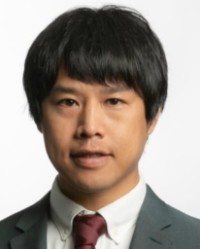

Nagashima Ohno & Tsunematsu is based in Tokyo, Japan, and is widely recognised as a leading law firm and one of the foremost providers of international and commercial legal services. The firm’s overseas network includes locations in New York, Singapore, Bangkok, Ho Chi Minh City, Hanoi, Jakarta and Shanghai. The firm also maintains collaborative relationships with prominent local law firms. In representing its leading domestic and international clients, it has successfully structured and negotiated many of the largest and most significant technology-related M&A transactions in Japan. In addition to its capabilities spanning key commercial areas, the firm is known for path-breaking domestic and cross-border risk management/corporate governance cases and large-scale corporate reorganisations. The approximately 600 lawyers at the firm work together in customised teams to provide clients with the expertise and experience specifically required for each client matter.
Introduction
Japan’s technology M&A is reshaping how traditional industries –ie, manufacturing and automotive – implement AI and digital transformation. Acquisitions and partnerships span the entire value chain, from semiconductors through applications to physical AI implementation, while concurrent M&A activity focuses on IT talent acquisition, addressing Japan’s persistent workforce shortage. M&A success requires integrating organisational capability with technological consolidation – fusing hardware-centric corporate cultures with agile software methodologies while consolidating technology platforms. Japan’s acquisition-driven talent strategy contrasts sharply with US technology sectors that achieve efficiency through workforce reductions, reflecting structural differences in labour market dynamics and the IT talent pipeline. These distinctive market characteristics mean that regulatory compliance, post-acquisition cultural integration and workforce retention will likely determine competitive advantage.
Investment Approaches Across the AI Value Chain
Japanese enterprises pursue AI capabilities through diverse transaction structures – acquisitions, strategic investments and business partnerships. These investments follow distinct patterns depending on their position within the AI value chain and the stage of development.
Technical architecture: four-layer value chain
The Japanese AI investment landscape comprises four distinct technical layers:
- layer 1 provides foundational AI chip hardware;
- layer 2 delivers computational capacity infrastructure (data centres and cloud platforms);
- layer 3 encompasses foundation models (large language models and multimodal AI systems); and
- layer 4 includes AI applications – vertical AI, AI agents for business process automation and physical/embedded AI systems.
Transaction patterns: infrastructure versus application investments
From a transaction structure perspective, these four technical layers resolve into distinct investment patterns. Infrastructure layers (1–3) emphasise strategic control, capital deployment and established technology pathways; the application layer (4) demonstrates partnership-dominant approaches, though market positioning creates strategic variations.
Infrastructure-orientated layers: strategic control and co-ordinated development
Layers 1–3 (AI chips, computational capacity, foundation models) share three characteristics that help explain control-oriented transaction structures:
- strategic control imperative – ownership or exclusive access to foundational capabilities significantly influences competitive positioning across all AI-dependent industries;
- capital intensity – development requires long-term commitments beyond typical partnership horizons; and
- established development pathways – proven technology trajectories justify major capital deployment.
These characteristics help explain why Japanese investments in infrastructure layers tend to concentrate on control-oriented transaction structures – including acquisitions, strategic investments and co-ordinated public-private initiatives (ie, joint programmes between government and private companies) – rather than partnership-based approaches.
Layer 1: AI chips and semiconductors
AI-specific processors, graphics processing units (GPUs) and neural processing units (NPUs) constitute the foundational hardware enabling AI deployment at scale. Japanese investments reflect the recognition of chip capabilities as strategic national infrastructure requiring co-ordinated public-private approaches.
In December 2024, Preferred Networks – led by SBI Group – raised JPY19 billion to develop ultra-low-power AI processors and foundation model capabilities. Complementing this venture approach, in January 2025 Mitsubishi Corporation, Preferred Networks and Internet Initiative Japan established the Preferred Computing Infrastructure joint venture to commercialise secure AI infrastructure, exemplifying vertical integration from AI processor architecture through secure infrastructure delivery.
Recognising AI chip capabilities as critical to economic security, the government-backed GENIAC programme allocated JPY72.5 billion across six providers. KDDI, Sakura Internet and Highreso formalised the Japan GPU Alliance in October 2025, creating a resource-sharing framework among major providers.
Layer 2: computational capacity infrastructure
Computational capacity infrastructure comprises cloud platforms – infrastructure as a service (IaaS) and artificial intelligence as a service (AIaaS) – and their underlying physical foundation: real estate, construction, power systems and operational management. This convergence of technology services and physical infrastructure creates distinct cross-sector strategic dynamics (covered below).
Layer 3: foundation models
Foundation models – large language models and multimodal AI systems – significantly influence competitive positioning across AI-dependent industries. Strategic investments in foundational language models reflect market recognition that control over base model capabilities will significantly influence competitive positioning across all downstream applications.
International market access through strategic capital
Japanese enterprises pursue global market access through strategic commitments to leading international models. SoftBank’s Vision Fund committed billions of dollars cumulatively to OpenAI through partnerships announced in September 2024, subsequently establishing the SB OpenAI Japan joint venture in February 2025. The joint venture exclusively markets OpenAI’s foundation model capabilities in Japan through Cristal Intelligence, targeting the automation of over 100 million workflows across financial reporting, document creation and customer inquiry management.
Domestic foundation model development
Japan’s AI sovereignty strategy manifests through strategic development of domestic foundation model capabilities. Sakana AI’s investment trajectory exemplifies this approach. NVIDIA’s investment in September 2024 elevated the start-up to unicorn status within a year of having been founded. Strategic investments from Japan’s three major megabanks and over 30 leading corporations exceeded JPY30 billion in Series A funding. Continued investor interest – with reported valuation discussions exceeding USD2 billion in late 2025 – underscores the strategic importance of domestic foundation model development for Japan’s AI sovereignty objectives.
This dual strategy – international market access combined with domestic capability development – allows Japanese enterprises to secure access to leading foundation models while reducing long-term dependency on foreign foundation models and supporting national economic security objectives.
Application-oriented layer: partnership-dominant with strategic exceptions
Layer 4 (AI applications) exhibits contrasting characteristics to layers 1–3, favouring partnership structures:
- use case uncertainty – technology and commercial immaturity mean that it remains largely unproven as to which applications will generate sustainable economic value;
- early-stage development – applications remain in the early stages such that collaboration between business enterprises and technology companies enables shared risk and parallel capability development; and
- rapid technology evolution – foundation model advancement may mean that application-layer differentiation becomes obsolete, favouring flexible partnership approaches over permanent capital commitments.
These characteristics help explain why Japanese investments in application layers predominantly favour partnerships and joint ventures. However, platform acquisitions occur where new market entrants lack operational capability and established customer ecosystems to access markets directly. Conversely, incumbent manufacturers pursue selective partnerships and minority investments that leverage existing competitive positions while maintaining technological flexibility as industry standards emerge.
Vertical AI applications: market entry and established capabilities
Vertical AI investments target industry-specific applications. Transaction structures reflect market-specific factors: whether established global leaders already serve the market, data regulatory requirements and the strategic positioning of Japanese enterprises.
SoftBank’s SB TEMPUS joint venture with Tempus AI – a JPY30 billion combined investment announced in June 2024 – focuses on precision medicine and genomic testing for cancer treatment. The transaction structure reflects a distinctive market condition: Tempus, a leading US-based precision medicine platform, had not previously entered the Japanese market despite global expansion. The joint venture structure reflects partnership necessity: entering an unfamiliar regulatory environment – with Pharmaceuticals and Medical Devices Agency (PMDA) oversight – while maintaining governance alignment with the US parent company. This suggests that market entry strategy, rather than data exclusivity, appears to be a primary driver of transaction structure in this case, demonstrating how joint venture structures enable market entry into regulated sectors without full acquisition.
AI agents for business process automation: collaboration-first approach
AI agent implementation for business process automation remains predominantly in the early stages of development. Technology and commercial immaturity favour collaboration between business enterprises and technology companies.
SoftBank’s SB OpenAI Japan joint venture developed Cristal Intelligence for enterprise AI agents, yet such large-scale strategic investments remain limited. NEC’s collaboration with Google Cloud, announced in August 2025, exemplifies broader market patterns: integrating AI agent functionality with established cloud infrastructure and foundation models.
These partnerships prevail because AI agent technologies remain technically immature, and standardisation frameworks have yet to solidify. Cross-industry partnerships indicate widespread recognition that AI agent deployment requires sustained ecosystem development rather than immediate market consolidation. Current market dynamics remain collaboration-dominant as the primary strategic focus.
Physical and embedded AI: market position and industry structure
Physical AI investments – AI systems integrated with mechanical platforms – present a key layer 4 exception. While most layer 4 investments favour partnerships due to technological uncertainty, physical AI requires integration with established (over a period of decades) hardware platforms, manufacturing ecosystems and regulatory standards – creating industry barriers that necessitate different transaction structures. Market positioning and existing industry structure create asymmetric strategic imperatives.
New entrants lacking established robotics capabilities face challenges penetrating technology-dense markets through partnerships alone. SoftBank’s JPY818.7 billion ABB Robotics acquisition in October 2025 exemplifies this necessity: ABB’s integrated platform – combining manufacturing, supply chains, customer relationships and decades of IP – cannot be replicated through partnerships. For technology investors without a hardware presence, platform acquisition enables physical AI deployment and market access.
Established robotics manufacturers – possessing customer relationships, manufacturing infrastructure, regulatory compliance and technical standards – face different imperatives. Rather than wholesale platform consolidation, they enhance existing products through selective partnerships and targeted acquisitions. Yaskawa acquired Tokyo Robotics in March 2025 for humanoid expertise while establishing Astellas Pharma as a joint venture for biomedical applications. Fanuc maintains NVIDIA partnerships for deep learning while establishing Kitov AI for vision inspection, while Kawasaki partners with Dexterity for autonomous truck loading. These structures enhance capability without reorganising established systems, representing a true competitive advantage.
This divergence suggests that industry structure plays a dominant role alongside layer 4 characteristics. Physical AI implementation intersects with sectors where incumbent manufacturers possess durable advantages through installed bases, regulatory compliance, technical standards and customer relationships.
Data Centres as Computational Capacity Infrastructure
Data centre M&A demonstrates infrastructure investment dynamics with particular clarity: strategic control imperatives, capital intensity and the imperative to establish capacity quickly create distinctive transaction patterns. Strategic control over computational capacity significantly influences competitive positioning in AI-dependent industries, requiring substantial capital deployment through acquisition-oriented structures that secure immediate operational capacity.
Three factors drive acquisition and consolidation patterns in data centre investments:
- speed of establishment imperative – AI demand outpaces new facility development timelines (typically 2–3 years), favouring asset acquisition for immediate capacity;
- infrastructure bottlenecks – construction capacity constraints, skilled labour shortages and power infrastructure limitations create competitive advantages for acquiring existing assets; and
- operational complexity – integrated data centre operations require co-ordinated capabilities across real estate, electrical engineering, cooling systems and IT management, driving vertical integration.
These factors help explain transaction patterns across hyperscaler, corporate and downstream investments.
Hyperscaler and fund investment: asset acquisition over new development
Hyperscalers (AWS, Microsoft, Google) and international investment funds have committed substantial capital to Japanese data centre expansion. Ares Management closed its Japan DC Partners I LP fund at USD2.4 billion (June 2025), and Brookfield committed over USD10 billion over five years, reflecting sustained AI-driven growth expectations.
However, escalating construction costs and extended development timelines incentivise strategic asset acquisition. SoftBank’s acquisition of Sharp’s former manufacturing facilities in Sakai for approximately JPY100 billion (December 2024) exemplifies this approach, providing rapid conversion capacity with established power infrastructure, reducing deployment timelines compared to greenfield development.
Corporate restructuring for accelerated deployment
Technology conglomerates have undertaken major restructuring to accelerate data centre investment decision-making. NTT’s full acquisition of NTT Data for JPY2.37 trillion (May 2025) – Japan’s second-largest M&A transaction – targeted simplified capital structure and accelerated decision-making for AI and data centre expansion, addressing delays inherent in complex parent-subsidiary listing structures.
Hitachi consolidated its data centre operations – which were distributed across three entities – into Hitachi Systems (April 2025), concentrating approximately 1500 engineers to deliver integrated solutions combining renewable energy infrastructure, advanced cooling systems and IT operations management.
Downstream sector consolidation
Data centre expansion has driven consolidation in electrical engineering and construction sectors, addressing implementation bottlenecks. Daiwa House Industry’s acquisition of Sumitomo Densetsu (October 2025, JPY292 billion) – one of Japan’s largest data centre construction M&A transactions – vertically integrated real estate development expertise with specialised electrical engineering and data centre construction capabilities, directly addressing skilled labour constraints and escalating construction costs.
Automotive Industry: Physical AI and SDV Transformation
Japanese automakers face dual transformations: ongoing electric vehicle (EV) competition with Chinese manufacturers and the fundamental shift towards software-defined vehicles (SDVs) and AI-powered autonomous systems. As vehicle value shifts from mechanical platforms to software and AI systems, automotive companies must access external AI capabilities beyond traditional keiretsu networks (close-knit Japanese corporate groups with cross-shareholding and exclusive supplier ties).
This transformation exemplifies the layer 4 (physical and embedded AI) investment patterns identified in the foregoing. Distinctive capability gaps and organisational integration complexities create characteristic transaction patterns favouring partnerships combined with minority investments.
Two major factors appear to drive automotive AI investments towards partnership-plus-minority-investment structures.
- Integration constraints: Automotive manufacturers require specialised software and AI expertise outside of traditional keiretsu networks, but organisational incompatibilities (hardware-centric vertical integration versus agile software practices) make full acquisition integration challenging.
- Technical uncertainty: Autonomous driving faces competing approaches across sensor architectures – light detection and ranging (LiDAR)-based, camera-based, sensor fusion – and software methodologies (end-to-end deep learning versus modular approaches). Minority investments provide capability access while maintaining flexibility as standards emerge, avoiding permanent commitments to approaches that may become obsolete.
These factors help explain why automotive AI investments predominantly emphasise partnerships and minority investments. However, full acquisitions occur when strategic integration into existing operations is essential, or where operational control is required to capture value. Woven by Toyota’s acquisition of automotive operating system (OS) developer Renovo Motors exemplifies this pattern, securing platform capabilities requiring direct integration with Toyota’s SDV architecture.
From vertical integration to cross-industry collaboration
Mitsubishi Motors’ agreement to procure EVs from Foxconn’s subsidiary Foxtron (May–June 2025), with the majority of production being outsourced, exemplifies SDV’s structural impact: traditional keiretsu-based vertical integration gives way to cross-industry technology partnerships mirroring consumer electronics contract manufacturing.
SDV and autonomous driving partnerships
Major SDV developments in 2024–25 reflect partnerships between traditional automakers and technology sector players. These partnerships mark strategic shifts towards sourcing software and AI capabilities from specialised technology firms rather than in-house keiretsu development.
Domestic partnerships include NTT Data and Denso’s commitment to build a 3,000-person software development organisation by 2030 (June 2024), and Honda-Nissan’s strategic partnership for EV and SDV development (August 2024). Multiple automakers invested in tier IV (June 2024), reflecting architectural divergence in autonomous driving: competing sensor architectures and software methodologies drive minority investments that maintain technological optionality, contrasting with Tesla’s camera-only approach and Waymo’s sensor fusion architecture.
International partnerships include Toyota’s alliance with NVIDIA for AI-based autonomous driving (January 2025) and SoftBank’s minority investment in Wayve (May 2024). These partnerships reflect Japanese original equipment manufacturers (OEMs) maintaining flexibility through multiple technology relationships rather than exclusive commitments as technical standards emerge.
Organisational transformation and implementation challenges
The transformation affects traditional supplier relationships. As vehicle value shifts from mechanical components to software and electronics, the supplier structure built around hardware manufacturing faces restructuring.
These partnerships require automotive companies to bridge fundamental cultural differences alongside technical integration challenges – closed vertical integration versus agile software practices, and hardware-centric architectures versus software-defined platforms – explaining why minority investments with operational autonomy are preferred over full acquisitions requiring both organisational and technical transformation. Traditional automotive norms of closed vertical integration and detailed specifications conflict with software industry practices emphasising flexibility, iterative development and ecosystem collaboration – adaptation challenges that will determine whether partnership structures succeed or eventually require acquisition-based integration.
IT Systems and Digital Transformation M&A
The “2025 cliff”: legacy system modernisation imperatives
Although leading Japanese enterprises pursue strategic AI investments, a PricewaterhouseCoopers (PwC) survey revealed that Japanese enterprises broadly lag behind the USA, the UK and China in effective utilisation. This implementation gap reflects the “2025 cliff” – warnings of JPY12 trillion annual losses from aging IT systems – that materialised through widely publicised system failures at multiple major companies. These failures appear to reflect underlying structural issues: highly customised proprietary systems, inadequate documentation creating “black boxes” dependent on veteran employee knowledge and organisational weaknesses suggesting insufficient in-house IT expertise. These challenges have elevated IT system due diligence to critical M&A components, requiring rigorous assessment of legacy system conditions, IT professional availability and knowledge management practices.
IT services sector consolidation
Consolidation strategies: internal restructuring and external acquisition
Japanese enterprises address IT capability gaps through two approaches: consolidating dispersed IT personnel within corporate groups or acquiring external IT service providers.
Internal restructuring through group consolidation concentrates IT capabilities dispersed across group entities. Major group consolidations include NTT’s subsidiarisation of NTT Data (September 2025), Sumitomo Corporation’s JPY881.7 billion tender offer for SCSK (October–December 2025) and NEC’s JPY239 billion acquisition of NEC Networks & System Integration Corporation, with additional mergers planned by TIS-INTEC, Panasonic and Fujitsu concentrating approximately 2,000–3,000 IT professionals per entity.
These transactions pool technical expertise to consolidate and strengthen digital transformation capabilities, while eliminating parent-subsidiary listing structures creating governance conflicts. Tokyo Stock Exchange market reforms encouraging resolution of such arrangements have accelerated such consolidation activity.
External expansion through workforce acquisition represents the second approach. Beyond internal restructuring, enterprises have intensified acquisition activity targeting external IT service providers to secure IT personnel. Major 2024–25 transactions demonstrate this imperative: KKR’s JPY640 billion acquisition of FUJISOFT (May 2025) and SCSK’s JPY360 billion acquisition of NetOne Systems represent strategic consolidation, while Accenture Japan’s acquisitions of Yumemi – involving approximately 400 user interface/user experience (UI/UX) professionals – and SI&C Group (approximately 1,500 IT professionals) exemplify targeted workforce acquisition.
Japan-US workforce strategy divergence
Neither internal consolidation nor external acquisition is aimed at headcount reduction. Both concentrate technical personnel to strengthen IT service delivery.
This contrasts sharply with US technology sectors, where AI-driven productivity has enabled workforce optimisation. Japan faces fundamentally different structural conditions: the Ministry of Economy, Trade and Industry (METI) projects an IT workforce shortage of 790,000 professionals by 2030. The USA achieved relative talent abundance through decades of computer science education expansion combined with high labour market fluidity, enabling large pools of mobile IT professionals. Japan’s constrained IT education capacity and limited labour market flexibility contribute to persistent workforce shortages. Consequently, Japanese acquirers prioritise workforce acquisition to combine technical talent with AI-powered tools, generating capability gains, whereas US enterprises achieve efficiency through workforce optimisation.
Emerging signals suggest potential shifts: AI-native startups have adopted selective hiring focusing on highly skilled engineering talent, suggesting AI tools enable smaller, advanced teams to achieve productivity levels previously requiring larger workforces. Whether such practices will spread to large enterprises remains uncertain, though structural labour market factors are likely to sustain acquisition-driven strategies through 2027–28.
Practical Implications and Conclusion
Japan’s technology M&A reflects a distinctive challenge: integrating external software-centric capabilities into rigid corporate cultures built on hardware manufacturing principles. This challenge extends beyond strategy and capability integration to practical execution realities: regulatory frameworks, cross-industry compliance complexities and post-acquisition organisational dynamics fundamentally dictate whether M&A investments generate sustainable competitive advantage.
Foreign investment screening under Japan’s Foreign Exchange and Foreign Trade Act (FEFTA) increasingly scrutinises software, AI and semiconductor-related businesses driven by national security considerations and geopolitical tensions, particularly regarding Chinese investment. This heightened scrutiny, with extended review timelines, requires early regulatory engagement.
Separately, cross-industry partnerships face ambiguous licensing and regulatory boundaries as digitalisation blurs traditional industry frameworks. Technology companies entering established industrial sectors must navigate unfamiliar compliance requirements while ensuring acquired operations maintain necessary licences and regulatory certifications post-acquisition. Regulatory and compliance due diligence must therefore address not only current licensing status but also the organisational capacity to sustain regulatory obligations. These considerations must be integrated as core transaction components, not peripheral elements.
Post-acquisition integration challenges extend beyond regulatory compliance to fundamental organisational dynamics. Critical decisions regarding brand consolidation, organisational structure and integration pace – whether immediate absorption or phased autonomy – directly impact workforce retention and cultural compatibility.
Workforce retention will likely determine whether talent acquisitions deliver a sustained competitive advantage or merely redistribute Japan’s scarce IT professionals across the market. Integration success requires establishing career pathways, compensation structures and governance models that bridge traditional manufacturing management practices with agile software development methodologies, while creating collaborative frameworks where diverse organisational cultures generate synergies rather than friction.
Success requires balancing organisational transformation with technology integration, regulatory compliance and talent retention. Whether established enterprises can absorb agile, innovation-driven practices from acquired technology firms while consolidating technology platforms and maintaining regulatory standards will determine competitive outcomes. M&A outcomes are likely to be measured by success across all dimensions – organisational adaptation, technology integration, regulatory navigation and talent retention – which are interdependent elements of obtaining a sustainable competitive advantage.
Nagashima Ohno & Tsunematsu
JP Tower
2-7-2 Marunouchi
Chiyoda-ku
Tokyo 100-7036
Japan
+81 3 6889 7000
+81 3 6889 8000
info@noandt.com www.noandt.com
Trends and Developments
Authors
Nagashima Ohno & Tsunematsu is based in Tokyo, Japan, and is widely recognised as a leading law firm and one of the foremost providers of international and commercial legal services. The firm’s overseas network includes locations in New York, Singapore, Bangkok, Ho Chi Minh City, Hanoi, Jakarta and Shanghai. The firm also maintains collaborative relationships with prominent local law firms. In representing its leading domestic and international clients, it has successfully structured and negotiated many of the largest and most significant technology-related M&A transactions in Japan. In addition to its capabilities spanning key commercial areas, the firm is known for path-breaking domestic and cross-border risk management/corporate governance cases and large-scale corporate reorganisations. The approximately 600 lawyers at the firm work together in customised teams to provide clients with the expertise and experience specifically required for each client matter.
