White-Collar Crime 2026
USA – California
Trends and Developments
Author
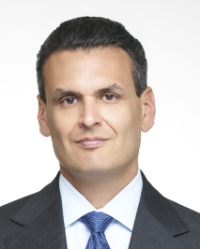
The Freedman Firm PC is a Los Angeles trial boutique focused on high-stakes criminal defence and complex civil litigation. The firm defends clients against all types of criminal charges, government investigations, and regulatory enforcement in state and federal court, with particular experience in federal white-collar cases. Clients include executives, professionals, public officials, celebrities and corporations who require experienced trial counsel, strategic judgement, courtroom credibility, and aggressive but efficient representation. The firm is dedicated to protecting clients against the biggest challenges they face, including criminal prosecution and investigations, regulatory enforcement actions, and lawsuits where businesses and reputations are on the line. The firm fights to achieve the best results for clients, as creatively and efficiently as possible, behind the scenes when possible and in the courtroom when necessary.
White-Collar Crime in California: Recent Trends Across the Golden State
Although California has been no exception to the Trump Administration’s shift in prosecutorial priorities, white-collar prosecutions have remained a priority of US Attorney’s Offices throughout the state, and local district attorney’s offices have also developed their own priorities in the area as well.
This article discusses recent trends in white-collar prosecution across California’s four US Attorney’s Offices: the Central District (Los Angeles, Orange County, and the surrounding counties); the Northern District (San Francisco, Oakland, and San Jose); the Eastern District (Sacramento, Fresno, and Bakersfield); and the Southern District (San Diego and Imperial County), along with related developments in state and local prosecutions and priorities.
The Central District, the country’s second-largest US Attorney’s Office, handles a broad mix of public corruption and fraud cases, with a perennial focus on healthcare fraud and a newer focus on government funding fraud, especially in the homelessness sector, along with a steady dose of national security prosecutions. The Northern District’s docket is shaped by the technology and venture capital economy of the Bay Area, generating a steady stream of securities, trade-secret and economic-espionage cases. The Southern District, a border office, combines a conventional healthcare and investment-fraud docket with a line of cross-border financial-crime cases tied to narcotics trafficking. The Eastern District, which includes the state capital, pairs public corruption cases arising from Sacramento’s political establishment with a steady docket of healthcare and government-programme fraud. District attorneys’ offices in several metropolitan areas have carved out priorities of their own in white-collar cases, especially in Los Angeles.
The national landscape
Before turning to specific trends and examples in California, it is worth noting several national developments across white collar prosecutions.
Nationally, the Department of Justice has lost a substantial share of its attorneys since early 2025, an exodus of hundreds of career prosecutors to early retirement programmes, deferred resignation incentives and involuntary transfers.
At the start of the second Trump Administration, then-Attorney General Pam Bondi directed prosecutors toward the “total elimination” of drug cartels and transnational criminal organisations and toward immigration enforcement in border-state districts, a directive of particular consequence for the Southern District, given its location.
Todd Blanche, who had been carrying out those same priorities as Deputy Attorney General, was confirmed as Attorney General in August 2026 and has continued that emphasis, with Trent McCotter now serving as Deputy Attorney General.
The four California US Attorney’s offices have seen a comparable wave of retirements and resignations, and their white-collar sections are, in practical terms, competing for staff and resources against units whose caseloads have grown substantially in line with the Department’s national priorities.
The National Fraud Enforcement Division
The clearest sign that white-collar enforcement is not retreating, notwithstanding the staffing losses, is the Department’s new National Fraud Enforcement Division. Vice President J.D. Vance announced the office’s creation in January 2026; then-Acting Attorney General Todd Blanche formally directed its creation in a 7 April memorandum that transferred more than 150 prosecutors out of the Criminal Division, and the Senate confirmed the division’s chief, Colin McDonald, as Assistant Attorney General in March.
By August, a final rule amending the Department’s organisational regulations gave the division, known as NFED, formal prosecutorial authority, the first such grant to a new Department component since the creation of the National Security Division in 2006. In the months between the April memorandum and the August rule, NFED’s ranks grew to roughly 500 attorneys and staff, absorbing the Tax Section, the Health Care Fraud Unit, and parts of the Market, Government and Consumer Fraud Unit along the way.
The August rule gives NFED jurisdiction, much of it shared with the Criminal Division, over six categories of conduct: fraud generally, trade and customs fraud, fraud involving money owed to or paid by the federal government, controlled-substances offenses, and, on an exclusive basis, criminal tax violations and fraud involving health plans. A catchall provision lets NFED prosecute any federal crime it uncovers while investigating conduct within those six areas, and lets the Attorney General or Deputy Attorney General assign the division additional cases at will.
Each of the 93 US Attorney’s Offices has been directed to place a detailee inside the division, and NFED now houses the National Fraud Detection Center, a multi-agency, data-driven unit co-ordinating with the White House’s Task Force to Eliminate Fraud. McDonald has described the division’s approach as a “broken windows” model, pursuing comparatively small fraud matters, including individual false tax returns, on the theory that a defendant who defrauds one government programme frequently defrauds several at once. He has said NFED will bring securities-fraud charges of its own where they arise within its healthcare, tax, and government-contracting portfolios even as the Department weighs whether to transfer securities-fraud enforcement to the division wholesale.
The cases now being brought across California increasingly exemplify these trends and priorities: fraud involving nonprofit and public funds, public corruption, trade-secret and sanctions violations, investment and digital-asset fraud, healthcare fraud, and cross-border financial crime tied to narcotics trafficking.
Nonprofit and public-funds fraud
The largest concentration of this activity is in Los Angeles, where fraud, waste, and corruption in the homelessness-services system has become a significant source of white-collar casework. In April 2025, the Central District US Attorney’s Office launched a Homelessness Fraud and Corruption Task Force covering all seven counties in the district, drawing upon the Major Frauds Section, the Public Corruption and Civil Rights Section, and the Civil Fraud Section with the FBI, the HUD Office of Inspector General, and IRS Criminal Investigation.
In October 2025 and September 2026, the task force brought charges in several matters targeting several real estate developers, as well as the founder of a Culver City nonprofit, who was charged with misappropriating roughly USD7.5 million of the USD118 million his organisation had received since 2019, including diverting more than USD1 million toward opening a nightclub. A nonprofit employee was charged with taking more than USD180,000 in bribes in exchange for referring “ghost” clients who could be billed to housing programmes, and the operator of a now-defunct nonprofit agreed to plead guilty to wire fraud and money laundering, for which he also faces parallel state charges filed by the Los Angeles County District Attorney’s Office the same day as his initial federal complaint in January 2026.
A comparable pattern has emerged at the state level in San Diego, where the County District Attorney’s Office charged the former chief operating officer of the Harm Reduction Coalition of San Diego with misappropriating more than USD134,000 in public funds for personal expenses. The charges follow a 2023 county audit had already flagged financial irregularities that went unaddressed before the county renewed the nonprofit’s contract in 2024. District Attorney Summer Stephan’s public criticism of that oversight lapse closely tracks the rationale federal prosecutors have given for the Los Angeles task force, suggesting that scrutiny of public money moving through nonprofit intermediaries has become a statewide phenomenon rather than one confined to homelessness spending. The Los Angeles County District Attorney’s Office has pursued similar conduct outside the homelessness context, recently charging the founding director of a shuttered charter school with embezzling more than USD150,000 in public funds.
In the Eastern District, public-funds cases have centred less on nonprofit governance than on diverted government payments and pandemic-era programme fraud, including the redirection of more than $1.5 million in Fresno County payments owed to a nonprofit and a scheme, run in part from a state prison, seeking more than USD550 million in Employee Retention Credit refunds.
Public corruption
The most significant public corruption activity in the state over the past year has come from the Eastern District, which includes the state capital. In May 2026, Governor Gavin Newsom’s former chief of staff pleaded guilty to fraud, tax and false-statement charges arising from the diversion of roughly USD225,000 from a dormant campaign account of former Health and Human Services Secretary Xavier Becerra, a case built on bank, wire and tax fraud rather than the bribery and honest-services theories the Supreme Court has narrowed in recent years. The same office is also conducting a grand jury investigation concerning the governor and his wife; no charges have been filed, and the governor has characterized the investigation as politically motivated.
In the Central District, the Los Angeles County District Attorney’s Office under Nathan Hochman, who took office in December 2024, has pursued public corruption cases with an increased visibility. These include amended charges against a sitting Los Angeles City Councilmember alleging a pay-to-play scheme in which his wife’s company received hundreds of thousands of dollars while he voted to approve multimillion-dollar contracts and grants for the agencies involved. The office is also conducting an ongoing corruption investigation into a public aquatic-centre construction project in Huntington Park that has included search warrants involving current and former city officials. The same office has also brought a notable environmental prosecution, obtaining a no-contest plea and the permanent shutdown of a Watts metal recycling facility that had illegally disposed of hazardous waste for years next to a public high school, extending the office’s reach into resource-intensive regulatory cases that had not previously been a local enforcement priority.
In the Northern District, the most prominent public corruption matter is the January 2025 indictment of former Oakland Mayor Sheng Thao, her domestic partner and two businessmen on bribery and honest-services fraud charges arising from an alleged scheme in which the businessmen funded a negative campaign against Thao’s 2022 opponents and provided her partner a “no-show job,” in exchange for official actions benefiting their recycling and housing companies after she took office. The Thao indictment follows a multi-year public corruption investigation centred on San Francisco City Hall that produced the conviction of the city’s former public works director and of the former general manager of its public utilities commission on bribery and fraud charges tied to city contracts, indicating that public corruption prosecutions in the Bay Area have continued at a steady pace independent of shifts in national enforcement priorities.
Trade secrets, export controls, and economic espionage
The Northern District, given its concentration of technology companies, has become the Department’s leading venue for economic espionage and trade-secret prosecutions, with US Attorney Craig Missakian stating there is “no more important national security issue”. The district’s highest-profile recent matter involves a former Google software engineer charged with economic espionage and theft of trade secrets after allegedly uploading more than a thousand confidential files relating to Google’s artificial-intelligence supercomputing infrastructure while secretly affiliated with China-based technology companies and applying to a PRC state talent programme. The office has brought a series of related cases against Chinese state-owned companies and researchers accused of stealing proprietary technology, part of a broader concentration of PRC-linked economic espionage prosecutions in the district.
A parallel set of cases in the Central District addresses sanctions and export-control violations involving both China and Iran. On October 1, 2026, prosecutors charged the owner of a City of Industry computer company with smuggling more than USD300 million in servers containing advanced Nvidia processors to China by routing them through Malaysia and Singapore, the district’s second such case since August 2025. In April 2026, prosecutors arrested a Woodland Hills woman on charges that she brokered the sale of Iranian-made weapons to Sudan on behalf of Iran’s government, including a drone contract valued at more than USD70 million, tens of thousands of bomb fuses and millions of rounds of ammunition, allegedly funnelled through an Oman-based company. Two months later, the district brought IEEPA charges against the Orange County-based head of a Tehran technology company accused of supplying US networking equipment to Iran’s nuclear and defence establishment.
Together, the two districts illustrate how export-control and economic-espionage enforcement in California tracks the state’s two principal points of exposure: the technology sector concentrated in the north, and, in the south, Los Angeles’s role as a hub for computer-hardware distribution and its trade and demographic ties to Iran.
Investment, securities and digital asset fraud
The Central District’s investor-fraud docket has produced two of its highest-profile matters of the past year. A well-known short-seller and the founder of an investment research service was found guilty in mid-2026 of a multi-year scheme in which he took undisclosed trading positions opposite to the stock recommendations he published to a large public following, generating at least USD21 million in illicit profits before closing those positions and publicly claiming otherwise. Separately, the co-founder of a Los Angeles-based financial technology company agreed to plead guilty to a USD248 million scheme that combined fraudulently obtained loans secured by company stock, fabricated revenue arrangements, and a falsified letter overstating the company’s cash position by hundreds of millions of dollars. The district has also taken investor-fraud cases to trial, including the September 2026 jury conviction of a wearable-technology company’s chief executive on securities fraud, wire fraud and money-laundering charges.
The Northern District’s docket in this area reflects the concentration of cryptocurrency firms in the Bay Area. In March 2026, prosecutors unsealed indictments against ten executives and employees of four cryptocurrency firms for wash trading, artificially inflating trading volume and prices before selling the inflated tokens to investors. Separately, the founder of a San Francisco cryptocurrency trading fund was convicted in August 2026 of defrauding investors by falsely claiming the fund’s trading algorithm was operational while diverting investor money to other uses. A recurring feature of digital-asset cases in both districts is the pairing of the underlying fraud or manipulation charge with a separate money-laundering count against the intermediaries who moved the proceeds, reflecting an increased willingness among prosecutors to charge the parties who handle fraud proceeds and not only the people who originated the scheme.
In the Southern District, stock-promotion schemes have drawn parallel criminal and SEC enforcement, including the January 2026 indictment of a La Jolla couple accused of a roughly USD100 million scheme to promote six publicly traded companies on social media while secretly selling their own shares.
Healthcare fraud
Healthcare fraud remains a significant and geographically consistent source of casework across all four districts, reinforced by the Department’s participation in national, co-ordinated takedowns. In the Central District, the 2026 National Health Care Fraud Takedown resulted in charges against ten Southern California defendants, including hospice operators accused of billing taxpayers for services never provided to dying patients, and an Orange County man separately pleaded guilty to orchestrating a scheme that submitted nearly USD270 million in fraudulent claims to Medi-Cal, one of the largest healthcare fraud matters the district has brought in recent years. In the Southern District, an 85-year-old durable medical equipment supplier in Bonita pleaded guilty in mid-2025 to a USD5.88 million Medicare fraud scheme built on kickback payments for patient referrals and claims submitted using prescriptions from physicians with no legitimate relationship to the patients, a pattern consistent with the durable-medical-equipment and telehealth fraud the Department has prioritized nationally. In the Eastern District, prosecutors have focused on Central Valley hospice and durable-medical-equipment fraud, most recently charging two men accused of cycling through shell equipment suppliers to bill Medicare more than USD3.5 million.
Cross-border financial crime
The Southern District’s location produces a category of case largely unique to it: financial crime tied directly to narcotics trafficking organisations. A Mexico City-based attorney pleaded guilty in 2025 to laundering at least USD52.7 million for the Sinaloa Cartel through San Diego shell companies, bulk cash couriers and ultimately cryptocurrency, in a scheme that resulted in eleven arrests on money laundering charges and the seizure of millions of dollars in assets. A related, though doctrinally distinct, pattern has emerged in the Central District around the Ports of Los Angeles and Long Beach, where logistics executives and warehouse operators were charged with swapping counterfeit customs seals on shipping containers to conceal more than USD200 million in smuggled goods, underscoring that trade-based fraud and concealment schemes are drawing sustained attention along California’s other major commercial gateway.
Looking ahead
The California white-collar docket over the coming year is likely to continue reflecting the task-force-driven, multi-agency model now visible in each district: the Homelessness Fraud and Corruption Task Force and continued healthcare takedowns in the Central District, sustained economic-espionage and digital-asset enforcement in the Northern District, public corruption matters reaching into state government in the Eastern District, and narcotics-linked financial crime prosecutions in the Southern District. Running alongside that federal activity, California’s county district attorneys, in Los Angeles and San Diego in particular, have taken on public corruption, environmental and nonprofit-oversight cases with a visibility they had not had in recent years, making state and local prosecution an increasingly significant part of the overall picture rather than a secondary one.
The Freedman Firm PC
1801 Century Park East
Suite 450
Los Angeles,
CA 90067
United States
+310 285 2210
+310 425 8845
michael@thefreedmanfirm.com www.thefreedmanfirm.com
Trends and Developments
Author
The Freedman Firm PC is a Los Angeles trial boutique focused on high-stakes criminal defence and complex civil litigation. The firm defends clients against all types of criminal charges, government investigations, and regulatory enforcement in state and federal court, with particular experience in federal white-collar cases. Clients include executives, professionals, public officials, celebrities and corporations who require experienced trial counsel, strategic judgement, courtroom credibility, and aggressive but efficient representation. The firm is dedicated to protecting clients against the biggest challenges they face, including criminal prosecution and investigations, regulatory enforcement actions, and lawsuits where businesses and reputations are on the line. The firm fights to achieve the best results for clients, as creatively and efficiently as possible, behind the scenes when possible and in the courtroom when necessary.