White-Collar Crime 2026
USA – Delaware
Trends and Developments
Author
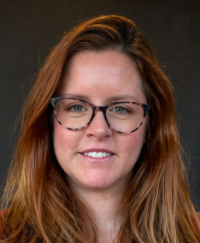
Freeh Sporkin & Sullivan LLP provides strategic counsel to its clients, which include large multinational corporations, law firms and individuals facing complex challenges. The firm specialises in internal investigations, compliance advice, and representation in white collar and complex civil litigation matters. Headed by former FBI Director Louis J. Freeh, all of the firm’s partners are former federal judges and long-time federal prosecutors. The firm has recently expanded its Greenville, Delaware office with the addition of former Assistant United States Attorney Jennifer Welsh.
Recalibration at Main Justice, Rebuilding in Delaware: White Collar Enforcement Trends
Delaware is a small state with broad jurisdiction when it comes to white-collar cases and enforcement. A number of large corporations, including many major banks, continue to call Delaware home, which provides law enforcement in Delaware with many potential cases to investigate. In our modern world, the global nature of commerce means that most cases could be investigated in almost any district, and Delaware has historically punched above its weight in terms of prosecuting large international cases and bringing affirmative civil fraud litigation. Unlike many states that have multiple prosecutors’ offices, Delaware has only two: federal (United States Attorney’s Office, or USAO) and state (Delaware Department of Justice, or DDOJ). As this article will explore, the white-collar landscape in the USAO has largely mirrored its historical docket, but there is a renewed focus on cases that fit with the US Department of Justice’s new priorities. Meanwhile, resources at the DDOJ have been shifted to make space for a robust civil docket challenging the federal government’s actions.
The District of Delaware USAO is in a period of transition, both in terms of personnel and in the focus of its investigations and cases. Its cases have mirrored the US Department of Justice’s stated priorities in the last two years, with a focus on individual defendants and government-victim fraud. That trend seems likely to continue. In terms of volume, the USAO intends to increase its white-collar investigations capabilities. The office lost a number of experienced prosecutors in the last two years, and it has filled out its ranks with new hires, many of whom were previously in white-collar departments at large law firms. In terms of agency resources, sources report that the office is also in the process of forming an interagency task force focused on fraud against the government, increasing the likelihood that companies will hear from prosecutors via a subpoena or civil investigative demand.
The Delaware Department of Justice, for its part, continues to investigate and prosecute consumer type fraud focused on individual victim losses, and has focused its affirmative enforcement efforts on multi-state civil litigation against large corporations, including cases regarding the opioid epidemic and data security.
Notably, there is a new white-collar sheriff in town. The newly-created Delaware Inspector General’s Office is soliciting fraud and corruption tips throughout the state, which is likely to lead to additional white-collar investigations.
Delaware federal prosecutors focus on government victim fraud and TCOs
Delaware’s recent federal cases are consistent with guidance put out by USDOJ officials in 2025. Based on both the day-one memoranda put out by then-Attorney General Bondi and a May 2025 memo issued by the head of the criminal division, the USDOJ’s fraud focus has changed. Although “unchecked fraud in US markets and government programmes robs hardworking Americans and harms the public fisc”, this administration’s position is that “overbroad and unchecked corporate and white-collar enforcement burdens US businesses and harms US interests”. The May memo highlights that USDOJ should focus on:
- thefts from federal programmes like Medicare;
- complex fraud schemes that target investors and elders;
- trade and customs cases and tariff evasion;
- sanctions evasion;
- money laundering; and
- businesses and financial institutions that provide material support to foreign terrorist organisations.
A review of the USAO’s publicly disclosed white-collar cases from early 2025 to the present show adherence to those general priorities, alongside some other typical types of fraud prosecutions:
- The chief of the Rehoboth Beach police department, along with another employee, were prosecuted for theft of federal funds in connection with an overtime theft scheme.
- A husband and wife were prosecuted for embezzling from a housing nonprofit that received federal funds.
- The USAO prosecuted a man for aggravated identity theft and obtaining drugs by fraud for stealing prescribers’ identities to obtain pain medications and faking his own cancer diagnosis for access to drugs and medical tools, all billed to his insurer.
- A woman who owned a government contracting business was convicted after trial for lying to shield assets from the reach of creditors in a bankruptcy proceeding.
- The USAO is currently prosecuting a securities fraud scheme, alleging that an employee exploited insider confidential information from his employer to make investments.
For the USAO, a focus on investigations of those who defraud the government is nothing new. Like many districts, the District of Delaware charged a number of PPP loan fraud schemes in the last five years, including one I prosecuted against a former Philadelphia Eagles player. Most recently, the district tried an over nine-million-dollar PPP loan scheme to verdict in May 2026.However, most of the PPP loan cases appear to be wrapping up, in a sentencing posture more so than a charging posture. Following a national trend, the most recent PPP loan cases are being pursued civilly via the False Claims Act.
The office’s civil division has been busy with False Claims Act cases. Delaware USAO notably had a major role in the Department of Justice’s litigation against Wal-Mart for filling bad prescriptions. That case was brought years ago in 2020, but resolved within the last few months. It also recently brought a civil complaint against a medical company over false laboratory claims, alleging thousands of medically unnecessary or unperformed diagnostic lab tests billed to federal health programmes as part of a nationwide healthcare fraud initiative.
In short, the USAO has been focusing its enforcement efforts on mostly individual defendants who defraud the government, with some additional resources put towards those who defraud investors or creditors, and its civil division continues to bring affirmative enforcement litigation in high-priority areas. The district’s nascent fraud task force shows an intent to place additional importance on the white-collar docket.
Delaware Department of Justice focuses on consumer fraud and nationwide litigation
The DDOJ’s Economic Crime Unit, according to its website, is focused on prosecuting a broad array of white-collar type crimes. There is not much public reporting about its cases. The division’s website indicates that it prosecutes “embezzlement, money laundering and home improvement fraud”, as well as “state tax fraud, insurance fraud and employer wage theft” and elder care fraud. The Unit is also responsible for civil actions under the Delaware False Claims Act. In the last year or so, publicly reported prosecutions include subject areas like contractor fraud and insurance fraud. Recently, the DDOJ has hired some attorneys who left the US Department of Justice during the widely reported exodus in 2025, increasing its ability to investigate and bring affirmative enforcement litigation.
In December 2025, the DDOJ obtained a nearly million-dollar penalty against an investment advisory firm for Delaware Securities Act violations, including incomplete registration materials and failure to supervise employees. In September 2026, an insurance agent was sentenced to three years in prison for felony theft of over USD600,000 in client funds.
The DDOJ also frequently joins litigation as part of a coalition with other states to seek broad relief for corporate fraud. In December 2025, DDOJ worked with 34 other states to obtain a USD9 million settlement with Hyundai and Kia over allegations that its vehicles were sold without industry-standard anti-theft technology. That same month, DDOJ announced a USD150 million, 50-state settlement with Mercedes-Benz over undisclosed emissions defeat devices. In August 2026, a USD12.1 billion multistate settlement with Meta resulted in Delaware receiving up to USD103 mullioned has also been involved in data security litigation, announcing in late September 2026 that Labcorp will pay USD2.3 million to resolve multistate litigation regarding a 2019 data breach at its debt collection agency.
DDOJ’s civil division has been engaged in other major types of litigation outside of the white-collar space, and those cases have presumably shifted some resources from other areas. The state regularly sues the federal government, either alone or in conjunction with other states, to challenge policies or changes in funding mechanisms. This new reality means that, more than ever, the DDOJ and USAO find themselves on opposite sides of court cases. For example, in the last year, the DDOJ and USAO were litigating the issuance of a subpoena by federal law enforcement to obtain certain employee data for immigration enforcement purposes.
Notwithstanding the differing priorities and occasional adverse legal positions, the USAO and the DDOJ continue to share a good working relationship. It is common for the two offices to refer investigations to each other, and for joint investigations to occur, particularly in the healthcare fraud space.
Delaware’s New Inspector General solicits referrals for fraud and corruption cases
Delaware’s first Inspector General is Robert P. Storch, sworn in on May 7, 2026. A Delaware Senate bill created the independent Office of the Inspector General in 2025. Inspector Storch served as the inspector general for both the National Security Agency and the Department of Defense. Before that, he was in the Public Integrity Section of the US Department of Justice and worked as a legal advisor in Ukraine to help develop anti-corruption measures. In short, he has a deep background in investigations, and his office is likely to play a role in the white-collar landscape once he is up and running with a full staff.
His office mission, according to public reports, includes investigation of fraud, waste, and abuse in matters involving public resources. The IG’s work will be broader than criminal referrals and extends to potential civil recovery of misspent state resources, or programmatic fixes where a weakness has been identified.
It remains to be seen what percentage of the office’s work will involve allegations against government officials versus private citizens who are stealing or misusing resources. Either way, there will be a new avenue for investigations leading to new criminal and civil cases in the state.
White-collar and organised crime/drug cartel cases are no longer separate
There is an emerging area of cases that has not yet showed up in Delaware’s cases, but feels likely to be a priority in the coming years. In addition to traditional white-collar economic crimes cases, the US Department of Justice has made a public push to the use of all available resources to combat drug cartels and other transnational criminal organisations (TCO). Businesses and individuals should be aware of the implications of the government’s aggressive enforcement efforts. Even for companies and people who are far from complicit in cartel money movement, investigations and sanctions can have an impact.
Cartels and TCOs use all available methods and commit all manner of crimes to make revenue for their operations. They are now involved in cybercrime, elder fraud, cryptocurrency schemes and telemarketing fraud, among many others. They move their money through banks, digital currency, real estate, and all conceivable transportation methods. They patronise all of the same businesses we all do – restaurants, hotels, resorts and schools. Accordingly, expect the Delaware United States Attorney’s Office and its agency partners to be on the lookout for cases that intersect with, or disrupt, TCOs and cartels’ revenue streams, with a broader lens than ever before.
This Department of Justice has repeatedly made clear that eliminating drug cartels is a top – if not the top – departmental priority, as seen in both the Bondi, Day One Memo, February 5, 2025, “Total Elimination of Cartels and Transnational Criminal Organizations”, and the Galeotti Memorandum, May 12, 2025, “Focus, Fairness, and Efficiency in the Fight Against White-Collar Crime”. The administration designated the cartels as foreign terrorist organisations and many cartel-alleged people and businesses have been added to the OFAC sanctions list, bringing to bear new tools and new powers that could have consequences for Delaware businesses. For example, the Office of Foreign Assets Control (OFAC) has implemented sanctions on businesses that are accused of helping cartels move their money, like various money service businesses. OFAC also sanctioned a resort in Mexico that was accused of being a front for a cartel, providing the cartel with leads to defraud customers.
Companies must be diligent with OFAC and other compliance measures; transacting with cartel money, even unknowingly, can have serious consequences. And now that the cartels are reportedly engaging in telemarketing fraud and committing cybercrimes, data security compliance is more important than ever to avoid the reputational risk and financial harm of a government investigation. Controls must be in place within companies to prevent criminal proceeds, or assets of sanctioned entities, from engaging in transactions with legitimate businesses. If a company detects data theft or suspicious financial transactions that appear tied to sophisticated organisations, working with competent counsel to investigate the issue and potentially reporting it to the government can be the difference maker in whether the company is held responsible in some way. Among the many changes this Department of Justice has made, its recently announced Corporate Enforcement Policy clearly incentivises self-reporting, both in terms of the decision to charge/sue and in the amount of the potential penalty. The USAO in Delaware will be following both of those mandates – to investigate cartel-involved fraud, and to treat self-reporting companies and individuals more leniently.
When the Department of Justice announces changes to its priorities, the industry often does not see an immediate change in the types of cases on the docket. Cases that were charged or investigated under the old administration are still alive and well. It takes time for agencies to locate and investigate new leads into priority cases. Accordingly, I fully expect to see additional white-collar cases aligning with the agency’s resources charged by the USAO in the future as those investigations start to bear fruit.
Conclusion
In summary, the USAO has started to shift its white-collar resources consistent with administration priorities. The DDOJ continues with its traditional pursuit of consumer fraud, individual loss type cases. Both jurisdictions are using their civil enforcement tools to pursue their stated agendas. The new Inspector General has entered this space and is likely to begin additional investigations. Delaware, nicknamed the “Small Wonder”, continues to live up to its reputation as a jurisdiction with a surprisingly robust white-collar and enforcement landscape.
Freeh Sporkin & Sullivan LLP
3711 Kennett Pike
Suite 130
Wilmington,
DE 19807
United States
+1 302 824 7533
welsh@fsslaw.com www.fsslaw.com
Trends and Developments
Author
Freeh Sporkin & Sullivan LLP provides strategic counsel to its clients, which include large multinational corporations, law firms and individuals facing complex challenges. The firm specialises in internal investigations, compliance advice, and representation in white collar and complex civil litigation matters. Headed by former FBI Director Louis J. Freeh, all of the firm’s partners are former federal judges and long-time federal prosecutors. The firm has recently expanded its Greenville, Delaware office with the addition of former Assistant United States Attorney Jennifer Welsh.
