Cartels 2026
USA – California
Trends and Developments
Author
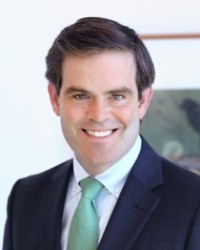
Shook, Hardy & Bacon LLP has antitrust lawyers around the United States, with particular depth in Chicago, Kansas City, San Francisco and Washington, D.C. Shook’s antitrust lawyers handle agency-facing work and all aspects of antitrust counselling. They are also experienced in class action matters, and nationally recognised for skilfully resolving complicated, multi-jurisdictional class actions, including antitrust class actions.
For decades, California has been the most important state for antitrust enforcement in the United States. Apple, Meta and Google are based in Northern California, and many of the antitrust cases filed against these companies are litigated in the Northern District of California. The next generation of antitrust cases could also be centred in the Bay Area. Just this year, the Elon Musk–OpenAI trial (though not an antitrust case) was heard in Oakland. Even more importantly, the California Attorney General and California legislature are becoming more aggressive on antitrust enforcement. California, as it has in many other areas of the law, could become an enforcement regime of its own. So, the song remains the same for antitrust lawyers around the world: Sacramento (California’s state capital) and San Francisco are in the same antitrust league as Washington, DC and Brussels.
The California Attorney General Is Increasingly Independent on Antitrust Issues
2026 is seeing increased antitrust energy from the California Attorney General, most notably in the Ticketmaster case. In 2024, the Department of Justice, along with 30 state and district attorneys general, filed suit against Ticketmaster and Live Nation. The assumption was that the other attorneys general were along for the ride and would simply follow the DOJ’s lead. That assumption proved to be incorrect: the DOJ reached a settlement during trial, but a bipartisan coalition of state attorneys general rejected the deal as being inadequate to address the company’s alleged anti-competitive conduct. Rather than accept behavioural remedies, the states chose to continue litigating.
The decision paid off. In April 2026, a jury in the Southern District of New York found Live Nation/Ticketmaster liable for anti-competitive conduct, including overcharging consumers for ticket sales from 2020 through 2024. Emboldened by this success, the coalition has now pressed for sweeping structural relief. In May 2026, the remaining state AGs asked the court to break up Live Nation and Ticketmaster, including requiring divestiture of Ticketmaster and potentially Live Nation’s amphitheater assets. The states argue that prior behavioural remedies failed to curb the company’s conduct and that only structural separation can restore competition and prevent recurrence.
The lesson is that state AGs, including the California Attorney General, are increasingly willing not only to litigate independently of federal enforcers but also to pursue more aggressive theories of harm and more robust remedies. That independence might show itself in Hollywood.
California opened an active investigation into proposed mergers involving the potential acquisition of Paramount by Warner Bros. The Attorney General has emphasised that entertainment deals must be scrutinised, given the centrality of entertainment to California’s economy.
We will likely see continued breaks from federal enforcers. For example, in the HPE/Juniper matter, the state joined a coalition of attorneys general seeking to intervene in federal proceedings to review a USD14 billion merger settlement reached by the Department of Justice. The states argued that the court should independently assess whether the settlement adequately protects the public interest, and sought to participate directly in that review.
Of course, California will also work with federal enforcers when they agree. For example, in 2025, California joined with the Department of Justice in filing suit against RealPage regarding the use of revenue management in multifamily housing.
California May Impose a New, Stronger California Antitrust Regime
Assembly Bill 1776 – the COMPETE Act – is an effort to expand California’s antitrust laws in response to growing concerns about market concentration. The bill would transform the state’s Cartwright Act by extending liability beyond co-ordinated conduct among multiple firms to include the unilateral actions of a single dominant company.
The proposal has become the subject of debate in Sacramento. Supporters argue that existing antitrust frameworks are outdated and ill-suited to address modern economic realities, especially in digital markets and platform-based industries where a single firm can exercise substantial control without explicit collusion. By expanding the law to cover single-firm conduct that restrains trade, the COMPETE Act aims to address practices that can raise prices, suppress wages and exclude competitors even in the absence of agreements among firms.
The bill would also represent a sharp break from traditional antitrust doctrine by moving away from reliance on federal precedent. It explicitly provides that federal antitrust law is not controlling in interpreting California law, opening the door for courts to develop broader and more flexible standards. Rather than simply mirroring the Sherman Act, it seeks to go further by allowing claims based on unilateral “restraints of trade” and lowering traditional barriers to proving anti-competitive conduct. These changes could make it easier for both regulators and private plaintiffs to bring cases and take them to trial, increasing litigation risk for firms operating in California.
Critics argue that these changes could create uncertainty by eliminating long-standing guardrails that distinguish aggressive competition from unlawful conduct. Still, the broader significance of AB 1776 is clear: it reflects a growing willingness at the state level to rethink antitrust law and pursue more interventionist approaches to regulating dominant firms.
“AI Antitrust” Is Inevitable
2026 is truly the year of acceleration for AI. It is now apparent to humans and machines alike that there is an AI-generated economic revolution and reshuffling, which could be even more significant than the personal computer and internet revolutions of the past 50 years. Antitrust lawyers know that the personal computer revolution led to the Microsoft cases and the internet revolution led to the Google cases. It seems like a safe bet that whatever comes next in AI will lead to a new round of antitrust cases.
What is less clear is what those claims will look like. One possibility could be claims based on high market shares, with some AI company in the role of the Standard Oil octopus. The concentration of AI capabilities in a small number of firms presents significant competition risks across the broader economy. AI systems require massive investments in data, computing power, talent and infrastructure – resources that only a handful of companies currently possess.
As a result, a small group of firms may come to dominate not just one layer, but multiple layers of the AI ecosystem, including cloud services, model development and downstream applications. This level of vertical and horizontal integration can create powerful barriers to entry. New entrants may struggle to access the data, computing capacity or distribution channels necessary to compete effectively.
Another possibility is an AI company as a gatekeeper, controlling the entry to AI. After all, no matter how powerful AI is, at least for the moment, it still requires a human being to put fingers to keyboard and do something to summon the genie. Control of that access point could be an antitrust issue, perhaps with another fight over the power of defaults.
That said, there is a rosier view: the possibility that the nature of AI itself could prevent antitrust problems. Agentic AI (systems composed of autonomous, interoperable agents acting on behalf of users) could mitigate many of the antitrust risks associated with concentration in traditional AI markets. Unlike centralised platforms that aggregate data and control distribution, agentic architectures distribute decision-making and reduce dependence on any single provider. This can weaken the development of durable “moats” based on proprietary ecosystems, because agents can dynamically switch between models, providers and services based on price, quality or performance.
As discussed in the broader AI antitrust context, concerns often stem from control over key inputs – data, compute and distribution. Agentic systems can counteract this by enabling users (or firms) to route tasks across multiple vendors, lowering switching costs and preventing lock-in. For example, an agent could compare outputs across competing models or automatically select optimal providers, fostering contestability even in concentrated markets. Agentic AI may also reduce the importance of vertical integration. If agents can interface seamlessly across layers of the AI stack, dominant firms have less ability to leverage power from infrastructure into applications or vice versa. This could promote more modular competition, where innovation at one layer remains accessible to others.
A more immediate AI antitrust problem is the “acquihire” dilemma. Rather than acquiring a company (and its employees), companies are acquiring just the key employees. In the past several years, Google, Microsoft, Amazon and others have spent tens of billions acquiring start-ups, without ever actually buying a company. There is a concern that these transactions will evade antitrust review because they look like simple hiring decisions (not normally the subject of merger review) rather than a standard acquisition of the assets of an entire company. The DOJ and FTC already have the tools to look at these hires. Just because there is no HSR filing does not mean there will be no antitrust review. And it seems extremely unlikely that the DOJ and FTC do not notice high-profile acquihires, which generate a massive amount of attention. But it is also true that an acquihire is procedurally less complicated – the parties do not have to submit HSR forms and, most importantly, do not have to wait for clearance. The transaction will be consummated immediately, with the agencies only having the ability to challenge a consummated transaction.
Antitrust Constants
We can close on a note of antitrust consistency. Cartel investigations, criminal cartel cases and private actions alleging collusion under Section 1 of the Sherman Act remain a core part of California and United States antitrust practice.
The San Francisco office of the Antitrust Division remains a leader in bringing criminal antitrust cases. In May 2026, the DOJ unsealed an indictment charging shipping container manufacturers and executives with conspiring to fix prices and restrict output of standard dry shipping containers. According to the indictment, the conspiracy operated from late 2019 through early 2024. The case was filed in the Northern District of California, with San Francisco DOJ attorneys as some of the signatories.
Shook, Hardy & Bacon LLP
555 Mission Street, Suite 2300
San Francisco
CA 94105
USA
415.544.1900
415.391.0281
www.shb.com
Trends and Developments
Author
Shook, Hardy & Bacon LLP has antitrust lawyers around the United States, with particular depth in Chicago, Kansas City, San Francisco and Washington, D.C. Shook’s antitrust lawyers handle agency-facing work and all aspects of antitrust counselling. They are also experienced in class action matters, and nationally recognised for skilfully resolving complicated, multi-jurisdictional class actions, including antitrust class actions.
