Securitisation 2026 Comparisons
Contributed By Walder Wyss Ltd
Law and Practice
Authors

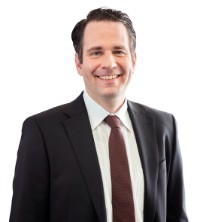


Walder Wyss Ltd is a leading law firm in Switzerland with around 290 legal experts across offices in Zurich, Basel, Berne, Geneva, Lausanne and Lugano, including a team of six partners and 12 associates for Swiss securitisation transactions. The firm has been involved in almost all Swiss first-time transactions (first Swiss RMBS transaction for Zürcher Kantonalbank 2001, first covered bond transaction for UBS AG 2009, first insurance-linked synthetic transaction for FIFA 2006, etc) and continues to be involved in most public and private ABS transactions, synthetic transactions, covered bond transactions and other securitisations, in particular in auto lease ABS (and consumer lending more generally) and mortgage loan transactions. Walder Wyss is regularly retained by market participants, including Swisscard, Cembra Money Bank, AMAG Leasing, Multilease, Ford Credit, PSA, BMW Schweiz, UBS and Goldman Sachs. The firm is also active in relation to various regulatory initiatives in the structured finance area.
1. Specific Financial Asset Types
1.1 Common Financial Assets
Securitisation transactions in Switzerland have in the past primarily been based on trade receivables, auto leases and loans, credit card receivables, residential mortgage loans, commercial real estate loans and loans to small and medium-sized businesses.
In recent years, the market has seen a large number of public securitisation transactions involving auto lease receivables and credit card receivables. In addition, privately placed securitisation transactions are regularly implemented in Switzerland. Whilst, in principle, any type of asset can be securitised, general considerations regarding the suitability of assets for securitisation transactions also apply in Switzerland.
Covered bond transactions in Switzerland have been traditionally based on Swiss residential and commercial mortgage loans and, more recently, also on auto lease assets. Due to the increasing volume of residential and commercial mortgage loans in Switzerland, the number of covered bond and securitisation transactions involving such loans is expected to continue to grow.
1.2 Structures Relating to Financial Assets
Securitisation transactions in Switzerland are usually structured as (legal) true sale transactions in which a (domestic or foreign) bankruptcy-remote special-purpose entity (SPE) purchases a pool of income-generating assets and issues notes. The notes are either publicly placed and listed or privately placed. The proceeds from the issuance of the notes are used by the SPE to acquire the initial pool of assets from the originator upon the issuance of the notes. The securitisation structures then typically provide for a revolving period during which the SPE acquires additional assets from the originator, fulfilling pre-defined eligibility criteria and thereby replenishing the asset pool on a regular basis. The replenishment period is followed by an amortisation phase, during which the notes are amortised over time using the proceeds from the asset pool, unless the originator repurchases the asset pool at the end of the revolving period and the notes are repaid in full using the proceeds from the repurchase by the originator at that time. Transaction parties involved in Swiss securitisation transactions regularly include asset and corporate servicers for the SPE, security and note trustees, cash managers, account banks and further third-party service providers, in addition to the arrangers and managers who are usually involved in structuring the securitisation transaction.
1.3 Applicable Laws and Regulations
Switzerland has not enacted any specific primary legislation covering securitisation (or covered bond) transactions. Instead, securitisation and covered bond transactions in Switzerland have been developed and are structured under the general legal and regulatory framework relevant as for any other financing transaction, such as the Swiss Code of Obligations (eg, relating to the formation of the SPE and the transfer of receivables and assets), the Swiss Civil Code (eg, relating to security interests), general capital market regulations and regulatory and tax laws.
1.4 Special Purpose Entity (SPE) Jurisdiction
Securitisation transactions in Switzerland can be structured using either Swiss or foreign SPEs. However, various considerations typically need to be made when deciding whether to use a Swiss or a foreign SPE, which depend in particular on the underlying assets being securitised.
In particular, in a transaction where the underlying asset relates to real estate located in Switzerland, special care must be given when using non-Swiss SPEs due to restrictions under the Federal Act on the Acquisition of Real Estate by Persons Abroad (known as the “Lex Koller”) and also owing to the fact that special cantonal withholding taxes may be incurred on any interest payment secured by Swiss real estate.
In addition, interest payments on debt instruments issued by a Swiss SPE (or a Swiss originator in the case of a covered bond) are typically subject to Swiss withholding tax at a rate of 35%. Structuring a transaction using non-Swiss SPEs in view of Swiss withholding tax is, in principle, possible, but it adds significant complexity to the structuring process, and care must be taken, given the strong focus on the true sale analysis from a tax perspective.
Furthermore, Swiss originators that do not have any presence abroad typically prefer the use of a Swiss SPE for cost-efficiency and organisational purposes.
1.5 Material Forms of Credit Enhancement
Swiss securitisation transactions can benefit from various forms of credit enhancement, including subordination, over-collateralisation and cash reserves, subject to structuring considerations on a case-by-case basis.
2. Roles and Responsibilities of the Parties
2.1 Issuers
The issuer in securitisation transactions is a (Swiss or foreign) SPE that is structured in a bankruptcy-remote way, acquires the assets to be securitised from the originator and issues debt financial instruments.
In contrast, in Swiss covered bond transactions, the issuers are operating entities that originate the assets serving as the cover pool (such as banks that originate residential and commercial mortgage loans or auto lease assets) and transfer those assets to the guarantor for security purposes.
2.2 Sponsors
As Switzerland has not adopted any securitisation legislation, there are no specific responsibilities or roles that would be assigned to a sponsor in Swiss securitisation transactions. The term “sponsor” thus commonly refers to the entity that originates the underlying assets and initiates the securitisation transaction.
2.3 Originators/Sellers
Originators in Swiss securitisation transactions are typically operating entities that generate the underlying assets to be securitised. In the course of the securitisation transaction, they transfer the assets to be securitised to an SPE against payment of the considerations. Typically, the servicing of the assets is also delegated by the SPE to the originator as the initial servicer.
Recently, the main originators of public ABS have been active in the auto leasing business and the credit card business. In addition, there has been an increasing number of private ABS transactions, with originators active across a variety of businesses and asset classes.
2.4 Underwriters and Placement Agents
Underwriters or managers, often investment banks, usually enter into a subscription agreement with the issuer. Under this agreement, they commit to purchasing the issuer’s debt instruments at the issue price and then selling them to investors. The underwriters thereby act as intermediaries between the issuer and investors in an offering.
2.5 Servicers
The servicer is appointed by the SPE to collect and enforce the transferred receivables and to service the other underlying assets. The role of the servicer is typically assigned to the originator, subject to certain trigger events occurring, after which it will be replaced by a substitute servicer.
Given that there is no specific securitisation legislation in Switzerland, there is no licensing requirement for servicers as such, but the generally applicable regulatory and licensing requirements will need to be carefully analysed on a case-by-case basis, in particular in light of the specific underlying assets and the business conducted by the originator.
2.6 Investors
The investors acquire the financial instruments that are issued by the SPE.
2.7 Bond/Note Trustees
Swiss public securitisation transactions typically provide for the appointment of a note trustee, which normally also acts as the sole representative of each class of notes for the purposes of the Swiss law bondholder provisions. The form of the appointment of the note trustee and the scope of its rights and obligations are determined in the securitisation documentation, which is subject to foreign or Swiss law.
2.8 Security Trustees/Agents
The security trustee is appointed by the noteholders (and other secured parties) to hold and enforce the security interests in favour of such secured parties. The scope of the security trustee’s rights and obligations and the form of its appointment (agency relationship or trust) is often governed by a security trust deed that is subject to foreign law. However, also pure Swiss law-governed security structures are successfully implemented more frequently.
3. Documentation
3.1 Bankruptcy-Remote Transfer of Financial Assets
The transfer of the underlying assets governed by Swiss law is documented in Swiss law-governed transfer documents, such as an asset sale agreement and transfer deeds. Such transfer documents lay out the mechanics of the transfer of title and its perfection, which depend on the asset class to be securitised, and typically also include customary representations and undertakings regarding the originator, the assets, and the underlying debtors.
3.2 Principal Warranties
The principal warranties provided by the originator and issuer in a Swiss securitisation transaction will depend on the assets to be securitised and the securitisation structure, but would typically include warranties regarding the status of the originator and issuer, the underlying assets (including the underlying agreements) and further warranties customarily provided in financing transactions.
3.3 Principal Perfection Provisions
The perfection steps for the transfer of the underlying assets to the SPE depend on the assets to be transferred. Under Swiss law, for the transfer and assignment of rights and receivables governed by Swiss law, an agreement and a written assignment declaration are required. Notification of the underlying debtor is not required. However, prior to notification to the obligors, the obligors may validly discharge their obligations by paying the originator or the SPE, and, in the event of the SPE’s bankruptcy, such payments would form part of the bankrupt estate of the SPE until the obligors are notified.
In relation to the creation of security interests over receivables and bank accounts, the execution of a written security assignment agreement by the parties is sufficient to perfect the security interest in the receivables and the bank accounts. No notification is required, even though it is standard to notify the account bank, which is normally involved in the transaction in any event.
3.4 Principal Covenants
The principal covenants of the originator and issuer in a Swiss securitisation transaction will depend on the assets to be securitised and the securitisation structure, but will typically cover the same items that are also subject to principal representations.
3.5 Principal Servicing Provisions
The servicer is appointed by the issuer under a servicing agreement, which typically provides, among others, for the following services:
- the collection of payments and recovery from the obligors and the transfer of such collections to the issuer;
- the enforcement of the underlying receivables;
- record keeping in relation to the securitised assets;
- overall administering of the securitised assets in line with the credit and collection policies of the originator; and
- the provision of the servicer’s reports.
Upon the occurrence of pre-defined servicer termination events, the servicer will be replaced by a replacement servicer.
3.6 Principal Defaults
Typical events of defaults under the notes may include:
- the occurrence of an insolvency event with respect to the issuer;
- a payment default of the issuer on interest or principal of the most senior class of notes outstanding; and
- non-compliance with other obligations under the transaction documents.
In the event of a default on the notes, the most senior class of noteholders usually has the right to instruct the note trustee to declare all outstanding amounts under the notes due and payable, and to enforce the security provided.
3.7 Principal Indemnities
The scope of indemnities provided to the issuer depends on the specific transaction but typically includes indemnities from the originator for losses and liabilities in connection with the securitised assets sold, and from the servicer for losses and liabilities arising from the servicing of the securitised assets.
3.8 Bonds/Notes/Securities
The terms and conditions of the notes are typically included in the note trust deed and normally include provisions relating to:
- the form and denomination of the notes;
- the status and priority of the notes;
- limited recourse and non-petition;
- covenants of the issuer;
- payments on the notes of interest and principal;
- redemption of the notes;
- priority of payments;
- bondholder provisions; and
- governing law and jurisdiction.
3.9 Derivatives
Depending on the underlying assets, the notes and the particularities of a transaction, Swiss securitisation structures may provide for the use of derivatives (such as swaps) to account for and mitigate, in particular, interest rate and foreign exchange risks.
3.10 Offering Memoranda
The prospectus regulations contained in the Swiss Financial Services Act (FinSA) and the Swiss Financial Services Ordinance (FinSO) provide that any person offering securities for sale or subscription in a public offering in Switzerland or any person seeking the admission of securities for trading in a trading venue as defined in the Financial Market Infrastructure Act (FinMIA) must first publish a prospectus. There are various exemptions available from the prospectus requirement (eg, based on the type of offering) and the prospectus requirements need to be analysed on a case-by-case basis. If a prospectus is required, it must be approved by a prospectus review body appointed by the Swiss Financial Market Supervisory Authority (FINMA). Whilst approval will generally need to be obtained in advance of the public offering, it may also be obtained after the public offering has started for certain debt instruments under certain conditions. The approved prospectus will need to be published in accordance with FinSA.
4. Laws and Regulations Specifically Relating to Securitisation
4.1 Specific Disclosure Laws or Regulations
There is no specific securitisation legislation in Switzerland, but the FinSO contains limited disclosure requirements specifically relating to ABS. These rules provide for the disclosure in the prospectus (in addition to the general disclosure requirements) of:
- a transaction summary, covering the general characteristics of the structure and a structure overview, risks related to an investment in the ABS, cross-references to the specific sections in the prospectus dealing with such risks; and
- a transaction overview, covering key elements of the transaction (ie, structure, parties involved and their role, cash flows and credit enhancement), a description of the assets that back the transaction and related risks, historical key date (three years) relating to the relevant assets, structural risks, legal risks and other significant risks.
The limited disclosure requirements outlined above will need to be complied with (in addition to the general prospectus and listing requirements) when issuing securities to the public capital market in Switzerland. To the extent that Swiss securitisation transactions are placed outside of Switzerland or become otherwise subject to Regulation (EU) 2017/2402 (the “Securitisation Regulation”), the transactions must be structured to ensure compliance with the Securitisation Regulation or other non-Swiss regulations that might apply.
4.2 General Disclosure Laws or Regulations
The general disclosure regulations of the FinSO for debt instruments apply, which set out the minimum disclosure requirements for the prospectus, including information on the issuer, the securities, risks, and admission to trading.
4.3 Credit Risk Retention
Swiss law does not provide for risk retention rules. In particular, Article 6(1) of the Securitisation Regulation has not been adopted by Switzerland and implemented into Swiss law.
However, in view of not negatively affecting distribution, transactions frequently impose covenants on the originator to retain, on an ongoing basis, a material net economic interest in the transaction in an amount equal to at least 5% (or a higher percentage as may be required from time to time in accordance with the applicable EU risk retention rules).
4.4 Periodic Reporting
Switzerland has not adopted specific securitisation legislation. Also, neither FinSO nor the SIX Swiss Exchange listing rules provide specific public disclosure requirements that relate solely to issuances in the framework of securitisation transactions. As with any other issuer, SPEs listed on the SIX Swiss Exchange must comply with general Swiss capital market regulations, including the ad hoc publicity requirements under the SIX Swiss Exchange listing rules. However, as in other jurisdictions, it is market standard for servicer reports and investors’ reports to be provided monthly. Furthermore, to the extent that any non-Swiss regulation would be applicable (such as the Securitisation Regulation), such regulations will need to be complied with.
4.5 Activities of Rating Agencies
It is market practice that credit ratings are obtained for notes issued in public ABS transactions in Switzerland from at least one internationally recognised rating agency. However, rating agencies are not regulated under Swiss law for securitisation activities.
4.6 Treatment of Securitisation in Financial Entities
The capital holding requirements for banks and account-holding securities firms in Switzerland are governed by, among others, the Capital Adequacy Ordinance (CAO) and the related FINMA ordinance on credit risks of banks and securities firms (CreO-FINMA). These provide, among others, for technical rules in connection with the calculation of the minimum capital that applies to transactions in connection with the securitisation of credit risk and the applicable Basel minimum standards.
The investment rules for insurance companies concerning their assets, including tied assets (ie, assets necessary to cover claims from insurance contracts), are governed by the Insurance Supervisory Act as well as related ordinances and implementation provisions issued by FINMA. These provide, among other things, for technical rules regarding the investment of insurance companies in securitised claims.
4.7 Use of Derivatives
In Switzerland, there are no specific laws or regulations that exclusively govern the use of derivatives in securitisation transactions. However, the general legal framework, particularly the FinMIA, is applicable to the use of derivatives in these transactions.
4.8 Investor Protection
As Switzerland has not adopted specific securitisation legislation, the general legal framework also applies with respect to investor protection. This includes the prospectus regulation under the FinSO and FinSA, which aims to protect investors by, among other things, providing for prospectus disclosure requirements to allow investors to make informed decisions when investing in public securitisation transactions, and requiring the prospectus to be approved by a prospectus approval office.
4.9 Banks Securitising Financial Assets
Switzerland has not adopted specific legislation on bank securitisation, but the general legal and regulatory framework applies, in particular the Swiss Banking Act and the related ordinances.
4.10 SPEs or Other Entities
SPEs in Switzerland may take the form of a limited liability stock corporation (AG) or a limited liability company (GmbH). As there is no specific legislation in Switzerland on securitisations, the general legal framework also applies to SPEs and other entities.
4.11 Activities Avoided by SPEs or Other Securitisation Entities
There is no specific securitisation legislation or legislation on covered bonds in Switzerland, and therefore there are no licensing requirements per se for SPEs, originators, servicers or other securitisation entities. However, every transaction needs to be carefully analysed and structured on a case-by-case basis in view of the general regulatory and licensing requirements under applicable financial market regulations, including the Swiss Federal Banking Act, the Swiss Federal Collective Investment Schemes Act, and Swiss anti-money laundering regulations. Further, depending on the receivables and assets being securities or used as collateral for a covered bond and the regulatory status of the originator, additional regulations may be of relevance, including (but not limited to) the Consumer Credit Act (eg, credit card receivables or retail auto lease receivables being securitised), the Federal Law of 16 December 1983 on the Acquisition of Real Estate by Persons Abroad (Lex Koller) (eg, residential mortgage loans being securitised or used as collateral for a covered bond) or the Insurance Supervisory Act (in the case of licensed insurance companies acting as transaction parties).
4.12 Participation of Government-Sponsored Entities
There have been no public transactions in which government-sponsored entities participated in the Swiss securitisation market.
4.13 Entities Investing in Securitisation
Securitisation transactions offered to the Swiss public capital market can, in principle, be offered to any investor, including retail investors. However, the financial intermediaries involved in the placement of the notes will need to comply with their duties under financial market laws (such as the FinSA), including in relation to the assessment of the appropriateness and suitability of such products for investors, as applicable. Furthermore, certain lead managers might apply (internal) guidelines in the distribution process. Additional restrictions may apply under relevant foreign capital market regulations that must be complied with in connection with any placement of securitisation transactions outside Switzerland.
4.14 Other Principal Laws and Regulations
See 1.3 Applicable Laws and Regulations.
5. Synthetic Securitisation
5.1 Synthetic Securitisation Regulation and Structure
As Switzerland has not adopted specific securitisation legislation, the general legal and regulatory framework also applies to synthetic securitisations, which have to be analysed and structured on a case-by-case basis.
6. Structurally Embedded Laws of General Application
6.1 Insolvency Laws
As Switzerland has not adopted specific securitisation regulation, the general insolvency regime and regulations (in particular the Swiss Debt Enforcement and Bankruptcy Act (DEBA)) also apply in Switzerland to Swiss entities (such as issuers, originators and servicers) in securitisation transactions. Similar to other jurisdictions, the bankruptcy remoteness of the SPE is a key consideration when structuring a domestic securitisation transaction.
6.2 SPEs
Swiss SPEs are either held and controlled by shareholders unaffiliated with, and independent from, the originator and the other transaction parties (ie, orphan SPEs) or structured as (direct or indirect) subsidiaries of the originator; in each case depending on the specific needs and goals of the originator and corresponding requirements from an accounting perspective in view of potential derecognition and deconsolidation. In the majority of the public transactions, the Swiss SPE is held by the respective originator, sometimes also providing for golden shareholder structures that provide the (independent) golden shareholder or shareholders with some control (veto rights) at the level of the shareholders’ meeting. Essentially, all transactions involving Swiss SPEs provide for an independent director structure, giving the independent director some control (veto rights) at the board level.
Under Swiss corporate law, the bankruptcy of a shareholder of the SPE does not automatically lead to the bankruptcy or liquidation of the SPE itself. Rather, a shareholder bankruptcy would result in the SPE’s shares being transferred to the shareholder’s bankruptcy estate, which would be sold in the course of such liquidation or bankruptcy. Any such transfer of shares in the SPE would not legally affect the contractual obligations of the SPE under the transaction documents. Also, there is no concept of substantive consolidation under Swiss law (subject to extraordinary cases, such as fraud and abuse of rights), and a bankruptcy of an SPE shareholder would, under Swiss law, not result in the consolidation of its assets and liabilities with those of the SPE.
6.3 Transfer of Financial Assets
For the perfection steps required for a transfer, see 3.3 Principal Perfection Provisions.
6.4 Construction of Bankruptcy-Remote Transactions
Bankruptcy remoteness in Swiss securitisation transactions is generally achieved through the limited corporate purpose of the SPE and limited recourse and non-petition provisions to which counterparties to the SPE are asked to sign up to. In addition, all parties contracting with the SPE are asked to sign up to waiver set-off provisions.
6.5 Bankruptcy-Remote SPE
See 6.4 Construction of Bankruptcy-Remote Transactions.
7. Tax Laws and Issues
7.1 Transfer Taxes
The transfer of underlying assets that are frequently securitised in the Swiss market (such as auto lease receivables, credit card receivables and trade receivables) from the originator to the issuer is not subject to any transfer tax in Switzerland. However, it will need to be analysed on a case-by-case basis, and typically, advance tax ruling confirmations are obtained to confirm the tax treatment of the securitisation transactions.
7.2 Taxes on Profit
Swiss domestic SPEs are generally subject to corporate income and capital tax. If the transaction involves a Swiss SPE, it is therefore, among other things, required that the additional entity-level corporate income and net equity taxes, which cannot be completely structured away, be kept at a (negligible) minimum. Due to a lack of specific tax legislation or tax guidelines, or both, securitisation transactions must be presented to and signed off by the relevant tax authorities by way of advance tax rulings.
7.3 Withholding Taxes
Interest payments on debt instruments issued by a Swiss vehicle to multiple investors are subject to Swiss withholding tax at a rate of 35%. While Swiss withholding tax is generally recoverable, the process for doing so can be burdensome for non-Swiss investors, and even a Swiss investor may experience a delay in recovering the withholding tax. If an investor is located in a jurisdiction that does not benefit from favourable double tax treaties or does not otherwise benefit from treaty protection (such as tax-transparent funds), Swiss withholding tax might not be fully recoverable, if at all. Swiss withholding tax may not apply if a non-Swiss vehicle is used. However, this adds significant complexity to the structuring process, as there will also be a strong focus on the true sale analysis from a tax perspective.
7.4 Other Taxes
Swiss VAT should be analysed carefully in connection with securitisation transactions. For example, asset servicing may trigger Swiss VAT and, if the Swiss SPE holding the securitised assets is not registered for VAT purposes (and is not part of the VAT group of the originator), such VAT charge will constitute a cost for the transaction. Furthermore, if VAT-charged receivables are transferred to an SPE, such transfer may trigger an acceleration of the tax point for VAT purposes. In addition, the originator may be denied bad debt relief for non-performing receivables transferred. If future receivables are transferred at a time when the tax point for VAT purposes has not yet been reached, a potential secondary joint liability of the acquiring SPE with the transferring originator may arise. Subject to careful structuring, these issues can be addressed and comfort obtained through advance tax ruling confirmations from the tax administration.
7.5 Obtaining Legal Opinions
It is market practice in Swiss securitisation transactions that legal opinions are provided, including in relation to selected tax aspects of the transaction.
8. Accounting Rules and Issues
8.1 Legal Issues With Securitisation Accounting Rules
Typical accounting topics in Swiss securitisation transactions include the derecognition of assets to be securitised from the issuer’s balance sheet and the non-consolidation of SPEs.
8.2 Dealing With Legal Issues
The accounting analysis and treatment of a securitisation transaction is performed separately from the legal analysis and accounting matters are not addressed in legal opinions in the Swiss market. However, transactions can usually be structured legally in a way that supports the accounting analysis on a case-by-case basis.
Walder Wyss Ltd
Seefeldstrasse 123
PO Box
8034 Zurich
Switzerland
+41 586 585 858
+41 586 585 959
reception@walderwyss.com www.walderwyss.com
Law and Practice in Switzerland
Authors
Walder Wyss Ltd is a leading law firm in Switzerland with around 290 legal experts across offices in Zurich, Basel, Berne, Geneva, Lausanne and Lugano, including a team of six partners and 12 associates for Swiss securitisation transactions. The firm has been involved in almost all Swiss first-time transactions (first Swiss RMBS transaction for Zürcher Kantonalbank 2001, first covered bond transaction for UBS AG 2009, first insurance-linked synthetic transaction for FIFA 2006, etc) and continues to be involved in most public and private ABS transactions, synthetic transactions, covered bond transactions and other securitisations, in particular in auto lease ABS (and consumer lending more generally) and mortgage loan transactions. Walder Wyss is regularly retained by market participants, including Swisscard, Cembra Money Bank, AMAG Leasing, Multilease, Ford Credit, PSA, BMW Schweiz, UBS and Goldman Sachs. The firm is also active in relation to various regulatory initiatives in the structured finance area.