Antitrust Litigation 2026 Comparisons
Contributed By Clifford Chance LLP
Law and Practice
Authors


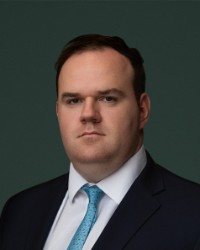

Clifford Chance LLP is one of the world’s largest law firms. Its antitrust litigation group has handled many of the most significant antitrust damages claims during the past 30 years before the High Court and the Competition Appeal Tribunal (CAT). The firm has experience in taking these cases to trial − an example being the landmark victory for EE in defence of a standalone claim brought by the administrators of Phones 4u. It also has a long history of representing clients before the appellate courts, including leading substantive cases on alleged unfair pricing, concerted practices, and cartels, as well as on procedural issues relating to limitation, summary judgment/strike out and the recoverability of costs. Alongside its antitrust damages experience, Clifford Chance also represents clients in appeals against Competition and Markets Authority decisions before the CAT and the court of appeal, having acted in more of these than any other firm in the UK and overturning cartel findings and abuse-of-dominance cases.
1. Introduction
1.1 Current Framework for Private Antitrust Litigation
England and Wales has been a leading European jurisdiction for antitrust litigation for more than 30 years. A well-regulated jurisdiction for commercial litigation, along with specialist competition judges, an expert tribunal (the Competition Appeal Tribunal, or CAT), and wide-ranging disclosure have made the UK an attractive forum for antitrust damages claims. Since the introduction of opt-out collective actions before the CAT in 2015, those claims have grown substantially, with the CAT case list now recording 72 individual collective action case numbers ‒ most brought on an opt-out basis.
The legislative framework for assessing competition law infringements comprises the Competition Act 1998 (the “CA 98”), as amended by the Enterprise Act 2002, and the Consumer Rights Act (CRA) 2015, which introduced collective proceedings for breaches of competition law. The CA 98 sets out:
- the Chapter I prohibition, against agreements which have as their object or effect the prevention, restriction or distortion of competition; and
- the Chapter II prohibition, against abuse of a dominant position.
Claims for damages may be brought for breach of statutory duty where the Chapter I or II prohibitions have been infringed, on a standalone or follow-on basis. Since the CRA 2015, collective actions have been available in the CAT for follow-on and standalone claims, on an opt-in or opt-out basis. Increasingly, standalone collective claims are brought for abuse of dominance, particularly against large technology companies.
1.2 Recent Developments
Legislative Developments
Digital Markets, Competition and Consumers Act 2024
On 1 January 2025, the Digital Markets, Competition and Consumers Act 2024 came into force, amending the existing competition regime. For private litigation, Part 2 expands the CAT’s jurisdiction to include declaratory relief. The Digital Markets, Competition and Consumers Act 2024 also gives the Competition and Markets Authority (CMA) direct enforcement powers to decide whether consumer protection laws have been breached without going to court.
Potential reform of the opt-out collective actions regime
In 2025, the UK government consulted on the operation and impact of the opt-out collective actions regime, covering funding access and its framework, the scope and certification of cases, ADR/settlement/damages, and distribution of funds. The consultation attracted more than 100 responses focusing on these same issues.
On 17 July 2026, the Department for Business and Trade published a further consultation, “Swifter and Simpler Competition Redress, Regulatory Appeals and Competition Enforcement” (the “DBT Consultation”), seeking views on more substantial reforms to the collective actions regime and building on the 2025 consultation. The DBT Consultation makes significant proposals in relation to opt-out collective actions, including:
- a tightening of the certification threshold;
- permitting the use of damages-based agreements (DBAs), which would be subject to the same scrutiny as litigation funding agreements (LFAs) at the certification stage;
- introducing a presumption that funders receive payment at the point of a damages award, rather than after distribution;
- exploring alternative redress schemes, including enhancing the existing CMA voluntary redress scheme, and the introduction of settlement offers with automatic cost consequences; and
- considering an extended regime whereby full immunity from civil litigation damages would be granted for Type A leniency applicants.
The DBT Consultation closes on 25 September 2026.
Landmark cases
England and Wales is a highly active jurisdiction with dozens of judgments issued in private antitrust litigation. A handful of the key recent cases are summarised here.
In July 2025, the court of appeal issued judgment in Phones 4U Limited v EE Limited and others (2025) EWCA Civ 869, an appeal by Phones 4u against the dismissal of its claim that it was the victim of collusive anti-competitive schemes involving senior executives of three mobile network operators and their parent companies between 2012 and 2014.
Two grounds of appeal are of particular relevance to standalone cartel claims involving information exchange. At first instance, Roth J found that O2’s CEO was “sounding out” EE’s CEO as to whether, if O2 reduced supply volumes via indirect retailers, EE would not take up that volume – an invitation to collude by O2 – but accepted EE’s evidence that its CEO remained passive until the conversation moved on and that the remarks were “too vague” to remove EE’s uncertainty as to O2’s future conduct.
The court of appeal considered whether a passive response to disclosure of confidential information between competitors could infringe competition law and found it did not on these facts, with no error of law by the High Court. The court of appeal held that some reciprocity is required, which may be satisfied where a disclosure of future intentions is accepted or requested by the recipient. The conduct must at least be capable of reducing uncertainty, which the judge was entitled to find it did not here. The court of appeal also found that concertation requires an element of consensus depending on context: for an unanticipated “one-way” communication, whether a passive response amounts to tacit approval depends on the facts, and a failure to object will often be seen as such, even where the discloser derives something from an entirely passive reaction.
The court of appeal also considered whether the “Anic” presumption – that undertakings participating in concerted practices and remaining active on the market are presumed to take account of information exchanged with competitors – can be rebutted by anything other than public distancing or a report to the competition authorities. At first instance, despite finding no “concertation”, Roth J concluded that EE had rebutted the Anic presumption by signing a new three-year deal with Phones 4u.
The court of appeal found no error of law, holding that Anic also contains a further presumption: that participating in a meeting at which an anti-competitive agreement/concerted practice is concluded, without public distancing, is presumed to amount to participation (the “participation” presumption). It held that public distancing is not essential to rebut the Anic presumption, that the contrary view lacked authority and logic, and that the presumption applies only to those receiving information. Here, EE’s CEO conveyed nothing to O2’s CEO, so O2 gleaned nothing that could have influenced its conduct.
Limitation
There have also been important developments on limitation.
The limitation rules in competition claims are complex and depend on:
- whether the claim is in the CAT or the High Court;
- whether it is standalone or follow-on;
- when it is issued; and
- when the infringement occurred.
At first instance in the MIF Umbrella and Merricks proceedings (2023) CAT 49, the claimants argued that a post-Brexit ECJ decision (Case C-267/20, Volvo AB and DAF Trucks NV v RM, EU:C:2022:494) meant limitation periods for competition law infringement damages claims could not begin to run until:
- the infringement ceased; and
- the injured party knew, or could reasonably be expected to know, that it had suffered harm as a result and the identity of the perpetrator – potentially extending significantly the two-year limitation period that currently applies in the CAT to standalone claims commenced after 1 October 2015, for damages suffered prior to 9 March 2017.
The CAT rejected the claimants’ analysis of the ECJ judgment’s effect and held it was in any event not bound to follow the decision post-Brexit.
The court of appeal upheld the CAT’s judgment in December 2024 ((2024) EWCA Civ 1559), confirming that a cessation requirement is not part of English law for limitation periods to start.
In Lundbeck v Secretary of State for Health and Social Care (2025) EWCA Civ 677, the court of appeal clarified the limitation rules where a claim is issued in the High Court but transferred to the CAT. A standalone Article 101 damages claim was transferred by way of a consent order, preserving accrued rights (including as to limitation). This was important because the High Court claim had been filed out of time. The court of appeal held that, once transferred, the proceedings became CAT proceedings subject to the CAT’s limitation rules (more generous in the circumstances of this claim), even though the High Court proceedings were time-barred.
In Mr Justin Gutmann v Vodafone Limited and others (2025) CAT 77, the CAT confirmed that Rule 119(2) of the CAT Rules 2015 applies to standalone claims arising before 1 October 2015, rejecting the proposed class representative (PCR)’s case that the more favourable six-year period under domestic limitation legislation should apply as default. The judgment has clarified that both follow-on and standalone claims arising before 1 October 2015 are subject to the two-year limitation period in Rule 31(2) of the 2003 CAT Rules. Accordingly, the collective proceedings claim form filed on 28 November 2023 was out of time in respect of the pre-1 October 2015 period of Gutmann’s claim (as the last date for bringing a claim in respect of this period was 1 October 2017).
Collective Actions
There have also been important developments in collective action proceedings before the CAT.
Certification
The certification process for collective proceedings has been heavily litigated since the regime was introduced in 2015. Under Section 47B of the CA 1998 (as amended by the CRA 2015), collective proceedings may only proceed if the CAT makes a collective proceedings order (CPO).
Since the 2020 Supreme Court judgment in Walter Merricks CBE v Mastercard Incorporated & Ors (2020) UKSC 51, the bar to certification has generally been considered relatively low, with most cases certified. Recently, however, there appears to be a trend towards greater scrutiny – particularly following Evans v Barclays Bank Plc and Others (2025) UKSC 48 (“Evans”), which held that claim strength and the practicability of opt-in proceedings are relevant and can be decisive, when the CAT decides whether to certify.
There have been several recent cases where a CPO has not been made, as follows.
- In Christine Riefa Class Representative Limited v Apple Inc & Others (2025) CAT 5, the CAT refused certification because the PCR did not satisfy the Rule 78(1) authorisation conditions. Following cross-examination, the CAT was concerned that the PCR had acceded to the funder’s request to keep the terms of its funding confidential – including from class members – and lacked sufficient understanding of the funding agreements.
- In Roberts v Thames Water and ors (2025) CAT 17, the CAT rejected the claim as it relied on alleged infringements of a statutory regime, remediable only by an enforcement order from the water regulator.
- A third refusal followed in David Rowntree v PRS For Music Limited (2025) CAT 49, refusing a CPO sought on behalf of songwriter members over unattributed “black-box” royalties, because:
- songwriter members had not shown existing individual claims satisfying Section 47B;
- the Performing Right Society (PRS) lacked a credible methodology for assessing aggregate damages; and
- the CAT Rule 79(2)(a) cost-benefit test was not met, given that litigation costs and the funder’s return might together equal or exceed any damages recovered.
- In April 2026, the CAT refused to certify claims against farmed-salmon producers on similar proportionality grounds in Waterside Class Limited v Mowi ASA & Others (2026) CAT 32 (“Waterside”), concluding the proceedings would have “principally benefited the lawyers and funder” given insufficient evidence that any amount returned to the class would be proportionate to the costs incurred.
Judgments
In December 2024, the first liability judgment in collective proceedings was handed down in Le Patourel v BT (2024) CAT 76 (“Le Patourel”). The CAT found that – even though BT was dominant in the market for standalone fixed-voice services and its prices were excessive – they were not unfair, so BT had not breached competition law and no damages were awarded. The judgment largely followed the court of appeal’s approach to unfair pricing in CMA v Flynn Pharma and Pfizer (2020) EWCA Civ 339. Permission to appeal was refused by the CAT and, in July 2025, by the court of appeal.
The judgment also made obiter observations on quantum in unfair pricing cases – rejecting the suggestion that, if BT’s prices had been found unfair, there would have been a margin for pricing above the competitive benchmark before it would qualify as significantly and persistently above that benchmark. This relied on the CAT’s judgment in Albion Water v Dwr Cymru Cyfngedig (2013) CAT 16 (“Dwr Cymru”), which held that requiring a claimant to show where the line should be drawn (the counterfactual price) would be an almost impossible task, effectively redoing the work already undertaken to establish liability.
In Justin Gutmann v Govia Thameslink Railway Limited and Others (2025) CAT 64, the CAT dismissed all allegations of abuse of dominance brought against train operators concerning the availability of boundary fares to consumers, clarifying that “competition law is not a general law of consumer protection”.
Dr Rachael Kent v Apple Inc and Apple Distribution International Ltd (2025) CAT 67 was the first final merits judgment won by a class representative under the Section 47B regime. The CAT ruled in the claimant’s favour on all aspects of Dr Kent’s standalone abuse-of-dominance claim concerning Apple’s AppStore, awarding aggregate class-wide damages of around GBP1.5 billion (including interest). Apple’s application for permission to appeal was refused in November 2025.
A further judgment from the CAT is pending, following the hearing of Alex Neill Class Representative Limited v Sony Interactive Entertainment Europe Limited and Others in early 2026.
Settlements
Under the collective proceedings regime in the CAT, any opt-out settlements must be judicially approved. The CAT may approve the settlement only if it is satisfied that the settlement’s terms are just and reasonable.
In May 2024, the CAT approved the second collective settlement under the CRA 2015 in Justin Gutmann v First MTR South Western Trains Limited and Another (2024) CAT 32, between the class representative and the second defendant, Stagecoach South Western Trains Limited (SSWT). The class representative alleged SSWT had abused a dominant position by, in effect, double-charging customers for part of the service provided. The CAT raised concerns about the feasibility of individuals recovering damages and the proposals for unclaimed sums. The parties revised the settlement accordingly and it was then approved.
In February 2025, the CAT approved the largest collective settlement to date, in the action against Mastercard brought by Walter Merricks. The claimants originally sought approximately GBP20 billion (including interest) but the claim had faced hurdles on limitation, causation and pass-on that narrowed its scope significantly, before a settlement was reached in December 2024. The litigation funder objected to the settlement, arguing that the sum was too low, but the CAT found it just and reasonable. In May 2025, the CAT approved the proposed distribution of the GBP200 million:
- GBP100 million ring-fenced for class members;
- GBP46 million ring-fenced as a minimum return to the funder (roughly its expenditure); and
- part of the balance to the funder as profit, the rest to charity.
The High Court later dismissed Innsworth’s challenge to that distribution plan (R (on the application of Innsworth Capital Limited v The Competition Appeal Tribunal (2026) EWHC 1393 (Admin)), finding that the CAT had acted within its “wide powers” as an expert tribunal.
In Consumers’ Association v Qualcomm Incorporated (2026) CAT 50, the CAT approved the first “drop hands” settlement of UK opt-out collective proceedings – involving no financial compensation to the estimated 29 million class members (following trial).
Subject to CAT approval, settlement has also been provisionally agreed in Barry Rodger v Google. Rodger initially sought GBP1 billion on behalf of UK developers selling apps on Google’s Play Store, but has agreed to settle for GBP260 million, with no admission of liability or wrongdoing by Google. The settlement hearing is listed before the CAT in September 2026.
Funding
Following the Supreme Court’s judgment on 26 July 2023 in PACCAR Inc and Ors v Road Haulage Association Limited and UK Claims Limited (2023) UKSC 28 (“PACCAR”), LFAs where the funder’s return is a share of damages awarded are categorised as DBAs, which are unenforceable unless they meet applicable requirements, such as capping the funder’s share at 50% and being on a no win no fee basis. Most LFAs have been updated to work around this ruling (eg, by recovering a multiple of the funds committed). For further information, see 11.1 Litigatoin Funding.
In March 2024, the UK government announced the Litigation Funding Agreements (Enforceability) Bill, seeking to reverse PACCAR. A 2025 Civil Justice Council report recommended urgent legislation, which the Ministry of Justice accepted, but no bill has been enacted yet.
Subsidy Control
The Subsidy Control Act (SCA) 2022 extended the CAT’s jurisdiction to include challenges brought by interested parties against a public authority’s decision to grant a subsidy.
The CAT has handed down several substantive judgments under this jurisdiction – all in favour of the public authority. In Mr Aubrey Weis v Greater Manchester Combined Authority (2025) CAT 41 and The New Lottery Company Ltd and Others v The Gambling Commission (2026) CAT 14, the CAT held that no subsidy had in fact been conferred, applying the commercial market operator principle under Section 3(2) of the SCA by reference to EU state aid case law.
Even where a measure is accepted to be a subsidy, the CAT confirmed in Bristol Airport Ltd v Welsh Ministers (2026) CAT 30 that challengers face a high threshold to show a public authority’s assessment was unlawful, applying conventional judicial review standards.
No subsidy decision has been quashed yet, suggesting authorities acting within a reasonable range of judgment are likely to withstand challenge.
2. Private Antitrust Claims: Basis and Procedure
2.1 Statutory Basis
Claims for damages arising from a breach of UK or EU competition law can be brought in the High Court (either in the Chancery Division or the Commercial Court) or before the CAT. In the High Court, claims are based on the tort of breach of statutory duty of Chapters I/II of the CA 1998 and/or – for conduct occurring prior to December 2020 – Section 2(1) of the European Communities Act 1972 (as preserved by Section 1 of the EU (Withdrawal Agreement) Act 2020), which imported into English law Articles 101 and 102 of the Treaty on the Functioning of the European Union (TFEU). Claims for damages before the CAT are based on Section 47A of the CA 1998 and/or Section 47B of the CA 1998. Section 47B of the CA 1998 forms the basis for collective actions before the CAT.
Standalone and Follow-On Claims
Claims may either be on a “standalone” or “follow-on” basis. In standalone claims, the claimant must establish:
- the anti-competitive conduct of the defendant(s); and
- that the defendant’s/defendants’ behaviour caused loss to the claimant.
In follow-on actions, the claimant may rely on a decision the CMA or the EC (if made prior to 31 December 2020) finding an infringement of competition law. Provided the decision is final (all appeals or time limits exhausted), it binds UK courts, and the claimant need not prove the anti-competitive conduct as in a standalone claim. Findings and decisions by EU member state competition authorities prior to 31 December 2020 are prima facie evidence of an infringement.
2.2 Courts
Standalone and follow-on claims may be brought in the High Court or the CAT.
Comparison Between the CAT and the High Court
The CAT is a specialist tribunal with its own rules, procedures and specialist judges. It hears cases in panels typically comprising a High Court judge (as chair) and two other members, who may be lawyers, judges, or specialists such as economists or accountants. High Court proceedings are typically presided over by a single judge who may or may not have specialist competition-law expertise.
The powers of the High Court and CAT are broadly similar for typical competition proceedings: both can order interim measures such as injunctions and neither has a limit on the compensation it can award. However, only the CAT can hear collective actions under Section 47B of the CA 1998. In the High Court, the Civil Procedure Rules (CPR) permit claims to be combined under a group litigation order where they have “the same interest” –although such claims are harder to bring, given the high threshold for commonality. Both courts can grant declaratory relief following the Digital Markets, Competition and Consumers Act 2024, which extended this power to the CAT.
Transferral of Cases Between Courts
The High Court may transfer proceedings relating to the infringement of competition law to the CAT, in whole or in part. Relevant factors include the complexity of the issues, the extent of economic evidence, and cost implications. Conversely, CAT Rule 71 allows the CAT to transfer a claim to the High Court.
2.3 Impact of Competition Authorities
Under Section 58A of the CA 1998, final decisions of the CMA or the EC (made before 31 December 2020) bind UK courts as to the existence of an infringement of competition law. In such claims, the claimant need not prove the infringement, and proceedings focus on the extent of loss and whether the defendant’s conduct caused it.
Infringement decisions by another EU member state’s National Competition Authority on EU competition law made after 9 March 2017 and before 31 December 2020 are treated as prima facie evidence of an infringement for damages claims under paragraph 35, Schedule 8A of the CA 1998.
Under paragraphs 4.1 and 4.1A of the High Court Competition Law Practice Direction, competition authorities may make written observations and apply to make oral observations on issues relating to Chapter I or II of the CA 1998 and/or Articles 101 or 102 of the TFEU. The CMA may make written or, with permission, oral observations in CAT cases (permission given for the first time in a Section 47A claim in Epic Games, Inc and Others v Alphabet Inc, Google LLC and Others).
2.4 Proof
In both follow-on and standalone claims, the burden of proof is on the claimant. In follow-on claims, the infringement decision establishes the infringement, but the claimant must prove it caused loss. In a standalone claim, the claimant must establish both the infringement and that it caused loss. The standard of proof, as in civil claims generally, is the “balance of probabilities”.
In addition, for claims where the loss or damage occurred wholly on or after 9 March 2017, there is a rebuttable presumption that cartels cause loss or damage (see Article 17 of the EU Damages Directive and Schedule 8A, paragraph 13 of the CA 1998).
If defendants can show that the alleged damage suffered by the claimant was passed on to the claimant’s own customers, this may be a whole or partial defence (the “passing-on” defence) – of which, the burden of proving lies with the defendant.
2.5 Pass-On Defence
Damages awarded to a claimant as a purchaser of a cartelised product may be reduced if the defendant can prove in fact that the overcharge was passed on to the claimant’s own customers.
In Sainsbury’s v Mastercard (2016) CAT 11, the CAT held that the pass-on defence is only available for identifiable price increases by a firm to its customers and that the defendant must show (on the balance of probabilities) that there is another class of claimant, to whom the overcharge was passed on – in the absence of which, a claimant’s damages should not be reduced. The court of appeal upheld the CAT’s finding that Mastercard’s defence failed for want of an identifiable price increase causally connected to the UK Multilateral Interchange Fee. The Supreme Court held that the court of appeal erred by requiring greater precision in quantifying pass-on from the defendant than from the claimant. Once pass-on is raised, the claimant bears a heavy evidential burden to show how it dealt with recovering its costs, given that most relevant information sits exclusively with the claimant. The Supreme Court concluded that the law does not require unreasonable precision in proving the amount passed on.
For claims where the loss or damage suffered from an infringement took place wholly on or after 9 March 2017, the claimant is presumed (subject to rebutting evidence) to have proved that the overcharge or underpayment was passed on if:
- the defendant infringed competition law;
- there was an overcharge or underpayment as a result of the infringement; and
- the product or service was provided to the customer by the claimant.
This was applied by the CAT in Royal Mail Group Limited v DAF Trucks Limited and Others (2023) CAT 6, which held that the pass-on causation test requires the defendant to prove a “direct and proximate” causative link between the overcharge and any price increase by the claimants. the court of appeal upheld this finding.
In Le Patourel, the CAT adopted a similar approach. Although no infringement was found, its obiter view on quantum found no pass-on, because:
- class members were unaware of the overcharge at the time;
- the overcharge and the businesses affected were likely small, with other firms in the same market facing no such overcharge; and
- there was no evidence of a direct relationship between BT’s standalone fixed-voice services and products whose prices would have risen due to pass-on.
In Granville Technology Group Limited v Chunghwa Picture Tubes Ltd, LG Display Co Ltd (2024) EWHC 13, the High Court addressed overcharge and pass-on in a cartel affecting liquid crystal display (LCD) panel prices. The claimants, personal computer (PC) and notebook manufacturers and sellers, alleged inflated LCD panel prices due to the cartel’s activity. The court found overcharge rates of 8% for monitors, 4% for notebooks and 14% for TVs, and estimated 50–100% of the overcharge was likely passed on, given market competitiveness and variable pass-on rates. The CAT arrived at 65%, erring towards under-compensation, given the uncertainty. The court also found the claimants had suffered a significant loss of profit from reduced sales as a consequence of that pass-on. The court of appeal overturned these findings ((2026) EWCA Civ 409), holding that no principle of erring towards under-compensation exists, but that the aim is always the correct amount of compensation and that – where a range applies – an award in its middle is most appropriate.
A recent judgment in Trial 2 of the Merchant Interchange Fee Umbrella Proceedings ((2026) CAT 11) saw the CAT confirm that, in order to prove a direct causal link between the overcharge and the downstream prices, defendants are required to show that the overcharge actually fed into the claimant’s price-setting processes. The CAT also held that the primary tool of that analysis should be factual, qualitative evidence about a claimant’s pricing decisions, with econometric evidence to be used as a cross-check of conclusions reached from the factual evidence.
3. Limitation Periods and the Duration of Litigation
3.1 Statute of Limitations
Rules on limitation differ depending on whether the claim is brought before the High Court or CAT and when the cause of action accrues (ie, when the infringement causes damage to the claimant). New limitation rules apply to claims (whether brought in the High Court or CAT) where the loss or damage took place wholly on or after 9 March 2017 (paragraphs 17–26, Schedule 8A, CA 1998). These new limitation rules displace the Limitation Act 1980 in relation to antitrust claims.
Claims Where Loss or Damage Occurred Before 9 March 2017
For High Court claims where the loss or damage occurred wholly before 9 March 2017, the limitation period is six years from the date the cause of action accrues. The High Court in Gemalto Holding and Thales DIS France v Infineon Technologies and ors (2022) EWHC 156 clarified that the six years runs from when the claimant’s state of knowledge allows the claimant and its advisers to plead a claim that would not be struck out as unarguable or lacking evidential basis. The limitation period is not postponed until investigations are complete or success is certain, but vague, unsupported suspicion is not enough – the standard being “reasonable belief” of the relevant facts.
Where there is deliberate concealment (or fraud), the six-year period does not begin to run until the claimant discovered – or ought reasonably to have discovered – the concealment. There must either be active and intentional concealment of a fact relevant to the cause of action (without which it would be incomplete) or intentional concealment by omission of a fact the defendant knew it was under a duty to disclose – concealing a fact that would merely strengthen a claimant’s case is not enough.
Follow-on claims issued more than six years after the underlying infringement decision (or, depending on context, the preceding statement of objections (see Gemalto)) may be time-barred. However, defendants often argue that claimants discovered or ought to have discovered any concealment earlier – for instance, from a press release on dawn raids or a statement of objections.
Claims Where Loss or Damage Occurred On or After 9 March 2017
Where the loss or damage occurred wholly on or after 9 March 2017, proceedings may not be brought after a six-year limitation period, beginning on whichever is later: the day the infringement ceases or the claimant’s “day of knowledge” – the latter being the day the claimant first knew or could reasonably be expected to have known:
- the identity of the infringer;
- about the existence of the infringer’s behaviour;
- that the behaviour infringed competition law; and
- that the claimant itself had suffered loss or damage due to the infringement (paragraphs 17–26, Schedule 8A of the CA 1998).
This period may be suspended in various circumstances, including during a competition authority investigation or a consensual dispute resolution process.
3.2 Typical Length of Private Antitrust Litigation
The typical timetable for an antitrust damages claim is around three to five years, depending on many factors, including the extent of disclosure, the number of witnesses and experts, whether the court or tribunal orders a stay, and whether applications are made for strike out/summary judgment or determination of preliminary issues.
Related cases may also cause delays or applications for stays (eg, David Courtney Boyle & Edward John Vermeer v Govia Thameslink Railway Limited & Others (2021) CAT 38). Expedited trials may also be ordered in certain circumstances.
4. Class and Collective Actions
4.1 Statutory Basis
Procedures for bringing claims on a group or collective basis differ depending on whether such claims are brought in either the High Court or the CAT.
High Court
Collective claims have been brought in the High Court as representative actions. CPR 19.8(1) allows a claimant to represent themselves and others with the “same interest” who have opted in to the action. Representative actions are typically difficult to bring in private antitrust litigation. In Emerald Supplies Limited v British Airways plc (2009) EWHC 741 (Ch), the High Court struck out a representative action on behalf of direct and indirect purchasers because inclusion in the class depended on the claim’s outcome and not all purchasers would benefit from the relief sought, given the need for direct purchasers to pass on the overcharge for indirect purchasers to benefit. The court of appeal upheld this, rejecting the claim as an attempt to engineer a class action and held that “same interest” requires enough certainty to constitute a representable class.
Group litigation orders (GLOs) under CPR 19.22 are available where claims raise “common or related issues” – although they are rarely used in competition claims. Allsopp v Bayerische Motoren Werke AG (2023) EWHC 2710 is a recent example: a GLO application was made on behalf of 41,225 of approximately 125,000 claimants who had owned or leased BMW vehicles in the UK allegedly fitted with prohibited defeat devices, raising questions including whether the defendants breached Article 101 of the TFEU or Chapter I of the CA 1998.
CAT
Collective actions have been available in the CAT since October 2015 for follow-on and standalone antitrust damages claims, following the CRA 2015, on an opt-in or opt-out basis. Proceedings must be commenced by a person proposing to act as representative. The CAT may authorise a claim brought by a representative on behalf of the class, who need not be a class member, if the CAT considers it just and reasonable for them to bring the claim.
Collective proceedings will only continue if the CAT makes a CPO, where the CAT is satisfied the claims are eligible for inclusion in collective proceedings – raising the same, similar or related issues of fact or law. The CAT will also consider, among other factors:
- whether collective proceedings are an appropriate means of fair and efficient resolution;
- whether similar claims have already been commenced by class members;
- class size and nature;
- whether individual membership can be determined; and
- suitability for an aggregate award of damages.
The CAT will consider whether the UK, and the CAT itself, is the appropriate forum. In James Daley Class Representative LLP v Apple Inc and Others (2026) CAT 23, the CAT granted permission for the class representative to serve Apple Inc (incorporated in the USA) and Apple Distribution International Limited (incorporated in the Republic of Ireland) out of the jurisdiction, under Rule 31(2) of the CAT Rules 2015.
4.2 Opting In or Out
In making a CPO, the CAT must decide whether proceedings should be opt-in or opt-out. In Evans v Barclays and ors (2023) EWCA Civ 876, the court of appeal held that a claim being viable only on an opt-out basis is a powerful indicator for opt-out certification and that – although claim strength is usually neutral – any relevant connection to that decision must be considered. The Supreme Court ((2025) UKSC 48) unanimously overturned the court of appeal’s decision, holding that claim weakness is relevant against opt-out certification, reiterating the CAT’s broad discretion, and reinstating the CAT’s refusal to certify on an opt-out basis.
In Dr Sean Ennis v Apple (2024) CAT 58, on an application for a CPO brought by app developers alleging unfair commission on in-app purchases on Apple’s iOS platform, the CAT held that opt-in proceedings would not serve the class’s interests. The CAT found that financial viability on an opt-in basis did not overcome the impracticability of opt-in proceedings, given most class members’ relatively modest claims. The claim was certified on an opt-out basis.
Following Evans v Barclays and ors (2023) EWCA Civ 876, defendants have sought decertification and variation of CPOs in existing collective actions, so far unsuccessfully:
- in Dr Sean Ennis v Apple Inc and Others (2026) CAT 55, the CAT refused Apple’s application to decertify, finding the claims “relatively, even unusually, strong” and opt-out still appropriate for the whole class; and
- in Professor Barry Rodger v Alphabet Inc and Others (2026) CAT 49, the CAT refused Google’s application to require the largest-claim app developers to proceed on an opt-in basis.
Non-UK residents must still opt in, even where the CAT has granted an opt-out CPO.
4.3 Direct/Indirect Purchasers
Claims for damages before the CAT are based on Section 47A and/or Section 47B of the CA 1998. Section 47B forms the basis for collective actions and allows both direct and indirect purchasers to bring claims for their losses on a collective basis to the CAT.
4.4 Class Certification
High Court
In the High Court, there is no US-style opt-out class-action procedure, nor a similar certification process. For representative proceedings, the claimant must show the “same interest” test is satisfied. The court of appeal’s judgment in Emerald Supplies Ltd v British Airways plc (2010) EWCA Civ 1284 shows this is difficult in follow-on damages claims.
GLOs may be made of the court’s own motion or on a party’s request, where claims raise “common or related issues” – a concept wider than the “same interest” test for representative proceedings.
CAT
The certification process in the CAT has been heavily litigated. Under Section 47B of the CA 1998 (as amended by the CRA 2015), collective proceedings may only proceed if the CAT makes a CPO, where it is satisfied that:
- the representative could be authorised to act as such; and
- the claims are eligible (ie, raise the same, similar or related issues of fact or law and are suitable for collective proceedings).
The CPO must authorise the representative, describe the eligible class, and specify whether proceedings are opt-in or opt-out. The class must comprise those with eligible claims existing at the date of the claim form and cannot include future claimants. In Alex Neill Class Representative Limited v Sony (2024) CAT 13, the CAT ordered the PCR to amend the class definition so the relevant period ended at the date of filing, rather than final judgment or settlement, thereby excluding future claimants.
Since the 2020 Supreme Court judgment in Walter Merricks CBE v Mastercard Incorporated & Ors (2020) UKSC 51, the bar to certification has generally been considered to be relatively low, with the vast majority of cases being certified.
There have now been several instances where a CPO was refused:
- claims against six water and sewerage undertakers, rejected as relying on infringements of a statutory regime remediable only by enforcement order from the water regulator;
- Mr Rowntree’s application on behalf of PRS songwriter members; and
- Waterside Class Limited’s application against farmed-salmon producers, refused because the litigation would have principally benefited the lawyers and funder rather than the class.
5. Choice of Jurisdiction
5.1 Rules on Jurisdiction and Applicable Law
Common-Law Jurisdiction Regime
For claims brought after 31 December 2020 against defendants domiciled outside the EU, the common-law jurisdiction regime applies: English courts have jurisdiction where the defendant is located in England or Wales, unless another state’s courts are shown to be more appropriate. Claimants may seek permission to serve a defendant domiciled elsewhere by showing:
- that the claim has a reasonable prospect of success;
- that there is a basis for jurisdiction set out in the CPR; and
- that England and Wales is the proper place to bring the claim.
On 28 September 2020, the UK submitted a new accession instrument to the Hague Convention on Choice of Court Agreements and is now bound by the Hague Convention in its own right rather than via former EU membership. Under the Hague Convention, EU member states must give effect to exclusive jurisdiction agreements favouring the English courts.
The Brussels Regulation
For claims brought before the conclusion of the UK’s Brexit transition period, where the defendant is domiciled in an EU member state, jurisdiction is governed by EU Regulation 1215/2012 (the “Brussels Regulation”), which sets out various jurisdictional bases for antitrust claims, including:
- where the defendant is domiciled;
- the place where an obligation under a contract was to be performed;
- in tort, the place where the harmful event occurred (the place where the damage was sustained or where the event giving rise to it took place);
- any jurisdiction agreement;
- whether a party submits to a jurisdiction; and
- the jurisdiction of any related actions.
6. Disclosure/Discovery
6.1 Disclosure/Discovery Procedure
Standard and Specific Disclosure
Disclosure generally follows service of particulars of claim, defence, and any replies. Under standard disclosure, parties must search for and disclose documents in their control on which they rely, as well as documents adversely affecting their own or another party’s case or supporting another party’s case. Specific disclosure of particular documents or categories is common in antitrust claims. The CAT Rules are supplemented by the CAT Practice Direction on Disclosure and Inspection of Evidence 2017. Non-parties may also be ordered to disclose documents likely to support the case, where necessary to dispose of it fairly or to save costs.
Pre-Action Disclosure
Pre-action disclosure may be ordered before a claim is issued and parties are encouraged to exchange documents pre-action to resolve disputes before proceedings are commenced. Pre-action disclosure may be ordered where the documents sought would fall within the standard disclosure test and the court considers it desirable to dispose fairly of anticipated proceedings, assist resolution without proceedings, or reduce costs. Overly broad applications will be refused.
The introduction of Disclosure Practice Direction 57AD (formerly the Disclosure Pilot) in the business and property courts changed the disclosure regime generally. However, it does not currently apply to competition law claims, unless otherwise ordered.
Restriction on Documents
Parties are generally restricted from using disclosed documents other than for the purpose of the litigation. However, this protection may be lost if documents are referred to in open court. Confidential and irrelevant material may be redacted – although significant redaction may be resisted by the court and confidential material may also be protected via a “confidentiality ring” limiting access to specified persons (see the CAT’s Practice Direction 2/2026 on the Management of Confidential Information).
6.2 Legal Professional Privilege
Documents may be withheld from inspection on the basis that they are protected by legal professional privilege, which falls into two broad categories:
- legal advice privilege; and
- litigation privilege.
Legal Advice Privilege
Legal advice privilege protects communications that are:
- confidential;
- between a client and lawyer; and
- made for the dominant purpose of giving or receiving legal advice.
Confidentiality is key: if a communication becomes public, is shared with a third party (other than on a non-limited waiver basis) or is widely circulated, it is no longer privileged.
The communication must be between lawyer and client; “lawyer” includes external and in-house counsel qualified in any jurisdiction. “Client” for privilege purposes includes those authorised to give and receive legal advice (following Three Rivers No 5), not all employees of the undertaking. In SFO v ENRC (2018) EWCA Civ 2006, the court of appeal held that employee–lawyer communications are privileged only if the employee was tasked with seeking or receiving advice on the corporation’s behalf. The dominant purpose must be giving or receiving legal advice (R (Jet2) v CAA (2020) EWCA Civ 35).
Litigation Privilege
Litigation privilege applies to confidential communications between a lawyer and client – and between a lawyer or client and a third party – that come into existence after litigation is contemplated. The communication must be for the sole or dominant purpose of:
- obtaining or giving legal advice in relation to the litigation;
- obtaining evidence to be used in the litigation; or
- obtaining information that may lead to the obtaining of evidence.
In Tesco Stores v OFT (2012) CAT 6, the CAT found that proceedings were sufficiently adversarial by the time the Office of Fair Trading (OFT) had issued a statement of objections. In SFO v ENRC (2018) EWCA Civ 2006, the court of appeal found that where the Serious Fraud Office had made the prospect of criminal prosecution clear to the defendant – and lawyers had been engaged – a basis for concluding criminal prosecution was in reasonable contemplation.
6.3 Leniency and Settlement Agreements
Leniency statements and settlement agreements are protected from disclosure under Part 6 of the 2017 UK Regulations implementing the EU Damages Directive.
Claims Issued On or After 9 March 2017
For claims issued wholly on or after 9 March 2017, the CA 1998 prohibits a court or tribunal from making a disclosure order in respect of a settlement submission that has not been withdrawn or in respect of a cartel leniency statement. In addition, a competition authority’s investigation materials are not admissible as evidence in competition proceedings at any time before the competition authority has closed the investigation, unless a party obtains them lawfully and by means other than from the authority’s file.
Claims Issued Prior to 9 March 2017
For cases that began prior to 9 March 2017, the position is governed by case law. The ECJ held in Pfleiderer v Bundeskartellamt that EU law allows member state courts and tribunals to determine when materials may be disclosed. In National Grid Electricity Transmission plc v ABB Ltd (2012) EWHC 869 (Ch), the High Court balanced disclosure against confidentiality of leniency and investigation materials by reference to:
- whether disclosure would increase leniency applicants’ liability exposure or disadvantage them relative to non-cooperating parties;
- whether it would deter potential future leniency applicants; and
- whether the disclosure sought was proportionate.
The EC intervened against disclosure of leniency documents; the judge assessed relevance on a document-by-document basis and ordered only limited disclosure.
7. Witness and Expert Opinions
7.1 Witness Procedure
High Court
Factual evidence in the High Court may take the form of documents or witness evidence. Witness evidence is provided in witness statements (which are exchanged in advance of trial) and oral evidence given at trial. A witness may be cross-examined and re-examined at trial on the basis of their witness statement. The weight given to witness evidence will depend on the credibility of the witness, as well as on the other circumstances of the case. A party wishing to secure the evidence of a witness present within the jurisdiction, in the form of oral evidence at trial, can also issue a witness summons under CPR 34.31.
In the business and property courts, Practice Direction 57AC applies to trial witness statements. The requirements include that a trial witness statement must:
- contain only evidence of fact needed at trial on an issue to be decided at trial; and
- set out only matters of fact within the witness’s personal knowledge that are relevant to the case.
CAT
The CAT proceeds on the basis that it will “be guided by overall considerations of fairness rather than technical rules of evidence” (Argos v OFT (2003) CAT 16). The CAT has the general power to control the evidence placed before it by giving directions as to the issues on which it requires evidence, the nature of the evidence it requires, and the way in which the evidence is to be placed before it. The CAT may also dispense with hearing oral evidence if a written witness statement suffices or it may limit cross-examination of witnesses. The CAT also has the power to issue a summons requiring a person in the UK to attend as a witness before the CAT and produce documents.
The CAT’s 2021 practice direction (Practice Direction 2/2021) on witness statements for trial provides that a statement must contain only evidence of fact needed to be proved at trial on an issue to be decided, limited to matters about which the witness would be asked and allowed to give in evidence-in-chief if called orally. The witness statement must set out only matters of fact within the witness’s personal knowledge that are relevant to the case and must list any documents referred to in preparing it. Both the witness and legal representative must sign a statement of compliance.
7.2 Expert Witness Role and Procedure
Expert evidence in the High Court requires the High Court’s permission and follows the exchange of factual witness statements. The expert’s duty to the court overrides any obligation to the instructing party. Evidence is normally given in a written report, followed by written questions and possible cross-examination at trial. The court may order joint statements clarifying areas of agreement and disagreement before trial or may order the appointment of a single joint expert (although this is less common in antitrust claims).
There have also been cases where courts have ordered that expert evidence be given concurrently, also known as “hot-tubbing”, which is typically judge-led and results in more limited time for cross-examination by the parties (recently in National Grid Electricity Transmission plc v ABB Ltd).
The CAT also has similar rules for dealing with expert evidence (see, in particular, the CAT’s Practice Direction 3/2025) and may also appoint its own expert.
8. Damages
8.1 Damages: Assessment, Passing On and Interest
Assessment of Damages
Damages are awarded on a tortious basis. ECJ case law requires compensation to be available for actual loss, lost profit, and interest. There is a rebuttable presumption, following the EU Damages Directive, that cartels cause harm.
In BritNed Development Limited v ABB AB and ABB Limited (2019) EWCA Civ 1840, the court of appeal held that damages can only be awarded on a compensatory (not a punitive) basis, finding it an error of law for the High Court to have based damages on ABB’s savings rather than BritNed’s loss from paying an inflated price. The court of appeal found this was an error of law but agreed that claimants must show actionable harm, demonstrating a causal link between infringement and damage – generally through the “but for” test, proved on the balance of probabilities, with damages putting the claimant in the position it would have been in absent the tort. An inability to prove the exact loss is not a bar to recovery. The court of appeal found the assessment of damages may involve estimation and a broad-brush approach, if grounded in the evidence.
Where the claim is part of CAT collective proceedings, damages may be awarded on an aggregate, class-wide basis without assessing individual loss (Section 47C(2) of the CA 1998). In the first competition collective action to succeed at trial, Kent v Apple ((2025) CAT 67), the CAT estimated total harm across the class.
For claims where the loss or damage occurred wholly on or after 9 March 2017, under paragraph 36, Schedule 8A of the CA 1998 (as amended), a court or tribunal may not award exemplary damages in competition proceedings (although the UK government has announced plans to give the CAT discretion to award exemplary damages outside collective proceedings).
For claims where loss or damage occurred before 9 March 2017, punitive and exemplary damages are available in certain limited circumstances in England and Wales. Section 47C of the CA 1998 also prevents the CAT from awarding exemplary damages in collective proceedings.
Passing-On Defences
The leading authorities on the pass-on defence, including Sainsbury’s v Mastercard (2016) CAT 11 and Royal Mail Group Limited v DAF Trucks Limited and Others (2023) CAT 6, are discussed in 2.5 Pass-On Defence.
Interest on Damages
English courts have discretion to order pre-judgment interest on damages, at the claimant’s borrowing rate or a fair commercial rate, and may award compound interest if the claimant shows it paid interest on debt as a result of its losses. The CAT may similarly order interest for any part of the period between when the action arose and the damages award. In Royal Mail Group Limited v DAF Trucks Limited and Others (2023) CAT 6 (upheld in (2024) EWCA Civ 181), the CAT followed Sainsbury’s v Mastercard (2016) CAT 11 and awarded compound interest, noting compund interest can better reflect a claimant’s actual interest losses.
9. Liability and Contribution
9.1 Joint and Several Liability
Defendants in a cartel action are generally jointly and severally liable. Article 11 of the EU Damages Directive also requires EU member states to ensure undertakings that have infringed competition law through joint behaviour are jointly and severally liable for the harm caused by the infringement. There is a statutory exception for SMEs under Part 3, Schedule 8A of the CA 1998, for infringements occurring on or after 9 March 2017.
For claims where the loss or damage suffered as a result of a cartel took place wholly on or after 9 March 2017, an immunity recipient is not liable (either alone or jointly) to pay damages as a result of the cartel infringement, subject to certain exceptions (paragraph 15, Schedule 8A of the CA 1998) – namely, if:
- the claimant is unable to obtain full compensation for the loss or damage from other undertakings involved in the cartel infringement;
- the claimant acquired (or provided) a product or service that was the object of the cartel infringement directly or indirectly from the immunity recipient (or to the immunity recipient);
- the claimant acquired a product or service containing or derived from a product or service that was the object of the cartel infringement indirectly from the immunity recipient; or
- the product or service that was the object of the cartel infringement contained or was derived from a product or service provided by the claimant.
The principle of joint and several liability is also subject to certain modifications in the context of settlements where the infringement of competition law occurred on or after 9 March 2017.
9.2 Contribution
In England and Wales, the Civil Liability (Contribution) Act 1978 allows contribution between persons who are jointly or severally (or both jointly and severally) liable for the same damage, either in the same or new proceedings. The court may determine how liability between defendants is apportioned. In cases of cartel infringements, the approach that the courts will take to contributory liability is unclear; the court may, for instance, apportion according to perceived cartel member culpability and/or based on volume of sales. A defendant may still claim contribution against another party even after settling with the claimant.
Where the loss or damage in a claim took place wholly on or after 9 March 2017, the amount of recoverable contribution must be determined in light of the parties’ relative responsibility for the whole of the loss or damage caused by the infringement – taking into account any damages paid by the other person in respect of the loss or damage, in accordance with a settlement between an infringer and a claimant. This is likely to take account of the volume of sales of the parties.
10. Other Remedies
10.1 Injunctions
Injunctions are available both in the High Court and in the CAT.
High Court
Claimants can seek injunctions in the High Court for ongoing or anticipated breaches of competition law – prohibitory, mandatory, or quia timet (relating to future conduct). The applicant must show:
- a good, arguable case;
- that damages would be inadequate to remedy its losses; and
- that the balance of convenience favours ordering the injunction.
Where an interim injunction is sought, a claimant must give a cross-undertaking in damages to cover any loss suffered by the defendant if the former were to lose the substantive case which follows. The High Court can also award security for costs.
Timing is critical. In AAH Pharmaceuticals v Pfizer Limited & Unichem Limited (2007) EWHC 565 (Ch), the last-minute nature of the application and the complexity of assessing whether Pfizer’s conduct was anti-competitive led the court to refuse the wholesalers’ application. Without-notice applications are permitted only in exceptional, justified circumstances. In such an ex parte application (ie, made on a without-notice basis), the applicant bears the burden of full and frank disclosure to the court and – in the absence of the respondent party – must not withhold evidence that is adverse to its case.
CAT
The CRA 2015 gives the CAT power to grant injunctions in individual claims or collective proceedings, with the same effect as a High Court injunction and applying the same principles. Failure to comply allows the CAT to certify the matter to the High Court, which may deal with that person as if they were in contempt. An interim injunction may be sought without notice if the CAT considers that there are good reasons for not giving notice, which must be stated in the supporting evidence.
10.2 Alternative Dispute Resolution
ADR is available and encouraged in England and Wales but is not mandatory. Antitrust disputes are arbitrable if the claim alleging an antitrust infringement falls within the ambit of an arbitration clause. In Microsoft Mobile v Sony (2017) EWHC 374 (Ch), the High Court stayed a tortious claim arising from anti-competitive conduct allegations under Section 9 of the Arbitration Act 1996 – an approach confirmed in Gazprom Export LLC v DDI Holdings Ltd (2020) EWHC 303 (Comm).
11. Funding and Costs
11.1 Litigation Funding
Damages-Based Agreements
DBAs are available, under which lawyers can agree to accept a share of the client’s winnings, capped at 50% and on a no win no fee basis. DBAs are not available in opt-out collective proceedings (as confirmed in PACCAR).
Litigation Funding Agreements
As mentioned in 1.2 Recent Developments, following PACCAR, LFAs where the funder’s return is a share of damages awarded are now categorised as DBAs and unenforceable unless they meet applicable requirements (such as capping the funder’s share at 50% and being on a no win no fee basis). Most LFAs have been updated to work around this – for example, by recovering a multiple of the funds committed. The court of appeal in Sony Interactive Entertainment Europe Ltd v Alex Neill Class Representative Ltd and related appeals (2025) EWCA Civ 841 clarified that LFAs made after PACCAR where the funder’s return is calculated by reference to its outlay (notwithstanding that payout would come from proceeds) are not DBAs.
Conditional Fee Arrangements (CFAs)
CFAs, under which lawyers act on a “no win no fee” basis with a “success fee” uplift on success, are available in England and Wales. They must be in writing, with an uplift capped at 100% of normal fees. The uplift is no longer recoverable from the losing party in most cases, save for CFAs entered into before 6 April 2016. Following PACCAR, CFAs where the funder’s return is a share of damages awarded must also comply with DBA requirements.
Third-Party Funding
Third-party funding by a professional litigation funder is also available in competition cases. The court of appeal has held that professional funders may be liable for opposing parties’ costs, capped at the funding provided. Following PACCAR, arrangements where the funder’s return is a share of damages awarded must also comply with DBA requirements.
Under the collective actions regime, the CAT has become increasingly willing to scrutinise the structure and adequacy of funding arrangements in place at the certification stage when assessing a class representative’s suitability (eg, in Consumers’ Association (Which?) v Apple Inc & Ors (2026) CAT 29). Even once certified, the CAT has scrutinised funding arrangements (eg, in Boyle v Govia Thameslink Railway Ltd & Ors (2026),ordering proceedings decertified unless the claimant secured necessary funding (as well as replacing the deceased class representative).
Distribution of funder returns from settlement proceeds is also becoming a key CAT consideration, following the High Court’s judgment in R (Innsworth Capital Ltd) v Competition Appeal Tribunal (2026) EWHC 1393 (Admin) confirming it is within the CAT’s “wide powers” as a specialist tribunal to determine a just and reasonable return for funders.
Insurance
Legal expenses or after-the-event insurance is also available to cover costs. However, it is normally expensive.
11.2 Costs
High Court
Costs follow the event
The general rule in the High Court is that costs follow the event – namely, that the unsuccessful party pays the reasonable costs of the successful party (CPR 44.2). The courts retain general discretion, having regard to all circumstances, including the parties’ conduct, partial success, and any payment into court or settlement offer drawn to the court’s attention. Even where a costs order is made, the successful party generally recovers only around two-thirds of its costs.
Costs orders against third parties
In exceptional cases, a successful party may seek a costs order against a third party – for example, if a third party has helped to fund litigation on behalf of the losing party. However, following Arkin v Borchard Lines Limited (2005) EWCA Civ 655 (“Arkin”), it is necessary to distinguish between “pure funders” (who personally have no interest in the litigation and do not stand to benefit from it) and professional funders. The court in Arkin held that costs orders would not be made against pure funders but may be made against professional funders to the extent of the funding provided.
Offers to settle
Offers to settle can also be made under CPR Part 36, which may have certain costs consequences. By way of example, a defendant can make a CPR Part 36 offer and – if the claimant accepts – that ends the litigation. However, if the claimant rejects the offer and succeeds at trial but is awarded less at trial than the amount of the offer, the claimant will generally have to pay the defendant’s costs from the 21st day of the offer. A claimant can also make an offer under CPR Part 36. If the defendant refuses the offer and the claimant recovers more at trial, the court can order the defendant to pay a 10% uplift on that sum and interest on all or part of the sum recovered.
CAT
Factors determining costs
CAT Rule 104 provides that the CAT may, at its discretion, make any order it considers fit in relation to the payment of costs. In contrast to the provisions in relation to the High Court, in the CAT there is no general rule that costs follow the event. However, the CAT Rules 2015 provide a number of factors that the CAT may take into account when determining the amount of costs. These factors are set out in CAT Rule 104(4) and include:
- the conduct of all parties in relation to the proceedings;
- any schedule of incurred or estimated costs filed by the parties;
- whether a party has succeeded in part of its case, even if that party has not been wholly successful;
- any admissible offer to settle that is drawn to the CAT’s attention and that is not a settlement offer to which cost consequences apply;
- whether costs were proportionately and reasonably incurred; and
- whether costs are proportionate and reasonable in amount.
The CAT’s general approach is that the successful party should be awarded its costs as a starting point (Dwr Cymru) – although a balance must be struck between not undermining the effectiveness of the competition regime and ensuring a just result for both parties (CMA v Flynn Pharma (2020) UKSC 12).
Offers to settle
The CAT Rules also include cost consequences for accepting or rejecting a settlement offer, similar to CPR Part 36 in the High Court. Under the CAT Rules, an offer to settle is a “Rule 45 Offer”.
Costs orders
CAT Rule 57(1)(d) provides that, if a party fails to comply with a direction, the CAT may order that party (or its representative) to pay costs as it sees fit.
In June 2016, in Socrates Trading Limited v The Law Society of England and Wales, the CAT decided to exercise its powers under Rule 58(2)(b) to cap the level of recoverable costs in the case.
12. Appeals
12.1 Basis of Appeal
Judgments of the CAT and the High Court may be appealed to the court of appeal with permission from the lower court or the court of appeal. Appeals are typically permitted only on points of law, brought by a party or someone with sufficient interest. A further appeal to the Supreme Court is possible with permission from the court of appeal or the Supreme Court.
13. Looking Forward
13.1 Legislative Trends and Other Developments
2026 has seen further key developments in CAT collective action proceedings, alongside continued evolution in funding and the wider policy landscape, as follows.
- Certification – the trend towards greater scrutiny of certification applications, which began with first three refusals in 2025, has continued. Please refer to 1.2 Recent Developments and 4.4 Class Certification for the underlying case law, including Waterside and Evans. The Evans judgment has already prompted defendants to apply to decertify existing opt-out proceedings on the basis that they no longer meet the Evans test; however, the CAT rejected the first such application in Dr Sean Ennis v Apple Inc and Others (2026)CAT 55, finding that the claims remained relatively strong.
- Distribution – distribution of damages is also likely to be a defining issue in the next phase of the regime. Following the distribution difficulties in Justin Gutmann v First MTR South Western Trains Limited and Another (2024) CAT 32, the CAT made clear in Waterside that distribution can no longer be treated as a matter to be addressed only after liability has been established. Instead, proposed distribution mechanisms should be considered and stress-tested as part of the certification analysis and cost-benefit assessment. In Waterside, certification was refused in part because the CAT was not satisfied that the proposed distribution method would not effectively return damages to class members, indicating a shift in focus from whether loss can be quantified on a class-wide basis to whether compensation can realistically be delivered to those harmed. This suggests that, moving forwards, class representatives and litigation funders are likely to face increasing pressure to develop credible, creative and market-specific distribution solutions from the outset, whether through loyalty schemes, customer databases, digital purchasing records, account-based payment systems, or other mechanisms capable of efficiently identifying and compensating class members. The success of collective actions may therefore depend not only on establishing liability and loss, but also on demonstrating a practical and effective pathway for distributing damages to class members.
- Merits judgments – since Le Patourel, the CAT has handed down two further significant merits judgments. In Justin Gutmann v Govia Thameslink Railway Limited and Others (2025) CAT 64, the CAT dismissed all abuse-of-dominance allegations against train operators over boundary fares, confirming that competition law is not a general law of consumer protection. In Dr Rachael Kent v Apple Inc and Apple Distribution International Ltd (2025) CAT 67, the CAT delivered the first final merits judgment won by a class representative under Section 47B of the CA 1998, ruling for the claimant on all aspects of her standalone abuse-of-dominance claim over Apple’s AppStore and awarding aggregate class-wide damages of around GBP1.5 billion (including interest); permission to appeal was refused in November 2025. A further judgment is awaited following the ten-week trial in Alex Neill Class Representative Limited v Sony Interactive Entertainment Europe Limited and Others, which concluded in May 2026 and concerns alleged excessive pricing on the PlayStation Store.
- Settlement – the Merricks/Mastercard settlement and the High Court’s dismissal of the funder’s judicial review challenge (see 1.2 Recent Developments) are likely to be an important reference point as further collective settlements move towards distribution, with the CAT continuing to scrutinise funding arrangements at the certification stage, as in Consumers’ Association (Which?) v Apple Inc & Ors (2026) CAT 29.
- Funding – the Litigation Funding Agreements (Enforceability) Bill(see 1.2 Recent Developments and 11.1 Litigation Funding)was not passed before the 2024 General Election, but the Civil Justice Council’s 2025 review recommended reversing PACCAR, and the government has reconfirmed its intention to legislate. As of the time of writing (September 2026), no bill has been proposed yet.
Looking ahead, two developments in particular are likely to shape the landscape over the coming year: the CAT’s judgment in Alex Neill Class Representative Limited v Sony Interactive Entertainment Europe Limited and Others, which is awaited following the conclusion of a ten-week trial in May 2026 and will be a significant further test of the collective proceedings regime; and the outcome of the DBT Consultation, which closes on 25 September 2026 and could bring the most substantial reform of the opt-out collective actions regime since its introduction in 2015.
Clifford Chance LLP
10 Upper Bank Street
London
E14 5JJ
UK
+44 207 006 8546
+44 207 006 8546
samantha.ward@cliffordchance.com www.cliffordchance.com
Law and Practice in UK
Authors
Clifford Chance LLP is one of the world’s largest law firms. Its antitrust litigation group has handled many of the most significant antitrust damages claims during the past 30 years before the High Court and the Competition Appeal Tribunal (CAT). The firm has experience in taking these cases to trial − an example being the landmark victory for EE in defence of a standalone claim brought by the administrators of Phones 4u. It also has a long history of representing clients before the appellate courts, including leading substantive cases on alleged unfair pricing, concerted practices, and cartels, as well as on procedural issues relating to limitation, summary judgment/strike out and the recoverability of costs. Alongside its antitrust damages experience, Clifford Chance also represents clients in appeals against Competition and Markets Authority decisions before the CAT and the court of appeal, having acted in more of these than any other firm in the UK and overturning cartel findings and abuse-of-dominance cases.