Alternative Funds 2026 Comparisons
Contributed By Shook Lin & Bok LLP
Law and Practice
Authors
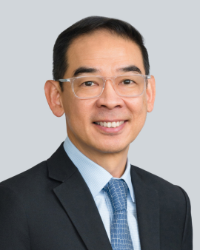

Shook Lin & Bok LLP is a leading, full-service law firm in Singapore with a strong Asian presence and global reach. It has more than a century of rich legal heritage, and among its 130+ lawyers are numerous partners who are highly regarded lawyers in their respective areas of expertise. The firm’s team of well-trained and experienced lawyers deploy innovative and effective solutions to solve complex and difficult legal issues, and provide customised and value-added legal services to clients. Over the years, the firm has built a strong base of clients comprising both local and international financial institutions and large multinational corporations. It has a leading specialised asset and wealth management practice led by a veteran specialist funds lawyer who has been ranked Band 1 in Investment Funds by Chambers Asia-Pacific since 2014.
1. General
1.1 General Overview of Jurisdiction
In Singapore, the management, offering and distribution of funds and related issues are regulated and primarily governed by the Securities and Futures Act 2001 (SFA) and its subsidiary legislations. The regulatory authority in Singapore that has supervisory responsibility for administering the SFA and its subsidiary legislation is the Monetary Authority of Singapore (MAS).
The funds market can be broadly divided into retail and non-retail. Any investor who is not an accredited investor (AI) or institutional investor (II), as defined in the SFA, will be considered a retail investor. Any funds that are not offered exclusively to AIs and/or IIs are considered retail funds. Non-retail investor funds which invest in non-traditional asset classes (eg, private markets) are considered alternative funds.
A manager of any fund (retail or alternative) must be licensed in Singapore unless a statutory exemption is available.
Alternative funds generally do not have investment restrictions or limitations. See 2.2 Regulatory Regime for Funds.
Fund managers can be of any nationality and domicile, but a local presence and licence are required if the fund manager intends to conduct fund management activity in Singapore. In addition, fund managers that manage a Variable Capital Company (VCC) must have a licence or fall within a limited set of exemptions. See 2.8 Local/Presence Requirements for Funds.
Investors of alternative funds can be of any nationality and domicile provided they are not on the list of sanctions (eg UN-designated individuals and entities) and are AIs or IIs.
1.2 Key Trends
Alternative funds were active throughout 2025 and 2026, with Singapore experiencing net assets under management (AUM) inflow growth of 29% in 2025. This is in part due to the increasing adoption of VCC funds, demand from family offices, and preference by fund managers and capital allocators for Singapore-based structures. Geopolitical tensions and uncertainties continue to contribute to the onshoring of alternative funds and fund managers alike, and this trend is likely to continue with anticipated tax incentives for fund managers as well as initiatives targeted at hedge fund managers. Private equity (PE), venture capital (VC) and private credit funds remain active, and asset managers based in Singapore favoured strategies with ESG overlay in 2025.
SFOs remain an area of growth, with changes in June and July 2026 introducing a streamlined, structure-agnostic class exemption from Capital Markets Services (CMS) licensing requirements, as well as revised conditions, making it simpler for family offices to qualify for tax incentives while tightening scrutiny over the sources of wealth.
The MAS unveiled further measures in August 2026 to strengthen Singapore’s position as a leading asset management hub, touching on areas such as a new tax exemption to take effect from 2027 for profit-related returns from the provision of fund management services to qualifying funds, a new hedge fund investment programme to anchor leading hedge fund managers in Singapore, and a new Investment Management Track under the Overseas Networks & Expertise (ONE) Pass framework to attract global leaders and senior investment professionals. See 2.4 Tax Regime for Funds and 3.4 Tax Regime for Managers.
2. Funds
2.1 Types of Alternative Funds and Structures
Types of Funds
The most common types of alternative funds are hedge, fund of funds, PE, VC and real estate (RE). There are also some private credit, distressed and special situation funds. While these types of funds have traditionally been structured as closed-end funds with fixed charter lives, fund managers have been increasingly adopting evergreen fund structures and other hybrid models to meet the evolving preferences of investors. Key drivers for such fund structures include flexibility and access, as well as regulatory reform, as the MAS has also consulted on a framework to make private market investments accessible to retail investors subject to appropriate safeguards.
Fund Structures
Alternative funds may take any of four legal structures, namely:
- unit trust;
- limited partnership (LP);
- company; and
- VCC.
The most common structures were the Singapore LP, Cayman LP and Cayman Segregated Portfolio Company funds prior to the launch of the VCC framework on 15 January 2020. Since then, a significant shift towards VCCs has been observed. Based on the MAS’s Singapore Asset Management Survey 2025, as of 31 December 2025, a total of 1,406 VCCs (representing 3,443 sub-funds) were incorporated or re-domiciled in Singapore, with just over 60% utilised for alternative strategies.
Unit Trust Fund
The unit trust fund is not a separate legal entity. The unit trust fund is organised as a trust pursuant to a trust deed where the legal ownership of the unit trust fund’s assets is vested in a trustee that holds such assets on trust for the benefit of the investors. The trust does not need to be registered with the Accounting and Corporate Regulatory Authority (ACRA) and there is no public register for private trusts. The trustee must hold a trust business licence pursuant to the Trust Companies Act 2005 (TCA), and in certain circumstances may additionally need to be an approved trustee under Section 289(1) of the SFA.
Investors are unitholders and own units issued by the trust. There are no management units or general partnership units. There is no board of directors as in a normal company. As such, the day-to-day control, management and decision-making powers of the unit trust fund vest with the trustee but are delegated to the fund manager. The investment mandate and terms of such delegation are normally found in the trust deed.
A unit trust fund can be organised as an umbrella or standalone fund. The umbrella structure accommodates the creation of one or more sub-funds, where investors select and invest directly into each sub-fund, while the trustee holds the assets of each sub-fund for the benefit of the sub-fund investors. Nonetheless, the sub-funds are not separate legal entities, and while the performances, assets and liabilities of each sub-fund may be contractually segregated from those of other sub-funds in accordance with the trust deed terms, there is no statutory ringfencing.
The unit trust is commonly utilised as a retail fund vehicle but, in the alternative space, is typically adopted for open-end or income funds.
LP Fund
The LP fund is not a separate legal entity. The LP fund is organised as a limited partnership pursuant to the Limited Partnerships Act 2008 and pursuant to an LP agreement where the legal ownership of the LP fund’s assets is vested in the general partner (GP), who holds such assets on behalf of the LP fund. The LP fund must be registered with the ACRA.
Investors are known as limited partners (LPs) and own interests in the LP fund in accordance with the LP agreement. The GP is usually owned, directly or indirectly, by the fund manager or the fund sponsor. The GP has full liability for all activities of the LP fund, while the risks undertaken by the LPs are capped at their investment amounts as long as the LPs do not undertake management activities of the LP fund. The LP fund does not have a board of directors, and the day-to-day control, management and decision-making powers of the LP fund vest with the GP, who may delegate this to the fund manager. The investment mandate and terms of such delegation are normally found in the investment management agreement (IMA). The LP fund may constitute a Limited Partner Advisory Committee (LPAC) comprising key LPs, who typically have veto rights over key LP fund decisions. LP funds managed by a permissible fund manager, such as a licensed or exempt fund manager in Singapore, will not have the identities and particulars of LPs available in public searches.
The LP is commonly utilised for closed-end PE, VC, RE and other exotic assets fund strategies.
Company Fund
The company fund is a separate legal entity. The company fund is organised as a private limited company pursuant to the Companies Act 1967 (CA) and is administered in accordance with its constitution, where the legal ownership of the company fund’s assets is vested in the company. The company fund must be registered with the ACRA. In addition, companies are subject to disclosure requirements including the need to maintain and file details on its register of registrable controllers with the ACRA, and certain information on its shareholders are publicly available.
Investors are known as shareholders, who typically own preference shares or redeemable preference shares. The ordinary shares are usually owned by the fund manager or a GP entity. There is a board of directors. As such, the day-to-day control, management and decision-making powers of the company fund vest with the board of directors but are often delegated to the fund manager. The investment mandate and terms of such delegation are normally found in the IMA.
The company is seldom utilised as a fund vehicle due to the restrictions surrounding the company structure such as dividend and capital maintenance requirements.
VCC Fund
The VCC framework was introduced in Singapore on 15 January 2020 pursuant to the Variable Capital Companies Act 2018 (the “VCC Act”). The VCC Act stipulates that the VCC can only be used as a fund (ie, collective investment scheme) and must appoint a fund manager that holds a CMS licence for fund management (or a financial institution licensed in Singapore that can manage VCC).
The VCC fund is a separate legal entity and is organised as a VCC pursuant to the VCC Act and pursuant to the constitution where the legal ownership of the VCC’s assets is vested in the VCC. The VCC fund must be registered with the ACRA.
Investors are known as shareholders who own participating shares. The management shares are usually owned by the fund manager or the fund sponsor. There is a board of directors. As such, the day-to-day control, management and decision-making powers of the VCC fund vest with the board of directors but are often delegated to the fund manager. The investment mandate and terms of such delegation are normally found in the IMA.
VCC funds have certain disclosure and reporting requirements under the VCC Act, but capital maintenance requirements are not applicable, and the register of shareholders is not available to the public. The VCC must also comply with the requirements for prevention of money laundering and countering the financing of terrorism prescribed by the VCC Act and MAS Notice VCC-N01.
A VCC fund can be organised as an umbrella VCC fund with sub-funds created under the umbrella VCC. The umbrella structure itself is not a fund that investors can invest into but is merely an overarching structure to house the sub-funds. Investors invest into the sub-funds directly and the VCC (acting on behalf of each specific sub-fund) holds the investment assets of each sub-fund. The sub-funds are not separate legal entities but have their own unique sub-fund registration number issued by the ACRA.
The performance, assets and liabilities of each sub-fund must be segregated from those of other sub-funds as required by the VCC Act, and this cannot be overridden by the VCC constitution or any agreement or contract. Hence, the VCC enjoys statutory segregation and ringfencing of assets compared to sub-funds of an umbrella unit trust.
The VCC combines the benefits of the corporate structure with the flexibility of the unit trust, and can accommodate open-end and closed-end fund structures spanning the full range of fund strategies such as hedge, PE, VC, RE and exotic assets. In Singapore, the VCC is predominantly utilised for alternative or restricted schemes, although there are a handful of retail fund VCCs which focus on income and/or liquid asset strategies.
Changes to the VCC Act are expected, and these will usually be preceded by a consultation process prior to enactment.
2.2 Regulatory Regime for Funds
Overview of Regulatory Regime
Alternative funds which are not offered to retail investors are not regulated in Singapore and are not subject to a regulatory approval process, except that the offering of units in a fund to AIs and other relevant persons pursuant to Section 305 of the SFA requires a notification process with the MAS for the fund to be entered into the list of restricted schemes prior to such restricted offer being made. Restricted schemes (in respect of both Singapore and foreign domiciled funds) must comply with scaled-down requirements, and an offer of units in the restricted scheme must be made in or accompanied by an information memorandum that complies with the Sixth Schedule to the Securities and Futures (Offers of Investments) (Collective Investment Schemes) Regulations 2005.
Funds offered to retail investors must be authorised (for Singapore domiciled funds) or recognised (for non-Singapore domiciled funds). In addition, the authorised or recognised scheme, as the case may be, must comply with the Code on Collective Investment Schemes and such offer must be made in or accompanied by a prospectus compliant with the SFA and related regulations, which must be registered with the MAS before any units in the retail fund can be offered to the public in Singapore.
The management of funds and the distribution of funds are regulated activities under the SFA and require a CMS licence unless an exemption applies. See 3.3 Regulatory Regime for Managers and 4.4 Rules Concerning Marketing of Alternative Funds.
Non-retail alternative funds are not required to comply with any investment guidelines and may, subject to public policy considerations and compliance with applicable laws, adopt any investment strategy, thesis or approach, and make investments in any asset class or jurisdiction. There are no restrictions on the amount of capital to be raised and invested, or the length of the investment period, although managers typically have regard to comparable market offerings when designing and structuring alternative fund(s) under their management. Moreover, if the alternative fund is applying for fund tax incentives, certain asset classes will not qualify. See 2.4 Tax Regime for Funds.
Alternative funds can adopt a variety of tax-efficient holding structures to invest directly or indirectly in the investment portfolio, including holding these through special purpose vehicles where appropriate. The critical requirement, particularly if the fund is marketed as a restricted scheme, is that the investment objectives and focus, investment approach, and other key terms and conditions and risks are adequately disclosed to investors, typically in the fund private placement memorandum (PPM).
Unit Trust Fund
The unit trust fund is constituted when the trust deed is executed by the trustee and the fund manager, and no registration is required. The constitutive document for a unit trust fund is the bilateral trust deed, and other key fund documents include the trust deed, subscription agreement and (where applicable) investor side letter(s). The fund manager may issue a PPM in connection with such offer of fund units. The time taken to set up a unit trust fund can range from a few days to a few weeks, and this is largely dependent on the negotiation of the terms of the trust deed between the parties. There is no registration fee and the professional fees for setting up are considered reasonable.
LP Fund, Company Fund and VCC Fund
The LP fund, company fund and VCC fund are constituted when they are registered or incorporated by the ACRA. Prior to establishment or incorporation, reservation of names is required, and the registration or incorporation forms must be lodged with the ACRA, together with relevant supporting documents.
The constitutive document for the LP fund is the LP agreement; other key documents include the investment management agreement, subscription agreement and (where applicable) investor side letter(s). The constitutive document for the company fund and VCC fund is the constitution, and other key documents include the investment management agreement, shareholders’ agreement (if applicable), subscription agreement and (where applicable) investor side letter(s). The fund manager may issue a PPM in connection with such offer of fund interests or shares, as the case may be.
The time taken to set up an LP fund, company fund or VCC fund can range from a few days to a few weeks, and this is largely dependent on the negotiation of the terms of the fund documents – in particular, the LP agreement or constitution, investment management agreement, shareholders’ agreement and subscription agreement (as may be applicable) between the relevant parties. The incorporation/registration fee payable to ACRA for a VCC is SGD8,015, comprising the name application fee of SGD15 and an SGD8,000 incorporation fee. In the case of an umbrella sub-fund, each additional sub-fund costs SGD400 to register. The professional fees for setting up LP funds, company funds and VCC funds are considered reasonable.
Pre-Marketing
For the statutory exemptions for small offers, private placements and offers to AIs and certain other persons (see 4.7 Private Placements), none of the offers may be accompanied by an advertisement making an offer or calling attention to the offer or intended offer, and there must be no selling or promotional expenses paid or incurred in connection with each offer other than those incurred for administrative or professional services, or by way of commission or fee for services rendered by certain prescribed persons. Apart from this, there are no express legal requirements or prohibitions against pre-marketing of alternative funds in Singapore. Any offer of units in non-retail alternative funds must be made in reliance on one or more statutory exemptions under the SFA and comply with the conditions, including re-sale restrictions applicable to the exempt offering.
In the absence of any other formal offering documents, a presentation, pitchbook or teaser document (whether provided in print or any other form) containing the key terms of an investment in the alternative fund such that it could form the basis of an offer could constitute an offering of units or interests in the fund. Much depends on the actual facts and circumstances surrounding the interaction, and the details and substance contained in such documents.
Distribution or Placement of Funds
See 4.4 Rules Concerning Marketing of Alternative Funds and 4.7 Private Placements.
Post-Marketing Ongoing Requirements
There are no specific ongoing legal requirements applicable to firms that have marketed alternative funds in Singapore, except for ongoing anti-money laundering and countering the financing of terrorism (AML/CFT) and suspicious transaction monitoring requirements that are generally applicable to the holder of a CMS licence for fund management (“Licensed FM”). Where fund managers intend to continuously offer the restricted scheme in Singapore, an annual declaration should be submitted in respect of such scheme. See 3.3 Regulatory Regime for Managers.
2.3 Disclosure/Reporting Requirements
Fund managers are required to provide adequate disclosures to investors and prospective investors in the alternative fund. Disclosures are usually made in the PPM or information memorandum, but may also be made in other fund documents and should cover all material and up-to-date information that will assist investors and prospective investors to make informed decisions about investing in the fund. Where the offer of units in the alternative fund is made to accredited investors and other relevant persons as defined in the SFA and related regulations, the information disclosed in the PPM or information memorandum should include (on a non-exhaustive basis):
- a description of the fund;
- names and details of the fund managers, and other professionals and main service providers such as the trustee or custodian, including whether such entities are regulated by any financial supervisory authority and, if so, the name and contact details of the authority;
- legal structures and regulatory statuses of the fund, including whether it is regulated by any financial supervisory authority and, if so, the name and contact details of the authority;
- investment objectives and focus of the fund, and the investment strategy, thesis and approach of the fund manager;
- risks associated with the fund, including the risks of subscribing for or purchasing units in the fund;
- fees and charges payable by the investors and by the fund;
- conflicts of interests;
- how the funds are to be offered in Singapore and which statutory exemptions are invoked for the offers;
- where applicable, the conditions, limits and gating structures for redemption of the fund units;
- where applicable, the fund manager’s policy on fund distributions and the use of leverage;
- the charter life of the funds and termination of the fund;
- where applicable, the policy regarding side letters that may further qualify the relationship between the fund and selected investors, and the nature and scope of such side letters;
- where applicable, the past performance of the fund, or where information on the past performance of the fund may be obtained; and
- the details on where the accounts of the fund may be obtained.
If there are significant changes or updates to the terms and conditions of the alternative funds, or to any sections of the PPM, the fund manager may consider whether investor approval or notification, as the case may be, is required, and issue a notice to existing investors together with the requisite ancillary documents such as an amended and restated or supplemental PPM.
Where the offer of units in the alternative funds is made to non-retail investors, there are statutory exemptions from the requirements of authorisation for the alternative funds and registration of an SFA-compliant prospectus, provided certain conditions are met (see 4.7 Private Placements). When an offer is made in reliance on such exemptions, there is no requirement to file the PPMs of the alternative funds with the MAS, and thus the PPMs are not available to the public. If an offer is made in reliance on the exemption pursuant to Section 305 of the SFA, a copy of the PPM must be notified to the MAS, but such PPM is not otherwise available to the public.
2.4 Tax Regime for Funds
Taxes in General
In Singapore, income tax is imposed on any income that is accrued in or derived from Singapore and on any foreign-sourced income received or deemed to have been received in Singapore, unless otherwise statutorily exempted. The current corporate income tax rate is 17%.
At present, the Singapore government does not impose tax on capital gains unless the investment gains of any entity are considered to be income in nature. This depends on a number of factors and is scrutinised by the Inland Revenue Authority of Singapore (IRAS).
For the purposes of alternative funds, the investment decisions and control and management are typically delegated to the fund manager. If the fund manager is incorporated in Singapore, or has its control and management in Singapore, it is highly likely that the alternative fund will be considered to have tax residence in Singapore and be subject to Singapore income tax.
Section 10L of the Income Tax Act 1947 (ITA) is deemed operative from 1 January 2024 and applies to gains from a sale or disposal of a foreign asset that occurs on/after 1 January 2024. Pursuant to Section 10L of the ITA, any gains received or deemed to have been received in Singapore by the alternative fund from the sale or disposal of any foreign investment assets (movable or immovable property situated outside Singapore) will be treated as income chargeable to Singapore income tax, unless certain exclusions apply. One applicable exclusion is where the alternative fund has sufficient economic substance in Singapore in the year in which the sale or disposal of the foreign investment asset occurs.
Unit Trust
The unit trust fund is not a separate legal entity. However, the unit trust fund requires a trustee to hold a licence pursuant to the TCA and, in certain cases, be an approved trustee under Section 289(1) of the SFA. Such trustee must be a company incorporated under Singapore law. Thus, the unit trust fund is subject to 17% corporate income tax by virtue of the trustee being a Singapore tax resident.
LP Fund
The LP fund is not a separate legal entity and will not be subject to corporate income tax. Instead, the limited partners will be subject to tax on the income derived from the LP fund in accordance with their own tax incidence and liability.
Company Fund
The company fund is a separate legal entity and is subject to 17% corporate income tax.
VCC Fund
The VCC is a separate legal entity and is subject to 17% corporate income tax.
Sections 13D, 13O, 13OA and 13U Tax Incentives
Certain tax incentives are available to alternative funds and fund managers, provided certain conditions are fulfilled. An alternative fund managed by a Licensed FM can apply to the MAS for tax incentives pursuant to Section 13O, 13OA or 13U of the ITA, allowing the fund to be taxed at a lower rate. There is no need to apply to the MAS for Section 13D, which is a self-administered scheme designed for foreign or offshore-domiciled funds managed by a Licensed FM.
If the relevant incentive conditions for Section 13O, 13OA or 13U are met, the MAS will grant the incentive in writing to the alternative fund. These tax incentives come under certain sections of the ITA and were extended by the Parliament of Singapore on 15 October 2024 until 31 December 2029. The Section 13D, 13O, 13OA and 13U tax incentive conditions have also been revised with effect from 1 January 2025, although there is a grace period extended to existing tax incentive awardees to fulfil the new conditions from the financial year ending in 2027 (year of assessment 2028). These tax incentive conditions were further revised on 31 July 2026. The common condition is that the fund must be managed by a Licensed FM.
The other key conditions for the incentives are as follows.
Section 13D
The fund must be non-Singapore resident, with at least one investment professional, and there are certain restrictions on investors.
Section 13O
The fund must be a Singapore company or VCC, with at least two investment professionals, a Singapore fund administrator, a minimum AUM of SGD5 million, and tiered annual local business spending commencing at SGD200,000 for AUM less than SGD250 million; there are also certain restrictions on investors.
Section 13OA
Conditions are similar to those applicable to Section 13O except that the fund must be a Singapore limited partnership.
Section 13U
This is any fund structure with at least three investment professionals, a Singapore fund administrator if the fund is Singapore incorporated and tax resident, a minimum AUM of SGD50 million, and tiered annual local business spending commencing at SGD200,000 for AUM less than SGD250 million.
There are other specific conditions, requirements and restrictions regarding the application, approvals and variations, as well as in relation to investment assets and investment income of the fund.
Where the fund is managed by a single-family office (SFO) that is exempt from a CMS licence for fund management under the SFA, the MAS issued a circular on 31 July 2026 detailing changes to the requirements for SFO funds, which took effect from 1 August 2026. The key changes in conditions make it simpler for family offices to qualify for tax incentives while tightening scrutiny over the sources of wealth, including as follows.
- SFOs will have more time to hire investment professionals, where SFOs applying under Section 13O can start with one qualifying investment professional (instead of two) while SFOs applying under Section 13U can commence with two qualifying investment professionals (instead of three). Nonetheless, the remaining hires, which must include at least one non-family member, must be completed within the first year of the award of the scheme.
- Reduced requirements on monitoring of minimum AUM in designated investments such that funds will only need to report compliance at the point of application and at the end of each basis period, although family offices are still expected to maintain proper internal records and governance.
- Tiered minimum local spending requirements based on AUM in designated investments.
- Greater flexibility in meeting local spending requirements, which now include eligible charitable donations and grants to blended financial instruments, where eligible grants will be recognised at twice their actual value.
- Increased capital-deployment options including investments in Singapore-listed equities and non-listed operating companies, which will be recognised at double their value for the minimum deployment requirement.
- Removal of the 5% cap on physical investment precious metals qualifying as designated investments.
The tightened scrutiny over beneficial ownership and source-of-wealth requirements means that relevant persons to be screened will include anyone who contributed to the source of funds, where such requirement will be applied retroactively. Funds are also required to open a bank account and will have a three-month grace period from 1 August 2026 to do so.
Philanthropy Tax Incentive Scheme for SFOs (PTIS)
A qualifying donor approved under the PTIS will be able to claim a 100% tax deduction for their overseas donations made through qualifying local intermediaries for a period of five years starting from an approved incentive commencement date of 1 January 2024. The tax deduction is capped at 40% of the approved qualifying donor’s statutory income. The unutilised deductions cannot be carried forward to be offset against income from any subsequent year of assessment. The deduction also cannot be transferred to another company of the same group under group relief arrangements. To qualify, donors must have an incentivised fund under the Section 13O or 13U schemes and meet the eligibility conditions.
2.5 Private Credit
Alternative funds can originate loans (ie, extend loans to a borrower) and invest in consumer credit or other loan portfolios. There are no limitations nor special rules applicable to alternative funds that originate loans, provided such alternative funds operate within a statutory exemption under the Moneylenders Act 2008 (MLA). The exemption from having to hold a moneylender’s licence pursuant to the MLA applies to any person who lends money solely to an accredited investor or to corporations, limited liability partnerships, trustees or trustee-managers (as the case may be) of business trusts for the purposes of the business trusts, or trustees of real estate investment trusts (REITs) for the purposes of the REITs. Nonetheless, fund managers should be mindful of the regulatory expectation that substantive fund management involves the management of assets that are capital markets products as defined in the SFA.
2.6 Non-Traditional Assets
Alternative funds can adopt any investment strategy and theme, and invest in any asset class, so long as it is not against public policy or involves investing in any asset class that is prohibited. However, if the fund is applying for fund tax incentives, certain asset classes will not qualify for the tax incentives. These include digital assets, physical assets, immovable property situated in Singapore and exotic assets (eg wine, art, cars, yachts, planes and precious metals). See 2.4 Tax Regime for Funds.
Digital Assets
As above, there is no restriction on an alternative fund’s ability to invest in digital assets such as cryptocurrencies or tokenised capital markets products. Nonetheless, the fund manager should consider such fund strategies in the context of its business plan and CMS Licence conditions, consult the regulator if necessary, and ensure that it has the requisite experience and policies and procedures in place to manage the risks arising from an investment in such digital assets.
Cannabis
Cannabis is illegal in Singapore. Possession, consumption, trafficking, importation and exportation of cannabis are offences and carry severe penalties under local laws. Even though there is no express guidance on funds investing in cannabis, it would be against public policy.
Litigation Funding
Litigation funding is legal in Singapore but there are restrictions and limited applications. Litigation funding is permissible for arbitrations, proceedings in the Singapore International Commercial Court, certain types of mediations, and insolvency matters. The current framework imposes certain conditions that funds having litigation funding strategies must comply with.
As above, fund managers should be mindful of the regulatory expectation that substantive fund management involves the management of assets that are capital markets products as defined in the SFA. Licensing exemptions exist for fund managers who manage non-capital markets products on behalf of AIs or IIs.
2.7 Use of Subsidiaries for Investment Purposes/Co-Investments
Alternative funds can invest directly into the asset classes or indirectly through special purpose vehicles (SPVs), including using a private corporation, a trust or a limited partnership. SPVs are commonly used if the alternative fund wishes to ringfence investment strategies, performance, liabilities, risks and rewards and/or groups of investors (such as in the case of co-investment structures). SPVs are also used when there may be regulatory or commercial restrictions, or where the use of SPVs provides greater tax efficiency. SPVs that are corporations may also enjoy tax benefits pursuant to Avoidance of Double Taxation Agreements.
A co-investment vehicle is a separate entity that is run in parallel with the main fund, and functionally operates as a separate fund with different investors (from the main fund) and usually different economic terms. As above, such co-investment vehicles take the form of SPVs such as limited partnerships.
2.8 Local/Presence Requirements for Funds
A fund manager who intends to launch and manage a VCC fund or avail the alternative fund under its management to a tax incentive that reduces the local corporate income tax rate applicable to the alternative fund is required to have local presence and obtain the CMS licence for the regulated activity of fund management (or fall within a set of limited exemptions).
Typically, the alternative fund manager will render fund management services (as defined in the SFA) to the funds that they manage in Singapore. Depending on the business model adopted, the alternative fund manager may also provide financial advisory services (as defined in the Financial Advisers Act 2001 (FAA)) to its customers and may file as an exempt financial adviser under the FAA. The fund manager may also appoint investment advisers, sub-advisers and/or sub-managers in pursuance of the investment strategy or objective of the fund. Such investment adviser, sub-adviser and/or sub-manager need not have a local presence provided the investment adviser, sub-adviser and/or sub-manager (as the case may be):
- has the requisite licence or exemption in the jurisdiction(s) in which it operates; and
- does not conduct any activity in Singapore that requires a licence under the SFA and/or the FAA.
Certain parts of the SFA and FAA have extraterritorial effect. For foreign fund managers that manage alternative funds incorporated or constituted in Singapore where the foreign fund manager does not otherwise carry out business activities or have a physical presence in Singapore, licensing requirements in respect of managing and/or marketing the fund generally do not apply unless the foreign fund manager does an act partly in and partly outside Singapore or does an act outside Singapore which has a substantial and reasonably foreseeable effect in Singapore, where such act would be an offence under certain parts of the SFA including Part 4 (Holders of Capital Markets Services Licence and Representatives). Where extraterritorial provisions under the SFA and/or FAA are engaged in respect of the acts undertaken by the foreign fund manager, the foreign fund manager will require a licence unless an exemption is available to it in respect of such activity.
See also 3.3 Regulatory Regime for Managers.
Alternative funds established as a Singapore private limited company or a VCC must have at least one Singapore resident director, a Singapore registered office, a Singapore company secretary and Singapore auditor. In addition, the VCC must appoint a Licensed FM (or a person mentioned in Section 99(1)(a), (b), (c) or (d) of the SFA) and have at least one director who is a director or qualified representative of the fund manager. The VCC is subject to AML/CFT requirements and must appoint an AML/CFT compliance officer at management level.
For a Singapore LP fund, a foreign general partner is permissible, but the LP fund may be required to appoint a local manager for the purposes of discharging the relevant obligations of the LP.
The alternative fund is a passive vehicle for the pooling and collective management of assets, and is not an operating entity, does not have employees nor carry out business activities from physical premises. Where the alternative fund appoints a Singapore-based Licensed FM to manage its assets, the directors, officers or employees of the Licensed FM would typically discharge the requirements described above in respect of the fund.
Where the alternative funds are applying for local tax incentives, there will be other local requirements as part of the incentive conditions. See 2.4 Tax Regime for Funds.
2.9 Rules Concerning Service Providers
Alternative funds can appoint service providers from any jurisdiction. However, to qualify for tax incentives, the fund must appoint a local fund manager and local fund administrator.
Generally, local service providers that do not conduct any regulated activities in Singapore are not subject to Singapore licensing or registration requirements. Currently, standalone entities offering fund administration services such as operational and/or accounting functions for funds, or fund compliance service providers, are not regulated and do not require a licence. Custodians that provide custodial services for specified products (as defined in the SFA) require a CMS licence for providing custodial services pursuant to the SFA. Alternative funds structured as a trust require a trustee to constitute the fund. Such trustee must have a trust licence pursuant to the TCA and may also need to be an approved trustee under Section 289(1) of the SFA.
Fund managers who appoint external service providers should consider the applicability of the MAS Guidelines on Outsourcing (Financial Institutions other than Banks) on such arrangements.
See 4.4 Rules Concerning Marketing of Alternative Funds and 4.7 Private Placements.
For non-local service providers that carry out business activities in Singapore regulated under the SFA (eg, sub-management, sub-advisory, brokerage or custody), licensing and registration requirements would apply if such activities are performed partly in and partly outside Singapore or entirely outside Singapore but have a substantial and reasonably foreseeable effect in Singapore. Where such relevant activities engage licensing and registration requirements in Singapore, the parties must apply to the MAS for the requisite CMS licence, unless otherwise statutorily exempted.
Local Regulatory Requirements for Non-Local Managers
Non-local managers may launch and manage alternative Singapore funds, except those constituted as VCCs. Alternative Singapore funds that are managed by non-local managers will not enjoy the tax incentives available to alternative funds. See 2.4 Tax Regime for Funds.
2.10 Anticipated Changes for Funds
The MAS is considering providing retail access to private market investment funds, to allow retail investors to have access to this asset class through authorised long-term investment funds subject to safeguards. The objective of the proposed long-term investment funds framework seeks to provide retail investors with a wider array of investment options, and aligns with the Equities Market Review established by the MAS in so far as it contemplates the possibility of exchange-listed private market funds. The MAS has also issued public consultation papers on topics regarding retail fund product innovation, liquidity risk management practices, technology risk management, complex products framework, third-party risk management, operational risk management, and artificial intelligence risk management for financial institutions.
3. Fund Managers
3.1 Origin of Promoters/Sponsors of Alternative Funds
In the last few years, it has been observed that promoters and sponsors of alternative funds usually come from Singapore, South-East Asia and North Asia, with growing traction in South Asia and Europe.
3.2 Legal Structures Used by Managers
Where the alternative fund managers are based in Singapore, they will take the form of a local private limited company. These are typically newly incorporated companies and wholly owned or majority-owned by the founders, sponsors or parent entity of the relevant financial services group.
Portfolio managers of the local alternative fund managers are paid monthly salaries, performance bonuses and incentive payouts, which may be correlated to the performance of the funds they manage (including some form of carry, long-term incentives, employee stock options or employee share plans). These may be structured using offshore vehicles such as corporations or limited partnerships. As Singapore remains a competitive market for fund managers and talent, individual personnel compensation and incentive arrangements play a significant part in attracting, retaining and incentivising talent.
3.3 Regulatory Regime for Managers
CMS Licence for Fund Management
Any entity that manages funds in Singapore must hold one of the three licences set out below, unless otherwise statutorily exempted:
- a CMS licence for fund management for retail investors (Retail LFMC);
- a CMS licence for fund management for AIs and IIs only (AIFMC); or
- a CMS licence for VC fund management for AIs and IIs only (VCFMC).
Basic information about the alternative fund managers, their licence status and permissible regulated activities are set out in the Financial Institutions Directory found on the MAS website.
Requirements for the Licensed FM
The fund manager must be a Singapore incorporated company and have a permanent physical office in Singapore. The office must be dedicated, secure and accessible only to the fund manager’s directors and personnel.
Retail LFMCs can carry on business in fund management with all types of investors. AIFMCs and VCFMCs can only carry on business in fund management with AIs and IIs. In addition, VCFMCs can only carry on business in fund management in respect of VC funds in line with criteria prescribed by the MAS.
To qualify for licensing, the fund manager must conduct substantive fund management activity in Singapore in respect of third-party moneys, such as portfolio management, investment research or trade execution in respect of capital markets products as defined in the SFA.
The fund manager should satisfy the MAS that it, its shareholders, directors, representatives and employees are fit and proper, in accordance with the Guidelines on Fit and Proper Criteria issued by the MAS (FSG-G01). The fund manager must perform adequate due diligence checks and refresh such checks regularly.
The CEO, directors and relevant professionals of the fund manager must have adequate relevant experience (ie, their experience should be relevant to the fund management activities of the fund manager). The CEO and directors must collectively have experience in both portfolio management and support functions such as risk management, operations and compliance. The CEO, senior management and directors who are responsible for exercising oversight of the fund manager’s investment activities must collectively have relevant experience in all of the asset classes, markets and investment strategies that the fund manager will invest in, and be able to properly manage such risks.
There must be at least two directors, with at least one executive director residing in Singapore. There must be at least two full-time relevant professionals and full-time representatives (at least three for Retail LFMCs) residing in Singapore, each of whom has at least five years of relevant experience. The CEO must have at least five years of relevant experience (at least ten years for Retail LFMCs), has to be employed full-time in the day-to-day operations of the fund manager, and be resident in Singapore.
The fund manager must at all times meet the base capital thresholds (eg SGD250,000 for AIFMCs) and risk-based capital thresholds prescribed by the MAS. The fund manager is expected to maintain an additional capital buffer, over and above the minimum requirement.
The fund manager must have in place compliance arrangements that are commensurate with the nature, scale and complexity of its fund management business. It must put in place a risk management framework to identify, address and monitor the risks associated with customer assets that it manages. It must be subject to external audit and internal audit. The MAS strongly encourages AIFMCs to maintain adequate Professional Indemnity Insurance coverage, and a Letter of Responsibility may be required by the MAS from the fund manager’s parent company or related company.
The fund manager is required to comply, on an ongoing basis, with all the business conduct requirements prescribed in the SFA and the relevant subsidiary legislation. These include:
- custody;
- valuation;
- reporting;
- mitigation of conflicts of interest;
- disclosure;
- termination of funds;
- cessation of business;
- complaints handling;
- oversight of personnel;
- AML/CFT;
- misconduct reporting;
- use of service providers;
- notifications and approvals; and
- periodic returns.
No Fiduciary Duty
The relationship between a fund manager and its customer is not one of the established classes of fiduciary relationships in Singapore. As such, fiduciary duties will not ordinarily arise in such a situation unless this is supported by the contract or where acts or circumstances are such that the imposition of such a relationship is justified. Alternative fund managers are appointed by the alternative fund pursuant to the IMA, which typically expressly provide that the relationship is purely contractual and the alternative fund manager has no fiduciary duty towards the fund nor towards the investors. Nonetheless, it is pertinent to ensure that the alternative fund manager does not act in a manner inconsistent with terms and conditions of the IMA and, in so doing, that knowingly or unknowingly justifies the imposition of fiduciary duties to the fund or its customers.
Conflicts of Interest
Potential conflicts of interest involving the alternative fund managers must be expressly disclosed to their customers in the fund offering documents or IMA. In line with regulatory expectation, fund managers are expected to have policies and procedures commensurate with their business activities, and this would include having policies to deal with or mitigate conflicts of interest (whether potential or otherwise).
3.4 Tax Regime for Managers
Licensed FMs are subject to 17% corporate income tax. The income of the Licensed FM typically includes management or base fees, performance fees and carried interest, including any other income derived from the alternative fund.
A Licensed FM can apply to the MAS for incentives under the Financial Sector Incentive – Fund Management Award. This incentive allows the Licensed FM to be taxed at a lower rate of 10% on income derived from managing or providing investment advisory services to qualifying funds (eg, funds approved under Section 13O and 13U of the ITA). The key conditions are that:
- the fund manager must be a Licensed FM;
- the Licensed FM must have at least three full-time investment professionals with minimum salary qualifications; and
- the Licensed FM must have minimum AUM of SGD250 million.
More recently, on 19 August 2026 the MAS announced a host of new measures to boost Singapore’s competitiveness as an asset-management hub, including as follows.
- A new tax exemption scheme to cover profit-related returns arising from the provision of fund management services to qualifying funds. These qualifying funds include those covered under Section 13O and 13U of the ITA, as well as funds managed by SFOs. Tax exemptions will apply when a share of the qualifying fund’s profits is contractually received by corporate entities, partnerships or individuals when providing fund management services. This tax exemption is set to take effect from the year of assessment 2027, and more details will be announced in the Singapore Budget 2027.
- A hedge fund investment programme, to encourage growth of Singapore’s hedge fund investment ecosystem, including ancillary service providers and prime brokerages.
- A work-pass track under the ONE Pass framework to attract top-tier foreign talent.
3.5 Rules Concerning Permanent Establishments
The question of whether a foreign alternative fund with a local fund manager creates a permanent establishment or other taxable presence in Singapore is a question of mixed fact and law. There are no exemptions or other rules on this. However, there is a tax incentive pursuant to Section 13D of the Income Tax (Exemption of Income of Prescribed Persons Arising from Funds Managed by Fund Manager in Singapore) Regulations 2010, which applies to prescribed persons (that are non-resident individuals, companies or trust entities – ie, offshore fund vehicles) managed by a Singapore fund manager. The incentive comes with prescribed conditions.
3.6 Taxation of Carried Interest
Currently, carried interest is not expressly dealt with by local tax legislation. The taxability of carried interest will depend on its legal nature, and this will in turn depend on the legal documentation, classification, and how in fact and in substance it is structured and dealt with. If it is income in nature in the hands of the fund manager, it will be subject to Singapore corporate income tax. If it is structured in the form of gains from actual capital investment into the alternative fund, it is possible that it would not be subject to local income tax.
See 3.4 Tax Regime for Managers on the new tax exemption scheme to cover profit-related returns arising from the provision of fund management services to qualifying funds.
3.7 Outsourcing of Investment Functions/Business Operations
Fund managers can outsource non-fund management functions to service providers or third parties. Fund managers can also outsource a portion of their fund management functions to third parties, provided that the relevant third parties have the requisite licence or exemption in the jurisdiction in which they operate and the fund manager retains a substantial role and conducts substantive fund management activity in general and with respect to the alternative fund.
Any outsourcing by the fund manager must comply with the Guidelines on Outsourcing (Financial Institutions other than Banks) issued by the MAS.
3.8 Local Substance Requirements
See 3.3 Regulatory Regime for Managers.
3.9 Change of Control
An entity (whether resident in Singapore or outside Singapore) must not obtain effective control (which refers to control of 20% or more of the voting power, or to holding an interest equal to 20% or more of the issued shares) of the Licensed FM unless it has obtained the prior approval of the MAS pursuant to Section 97A of the SFA. The application for approval must be made in writing, and the MAS may approve if it is satisfied that:
- the applicant is a fit and proper person to have effective control of the Licensed FM;
- having regard to the applicant’s likely influence, the Licensed FM is likely to continue to conduct its business prudently and comply with the provisions of the SFA and directions made thereunder; and
- the applicant satisfies such other criteria as may be prescribed.
In addition, the Licensed FM is obliged, as a condition of its CMS licence, to make a similar application for approval to the MAS.
The CMS licence typically contains conditions that require the Licensed FM to obtain the prior written approval of the MAS to acquire or hold, whether directly or indirectly, an interest of 20% or more of the share capital of any corporation, or to establish any branch (whether in Singapore or elsewhere) or to give at least seven days’ written notice to the MAS prior to the execution of the agreement or transaction for the purchase, sale, merger or any other business combination of all or any part of the business in a regulated activity under the SFA for which its CMS licence is granted.
In general, the Licensed FM should consult and inform the MAS of any proposed major corporate action, especially pertaining to a major restructuring, acquisition, divestment, joint venture or partnership.
3.10 AI and Use of Data
There is currently no express legislation on a fund manager’s use of artificial intelligence, predictive data or big data either for investment purposes or for operational/compliance purposes. The MAS has published several information papers, setting out foundational principles (the FEAT (Fairness, Ethics, Accountability and Transparency) Principles) on the responsible use of artificial intelligence and data analytics (AIDA), to guide financial institutions in assessing and updating existing frameworks or implementing new ones to govern their responsible use of AIDA.
The MAS has shared some of its observations and recommendations from its thematic review of selected financial institutions. Fund managers intending to use AIDA should familiarise themselves with the FEAT Principles, establish robust governance structures and be able to demonstrate how their internal controls meet the FEAT Principles. The MAS has also consulted on Guidelines on Artificial Intelligence Risk Management to enhance management of artificial intelligence risks in financial institutions, specifically on the oversight of artificial intelligence risk management, key artificial intelligence risk management systems, policies and procedures, key artificial intelligence life cycle controls, as well as capabilities and capacity needed for the use of artificial intelligence, with the intention of setting out the expectations generally applicable across the financial sector.
Further MAS guidance is expected in the near future.
3.11 Anticipated Changes for Fund Managers
See 2.10 Anticipated Changes for Funds.
There are anticipated changes to the tax regime for managers. See 3.4 Tax Regime for Managers.
The MAS consulted on proposed guidelines on Third-Party Risk Management, which are intended to supersede the Guidelines on Outsourcing (Banks) and Guidelines on Outsourcing (Financial Institutions other than Banks) and expand the application of the relevant expectations currently imposed on outsourced services to all third-party services. The MAS’s expectation is for all financial institutions (including fund managers) to manage the operational, technology and cyber risks associated with their third-party arrangements, and to re-evaluate risks when there are significant changes or incidents affecting the risk posture of the service providers. Financial institutions are also expected to establish robust business continuity measures and effective incident-response mechanisms to minimise disruptions arising from service provider-related incidents.
See 3.9 AI and Use of Data on artificial intelligence risk management guidelines.
4. Investors
4.1 Types of Investors in Alternative Funds
In recent years, there is more interest in alternative funds from AIs, family offices and external asset managers. As investors become more sophisticated and strategic – looking for more attractive returns and to diversify their portfolios – such investors have ventured into PE, VC, RE and private credit funds. Fund managers have also identified technologically savvy and crypto-native investors as a growth area, which has encouraged a new wave of offerings seeking to specifically tap into liquidity that currently resides on various blockchain networks. This has been a boon for fund managers launching tokenised offerings of fund units, with positive knock-on effects for service providers who provide custody, trading and other ancillary services in respect of tokenised capital markets products.
4.2 Side Letters
Side letters are permissible and not regulated. There is no special approval nor disclosure required except that the fund PPM should expressly disclose the fund manager’s side letter policy, including the implications of such side letter arrangements such as the potential of information asymmetry or preferential terms offered to cornerstone investors or investors who commit a higher minimum subscription.
4.3 Marketing of Alternative Funds to Investors
Alternative funds are typically non-retail funds. As alternative funds are usually managed by fund managers who are AIFMCs, they can be offered to anyone in Singapore provided each offeree qualifies as an AI or II.
4.4 Rules Concerning Marketing of Alternative Funds
Any entity, including distributors or placement agents, that distributes or markets the units or shares in any alternative funds in Singapore would likely be conducting the regulated activity of dealing in capital markets products (DCMP) as defined in the SFA and would be required to hold a CMS licence for DCMP, unless otherwise statutorily exempted. Such entity might also be conducting the regulated activity of advising others, either directly or through publications or writings, whether in electronic, print or other form, concerning any investment product. This is a regulated activity that requires a financial adviser’s licence pursuant to the FAA, unless otherwise statutorily exempted.
A Licensed FM can market in Singapore the alternative funds that it manages or sub-manages, as well as the funds that such manager’s related corporations (as defined in the CA) manage without a CMS licence for DCMP.
See 4.7 Private Placements.
4.5 High Net Worth or Retail Investors
Alternative funds are typically non-retail funds offered to AIs or IIs. Traditionally, high net worth investors access alternative investment strategies through private bank networks, although more recently there has been a proliferation of private platforms or private exchanges providing direct access to such investors. These institutions typically hold a CMS licence for DCMP and/or are approved as a Recognised Market Operator (RMO) pursuant to the SFA if secondary trading is permitted. Such platforms typically offer alternative funds as an investment asset class directly to eligible investors through applications or other digital interfaces, providing visibility, liquidity and scalability for alternative funds. The customers of such RMOs are AIs and IIs.
4.6 Retirement Investors
Retirement investors who are retail investors typically seek income and prefer exposure to mature real estate investments. As such, listed real estate investment trusts (REITs) were designed to provide exposure to alternative assets (RE) subject to safeguards as set out in the Code of Collective Investment Schemes. REITs are authorised schemes under Section 286 of the SFA, where the manager holds a CMS licence for the regulated activity of REIT management while the trustee is an approved trustee under Section 289 of the SFA.
Additionally, investors in Singapore are able to utilise Central Provident Fund (CPF) funds and the Supplementary Retirement Scheme (SRS) funds for investment purposes in accordance with applicable restrictions. The CPF is a mandatory social security scheme while the SRS is a voluntary savings framework which offers tax benefits. CPF savings may be invested in selected instruments such as insurance products, unit trusts (including selected REITs), fixed deposits, bonds and shares in line with CPF investment scheme restrictions. Similar restrictions apply to the deployment of SRS savings.
4.7 Private Placements
See 4.4 Rules Concerning Marketing of Alternative Funds.
Statutory Exemptions
Where alternative funds are offered to non-retail investors, there are statutory exemptions from the requirements of authorisation for the funds and registering a compliant prospectus, provided certain conditions are met. These statutory exemptions are discussed below.
Small offers
This exemption applies to personal offers of units in the fund where the total amount raised from such offers within any period of 12 months does not exceed SGD5 million.
Private placements
This exemption applies to offers of units in the fund where the offers are made to no more than 50 persons within any period of 12 months.
Offers to institutional investors
This exemption applies to offers of units in the fund where the offers are made solely to IIs.
Offers to AIs and certain other persons
This exemption applies to offers of units in the fund where the offers are made solely to:
- AIs or certain relevant persons, including persons who are related to the offeror; or
- a person who acquires the units as principal if the offer is on terms that the units may only be acquired at a consideration of not less than SGD200,000 for each transaction.
To invoke this exemption, a notification must be lodged with the MAS, and the fund must be entered on the list of restricted schemes before the fund can be offered pursuant to Section 305 of the SFA.
For an exempt offering of alternative funds to non-retail investors, the following would generally apply:
- (for offers to AIs in reliance on Section 305 of the SFA) the offer must be accompanied by a PPM;
- the PPM must state the statutory exemption that is invoked for the exempt offer;
- there must be no advertising or promotion of the funds; and
- there must not be a prospectus registered with the MAS.
4.8 Compensation and Placement Agents
See 4.4 Rules Concerning Marketing of Alternative Funds and 4.7 Private Placements.
Licensed FMs can market the alternative funds that they manage. They can also appoint placement agents and brokers to distribute the fund and raise capital for the fund. Such placement agents or brokers must hold the CMS licence for DCMP unless statutorily exempted. Placement agents may be used to widen the capital pool or help raise capital more successfully or efficiently. Typically, a placement agreement or distribution agreement would be signed to govern the placement and distribution, respectively.
The Licensed FM’s personnel may be compensated for their capital-raising effort for the fund that the Licensed FM and the personnel are managing (eg, providing financial advisory services under the FAA, where the Licensed FM is a licensed or exempt FA). However, it is more common for their financial rewards to the Licensed FM’s personnel (such as portfolio managers) to be in the form of performance bonuses or carried interest correlated to the successful capital raising and fund performance.
4.9 Tax Regime for Investors
Singapore adopts a semi-territorial system of taxation. Singapore income tax is imposed on income of any person that is accruing in or derived from Singapore and on foreign-sourced income received or deemed to be received in Singapore, unless an exemption under the ITA is applicable. The current Singapore corporate income tax rate is 17%.
Singapore tax is only imposed on income. Currently, any gain which is capital in nature is not subject to tax. The IRAS can challenge and has challenged that gains derived from alternative funds are income in nature. In such instance, the alternative funds will be subject to the prevailing corporate tax rate of 17%.
Where the alternative fund is regarded as tax-resident in Singapore, any dividends distributed by the alternative fund should constitute one-tier tax-exempt dividends. Any gains made by an investor of the alternative fund from the disposal or redemption of their units or shares in that fund will depend upon the particular circumstances and profile of the investor. Gains made by the investor may be subject to Singapore tax to the extent that such gains are regarded as sourced in Singapore and revenue in nature, in the absence of any tax exemption or incentive schemes.
Stamp duty is a tax on executed documents (whether in physical or electronic form) for the sale or transfer of interest in any immovable property in Singapore, and in any stock or shares in a company. This may be applicable to units or shares in an alternative fund. The current applicable stamp duty rate is 0.2% for executed documents relating to stocks or shares, except stocks or shares of certain companies which directly or indirectly hold certain categories of immovable properties. This chargeable rate is 0.2% of the transfer consideration or the value of the shares being transferred, whichever is higher. Where there is no open market value of shares available, the Comptroller of Stamp Duties is willing to accept the net asset value as the value of such shares.
There is no differentiation for alternative funds nor for investors in alternative funds. There are tax incentives applicable to alternative funds. See 2.4 Tax Regime for Funds.
4.10 Double Tax Treaties
Singapore has entered into more than 90 double tax agreements. Alternative funds that are structured as a company or a VCC established under Singapore law can utilise the relevant double tax agreements and enjoy treaty benefits provided the conditions of the relevant treaties are fulfilled.
4.11 Foreign Account Tax Compliance Act (FATCA)/Common Reporting Standard (CRS) Compliance Regime
Singapore signed a reciprocal Model 1 Intergovernmental Agreement with the USA on 13 November 2018. This came into force on 1 January 2021 and supersedes the previous Model 1 Intergovernmental Agreement (IGA) signed between Singapore and the USA on 9 December 2014.
In short, effect is given to the automatic tax information exchange requirements of the US Foreign Account Tax Compliance Act (FATCA). The relevant Singapore regulations and framework for dealing with FATCA requirements have been put in place, and local guidelines are also published by the IRAS. All financial institutions, including Licensed FMs, are required to comply with these regulations.
In addition to the FATCA, the Standard for Automatic Exchange of Financial Account Information in Tax Matters (AEOI), more commonly known as the Common Reporting Standard (CRS) – a framework and set of regulations developed by the Organisation for Economic Co-operation and Development – is also applicable. The relevant Singapore regulations and framework for dealing with AEOI and CRS requirements have been put in place, and local guidelines are also published by the IRAS. All financial institutions, including Licensed FMs, are required to comply with these regulations.
It is important to note that the alternative fund and/or Licensed FM may be compelled by law to disclose or hand over certain information or documentation to the IRAS pursuant to the rules and regulations concerning the FATCA, AEOI and/or CRS. The IRAS may under certain conditions be required to automatically exchange information with the relevant foreign tax authorities or agencies in accordance with the relevant FATCA, AEOI and/or CRS regulations.
4.12 Anti-Money Laundering (AML) and Know Your Customer (KYC) Regime
The AML/CFT and know-your-customer (KYC) regime for Singapore applicable to Licensed FMs is found in:
- the SFA;
- Notice SFA 04-N02 to Capital Markets Intermediaries on Prevention of Money Laundering and Countering the Financing of Terrorism; and
- the Guidelines to Notice SFA 04-N02 on Prevention of Money Laundering and Countering the Financing of Terrorism – Capital Markets Intermediaries issued by the MAS.
These pieces of legislation, notices and guidelines are instructive and provide the framework for Licensed FMs. The MAS expects a top-down approach where each Licensed FM’s board and senior management are responsible for the oversight of the development and implementation of a sound money-laundering and terrorism-financing (ML/TF) risk management framework. The board of directors and senior management are expected to ensure that the processes are robust and that adequate risk-mitigating measures are in place.
The Licensed FM is expected to identify and assess ML/TF risk on an enterprise-wide level. This must include a consolidated assessment of its ML/TF risks that exist across all its business units, product lines and delivery channels. In conducting an enterprise-wide risk assessment, the broad ML/TF risk factors that the Licensed FM should consider include:
- its customers;
- the countries or jurisdictions that its customers are from or in, or where the Licensed FM has operations; and
- the products, services, transactions and delivery channels.
The MAS expects that the nature and extent of ML/TF risk management systems and controls implemented by the Licensed FM should be commensurate with the ML/TF risks identified via its enterprise-wide ML/TF risk assessment. The Licensed FM should put in place adequate policies, procedures and controls to mitigate the ML/TF risks. Proper processes, record-keeping and documentation must be in place, and these are subject to inspection by the MAS on request. The Licensed FM must also review its risk assessment at least once every two years or when material trigger events occur, whichever is earlier.
The Licensed FM must perform KYC, AML/CFT, source-of-funds and source-of-wealth checks before onboarding a customer. There are also specific requirements for non-face-to-face business relations. All customers of the Licensed FM must be screened and, where screening results in a positive hit against sanctions lists, the Licensed FM must act accordingly. This may include freezing, without delay and without prior notice, the funds or other assets of the affected persons and entities that it has control over, so as to comply with applicable laws and regulations in Singapore, including any sanctions. The Licensed FM is subject to the regime that requires them to file a suspicious transaction report to the MAS and the Suspicious Transaction Reporting Office (Singapore’s Financial Intelligence Unit, which is part of the Singapore Police Force).
The VCC is subject to a similar AML/CFT and KYC regime, but can outsource the function to an eligible financial institution. Typically, this role would be outsourced to the Licensed FM that launched and manages the VCC, as it would have to comply with the AML/CFT and KYC regime in the first place, whether it uses the VCC, another fund structure or a trading account for its customers.
4.13 Data Security and Privacy for Investors
The applicable regime in Singapore is too technical and substantive to cover in this chapter – suffice to say that Licensed FMs are required to comply with:
- the Personal Data Protection Act 2012, which broadly applies to how private organisations collect, use and share personal data; and
- relevant MAS Notices and Guidelines such as MAS Notice FSM-N21 Technology Risk Management and Technology Risk Management Guidelines.
4.14 Anticipated Changes for Investors
There are no forthcoming changes for investors.
Shook Lin & Bok LLP
1 Robinson Road
#18-00 AIA Tower
Singapore 048542
+65 6535 1944
+65 6535 8577
slb@shooklin.com www.shooklin.com
Law and Practice in Singapore
Authors
Shook Lin & Bok LLP is a leading, full-service law firm in Singapore with a strong Asian presence and global reach. It has more than a century of rich legal heritage, and among its 130+ lawyers are numerous partners who are highly regarded lawyers in their respective areas of expertise. The firm’s team of well-trained and experienced lawyers deploy innovative and effective solutions to solve complex and difficult legal issues, and provide customised and value-added legal services to clients. Over the years, the firm has built a strong base of clients comprising both local and international financial institutions and large multinational corporations. It has a leading specialised asset and wealth management practice led by a veteran specialist funds lawyer who has been ranked Band 1 in Investment Funds by Chambers Asia-Pacific since 2014.