Intellectual Property 2026 Comparisons
Contributed By Magnusson Law
Law and Practice
Authors

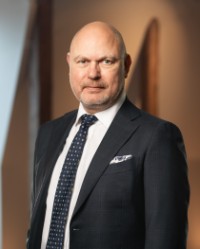

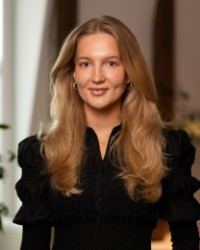
Magnusson Law is a business law firm with more than 130 lawyers providing legal services across the Nordics and Baltic Sea region. With offices in Stockholm and Gothenburg, Magnusson Sweden is the firm’s largest entity and home to a well-established intellectual property practice. The firm’s dedicated IP team advises on a broad range of intellectual property matters, encompassing both contentious and non-contentious work, including trade mark and design prosecution, portfolio management, copyright, licensing, enforcement and dispute resolution. A distinguishing strength of the team is its deep expertise in IT and technology, positioning it particularly well to advise on digital IP matters, including software licensing, AI, data protection and technology-driven business models. The team also brings significant experience in structuring complex IP agreements, advising on IP ownership structures and supporting clients through IP-intensive transactions, including acquisitions, carve-outs and technology transfers. The team regularly assists Swedish and international clients across a wide range of industries, including healthcare, life sciences, financial services, defence, insurance, technology, fashion, design, retail and infrastructure.
1. Patents
1.1 Legal Framework and Patentable Subject Matter
For an invention to be eligible for patent protection, it must satisfy the requirements of novelty, inventive step and industrial applicability. A new Swedish Patent Act (2024:945) entered into force on 1 January 2025, aligned with the European Patent Convention (EPC) and the Agreement on a Unified Patent Court (the UPC Agreement).
Patent protection in Sweden may be obtained through the Swedish national system or the EPC system. Irrespective of the route chosen, the resulting patent is national in scope. Since 1 June 2023, the Unitary Patent system has also been available in Sweden, complementing the existing national and EPC systems. Under this system, a European patent application filed with and granted by the European Patent Office (EPO) may, at the applicant’s election, result either in a traditional European patent or in a patent with unitary effect. A unitary patent confers uniform protection and has the same legal effect across all participating member states.
1.2 Patent Granting Procedure
An application for a Swedish patent may be filed by the inventor or by any other person or entity entitled to the invention. The application is submitted to the Swedish Intellectual Property Office together with a description of the invention, patent claims, an abstract and, where applicable, drawings.
The grant procedure for a Swedish patent typically takes approximately two to three years. As a general rule, the Swedish Intellectual Property Office issues its initial assessment of the patentability of the invention within six to eight months of filing. The overall duration of the procedure will depend on whether, and to what extent, the applicant is required to address any deficiencies identified in the application.
During the examination process, third parties may submit observations, which may be taken into account in the assessment. Once the patent has been granted, third parties may file an opposition within nine months from the date of grant. Where an application is refused, the applicant may appeal the decision to the Patent and Market Court.
1.3 Scope, Term and Maintenance of Patent Rights
The maximum term of a Swedish patent is 20 years. In order to keep the patent in force, annual fees are required. The first annual fee falls due at the beginning of the patent’s third year, and the fees for the first two years are payable at the same time as the third-year fee. At present, however, no fee is charged for the first two years. The same applies where a patent application remains pending. From the third year onwards, the fee is payable annually.
Where a patent covers a pharmaceutical or plant protection product, the patent holder may apply for a supplementary protection certificate (SPC), which may extend the period of patent protection by up to five years, provided that the applicable conditions are met.
1.4 Ownership, Assignment and Licensing
The original owner of an intellectual property right is the person who has created it, whether by producing copyright-protected material, devising a design, or making an invention that gives rise to a patent. As regards patentable inventions, the employer’s rights are governed by statute.
In the absence of any contractual agreement to the contrary, the employer may, depending on the degree to which the invention is connected to the employment, acquire full rights to the invention or obtain a licence or an option right. An exception applies to inventions made by teachers (which generally includes university doctoral candidates). The employee is in all cases entitled to reasonable financial compensation for the invention. A Swedish patent may be applied for by the inventor or by any other person or entity holding the rights to the invention.
The transfer or licensing of intellectual property rights takes effect by way of contract. No formal requirements apply, although it is advisable, for evidentiary purposes and in the interest of legal certainty, to enter into a written agreement. Registration of an assignment or licence is not mandatory but is recommended. Having the correct owner recorded in the relevant register serves, inter alia, to provide notice to third parties and to ensure that notifications regarding annual fees are directed to the appropriate person.
1.5 Patent Infringement and Defences
General
In patent infringement proceedings, the burden of proof rests with the claimant, who must demonstrate both the existence of its rights and that an infringement has taken place. Swedish law applies a principle of free assessment of evidence, meaning that there are no restrictions on the types of evidence that may be presented. Evidence commonly relied upon includes photographs, market surveys and expert reports, although the specific evidentiary requirements will vary depending on the circumstances of each case.
Direct Infringement
Under statutory law, direct infringement encompasses the following acts:
- manufacturing, offering, placing on the market, or using a product that is protected by a patent, as well as importing or possessing such a product for any of those purposes;
- using a process protected by a patent, or – where the party knows, or it is evident from the circumstances, that the process may not be used without the patent holder’s consent – offering that process for use in Sweden; and
- offering, placing on the market, or using a product produced by a process protected by a patent, as well as importing or possessing such a product for any of those purposes.
Indirect Infringement
Indirect infringement arises where a party contributes to a direct infringement. Specifically, indirect infringement occurs where:
- a third party, without the patentee’s consent, exploits the invention by offering or supplying means to a person not entitled to exploit the invention for use in Sweden;
- those means relate to an essential element of the invention; and
- the party offering or supplying the means knew, or ought to have known, that the means are suited and intended for use in connection with the invention.
Remedies
In both cases, the patentee is entitled to the same range of remedies, including the right to seek an injunction or a declaratory judgment against the infringer, as well as compensation for damages.
Scope of Protection
The scope of patent protection is defined by the patent claims. The description may be used as a guide when construing those claims – and, in light of emerging case law from the Unified Patent Court (UPC), it is anticipated that the description will assume a more significant role in the interpretation of the scope of protection.
Further principles governing the assessment of the scope of protection have been developed through case law. Swedish courts generally apply the principles set out in Article 69 of the EPC and the Protocol on the Interpretation of Article 69. The doctrine of equivalents is recognised under Swedish law, subject to the fulfilment of certain criteria established in case law.
Available Defences
An alleged infringer will typically seek to avoid a finding of infringement by arguing that the act in question falls outside the scope of protection conferred by the patent. Beyond this primary defence, a number of other defences are commonly invoked depending on the circumstances of the case. The defendant may:
- assert prior-use rights;
- apply for a compulsory licence;
- invoke the exhaustion of rights doctrine; or
- argue that the alleged infringing acts were carried out for non-commercial or experimental purposes, or that the Bolar exemption applies.
In cases involving standard-essential patents (SEPs), it may further be argued that the patentee failed to offer a licence on fair, reasonable and non-discriminatory (FRAND) terms prior to seeking injunctive relief against the alleged infringer.
1.6 Patent Enforcement and Remedies
Infringement
All court proceedings and matters concerning intellectual property, competition and marketing law fall within the jurisdiction of the Patent and Market Court at first instance and the Patent and Market Court of Appeal at second instance.
Swedish intellectual property legislation provides for criminal liability in respect of infringement. Criminal sanctions apply where the infringement is committed intentionally or through gross negligence, and the penalties range from fines to imprisonment depending on the gravity of the offence. The public prosecutor may bring criminal charges only where prosecution is considered to be in the public interest.
Infringement of intellectual property rights may be pursued through civil court proceedings. In addition, opposition proceedings and administrative invalidity proceedings may be initiated against registered rights. Alternative dispute resolution is available only where both parties consent to such proceedings.
As a general indication, civil proceedings for intellectual property infringement typically take around 12 months from the filing of the application for a summons to a first-instance decision by the Patent and Market Court. Patent cases, however, may require approximately 18 months at first instance. A decision may be appealed to the Patent and Market Court of Appeal, where the appellate process, provided leave to appeal is granted, generally takes an additional year.
Court Proceedings
Civil proceedings are initiated by filing an application for a summons with the Patent and Market Court. Following the initial exchange of written submissions, the court will ordinarily convene a preparatory hearing at which the procedural timetable is established and the prospects of a settlement are explored. The parties subsequently submit their evidence in advance of the main hearing, which generally takes place approximately 12 months after the summons was filed. A main hearing is not mandatory; the court may decide the case on the basis of the written submissions alone, provided it considers a hearing unnecessary and neither party requests one.
The main hearing comprises opening statements, examination of witnesses and experts, and closing arguments. A judgment is typically delivered within four weeks of the conclusion of the main hearing, although more complex cases may require additional time.
Judgments of the Patent and Market Court may be appealed to the Patent and Market Court of Appeal, subject to leave to appeal being granted. As a general rule, decisions of the Patent and Market Court of Appeal are final and may not be further appealed. In exceptional circumstances, however, the Patent and Market Court of Appeal may permit an appeal to the Supreme Court, in which case the Supreme Court must also grant leave to appeal.
Interim Measures and Alternative Dispute Resolution
A holder of registered intellectual property rights may file an “application for action” with the Swedish Customs, requesting that suspected infringing goods being imported, exported, or in transit through Sweden be detained. The Swedish Customs may also act on its own initiative to intercept suspected infringing goods.
Where court proceedings have been commenced, the parties may elect to settle the dispute, either independently or with the assistance of the court. If the parties wish to keep the terms of the settlement confidential, they may withdraw the case and enter into a private settlement agreement. Alternatively, the settlement may be incorporated into a court judgment, in which case it becomes a matter of public record.
Given the costs associated with litigation, parties may also seek to resolve the matter by reaching an agreement with the infringer prior to initiating formal legal proceedings.
Remedies and Costs
Where an infringement of an intellectual property right is established, the available remedies include damages, prohibition, information injunctions and security measures such as seizure and forfeiture of the infringing property. The exact available remedies follow from the relevant intellectual property legislation. Issuing interim and final prohibitions (under penalty of fine) is considered one of the most important remedies against infringement.
The general rule under Swedish law is that costs follow the event, meaning that the prevailing party is entitled to recover its reasonable legal fees and costs from the unsuccessful party. The court may, however, reduce the amount awarded if it considers the claimed costs to be disproportionate, taking into account factors such as the complexity, duration, and value of the dispute. As a result, a party may not be fully compensated for its legal costs even where it obtains a favourable outcome.
A respondent may request that a foreign claimant provide security for legal costs. This right does not, however, apply where the claimant has a connection to the EEA or where an applicable international convention provides otherwise.
2. Trade Marks
2.1 Legal Framework and Protectable Signs
Trade marks may take a wide range of forms, including words, figurative elements, letters, numbers, logos, personal names, slogans, holograms, three-dimensional shapes, ornamental features and sounds. Non-traditional marks, such as scents and colours, may also be eligible for protection.
Trade mark protection may also be obtained without registration, provided that the mark has become established through use, ie, that it is recognised by a substantial proportion of the relevant public as identifying the goods or services in question.
2.2 Requirements for Trade Mark Protection
A trade mark must be capable of distinguishing the goods or services of one undertaking from those of other undertakings. Furthermore, the mark must not lack distinctive character, nor may it consist exclusively of signs or indications that serve to designate the kind, quality, quantity or other characteristics of the goods or services in question. A mark that does not inherently possess distinctive character may nevertheless acquire it as a result of the use made of it.
2.3 Trade Mark Registration System
Trade Mark Protection
Trade mark protection in Sweden may be obtained by filing a national trade mark application, an EU trade mark application, or through the international registration system administered by the World Intellectual Property Organization (WIPO). Any natural or legal person may apply for a Swedish trade mark by submitting an application to the Swedish Intellectual Property Office, specifying the goods and services for which protection is sought. Where the application does not satisfy the requirements for registration, the applicant will be issued a communication with an opportunity to rectify the deficiencies.
Company Names
Company names may be protected either by way of registration or through establishment. Registration requires that the company name possesses distinctive character, does not exclusively describe the company’s field of activity, and is not liable to be confused with an existing company name or trade mark. An application for registration is filed with the Swedish Companies Registration Office.
Registration Process
Typical processing times are approximately three months for trade marks and one to two weeks for company names, provided that the application is complete and all necessary documentation has been submitted.
During the registration process, third parties may submit observations, which may be taken into account in the examination. Once registration has been granted, third parties may file an opposition within three months from the date of publication.
Where an application for registration of a trade mark or company name is refused, the applicant may appeal the decision to the Patent and Market Court.
2.4 Term, Use and Maintenance
Term and Renewal Requirements
A Swedish trade mark registration is valid for ten years, after which the trade mark must be renewed to remain valid. If the renewal fee is not paid, the registration will lapse, subject to a grace period of six months within which the non-payment may be remedied. A company name registration is not limited in time and does not require renewal.
Genuine Use
A registered trade mark must be put to genuine use in connection with the goods or services for which it is registered within five years from the date of registration. Genuine use requires that the mark is actually and commercially used in a manner consistent with its essential function. Where the trade mark has not been put to genuine use within the prescribed period, and no proper reasons for non-use exist, any interested party may apply for revocation of the registration.
2.5 Trade Mark Rights and Limitations
Scope of Protection
Upon registration of a trade mark, or upon acquisition of protection through establishment, the owner obtains the exclusive right to use the mark for commercial purposes in connection with the goods or services for which it is protected. No third party may, without the owner’s consent, use an identical or confusingly similar sign in relation to identical or similar goods or services.
The scope of protection is determined by reference to the likelihood of confusion. The trade mark owner may prevent the use of identical or similar signs for identical or similar goods or services where such use gives rise to a risk of confusion on the part of the relevant public.
Limitations
The exclusive right is, however, subject to certain limitations. It does not prevent:
- the use by a person of his or her own name or address;
- the use of descriptive indications concerning the characteristics of the goods or services; or
- referential use of the trade mark, for example, for the purpose of identifying compatible spare parts or accessories.
Where trade marks have coexisted on the market, the prospects of a successful infringement claim are diminished. If the owner has acquiesced in such coexistence for a continuous period of five years, the right to bring an infringement claim is forfeited.
2.6 Trade Mark Enforcement and Remedies
Infringement – General
The exclusive right to a trade mark means that no one other than the proprietor may, without the proprietor’s consent, use a sign in the course of trade for goods or services if the sign is:
- identical to the trade mark and is used for goods or services of the same kind;
- identical to or similar to the trade mark and is used in relation to goods or services of the same or similar kind, where there is a likelihood of confusion, including the risk that the use of the sign may lead to the perception that there is a connection between the user of the sign and the proprietor of the trade mark; or
- identical to or similar to a trade mark which is well known in this country among a significant section of the relevant public, if the use, without due cause, takes unfair advantage of or is detrimental to the distinctive character or reputation of the trade mark, regardless of whether the use relates to goods or services of the same, similar or different kind.
Infringement of intellectual property rights may be addressed through civil court proceedings. In addition, opposition and administrative invalidity proceedings may be brought against registered rights. Alternative dispute resolution mechanisms are available only where both parties agree to participate.
As a general estimate, civil proceedings concerning intellectual property infringement take approximately 12 months from the filing of the application for a summons until a first-instance decision is rendered by the Patent and Market Court. A decision may be appealed to the Patent and Market Court of Appeal, where the appellate proceedings, subject to leave to appeal being granted, typically require around one additional year.
Dilution
Swedish law provides for protection against dilution of a trade mark, although there is no specific legal definition of dilution in Swedish legislation. The legislation stipulates that confusing similarity may be invoked for the benefit of a reputed trade mark if the use of another similar mark would take unfair advantage of, or be detrimental to, the distinctive character or reputation of the trade mark. For a use to be considered “detrimental", it must involve some form of defamation or dilution of the reputed trade mark. Only trade marks having a reputation in Sweden are afforded protection against dilution.
Passing Off
Swedish trade mark legislation does not contain a specific provision that directly mirrors the common law tort of passing off as it exists in, for example, English law. However, Swedish law achieves largely similar protective outcomes through a combination of statutory provisions.
The Swedish Trade Marks Act provides protection against the use of identical or similar signs where there is a likelihood of confusion, including the risk that the public may perceive a connection between the user of the sign and the proprietor of the trade mark. This captures much of the same conduct that passing off is designed to address, namely the misrepresentation that goods or services originate from, or are connected with, a particular trader.
The Marketing Practices Act provides an additional layer of protection and is particularly relevant in “passing off-type” situations. It prohibits:
- misleading marketing practices, including false or deceptive representations as to the commercial origin of goods or services; and
- imitation of another trader’s products, packaging, or other distinctive features where such imitation is liable to mislead consumers as to the commercial origin of the goods or services.
This provision is broadly equivalent to the misrepresentation element of passing off.
Court Proceedings
All disputes and proceedings pertaining to intellectual property, competition and marketing law are heard by the Patent and Market Court as the court of first instance. Judgments of the Patent and Market Court may be appealed to the Patent and Market Court of Appeal, subject to leave to appeal being granted. As a general rule, decisions rendered by the Patent and Market Court of Appeal are final and not subject to further appeal. In exceptional circumstances, however, the Patent and Market Court of Appeal may permit an appeal to the Supreme Court, in which case the Supreme Court must also grant leave to appeal.
Civil and Criminal Remedies
Where a trade mark infringement is established, the available remedies include damages, injunctive relief (both interim and permanent, subject to a penalty of fine) and security measures such as seizure and forfeiture of infringing goods.
A holder of registered intellectual property rights may file an “application for action” with the Swedish Customs, requesting that suspected infringing goods being imported, exported, or in transit through Sweden be detained. The Swedish Customs may also act on its own initiative to intercept goods suspected of infringing intellectual property rights.
Swedish intellectual property legislation imposes criminal liability for infringement committed intentionally or through gross negligence. Depending on the seriousness of the offence, sanctions may include fines or imprisonment. Criminal charges may be brought by the public prosecutor, provided that prosecution is deemed to be in the public interest.
3. Copyright
3.1 Legal Framework and Copyrightable Works
Copyright protection may arise in respect of original works falling within recognised categories, including literary, dramatic, musical and artistic works, as well as sound recordings, films, broadcasts and computer programs. Neighbouring rights, such as those afforded to performing artists and databases, are also recognised. The enumeration of protected categories is not exhaustive, and protection may extend to other forms of intellectual creative output. Applied art may likewise qualify for copyright protection, provided that the work attains the requisite degree of originality.
3.2 Requirements for Copyright Protection
Copyright protection arises automatically, without registration, when a work is created and is original. For a work to be considered original, it must be the result of the creator’s own intellectual creation and reflect a degree of creativity. It is not required that the work be unique or of high artistic merit; even simple works may qualify for protection if they are the product of the creator’s own creative choices.
3.3 Authorship and Ownership
Authorship and Ownership
The author of a work is the natural person who has created it. Under Swedish copyright law, only natural persons can be original authors, meaning that neither legal entities nor AI can hold original authorship. Where a work is created jointly by two or more persons, and their respective contributions cannot be distinguished as independent works, the authors hold the copyright jointly (joint authorship).
Employer Rights
The employer may acquire rights to works created by employees through express or implied terms of the employment contract, or through established custom within the relevant industry. An important statutory exception applies to computer programs: unless otherwise agreed, the copyright in a computer program created by an employee as part of his or her employment duties or following instructions from the employer is automatically transferred to the employer. For works created by independent contractors or consultants, copyright remains with the creator unless the parties have agreed otherwise by contract. It is therefore advisable to address the allocation of copyright expressly in any engagement agreement.
3.4 Scope of Rights and Moral Rights
Economic Rights
The copyright owner holds the exclusive right to exploit the work by making copies of it (the right of reproduction) and by making it available to the public (the right of communication). The right of communication encompasses several forms, including the public performance of the work, the distribution of copies to the public, and the making available of the work to the public by digital transmission (eg, on-demand streaming or downloading). These economic rights may be assigned or licensed, in whole or in part, to third parties.
Moral Rights
Swedish copyright law recognises moral rights (Sw. ideella rättigheter), which are personal to the author. The two principal moral rights are: (i) the right of attribution (paternity right), ie, the right to be identified as the author of the work in accordance with good practice; and (ii) the right of integrity, ie, the right to object to any modification of, or making available of, the work in a manner or context that is prejudicial to the author’s literary or artistic reputation or individuality. Moral rights cannot be assigned but may be waived by the author. Upon the author’s death, moral rights pass to the author’s heirs or successors, who may exercise them for the duration of the copyright term.
3.5 Term of Protection and Termination
Copyright subsists for the lifetime of the author and for a further 70 years after the author’s death. Upon the author’s death, the copyright passes to the author’s successors by inheritance or Will. As regards neighbouring rights, these normally subsist for 50 years from the year of the performance. If an audio recording is released or made public within the 50-year period, the rights will instead subsist until 70 years after the first release or the first occasion on which the audio recording was made public. Database rights subsist for 15 years.
3.6 Limitations, Exceptions and Defences
Fair Dealing
Sweden does not have a broad, flexible “fair use” defence. Use of copyrighted material without permission is generally an infringement unless it falls within a strictly defined statutory exception.
Any limitation or exception must satisfy the “three-step test” (an international standard), meaning the exception applies only in special cases, does not conflict with normal exploitation of the work, and does not unreasonably prejudice the rights-holder.
Quotation
It is permitted to quote from a work that has been made public, provided the quotation is done in accordance with “proper usage” and only to the extent necessary for the purpose. The source must be acknowledged, and the quote must serve a purpose such as criticism, review, or illustration.
Parody
While not explicitly defined in the text of the Swedish Copyright Act, parody is permitted on the basis of legislative preparatory works and case law. Following EU case law (Deckmyn), a parody must:
- be reminiscent of an existing work while being distinctly different; and
- constitute an expression of humour or mockery.
A parody is regarded as a new, independent work that does not infringe the economic or moral rights of the original creator.
Private Use
The private use exception permits individuals to reproduce published works for private use.
The key conditions and limitations are as follows.
- The reproduction must be for private use, meaning personal use or use within a close circle of family and friends. It does not extend to professional or commercial use.
- The source material must be lawfully published; copying from an unlawful source is not permitted.
- The exception covers making a limited number of copies.
- For text, “private use” is restricted to limited parts of works or works of limited scope.
- Certain categories of works are excluded from the private copying exception, including:
- computer programs;
- making copies of buildings or three-dimensional works of art through three-dimensional reproduction; and
- copying sheet music.
- The private copying exception does not permit the person making the copy to engage others to do so on his or her behalf in a commercial context.
- Rights-holders are compensated for private copying through a statutory remuneration scheme administered collectively, funded in part through levies on blank media and copying equipment.
It should be noted that the private use exception does not extend to public performance, distribution or any other act beyond private reproduction.
3.7 Copyright Enforcement and Remedies
Infringement
Infringement occurs where a person, without the consent of the rights-holder and without the benefit of a statutory exception, performs any of the acts falling within the exclusive rights described in the previous sections. In practice, the most encountered forms of infringement include:
- unauthorised reproduction – copying a work in whole or in substantial part, whether digitally or in physical form;
- unauthorised distribution – selling, lending or otherwise distributing copies of a work without authorisation;
- unauthorised communication to the public – making a work available online, streaming, or broadcasting without a licence;
- unauthorised adaptation – translating, arranging or otherwise modifying a work without consent; and
- infringement of moral rights – failing to attribute the author or altering or using the work in a manner that is prejudicial to the author’s honour or reputation.
It is important to note that infringement does not require the entire work to be copied; copying a substantial part of a work is sufficient. The assessment of substantiality is both quantitative and qualitative, meaning that even a small portion of a work may constitute infringement if it represents a qualitatively significant element.
Civil and Criminal Remedies
Where a copyright infringement is established, the available remedies include damages, injunctive relief (both interim and permanent, subject to a penalty of fine), information orders, and security measures such as seizure and forfeiture of infringing goods. There are no statutory damages.
A holder of registered intellectual property rights may file an “application for action” with the Swedish Customs, requesting that suspected infringing goods being imported, exported, or in transit through Sweden be detained. The Swedish Customs may also act on its own initiative to intercept goods suspected of infringing intellectual property rights.
Swedish intellectual property legislation imposes criminal liability for infringement committed intentionally or through gross negligence. Depending on the seriousness of the offence, sanctions may include fines or imprisonment. Criminal charges may be brought by the public prosecutor, if prosecution is deemed to be in the public interest.
3.8 Infringement Tests and Substantiality
Copyright protects the creative expression of a work, not the underlying idea itself. This distinction is of particular importance in the context of software. Copyright does not extend to the functions, ideas or algorithms embodied in a computer program; what is protected is the specific form of expression. The decisive factor in assessing whether copyright infringement has occurred is whether the copied elements reflect the author’s own intellectual creation and constitute an original expression of the author’s creative choices. In the case of software, this means that the reproduction of a detailed and original code architecture may constitute infringement, even where the individual lines of code differ from those of the original work.
3.9 Collective Management and Licensing
Collecting societies in Sweden operate as collective management organisations (CMOs) that license copyrighted works, collect fees and distribute royalties to rights-holders. Their operations are regulated under the Act on Collective Management of Copyright (2016:977), and they are supervised by the Swedish Intellectual Property Office.
A cornerstone of the Swedish system is the Extended Collective Licensing model. A representative CMO negotiates an agreement with a user that is extended by law to also cover non-member rights-holders within that category. This allows users to obtain a “blanket” licence for large repertoires without contacting each creator individually.
The extended collective licensing model in the Copyright Act can be characterised as a form of compulsory licence. If a licensing organisation represents a large number of rights-holders, the licence can be extended to rights-holders who are not members, permitting use of their works under the same terms.
The Copyright Act provides for various extended collective licences that grant a licensee the right to use copyright-protected works. Such licences are available for, among others:
- reproduction of copies within public authorities and businesses;
- reproduction of copies for educational purposes;
- archiving and preservation by libraries and archives;
- broadcasting; and
- retransmission of broadcasting.
Tariffs for extended collective licences are not regulated. The Act on Collective Management of Copyright provides that tariffs should be reasonable.
Disputes over royalties and tariffs can be settled in the Patent and Market Court as the court of first instance, with appeals directed to the Patent and Market Court of Appeal.
There is also a possibility for the parties to request voluntary mediation under the Act on Mediation in Certain Copyright Disputes in certain types of disputes, including, among others, tariffs for extended collective licences.
4. Industrial Designs and Trade Dress
4.1 Legal Framework and Protectable Subject Matter
Industrial designs are regulated at both EU level and national level. The two legal frameworks do not differ materially but provide the option of obtaining either EU-wide or national protection.
A design right protects the appearance of the whole or a part of a design, as resulting from the features of the design itself, in particular its lines, shape, contours, colours, texture and materials. Protection may extend to a wide range of designs and products, from furniture and clothing to product packaging and graphical interfaces, such as the shape of a chair or the design of a bottle.
Where a product consists of multiple components, protection may also be obtained for the appearance of individual components.
Trade dress does not constitute a separate category of intellectual property under Swedish law but may be protected through other forms of intellectual property, such as a design right or a trade mark, depending on the circumstances.
4.2 Requirements for Protection
A design may be registered if it is new and possesses individual character. Registration may cover the appearance of a product in its entirety or a part thereof and may relate to both three-dimensional and two-dimensional designs. Registration is excluded for: (i) features of a product which are solely dictated by their technical function, or which serve to interconnect with another part to perform a function; (ii) designs that conflict with public policy; or (iii) computer programs.
A limited form of design protection within the EU may be obtained without registration, simply by making the design available to the public. Such unregistered protection has a duration of three years. An application for registration may be filed within one year from the date on which the design was first made public.
4.3 Registration and Term
The designer or any other person or entity entitled to the design may apply for registration of a design in Sweden. The application is submitted to the Swedish Intellectual Property Office and must include images that clearly depict the design. The Swedish Intellectual Property Office does not carry out any examination as to whether the design satisfies the requirements of novelty and individual character. It is incumbent upon the applicant to ascertain whether the appearance of the design differs from previously known or registered designs.
The typical processing time for a Swedish design registration is approximately three to four weeks, provided that the application is complete and all necessary documentation has been submitted. Once registration has been granted, third parties may file an opposition within two months from the date of registration.
Where an application for registration of a design is refused, the applicant may appeal the decision. The appeal is to be directed to the Patent and Market Court and submitted to the authority that issued the decision. If the renewal fee for design rights is not paid, the registration will lapse, subject to a grace period of six months within which the non-payment may be remedied.
A Swedish design registration is valid for a period of five years from the date of the application. The registration may be renewed for a total maximum term of 25 years. In the case of spare parts, the maximum term of protection is 15 years. A limited form of design protection within the EU may also be obtained without registration, simply by making the design available to the public. Such unregistered protection has a duration of three years from the date of publication.
4.4 Enforcement and Remedies
See 3.7 Copyright Enforcement and Remedies.
4.5 Functionality and Technical Features
Under Swedish law, in line with the broader EU framework, design protection is unavailable for features of a product’s appearance that are exclusively dictated by its technical function. Swedish courts apply the principles established by the Court of Justice of the European Union (CJEU) in this area. A key authority is the CJEU’s judgment in Case C-395/16, Doceram, in which the Court clarified the applicable test. According to the Court, to establish that features of appearance are exclusively dictated by technical function, it must be shown that technical function was the sole determining factor behind those features – irrespective of whether alternative designs capable of achieving the same function may exist.
Partial designs can be protected.
Design protection does not extend to those features of a product’s appearance which must be reproduced exactly in terms of shape and dimensions in order for the product to which the design relates to be mechanically connected to, or placed in, around or against another product, so that both products fulfil their function – the so-called “must-fit rule”. There is, however, an exception for connecting parts. The exception applies if the products are interchangeable and are joined together repeatedly within a modular system – the so-called “LEGO exception”.
5. Trade Secrets
5.1 Legal Framework and Protectable Information
The Swedish Trade Secrets Act implements the EU Trade Secrets Directive, which broadly harmonises the law in this area in the EU. The Trade Secrets Act provides protection for trade secrets, which are defined (broadly) as information (i) which is secret, in the sense that it is not generally known or accessible in the circles that normally deal with the kind of information in question, (ii) that has been subject to reasonable steps to keep it secret, and (iii) whose disclosure is likely to cause damage to the holder in respect to competitors. The law is technology-neutral and applies to all forms of trade secrets including source codes and computer programs.
5.2 Reasonable Measures and Confidentiality
Under the Swedish Trade Secrets Act information is protected only if the holder (ie, the owner) has taken reasonable measures to keep it secret, which entails an active obligation on the part of the holder.
The required measures are assessed on a case-by-case basis and do not need to meet any specific formal standard. The measures may include issuing internal instructions on how confidential information is to be handled and restricting access to authorised persons. A completely passive approach is insufficient, and it is not enough for the holder to refrain from disclosing the information or for recipients to understand that it is confidential solely based on the nature of the information.
Disclosure to employees or third parties does not in itself mean that protection ceases, provided that the information remains confidential and that access is appropriately restricted. However, if the information is disclosed without adequate measures to preserve its secrecy, such that it becomes generally known or readily accessible, it no longer meets the requirements to be regarded as a trade secret.
5.3 Misappropriation of Trade Secrets
Misappropriation includes the unlawful acquisition, use or disclosure of a trade secret. Unlawful acquisition may occur through, for example, unauthorised access, breach of confidentiality obligations or other improper conduct. The use or disclosure of a trade secret is unlawful if the person knew or ought to have known that the information had been obtained through such conduct.
Employees are subject to a duty of loyalty during their employment and may not exploit or disclose trade secrets. Following termination of employment, liability is more limited and generally requires exceptional circumstances. In commercial relationships, including joint ventures, the handling of trade secrets if often governed by agreements, although the statutory rules apply in parallel.
5.4 Duration and Loss of Protection
The Swedish Trade Secrets Act does not provide for any fixed period of protection. Instead, protection is conditional upon the information meeting the statuary criteria of a trade secret: it must be secret, have commercial value by virtue of its secrecy, and have been subject to reasonable measures to keep it confidential.
5.5 Enforcement and Remedies
Trade secrets are not considered to be intellectual property rights per se under Swedish law. Nevertheless, the Trade Secrets Act provides for criminal sanctions for corporate espionage or unlawful dealing in a trade secret. The sentences for such crimes are, depending on the severity, fines or imprisonment.
Under the Trade Secrets Act, it is also, inter alia, possible to claim damages as well as interim and final injunctions (under penalty of fine) and security measures to stop an infringement.
In order to preserve confidentiality during litigation, it is possible to request that certain parts of the case file and proceedings shall be kept confidential on the grounds that it contains sensitive information related to business and operational matters (ie, trade secrets). Only these specific parts are kept confidential; the remainder of the proceedings is generally public.
6. Know-How
6.1 Definition and Legal Basis of Know-How
Information and/or know-how that is secret or confidential in nature may be afforded protection through confidentiality obligations arising by operation of law or by virtue of contractual provisions, such as those contained in employment contracts and non-disclosure agreements.
6.2 Protectability Requirements and Scope
Know-how may be protected as a trade secret if it meets the criteria set out in the Swedish Trade Secrets Act, namely that it is a business-related secret (eg, business practices and customer lists), has commercial value by virtue of its secrecy, and that reasonable measures have been taken to keep it confidential.
Know-how does not need to be novel in the sense required for patent protection, but it must not be generally known or readily accessible to persons within the relevant circles. Its economic value typically derives from the competitive advantage associated with its confidentiality.
Protection does not extend to information that is generally known, readily accessible, or forms part of the general skills and experience of employees. Furthermore, trade secret protection does not confer an exclusive right to the information as such; independent creation and reverse engineering of lawfully acquired products are generally permitted under applicable law.
6.3 Ownership, Creation and Employee Know-How
As a general rule, the employer is deemed to own the know-how created by an employee in the course of their employment, provided that the know-how is considered a trade secret, was created during working hours or using the employer’s resources, and that its creation falls within the scope of the employee’s regular duties or the field for which the employee was hired. Unlike in the case of employees, there is no automatic transfer of ownership of know-how created by contractors, consultants, or joint development partners. Instead, the creator of the know-how also owns it, unless otherwise agreed.
If know-how is not considered a trade secret, there are no specific statutory provisions that regulate know-how as such. Instead, the parties may regulate ownership of know-how in the employment contract or in separate agreements, for example, through non-disclosure agreements.
6.4 Protection Through Contract and Confidentiality
The most used contractual mechanisms for the protection of know-how are non-disclosure agreements (NDAs), confidentiality clauses (whether contained in employment contracts, consultancy agreements, or commercial contracts), and non-use provisions restricting the recipient from utilising the know-how for purposes other than those expressly permitted. These mechanisms are frequently combined to provide comprehensive protection. In addition, non-compete and non-solicitation clauses may be employed to limit the risk of know-how being exploited by former employees or business partners.
6.5 Licensing and Assignment
Know-how may be assigned or licensed separately from any related trade secrets or patents. Since know-how is not a registered intellectual property right under Swedish law, its transfer and licensing are governed by general contract law principles. There are no statutory formalities for the assignment or licensing of know-how; in particular, no requirement of writing, recordal, or notarisation applies. However, for reasons of evidence and legal certainty, it is strongly advisable to document any assignment or licence in writing, clearly defining the scope of the know-how, the permitted use, any restrictions on further disclosure, and the duration of the arrangement. Where know-how is transferred or licensed in connection with a patent or trade secret, the parties should ensure that the respective agreements are co-ordinated to avoid gaps or inconsistencies in the allocation of rights.
6.6 Reverse Engineering
Swedish law does not specifically prohibit reverse engineering, provided that the product has been acquired lawfully. The Swedish Trade Secrets Act expressly provides that the observation, study, disassembly, or testing of a product that has been made available to the public, or that is lawfully in the possession of the person carrying out the analysis, does not constitute unlawful acquisition of a trade secret.
Contractual restrictions on reverse engineering are, however, common and generally enforceable under Swedish law. Parties may, by way of licence agreements, NDAs, or terms of use, prohibit or limit the right to reverse engineer a product. A contractual restriction on reverse engineering that is reasonable in scope and purpose will, as a general rule, be upheld by the courts.
7. Data, AI and Emerging IP Issues
7.1 Data Rights and Database Protection
Swedish copyright law recognises a sui generis catalogue right which provides protection to compilations of information, such as catalogues, tables, databases, and similar productions. Protection under the catalogue right arises where either a large number of items of information have been compiled or the compilation is the result of a substantial investment. The right confers on the producer an exclusive right to reproduce the compilation and to make it available to the public. The protection extends to the compilation as such, and not to the individual items of information contained therein. The protection is valid 15 years after the year in which the work was first made available to the public.
7.2 AI-Generated Works and Inventorship/Authorship
Only natural persons can be original inventors/authors. Where an output is generated autonomously by an AI system without sufficient human creative input, it is unlikely to qualify for protection. Where, however, a natural person has exercised creative choices in directing or shaping the output, such that the AI serves merely as an assisting tool, copyright may vest in that person in accordance with the ordinary rules on authorship in accordance with the copyright law.
7.3 Training Data, Model Development and Infringement Risk
The basic principle of intellectual property law is that the unauthorised use of protected works constitutes an infringement of intellectual property rights. The same applies to AI-generated material that has striking similarities to a work protected by intellectual property rights. Using copyright-protected works as training data in an AI system therefore gives rise to a risk of infringement.
In addition, the EU AI Act, which is directly applicable in Sweden, imposes specific obligations relevant to the use of protected works in AI training. Providers of AI models are required to provide a sufficiently detailed summary of the content used for training, including content protected by copyright. Furthermore, AI systems must be designed in a manner that provides sufficient safeguards against the generation of illegal content, which includes content that infringes intellectual property rights.
7.4 Enforcement Against AI-Enabled Infringement
Swedish law does not contain any specific provisions addressing enforcement against AI-enabled infringement. Instead, the general rules on intellectual property infringement apply, meaning that a rights-holder may pursue claims against any party that infringes its intellectual property rights through the use of generative AI tools, relying on the same causes of action, procedural mechanisms, and remedies as would be available in respect of any other form of infringement.
8. Intersections and Overlaps
8.1 Choice of Protection and Strategic Considerations
The choice between different forms of IP protection depends on the nature of the subject matter, the commercial objectives of the rights-holder, the anticipated duration of the competitive advantage, and the costs of obtaining and maintaining protection. Swedish law permits cumulative protection under multiple IP regimes where the relevant requirements are independently satisfied. Patent protection is generally preferred where the rights-holder intends to license the technology, or where enforcement against independent developers is important. However, a patent requires public disclosure, involves significant costs, and is limited in duration. Key factors influencing the choice include the ease of detecting the innovation in a competitor’s product, the speed of technological development, regulatory disclosure requirements, and the enforceability of contractual confidentiality obligations. Where subject matter qualifies for protection under multiple regimes, the rights-holder should consider the differing scope, duration, and enforcement mechanisms of each.
8.2 Cumulative and Overlapping Protection
Cumulative and overlapping IP protection in Sweden allows for a single asset to be protected by multiple, independent IPRs simultaneously or sequentially. Swedish law, aligning with EU harmonisation and decisions from the CJEU, generally treats different IP rights as independent, meaning that the existence of one right does not prevent the acquisition of another. There are no statutory or judicial limits on claiming overlapping protection.
A rights-holder who has overlapping protection, eg, design protection and copyright, can choose to claim infringement of one of the protections or both. The court will examine the question of infringement individually for each protection. Since all cases of infringement and validity of IP rights are dealt with by the same court, the Patent and Market Court, this is not a problem.
8.3 Patents and Trade Secrets
Confidential know-how and technical information may be protected as a trade secret under the Swedish Trade Secrets Act before, during, and – in certain circumstances – after a patent application, provided that the information is secret, that reasonable protective measures have been taken, and that its disclosure is likely to cause damage to the holder in a competitive context. Prior to the filing of a patent application, the invention will typically qualify as a trade secret. During the application process, the information remains confidential until publication. Upon publication, the disclosed information enters the public domain and can no longer satisfy the secrecy requirement under the Trade Secrets Act. However, ancillary know-how not included in the patent specification – such as manufacturing parameters, optimisation data, and quality control procedures – may continue to qualify as trade secrets. Similarly, trade secret protection may survive the expiry or invalidation of a patent in respect of information that was not disclosed in the patent application or otherwise made publicly available. There is no statutory time limit on trade secret protection under Swedish law; protection subsists for as long as the statutory requirements are met. rights-holders are therefore well advised to carefully consider which information to include in a patent application and to maintain appropriate confidentiality measures in respect of any ancillary know-how.
8.4 Trade Marks, Trade Dress and Industrial Designs
Swedish law does not recognise “trade dress” as a distinct legal category of intellectual property rights. However, the visual appearance of a product or its packaging may, depending on the circumstances, be protected under trade mark law, design law and/or copyright law. Swedish law permits cumulative protection under multiple IP regimes where the respective requirements are independently satisfied. For instance, the shape and packaging of a product may be protected as a trade mark and a design right simultaneously.
8.5 Copyright and Trade Marks
Logos, artistic elements, and branding may be protected simultaneously under both copyright and trade mark law, provided that the requirements of each regulation are independently satisfied. A logo or graphic element will qualify for copyright protection where it constitutes an original work, ie, where it reflects the author’s own intellectual creation. The same element may be registered as a trade mark provided it is distinctive and capable of distinguishing the goods or services of one undertaking from those of another. Swedish law does not impose any general prohibition on cumulative protection.
8.6 Enforcement and Remedies Across Multiple IP Rights
Claims based on different IP rights can be brought in the same proceedings. This is not a problem since all IP disputes are settled by the same court, the Patent and Market Court. The court will most likely assess remedies individually for each IP right.
In Swedish IP litigation, double recovery is generally not permitted. While IP holders are entitled to full compensation for damages, the principles of Swedish tort law and IP-specific regulations ensure that a rights-holder is not put in a better financial position than if the infringement had not occurred.
8.7 International and Cross-Border Considerations
Conflicts between national and international IP regimes in Swedish cross-border disputes are managed primarily through the principle of territoriality, EU regulations, and specialised courts, ensuring that IP rights are protected within their specific jurisdictions. When cross-border disputes arise, Swedish courts apply private international law to determine jurisdiction and applicable law, often relying on applicable frameworks such as the Brussels I bis Regulation.
A Swedish court in infringement proceedings where a defendant challenges the validity of an IP right granted in another member state or a third country, must decline jurisdiction to rule on the validity of that IP right. As a general rule, the court will, however, retain jurisdiction to determine the infringement claim.
Magnusson Law
Strandvägen 1
P.O. Box 7413
SE-103 91 Stockholm
Sweden
+46 8463 7500
info@magnussonlaw.com www.magnussonlaw.com
Law and Practice in Sweden
Authors
Magnusson Law is a business law firm with more than 130 lawyers providing legal services across the Nordics and Baltic Sea region. With offices in Stockholm and Gothenburg, Magnusson Sweden is the firm’s largest entity and home to a well-established intellectual property practice. The firm’s dedicated IP team advises on a broad range of intellectual property matters, encompassing both contentious and non-contentious work, including trade mark and design prosecution, portfolio management, copyright, licensing, enforcement and dispute resolution. A distinguishing strength of the team is its deep expertise in IT and technology, positioning it particularly well to advise on digital IP matters, including software licensing, AI, data protection and technology-driven business models. The team also brings significant experience in structuring complex IP agreements, advising on IP ownership structures and supporting clients through IP-intensive transactions, including acquisitions, carve-outs and technology transfers. The team regularly assists Swedish and international clients across a wide range of industries, including healthcare, life sciences, financial services, defence, insurance, technology, fashion, design, retail and infrastructure.