Corporate M&A 2026
Slovenia
Trends and Developments
Authors
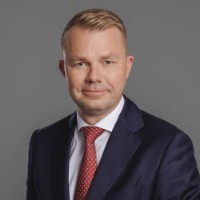

Rojs, Peljhan, Prelesnik & partners (RPPP) is the largest corporate and commercial law firm in Slovenia. With a legal team numbering over 30 lawyers, the firm has been recognised for its comprehensive legal solutions, extensive knowledge and long-standing experience. RPPP is a market leader in a variety of commercial and corporate law matters, including antitrust, M&A, litigation and alternative dispute resolution. In one way or another, it has been involved in just about all the major M&A transactions in Slovenia, with several of these being nominated for deal of the year by various outlets. Recently, the firm was involved in MOL’s acquisition of gas stations from OMV in Slovenia, after OMV’s exit; Dulux on its EUR194.5 million acquisition of Slovenian paint giant JUB; Sartorius on its EUR360 million agreement to merge with purification specialist BIA Separations; and Generali on its merger by acquisition of Slovenia’s second largest insurance company Adriatic Slovenica. The firm has also recently assisted the Ministry of Finance and Insurance Supervision Agency in the adoption of a law.
Introduction
Slovenia’s mergers and acquisitions market has experienced dynamic activity over the past five years, demonstrating notable resilience despite successive global shocks. Following a pandemic-induced slowdown in 2020, deal-making rebounded strongly in 2021 and remained robust throughout 2022, supported by abundant liquidity, low interest rates and strong investor confidence. Although 2023 and 2024 saw a moderation in activity due to inflationary pressures, rising interest rates and geopolitical uncertainty, the market remained active, with several landmark transactions completed across key sectors.
By 2025, improving financing conditions, easing inflation and renewed investor confidence contributed to a gradual reacceleration of M&A activity. Both domestic and cross-border transactions continued to shape the Slovenian M&A landscape, with a growing number of outbound investments by Slovenian corporates complementing sustained inbound interest from international strategic as well as financial investors.
The broader European environment has also become more supportive. As inflationary pressures have subsided and central banks have begun to loosen monetary policy, financing conditions have improved, supporting both sponsor-led and strategic transactions. While private equity activity has rebounded, there has been a continued emphasis on strategic consolidation, operational synergies and sector transformation. Slovenia has broadly mirrored these trends, with steady deal flow, increasing sophistication in deal structuring and a notable shift towards more complex, multi-jurisdictional transactions.
Key Transactions
Multiple high-profile deals and strategic investments have shaped Slovenia’s M&A landscape in recent years. The market has seen consolidation in the banking sector, pivotal moves in energy and infrastructure, as well as acquisitions across manufacturing, technology and retail. These transactions have not only reshaped individual industries but have also contributed to the broader internationalisation of the Slovenian economy.
Following a wave of large strategic corporate acquisitions between 2020 and 2024, transaction activity in 2025 has been characterised by a combination of inbound strategic investments and increasingly ambitious outbound deals by Slovenian corporates. This dual dynamic reflects both the continued attractiveness of Slovenia as an investment destination and the growing confidence of Slovenian companies in pursuing cross-border expansion strategies.
A standout example is Advance Capital Partners’ acquisition of a majority stake in Mass, which in turn agreed to acquire Leder & Schuh, owner of the Humanic and Shoe4You brands. The transaction, expected to close in 2026, will create one of the largest footwear retail groups in Europe. It also exemplifies the increasingly common combination of private equity backing and strategic expansion, whereby financial sponsors support the creation of regional champions through targeted acquisitions.
In parallel, Perutnina Ptuj’s acquisition of Grupo Uvesa represents a significant outbound investment, creating a strong regional player in the poultry market.
The year 2025 has also been marked by significant private equity activity. Advance Capital Partners completed multiple transactions, including the acquisitions of Unitur, one of Slovenia’s largest tourism companies, and Mikrocop, a market leader in business digitalisation and cloud-based services. Prva Capital Partners entered the market with its first investment in Cookinox, a manufacturer of premium stainless steel kitchen equipment, signalling the continued emergence of new domestic investment platforms.
At the same time, Alfi exited from its investments in Trival Antene and Baby Center, with aggregate deal values exceeding EUR50 million. These exits demonstrate the increasing maturity of Slovenia’s private equity ecosystem and its ability to generate attractive returns through strategic sales to international buyers.
Notable strategic transactions included the sale of Metronik, a leading provider of automation and digitalisation solutions, to SKAN AG; the acquisition of the HCG group, a global player in the nutraceutical industry, by ANJAC Health & Beauty; and easyJet’s acquisition of Adria Tehnika, d.o.o. These transactions reflect continued international interest in Slovenian companies with strong technological capabilities and export orientation.
Private Equity as a New Driving Force in the M&A Landscape
Private equity has become an increasingly important driver of M&A activity in Slovenia, particularly in the mid-market segment. Domestic funds such as Alfi, Advance Capital Partners, Prva Capital Partners and Generali Investments have played a central role in facilitating ownership transitions, consolidating fragmented industries and professionalising management structures.
The growth of private equity activity is closely linked to the availability of European capital. EU structural funds, support from the European Investment Fund and favourable regulatory initiatives have enabled the establishment and scaling of local fund managers. As a result, Slovenia has developed a relatively well-functioning private equity ecosystem for a market of its size, with multiple active players capable of executing increasingly complex transactions.
This has resulted in the accumulation of significant amounts of available capital (“dry powder”), which continues to drive investment activity despite periods of macroeconomic uncertainty. The pressure to deploy capital within defined investment horizons encourages funds to actively seek opportunities, particularly in sectors characterised by fragmentation or consolidation potential.
Private equity investors in Slovenia typically focus on family-owned businesses facing succession challenges, as well as companies with strong export potential. Many Slovenian companies are still founder-led or family-owned, and generational transition remains a key driver of deal flow. In this context, private equity funds often provide not only capital but also professional management structures, governance improvements and strategic direction.
Investment strategies increasingly emphasise buy-and-build platforms, operational improvements and international expansion. The Mass/Leder & Schuh transaction illustrates this trend well, combining financial sponsorship with a clear strategic growth trajectory aimed at creating a regional market leader.
At the same time, exit activity has accelerated, with funds monetising earlier investments through strategic sales to international buyers. Transactions such as the sale of Trival Antene and Baby Center illustrate the growing maturity and international integration of Slovenia’s private equity ecosystem. Over time, this is expected to create a virtuous cycle, whereby successful exits generate capital and experience for reinvestment into new opportunities.
Shifts in M&A Strategy
Despite increasing M&A activity in 2025, acquirers have remained cautious in light of ongoing economic and geopolitical uncertainties and have adapted their M&A strategies accordingly. Buyers have generally become more selective in their acquisitions, placing greater emphasis on resilience, profitability and tangible value creation.
The “valuation gap” between sellers and buyers continues to be a central point of negotiation. While this gap has narrowed compared to the peak uncertainty of 2023, differences in price expectations remain a key challenge in many transactions. Sellers often anchor their expectations to historical valuations or peak market conditions, whereas buyers apply more conservative assumptions reflecting current market risks.
In certain industries, particularly software, technology and AI, 2025 has been a year of relatively strong valuations. Companies with scalable business models, recurring revenues and strong growth prospects continue to attract significant investor interest and premium pricing. In more traditional industries, however, sellers’ expectations do not always fully reflect market volatility, which can complicate negotiations and prolong deal timelines.
While acquirers are still willing to pay “top euro” for clear growth potential, they increasingly require mechanisms to mitigate risk. This has led to a greater use of earn-outs and other contingent pricing mechanisms, which link a portion of the purchase price to the future performance of the target. Such structures allow buyers and sellers to bridge valuation gaps but also introduce additional complexity into transaction documentation and post-closing integration.
Defence-Oriented Opportunities
A notable emerging theme in Slovenia’s investment landscape is the increasing strategic focus on the defence and security sector, reflecting broader European geopolitical developments and commitments to higher defence spending.
In 2025, Slovenian Sovereign Holding (SDH) established DOVOS as a dedicated investment vehicle focused on strengthening national defence, security and resilience capabilities. The entity is designed to take minority ownership stakes in domestic companies and support the development of strategic industrial capacities.
DOVOS is expected to play an active role in investing in Slovenian defence and dual-use technology companies, supporting high-tech segments such as robotics, autonomous systems and advanced manufacturing, and developing strategic supply chains and maintenance capabilities for defence infrastructure. This initiative reflects a broader European trend towards strengthening domestic industrial bases in strategically important sectors.
This development signals a shift towards a more interventionist industrial policy, where the state acts not only as a regulator but also as an investor. From an M&A perspective, this may result in increased minority stake investments by the state in strategic companies, co-investment structures alongside private investors and enhanced deal activity in sectors linked to defence, cybersecurity and critical infrastructure.
For investors, this creates both opportunities and additional considerations. While the defence sector may benefit from strong public support and funding, transactions may also be subject to heightened regulatory scrutiny, particularly under foreign direct investment screening regimes. The interplay between investment incentives and regulatory oversight is likely to be a defining feature of this segment.
Potential Distressed Transactions
In parallel with increased deal activity, the Slovenian market is also witnessing early signs of restructuring processes in certain industries, which may give rise to distressed transactions in the near to medium term.
Several industrial groups have faced operational and financial pressures in recent years, driven by energy price volatility, weaker demand in key export markets and structural challenges in capital-intensive industries. Companies such as Unior, TPV Group and SIJ Group operate in sectors exposed to high input costs, cyclical demand and intense global competition. These pressures have, in some cases, resulted in declining profitability, increased leverage and the need for operational and financial restructuring.
While not all such companies are in formal distress, their situations illustrate the potential for restructuring-led transactions. These may include divestments of non-core assets, entry of strategic or financial investors, recapitalisations or broader corporate reorganisations. In certain cases, debt restructuring or debt-to-equity conversions may also be required to stabilise balance sheets.
Such situations typically create opportunities for distressed M&A transactions, corporate restructurings and entry points for private equity and special situations investors. Investors with experience in turnaround scenarios may find attractive opportunities to acquire quality assets at discounted valuations, provided they are able to manage the associated operational and financial risks.
It is expected that lenders and shareholders will increasingly favour structured solutions, including partial disposals and strategic investor entry, rather than outright insolvency proceedings. This approach is consistent with broader European trends, where early intervention and consensual restructuring are preferred over formal insolvency.
As a result, restructuring-driven transactions are likely to form an increasingly important component of Slovenia’s M&A landscape, adding both complexity and opportunity to the market.
Increased Regulatory Scrutiny
Foreign direct investment screening has become a more prominent feature of the Slovenian M&A landscape. While historically perceived as a limited risk, the past two years have demonstrated a clear increase in regulatory scrutiny and practical relevance.
In 2024, the Ministry of the Economy initiated its first in-depth assessment (Phase II) in relation to a UK investor’s attempted acquisition of SRC (one of Slovenia’s leading IT solutions providers), which ultimately resulted in the transaction being abandoned due to protracted proceedings. Similarly, delays in FDI screening contributed to the failure of the proposed sale of DBA Group’s shareholding in Actual, another important provider of IT solutions.
Experience indicates that transactions in the IT sector are particularly exposed, primarily due to considerations relating to data processing, digital infrastructure and potential security implications. Increased scrutiny can also be expected in sectors relevant to defence and dual-use technologies, as well as critical infrastructure and energy.
Although the number of cases requiring in-depth review remains limited, there is a clear upward trend. This introduces additional uncertainty for deal execution and underscores the importance of careful regulatory analysis and preparation by both buyers and sellers. Transaction documentation increasingly reflects this reality, with more detailed provisions addressing regulatory approvals, long-stop dates and risk allocation.
Conclusion, Future Projections and Outlook
The past five years have cemented Slovenia’s reputation as a dynamic and increasingly sophisticated M&A market within Central and Eastern Europe. Significant strategic transactions, growing private equity activity and increasing outbound investments by Slovenian companies have contributed to a more mature and internationally integrated market environment.
Looking ahead, Slovenia’s M&A market is expected to remain active, supported by improving financing conditions, strong investor interest and ongoing structural transformation across key industries. Technology, the energy transition, infrastructure and advanced manufacturing are likely to remain key areas of focus.
Private equity is expected to continue playing a central role, with both domestic and international funds actively seeking investment opportunities. The availability of capital and continued pressure to deploy funds suggest sustained deal activity, particularly in mid-market transactions and buy-and-build strategies.
Distressed and special situations are also likely to emerge as an increasingly relevant source of deal flow, particularly in capital-intensive and cyclical sectors. Developments surrounding groups such as SIJ Group may serve as early indicators of this trend, with restructuring processes potentially leading to strategic partnerships, recapitalisations or asset disposals.
At the same time, regulatory complexity will remain a defining feature of the market. FDI screening, merger control and foreign subsidies review will continue to impact transaction timelines and execution risk, requiring careful planning and proactive engagement with regulators.
Overall, Slovenia remains an attractive destination for both strategic and financial investors. Its M&A market, while relatively small, is well integrated into European capital flows and characterised by increasing sophistication. While challenges persist, the outlook remains cautiously optimistic, with a steady pipeline of opportunities expected in the years ahead.
Rojs, Peljhan, Prelesnik & partners
Tivolska cesta 48
Ljubljana
Slovenia
+38612306750
office@rppp.si www.rppp.si
Trends and Developments
Authors
Rojs, Peljhan, Prelesnik & partners (RPPP) is the largest corporate and commercial law firm in Slovenia. With a legal team numbering over 30 lawyers, the firm has been recognised for its comprehensive legal solutions, extensive knowledge and long-standing experience. RPPP is a market leader in a variety of commercial and corporate law matters, including antitrust, M&A, litigation and alternative dispute resolution. In one way or another, it has been involved in just about all the major M&A transactions in Slovenia, with several of these being nominated for deal of the year by various outlets. Recently, the firm was involved in MOL’s acquisition of gas stations from OMV in Slovenia, after OMV’s exit; Dulux on its EUR194.5 million acquisition of Slovenian paint giant JUB; Sartorius on its EUR360 million agreement to merge with purification specialist BIA Separations; and Generali on its merger by acquisition of Slovenia’s second largest insurance company Adriatic Slovenica. The firm has also recently assisted the Ministry of Finance and Insurance Supervision Agency in the adoption of a law.
