Equity Finance 2026
Hong Kong SAR, China
Trends and Developments
Authors

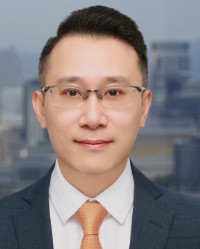


YYC Legal LLP is a Hong Kong law firm dedicated to providing comprehensive and efficient legal services to a wide variety of clients, including corporations, financial institutions, funds, governmental and official authorities, family offices, high net worth individuals and non-profit-making organisations. Where a client requires legal advice on capital markets transactions, M&A, corporate finance, corporate and commercial matters, asset management, data protection, cybersecurity, fintech, dispute resolution, real estate, restructuring and insolvency, employment, ESG, China attestation, immigration, private wealth management, succession planning, trusts, or wills and probate, the firm is committed to resolving legal challenges tailored to the client’s specific needs. YYC Legal is in association with East & Concord Partners, a China law firm with over 200 partners and 600 legal professionals in offices across China and internationally. This allows YYC Legal and East & Concord Partners to bridge the gap of legal services needs between China and other jurisdictions.
Introduction and Overview
Hong Kong’s equity finance landscape is evolving rapidly in 2026, shaped by regulatory progress, deeper cross‑border connectivity and market innovation. The initial public offering (IPO) market is enjoying its strongest run in five years, with record capital raised and a large pipeline, prompting the Securities and Futures Commission (SFC) and Hong Kong Exchanges and Clearing Limited (HKEX) to lift regulatory standards on listing‑document quality and sponsor oversight.
At the same time, a series of new Memoranda of Understanding (MOUs) and policy measures are strengthening ties with Mainland China’s regulators and exchanges, while expanding co-operation with markets in the Middle East, South-East Asia and beyond. Alongside these developments, Hong Kong’s virtual asset (VA) regime is maturing, with enhanced supervisory technology, stricter investor‑protection rules, and an expanded licensing perimeter for VA advisory and asset management activities.
Hong Kong’s IPO Market – Booming, but With Regulators’ Concerns Over Quality of New Listing Documents Preparation
Hong Kong has had its strongest IPO first half in five years. HKEX reported HKD210.2 billion raised across 87 new listings by end of June 2026 (up 92% and 98%, respectively, from H1 2025), and HKD342.4 billion raised across 106 listings through August (up 153% and 80%, respectively, from January to August 2025). Two engines drive the volume:
- A+H dual listings (24 first-half deals, raising HKD121.7 billion, taking eight of the half year’s top ten IPO slots); and
- Chapter 18C specialist technology companies (13 first-half deals, more than the previous three years combined).
At mid-year, KPMG counted more than 500 active applicants in the pipeline; in July, PwC projected up to HKD380 billion of full-year IPO proceeds.
Behind the numbers sits a problem that regulators have grown tired of tolerating. On 30 January 2026, the SFC issued a circular to licensed corporations carrying out sponsor work, after the December 2025 joint SFC/HKEX letter to 13 sponsors with specific cases of concerns from recent listing applications. The language of the SFC’s CEO was blunt: the gatekeeping role of sponsors “may have been eroded in their eager pursuit of deal volume”. By year-end of 2025, vetting of 16 applications had been suspended.
Among its regulatory concerns on sponsor work, the SFC identifies the following issues regarding the declining quality of draft listing documents.
Unclear or convoluted business-model descriptions, and excessive marketing and promotional language
Draft listing documents often fail to explain the applicant’s business model clearly, using opaque descriptions rather than plain, substantive disclosure. Also, they often involve excessive use of marketing or promotional language, and selectively present industry data to overstate the applicant’s market position. These documents, as they are drafted and submitted to the regulators, fail to serve their intended purpose of providing sufficient particulars and information for investors to form a valid and justifiable opinion of the listing applicants.
Omission of material information and analysis
Some draft listing documents fail to substantiate the significant financial fluctuations, historical non-compliance, legal proceedings, sanction-related risks and/or competitive landscape/market share. In certain listing applications under Chapter 18A (biotech companies) or Chapter 18C (specialist technology companies), the documents lack sufficient disclosure demonstrating how the relevant applicants have fulfilled the applicable listing eligibility requirements.
Unreasonably lengthy listing documents
Documents are unnecessarily long owing to repetition and boilerplate disclosure that does not meaningfully present the business or financial performance. The SFC generally expects that the main body should not exceed 300 pages (excluding the experts’ reports contained in the appendices).
Inadequate responses to regulatory comments
Despite clear guidance, sponsors have repeatedly failed to provide clear and satisfactory responses to regulatory comments. Many responses do not address the regulators’ concerns, or contain information that is incomplete, inconsistent or even contradictory.
Inadequate sponsor resources and supervision
A concerning number of sponsor principals are simultaneously undertaking six or more active listing engagements (up to 19 in extreme cases). In addition, some principals do not appear to be suitably qualified, and some sponsors do not have sufficient staff with appropriate levels of knowledge, skills and experience in Hong Kong IPOs.
HKEX’s IPO vetting leadership reinforced the point at the HKEX Future Tech Summit in June 2026, citing the following specific examples:
- an applicant used the first five pages of the draft prospectus for brand storytelling and promotional language without once clearly stating its core business or key financial metrics;
- some applicants declare themselves a “market share leader” or “absolute leader” in their draft prospectuses by slicing the market into absurdly narrow segments; and
- some Chapter 18C applicants – particularly AI companies – describe their business models and revenue recognition methods in such convoluted language that even HKEX cannot understand them.
To remediate this, listing applicants should now include in their own drafting checklists:
- plain language rather than professional jargon;
- more charts;
- front-loaded business substance; and
- concrete application scenarios to explain how their technology actually generates revenue.
All of these help investors understand the applicant’s business.
A closely related rule change landed on 21 August 2026. HKEX announced a temporary waiver extending the validity period of new listing applications from six months to 12 months, in force for three years. Applicants, sponsors and advisers gain breathing room to manage listing timetables without the costly cycle of refiling applications and administrative updates once every six months – freeing up time, in HKEX’s words, “to focus on the quality of the application materials and listing documents”. However, to be eligible for this temporary waiver, HKEX must not have indicated that vetting was suspended, and no major concerns letter or direct requisition letter must be outstanding from the SFC or HKEX.
The lesson is not that Hong Kong is hostile to new listings. The July 2026 consultation conclusions – halving the WVR market capitalisation threshold to HKD20 billion (or HKD6 billion with HKD600 million of revenue), permitting a 20:1 voting ratio at the largest end, and extending confidential filing to all applicants – are among the most material reforms in recent years, recalibrating the listing regime to attract growth-stage Chinese and Asian tech companies and accelerate secondary listings from the USA. A+H will remain the dominant theme for the rest of 2026. The regulator’s message is not “less”; it is “better”. For applicants, sponsors and advisers, what matters now is whether the quality of the documents prepared for each application meets the standards the regulators have made clear.
Strengthening of Co-Operation and Co-Ordination With Mainland China’s Regulatory Authorities and Markets
On 3 August 2026, the SFC and the China Securities Regulatory Commission announced a series of new measures aimed at strengthening practical collaboration and promoting more co-ordinated development between Hong Kong’s and Mainland China’s capital markets.
The measures include:
- facilitating listings of Mainland China’s enterprises in Hong Kong and enabling Hong Kong-listed companies to pursue dual listings on Mainland China’s exchanges;
- introducing indices based on Chinese assets;
- introducing additional renminbi-denominated futures products in Hong Kong; and
- launching more exchange-traded funds (ETFs) products based on the two markets, and oriented towards Mainland China’s modern industrial system.
The two regulators also seek to:
- advance the internationalisation of financial institutions;
- establish pilot programmes for listed companies in both jurisdictions to disclose climate-related transition plans;
- advance the development of green finance; and
- support Hong Kong securities practitioners in obtaining relevant Mainland China professional qualifications.
Strengthening of Mainland China’s Ties With Three Strategic MOUs
HKEX recently announced three MOUs with Mainland China’s financial institutions, signalling deepening cross-border market connectivity.
First, HKEX renewed its MOU with the China Financial Futures Exchange on 18 June 2026, committing to enhanced co-operation in exploring product and business development, the sharing of research and market expertise, and personnel exchanges and training.
Secondly, on 7 July 2026, HKEX signed an MOU with CIPS Co Ltd, the operator of China’s Cross-Border Interbank Payment System (CIPS), to explore strategic collaboration in cross-border renminbi business and to support the long-term development of Hong Kong’s fixed income and currencies ecosystem. OTC Clearing Hong Kong Limited, HKEX’s clearing subsidiary, intends to apply to become a direct participant of CIPS before the end of 2026, which would enable direct renminbi fund settlement through CIPS and more efficient cross-border renminbi clearing.
Thirdly, on 17 July 2026, the Stock Exchange of Hong Kong Limited (SEHK), a subsidiary of HKEX, entered into MOUs with the Shanghai Stock Exchange and the Shenzhen Stock Exchange to enhance co-operation and information sharing under Northbound Stock Connect. The arrangements facilitate the voluntary sharing of trading information by market participants engaged in north-bound proprietary trading with Mainland China’s two exchanges, helping them comply more effectively with the programme trading requirements applicable in Mainland China’s markets.
Development in Co-Operation With Other Countries
Middle East
In September 2025, the SFC and the Dubai Financial Services Authority, the independent regulator of the Dubai International Financial Centre, signed an MOU with the aim of deepening co-operation in the oversight of investment fund managers in each other’s markets, to ensure compliance, governance and cross-border regulatory alignment. The SFC has also concluded an MOU with the Securities and Commodities Authority of the United Arab Emirates (UAE) to expand cross-border market access for public funds under a mutual recognition of funds arrangement, which includes allowing the direct offering of unlisted foreign funds to retail investors in the UAE for the first time.
In the same month, HKEX signed an MOU with the Abu Dhabi Securities Exchange to explore joint initiatives in market promotion, ETFs, ESG-related products, cross listings and other areas of mutual interest, and to reinforce their commitment to fostering a more integrated global financial ecosystem.
In October 2025, HKEX announced the launch of Commodity Pricing and Analysis Limited, a new HKEX subsidiary based in Dubai, to operate as a commodities pricing administrator, providing independent price reporting and market analysis dedicated to the global metals market, including the support of the London Metal Exchange’s development of sustainable metal premia.
The SFC and the Capital Market Authority of the UAE signed an MOU on 27 January 2026 to strengthen cross-border regulatory collaboration on digital asset-related matters, establishing a framework to enhance regulatory co-operation, including mutual consultation and information exchange for supervising cross-border regulated digital asset entities.
Malaysia
In March 2026, HKEX signed an MOU with Bursa Malaysia Berhad (Bursa Malaysia) to strengthen collaboration and enhance capital market connectivity between Hong Kong and Malaysia, including co-operation on dual listings, ETFs, joint development of indices and investment products, Shariah-compliant securities, and carbon markets.
In July 2026, SEHK added Bursa Malaysia as a Recognised Stock Exchange, enabling public companies with a primary listing on Bursa Malaysia’s main market to apply for a secondary listing in Hong Kong. The other South-East Asia-recognised stock exchanges are the Indonesia Stock Exchange, the Singapore Exchange and the Stock Exchange of Thailand.
The SFC and the Securities Commission Malaysia entered into an MOU on 23 July 2026 to strengthen co-operation and information exchange, and to facilitate an expanded mutual recognition of funds scheme and a simplified dual IPO listing framework.
Other international initiatives
The SFC and the Central Bank of Ireland entered into an MOU on mutual recognition of funds on 14 May 2025, allowing the distribution of eligible Hong Kong and Irish public funds in each other’s market through a more streamlined process. In July 2025, the first tangible result of this MOU was realised through the cross-listing in Hong Kong of the city’s first actively managed ETF, which is structured as a feeder fund with an Irish master ETF.
In May 2025 and October 2025 respectively, the SFC signed MOUs with the Ontario Securities Commission of Ontario, Canada, and with the Autorité des marchés financiers, the financial regulator of Québec, Canada. The MOUs aim to enhance collaboration between the regulatory authorities in the supervision of investment managers of collective investment schemes operating in their respective markets. They establish formal mechanisms for consultation, regulatory co-operation and the exchange of supervisory information, thereby supporting the effective oversight of regulated entities engaged in cross-border investment management activities.
On 2 June 2026, HKEX signed an MOU with Astana International Exchange, the international stock exchange operating within the Astana International Financial Centre (AIFC) in Kazakhstan, whereby the regulators will pursue co-operation in climate transition, decarbonisation efforts and green finance, including the development, financing and implementation of sustainable aviation projects, as well as collaboration in commodities markets, including trading and ecosystem development, and financing of early-stage mining projects. On the same day, HKEX also signed an MOU with the AIFC Authority, the body responsible for the strategic development of the AIFC, to explore collaboration on broadening cross-border listing opportunities and growing dual listings in equities, including primary and secondary listings, as well as cross-border listings of debt securities on their respective exchanges.
VAs: Supervisory Technology, Investor Protection and Licensing Perimeter
Supervisory technology catching up with products
Hong Kong’s VA ecosystem is entering a phase where product innovation is being matched by rapid advances in supervisory technology and licensing scope. The 2026 Policy Address and recent measures of the SFC and the Hong Kong Monetary Authority signal a clear direction: crypto and fintech activities will be permitted to scale, but only under robust, data‑driven supervision and within a defined licensing perimeter.
The 2026 Policy Address confirms that the SFC will begin operating a dedicated digital asset custody surveillance system in the second half of 2026. This system is designed to monitor custody arrangements, trading patterns and money-laundering risks across licensed VA trading platforms (VATPs) and related intermediaries on an ongoing basis. Looking ahead to 2027, the SFC plans to activate CrypTech’s big data market surveillance and anti-money laundering (AML) surveillance components, further embedding real time analytics into day-to-day oversight of VA markets.
These tools are not merely “nice to have” add-ons; they form part of a broader shift towards continuous, technology-enabled supervision. By integrating custody data, order book information and AML alerts, the SFC will be able to identify abnormal flows, potential misappropriation of client assets and suspicious trading behaviour much earlier than under periodic inspections alone. For market participants, this implies higher expectations around data quality, audit trails and co-operation with regulatory queries.
Tighter investor‑protection rules
Alongside enhanced surveillance, investor protection standards have been tightened. In July 2026, the SFC issued guidance requiring internet brokers and VATPs to phase out one-time passwords for client login and device binding, mandating phishing-resistant passkeys and stronger authentication mechanisms by July 2027. This move responds to rising phishing and social engineering attacks targeting crypto users, and aligns VA platforms more closely with global best practices in cybersecurity and client asset protection.
HKEX’s Guidance Letter GL122 26 (July 2026) formalised HKEX’s stance on digital asset treasury (DAT) companies. The guidance closes the listing gate for pure crypto treasury plays while clarifying continuing obligations for existing issuers, reinforcing the message that Hong Kong’s equity market will not become a venue for unregulated crypto balance sheet speculation. Instead, the focus is shifting towards regulated, product-based exposure (such as ETFs and tokenised funds) rather than corporate treasury strategies centred on volatile digital assets.
VA advisory and asset management: expanding the licensing perimeter
Another important development concerns VA advisory and asset management. Recent commentary from industry and regulators highlights that Hong Kong’s new crypto licensing regimes now cover dealing, custody, advisory and management activities. Each of the four proposed VA licences mirrors a core Securities and Futures Ordinance (SFO) pillar (Type 1 dealing, Type 4 advisory, Type 9 asset management) but will sit as a standalone licence under the Anti-Money Laundering and Counter-Terrorist Financing Ordinance (AMLO), alongside the existing VA trading platform regime.
There is no de minimis threshold for management or advisory. Any discretionary portfolio management involving any amount of VAs, and any advice that recommends or influences a client’s decision to acquire, dispose of or hold VAs (including VA linked products), now requires appropriate licensing. This captures traditional fund managers, family offices and other asset managers that may have previously treated VA exposure as a small, ancillary part of their mandate, as well as brokers and research houses providing VA-focused investment recommendations.
The SFC has also clarified that licensed fund managers that self-custody VAs may fall within the VA custody licensing scope, with stringent requirements on segregation of client assets, key management, cybersecurity and business continuity planning. At the same time, VA advisers must apply robust suitability assessments, take into account the complexity and volatility of VAs, and ensure that their recommendations are compatible with the custody and AML controls that will be monitored through the SFC’s digital asset custody surveillance system and, from 2027, CrypTech’s big data AML module.
In practice, this means that both VA asset managers and VA advisers must:
- hold the correct Type 4/Type 9 SFO licences and/or AMLO-based VA advisory and management licences;
- demonstrate competent staff with relevant VA experience;
- embed VA-specific risk disclosures and product governance controls; and
- align their advisory and investment processes with the group’s custody, AML and surveillance infrastructure.
Implications
There are three major practical implications. First, VA-related activities can no longer be treated as peripheral or “experimental”; they now sit within the regulated perimeter, with dedicated AMLO licences and SFC expectations around governance, responsible officers and capital. Second, the combination of digital asset custody surveillance, CrypTech analytics and stricter authentication requirements means that operational and technology risk will be scrutinised as closely as traditional conduct risk. Third, the closure of the DAT listing route channels innovation towards regulated products (such as VA ETFs, tokenised funds and real-world-asset-backed structures) where disclosure, custody and valuation frameworks will resemble those for conventional securities, albeit with blockchain-specific risk factors.
Outlook and Conclusion
Looking ahead, Hong Kong is poised to reinforce its status as a global financial hub that bridges traditional and digital capital markets. Supported by targeted IPO reforms, deeper Mainland China integration and a growing network of international partnerships, the market is well placed to attract quality listings and cross‑border investment. Success will increasingly depend on issuers and intermediaries meeting higher disclosure and governance standards, while embracing the city’s progressive framework for VA and tokenised products.
YYC Legal LLP
2803-2803A
China Resources Building
26 Harbour Road
Wanchai
Hong Kong
+852 2816 6888
+852 3797 3835
general@east-concord.com.hk www.yyc-ec.com/
Trends and Developments
Authors
YYC Legal LLP is a Hong Kong law firm dedicated to providing comprehensive and efficient legal services to a wide variety of clients, including corporations, financial institutions, funds, governmental and official authorities, family offices, high net worth individuals and non-profit-making organisations. Where a client requires legal advice on capital markets transactions, M&A, corporate finance, corporate and commercial matters, asset management, data protection, cybersecurity, fintech, dispute resolution, real estate, restructuring and insolvency, employment, ESG, China attestation, immigration, private wealth management, succession planning, trusts, or wills and probate, the firm is committed to resolving legal challenges tailored to the client’s specific needs. YYC Legal is in association with East & Concord Partners, a China law firm with over 200 partners and 600 legal professionals in offices across China and internationally. This allows YYC Legal and East & Concord Partners to bridge the gap of legal services needs between China and other jurisdictions.