Patent Litigation 2026
USA – California
Trends and Developments
Authors
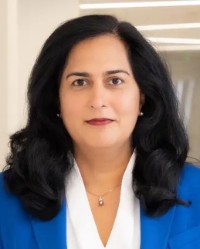



Nixon Peabody has its California patent litigation team of 30+ IP professionals based in Los Angeles and San Francisco, representing plaintiffs and defendants in US courts, the PTAB and abroad. The team translates complex IP into clear strategy, handling venue, discovery, experts, claim construction, dispositive motions, trials, appeals, and PTAB post grant (IPR, PGR, ex parte re-exam). Recent results include: acting for Scientific Applications & Research Associates in ND Cal, defeating four validity and summary judgment challenges before settlement assigning multiple US/foreign patents; advising the Regents of the University of California in a filament LED campaign with a December 2024 Federal Circuit win and ITC/district court/PTAB matters yielding dozens of licences; and successfully defending Shutterfly (via subsidiary Spoonflower) against patents on “fabric having a procedure map” – securing a Rule 12 dismissal under 35 USC § 101 on 26 September 2025, eliminating liability and setting favourable precedent for similar claims.
Introduction
California’s District Courts have long had a prominent role in adjudicating patent cases. Since 2008, only two states (Texas and Delaware) have been home to more patent litigation than California. Given the density of major universities and high-profile companies throughout the state, California’s District Courts are no stranger to complex patent cases involving resident companies seeking to protect their own intellectual property, defend against assertions of infringement by others, or both. But California’s District Courts are not all the same, and an examination of each of California’s four judicial districts (Northern, Central, Southern and Eastern) reveals that, while there are some trends that are consistent across the state, California’s District Courts do not lend themselves to a one-size-fits-all approach to litigation strategy.
This chapter of the guide examines some relevant similarities and differences between California’s District Courts, and provides a background on recent litigations trends in each judicial district. It then offers some illustrative examples of recent important patent outcomes in order to provide additional insight into how California litigation trends are observable in practice.
National Rankings
California’s District Courts have for many years been among the most popular venues for patent litigation. Since 2008, three of California’s judicial districts (Central (3), Northern (6) and Southern (10)) are among the top ten districts in the country for total new patent filings. They have also consistently ranked near the top on an annual basis. The Central District was among the top five districts in the country each year from 2008 to 2023, and the Northern District was among the top five in each year except for three (in which it ranked sixth or seventh).
More recently, California’s courts have seen a slight reduction in new patent cases as compared to the rest of the country. In 2025, the Central District saw 191 new patent cases (6th nationally), the Northern District saw 105 (10th nationally) and the Southern District saw 26 (23rd nationally). Meanwhile, the Eastern District of California, which covers much of California’s agricultural Central Valley, was home to only ten new patent cases in 2025, after seeing only five new cases in 2024).
California’s courts are not considered “rocket dockets” in the way that some other courts with patent heavy dockets are sometimes described. But time to trial in California falls roughly in line with national averages. Average time to trial in the Northern (33 months), Central (35 months) and Southern (34 months) are only slightly above the national average of 32 months. Likewise, median time to trial in the Northern (32 months), Central (31 months) and Southern (32 months) are only slightly above the national average of 29 months. Outlier time to trial statistics for the Eastern District of California (average – 66 months; median – 65 months) are skewed by the small sample size and so should not be considered representative.
Patent-Specific Procedures
California’s Courts have employed a variety of techniques to help manage and streamline busy dockets. For example, the Northern and Southern Districts of California have adopted their own set of local rules to be applied in patent cases, with explicit timeframes and procedures governing patent-specific litigation mileposts such as invalidity and infringement contentions, and claim construction. And while the Central District – California’s busiest docket of patent cases – has not adopted district-wide patent local rules, many Central District judges elect to adopt the Northern District’s patent local rules for patent cases that come across their docket. The Northern and Southern Districts also generally require litigants to participate in Alternative Dispute Resolution (ADR) and/or Early Neutral Evaluation (ENE) programmes that can help narrow disputes early in the case and potentially lead to faster settlements.
The Central and Southern Districts of California also took part in the national patent pilot programme that officially ended in 2021 (although the Central District extended its own programme until March 2024). Under the pilot programme, approximately 70% of patent cases filed in the Central District of California were assigned to only six of the District’s 28 judges (up from approximately 20% of patent cases that would have been assigned to the same six judges absent the patent pilot programme). Similarly, in the Southern District, approximately 80% of patent cases filed during the pilot programme were assigned to five of the 13 judges on the Southern District bench (up from less than 40% that would otherwise have been assigned to the same five judges). In both the Central and Southern Districts, most of the judges who participated in the patent pilot programme remain on the bench, adding significant experience and familiarity in patent cases that are assigned to them.
Motion Practice Comparison
In selecting a venue for patent litigation, or in crafting a litigation strategy after a suit has begun, litigants often consider the anticipated success rate of dispositive motions. This might include:
- pleadings-stage motions such as transfer of venue or failure to state a claim;
- late-case motions such as dispositive summary judgment motions seeking findings related to infringement and validity of asserted patents; or
- post-action motions, eg, motions for attorneys’ fees.
Here, too, California’s District Courts do not provide uniform results, and there is insufficient data from the Eastern District to establish a meaningful trend.
With regard to pleadings-stage motions, for litigants seeking to transfer venue out of California on convenience grounds (28 U.S.C. § 1404), the Central District provides the best chance, with a 71.4% success rate for such motions since 2020. The Southern District (63.6%) and Northern District (52.9%) are also significantly more favourable than the national success rate of 45.1%. For pleadings-stage motions to dismiss under Fed. R. Civ. P. 12(b)(6), the Northern District has been California’s most friendly Court, granting 49.2% of such motions since 2020 (including 53.7% in 2025), making it one of the most favourable venues in the country for pleadings-stage dismissals. The Central District (28.9%) and Southern District (25.4%), while well below the grant rate of the Northern District, both still exceed the national rate of 20.7%.
The Northern District is also the most likely to grant summary judgment motions related to infringement or validity of patents, with a 34.1% overall grant rate for such dispositive motions compared to 27.1% in the Central District, 27.5% in the Southern District and just 22.5% nationally. The numbers are similar looking only at summary judgment related to non-infringement and invalidity, the Northern District granting 36.4% of such motions compared to 27.4% in the Central District, 36.4% in the Southern District and 23.6% nationally. By contrast, for summary judgment motions related to infringement and validity, the Central District leads, granting 26.6% of such motions, compared with 28.8% in the Northern District, 11.1% in the Southern District and 20.3% nationally. These statistics demonstrate California courts’ willingness to adjudicate dispositive motions before trial. In particular, the Northern and Central Districts are both more likely than other courts to grant dispositive motions in favour of either party, whether at the pleadings stage or at summary judgment.
When it comes to motions for attorneys’ fees, typically governed by 35 U.S.C. § 285 in patent cases, the Central District grants 33.8% of such motions. The Northern District (25.7%) and the Southern District (30%) trail the Central District in granting attorney fee awards, but all three allow such awards with greater frequency than the national rate of 23.7%.
Venue Considerations
A domestic defendant must either be incorporated in or have a regular and established place of business and commit infringement in a judicial district for venue to lie for a patent infringement claim. Foreign entities can be sued in any district in the United States where they meet the constitutional test for personal jurisdiction, which requires purposeful direction of activities at the forum that make it foreseeable and fair to subject them to litigation there.
Patent plaintiffs enjoy the prerogative of choosing where to file patent litigation, and those choices have a substantial impact on the prospects for success. As indicated above, while one might be tempted to look at the statistics for California’s District Courts and conclude that the Central District is more favourable for plaintiffs while the Northern District is more favourable for defendants, such sweeping conclusions may not be justified. The differences in motion success rates between the districts are not so large that they could not also be explained by the specific nature of the cases and issues that happened to come before each Court.
While the Northern District of California often carries a reputation of being relatively more favourable for patent defendants, the Central District has recently drawn attention for outsized jury verdicts in favour of plaintiffs.
The Central District of California encompasses the Los Angeles metropolitan area, home to multiple prominent research universities, as well as the second largest population and business centre in the United States. Patent plaintiffs therefore often have a stronger basis for asserting venue in the Central District than in other popular districts for patent plaintiffs like the Eastern and Western Districts of Texas. As just one example illustrating the significance of this dynamic, Apple has systematically eliminated any physical presence in the Eastern District of Texas to avoid facing patent infringement suits in that venue, but maintains a significant presence in both the Northern District of California, where it is headquartered, and also in the Central District.
Noteworthy Decisions and Outcomes
California’s District Courts, especially the Northern District of California and Central District of California, are major venues for resolving complex questions of patent law and handling highly technical subject matters driven by the high case volumes, experienced judges and the large presence of major universities and prominent companies in the state. Their decisions have received significant attention on the national stage and are the subject of a number of decisions on appeal to the United States Court of Appeals for the Federal Circuit.
In 2025 there was significant activity, with major patent rulings and verdicts in California and related appeals. The following is a brief summary of several noteworthy decisions and outcomes.
Subject matter eligibility
An invention is eligible for patent protection if the invention falls into the categories Congress allows patents for: processes, machines, manufactures, and compositions of matter, as defined in 35 U.S.C. § 101, while excluding abstract ideas, laws of nature and natural phenomena. The eligibility of patent protection often arises when the patents involve software. In 2025, the California District Courts issued several opinions addressing the eligibility of software patents.
In IOT Innovations LLC v Lutron Electronics Co., Inc., No. 2:24-cv-10320-SRM (C.D.Cal., 25 Nov. 2025), the Court invalidated the claims of multiple patents directed to security protections in mobile devices, caching data and other software-related technologies due to a lack of disclosure of any unconventional software and hardware, specific configuration of algorithms, and techniques for performing the disclosed software steps.
In Carbon Autonomous Robotic Systems Inc. v Laudando & Assocs., No. 2:24-cv-03012 (E.D.Cal., 12 June 2025), the Court issued a preliminary injunction order enjoining the defendant from selling the accused product until the date of judgment. The asserted patents were directed to systems incorporating computer vision software implemented as a neural network to distinguish between weeds and desirable plants. The Court evaluated a number of factors, including the parties’ arguments related to infringement and validity of the patents, irreparable harm and other factors, and determined that they weighed in favour of issuing a preliminary injunction. On the issue of subject matter eligibility, the Court found that the plaintiff’s argument that the combination of claim elements created a technical improvement was persuasive.
In Nantworks, LLC v Bank of America Corp., No. 2:20-cv-07872-GW (C.D.Cal., 28 July 2025), the Court invalidated a claim of a patent directed to an image recognition for built-in cameras in cell phones, finding that the steps in the claim were not an improvement in the art and that the claim recited generic components.
In Longitude Licensing Ltd. v Google, LLC, No. 3:23-cv-03046-VC (N.D. Cal.) (aff’d No. 2024-1202 (Fed. Cir., 30 Apr. 2025)), the Federal Circuit affirmed a decision of the Northern District of California (J. Chhabria) dismissing a complaint on the basis that the asserted claims of four patents are not patent eligible. The patents were directed to performing digital image correction techniques on a computer. The Federal Circuit held that each claim failed to teach how to achieve the intended results and were abstract and non-transformative.
Obviousness
A patent may be invalid if the differences between the claimed invention and the prior art are such that the claimed invention as a whole would have been obvious before the effective filing date of the claimed invention to a person having ordinary skill in the art to which the claimed invention pertains.
In Resh, Inc. v Conrad, No. 22-cv-01427-EJD (N.D.Cal., 11 Mar. 2025), the Court invalidated multiple claims of one patent as obvious. The patent was directed to a swimming pool tool. The Court concluded that the elements of the claims were disclosed in two prior art references and that a person of ordinary skill in the art would have been motivated to combine them. The Court also considered the plaintiff’s evidence of objective, real world factors in support of an invention’s non-obviousness, referred to as secondary considerations of non-obviousness, and determined that the strong evidence of obviousness outweighed any secondary considerations of non-obviousness.
Prosecution laches
In a post-trial decision in Sonos, Inc. v Google LLC, Nos. 20-06754-WHA and 21-07559-WHA (rev’d No. 2024-1097), the District Court held that Sonos was guilty of unreasonable and inexcusable delay in its prosecution of several asserted patents by waiting over 13 years to file claims directed to devices that implement overlapping zone scenes. On 28 August 2025, the Federal Circuit reversed the District Court because Google could not meet its burden of establishing prejudice by Sonos’ delay. The Federal Circuit also cited the specification’s publicly disclosed teachings pre-dating Google’s investment in its products showing that the specification disclosed overlapping zone scenes.
Legal fee award
The patent statute provides that a court in exceptional cases may award attorney’s fees to the prevailing party.
In EP Family Corp. v Changzhou Win Up Time Technology Co., Ltd., No. 2:22-cv-04242-GW (C.D.Cal., 17 January 2025), the district court found that the defendant established an entitlement to attorney fees arising from the plaintiff cancelling the sole claim of a design patent in an inter partes review. The Court noted the distinction between design and utility patents, finding that design patents lack technical claims and detailed written description, and regarded them as easier to obtain and subject to less scrutiny during prosecution. The Court further noted the plaintiff’s failure to argue that it conducted any pre-filing investigation into the design patent’s validity.
Verdicts
California Institute of Technology v Broadcom Ltd., et al., No. 2:16-cv-03714-GW (C.D.Cal.)
Perhaps the most notable recent example of the propensity of Central District of California juries to award large patent damages verdicts is the litigation filed by The California Institute of Technology (Caltech), which is located in the Central District of California city of Pasadena, against Apple and Broadcom. Caltech accused millions of iPhones, iPads, Apple Watches and other Apple devices with Broadcom chips of infringing Caltech’s wireless-communication patents that it contends are essential to the implementation of IEEE’s 802.11n, 802.11ac or 802.11ax standards.
After a trial in 2020, presided over by Judge George H. Wu in Los Angeles, a Central District of California jury awarded Caltech USD270 million from Broadcom, to which Judge Wu added USD18 million in pre-judgment interest, and USD837 million from Apple, to which Judge Wu added USD47 million in pre-judgment interest, for a total judgment of USD1.1 billion.
On appeal, the Court of Appeals for the Federal Circuit affirmed the jury’s verdict of infringement of two asserted patents but vacated the verdict of infringement of a third patent and remanded for a new trial of infringement of that patent. The Federal Circuit also affirmed Judge Wu’s summary judgment of no invalidity based on IPR estoppel and no inequitable conduct. However, the Federal Circuit overturned the damages award and ordered a new trial on damages, finding the amount was “legally unsupportable”. Apple appealed the ruling regarding IPR estoppel to the United States Supreme Court, which denied Apple’s appeal in 2022.
After the case was remanded to the District Court for a retrial on damages, it was settled and dismissed in November 2023 on confidential terms. Caltech’s more recent complaints against other tech giants such as Samsung, Microsoft, HP and Dell point to the results of the Apple and Broadcom litigation as demonstrating the strength of the asserted Caltech patents.
Masimo Corp., et al. v Apple, Inc., No. 8:20-cv-00048-JVS (C.D.Cal.)
More recently, in November 2025, a Central District of California jury awarded a verdict of USD634 million from Apple to Masimo in a case tried before Judge James V. Selna in Santa Ana. The jury found that Apple infringed Masimo’s patent on pulse-oximetry technology that Apple incorporated in heart rate monitors in approximately 43 million Apple Watches. Post-trial motion proceedings are ongoing as of publication of this guide (12 February 2026).
SPEX Technologies, Inc. v Western Digital Corp., et al., No. 8:16-cv-1799 (C.D.Cal.)
While large patent verdicts can be won in the Central District of California, they can also be taken away. That is what happened in SPEX Technologies v Western Digital.
In October 2024, following another trial before Judge Selna in Santa Ana, a Central District of California jury returned a verdict finding that Western Digital infringed a SPEX Technologies patent related to securing a peripheral computing device. The jury awarded damages for two accused hard disk drives, about USD194 million for one and about USD122 million for the other. In January 2025, Judge Selna issued a final judgment that added pre-judgment interest of USD160 million and USD86 million for those respective products, for a total damage award of USD552 million.
However, Western Digital then filed a motion for judgment as a matter of law challenging the sufficiency of the evidence regarding damages. Western Digital argued that SPEX failed to apportion out certain non-infringing features of the products from those that did infringe. Judge Selna agreed, noting that Western Digital added encryption features to some of its products which were not apportioned out. He wrote: “[b]ecause SPEX failed to present evidence accounting for the value of these non-claimed features, the jury’s damages determination based on the [accused features] is not supported by substantial evidence.” He further noted that federal law “does not require an award of damages if none are proven that adequately tie a dollar amount to the infringing acts… [therefore] the Court enters nominal damages in the amount of $1.”
MR Technologies GMBH v Western Digital Technologies, Inc., No. 8:22-cv-01599 (C.D.Cal.)
A few months earlier, in July 2024, after another trial before Judge Selna in Santa Ana, a Central District of California jury returned a verdict of more than USD262 million from Western Digital to MR Technologies for infringement of two patents relating to hard disk drive magnetic recording media. Judge Selna added pre-judgment interest of about USD117 million for a total judgment of more than USD379 million. While post-trial motions were pending, the parties settled and dismissed the case in May 2025.
Omnitracs, LLC, et al. v Motive Technologies, Inc., No. 3:23-cv-05261 (N.D.Cal.)
On 24 April 2025, a jury returned a verdict that defendant, Motive Technologies, Inc., did not infringe the asserted claims of four patents. The parties moved for post-trial relief on the eligibility of the two patents. The District Court granted the defendant’s motion for judgment as a matter of law, finding that the asserted claims of two patents are ineligible.
Contour IP Holding, LLC v GoPro, Inc., No. 3:17-cv-04738 (N.D.Cal.)
On 10 October 2025, a jury returned a verdict that the products launched by the defendant, GoPro, Inc., from 2020 to 2024, did not infringe the asserted claims of two patents. The jury also invalidated several asserted claims of the patents. However, GoPro was ordered to pay USD8.2 million in past damages for certain legacy cameras found to infringe. The parties are currently engaged in post-trial briefing.
Conclusion
California’s District Courts are, with the exception of the Eastern District, deeply experienced in patent cases, owing at least in part to the wealth of major research universities, prominent companies and culture of innovation, as well as to California Courts’ embrace of patent pilot programmes and wide adoption of patent local rules. This deep experience is also evidenced by the tendency of California’s District Court judges to actively manage their cases, attending promptly to motion practice, and showing a stronger than average willingness to address case dispositive issues before trial, regardless of whether such issues favour plaintiffs or defendants. California jurisprudence is also responsible for development of significant new law, and regularly contributes to the national conversation regarding the evolution of patent law.
Readers are encouraged to contact patent litigation practitioners with questions or to engage in discussion about how best to navigate California’s District Courts.
Nixon Peabody
1 Embarcadero Center
32nd Floor
San Francisco
CA 94111
USA
+1 415 984 8200
+1 415 984 8300
srao@nixonpeabody.com www.nixonpeabody.com
Trends and Developments
Authors
Nixon Peabody has its California patent litigation team of 30+ IP professionals based in Los Angeles and San Francisco, representing plaintiffs and defendants in US courts, the PTAB and abroad. The team translates complex IP into clear strategy, handling venue, discovery, experts, claim construction, dispositive motions, trials, appeals, and PTAB post grant (IPR, PGR, ex parte re-exam). Recent results include: acting for Scientific Applications & Research Associates in ND Cal, defeating four validity and summary judgment challenges before settlement assigning multiple US/foreign patents; advising the Regents of the University of California in a filament LED campaign with a December 2024 Federal Circuit win and ITC/district court/PTAB matters yielding dozens of licences; and successfully defending Shutterfly (via subsidiary Spoonflower) against patents on “fabric having a procedure map” – securing a Rule 12 dismissal under 35 USC § 101 on 26 September 2025, eliminating liability and setting favourable precedent for similar claims.
