Power Generation, Transmission & Distribution 2026
Finland
Trends and Developments
Authors
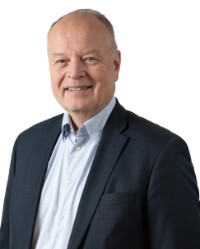


Procopé & Hornborg Attorneys Ltd is a Helsinki-based business law firm with decades of experience in delivering legal services. Its energy and infra team provides comprehensive legal support across the full lifecycle of energy and infrastructure projects. Operating in a field shaped by the green transition and an evolving security landscape, the team combines deep industry knowledge with the ability to address complex and rapidly changing regulatory frameworks across all key aspects of the energy sector, with particular expertise in energy production under the Mankala principle. With roots dating back to the 1920s, the firm brings both historical insight and forward-looking expertise in the transforming energy sector. Its recent work includes long-standing counsel to Teollisuuden Voima on Europe’s largest nuclear reactor unit OL3; advising one of Finland’s largest wind energy producers, Suomen Hyötytuuli, on its demerger; and representing Gasgrid Finland and Elering in the multi-jurisdictional Balticconnector pipeline insurance claim.
Introduction
The energy sector has been subject to significant global and geopolitical changes in recent years, and Finland is no exception. The Finnish energy market is currently undergoing several simultaneous developments relating to climate change, reduction of fossil fuels, reform of nuclear energy regulation, proliferation of battery storage systems and, more recently, data centres. At the same time, the anticipated growth in energy consumption over the coming years poses challenges for electricity generation and, specifically, for the adequacy of capacity and the load bearing capability of electricity networks. Annual electricity consumption in Finland is projected to rise to as much as 120 TWh by 2030, which represents a significant increase compared to the annual level of around 80–87 TWh that has remained stable for nearly two decades. The forecasted significant growth is driven, amongst other things, by the increasing demands of the information society, such as the need for computing power.
Like many other European countries, Finland has, due to its geographical location, depended on energy imported from Russia. Discontinuing energy imports from Russia happened rapidly following Russia’s full-scale invasion of Ukraine in 2022, forcing the Finnish society to respond swiftly to the crises that shook energy markets, to invest in energy self-sufficiency, and to seek opportunities in new forms of technology to support energy production.
The current developments concerning energy markets are therefore intertwined: moving away from fossil fuels means that the energy need must be replaced by other means, and risks related to energy availability require investing in self-sufficiency. Climate change, in turn, poses challenges not only to the current energy system but also to the energy infrastructure as extreme weather events become more frequent. At the same time, the electrification of society and data centre projects have created growing energy demand. These changes have also increased the need for new kinds of partnerships within the energy markets. To support the requirements of the energy infrastructure, the Finnish government has, for example, concluded a letter of intent with Germany promoting hydrogen technology, as well as taken investment measures with respect to the research and development of a national hydrogen network.
In accordance with the National Energy and Climate Strategy, Finland’s objective is to phase out fossil fuels in electricity and heat production by the 2030s at the latest, which is to be achieved by investing in domestic energy production. From a global perspective, Finland is one of the world’s leading countries in the utilisation of renewable energy, as over 40% of the total energy consumed has been acquired from renewable sources. The aim of the National Energy and Climate Strategy is to further improve the situation and to raise the share of these sources to above 50% during the 2020s.
In terms of renewable energy, however, a significant part of the energy production capacity in Finland currently relies on wind and solar power, which are dependent on weather conditions. The fluctuating northern climate has a direct and sometimes unpredictable impact on electricity generation capacity. Together with the move away from fossil fuels and the decline in the number and changing role of traditional combined heat and power plants (CHP), the shift to weather-dependent systems has raised the question of whether the current mix of electricity production forms is sufficient to cover the peak consumption even in the harshest conditions of Finnish mid-winter. The developments have also contributed to the increasing popularity of nuclear power as an alternative to the fossil fuels – a trajectory rather unlikely to have been foreseen at the beginning of the 21st century.
Changes in the information society have manifested in an exponential growth in the quantity and significance of data. An increasingly large proportion of society’s services are provided electronically, a significant share of data has moved online, and AI technologies require substantial and effective computing power to function, all of which lead to greater energy consumption. These changes have inevitably been reflected in energy markets through, for example, data centre projects, growing battery capacity, and discussions on the adequacy of electricity network capacity.
Several factors make Finland an attractive target for the establishment of data centres, relating amongst other things to social stability, geography, relatively light regulation, and energy prices that remain competitive by European standards. Finland is a stable Nordic country with a well-maintained power grid. Its northern location, cooler climate, and water resources directly sit well with data centres’ cooling requirements and energy consumption.
The benefits of data centres are seen not only in their significance as local investments, bringing some tax revenues and potential jobs to regions, but above all, as a means of attracting further high-technology projects to Finland. At the same time, critical discussion is under way on whether data centres should be regulated more comprehensively, in particular as regards their societal value relative to their energy consumption. The question is how to ensure that data centre projects intended to attract technology investments genuinely serve that objective, rather than simply becoming cheap, energy-intensive platforms for processing data. Certain regulatory obligations are already in place relating, for example, to reporting and waste heat utilisation obligations at EU level and land use planning, construction, and environmental impact assessment obligations at national level. Otherwise, the question of how the potential of data centres can be utilised more comprehensively to meet the needs of society remains unanswered.
Alongside data centres, a considerable number of battery storage facilities have also been established in Finland in recent years. The growth in battery capacity has likely contributed to improving the functioning of the reserve markets maintained by the transmission system operator Fingrid. Growing battery capacity helps to balance the electricity grid and provides short-term reserve capacity in various production shortage situations. However, battery storage facilities may face the challenge of being located at a distance from power generation plants, which in turn places additional strain on the transmission network. As a solution to this challenge, Fingrid has proposed, among other measures, streamlining the permit procedure for operators that locate a battery storage facility close to the relevant electricity generation site.
Power Generation Through Small Modular Reactors
Nuclear power is the most significant source of energy in Finland. There are five nuclear power plants in commercial operation. In 2024, 38% of all electricity was produced by nuclear power, and its importance as a means of producing energy is projected to grow. Should electricity prices rise, thereby increasing the economic incentives for the construction of new facilities for energy production, opportunities and market conditions for the construction of new nuclear power plants may also open up. The currently rather stagnant development of other new generation capacity, such as onshore and even offshore wind power, may also benefit from renewed interest when electricity price levels offer sufficient investment return potential.
The construction and commissioning of nuclear power plants in Finland is subject to substantial regulation. The central legislative framework is the Nuclear Energy Act (990/1987), which is currently being reformed. The government’s proposal for a new Nuclear Energy Act (HE 24/2026) was submitted to Parliament in March 2026. In addition to the Nuclear Energy Act, the operation of power plants is also governed by the Radiation and Nuclear Safety Authority’s (STUK) detailed Regulatory Guides on nuclear safety and security (YVL Guides), which set precise criteria for the type of nuclear power plants that may be constructed in Finland, as well as for how and where they may be built. STUK’s YVL Guides are also currently under revision and are expected to be finalised in 2027.
The Nuclear Energy Act and the YVL Guides set out the general framework for the safe use of nuclear energy, preparedness for potential crisis situations, prevention of nuclear accidents, and mitigation of the effects and impact on people and the environment in potentially hazardous nuclear-related incidents. The strict and tightly knit framework has, however, made the construction of nuclear power plants highly demanding and, consequently, slow. As an example, Olkiluoto 3, the most recently constructed nuclear power plant, took over 18 years to complete with a delay of more than 13 years compared to the original plan: the decision on Olkiluoto 3 by the Finnish parliament was made in 2002, construction commenced in 2005, the plant was connected to the electricity grid in 2022, and regular electricity production began in the spring of 2023. One of the key objectives of the ongoing reform of the Nuclear Energy Act is therefore to streamline nuclear facility projects from the permitting stage to energy production without compromising on security.
Reforming the Nuclear Energy Act is a substantial undertaking in which the existing Act will be replaced by a new one, leading to corresponding amendments in 14 other acts as well. The aim of the reform is to render the new Act more technology-neutral, thereby enabling the deployment of new technologies, including small modular reactors (SMRs), eliminating overlapping permit procedures, and incorporating the key provisions of the YVL Guides directly into the Act. Notwithstanding the overall easing of regulation, the legislative proposal, like the Act it replaces, imposes strict safety requirements for nuclear facilities, the use of nuclear energy, and the management of nuclear waste, all in accordance with the international agreements binding on Finland.
It should be noted, however, that large-scale nuclear power plant projects are not a near-term solution to increasing energy self-sufficiency. Consequently, the development and possible future commissioning of SMRs has attracted the interest of many actors in the energy sector. SMR technology is expected to accelerate the implementation of power plant projects and reduce construction costs, which could open up the possibility of nuclear energy production, at least with respect to the production of heat, to a greater number of operators in Finland.
Small modular reactors are nuclear power plants with an electrical output of less than 300 MW and a thermal output of less than 1,000 MW; for comparison, the electrical outputs of currently operating nuclear power plants range from 500 to 1,600 MW. The key advantage of small reactors over conventional nuclear power plants is their modular structure, which makes their construction faster, significantly cheaper, and improves production efficiency: individual components can be manufactured in series at a factory and transported as ready-made units to the construction site, where they are assembled into a power plant. In addition, small nuclear power plants offer more flexible siting options, as they require less space and, unlike current plants, may also be considered for underground siting.
Under the proposed new Nuclear Energy Act, SMRs are subject to licensing and supervision in the same manner as other nuclear reactors, although the application of technical requirements may differ from those applied to large nuclear power plants. As a concrete example, the former requirements under the YVL Guides to establish a five-kilometre exclusion zone and a 20-kilometre emergency planning zone around nuclear power plants were removed in the 2024 revision. Instead, the zones are determined on the basis of facility-specific safety analyses. As a result, SMRs, especially for heat production, may be constructed closer to population centres than their larger counterparts. This has led to several SMR projects being rapidly launched in Finland; these are currently in the planning or study phase but are expected to be fit for construction in the 2030s.
Based on the above, it is clear that SMR technology will grow in importance during the coming decade. SMR projects have, however, also attracted criticism alongside the opportunities they offer. In Finland, concern has been voiced especially about the siting of SMRs for heat production near population centres, which would represent a departure from the previous approach under which nuclear power plants were subject to requirements for extensive exclusion zones. It is therefore evident that for SMRs, or other new adaptations of nuclear power, to become more widespread, a clear regulatory framework is necessary to alleviate the concerns of the public and affirm its trust and acceptance of the technology. From a global perspective, the Finnish nuclear regulatory framework and the role of STUK have been exemplary in facilitating the development of new nuclear capacity.
Electricity Transmission and Distribution
The electricity network in Finland is generally stable and predictable. It is constantly being renewed, and investments amounting to billions of euros have been directed towards maintaining and improving the transmission grid. However, faced with potential hybrid threats targeting the energy infrastructure due to the rise in geopolitical uncertainty, an emphasis has also been put on preparedness. At the same time, Finland’s electricity network is geographically divided between areas of surplus production and areas where consumption exceeds production. Balancing the difference requires nationally co-ordinated measures in order to guarantee a reliable and secure electricity supply.
High electricity consumption occurs in Southern Finland, where the majority of the Finnish population lives and the country’s most significant infrastructure and business clusters are located. The continuing electrification of society and industrial investments will place further strain on the region's electricity network, necessitating considerable investment in new transmission connections and more efficient use of the existing network. The southern parts of the country currently account for 50% of the total energy consumption in Finland, and that share is forecast to rise to 60% by 2030. Ensuring a reliable supply of electricity and its transmission from production to consumption areas is one of the greatest challenges facing electricity networks and the overall security of electricity supply.
The largest electricity production area is located in Western Finland, where, in addition to three nuclear power plants critical for power generation, a significant amount of wind and solar power is also generated. Western Finland currently accounts for 70% of Finland’s total electricity production, a share that is forecast to rise to 80% by 2030. The regional challenge for electricity networks therefore lies in how the surplus capacity of one area can be transferred to high-consumption areas in a cost-efficient and energy-efficient manner while ensuring the reliability and security of electricity supply.
Fingrid is responsible for Finland’s transmission grid, the operational reliability of the electricity system, and the centralised data exchange system for electricity retail markets. Its long-term objective is to strengthen the transmission grid at the national level so that more distributed electricity production can not only support the electricity system but also smooth out production variations across different parts of the country. The current imbalance between production and consumption has arisen partly from practical considerations: nuclear power plants and renewable energy sources such as wind and solar power have been relatively straightforward to construct in areas where there is sufficient space for power plants and their uninterrupted operation. This has frequently meant siting them far from population centres, which are nonetheless the highest consumers of electricity, thereby increasing the load on electricity transmission networks.
In addition to the previously discussed possibility of locating heat-producing SMRs closer to centres of consumption, the imbalance has been addressed through both legislative and operational responses. Alongside the reform of the Nuclear Energy Act, a revised Electricity Market Act (588/2013) entered into force in January 2026. Prior to the legislative reform, the construction of lines above 110 kV was largely reserved for Fingrid, as such lines were considered part of the transmission grid. Following the reform, distribution network companies can also construct such lines, thereby enabling grid expansion.
The legislation was also amended to allow distribution network operators to develop generation-aggregating grids as part of their regulated operations. In addition, electricity producers were permitted, subject to certain conditions, to construct shared connection networks without an electricity network licence. The aim was to ease regulation, improve cost efficiency, and encourage co-operation, particularly in renewable energy projects. The legislative reform also aimed to promote the development of offshore wind power by extending the transmission system operator’s area of responsibility to cover Finland’s exclusive economic zone.
The Finnish Ministry of Economic Affairs and Employment is also currently preparing a support mechanism for electricity production that would secure the reliability of the electricity system in situations where modes and output of electricity production vary, for example due to weather conditions. The support scheme is planned to make use of the EU Block Exemption Regulation, under which it would not require state aid discussions with the European Commission.
In addition to the national reform of the regulatory framework, Fingrid has also proposed a number of concrete measures to address the challenges related to electricity network capacity. The measures include the re-examination of the transmission grid fee system to better incentivise the efficient use of capacity, the development of new technological solutions to enable more effective utilisation of network capacity without the need for major investments, and the facilitation of market-based mechanisms that allow capacity to be allocated and used more flexibly than at present. So far, Fingrid has sought to secure regional balance through, among other things, the reform of electricity network fees, which encourages operators to locate battery storage facilities closer to production plants.
Finland’s transmission grid infrastructure is therefore receiving significant investment while, at the same time, changes in the regulatory and operating environment are creating new opportunities for innovative energy production. The future will show how the state administration, Fingrid, and electricity producers succeed in building a sustainable and flexible system capable of responding flexibly to the forecast growth in electricity consumption, production challenges, the task of integrating new forms of technology with society’s needs, and the geopolitical challenges that have caused significant volatility in energy markets in recent years.
Procopé & Hornborg Attorneys Ltd
Eteläesplanadi 18
PO Box 1077
00101 Helsinki
Finland
+358 10 3090 300
law.firm@procope.fi www.procope.fi
Trends and Developments
Authors
Procopé & Hornborg Attorneys Ltd is a Helsinki-based business law firm with decades of experience in delivering legal services. Its energy and infra team provides comprehensive legal support across the full lifecycle of energy and infrastructure projects. Operating in a field shaped by the green transition and an evolving security landscape, the team combines deep industry knowledge with the ability to address complex and rapidly changing regulatory frameworks across all key aspects of the energy sector, with particular expertise in energy production under the Mankala principle. With roots dating back to the 1920s, the firm brings both historical insight and forward-looking expertise in the transforming energy sector. Its recent work includes long-standing counsel to Teollisuuden Voima on Europe’s largest nuclear reactor unit OL3; advising one of Finland’s largest wind energy producers, Suomen Hyötytuuli, on its demerger; and representing Gasgrid Finland and Elering in the multi-jurisdictional Balticconnector pipeline insurance claim.
