Real Estate: Zoning/Land Use 2026
USA – Arizona
Authors
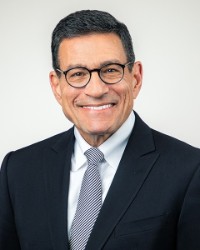


Snell & Wilmer maintains one of the largest zoning and land use practices in the western United States, supported by a large, multidisciplinary team of attorneys, urban planners and project professionals across key offices in Arizona, California, Colorado, Nevada, Utah and north-western Mexico. The team advises clients on zoning, land use, real estate development, environmental, regulatory and related litigation matters, working closely with development teams and maintaining long-standing relationships with local government attorneys, planning staff, commissioners and elected officials. The practice assists with legislative and administrative approvals, permitting, development agreements, entitlements and agency reviews, as well as administrative appeals, alternative dispute resolution and litigation involving property and civil rights. Snell & Wilmer regularly serves as local counsel to Fortune 100 and Fortune 500 companies and multi-state developers, with recent work spanning telecommunications, energy, manufacturing, commercial leasing, master-planned communities, resorts, shopping centres, institutional campuses, and public infrastructure and transit projects.
1. General
1.1 Main Sources of Law
No information is available on this topic for this jurisdiction.
1.2 Main Market Trends and Deals
No information is available on this topic for this jurisdiction.
1.3 Policy Considerations
In Arizona, zoning policies are often influenced by land use, development goals, housing affordability, housing demand, job creation and environmental impact. Mayors and council members must consider and balance community needs, economic development and sometimes even historical preservation, while navigating state regulations and occasionally local citizen input.
For instance, on the housing side, Arizona cities often must consider the need to increase housing density to meet demand while seeking to preserve the character of neighbourhoods. They also consider infrastructure needs created by a growing population and the source of funding – whether for roads, water supply and utilities – to handle more development.
On the economic side, such cities might look at attracting businesses, encouraging mixed-use development, or supporting affordable housing projects. There is also an environmental angle, where they need to protect natural resources, manage water use (a major consideration in the desert) and the engineering for things such as flood plains.
2. Obtaining Land Use Approvals
2.1 Types of Approvals
There are three types of land use approvals:
- legislative approvals;
- quasi-judicial approvals; and
- administrative approvals.
As a general rule, a zoning body will be deemed to have acted in a legislative capacity if the action results in the formulation of a general rule of policy (for example, rezonings and general plan amendments), whereas the action will generally be deemed quasi-judicial if the action involves the application of existing policy or rules (for example, variances). See Board of County Commissioners of Brevard County v Snyder, 627 So 2d 469 (Fla 1993).
Administrative approvals involve the routine, objective application of established rules and standards with no discretion applied (administrative decisions are straightforward checks against the rules and standards), while quasi-judicial approvals apply existing rules to particular facts and require judgment and evidence at a hearing, mimicking court-like proceedings.
Ex Parte Communication
A critical distinction between legislative, quasi-judicial and administrative land use approvals is the allowance or disallowance of ex parte communication. In the land use context, ex parte communication is best understood as communication that takes place between the decision-maker (eg, zoning adjustment hearing officer, board member or city council member) and a party or member of the public outside a public hearing on a topic that is to be heard at a formal public hearing.
Ex parte communication is generally prohibited in quasi-judicial land use decisions. However, it is permitted in legislative and administrative land use decisions. As such, it is essential to determine what category a land use decision falls under (legislative, quasi-judicial or administrative) in order to determine whether ex parte communication is prohibited.
The prohibition on ex parte communication stems first from the due process rights derived from the Fifth Amendment of the US Constitution, applicable to the states via the Fourteenth Amendment. As a general rule, procedural due process rights under the US Constitution require an impartial tribunal. See US Constitution Amendments V and XIV. The decision-maker in a quasi-judicial land use case is deemed to be acting like a judge.
Further, ex parte communication may implicate bias and can call into question the impartiality of the decision-maker. As such, courts have held that procedural due process rights are implicated in quasi-judicial land use decisions. See, for example, Cowan v Bd Of Comm’rs of Fremont Cnty, 143 Idaho 501, 510 148 P3d 1247, 1256 (2006) (“since decisions by zoning boards apply general rules to specific individuals, interests or situations, and are quasi-judicial in nature, they are subject to due process constraints”). See also Hide-A-Way Massage Parlor, Inc v Board of County Commissioners, 597 P2d 564 (Colo 1979) (finding that, when a public official performs a quasi-judicial act, the due process clause of the US Constitution is implicated).
In addition to case law, it is also important to look to state statutes and local ordinances, which may contain prohibitions on ex parte communication for quasi-judicial land use decisions. In Arizona, many local ordinances contain express prohibitions on ex parte communication with quasi-judicial bodies. See, for example, Section 1.5.7 of Town of Chino Valley’s Zoning Ordinance; see also Town of Paradise Valley Resolution Number 2022-12.
There are multiple potential consequences if a lawyer engages in ex parte communication in a quasi-judicial land use case. First, ex parte communication may invalidate quasi-judicial land use decisions. The word “may” is used here, as many courts have held that ex parte communication in quasi-judicial land use decisions does not invalidate a decision if the ex parte communication is cured. See, for example, Idaho Historic Preservation Council Inc v City Council of Boise, 134 Idaho 651, 8 P3d 646 (2000) (finding that ex parte contacts are not prohibited per se, so long as meaningful disclosure of the ex parte communication is made). That said, some courts have invalidated quasi-judicial land use decisions on the basis of ex parte communications. See Leverett v Town of Limon, 567 F Supp 471 (D Colo 1983) (finding that ex-parte communications with the Board of Adjustment poisoned the well).
In addition, for lawyers, ex parte communication arguably violates certain ethical rules. See Rule 3.5(b) of the ABA Model Rules of Professional Conduct (prohibiting a lawyer from communicating ex parte with a judge, juror, prospective juror or other official) (emphasis added); see also Rule 8.4(d) of the ABA Model Rules of Professional Conduct (providing that it is professional misconduct for a lawyer to engage in conduct prejudicial to the administration of justice).
2.2 Compulsory Purchase of Land
No information is available on this topic for this jurisdiction.
2.3 Scope/Extent of Review
No information is available on this topic for this jurisdiction.
2.4 Mega Projects
No information is available on this topic for this jurisdiction.
2.5 Conditions to Approval
A local government may impose conditions upon a land use approval – including monetary, land or facility contributions (called “exactions”) – provided the exaction does not constitute a taking under the Fifth Amendment of the US Constitution when applying the essential nexus and rough proportionality tests established by the US Supreme Court in Nollan v California Coastal Commission, 483 US 825 (1987) and Dolan v City of Tigard, 512 US 374 (1994).
An exaction imposed by a municipality or county as a condition to the issuance of a development permit is an unlawful exercise of the local government’s police power, and will be held by the courts as resulting in an unconstitutional taking under the Fifth Amendment of the US Constitution if:
- there is no “essential nexus” between the exaction and a legitimate governmental interest; or
- the exaction is not “roughly proportional” to the impact of the proposed use, improvement or development.
See again Nollan v California Coastal Commission and Dolan v City of Tigard.
In other words, the local government must make an individualised determination that the condition imposed as a requirement of the land use approval is related both in nature and extent to the impact of the proposed development.
2.6 Right to Appeal
No information is available on this topic for this jurisdiction.
2.7 Rights of Third Parties
No information is available on this topic for this jurisdiction.
2.8 Land Use Agreements
No information is available on this topic for this jurisdiction.
2.9 Effect of Approval or Denial
Upon satisfaction of all applicable conditions, a land use approval runs with the land – meaning that the land use approval attaches to the property rather than to a particular owner. In the rezoning context, approving authorities may impose conditions or a schedule of development that must be satisfied in order for the rezoning approval to vest. If those conditions are not met by the specified deadline, Arizona law requires the municipality or county that approved the rezoning to hold a hearing to consider an extension or reversion of the rezoning approval. See Arizona Revised Statutes (ARS) Section 11-814(I) (counties) and Section 9-462.01(E) (municipalities).
Vested Rights
A vested right, once acquired, entitles a property owner to develop their property in accordance with a land use approval. A vested right is a property right, which, subject to limited exceptions, cannot be revoked by a local government. In Arizona, a vested property right may arise where a party expends substantial sums in good-faith reliance on a validly issued building permit, special permit, use permit or conditional use permit. See Rivera v City of Phoenix, 186 Ariz 600, 925 P2d 741 (App 1996) (due process protects the permittee’s right to continue construction once substantial reliance occurs).
The issuance of a permit is a threshold requirement to establishing a vested right; a property owner’s reliance on existing zoning alone is insufficient to acquire a vested right. See Phoenix City Council v Canyon Ford, Inc, 12 Ariz App 595, 473 P2d 797 (1970). Nonetheless, Arizona case law recognises vesting and estoppel principles where a local government intentionally delays processing while changing its regulations and estops a local government from wrongfully denying an otherwise-entitled permit on the basis of a pending amendment to its zoning ordinance. See Folsom Invs, Inc v City of Scottsdale, 620 F Supp 1372 (D Ariz 1985).
3. Challenges to Land Use Approvals
3.1 Statutes of Limitations
No information is available on this topic for this jurisdiction.
3.2 Standards of Review
No information is available on this topic for this jurisdiction.
3.3 Mitigating Litigation Risk
No information is available on this topic for this jurisdiction.
4. Development Incentives
4.1 Development Incentive Tools
The State of Arizona does not provide many significant incentive programmes for real estate. The Arizona State Constitution provides that “…all taxes shall be uniform upon the same class of property within the territorial limits of the authority levying the tax” (Article 9, Section 1), and exempts all federal, state, county and municipal property from taxation (Article 9, Section 2).
The Government Property Lease Excise Tax (GPLET), ARS Section 42-6201 et seq, is an excise tax on leasehold interests in government-owned property. The tax rate is based on the use of the property and the size of the improvements. The GPLET was apparently enacted to cure an inequity arising from the fact that real property owned by the federal, state or local governments is, under the State Constitution, exempt from taxation. Prior to the imposition in 1986 of the first tax on possessory interests in government property, municipalities and developers were able to use the tax exemption to promote economic development. The government would lease government property in neighbourhoods lacking in commercial or other desirable uses, to private lessees who would utilise the property for the desired purposes. The lessee enjoyed the economic advantage of the property tax exemption, while the municipality benefited from the economic stimulus.
However, other governmental entities that depend on property taxes (such as school districts, community college districts and counties) and private landowners who felt that they faced unfair competition from their untaxed competitors petitioned the legislature to impose a tax in lieu of the property tax. The GPLET was the eventual result.
The excise tax is generally less than the property tax on similar property and is structured to encourage development in blighted areas. It thus continues to afford advantages both to local government (which can use the tax advantage to stimulate economic development) and to developers and businesses, which can realise a benefit from the lease of government property and the attendant lower rate of taxation. It has also become a useful tool in certain large, urban development and redevelopment projects.
In 1941, in a case challenging a City of Phoenix tax assessed against the plaintiffs’ leasehold interest in City-owned property, the Arizona Supreme Court ruled that, while government-owned property is exempt from taxation, leaseholds in such property are subject to taxation under the State Constitution, provided the legislature has set up a mechanism for assessing the tax on the leasehold only. See Maricopa County v Fox Riverside Theatre Corporation, 114 P2d 445 (1941). No such mechanism existed in state law at the time, and the Phoenix tax was invalidated.
In 1986, the legislature adopted an ad valorem tax on possessory interests in government-owned property (with certain exceptions), as unsecured personal property. The tax was invalidated by the Arizona Tax Court in 1993 in an unpublished opinion, apparently because certain of the exemptions were not authorised by the Constitution or violated the uniformity requirement of Article 9 Section 1[2]. See Scottsdale Princess Partnership v Maricopa County, 185 Ariz 368, 916 P2d 1084 (App 1995); Pimalco, Inc v Maricopa County, 188 Ariz 550, 937 P2d 1198, 1200.
Subsequent attempts by the legislature to amend the ad valorem tax were also invalidated. Finally, in 1996, the legislature replaced the ad valorem tax with an excise tax (the GPLET) tied to the size of the improvements and the use to which the property is put, with several categories of exemptions. State law allocates the proceeds of the GPLET among the county, the city or town, the community college district and the school district. In 2010, the legislature dramatically changed the excise tax structure by increasing the rates, effective 1 June 2010 (ARS Section 42-6203); however, the eight-year abatement provision of ARS Section 42-6209 remained intact. Then, in the spring of 2017, the legislature again modified the GPLET statute. The only major change was limiting the term of a GPLET that includes an eight-year abatement to no more than eight years.
As noted previously, the GPLET is structured in a way that encourages the lease of government-owned property for economic development purposes. The tax rate is lower for certain development in areas declared to be slum and blighted. There is an eight-year abatement of the tax for property improvements in a single central business district in a slum or blighted area, if improvements to the government-owned property result in an increase in property value of at least 100%. See ARS Section 42-6209. Properties that are devoted to uses deemed desirable to the public are exempt from the GPLET. These include, in addition to property used for public housing and rights of way, facilities that are used for athletic, artistic, cultural or convention activities. See ARS Sections 42-6208, 6209.
The GPLET is available in other districts, but at a higher tax rate. However, the eight-year abatement under ARS Section 42-6209 is available only for property improvements in a “single central business district” in a slum or blighted area.
The statutes also provide lower tax rates for property improvements located in a slum or blighted area that is not eligible for the eight-year abatement. If the improvements have resulted or will result in an increase in property value of at least 100%, the tax rate for the first ten years after the issuance of the certificate of occupancy is 80% of the tax that would otherwise apply. See ARS Section 42-6203E.
4.2 Underwriting Standards
No information is available on this topic for this jurisdiction.
4.3 Tax Implications and Other Considerations
No information is available on this topic for this jurisdiction.
5. Enforcement
5.1 Enforcement Authority
No information is available on this topic for this jurisdiction.
5.2 Enforcement Actions
No information is available on this topic for this jurisdiction.
6. Practitioner Considerations
6.1 Ethics, Lobbyist Registration Requirements and Campaign Finance
The Rules of Professional Conduct are enforceable rules adopted by the Arizona Supreme Court. Consequently, the rules establish minimum standards of conduct for all Arizona attorneys. The following are several rules that may be of particular importance to zoning and land use law attorneys.
Competence: Ethical Rule (ER) 1.1
Like other areas of law, land use law is an increasingly specialised field that demands knowledge of a wide array of laws, regulations, policies and procedures of the agencies involved in land use decision-making, in addition to current case law. In that regard, the Rules of Professional Conduct provide that:
“A lawyer shall provide competent representation to a client. Competent representation requires legal knowledge, skill, thoroughness and preparation reasonably necessary for the representation.”
The comments to this section address its application to complex and specialised matters:
“In determining whether a lawyer employs the requisite knowledge and skill in a particular matter, relevant factors include the relative complexity and specialised nature of the matter, the lawyer’s general experience, the lawyer’s training and experience in the field in question, the preparation and study the lawyer is able to give the matter and whether it is feasible to refer the matter to, or associate or consult with, a lawyer of established competence in the field in question. In many instances, the required proficiency is that of a general practitioner. Expertise in a particular field of law may be required in some circumstances.”
The rule and comment provide some practical suggestions for a lawyer to evaluate their competency to address a land use matter. For example, how complex is the matter? Is it routine, involving only a few rules and regulations, or does it involve many complex and intertwined regulations? How many governmental agencies are involved? Are there special procedures that must be learned, or special political skills that are needed? In many instances, practical issues such as client relations, marketing and malpractice concerns will guide a decision on whether to handle the matter, to associate special counsel or to refer the matter. Zoning and land use in Arizona is a very specialised field of endeavour that not only encompasses codes and ordinances but also contains a tremendous amount of nuance that cannot be learned through reading materials.
Candour Towards the Tribunal: ER 3.3
This rule states that a lawyer shall not knowingly:
- make a false statement of material fact or law to a tribunal;
- except as required by applicable law, fail to disclose a material fact to a tribunal when disclosure is necessary to avoid assisting a criminal or fraudulent act by the client; or
- except as required by applicable law, offer evidence that the lawyer knows to be false – if a lawyer has offered material evidence and comes to know of its falsity, the lawyer shall take reasonable remedial measures.
“Tribunal” is not defined for purposes of this rule. However, this rule could extend at least to public boards and commissions that hear zoning and land use matters, and potentially to agency personnel who are authorised by law to make decisions regarding a zoning and land use matter. While this rule may extend beyond the courtroom in zoning and land use matters, fortunately its application in this context is not likely to have such serious consequences as a false statement before a court that can lead to perjury charges. For example, while there are serious penalties for false statements in zoning and permit applications, many statements are statements of opinion or future zoning and plans that can be corrected by amendments to the application at a point in time when adverse consequences are not likely.
Truthfulness in Statements to Others: ER 4.1
While governmental agencies involved in zoning and land use decisions may be treated as tribunals for purposes of ER 3.3, it is clear that the rules for statements to third parties by a lawyer would apply. The rule states that, in the course of representing a client, a lawyer shall not knowingly:
- make a false statement of material fact or law to a third person; or
- fail to disclose a material fact to a third person when disclosure is necessary to avoid assisting a criminal or fraudulent act by a client unless disclosure is prohibited by ER 1.6 (confidentiality).
Ex Parte Contacts
Ex parte contacts pose special issues in the context of zoning and land use regulation. In Arizona, zoning cases are legislative in nature and permit ex parte lobbying; contacts with city staff, planning committee members, planning commissioners, mayors and council members are permitted. The only exception is matters that are before a quasi-judicial hearing officer or Board of Adjustment, or any other process that includes appeals to a superior court. In addition, while legislative ex parte contacts are permitted, no such decision-maker is compelled to meet with, or even speak with, any attorney outside a hearing.
Conflicts of Interest
Potential conflicts of interest can abound in the land use arena. To maintain a practice, lawyers must seek multiple clients. While the clients are seldom directly adverse in zoning and land use proceeding, clients may have competing projects vying for limited governmental approvals. In many cases, the ethical rules on conflicts may not apply to these situations, whereas marketing and client relations issues are very important and relevant.
ER 1.7 of the Rules of Professional Conduct provides as follows.
- A lawyer shall not represent a client if the representation of that client would be directly adverse for another client, unless:
- the lawyer reasonably believes the representation will not adversely affect the relationship with the other client; and
- each client consents after consultation.
- A lawyer shall not represent a client if the representation of that client may be materially limited by the lawyer’s responsibilities to another client or to a third person, or by the lawyer’s own interests, unless:
- the lawyer reasonably believes the representation will not be adversely affected; and
- the client consents after consultation – when representation of multiple clients in a single matter is undertaken, the consultation shall include explanation of the implications of the common representation and the advantages and risks involved.
Lobbying Requirements
Lobbyists are extensively regulated at the Arizona State Legislature. However, it should be noted that two local governments – Phoenix and Tempe – also have registration requirements for zoning and land use advocacy between a developer (and/or its lawyers) and any decision-maker or department head at such city.
Campaign Contributions to Publicly Elected Officials Who Act on Zoning and Land Use Matters
Zoning and land use lawyers are often asked to make campaign contributions, as well as to collect campaign contributions from clients and other third parties. It is important that such contributions are made/collected with the understanding that there is no quid pro quo regarding results. It is also critically important that the zoning and land use lawyer understand the legal limits of who may make such contributions and the maximum contributions that may be made.
6.2 Document Disclosure Requirements
No information is available on this topic for this jurisdiction.
Snell & Wilmer, LLP
One East Washington Street
Suite 2700
Phoenix, AZ 85004
USA
+1 602 382 6000
+1 602 382 6269
nwood@swlaw.com www.swlaw.com
Trends and Developments
Authors
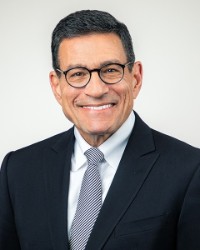


Snell & Wilmer maintains one of the largest zoning and land use practices in the western United States, supported by a large, multidisciplinary team of attorneys, urban planners and project professionals across key offices in Arizona, California, Colorado, Nevada, Utah and north-western Mexico. The team advises clients on zoning, land use, real estate development, environmental, regulatory and related litigation matters, working closely with development teams and maintaining long-standing relationships with local government attorneys, planning staff, commissioners and elected officials. The practice assists with legislative and administrative approvals, permitting, development agreements, entitlements and agency reviews, as well as administrative appeals, alternative dispute resolution and litigation involving property and civil rights. Snell & Wilmer regularly serves as local counsel to Fortune 100 and Fortune 500 companies and multi-state developers, with recent work spanning telecommunications, energy, manufacturing, commercial leasing, master-planned communities, resorts, shopping centres, institutional campuses, and public infrastructure and transit projects.
Arizona’s Growth, Housing Demand and Streamlining of Land Use Approvals to Deliver More Housing
Arizona has become a magnet for new residents. Arizona’s decade-long population expansion – accelerated during and after the COVID-19 pandemic – continues to reshape the state’s residential market, especially in the Phoenix and Tucson metropolitan areas. Continued migration to Arizona has tightened supply, elevated home prices, strained rental availability, and placed additional pressure on local infrastructure and public services. The result is a persistent supply-demand imbalance that requires new housing supply, especially attainable and affordable housing products. According to the United States Census Bureau, from 1 July 2023 to 1 July 2024, Maricopa County recorded the fourth-largest numeric population gain among US counties, and Pinal County posted the fifth-largest percentage growth, highlighting the intensity of recent in-migration.
Population Growth and Market Impacts
Arizona’s largest population centres – the Phoenix and Tucson metro areas – have experienced net in-migration that significantly outpaces many other US metro areas. This demographic momentum in Arizona has increased the need for new housing delivery and accelerated the need for expedient land use approvals and construction permits. The practical reality on the ground is a market in which demand for new housing remains robust, while obtaining necessary land use approvals and permits needed to bring this new supply of housing often lags behind the pace necessary to meet the demand for housing.
Entitlements and Permitting: the Critical Path
For residential developers, the greatest challenge faced is frequently not capital but the timing of securing necessary entitlements and permits at the municipal or county level. In Arizona, local jurisdictions administer zoning ordinances that establish zoning districts, permitted land uses and zoning development standards (such as density, height and setbacks) for properties within their jurisdiction. Securing the land use approvals necessary to bring any new development project (including housing) to fruition typically involves a two-stage track:
- land use entitlements, such as rezonings (or zoning map amendments), special or conditional use permits, variances and other land use applications; and
- administrative development plan reviews and permits, including site/development plan approvals, design review, land division/combination, easement abandonments, and building permits.
In practice, land use entitlement applications such as rezonings typically take approximately six to nine months from application to final decision, followed by an additional three to nine months for site plans, design review and permitting. The cumulative time investment – often approaching two years when accounting for submittals, revisions and hearings – introduces schedule risk and, in the housing context, can slow the delivery of new housing. The varying zoning regulations and processes among various jurisdictions in Arizona further underscore the need for early, tailored strategies that account for local regulations and nuances in procedures for entitlement applications.
Why Process Mastery Matters
As Arizona’s land use landscape can vary between jurisdictions, success hinges on developing a specific strategy and roadmap tailored to the specific jurisdiction in which the land use approval is being sought. Successful entitlement cases begin with developing a comprehensive strategy and roadmap identifying necessary approvals, public participation requirements and expected timelines. Thoughtful front-end work and proactive engagement with staff, decision-makers and neighbours can compress schedules and mitigate avoidable delays.
Typical Land Use Applications
These involve the following:
- special or conditional use permits;
- rezonings/zoning map amendments;
- variances;
- site/development plan applications;
- land division/combination applications;
- annexations;
- easement abandonments; and
- site development and building permits.
Legislative and Regulatory Evolution
Arizona’s policy environment continues to evolve in response to housing availability and affordability pressures. State-level initiatives in recent sessions have resulted in measures intended to bring additional housing supply and affordability to Arizona. Recent measures include the following.
- HB 2721 (Middle Housing Law): signed in 2024 and effective 1 January 2026, this bill requires cities with populations of over 75,000 to allow the development of duplexes, triplexes, fourplexes and town homes in all single-family residential zoned lots within one mile of a central business district. Municipalities that do not comply risk losing shared state revenue funding.
- HB 2928 (ADU Expansion): building on previous legislation, this 2025 law expands the allowance for Accessory Dwelling Units (ADUs), or casitas, to the county level, providing more low-cost housing and rental options.
- SB 1353 (Permitting Streamlining): this 2025 law streamlines the permitting process for new home construction, reducing red tape and potentially lowering development costs and speeding up timelines.
- HB 2110 (Commercial Land Use): this 2025 law requires cities with over 150,000 residents to make at least 10% of their commercial parcels available for multi-family housing development.
- SB 1611 (Ag-to-Urban Law): this 2025 law allows developers to purchase water rights from farmers who give up agricultural land for urban development in certain areas (eg, metro Phoenix and Pinal County), providing a new pathway for housing construction in areas with groundwater limitations.
At the local level, cities and counties have been amending or adopted new ordinances, development standards, and land use policy documents to align with these new state law requirements. For land use attorneys, staying current on these changes – and calibrating entitlement strategies accordingly – is a key component of legal practice.
Looking Ahead
Arizona has experienced a major shift in migration and population growth over the last decade that has contributed to a housing shortage for existing and new residents. Meeting that demand will require continued emphasis on obtaining timely land use approvals. With land use attorneys developing carefully tailored entitlement strategies and navigating developers through the complex entitlement process, alongside state and local measures aimed at accelerating additional housing supply, the conversion of planned housing projects into actual delivered housing products can be accelerated – thereby increasing the availability and affordability of housing in Arizona to support Arizona’s continued growth.
Sources for this article include: United States Census Bureau, Growth in Metro Areas Outpaced Nation (13 March 2025).
Snell & Wilmer, LLP
One East Washington Street
Suite 2700
Phoenix, AZ 85004
USA
+1 602 382 6000
+1 602 382 6269
nwood@swlaw.com www.swlaw.com
Law and Practice
Authors
Snell & Wilmer maintains one of the largest zoning and land use practices in the western United States, supported by a large, multidisciplinary team of attorneys, urban planners and project professionals across key offices in Arizona, California, Colorado, Nevada, Utah and north-western Mexico. The team advises clients on zoning, land use, real estate development, environmental, regulatory and related litigation matters, working closely with development teams and maintaining long-standing relationships with local government attorneys, planning staff, commissioners and elected officials. The practice assists with legislative and administrative approvals, permitting, development agreements, entitlements and agency reviews, as well as administrative appeals, alternative dispute resolution and litigation involving property and civil rights. Snell & Wilmer regularly serves as local counsel to Fortune 100 and Fortune 500 companies and multi-state developers, with recent work spanning telecommunications, energy, manufacturing, commercial leasing, master-planned communities, resorts, shopping centres, institutional campuses, and public infrastructure and transit projects.
Trends and Developments
Authors
Snell & Wilmer maintains one of the largest zoning and land use practices in the western United States, supported by a large, multidisciplinary team of attorneys, urban planners and project professionals across key offices in Arizona, California, Colorado, Nevada, Utah and north-western Mexico. The team advises clients on zoning, land use, real estate development, environmental, regulatory and related litigation matters, working closely with development teams and maintaining long-standing relationships with local government attorneys, planning staff, commissioners and elected officials. The practice assists with legislative and administrative approvals, permitting, development agreements, entitlements and agency reviews, as well as administrative appeals, alternative dispute resolution and litigation involving property and civil rights. Snell & Wilmer regularly serves as local counsel to Fortune 100 and Fortune 500 companies and multi-state developers, with recent work spanning telecommunications, energy, manufacturing, commercial leasing, master-planned communities, resorts, shopping centres, institutional campuses, and public infrastructure and transit projects.
