Renewable Energy 2026
Caribbean-Wide
Trends and Developments
Authors
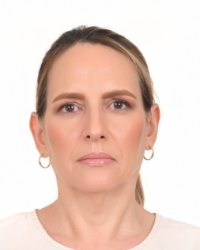

Low Carbon Consultants Ltd. is a specialist energy and low-carbon consultancy. The firm advises clients across the energy transition, with expertise spanning natural gas and LNG, carbon capture and storage, hydrogen, renewables and integrated energy projects. Its services include commercial and project development, investment due diligence, and legal, governance and regulatory advice. The founders bring extensive international energy-sector experience, including senior legal and commercial roles with Shell, bp, Drax and the BG Group. The firm is headquartered in Trinidad and Tobago and works internationally on energy and low-carbon projects.
Trends and Developments: Caribbean
The Caribbean spent 2025 moving from intention to delivery, and 2026 turning delivery into a system. For most of the past decade the region's renewable story was told in targets, feasibility studies and pilots, with the gap between announced projects and operational megawatts remaining wide. That gap has now begun to close: Trinidad and Tobago constructed and energised the largest solar facility in the Caribbean; Dominica brought the region's first CARICOM geothermal plant into commercial operation; and Barbados advanced the region's first utility-scale green hydrogen project through its regulatory approvals. In the first half of 2026 the region also moved decisively towards co-ordinated, cross-border procurement, launching a landmark aggregation programme designed to overcome the structural problems that have held Caribbean renewables back: small project sizes, fragmented regulation, fragile grids and a shortage of private capital willing to underwrite first-of-a-kind risk in small island markets.
The defining feature of the Caribbean market is the fuel trap. Imported fossil fuels account for roughly 80 to 90% of the region's electricity generation, far above the global average, and Caribbean electricity prices run around 50% above the Latin American average. The Eastern Caribbean Currency Union alone spends hundreds of millions of US dollars a year importing fossil fuel, equivalent to several percentage points of combined GDP. This dependence is both the central vulnerability of the regional economy and the strongest commercial case for renewables. On cost, solar, onshore wind and geothermal, paired with storage where needed, now beat imported diesel and fuel oil over their lifetimes in many Caribbean markets. What holds projects back is the legal, regulatory and financing structure, and that is where the developments of 2025 and 2026 developments sit.
Utility-scale solar reaches the grid, and meets its first test
The most visible development of 2025 was the construction and initial energisation of the Brechin Castle solar project at Couva in Trinidad. At 92.2 MW, it is the largest solar facility in the Caribbean. It delivered its first electrons to the Trinidad and Tobago Electricity Commission grid in July 2025, with the southern segment ramping towards around 40 MW and full commissioning of the northern segment planned to follow. Once fully operational it is designed to supply the equivalent of around 31,500 homes, avoid approximately 123,000 tonnes of carbon dioxide emissions a year, and provide close to 8% of national power generation capacity, allowing natural gas to be redirected to higher-value uses.
Brechin Castle is significant not only for its scale but for what its ownership structure signals. The project is a joint venture, with Shell and bp each holding 35% and the National Gas Company holding 30%; development and construction are being delivered through Lightsource bp and EPC contractor Grupotec. The participation of hydrocarbon players in a utility-scale renewable project is strategic as these are the entities with the balance sheet, execution capability and government relationships to deliver at scale.
The project has also become an instructive cautionary tale about the difference between building a plant and integrating it. In July 2026, the government confirmed that the electricity commission had stopped taking power from the plant at the end of January 2026, while arrangements were reviewed. Reports point to grid stability: absorbing intermittent output meant holding more gas-fired generation in spinning reserve, and in August 2025 the chairman of the National Gas Company criticised the decision to build the plant without battery storage. Whatever the eventual resolution, the episode carries a clear lesson: constructing a utility-scale renewable asset is only half the task, and a project is not truly bankable until the offtake, grid-integration and tariff arrangements are watertight and politically durable. The power purchase agreement and the grid-connection and dispatch terms deserve at least as much diligence as the engineering.
Jamaica remains one of the regional leaders, having added more than 70 MW of solar capacity in recent years alongside its established wind fleet, including the 62 MW Wigton facility, giving it one of the most diverse generation mixes in the region. The Inter-American Development Bank projects that electricity demand across Latin America and the Caribbean will grow by more than 90% through 2040, leaving an estimated multi-gigawatt investment gap across solar, wind, hydropower, biomass, storage and transmission.
Geothermal reaches commercial operation
Dominica reached a milestone in 2026 that had been more than 15 years in the making. The 10 MW geothermal power plant at Laudat in the Roseau Valley entered commercial operation in mid-2026, becoming the first operating geothermal plant in any CARICOM member state and only the second in the wider Caribbean. The Caribbean Development Bank had reached financial close as lead arranger, with the CARICOM Development Fund and other concessional sources providing additional financing, and the World Bank supporting the development through geothermal risk-mitigation facilities. The plant is owned by the Geothermal Power Company of Dominica (a subsidiary of Ormat Technologies) and sells power to Dominica Electricity Services Ltd. under a 25-year power purchase agreement, with ownership transferring to the government of Dominica at the end of the term. It was the first geothermal project in the region to reach financial close with a private sector partner.
The impact is already visible. By mid-2026 geothermal was contributing around 40 to 43% of Dominica's electricity supply, with hydropower adding a further quarter, and the plant is expected to produce around 59.6 GWh over 2026, roughly half of national demand. The government's stated ambition is to eliminate diesel generation entirely by 2030. The transaction structure is instructive. Geothermal is capital-intensive, carries significant subsurface resource risk early on, and produces firm, baseload power that variable solar and wind cannot match. The Dominica financing shows how that risk profile is managed in practice: a private developer with specialist geothermal expertise, a multilateral development bank as arranger, concessional climate finance and a dedicated risk-mitigation facility to absorb the risk that commercial lenders will not, a 25-year offtake agreement providing revenue certainty, and a host government providing the enabling framework and the resilient transmission network needed to deliver the power.
Dominica's island-wide geothermal potential is estimated on some assessments at up to around 1,000 MW, though the proven, drilled-and-tested resource at the developed field is far smaller, in the order of 60 to 90 MW. Either way it far exceeds national demand, which is why the project is positioned as the foundation for future expansion and export, whether as electricity via undersea cable to neighbouring islands or as green hydrogen and ammonia. For the wider Caribbean, the significance of Dominica is that it converts geothermal from a perennial feasibility study into a proven, financed and operating asset class, and provides a template that other volcanically active islands in the Eastern Caribbean can follow.
Green hydrogen: ambition tempered by economics
Barbados advanced the most prominent green hydrogen project in the English-speaking Caribbean. The RenewStable Barbados project at Harrow Plantation in St Philip is a hybrid facility combining roughly 50 MW of solar photovoltaic capacity with on-site green hydrogen storage and lithium-ion battery storage, designed to deliver firm capacity and supply clean, non-intermittent power to the national grid. The project is developed through a special purpose vehicle, Renewstable (Barbados) Inc., owned by HDF Energy and Rubis Caribbean Holdings, selling power to the Barbados Light and Power Company under a long-term power purchase agreement. Blended concessional finance, including support from the Green Climate Fund, the IFC and the European Investment Bank, has been central to the capital structure. As of mid-2026 the project remained in the advanced regulatory and pre-construction phase.
RenewStable reflects how the region now approaches hydrogen. Globally, green hydrogen has faced a sharp correction as production costs, infrastructure requirements and uncertain offtake demand have undermined the economics of standalone export-oriented projects. The Caribbean projects that are progressing are integrated power-generation projects that use hydrogen as a long-duration storage medium to firm up intermittent solar, addressing the specific reliability problem of an island grid rather than betting on a global hydrogen commodity market that has not materialised. The revenue comes from a domestic power purchase agreement with a known offtaker and a regulated tariff, not from a speculative export price, which makes the projects far more bankable than the cancelled mega-projects seen elsewhere.
Trinidad and Tobago is pursuing a different hydrogen pathway suited to its industrial base. Its green hydrogen pilot, targeted for completion in early 2027 and recognised at the 2025 Hydrogen Latin America and Caribbean industry awards, is designed to integrate green hydrogen into the country's existing petrochemical sector rather than to generate power. This is a logical use of an established asset base: Trinidad already has the ammonia and methanol infrastructure and the industrial offtake that most of the region lacks, which gives green hydrogen a domestic commercial logic there that it does not have elsewhere in the Caribbean.
From project finance to regional aggregation
The single most important structural development spanning 2025 and 2026 has been the shift from financing individual projects to aggregating procurement across borders. Individually, Caribbean projects are too small to attract large international developers and lenders, and the cost of structuring a bespoke transaction is disproportionate to any single project.
In April 2025, the World Bank approved the Caribbean Resilient Renewable Energy Infrastructure Investment Facility for Grenada, Saint Lucia, and Saint Vincent and the Grenadines, developed the Eastern Caribbean Central Bank and open to additional countries over time. The approximately US$110 million initiative aggregates renewable energy projects across countries to build the scale needed to attract private developers, finances grid modernisation and battery storage to support renewable integration, and, critically, mobilises up to US$120 million of commercial credit through partial credit guarantees to improve access to finance. A separate World Bank project approved in February 2025, the Caribbean Efficient and Green Energy Buildings Project, committed concessional financing to Grenada, Guyana and Saint Lucia to retrofit around 500 public buildings and integrate rooftop solar, using a pooled procurement model run through the Organisation of Eastern Caribbean States.
In 2026 the aggregation model took its most ambitious form yet. The Caribbean Aggregation Procurement Programme, convened in Bridgetown in late May 2026 (26 to 28 May), brought together public officials, national regulators, development finance partners and technical experts from across the region to coordinate large-scale renewable energy and battery storage procurement using harmonised technical standards. The logic is straightforward: by pooling demand across multiple small island states and standardising the technical and commercial terms, the region can offer developers the scale they need while allowing a solution deployed in one market to be replicated in another without costly redesign. For practitioners, the significance is that the transaction template itself is becoming a regional asset. The power purchase agreement structures, technical specifications and procurement rules developed under the programme will increasingly set the baseline that individual national deals are measured against.
The partial credit guarantee remains the key legal instrument underpinning this architecture. It addresses the central reason private capital has stayed out of small island markets. The barrier has rarely been the underlying project economics. It has been the perceived risk of lending into small, fragmented, hurricane-exposed jurisdictions with limited regulatory track records. By having a multilateral institution absorb a defined slice of that credit risk, the structure brings the risk-adjusted return into a range commercial lenders and institutional investors can accept. For practitioners advising on inbound investment, structuring a project to qualify for support, and now for the regional procurement framework, is becoming a core skill.
Storage decides how much solar the grid can take
As variable solar and wind capacity grows, the grid's ability to absorb it is becoming the limiting factor, and in 2026 storage moved to the centre of the agenda. Small island grids were built around centralised diesel and fuel oil plants delivering predictable output, and they are not naturally suited to absorbing large volumes of intermittent renewable power. The practical consequence is that further solar deployment is now blocked in some markets until storage is in place, a constraint the Brechin Castle experience illustrates vividly. Barbados has been explicit about this, moving to procure grid-scale battery storage in 2026 specifically to relieve an overstrained network and unblock a new wave of rooftop and commercial solar, having already issued tenders for battery storage and an onshore wind project as part of a broader energy transition and investment plan valued in the billions of US dollars.
Jamaica has taken the storage-first logic further still. In 2026, it opened the largest procurement in the region, targeting 220 MW of new generation with a mandatory 110 MW/220 MWh (two-hour) battery storage component; in May 2026 the energy minister indicated the tender would grow to 300 MW of renewables and 150 MW of storage. The programme is structured on a build-own-operate model, with 20-year power purchase agreements and a two-part capacity and energy tariff designed to de-risk revenue and enhance bankability. The mandatory storage requirement and the two-part tariff are the noteworthy legal features: they show a market deliberately engineering bankability and grid stability into the procurement itself rather than leaving them to project-by-project negotiation. Jamaica's participation in the regional programme also means these standards are being designed for replication across other Caribbean markets.
Storage in the Caribbean serves a dual purpose that distinguishes it from larger markets. It firms intermittent generation in the conventional way, but it also provides resilience against the grid failures that accompany hurricanes and tropical storms, keeping critical facilities running when the central grid goes down. This reframes how storage projects are justified and financed: the benefits come not only from energy arbitrage and grid services, but also from avoiding outage costs and improving disaster resilience, which opens the door to climate resilience funds and blended finance structures that a pure arbitrage play could not access.
Regulatory frameworks remain the binding constraint
Across the region, regulation is now the main constraint on renewable deployment, ahead of technology and capital. A recurring finding of market diagnostic work by the World Bank and regional institutions is that strong investor interest exists but is frustrated by fragmented regulation, weak institutional capacity, underprepared grids and the absence of the basic legal instruments that renewable investment requires.
Several jurisdictions have made progress. Trinidad and Tobago has been developing a renewable energy policy and a feed-in tariff implementation plan, alongside work on the power purchase agreement frameworks and financial modelling capacity that private generation requires. Its government has also signalled a move into wind, launching a National Wind Energy Action Plan and announcing a request for proposals for an offshore wind resource assessment. A private renewable market needs four things: a feed-in tariff or competitive procurement route that gives a developer revenue certainty, a power purchase agreement a lender will accept, a net billing regime for distributed generation, and a regulator able to set and adjust tariffs transparently. Dominica's Independent Regulatory Commission provides a useful illustration of the regulator's role at the point of delivery, having committed to monitor the geothermal plant's performance across its first months of operation and to assess its actual effect on consumer electricity costs. Projects progress where these instruments exist and function.
The regional aggregation programme is, in part, a response to this. A significant portion of the surrounding technical assistance is directed at harmonising regulatory frameworks, energy performance standards and net billing rules, and at building the project preparation and risk mitigation capacity that allows a pipeline of bankable projects to form across multiple jurisdictions at once. This pairing of capital and co-ordinated procurement with regulatory capability building is the right diagnosis. The lesson of the past decade is that money alone does not move projects in the Caribbean; the legal and institutional scaffolding has to be built alongside it, and increasingly it is being built regionally rather than country by country.
Cross-border structuring and the two-way capital flow
An underexamined dimension of the Caribbean energy transition is its increasingly two-way relationship with international capital markets, and in particular with the United States. Caribbean institutional and government-linked investors are beginning to look outward, appraising equity participation in the United States and wider regional renewable projects as a way to combine financial return with strategic learning relevant to their own domestic transition, while the structures used to bring international capital into Caribbean projects grow more sophisticated. InterEnergy Group's 2025 acquisition of Paradise Park, then Jamaica's largest solar plant, is an early sign of the secondary market activity a maturing regional market produces.
This outbound dimension introduces real legal complexity. Recent changes to the United States clean energy incentive regime, including restrictions on the involvement of certain foreign entities in transactions that rely on transferable tax credits, mean that a Caribbean fund contemplating a United States renewable investment must now conduct a threshold eligibility analysis before committing capital. The interaction between a Caribbean investor's domestic governance, its financing relationships, and the eligibility rules of the destination market is the kind of cross-border structuring question that will define the next phase of the region's engagement with global clean energy capital. Building the capability to structure these flows in both directions is both a commercial opportunity and a contribution to the regional market.
Climate vulnerability and the resilience premium
No analysis of Caribbean renewable energy is complete without addressing climate vulnerability, which shapes the legal and commercial structure of every project in the region. Small island grids are exposed to hurricanes, floods and droughts in ways that have few parallels in the larger markets from which most project finance precedent is drawn. A solar array or wind farm represents a concentrated, high-value asset directly in the path of recurring extreme weather, and the allocation of that physical risk is a central negotiating point in any Caribbean renewable transaction.
Hurricane Melissa showed what that means in practice. The Category 5 storm, the strongest ever recorded to strike Jamaica, made landfall on 28 October 2025, catastrophically damaging the 51 MW Paradise Park solar plant and leaving around 70% of electricity customers without power. The utility switched from LNG to diesel during the storm, and rebuilding the grid has been estimated at around USD350 million, more than double the government's USD150 million restoration loan.
This vulnerability runs through the documentation in ways an investor accustomed to mainland markets may not anticipate. Insurance and force majeure provisions carry far greater weight, and the availability and cost of property and business interruption cover for renewable assets in a hurricane zone can determine whether a project is financeable at all. Lenders will scrutinise the resilience of the physical design, the adequacy of the insurance programme, and the treatment of restoration obligations following a catastrophic weather event. The involvement of multilateral risk mitigation arms, such as the Multilateral Investment Guarantee Agency, reflects the same issue: private insurers and lenders need credit and political risk support to take on small island exposure at an acceptable cost. The resilience premium is real; structuring projects around it through robust insurance, carefully drafted force majeure and restoration regimes, and access to risk mitigation instruments is a distinctive feature of legal practice in this market.
Outlook for 2026 and beyond
The Caribbean enters the rest of 2026 with a clearer sense of what works, and of what still trips projects up. Geothermal has moved all the way from financial close to commercial operation. Utility-scale solar has shown it can be built at scale, but the Brechin Castle dispute is a reminder that generation without a watertight offtake and dispatch arrangement is not a finished project. Green hydrogen has found a defensible niche as a firming and industrial-integration technology rather than an export commodity. Most importantly, the region has moved from financing projects one at a time to procuring them together, through a regional aggregation programme built on harmonised standards and credit enhancement, designed to defeat the small-market penalty that has constrained the sector for years.
Three themes are likely to dominate the period ahead. The first is storage because small island grids cannot absorb variable renewables at scale without it. The second is regulatory and procurement harmonisation, as the regional programme turns bespoke national deals into replicable templates with standardised power purchase agreements and technical specifications. The third is the maturing of cross-border capital flows, inbound through the multilateral guarantee structures and the secondary market, and outbound as Caribbean investors engage with larger markets. On cost, of the case for renewables in the Caribbean is largely made. Whether projects get built now depends on regulation, procurement and financing structure.
Low Carbon Consultants Ltd.
118 Columbus Circle
Diego Martin
Trinidad, W.I.
+1 868 474 9249
+1 868 702 8086
susannah@lowcarbonconsultantsltd.com lowcarbonconsultantsltd.com
Trends and Developments
Authors
Low Carbon Consultants Ltd. is a specialist energy and low-carbon consultancy. The firm advises clients across the energy transition, with expertise spanning natural gas and LNG, carbon capture and storage, hydrogen, renewables and integrated energy projects. Its services include commercial and project development, investment due diligence, and legal, governance and regulatory advice. The founders bring extensive international energy-sector experience, including senior legal and commercial roles with Shell, bp, Drax and the BG Group. The firm is headquartered in Trinidad and Tobago and works internationally on energy and low-carbon projects.
