Sports Law 2026
Chile
Authors
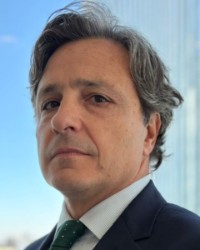

Moya & Bossart is an elite boutique law firm based in Santiago, Chile, renowned for its exceptional legal services and tailored solutions in sports, labour and civil law. The firm stands out for its strategic and proactive approach, serving a diverse clientele ranging from large corporations to high-performance athletes. The firm possesses unparalleled expertise in sports law, with a solid track record representing clubs, federations, players and agents before national and international bodies. Its partners bring a unique global perspective, with direct experience at institutions such as FIFA and the Court of Arbitration for Sport (CAS). Specialising in the management of complex labour relations and asset protection, Moya & Bossart combines technical rigour with superior problem-solving capabilities, establishing itself as a strategic partner for the sports industry and the business sector.
1. Athlete Conduct, Integrity and Enforcement
1.1 Anti-Doping Regimes
Doping/Criminal Offence
Whether doping is a criminal offence will depend primarily on two factors:
- who uses the doping substance; and
- what the substance is.
Regarding the user, the regulations do not stipulate criminal penalties for athletes, but they might apply to those associated with them, namely doctors, coaches, physical trainers, etc, in particular with regard to the possession, trafficking and supply of doping substances. As for the type of substance, generally speaking, the regulations do not criminalise use or consumption. However, under certain circumstances, even athletes could face criminal consequences if they use what are known in doping regulations as “specified” substances (commonly called recreational drugs) such as marijuana, cocaine and methamphetamine, among others.
National Anti-Doping Organization
Corporación Comisión Nacional de Control de Dopaje (the National Anti-Doping Commission Corporation) is the Chilean National Anti-Doping Organization (Organización Nacional Antidopaje – ONAD), the doping control and anti-doping education authority in Chile. It is a signatory to the World Anti-Doping Code of the World Anti-Doping Agency (WADA) and is responsible for its implementation. In particular, it is responsible for leading, promoting and driving the application of measures for the prevention and control of the use of prohibited substances and non-regulatory methods intended to artificially increase the physical capacity of athletes or affect the results of competitions.
Implementation of the World Anti-Doping Code
Both the Chilean Sports Law, which regulates the creation and organisation of the National Anti-Doping Commission, and the regulations governing the operation of said body, are based on the International Convention against Doping in Sport and its Annexes I and II, adopted at the 33rd Session of the General Conference of the United Nations Educational, Scientific and Cultural Organization (UNESCO). Furthermore, these regulations were approved by WADA prior to their promulgation. Therefore, anti-doping regulations in Chile strictly adhere to the World Anti-Doping Code, thus adopting international standards, a list of prohibited substances, therapeutic use permits and other relevant provisions.
Enforcement of Sanctions by Sport Organisations
In accordance with the Regulations Governing the Performance of Doping Controls, the National Sports Federations accept the authority and responsibility of the National Doping Control Commission in the implementation and enforcement of the Anti-Doping Rules (including the conduct of tests) with respect to all individuals under the jurisdiction of the relevant international federation, and will support and co-operate with the National Doping Control Commission in fulfilling this function. Furthermore, national federations undertake to recognise, abide by and enforce decisions made under these Anti-Doping Rules, including decisions of the Expert Doping Tribunal imposing sanctions on individuals under their jurisdiction.
Emblematic Case
The most recent high-profile doping case involved tennis player Nicolás Jarry. Although the sanction was handed down by the International Tennis Federation (ITF), not the local governing body, his case generated considerable discussion because it resulted from cross-contamination.
1.2 Misconduct and Match-Fixing
Chilean legislation does not address cheating in sports or match-fixing.
1.3 Betting-Related Offences
The general rule is that gambling is prohibited under Chilean law, except with express authorisation. However, despite a recent Supreme Court ruling (2025) confirming this, online betting sites have managed to circumvent national regulations, operating with impunity. Their advertising presence is conspicuous, especially in the sports market, specifically in football, where all the teams in the Chilean first division are sponsored by at least one betting site or online casino. While government sports bodies have not adopted a clear and strict policy on this matter, the government, through the Ministry of Justice, prohibited non-profit organisations linked to sports, including the Chilean Football Federation, from promoting these types of activities, specifically through advertising. As a result, the local first division championship had to remove a betting company as its naming sponsor. Conversely, sports governing bodies have turned a blind eye to this.
1.4 Disciplinary Framework
No response has been provided in this jurisdiction.
2. Commercial Rights
2.1 Sports-Related Rights
Notable Sports-Related Commercial Rights
Sports in Chile underutilise commercial opportunities for monetisation. Of the vast array of possibilities that sports offer for commercialisation, in addition to sponsorships and television rights, naming rights, the operation of sports venues and merchandising stand out. The most emblematic and commercially successful examples of naming rights are the Claro Arena, the stadium of Club Deportivo Universidad Católica; Liga de Primera Mercado Libre, the name of the first division football championship; and the BCI Seguros Chile Open, the Association of Tennis Professionals (ATP) tournament in Santiago.
Regarding the operation of sports venues, undoubtedly the most emblematic example is the aforementioned Claro Arena. This venue, inaugurated in 2025, offers a range of monetisation opportunities during match days – hospitality, brand activations, food and beverages, among others – and utilises its various halls and spaces for concerts, seminars, workshops, weddings and other events.
To a lesser extent, ticketing has evolved with the introduction of online sales and its outsourcing to specialised companies, as well as, in some cases, the sale of annual season tickets in football, which has allowed for a certain increase in stadium attendance and consequently in revenue for clubs.
2.2 Sponsorship Terms
Sport’s Appeal for Brands
As in the rest of the world, the attraction of sports in Chile for sponsors is related to its mass appeal and the positive values associated with it. Secondly, brands seek out sports that align with their own values and target social segments. This brand association is achieved through various channels, including mass media such as television and the digital channels of sports organisations – ie, social media and websites – as well as through brand presence in stadiums, on jerseys, in the press and on merchandising. Furthermore, they leverage fan databases of clubs and teams to develop their own advertising campaigns, which are typically carried out in conjunction with those of the sports clubs.
As mentioned earlier, sport itself generates attention for brands; nowadays, however, sports organisations actively work to enhance their appeal, mainly through digital media such as email campaigns and social media.
2.3 Broadcasting Rights
The exploitation of television rights by broadcasters was previously based on the sale of sponsorships. This was the case when broadcasters relied on free-to-air television. However, with the emergence of cable television, this changed – or rather, expanded to subscription or pay-per-view revenue.
The most emblematic case in Chile is that of Canal del Fútbol (the Football Channel), created and managed by the National Association of Professional Football (Asociación Nacional de Fútbol Profesional – ANFP), which was sold as a product of the association with cable and free-to-air television operators. This channel ceased to exist in 2018, when it was acquired by the North American television conglomerate Warner Bros.
3. Sports Events
3.1 Proprietary Rights and Event Management
Property Rights in Sport
Property rights in Chile are constitutionally protected, guaranteeing their owners the use, enjoyment and disposal of tangible and intangible assets. Television rights fall into the latter category, granting the Chilean sports world the right to exploit its image through this medium.
Except for the press, and even then only for restricted informational purposes, only broadcasters may disseminate images of sporting events. The only way a broadcaster can exploit a sporting event is through the express authorisation of the sports entity that owns the event. This authorisation is usually formalised in a contract that details the relationship and may involve the payment of rights fees to the event owner, typically in the context of professional football. In Chile, there is no law that compels sports entities to broadcast their events on free-to-air television.
Organisation and Management of Sports Events
The organisation, management and administration of sporting events falls mainly to sports organisations – ie, clubs, leagues, federations and private promoters – so they are the owners of the image rights associated with these events and therefore also have the right to exploit them.
3.2 Duty of Care and Liability
Duty of Care and Responsibility in Sports Events
In Chile, organisers of sporting events assume enhanced legal and civil liability under Laws 19.327 and 21.659, obligating them to guarantee the safety of all attendees. This legislation establishes strict and joint liability, requiring the implementation of rigorous security plans, access controls and the exercise of the right of admission. Furthermore, organisers have a strict duty to report any acts of violence or infractions within the venue. The primary focus is on making security an essential operational pillar for the execution of any large-scale event.
4. Corporate Structures
4.1 Legal Forms of Sporting Bodies
While freedom of association is constitutionally guaranteed in Chile, sports have adopted the non-profit organisation model as their primary legal vehicle. This is due not only to the primarily recreational and collective nature of sports, but also to the state’s promotion of this type of association through various laws, offering both public and private economic incentives. The exception to this is professional football, which, in order to promote more skilled and responsible management, as well as the influx of capital into football clubs, through the enactment of the Professional Sports Corporations Law of 2005, has mandated that these clubs must operate as public limited companies.
The case of sports federations has an extra peculiarity, since, although like the vast majority of amateur sport it adopts a non-profit structure for the same reasons explained in the foregoing, the incentives established by the state seem more like obligations.
4.2 Corporate Governance Codes
Sports law provides for sport-specific corporate governance codes. However, it should be noted that these apply generically to non-profit sports organisations – ie, clubs, associations and federations – and primarily regulate conflicts of interest for directors (board members) and, more specifically, directors of the so-called National Sports Federations (representing international federations in Chile). The codes regulate everything from the minimum requirements to be a director to the degree of responsibility for which they are accountable.
The regulation of sports corporations is subsidiarily left to the general regulations for corporations. However, it is worth mentioning that this law is currently being amended, and among the main reforms is the significant regulation and strengthening of directors’ liability. This is intended to enhance oversight, limit multiple ownership (particularly of football clubs), prevent conflicts of interest (especially preventing players’ agents from owning stocks) and improve administrative transparency.
The sanctions for violations are essentially dismissal for current directors and a ban on holding such positions in the future. This is without considering any potential civil and criminal liabilities that may arise as a result of the damages caused.
Regarding suitability and capabilities, the law only establishes special requirements for the directors of the National Sports Federations, requiring them to be at least 21 years of age and to have higher education (or, alternatively, to have completed a training course in sports management and administration).
Insolvency of Sport Organisations
Regarding the insolvency of a sports organisation, in the case of sports corporations, the law that regulates them is not specifically concerned with this matter. Regulation occurs instead via the general regulations for corporations, which prevent administrative, civil and criminal sanctions for both administrators and directors.
Unlike the laws of the Republic of Chile, the regulations of the ANFP establish sporting sanctions in the event of the insolvency of a sports organisation. Specifically, the ANFP statutes prohibit the registration of contracts for players and members of the coaching staff of clubs that are in a state of serious financial insolvency.
4.3 Sport Funding
The main forms of financing for sports organisations include:
- state funding;
- ticket sales;
- sponsorship;
- TV rights;
- merchandise; and
- stadium rentals.
While this model applies to the entire world of sports, there is a significant difference between amateur and professional sports. Amateur sports survive primarily because of state funding. Given its low profile and Chile’s relatively small size, the “image” of amateur sports is not very marketable, which generally discourages private investment, leaving that responsibility to the state. In professional sports, specifically football, the opposite is true. This activity is financed almost exclusively by private contributions, with television rights being its main source of income. However, the state does participate in professional football through sports infrastructure, as its high cost is borne by the government in the vast majority of cases.
State funding includes:
- the National Fund for the Promotion of Sport;
- sports subsidies; and
- donations for sporting purposes.
While sports donations come from private sources, they take the form of tax deductions.
5. Intellectual Property, Data and Data Protection
5.1 Trade Marks
To register a trade mark in Chile, a procedure must be followed before the National Institute of Industrial Property (Instituto Nacional de Propiedad Industrial – INAPI). According to the law, trade marks that are generic, descriptive, misleading, immoral or similar to others already registered cannot be registered.
Registering a trade mark in Chile grants its owner exclusive rights to use and enjoy it for ten years, with the possibility of renewal. It is important to emphasise that this protection only covers the national territory. Notwithstanding the foregoing, the right holder must use it within five years of registration to avoid expiration.
Notable Case
Despite opposition from the English football club Manchester City, the “Santiago City FC” trade mark was duly registered by INAPI, so the Chilean club enjoys protection to use the trade mark within the national territory.
5.2 Copyright/Database Rights
Copyright is recognised by law in Chile. For its protection, the law requires the existence of a physical medium that establishes the identity of the copyright holder. However, for greater protection, an agency has been established where works protected by this legislation can be registered and kept in a database. It is worth noting that this protection is international – extending to countries with which Chile has signed agreements on this matter – and also applies to foreign works in Chile.
Copyright offers both material and moral protection; that is, it allows the author the exclusive use and exploitation, as well as the preservation, of the work. Infringements of this right by third parties carry civil and criminal penalties.
The most common cases of intellectual property (IP) infringement in Chilean sport relate to the counterfeiting of football shirts (design) and the retransmission of matches subject to payment or subscription through “pirate” platforms.
5.3 Recognising Personality/Image Rights
While not explicitly stated, Chilean law protects image rights. Furthermore, these rights are constitutionally protected as implicit rights derived from the protection of privacy and honour. This protection prohibits the capture, reproduction or publication of a person’s image – in its various forms – without their consent. In other words, individuals have both material and moral ownership of their image.
Protecting Personality/Image Rights in Sports
Athletes can protect their image through both constitutional and judicial actions, allowing them to prevent abuses by third parties and potentially obtain compensation.
5.4 Protecting Personality/Image Rights
No response has been provided in this jurisdiction.
5.5 Licensing
Exploitation of IP Rights
Regardless of the stakeholder – whether an athlete, a club or a federation – in the sports world, to effectively exploit IP rights, it is essential to clearly define the specific right involved (trade mark, design, invention or intellectual work) and ensure it receives adequate protection under Chilean law. It is important to remember, however, that the image rights of athletes are automatically protected without any prior procedures or processes.
With this protection, the rights holder can exploit their rights, typically by entering into a contract with third parties. This contract will clearly define the rights and obligations, primarily concerning the territory, time frame and compensation associated with the exploitation.
5.6 Assignment of IP Rights
Free Trade of IP Rights
IP rights are protected by property law, which in Chile allows right holders to use, enjoy and dispose of the assets in question, whether tangible or intangible (IP rights).
5.7 Data in Sport
It could be said that football is the primary user of personal data among Chilean sports. To combat violence in football stadiums, the ANFP created the National Fan Registry (Registro Nacional de Hinchas – RNH), which aims to prevent those banned from entering stadiums and expedite entry. The system relies on the collection and use of biometric data (facial recognition) and fan identification to control stadium access. Fan registration requires explicit consent for the use of their data for the aforementioned purposes, all within the framework of Chilean law on the processing of personal data.
Sports clubs also manage personal data, including that of fans, which they use in their own marketing and advertising campaigns and in conjunction with their sponsors. They also handle sensitive personal data of their athletes, such as medical and biological records, for purely sporting purposes. A typical and quite widespread means of accomplishing the latter is through the use of athlete monitoring systems.
5.8 Data Protection
The new Personal Data Protection Law, enacted at the end of 2024, incorporated high standards of protection, aligning itself with the European Union’s General Data Protection Regulation (GDPR).
Like any other law of the Republic of Chile, the new Personal Data Protection Law applies to all persons – national and foreign, natural and legal, private and public – throughout the national territory. Therefore, sports entities are also subject to this law.
The aforementioned RNH is the most telling example due to the sensitive nature of the personal data under its protection.
6. Dispute Resolution
6.1 Role of National Court Systems
In cases where the internal tribunals of sports organisations have jurisdiction over internal disputes, all internal remedies must be exhausted before the Chilean national courts can hear the matters in dispute.
In Chile, certain matters fall under the exclusive jurisdiction of national courts, such as criminal, labour and antitrust disputes, among others. Therefore, these matters cannot be submitted to any jurisdiction other than that of the competent national courts, even by express agreement between the parties involved.
6.2 ADR Mechanisms
The most common alternative dispute resolution (ADR) mechanisms in Chile are conciliation, mediation and arbitration, to which conflicts arising within sports can be submitted.
Chilean legislation regulates these mechanisms in different laws, depending on the subject matter.
6.3 Sanctions, Remedies and Challenges
Enforcement of Decisions Involving Sports
The power to enforce judicial decisions in Chile rests exclusively with the national courts. Therefore, if the internal mechanisms typically available to sports organisations to enforce their decisions – such as fines, restrictions or loss of membership rights, or sporting sanctions – fail, they must resort to the civil courts to ensure enforcement of the judgment.
Regarding the possibility of appealing the decisions of the internal courts of sports organisations to external courts, this can only be done if expressly permitted by the relevant regulations of the organisation itself – or exceptionally in cases of serious abuses that violate procedural public order or due process.
7. Employment Contracts and Rights
7.1 Sports-Related Employment Contracts
Professional athletes in Chile are unambiguously employees. Estatuto Laboral del Futbolista Profesional (the Professional Footballers' Labour Statute) was published on 25 April 2007 and entered into force on 1 June of that year. It was enacted as Law 20.178, which regulates the employment relationship of professional sportspeople and workers performing related activities. The law covers not just footballers but anyone who is remunerated as a coach, technical assistant or any other person directly linked to the practice of the relevant sport. The Labour Code applies as background law, with Law 20.178 providing a lex specialis overlay for the sector.
The employment model is club-based, not centralised. Each club is the employer and contracts players individually – there is no league-wide or federation-administered central player contract system of the kind sometimes seen in newer or lower-revenue sports leagues elsewhere.
Salary Cap
There are no formal salary caps in Chilean professional football, and no equivalent mechanism appears to be in force across Chilean professional sports more broadly. No formal salary limit exists in Chile, though regulation or a budget ceiling has been discussed in order to achieve a competitive balance. So far, this has appeared difficult to achieve: larger clubs have no incentive to surrender their advantage.
The Competition Tribunal (Tribunal de Defensa de la Libre Competencia –TDLC) has noted the potential anti-competitive effects of multi-club ownership in Chilean football – a question that several European jurisdictions are also grappling with – though no definitive ruling has yet emerged on this point in Chile.
7.2 Employer/Employee Rights
Relationship Between Sports Governing Bodies and Athletes
The relationship between sports governing bodies and player employment sits at an unusual legal intersection in Chile. The clubs are the formal employers under Law 20.178 and the Labour Code (Código del Trabajo), but the ANFP – as the governing body – imposes rules that directly constrain what clubs may agree in their individual contracts with players. The ANFP represents a third party external to the employment relationship between a club and its players, yet it exercises legally recognised powers that directly affect the clubs’ operations in several areas, including recruitment rules. This creates persistent tension: the ANFP’s regulatory authority can conflict with workers’ constitutional rights, and the Labour Directorate (Dirección del Trabajo – DT) has shown increasing willingness to intervene when it does.
Case 1: Deportes Melipilla – relegation as labour enforcement
This case illustrates how the ANFP uses its internal disciplinary structure as a mechanism to enforce employment obligations, with direct sporting consequences.
Deportes Melipilla S.A.D.P. was sanctioned by the ANFP’s Disciplinary Tribunal with relegation at the end of the second division (Segunda División) tournament for the 2025 season. The sanction was based on a report from the ANFP’s financial control unit finding that the club had failed to prove it had paid wages and social security contributions for November 2025 in respect of four players. The club appealed to the Second Chamber of the Disciplinary Tribunal, which upheld the relegation on the basis that the infraction had occurred in the 2025 season and the sanction should therefore apply in that same season.
This was the second time Melipilla had faced this kind of consequence. In 2024, it had also been the subject of a complaint by rival club Deportes Concepción regarding unpaid labour taxes after the promotion playoff – a dispute that left the question of which club would actually be promoted unresolved for months.
Case 2: the sub-23 age restriction and the 2025 player strike
This is the most significant labour dispute in Chilean football in recent years, and its resolution in early 2025 reshaped the governance relationship between the ANFP and the Chilean Professional Footballers' Union (Sindicato de Futbolistas Profesionales de Chile – SIFUP).
In December 2024, the ANFP’s Council of Club Presidents voted to restructure the Segunda División so that clubs could only field players under 23 years of age. The stated rationale was developing domestic talent and easing financial pressures on smaller clubs.
SIFUP immediately opposed the measure and, in early January 2025, declared an indefinite strike. SIFUP took the case to the DT, which ruled that setting an age limit of this kind was illegal and unconstitutional. The DT’s formal opinion was unequivocal: it was not legally proper to enter into agreements with labour effects on third parties that prohibited or restricted the hiring of workers solely on the basis of their age, since this expressly curtailed those workers’ constitutional freedom of labour — one of the explicitly prohibited grounds of discrimination under Article 2 of the Código del Trabajo.
The dispute exposed a structural problem that sports lawyers had flagged for years: rules created by an external body like the ANFP that affect workers’ constitutional rights raise serious questions about their validity within Chilean labour law, as well as the extent to which the DT may intervene in a private association’s regulatory decisions. The ANFP initially resisted, arguing that government intervention in its sporting regulations risked Fédération Internationale de Football Association (FIFA; International Federation of Association Football) sanctions for third-party interference.
The main issues resolved were:
- the removal of any age restriction in the Segunda División;
- a guarantee that players who suffer serious injuries continue to receive treatment and remuneration from the contracting club even after their contract expires; and
- a requirement that all national championships run for at least 11 months.
A salary cap of CLP35 million (gross, monthly) was set for Segunda División clubs, and clubs were required to guarantee 125% of their monthly payroll total as security for their labour obligations – with failure to provide that guarantee constituting a serious breach of employment contract.
No formal challenge to the foreign player quota under competition law has yet been filed. However, the Provincial Osorno case and the broader line of TDLC jurisprudence signal that private-body quota rules that restrict access to a labour market are vulnerable to challenge if they lack objective justification.
7.3 Free Movement of Athletes
The Football Federation openly regulates the number of foreign players permitted in competition. Under Article 11 of the 2025 first division (Primera División) competition rules, clubs may register up to six foreign players in their squad. In the match-day lineup, up to six foreign players may be named, but only five may be on the field simultaneously. Additionally, every club must include in each match at least one Chilean player born on or after 1 January 2004.
While the caps are currently in force, they operate in tension with the non-discrimination framework of the Labour Code. Article 2 of the Labour Code prohibits the following as grounds for discrimination: race, colour, sex, trade union membership, religion, political opinion, nationality, national ancestry, socioeconomic situation, language, beliefs, sexual orientation, gender identity, etc. The same provision notes that the Chilean Constitution, while prohibiting discrimination not based on personal capacity or suitability, expressly reserves to the legislature the power to require Chilean nationality or age limits in specific cases.
There are no relevant restrictions on athletes applying for a visa.
8. Women’s Sport
8.1 Development and Growth of Women’s Sport
Chile has been privy to the rise of women in sports. In fact, women have always been key players in Chilean sports. However, their presence has become more noticeable, mainly due to two factors:
- first, in recent years, more women than men have participated in sports, at least proportionally; and
- second, women have entered into football.
While both factors are significant, the increased visibility and exposure of women in football, and the greater advocacy thereof, have brought them greater prominence overall.
Furthermore, women’s participation in professional football led to modifications of the Labour Code to protect the rights of female players.
8.2 Organisations and Initiatives to Promote Women’s Sport
A number of groups have formed around women’s football. The oldest dates back to 2016 and began as the National Association of Women’s Football Players (Asociación Nacional de Jugadoras de Fútbol – ANJUF), which later became the women’s football union.
9. Esports
9.1 Development and Growth of Esports
E-sports in Chile are experiencing an accelerated boom, with 50% of the population playing video games and a projected audience that is close to 1 million spectators. The country has consolidated its position as a regional hub thanks to high connectivity, the development of professional teams and growing investment in brand marketing.
9.2 Key Trends and Notable Deals in Esports
Key trends include rising investments, high-production tournaments involving titles like Valorant and CS2, and success in regional competitions.
10. NFTs, AI and the Metaverse
10.1 Non-Fungible Tokens (NFTs)
In the sports industry of Chile, the adoption of NFTs, artificial intelligence (AI) and the Metaverse is in a phase of strategic expansion led by the main football clubs and high-profile technological events.
10.2 AI
There is no applicable information in this jurisdiction.
10.3 The Metaverse
There is no applicable information in this jurisdiction.
Moya & Bossart
Cerro El Plomo 5420
Oficina 1105
Las Condes
Santiago
Chile
+56 2 2242 0955
contacto@myblegal.cl www.myblegal.cl
Law and Practice
Authors
Moya & Bossart is an elite boutique law firm based in Santiago, Chile, renowned for its exceptional legal services and tailored solutions in sports, labour and civil law. The firm stands out for its strategic and proactive approach, serving a diverse clientele ranging from large corporations to high-performance athletes. The firm possesses unparalleled expertise in sports law, with a solid track record representing clubs, federations, players and agents before national and international bodies. Its partners bring a unique global perspective, with direct experience at institutions such as FIFA and the Court of Arbitration for Sport (CAS). Specialising in the management of complex labour relations and asset protection, Moya & Bossart combines technical rigour with superior problem-solving capabilities, establishing itself as a strategic partner for the sports industry and the business sector.
