Trade Marks & Copyright 2026
USA – Florida
Trends and Developments
Authors
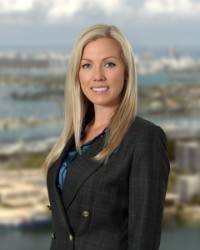
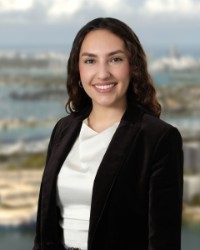


Shutts & Bowen LLP was established in 1910 and is a full-service business law firm with approximately 280 lawyers located in eight offices across Florida. Shutts is a leading law firm renowned for its expertise in intellectual property law, offering comprehensive services in trade marks, patents, copyrights, and trade secrets.
Florida՚s NIL Disputes in the AI Era: Legal Protections, Trade Mark and Copyright Challenges, and Recent Developments
Introduction
With the rise of AI and digital media, Florida is seeing more disputes where someone’s name, image, or likeness (NIL), including a person’s photo, voice, or even a digital recreation, has been used without their permission. The document discusses Florida’s legal protections for personal identity, comparing them to trade mark and copyright laws, and highlights recent developments affecting these areas.
Recent developments include:
- certain must-know substantive and procedural limits on defamation claims against media defendants;
- the contours of specific personal jurisdiction over foreign IP holding companies whose US-facing trade mark activities implicate Florida and the Eleventh Circuit; and
- the jurisdictional showing required to pursue online copyright claims in Florida federal courts.
Together, these recent decisions demonstrate how Florida’s statutory and common-law protections, in tandem with Eleventh Circuit doctrine, shape strategy for plaintiffs and defendants confronting reputational harms, cross-border brand enforcement, and digital copyright infringement.
Misappropriation of NiL versus trade mark and copyright rights
Rights of publicity (ROP)
Protects a person’s right to control the commercial exploitation of their identity and prevents its commercial appropriation by others. This protection extends to a person's NIL and voice. The laws governing the right of publicity vary from state to state, with more than 30 states recognising this right in some form, including Florida. In Florida, claims typically proceed under statutory and common-law theories, with remedies oriented toward injunctive relief and damages tied to commercial misuse. In Florida, both statutory and common-law frameworks address ROP claims, focusing on injunctive relief and damages for commercial misuse. The state’s right of publicity statute, Fla. Stat. § 540.08, prohibits the unauthorised use of a natural person’s protected aspects for commercial or advertising purposes without express written or oral consent. However, there are exceptions: legitimate news reports, resale of artistic works with initial consent, public photographs where individuals are not identified, and post-mortem use after 40 years.
Trade mark (the Lanham Act and state law)
Trade mark protects source identifiers to help consumers distinguish between different sources of goods and services. Trade mark law combats consumer confusion, which, in today’s digital age, includes false endorsement scenarios common in AI and deepfake contexts. Remedies for trade mark infringement are comprehensive. Courts can issue injunctions to stop unauthorised use, award profits gained from the infringement, and grant damages to compensate for any harm caused. Additionally, corrective relief may be ordered to rectify any public misconceptions resulting from the infringement.
Copyright
Protects original expression fixed in a tangible medium, such as books, music, films and other works. It ensures creators have control over the use and distribution of their works. Although copyright and ROP often intersect, they protect different interests: the expressive work versus the persona. Pre-emption issues may arise under Section 301 of the Copyright Act when state law ROP claims fall within the subject matter of copyright and are based on rights equivalent to the exclusive rights granted under the Copyright Act. Careful pleading can preserve injuries under the distinct areas of law (copying versus right to control identity).
Understanding the interplay between the three doctrines is crucial for selecting the most suitable protections and developing an effective strategy. This is especially relevant in the rapidly evolving AI landscape.
For instance, in AI-driven ads, pair a Lanham Act false endorsement theory (likelihood of confusion as to sponsorship/affiliation) with Florida publicity claims (unauthorised commercial use of identity). This dual track addresses consumer confusion and personal identity control.
Additionally, when creative works are copied or materially altered, copyright claims can secure takedowns and statutory remedies. In cases where a person’s identity is exploited (even absent copying the work), right of publicity becomes relevant. Lastly, in the event of false endorsement, trade mark fills the gap to address that issue.
Right of publicity claims available
AI can now conjure a convincing likeness of an individual in seconds ‒ placing their face on advertisements they never endorsed, generating their voice to reading a script they never spoke, or inserting their image into contexts that cause reputational and economic harm. For Florida practitioners and business owners, two questions dominate: What claims exist today under Florida law, and how might a pending federal right reshape the field? This article answers both and closes with tactical guidance plaintiffs can use now.
Florida already provides a potent toolbox against unauthorised AI replicas. The centrepiece is Florida’s statutory right of publicity, Fla. Stat. § 540.08, which prohibits the unauthorised use of a natural person’s protected aspects, such as a natural person’s name, portrait, photograph, or other likeness, for commercial or advertising purposes, with civil remedies that include damages, fees, and injunctive relief. Florida case precedent has explained that the purpose of the statute is to prevent the use of a person’s name and likeness to promote a product or service “because of the way that the use associates the person’s name or personality with something more”. Tyne v Time Warner Ent. Co., L.P., 901 So. 2d 802, 807 (Fla. 2005). Plaintiffs can pair the statute with common-law misappropriation claims to capture non-commercial exploitation and emotional harm scenarios.
Florida’s recent criminalisation of AI “nudification” and certain explicit deepfakes add leverage in cases involving sexualised content, complementing civil remedies and sharpening the risk calculus for defendants. Together, these pathways position Florida as a favourable forum when AI misuse targets residents or Florida markets. For instance, in October 2025, Florida enacted a law criminalising use of AI to generate an altered sexualised depiction of an identifiable person without consent (“nudification”), with felony exposure. This law was enacted following the arrest of Lucius William Martin, who used AI to create nude images of minors. The software Martin used digitally removed the girls’ clothing in pictures he downloaded from social media, effectively “nudifying” the social media posts. “Brooke’s Law”, another Florida law enacted in 2025, provides additional protections against such harmful deepfake materials by requiring digital platforms to create a system for victims to report deepfakes to them, and establish an internal review process to confirm the allegation and take the images down within 48 hours. Such laws make Florida an advantageous venue for residents targeted by out-of-state AI firms, given this blend of statutory and common-law tools.
Federal law may soon add another layer. The proposed NO FAKES Act (Nurture Originals, Foster Art, and Keep Entertainment Safe Act) aims to establish a nationwide right of publicity for AI-generated “digital replicas” of voice and likeness. Introduced by Representative Maria Salazar and others, the Bill targets creators and distributors while maintaining First Amendment exceptions for news, commentary, parody, and expressive works. It offers plaintiffs actual and statutory damages, injunctive relief, punitive damages for wilful conduct, and fee shifting, standardising outcomes across states. The Act pre-empts state laws to harmonise digital replica rules but preserves existing state laws on sexual deepfakes and election-related content.
The Act would create a federal property right in an individual’s voice and likeness for digital replicas, with federal courts handling civil suits. Liability extends to misuse and tools designed for unauthorised replicas, with safe harbours for platforms that remove content after notice. Remedies include injunctive relief, damages, and attorney’s fees, with carve-outs for expressive works but not commercial endorsements.
Even without this federal right, the Lanham Act already addresses cross-border AI misuse through false endorsement and personal jurisdiction theories. Federal courts can exercise jurisdiction over foreign or out-of-state actors exploiting US markets. The Lanham Act’s false endorsement theory complements state publicity claims, allowing broader discovery and relief. Courts consider a defendant’s US contacts and benefits from US protections to establish specific jurisdiction, which does not require a strict causal link but a strong relationship with the litigation.
In sum, today’s claims are strong ‒ particularly for commercial misuses ‒ and tomorrow’s may be stronger. Use Florida’s statute and common law to stop the spread and set the damages narrative; add federal false endorsement to reach interstate actors; and, if enacted, deploy the NO FAKES Act for a standardised federal right with clear remedies and platform obligations.
Case spotlight: navigating Florida’s defamation law: the pre-suit notice hurdle in Megan Pete v Milagros Cooper, case no 1:24-cv-24228-CMA (S.D.Fla.)
The lawsuit Megan Pete v Milagros Cooper, filed in the United States District Court for the Southern District of Florida, raised several legal issues that are particularly shaped by Florida law, even though the case was heard in federal court. Megan Pete, known professionally as Megan Thee Stallion, sued Milagro Elizabeth Cooper, an online blogger known as “Milagro Gramz,” over a series of online statements and posts that Pete alleged caused reputational harm, emotional distress, and the non-consensual dissemination of an altered sexual depiction. Because the alleged conduct occurred in Florida and Cooper was treated as a Florida-based media defendant, Florida substantive law governed the core tort claims.
One of the central Florida-specific issues involved defamation law and Florida’s statutory pre-suit notice requirement for media defendants. Florida law requires a plaintiff bringing a defamation claim against a media defendant to serve a written notice identifying the allegedly defamatory statements and providing an opportunity to retract before filing suit. Although the jury found Cooper liable for defamation per se, the trial judge later ruled that judgment could not be entered on that claim because Pete did not satisfy Florida’s pre-suit notice requirement. This ruling significantly limited the enforceability of the jury’s verdict and illustrates how Florida’s media-protection statutes can operate as a substantive bar to recovery, even after a favourable jury finding for the plaintiff, when Florida procedural requirements are not met.
Florida law also shaped the intentional infliction of emotional distress (IIED) claim. Florida courts apply a particularly high threshold for IIED, requiring conduct that is “outrageous” and “beyond all bounds of decency.” The jury’s finding of liability on this claim reflects a determination that the alleged conduct ‒ including persistent online attacks and the promotion of manipulated sexual content ‒ met Florida’s stringent standard, distinguishing it from protected speech or mere insult.
In addition, the claim concerning the promotion of an altered sexual depiction implicated Florida’s developing legal treatment of non-consensual manipulated imagery. Florida law recognises civil liability for the knowing dissemination or promotion of sexually explicit material that is altered to depict an identifiable person without consent. The jury’s verdict on this claim underscores Florida’s willingness to impose tort liability for harms caused by deepfakes and similar digital fabrications, even where traditional defamation remedies may be procedurally limited.
Following the verdict, the district court allowed recovery only on the IIED and altered sexual depiction claims, reducing the damages from the jury’s original award and reserving issues of fees and costs. The case highlights several Florida-specific legal realities: the strength of statutory protections for media defendants in defamation cases, the high but surmountable bar for IIED claims, and Florida’s emerging role in addressing civil liability for deepfake and digitally manipulated sexual content.
Megan Pete v Cooper offers a useful framework for predicting how a Florida court would likely decide a civil case involving deepfakes or AI-altered images. The case shows that, even where defamation claims may be limited by Florida’s media-defendant protections and pre-suit notice requirements, courts and juries are receptive to alternative tort theories when the harm arises from non-consensual, manipulated imagery. In particular, the jury’s findings on intentional infliction of emotional distress and promotion of an altered sexual depiction demonstrate that Florida law can reach AI-driven misconduct without needing to resolve difficult questions about truth, opinion, or journalistic privileges.
For a Florida case involving the knowing creation or dissemination of a sexually explicit AI-altered image of an identifiable person, a close analysis of Pete suggests a harm-focused approach. A court would likely scrutinise the defendant’s knowledge and intent and could allow claims based on emotional distress or altered sexual depictions to proceed even if defamation is procedurally barred. The case signals that Florida courts are prepared to adapt existing tort doctrines to address deepfakes, particularly where the conduct is persistent, sexual in nature, and causes concrete personal harm.
Case spotlight: beyond borders: US trade mark registration and jurisdictional exposure in Jekyll Island-State Park Authority v Polygroup Macau Limited, 140 F.4th 1304 (11th Cir. 2025)
The Eleventh Circuit’s 2025 decision in Jekyll Island-State Park Authority v Polygroup Macau Limited clarifies how trade mark registration and related market activity can anchor specific personal jurisdiction over foreign IP holding companies in US courts in the Eleventh Circuit, which includes Florida district courts.
Jekyll Island–State Park Authority, a Georgia state entity operating the Summer Waves Water Park and owning the federal SUMMER WAVES trade mark, sued Polygroup Macau Limited, a British Virgin Islands IP holding company, for trade mark infringement, unfair competition, and cancellation of Polygroup’s SUMMER WAVES registrations, alleging Polygroup registered nearly identical marks and allowed related companies to sell infringing products in the United States; the district court dismissed for lack of personal jurisdiction, but the Eleventh Circuit reversed and remanded.
The Eleventh Circuit held, as a matter of first impression, that trade mark registration can be considered compelling evidence of purposeful availment for minimum-contacts analysis in specific jurisdiction. The court concluded Polygroup Macau purposefully availed itself of US law by registering and maintaining dozens of trade marks with the USPTO, allowing sister companies and their customers unrestricted use of those marks in US commerce, and enforcing IP rights in US courts. Applying Rule 4(k)(2) (“the national long-arm statute”), the court found the first two prongs satisfied and held that specific jurisdiction comported with Fifth Amendment due process, emphasising that a strict “but-for” causal relationship is not required where the defendant’s contacts show a strong relation among the defendant, the forum, and the litigation. The court identified three categories of contacts establishing purposeful availment:
- USPTO registrations and maintenance;
- permitting sister companies and their customers to use the marks to sell products in the US; and
- US-directed marketing efforts.
Registration and maintenance as purposeful availment
By registering more than 60 trade marks and maintaining them at the USPTO, Polygroup Macau obtained valuable benefits “useful in infringement litigation,” including prima facie validity and the path to incontestability, and undertook continuing obligations (filings and US-counsel representation) that reflect deliberate engagement with US law. The court reasoned that a foreign entity that seeks and obtains a US property interest purposefully avails itself of US law.
Related-company use and stream of commerce
Polygroup Macau allowed sister companies to use its US-registered SUMMER WAVES marks without formal licences or royalties, while those entities marketed and sold hundreds of SUMMER WAVES-branded products through major US retailers and funded Polygroup Macau’s US registrations and litigation, often with joint representation by counsel. The court took a highly realistic approach to the business relationship and held that indirect sales and co-ordinated activities can establish minimum contacts notwithstanding corporate formalities.
“Arise out of or relate to”
The court rejected a strict but-for causation test, finding a close enough relationship between Polygroup Macau’s US contacts (registration, reliance on related-company use, and enforcement posture) and both the cancellation claim and the infringement/unfair competition claims. The cancellation claim directly arose from Polygroup Macau’s registration filings and declarations to the USPTO, and the infringement/unfair competition claims were sufficiently related because use in commerce is a prerequisite to registration and Polygroup relied on related-company use to obtain and maintain its US rights.
Fair play and substantial justice
In exercising jurisdiction comported with fair play and substantial justice, the Eleventh Circuit found that Polygroup Macau’s burden was slight given its extensive US IP portfolio and litigation history. This finding was supported by the fact that the US has a strong interest in adjudicating rights in property that exists exclusively under US law and consolidating the dispute serves judicial efficiency.
In sum, Jekyll Island clarifies that foreign entities who obtain and maintain US trade mark registrations, rely on US commerce ‒ direct or through affiliates ‒ to support those rights, and engage with US enforcement mechanisms, can be subject to specific personal jurisdiction in US courts under Rule 4(k)(2), without a strict but-for causation. The decision encourages courts to take a pragmatic view of related-company structures and US-directed activities, signalling increased jurisdictional exposure for foreign IP holding companies and informing corporate, registration, and litigation strategies going forward.
This decision expanded exposure for foreign IP holding companies-foreign entities that centralise US IP in non-operating holding companies but rely on affiliates’ US use can face specific jurisdiction in US courts under Rule 4(k)(2). It also signals that courts in the district courts in Florida may look past formal absence of licensing or royalties and assess the “highly realistic” course of dealing, joint representation, and funding to attribute US contacts to the registrant; and a foreign registrant’s history of enforcing IP in US courts contributes to purposeful availment and reduces fairness objections to US jurisdiction.
Case spotlight: establishing jurisdiction in digital copyright disputes in World Media All. Label, Inc. v Believe SAS, No. 24-12079, 2025 WL 2102017 (11th Cir. 28 July 2025)
In July 2025, the Eleventh Circuit in the case of World Media Alliance Label, Inc. v Believe SAS reaffirmed an important but often overlooked limitation on copyright enforcement in Florida: merely alleging that infringing content online has been placed online is not sufficient to bring copyright suit against a foreign or out-of-state defendant in Florida federal court. The Eleventh Circuit’s ruling adopts Florida Supreme Court precedent holding that in order to bring online tort claims, such as claims for infringement under the Copyright Act, in Florida against foreign or out-of-state defendants, plaintiffs must first establish that the court has jurisdiction by sufficiently pleading not only that the alleging infringing content was accessible in Florida, but also that it was actually accessed by people in the state. See Internet Solutions Corp. v Marshall, 39 So.3d 1201, 1203 (Fla. 2010). This ruling serves as a reminder for Florida creators, businesses, and rights holders that jurisdictional rules can be just as outcome-determinative as the merits of a copyright claim.
The case arose from Florida music label World Media Alliance Label, Inc.’s (WMA) attempt to sue a foreign digital distributor, Believe SAS (“Believe”), for allegedly making copyrighted recordings available on YouTube without authorisation. In its ruling, the Eleventh Circuit affirmed the ruling from the US District Court for the Southern District of Florida dismissing WMA’s complaint for lack of personal jurisdiction because WMA had failed to allege that there was specific or general jurisdiction over Believe under Florida’s long-arm statute. The district court’s ruling came despite WMA owning US copyrights registrations for the asserted works and being based in Florida.
At the centre of the Eleventh Circuit’s analysis was Florida’s long-arm statute, Fla. Stat. §48.193, and how it applies to online torts, including copyright infringement. Florida law allows courts to exercise jurisdiction over non-residents who commit a “tortious act” in the state (F.S. §48.193(1)(a)(2)), but the Eleventh Circuit emphasised that online accessibility alone does not satisfy this requirement. Instead, plaintiffs are required to demonstrate, at a minimum, that any material at issue was both accessible in Florida and actually accessed by people in the state.
This requirement flows from Internet Solutions Corp., where the Florida Supreme Court addressed whether a non-resident’s allegedly defamatory posts on a website subjected her to personal jurisdiction under Florida’s long-arm statute. In its ruling, the court held that to assert jurisdiction, the party suing for defamation had to make prima facie showing that the allegedly defamatory material posted on a website about a Florida resident was not only accessible in Florida, but also accessedin Florida in order to constitute the commission of the tortious act of defamation within Florida under the long-arm statute. The Eleventh Circuit extended this logic to copyright claims, making clear that copyright plaintiffs face the same burden of establishing that not only was the allegedly infringing content accessible in Florida but that the allegedly infringing content actually was accessed by people in Florida.
For Florida litigants, the Eleventh Circuit’s decision provides immediate practical considerations. Copyright owners pursuing online infringement claims must now think carefully about what jurisdictional facts they can plausibly allege at the outset of a case. Complaints should, at a minimum, include facts demonstrating that Florida users actually accessed or streamed the infringing content, rather than relying on generalised assertions about online availability.
Ultimately, the ruling highlights the growing importance of pre-litigation planning for Florida businesses in the creative and digital sectors. Contractual protections such as forum-selection clauses and jurisdiction consent provisions may offer a more reliable path to Florida courts than post-hoc reliance on Florida’s long-arm statute. Without such safeguards, plaintiffs may find themselves forced to litigate abroad or in less convenient and unfamiliar forums.
Conclusion and key takeaways
Understanding the interplay between Florida’s rights of publicity, trade mark, and copyright is crucial for addressing AI-driven deepfakes, false endorsements, and cross-border IP disputes. The Eleventh Circuit's Jekyll Island decision broadens jurisdiction over foreign IP holding companies, and the NO FAKES Act could provide a uniform federal framework for AI-related digital replicas. Legal practitioners should stay informed on these developments to align enforcement and remedies with the evolving IP landscape.
Shutts & Bowen
525 Okeechobee Boulevard
Suite 1100
West Palm Beach
FL 33401
USA
+1 561 835 8500
+1 561 835 8530
PFlanagan@shutts.com www.shutts.com
Trends and Developments
Authors
Shutts & Bowen LLP was established in 1910 and is a full-service business law firm with approximately 280 lawyers located in eight offices across Florida. Shutts is a leading law firm renowned for its expertise in intellectual property law, offering comprehensive services in trade marks, patents, copyrights, and trade secrets.
