White-Collar Crime 2026
USA – Tennessee
Trends and Developments
Authors
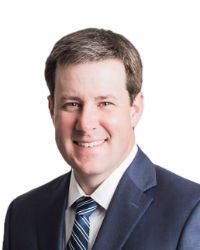

Miller & Martin PLLC is a leading full-service law firm in the Southeastern United States that has served businesses and individuals for 160 years. With offices in Tennessee, Georgia and North Carolina, and lawyers practicing across more than 50 areas of law, the firm combines sophisticated legal capabilities with lean staffing, partner attention and competitive regional rates. Membership in the World Law Group also connects clients with trusted legal resources in major business centres worldwide. When investigations or enforcement actions place a business or reputation at risk, Miller & Martin’s White Collar & Corporate Investigations team provides clear, strategic guidance. Drawing on experience as judges, defence counsel and trial lawyers, the team assists with compliance programs, government inquiries, whistleblower claims, criminal and regulatory matters, and trials. It also guides international clients through US enforcement actions and advises US clients facing scrutiny related to overseas activities, helping to protect their interests and minimise business disruption.
Fraud Enforcement Takes Centre Stage in Tennessee
White-collar enforcement matters in Tennessee tend to follow the path laid by the Trump administration. In particular, the administration and federal prosecutors in Tennessee emphasise a focus on two types of white-collar criminal matters: healthcare/Medicare fraud and financial fraud in connection with the Paycheck Protection Program (PPP) loans and other COVID initiatives. These focus areas serve the administration’s goal to combat fraud, waste and abuse in government programmes.
Federal priorities
Throughout 2026, the US Department of Justice (DOJ) has issued memoranda expressing its intent to investigate and prosecute government fraud.
In a 13 August 2026 memorandum, DOJ emphasised it will concentrate its resources on fraud that threatens the “health, safety, security, and prosperity of Americans,” with a focus on five priority areas:
- public trust and financial integrity;
- healthcare;
- internal revenue;
- global trade and commerce; and
- corporate misconduct.
The memorandum provides for a detailed reorganisation of DOJ’s fraud divisions, rededication of resources to fraud investigations, and revision of guidance to prosectors regarding fraud investigations and prosecutions.
On 1 October 2026, DOJ released a detailed memorandum outlining directives for prosecution of corporate fraud cases. The memorandum mandates a close working relationship between Fraud Division prosecutors and the DOJ’s Corporate Enforcement Section throughout all phases of corporate investigations. This mandate includes continual reporting procedures, as well as co-ordinated participation to ensure adequate resources are dedicated to investigating corporate fraud. The memorandum further outlines categories of corporate fraud to be prioritised, including schemes involving:
- the healthcare industry;
- the public trust or financial integrity of American and markets related to procurement, government contracts, and other government functions;
- significant evasion of internal or external revenue; and
- tariff evasion, importation of goods or services, or forced labour.
The memorandum expressly calls for the implementation of policies and programmes that appropriately incentive whistleblowers to bring forward credible information related to corporate fraud.
The 1 October 2026 memorandum further requires Fraud Division prosecutors to “place great weight” on a new list of non-exhaustive factors when bringing corporate fraud charges or negotiating related resolutions, including:
- knowledge of or involvement in fraud scheme by corporate management;
- efforts to conceal fraud from government agencies or auditors or otherwise impede or obstruct a government function or oversight;
- conduct that furthers the scheme lasting three years or more;
- actions that threaten the safety or security of Americans, including military readiness;
- conduct that causes substantial financial hardship to a taxpayer funded programme or government function;
- conduct that affects multiple taxpayer-funded programmes or government functions;
- conduct that affects three federal districts or more;
- conduct that results in financial harm to twenty-five or more victims or USD25 million or more in loss;
- conduct that involves the exfiltration of American dollars to support foreign adversaries; and
- conduct that involves immigration offenses.
This 1 October 2026 memorandum is a potentially valuable resource for compliance officers and in-house and outside counsel seeking guidance for setting policy priorities or managing internal investigations.
Tennessee enforcement
DOJ’s priorities are reflected in Tennessee enforcement actions, which largely focus on healthcare fraud and PPP loans fraud. In addition to conducting investigations and prosecutions under the criminal statutes, federal prosecutors are making great use of the civil False Claims Act to investigate and seek liability against or settlements from businesses. Because liability under the False Claims Act is not subject to the higher burden of proof for criminal liability, these cases give US Attorney’s offices greater flexibility while still allowing them to exert significant pressure on the targets of those investigations. Under the False Claims Act, the government can seek triple damages and penalties for fraudulent acts. In fact, to maximise pressure on targets, federal prosecutors in Tennessee routinely bring criminal and False Claims Act cases in parallel.
Healthcare and Medicare fraud
Tennessee has for years been a centre of healthcare fraud investigations and prosecutions, and that trend shows no sign of abating.
In the Eastern District of Tennessee, three individuals were recently prosecuted for a healthcare fraud conspiracy. The involved individuals were a licensed pharmacist, a marketer and an office manager of a pain clinic. The pharmacist created a drug formulary that listed certain drugs with high reimbursement values. He then hired the second individual to market the high-value formulary to a local clinic managed by the third conspirator. The pharmacist agreed to pay the marketer off-record cash bonuses based on the volume of signed formularies obtained. The marketer and office manager began to alter and forge blank formularies, resulting in patients receiving large volumes of unnecessary prescription medications. The marketer compensated the office manager in cash for her role in altering and forging the formularies. The pharmacist submitted the fraudulent formularies for reimbursement, resulting in the payment of over USD7 million to his pharmacy. All three co-conspirators received varying prison sentences for their involvement in the fraudulent scheme and were ordered to pay restitution.
In the Middle District of Tennessee, a physician was prosecuted for defrauding Medicare and other government health programmes out of nearly USD7 million. For over three years, the physician used her practice to submit false Medicare claims seeking reimbursement for services never provided and for products never purchased or used. The investigation revealed the physician submitted claims for dates that did not align with the practice’s appointment records, consistently reused products intended for single use, and directed staff to create false records to support the services fraudulently billed. The physician was sentenced to 42-months imprisonment and ordered to pay nearly USD7 million in restitution for her fraudulent conduct.
In the Middle District of Tennessee, two consent judgments were recently entered against corporate entities resulting from allegations of healthcare fraud. The first case involved claims under the Controlled Substances Act and False Claims Act, premised on allegations that a pharmacy owner and his two pharmacies had:
- knowingly dispensed controlled substances without valid prescriptions;
- knowingly and intentionally distributed and dispensed controlled substances outside the usual course of professional pharmacy practice; and
- falsely billed Medicare for prescriptions that were not medically necessary or otherwise eligible for reimbursement.
The defendants agreed to pay USD450,000 in restitution and received a permanent injunction banning them from handling controlled substances. The second case involved claims under the False Claims Act arising from the company’s alleged billing of Medicare and TennCare for nursing home services that failed to meet required standards of care. The company ultimately agreed to pay over USD2 million to resolve the claims.
In the Western District of Tennessee, a physician was prosecuted and convicted for adulterating medical devices and committing related healthcare fraud. The evidence presented at trial showed the physician routinely reused medical devices for procedures without properly reprocessing or disinfecting them as required by the FDA, thereby endangering patient safety. Those adulterated medical devices were used in more than 15,000 procedures on Medicare and Medicaid patients between 2019 and 2024, and over USD41 million was billed for those procedures. The physician was sentenced to 20 years in prison.
PPP and other COVID-19-related fraud
Tennessee has also focused on remedying fraudulent activity in connection with PPP loans and other financial relief issued during the COVID-19 pandemic.
Numerous cases involving PPP fraud have been investigated and prosecuted in Tennessee in 2026. For example, three cases brought under the False Claims Act involved PPP loans that issued based on fraudulent information provided in loan applications. Two involved applicants who misrepresented their number of employees when applying for a second-draw PPP loan and, had all employees been included, the applicants would have been ineligible for the loan. Those applicants agreed to pay USD2.25 million and USD2.5 million, respectively, to resolve the fraud claims against them. The third involved false representations concerning the applicant’s connection to bankruptcy proceedings. The applicant falsely represented that its owners were not presently involved in any bankruptcy proceedings, despite knowing a parent company was involved in a foreign bankruptcy proceeding which would have rendered it ineligible for the loan. The applicant similarly agreed to pay USD4.2 million to settle the claims.
However, efforts to prosecute COVID-19 related fraud are not limited to PPP loans. In the Eastern District of Tennessee, a woman was recently indicted for laundering money fraudulently obtained through COVID-19 unemployment insurance benefits. The woman was involved in a conspiracy centred on the submission of fraudulent unemployment insurance applications that listed her personal information, which she knowingly provided to her co-conspirators. When fraudulent unemployment insurance benefits were received, they were directly deposited into the woman’s bank accounts – several of which were accounts opened in connection with the conspiracy. She then withdrew those fraudulent funds from her accounts and deposited the cash into Bitcoin ATM machines to conceal the proceeds. The prosecution remains underway, but if convicted, could result in imprisonment, monetary fines and restitution.
Additionally, three defendants were recently sentenced to prison in connection with a COVID-19 employment tax fraud scheme. The conspiracy involved the submission of false tax returns seeking refunds based on two congressional acts passed to aid struggling businesses during the COVID-19 pandemic. The conspirators created illegitimate businesses with no employees or operations for the sole purpose of falsely claiming tax credits on behalf of the entities. Numerous false tax returns were filed, directing the refunds for the phony entities to be mailed to addresses controlled by the co-conspirators. This resulted in over USD3.4 million in fraudulent tax refunds being issued. The conspirators were sentenced to varying prison terms and ordered to pay nearly USD2 million in restitution.
Other instances of fraud
Although fraud enforcement has been primarily focused on healthcare and COVID-related fraud, U.S. Attorney’s offices in Tennessee maintain a steady stream of investigations and prosecutions of other fraudulent conduct consistent with administration priorities, including import-export fraud and investment schemes.
In the Eastern District of Tennessee, a man was charged with conspiracy to commit mail and wire fraud after he stole money from elderly victims. This was accomplished by posing as a federal agent who promised to help victims recover their money lost through investments, inducing payment of fake fees, taxes, and court costs that the defendant pocketed. He was sentenced to 14 years imprisonment for his fraudulent conduct.
Additionally, prosecution is underway for fraudulent conduct in connection with parts provided to the United States military. Four men have been indicted for wire fraud and money laundering, resulting from misconduct in the fulfilment of their obligations under a procured government contract. The contract required provision of certain original equipment manufacturer parts to the military; however, unapproved aftermarket parts were provided. The true source of those parts was concealed through fake labels and false documents, making it appear the parts were original and contract compliant. Two of the individuals were further indicted for their alleged involvement in a related kickback scheme, allowing them to keep excess profits resulting from aftermarket parts selling at the price of original parts.
A well-known fitness company recently agreed to settle fraud allegations stemming from deceptive valuation of equipment imported into the United States. Specifically, the government alleged the company deceptively undervalued fitness equipment purchased from a China-based manufacturer in order to lessen tariff obligations and other import assessments owed to the United States. The company agreed to pay over $2 million to settle the claims.
Finally, a Tennessee resident recently pled guilty to three felony charges – conspiracy to commit wire fraud, conspiracy to commit money laundering, and conspiracy to defraud the United States – in connection with a USD70 million fraudulent investment scheme. The individual participated in a scheme where investments were solicited for the purpose of building and operating a solar power facility; however, the funds raised were never used for such purposes. Instead, the funds were converted to accounts of the individual and his co-conspirators for personal use. Although the individual has not yet been sentenced, the plea agreement provides for a consent monetary judgment of not less than USD70 million.
The ability of US Attorney’s offices to achieve, or at least claim, significant monetary recovery through plea agreements, fines, restitution awards, judgments, and, in the case of False Claims Act matters, settlements has been and will continue to be a driving force in white-collar enforcement. These financial incentives create risks – as well as opportunities – for clients whose work relates to government programmes.
Conclusion
Tennessee white-collar prosecution trends and recent guidance from the DOJ emphasise that fraud enforcement is a top priority and will remain that way in 2027 and beyond.
Miller & Martin PLLC
832 Georgia Avenue,
Suite 1200
Chattanooga,
TN 37402
United States
+423 756 6600
+423 785 8480
info@millermartin.com www.millermartin.com
Trends and Developments
Authors
Miller & Martin PLLC is a leading full-service law firm in the Southeastern United States that has served businesses and individuals for 160 years. With offices in Tennessee, Georgia and North Carolina, and lawyers practicing across more than 50 areas of law, the firm combines sophisticated legal capabilities with lean staffing, partner attention and competitive regional rates. Membership in the World Law Group also connects clients with trusted legal resources in major business centres worldwide. When investigations or enforcement actions place a business or reputation at risk, Miller & Martin’s White Collar & Corporate Investigations team provides clear, strategic guidance. Drawing on experience as judges, defence counsel and trial lawyers, the team assists with compliance programs, government inquiries, whistleblower claims, criminal and regulatory matters, and trials. It also guides international clients through US enforcement actions and advises US clients facing scrutiny related to overseas activities, helping to protect their interests and minimise business disruption.