AI & Intellectual Property 2026
Switzerland
Authors


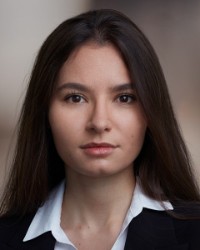
MLL Legal is one of Switzerland’s leading law firms for technology, digital business and innovation. With offices across Switzerland and Swiss-qualified lawyers in London and Madrid, the firm provides seamless support for both domestic and international clients. The firm’s ICT & Digital team advises Swiss and international clients on the full spectrum of technology-related matters, including artificial intelligence, data protection, cybersecurity, digital platforms, e-commerce, software and cloud services, technology transactions, outsourcing and regulatory compliance. The firm is particularly known for its expertise at the intersection of AI, intellectual property, data governance and regulation, advising on AI development and deployment, licensing and commercialisation strategies, copyright and database rights, data use, and compliance with evolving regulatory frameworks. The team has a deep understanding of digital technologies and business models, which they use to assist clients navigate complex digital and AI-related legal challenges.
1. Legal Framework for AI and IP
1.1 AI-Specific or Sui Generis IP Rules
Switzerland has so far deliberately avoided introducing a general AI Act. The Federal Council’s February 2025 strategy rests on three objectives: strengthening Switzerland as an innovation hub, safeguarding fundamental rights (including economic freedom), and increasing public trust in AI. The approach assumes that existing technology-neutral IP and other laws can accommodate AI without immediate structural amendments but also encourages activities to regulate AI in individual sectors such as health or transport. For copyright, the Federal Council acknowledged uncertainty regarding training data. Following the Swiss Parliament’s adoption of Motion 24.4596 (Gössi) in amended form, instructing the Federal Council to clarify copyright protection regarding generative AI, the Federal Act on Copyright and Related Rights (CopA) is set for adjustment. The Swiss Federal Institute of Intellectual Property (IPI) is currently preparing a preliminary consultation draft, expected by late 2026.
For patents, the landmark DABUS ruling (June 2025) confirmed that an AI system cannot be named as an inventor, but indicated that a natural person who makes a substantial technical contribution to the processing, recognises the patentable output and files the application can qualify for inventorship.
Additionally, Switzerland signed the Council of Europe Framework Convention on AI in March 2025, with ratification pending domestic implementation expected by late 2026.
1.2 International and Regional Frameworks
The Council of Europe Framework Convention on AI is currently the primary international instrument shaping Swiss AI law. While Switzerland signed it in March 2025, ratification depends on domestic implementing measures expected by late 2026. The Convention obliges contracting parties to ensure that public-sector AI use is consistent with human rights, democracy and the rule of law. Its effect on private companies might arise through domestic implementing measures and, where applicable, the horizontal application of fundamental rights.
The EU AI Act does not apply directly in Switzerland but exercises significant extraterritorial reach over Swiss companies serving EU customers. The Switzerland–EU Mutual Recognition Agreement (MRA) covers roughly two-thirds of industrial goods traded between the markets. However, high-risk AI conformity assessments are not yet included, potentially creating double-assessment burdens for developers. The proposed Bilateral Agreements III package currently under discussion in Parliament would update the MRA with dynamic alignment, requiring Swiss law to track relevant EU legal changes.
Foreign rightsholders and AI developers face no special rules under Swiss IP law. Copyright, patent and trade secret protections apply territorially without nationality-based distinctions, though developers should note that Swiss copyright exceptions differ notably from EU text and data mining (TDM) exceptions.
1.3 Definitions and Classification
Swiss law provides no statutory definitions of AI systems, generative AI, foundation models, training data, weights, prompts or outputs for IP purposes. Neither the CopA, the Swiss Patents Act (PatA), the Swiss Trade Mark Protection Act (TmPA) nor the Swiss Federal Act against Unfair Competition (UCA) includes AI-specific terminology.
The Federal Council’s 2025 strategy explicitly chose not to create new definitions, relying instead on existing frameworks. For copyright, the test remains firmly rooted in human authorship: whether there is an “intellectual creation with individual character” made by a natural person. The CopA does explicitly mention computer programs as copyright-protectable works in this context, but does not define the term “computer program”. It is not settled to what extent an AI system or parts thereof can be considered “computer programs”; while the implementing code may be considered a computer program, the inclusion of the training data and weights within the term computer program is controversial and seems unlikely. For patents, ordinary novelty, inventive step and industrial applicability requirements apply. Autonomous or agentic AI systems currently receive no separate legal classification; the legal analysis focuses entirely on whether a human exercised sufficient creative control or technical contribution, regardless of the system’s level of autonomy.
1.4 Courts, IP Offices and Regulators
Switzerland has no dedicated, centralised AI authority. AI-related IP issues are handled by the same bodies responsible for general IP law. The IPI handles copyright and patent policy and runs dialogue events concerning AI and copyright licensing. The Federal Administrative Court and the Federal Supreme Court provide authoritative case law, including the DABUS ruling (B-2532/2024, June 2025) on AI inventorship and the distinctiveness assessment in the “AI Brain” trade mark decision (4A_500/2022, March 2023). Other regulators intersect with AI depending on the sector. The Federal Data Protection and Information Commissioner (FDPIC) supervises data protection compliance and has issued AI-specific guidance. The Swiss Financial Market Supervisory Authority (FINMA) supervises AI governance in financial services, while Swissmedic assesses AI elements in medical devices. Currently, there are no specialist AI and IP procedures or examination guidelines. Patent applications involving AI are examined under ordinary requirements. The revised PatA, entering into force on 1 January 2027, introduces mandatory search reports for all applications alongside optional substantive examination but contains no AI-specific provisions.
2. Protecting AI Systems, Models and Data
2.1 Protectable Elements of AI Systems
Multiple elements of an AI system can be protected under Swiss IP law, provided they meet standard criteria. Computer programs, including source code defining model architectures, qualify for protection under Article 2(3) of the CopA if they demonstrate individual character. Training datasets can earn copyright protection, but only if the selection or arrangement of the data demonstrates human individual character; raw data alone is not protected, as Switzerland lacks a sui generis database right.
Model weights, embeddings, evaluation data, agent workflows and deployment know-how do not typically qualify for copyright, but may be protected as trade secrets where they are not publicly known, have commercial value, are subject to a legitimate secrecy interest and are actually kept secret. Carefully drafted prompt libraries or system instructions may be protected only in exceptional cases where their selection or arrangement has individual character. AI-related inventions are patentable where the AI forms part of a technical solution to a technical problem.
Article 5(c) of the UCA may also provide protection against the direct technical reproduction and exploitation of another party’s market-ready work product without reasonable effort of one’s own, but the requirements are narrow and should not be treated as a general database or model-protection right.
2.2 Copyright in Software and Model-Related Materials
Under Article 2(3) of the CopA, computer programs (source code and object code) are expressly protected as literary works. This protection extends to the code defining a model’s architecture. However, copyright protects the expression of the code, not the underlying ideas, algorithms or mathematical methods determining how the neural network functions. The protectability of other model-related materials is highly nuanced. Model weights and parameters are generally viewed as machine-generated numerical values lacking human intellectual creation, meaning they fall outside of copyright protection. Individual prompts or system instructions typically lack the required “individual character” for copyright, unless a prompt library is so extensive and creatively structured that it qualifies as a collection. Outputs of intermediate computational processes are similarly unprotected by copyright, lacking human authorship.
The protection against technical reproduction of work product under Article 5(c) of the UCA provides an alternative basis for asserting protection, but proving a case based on unfair competition laws can be challenging.
2.3 Patent Protection for AI Technologies
The Federal Council came to the conclusion in February 2025 that no legislative amendment is required for AI-related inventions. Ordinary novelty, inventive step and industrial applicability requirements apply. While an AI algorithm expressed as a pure mathematical method is excluded from patentability, an invention where AI functions as a tool to solve a specific technical problem within a broader technical solution is patentable on ordinary terms. Patent filings for AI-related inventions in Switzerland have grown sharply since 2016, and the IPI applies standard examination practices. Claim drafting must focus on technical effects rather than abstract algorithms. Swiss law contains no specific requirement to disclose datasets or training methods beyond standard enablement requirements – the skilled person must be able to reproduce the invention.
2.4 Trade Secrets and Confidential Information
Swiss law protects trade secrets through prohibitions rather than formal registration. Case law dictates that information is protected if it is: (1) not publicly known; (2) commercially valuable; (3) subject to a legitimate secrecy interest; and (4) actually kept secret through reasonable measures.
Under this framework, training datasets, model weights, prompts, evaluation data and agent workflows can qualify as trade secrets, provided the developer maintains access controls and confidentiality agreements. Article 162 of the Swiss Criminal Code (SCC) criminalises intentional disclosure by those under secrecy duties, while Article 6 of the UCA treats the exploitation of unlawfully obtained secrets as an act of unfair competition. Model extraction or weight-stealing can amount to trade secret misappropriation. Transparency obligations present a growing tension: FINMA expects detailed documentation for AI used in financial institutions, and draft platform regulations propose disclosure of AI in content moderation, though neither currently requires public disclosure of proprietary algorithms.
2.5 Data, Database and Dataset Protection
A crucial distinction for AI developers in Switzerland is the absence of a sui generis database right (unlike in the EU). A dataset or corpus earns copyright protection only if the selection or arrangement of its contents constitutes an intellectual creation with individual character (Article 4(1) CopA). Raw data, embeddings and synthetic datasets are not protected, and mere labour or financial investment does not confer rights.
Training datasets with highly creative curation may qualify; comprehensively scraped datasets without creative selection will not. Consequently, developers in Switzerland must rely heavily on alternative protections: unfair competition law (against systematic misappropriation or reproduction by technical processes), contract law (through strict licence terms or website Terms of Service), and trade secret protection where technical secrecy criteria are met.
3. Training Data and Model Development
3.1 Use of Copyright Works for Training
The legal status of using copyrighted works for AI training is one of the most intensely contested AI and IP issues in Switzerland. There is a broad consensus among practitioners that the initial collection of training data (crawling and downloading) constitutes reproduction under Article 10 of the CopA. The subsequent technical transformation of those works into training signals or model parameters does not undo these upstream acts of reproduction. There are Swiss commentators who argue for a more permissive approach to AI training, including on the basis that trained models do not normally contain human-perceptible copies of the works used. However, that argument is not supported by current Swiss copyright doctrine and should be understood as a contested, policy-oriented view rather than settled law.
However, whether the training step itself (adjusting weights based on the data) is a copyright-relevant reproduction is genuinely contested.
Following Parliament’s adoption of Motion 24.4596 (Gössi), the Federal Council was instructed to establish legal clarity regarding training data usage. The IPI is currently drafting a consultation proposal expected by late 2026. Currently, direct licensing or relying on unprotected/public domain works remain the primary paths to legal certainty for commercial AI developers using protected Swiss works.
From a rightsholder perspective, a broad implied freedom to train commercial AI systems on protected works would materially weaken the reproduction right and the licensing markets on which many authors, publishers, photographers, journalists, software developers and other creators depend. This is also relevant from an innovation policy perspective: if creators lose meaningful control over the commercial exploitation of their works, incentives to create new protected content may be reduced, which may ultimately affect the quality and availability of future training datasets. Any policy choice to privilege AI training over exclusive rights should therefore be made expressly by the legislature, rather than inferred from existing exceptions.
3.2 Text and Data Mining and Other Exceptions
Switzerland’s statutory copyright exceptions are narrow regarding AI training. Article 24d of the CopA permits certain reproductions for scientific research text and data mining, subject to conditions, but it was not introduced specifically for generative AI training and does not provide a general commercial TDM exception. The temporary copies exception in Article 24a of the CopA only covers transient copies with no independent economic significance, which will rarely apply to persistent training corpora.
Unlike the EU’s Digital Single Market Directive, Swiss law currently has no general commercial TDM exception with an opt-out mechanism. The absence of such an EU-style framework should not be misunderstood as making Switzerland a safe harbour for commercial AI training. On the contrary, if protected works are copied, stored or otherwise reproduced in Switzerland for commercial model development, the developer must still identify a legal basis under Swiss law. Some commentators have suggested that Switzerland may currently offer a favourable environment for AI training, but this view is highly contested and, in our assessment, underplays the protection of rightsholders under the existing reproduction right. Even if certain training activities were structured in Switzerland, the commercialisation of resulting models or outputs in other territories would remain subject to the copyright and market-access laws of those territories.
3.3 Licensing of Training Content
Direct licensing remains the most legally robust path for AI developers. Market practice involves negotiating individual licences that specify permitted uses, such as training, fine-tuning or retrieval-augmented generation, model types, exclusivity, remuneration structures, attribution, audit rights and treatment of downstream outputs.
Collective licensing is being discussed as a scalable solution, including possible statutory or extended collective licensing models with opt-out mechanisms. However, such mechanisms are not yet operative in Switzerland. Access to foundation models via application programming interfaces (APIs) is primarily governed by contract, but data protection, sector regulation, export controls and platform terms may also be relevant depending on the use case.
3.4 Rights Reservations and Opt-Outs
Switzerland has no general statutory TDM opt-out mechanism for commercial AI training. Because Article 24d of the CopA is limited to scientific research and Switzerland did not introduce an EU-style general commercial TDM exception, there is no corresponding statutory framework for rightsholders to reserve commercial rights through machine-readable notices.
Consequently, machine-readable notices, robots.txt files and content credentials currently have no specific IP status under Swiss copyright law for restricting AI training. They do, however, have contractual effect where website terms of use prohibit scraping, and ignoring them may violate the UCA if it constitutes systematic misappropriation. Additionally, an explicit opt-out from processing of personal data for AI training purposes would make such training illegal from a data protection point of view.
3.5 Provenance, Transparency and Cross-Border Training
No specific Swiss IP laws obligate developers to document training data sources, deduplication, removal requests or model development records. The Swiss Federal Act on Data Protection (FADP) applies where personal data is processed, but its focus is purely on privacy, not copyright provenance. Regulated entities face stricter rules; for example, FINMA Guidance 08/2024 expects thorough documentation for AI deployed in supervised financial institutions. Cross-border training raises complex jurisdictional questions yet to be tested in Swiss courts. Under the principle of territoriality, copyright infringement is assessed primarily under the law of the state where the infringing act (eg, the reproduction of the data onto a server, but also the making available, disseminating or exploiting of works) occurs. Swiss copyright exceptions cannot authorise acts outside Switzerland, just as foreign TDM exceptions cannot shield unauthorised reproductions made on Swiss soil.
4. Infringement by Model Developers and Model Providers
4.1 Direct Infringement in Training and Development
Swiss law applies general IP principles to AI in the absence of AI-specific direct infringement rules. To establish copyright infringement during model development, a claimant must prove: a valid copyright; a reproduction, adaptation or other use falling within the exclusive rights of Article 10 of the CopA; the absence of an applicable exception; and causation. As noted, mass downloading of data for corpora clearly triggers the reproduction right. Where such reproductions are carried out wilfully and without authorisation, Swiss criminal copyright provisions may also become relevant. Article 67 of the CopA provides for criminal sanctions, and where the infringement is committed for commercial gain, the penalties may include substantial monetary penalties for the responsible individuals within the company or imprisonment of up to five years. For large-scale commercial training on unlicensed third-party protected works, this creates a potentially severe risk. The consequence may appear harsh, but it follows from the structure of Swiss copyright law if the underlying training acts are characterised as systematic unauthorised reproductions.
For patent infringement, a claimant must prove the unauthorised use of a patented invention’s technical teaching. For trade secrets, the claimant must prove the information qualifies as a secret under Swiss law and was unlawfully obtained or exploited during training. Where an AI agent autonomously commits an infringing act (such as scraping a paywalled site), liability generally rests with the human or entity that deployed and configured the agent.
4.2 Model Weights, Memorisation and Substantial Similarity
Swiss courts have not yet ruled on whether model weights, embeddings or other internal model artefacts constitute infringing copies of protected works. This remains one of the most vigorously debated topics in Swiss legal circles. Some commentators argue that training transforms works into statistical patterns with no human-perceptible resemblance and that, in the ordinary case, no copyright-relevant copy remains in the model. In our view, this argument should not distract from the more immediate upstream question: the copying, downloading, storage and preparation of protected works for training already falls under the reproduction right. Whether model weights themselves are infringing copies is therefore important, but not decisive for the legality of the overall training pipeline.
No Swiss court has assessed memorisation or regurgitation specifically in the AI context. However, general principles still apply: infringement requires the taking of a “substantial part” of the protected expression (the individual character of the work). De minimis copying or regurgitation of unprotectable facts falls outside the rightsholder’s exclusive rights.
4.3 Secondary, Authorisation and Intermediary Liability
Swiss IP law does not feature a statutory doctrine of “contributory infringement” or “vicarious liability” in the Anglo-American sense. However, under general Swiss tort law (Article 50 Swiss Code of Obligations (CO)), anyone who instigates or assists in an unlawful act (such as copyright infringement or breach of unfair competition laws) can be held jointly and severally liable.
For a model provider to be liable for a user’s infringing output, the claimant would generally need to prove the provider acted with intent or negligence in facilitating the specific infringement under general tort participation rules (Article 50 CO). Providing a neutral, general-purpose AI tool is unlikely to trigger liability for user actions. Furthermore, Swiss practice acknowledges that neutral hosting intermediaries that expeditiously remove infringing content upon receiving actual knowledge can avoid civil liability, though this standard has yet to be tested specifically regarding generative AI model providers.
4.4 Trade Secret and Confidential Data Misuse
Claims for trade secret misappropriation under Article 162 of the SCC and Article 6 of the UCA can arise where confidential materials are ingested to train, fine-tune or prompt an AI system. A claimant must prove the information qualifies as a trade secret and was unlawfully exploited. A major risk area involves enterprise users. Where employees input confidential materials into public, third-party AI systems, employers risk destroying the legal secrecy of their own data, while simultaneously exposing themselves to liability if they input third parties’ secrets. Where a model inadvertently reveals confidential information in its outputs due to memorisation, complex liability questions arise between the provider and the user. Furthermore, professional secrecy duties (eg, Article 321 SCC) create severe criminal risks for Swiss lawyers, doctors, auditors and other professionals who expose client data to AI tools lacking strict enterprise privacy guarantees.
4.5 Defences and Limitations
An AI developer facing infringement claims in Switzerland can rely on several substantive defences. These include lack of copyright protection, lack of substantial taking, independent creation, exhaustion where applicable (although this will most likely only be the case in extremely narrow and rare constellations), implied or express licence, and the absence of an applicable exclusive-right act. Switzerland has no broad “fair use” doctrine; defendants must fit within specific statutory exceptions, such as private use or scientific research TDM, which will rarely cover commercial AI development.
Developers may also argue that training is non-expressive, transformative in function, or too remote from the protected expression embodied in the original works. Swiss law, however, does not contain a doctrine that would allow courts to balance these considerations freely. Such arguments must therefore be anchored in the absence of a copyright-relevant act, the absence of substantial taking, an applicable statutory exception, or a valid licence. A general innovation-policy interest in promoting AI development is not, by itself, a defence under current Swiss copyright law.
Monetary claims are subject to the ordinary civil limitation rules, while injunctive relief may remain available as long as an infringement continues or threatens to recur. Limitation issues should be assessed claim by claim, particularly where copyright, unfair competition, unjust enrichment or criminal-law based claims are pleaded in parallel.
In exceptional cases, competition-law arguments could be raised where a dominant holder of indispensable data refuses access to a dataset required to compete in a downstream market. This theory has not yet been tested in Switzerland.
5. AI Outputs, User Liability and Deployment Risk
5.1 Copyright Infringement in Outputs
AI-generated output infringes copyright in Switzerland if it reproduces or adapts a substantial part of a pre-existing work’s protected expression. The test focuses on the qualitative significance of what was taken. Outputs that perfectly regurgitate training works, or incorporate protected expression requested via reference images in a prompt, can infringe. However, imitating a style, genre or artistic technique without literal copying does not constitute copyright infringement under Swiss law. Copyright protects specific, concrete expression rather than underlying ideas or general stylistic approaches. Additionally, personality rights (Article 28 et seq Swiss Civil Code) apply where AI-generated content uses a real person’s likeness or voice without consent.
5.2 Unwitting User Infringement and Prompting
Users can unwittingly infringe IP by generating and commercialising AI output that reproduces protected expression. Under Swiss law, civil copyright claims for an injunction operate on objective unlawful acts without requiring fault; intent or knowledge is not required. However, to claim monetary damages under general tort principles (Article 41 CO), the claimant must prove fault (intent or negligence).
For agentic systems, liability hinges on whether the user had constructive knowledge of the risk and took reasonable precautions. Prompt design is highly relevant – a user crafting prompts that specifically request the reproduction of existing works demonstrates higher culpability. While reliance on a model provider’s Terms of Service does not shield users from third-party rightsholder lawsuits, provider indemnities may shift the ultimate economic burden.
5.3 Trade Mark, Passing Off and Brand-Related Outputs
Trade mark infringement under the TmPA requires use of a sign in the course of trade that is identical or confusingly similar to a registered mark for relevant goods or services. AI outputs that include third-party marks can therefore infringe if used commercially by the user or deployer.
The “AI Brain” ruling illustrates that adding “AI” to descriptive brand elements will not normally create distinctiveness. Unfair competition may also apply, in particular where AI outputs create avoidable confusion with another party’s goods, services or business under Article 3(1)(d) of the UCA, or where synthetic endorsements are misleading under Article 3(1)(b) or 3(1)(e) of the UCA. Personality rights protect against unauthorised use of an identifiable person’s likeness, name or voice in synthetic branding.
5.4 Patent, Design and Product-Related Infringement
AI systems generating product designs, software code or chemical candidates can create technical IP infringement risks. Direct patent infringement occurs if a user makes, uses or sells a physical product that falls within the claims of a valid patent, regardless of whether AI was used to design it. The autonomous nature of the AI provides no defence; infringement is assessed entirely on the characteristics of the final output.
Indirect patent infringement under Article 66(d) of the PatA arises from supplying the means for practising the invention with the knowledge that they are intended for that use. For designs, AI-generated outputs could infringe registered designs under the Swiss Designs Act if they produce the same overall impression on the informed user.
5.5 Agentic AI, Tool Use and Autonomous Acts
Swiss law has not yet developed a bespoke framework for liability regarding autonomous AI agents interacting with IP. General tort principles (Article 41 et seq of the CO) apply, requiring an analysis of who committed the unlawful act and with what degree of fault. Where an AI agent autonomously scrapes paywalled content or publishes infringing material, responsibility generally traces to the entity that deployed and configured the system parameters. Under Article 55 of the CO, employers are liable for damage caused by employees or ancillary staff unless they prove proper care; it is currently disputed in legal doctrine whether an autonomous AI system can be treated legally as an “auxiliary” person. While product liability under the Federal Act on Product Liability is strict, it remains unsettled whether a standalone AI system would qualify as a “product”.
6. Creation, Authorship, Invention and Ownership
6.1 Human Authorship and Copyright Protection
Swiss copyright law is strictly anchored to the creator principle. Under Article 2(1) of the CopA, a “work” is a literary or artistic intellectual creation with individual character, and under Article 6, only a natural person can be an author.
The Federal Supreme Court requires genuine human intellectual intervention: the human must conceive the outcome and the result must express that thought. Where a human uses AI as a tool – directing the process, heavily editing, and shaping the final result – the output can be protected. Iterative prompt engineering can constitute sufficient human contribution if it demonstrates deep creative control over the final expression. Conversely, in highly autonomous agentic systems (involving prompt chaining or automated intermediate selections), the distance between human intent and the final output likely eliminates the possibility of human authorship.
6.2 Computer-Generated or AI-Generated Works
Switzerland unequivocally does not recognise copyright in computer-generated or AI-generated works lacking a human author. Unlike the UK (which offers limited protection for computer-generated works), Swiss law requires human intellectual creation. Where an AI generates content with minimal human creative control (eg, via a simple, generic prompt), there is no author and no copyright protection in the output itself. While such outputs cannot be protected by copyright, their subsequent commercial use remains subject to and may infringe third-party IP rights, trade secrets, contractual terms and unfair competition rules.
6.3 Joint Authorship, Derivative Works and Adaptations
Joint authorship under Article 7 of the CopA requires that multiple natural persons contribute to a work in a way that their individual contributions cannot be separated. The AI system itself can never be a joint author. If multiple humans collaborate using AI (eg, one writes complex prompts, another creatively edits the output), joint authorship among the humans may arise. Derivative works under Article 3 of the CopA occur when a new work is based upon a pre-existing work. AI outputs heavily based on protected reference images constitute adaptations requiring the original rightsholder’s consent; generating such outputs without a licence infringes the adaptation right.
6.4 Registration, Disclosure and Enforcement of AI-Assisted Works
Switzerland has no registration requirement for copyright; protection arises automatically upon creation. Consequently, there is no formal mechanism or obligation to disclose AI involvement for copyright purposes.
For designs, registration with the IPI is required, but the application forms do not specifically require disclosure of the use of AI. For patents, however, Article 5 of the PatA strictly requires inventors to be named, and they must be natural persons. Misrepresenting inventorship (such as attempting to hide AI generation or falsely claiming full human invention of an AI-generated technical solution) could provide grounds for invalidity challenges.
6.5 Patent Inventorship and Entitlement
An AI system cannot be named as an inventor in Switzerland. The DABUS ruling (B-2532/2024) confirmed that only natural persons can be inventors under the PatA, and the Federal Administrative Court rejected an application naming DABUS as the sole inventor. However, a human may qualify as inventor where they make a sufficient technical contribution, for example by formulating the technical problem, configuring or using the AI system in a technically meaningful way, recognising the patentable solution and filing the application. Entitlement then follows ordinary rules. Under Article 332 of the CO, inventions made by employees in the course of their employment and in fulfilment of their contractual duties generally belong to the employer. Other employee inventions may require a written contractual reservation and, if acquired by the employer, may trigger compensation. For contractors, researchers and collaborators, entitlement should be addressed expressly by assignment and co-operation agreements.
6.6 Inventive Step, Prior Art and AI-Assisted R&D
Swiss patent law has not yet formally addressed whether the widespread availability of AI tools alters the analysis of “inventive step” or the benchmark of the “notional skilled person”. If AI R&D tools become standard practice in a specific technical field, the baseline of what the skilled person would find “obvious to try” might expand, potentially raising the bar for the inventive step. However, the Federal Council’s February 2025 conclusion that no legislative amendment is needed suggests confidence that the existing framework can accommodate these shifts. Regarding prior art, AI-generated disclosures (such as automated technical publications or synthetic datasets) are treated as prior art under Swiss law identically to human publications, provided they have been made available to the public before the priority date.
7. Other IP and Related Rights
7.1 Designs, Trade Dress and Product Appearance
AI-generated designs can be protected under the Swiss Designs Act if they meet the ordinary requirements of novelty and individual character. Protection focuses on the objective appearance of the design rather than on whether AI was used in the creative process. Product configurations, graphical user interfaces, icons, avatars and virtual goods may therefore be registrable if they are visually perceptible and sufficiently distinctive in their overall impression. Purely functional features are not protected as designs.
The Swiss Designs Act does not contain an AI-specific authorship or disclosure requirement. In practice, the applicant registered with the IPI is treated as the proprietor of the registered design and may enforce it. However, filing does not necessarily resolve underlying entitlement issues between employees, contractors, collaborators or commissioning parties. These issues should be addressed through employment terms, assignment clauses and development agreements. Trade dress and product get-up may also be protected under Article 3 of the UCA where imitation creates avoidable confusion with a competitor’s products.
7.2 Trade Mark Registration and AI-Created Brand Assets
AI-generated names, logos, slogans and other brand assets can be registered as trade marks in Switzerland if they meet the ordinary distinctiveness requirements. The TmPA evaluates the objective characteristics of the sign, not the human or machine effort behind its creation.
As the “AI Brain” court decision illustrates, generic or descriptive AI-generated signs will be refused on the same basis as human-created signs. The registered applicant is treated as proprietor, but contractual entitlement should be addressed separately where employees, agencies or AI vendors are involved.
7.3 Moral Rights, Attribution and Integrity
Swiss copyright law grants moral rights under Articles 9 and 11 of the CopA, including the rights of attribution, first publication and integrity. These rights are highly personal and belong exclusively to the natural human author.
For AI-assisted works that clear the hurdle of human authorship, moral rights vest in that human. Where a work is purely AI-generated and lacks a human author, no moral rights exist. Falsely attributing an AI-generated work to a specific human could constitute fraud, unfair competition (Article 3 UCA) or a violation of personality rights. A 2023 parliamentary motion seeking dedicated deepfake legislation was opposed by the Federal Council, which deemed existing civil and criminal provisions sufficient to handle false attribution and synthetic media.
7.4 Personality, Publicity, Performers’ and Neighbouring Rights
Under Article 28 et seq of the Swiss Civil Code, Swiss personality rights protect a person’s name, image, likeness, voice, persona and other identifying attributes against unauthorised AI generation or use. These rights are civil personality and privacy rights rather than separate “publicity rights” in the US sense. The key question is whether the person is identifiable and whether the interference is unlawful; consent, overriding private or public interests, or statutory authorisation may justify the use.
Unauthorised AI voice cloning, synthetic likenesses or digital replicas may give rise to claims for injunctions, removal, damages, satisfaction and surrender of profits, particularly where they are used commercially, misleadingly or in a reputationally harmful manner. The FADP may also apply where personal data is collected or processed to train, generate or deploy such replicas.
Performers’ neighbouring rights under Article 33 et seq of the CopA protect actual performances and their fixations, broadcasts or making available. Where AI systems use or reproduce protected recordings or performances, neighbouring-rights claims may arise. By contrast, a purely synthetic imitation of a person’s style, voice or mannerisms without use of protected recordings will usually be assessed primarily under personality rights, data protection and, where used in market communications, unfair competition law.
8. Enforcement, Evidence and Remedies
8.1 Venue
For copyright and design disputes (including those involving AI), cantonal civil courts hold primary jurisdiction, with appeals directed to the Federal Supreme Court. The Federal Patent Court holds exclusive jurisdiction over patent disputes.
For trade mark disputes, cantonal courts handle civil litigation, while the IPI handles administrative proceedings such as trade mark oppositions or deletion requests for non-use of a trade mark. The Federal Administrative Court hears appeals from IPI decisions (as seen in the DABUS patent case). Trade secret and unfair competition claims fall within the jurisdiction of cantonal civil courts. While there is no specialist alternative dispute resolution body solely for AI and IP, standard arbitration is available, and domain-name disputes involving AI brands are frequently resolved through WIPO’s UDRP or other domain dispute mechanisms.
8.2 Evidence, Disclosure and Confidentiality
Swiss civil procedure provides mechanisms for obtaining evidence under Article 150 et seq of the Swiss Civil Procedure Code (CPC), but it does not provide broad discovery comparable to common-law jurisdictions. Parties and third parties may be ordered to co-operate in the taking of evidence, including by producing documents in their possession, but requests must be sufficiently specific and relevant to disputed facts. Claimants cannot conduct fishing expeditions and must identify the documents or narrowly defined categories sought, such as specific training logs, API records, prompts, source-code modules or model documentation.
In appropriate cases, evidence may also be preserved or obtained before proceedings through precautionary taking of evidence under Article 158 of the CPC, provided the statutory requirements are met. This may be relevant where there is a risk that AI-related evidence such as logs, tool-call histories, browsing records or model versions could be altered or deleted.
Courts can protect trade secrets and confidential technical information under Article 156 of the CPC, and in patent matters also under Article 77 of the PatA. Protective measures may include redactions, restricted access, confidential expert review, in-camera hearings or other tailored confidentiality arrangements. Access restrictions must, however, remain compatible with the parties’ right to be heard and procedural fairness, so US-style “attorney eyes only” arrangements should not be assumed as a standard solution.
8.3 Interim and Final Injunctive Relief
Swiss courts can grant interim and final injunctive relief in IP disputes under Articles 261–269 of the CPC. Interim measures require a prima facie case, irreparable harm, urgency and proportionality; ex parte measures are available in appropriate cases.
In AI disputes, orders may include ceasing deployment, disabling infringing outputs, preserving evidence, applying guardrails or restricting tool access. Orders to remove specific works from an already trained model, delete model versions or impose “algorithmic disgorgement” remain untested in Switzerland and would raise difficult questions of technical feasibility and proportionality. Cross-border enforcement depends on ordinary private international law rules and applicable treaties, including the Lugano Convention for relevant European judgments.
8.4 Monetary Remedies and Cross-Border Enforcement
Swiss law provides comprehensive monetary remedies for IP infringement. Damages under Article 41 et seq of the CO compensate for actual, proven loss. An account of profits (disgorgement) is specifically available in copyright (Article 62 CopA) and patent cases (Article 73 PatA) by reference to the CO.
Swiss courts may award damages by reference to a reasonable royalty or hypothetical licence fee, which is a recognised method where actual loss or infringer’s profits are difficult to prove. This is highly relevant in AI training cases where actual financial loss is difficult to quantify. However, the claimant must still substantiate the basis and amount of the reasonable or hypothetical royalty claimed. Claims for unjust enrichment (Article 62 CO) provide an independent basis for financial recovery. Territorially, Swiss IP rights only protect against acts occurring in, or directly targeted at, Switzerland.
9. Transactions, Licensing and Commercialisation
9.1 Training Data and Content Licensing
Licences for AI training, fine-tuning, evaluation and retrieval-augmented generation are governed by ordinary Swiss contract and IP principles. Internationally familiar provisions on scope, permitted models, exclusivity, remuneration, attribution, audit, sublicensing, downstream outputs, deletion, indemnities and liability allocation should therefore be included.
Swiss law does not currently provide a general commercial TDM exception or an EU-style statutory opt-out mechanism, so contractual clarity on whether content may be copied, ingested, embedded, indexed, retrieved or used for model training is particularly important.
Switzerland also has no sui generis database right. Dataset protection must therefore be secured through clear contractual obligations. Where licences cover works protected by copyright, the permitted uses should be drafted expressly because Swiss copyright licences and assignments are generally interpreted according to the purpose and wording of the transfer. Moral rights remain with the human author and should be addressed through consents and waivers to the extent permitted. The warranty of the licensor’s ability to grant the necessary licences is particularly important under Swiss law because of the statutory provisions on the employer’s rights in inventions and copyright works.
Clauses on opt-outs, deletion, model unlearning, RAG exclusion lists, logging, tool permissions and restrictions on autonomous access (agentic systems) should be framed as contractual obligations and limited by technical feasibility.
Where personal data, confidential information or trade secrets are involved, the licence should also address FADP compliance, security measures, confidentiality duties, audit restrictions and the treatment of model logs and outputs.
10. Emerging Issues and Reform
10.1 Pending Legislation, Regulation and Policy
Several important initiatives are pending in Switzerland. The Federal Administration is expected to prepare implementing legislation for the Council of Europe AI Convention, with a consultation draft expected by late 2026. The resulting rules are likely to focus primarily on transparency, data protection and oversight, especially for public-sector AI, and may influence private-sector standards indirectly.
Motion 24.4596 (Gössi) remains the main vehicle for copyright reform concerning AI training. Following Parliament’s adoption of the motion, the IPI is preparing a preliminary consultation draft to clarify the use of protected works for generative AI. Separately, proposed platform regulation may introduce additional transparency duties for large digital platforms. The revised Patents Act, entering into force on 1 January 2027, will make search reports mandatory for Swiss patent applications but does not introduce AI-specific patent rules.
The legislative debate is likely to require a fundamental policy choice. One option would be to create a statutory exception, collective licensing mechanism or remuneration model for AI training. Another would be to preserve a stricter authorisation-based approach, under which commercial developers must obtain licences for protected training content. In our view, if Swiss law is to depart from the traditional copyright framework in favour of AI training, this should occur through transparent legislation that balances innovation incentives against the legitimate interests of rightsholders, rather than through an expansive interpretation of existing exceptions.
10.2 International Harmonisation and Divergence
Switzerland actively shapes international AI harmonisation while maintaining its distinct legal traditions. As a Council of Europe member, Switzerland signed the Framework Convention on AI and participates heavily in WIPO discussions regarding IP and AI.
However, distinct points of divergence remain between Switzerland and major jurisdictions. Unlike the EU, Switzerland has no omnibus AI Act and notably lacks a statutory TDM opt-out for copyright rightsholders. Unlike the UK, Switzerland firmly rejects copyright protection for computer-generated works lacking a human author. Unlike the USA, Switzerland does not possess a broad “fair use” doctrine, requiring AI developers to navigate strict, enumerated copyright exceptions. On the issue of patent inventorship, however, Switzerland remains firmly aligned with the EPO, USPTO and UKIPO in requiring human inventors.
The Swiss debate also differs in tone from jurisdictions that have adopted, or are considering, more explicit TDM regimes. Switzerland’s current law does not provide a broad fair-use defence, a general commercial TDM exception or a statutory opt-out system. This makes the policy question particularly visible: either Swiss law remains anchored in prior authorisation and licensing for commercial use of protected works, or Parliament creates a new mechanism for balancing interests.
MLL Legal Ltd
MLL Legal Ltd
Schiffbaustrasse 2
P.O. Box
8031 Zurich
Switzerland
+41 58 552 04 80
lukas.buehlmann@mll-legal.com www.mll-legal.com
Law and Practice
Authors
MLL Legal is one of Switzerland’s leading law firms for technology, digital business and innovation. With offices across Switzerland and Swiss-qualified lawyers in London and Madrid, the firm provides seamless support for both domestic and international clients. The firm’s ICT & Digital team advises Swiss and international clients on the full spectrum of technology-related matters, including artificial intelligence, data protection, cybersecurity, digital platforms, e-commerce, software and cloud services, technology transactions, outsourcing and regulatory compliance. The firm is particularly known for its expertise at the intersection of AI, intellectual property, data governance and regulation, advising on AI development and deployment, licensing and commercialisation strategies, copyright and database rights, data use, and compliance with evolving regulatory frameworks. The team has a deep understanding of digital technologies and business models, which they use to assist clients navigate complex digital and AI-related legal challenges.
