Anti-Corruption 2026
The Anti-Corruption 2026 guide covers a range of key jurisdictions. Experts discuss bribery, influence-peddling, financial record-keeping, offences relating to public officials and lobbying, limitation periods, the geographical reach of legislation, corporate liability, defences and exceptions, safe harbour programmes, protection for whistle-blowers, and landmark investigations.
Last Updated: December 04, 2025
Compare law and practice by selecting locations and topic(s)
Select Locations

Select Topic(s)
Please select at least one location and one topic to use the compare functionality.
Authors
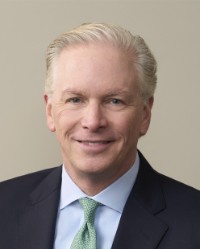
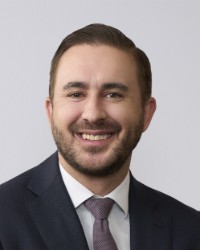
Freshfields US LLP has a white-collar defence team that is highly skilled in advising cross-border businesses on anti-bribery and corruption risks arising anywhere in the world. The firm’s US white-collar partners, most of whom are former federal prosecutors, lead a team with more than 200 US lawyers working in close co-ordination with Freshfields’ offices in Europe, the Middle East and Asia. Freshfields helps clients respond to simultaneous inquiries from the US DOJ, the US SEC and CFTC, the UK Serious Fraud Office, and other global regulators and prosecutors, in connection with allegations of bribery and corruption. Freshfields’ lawyers develop multi-pronged defence strategies to navigate the varied expectations of regulators and prosecutors around the globe. The firm regularly conducts international anti-bribery compliance programme reviews and provides due diligence and transactional advice for some of the world’s leading investors, banks and multi-nationals. Recent anti-corruption work has included securing the first declination with disgorgement under the DOJ’s Corporate Enforcement Policy.
Anti-Corruption: Global Enforcement at a Transitional Moment
We are proud to introduce the ninth edition of the Chambers Global Anti-Corruption Guide. The purpose of this Guide is to provide an overview of current anti-bribery and corruption laws in a wide range of countries, including insights into key legal standards, enforcement policies, and emerging trends, from the perspectives of leading practitioners in their respective jurisdictions.
The release of this Guide comes at a transitional moment for global anti-corruption enforcement. After decades of predictable enforcement goals, the United States this year affirmed its commitment to future enforcement efforts, but it has also signalled its intention to focus on new enforcement priorities. Meanwhile, after decades of maturing domestic anti-corruption enforcement institutions and capabilities, other countries have signalled their intention to expand enforcement efforts. Thus, for global practitioners, it is an especially important time to take stock of cross-jurisdictional legal and policy developments.
Shifting US enforcement priorities
The United States has long been a leader of global anti-corruption enforcement efforts through the Foreign Corrupt Practices Act (FCPA) and related laws. Upon taking office in January 2025, the Trump Administration announced its intention to revisit the way that US enforcement bodies approach those laws and allocated their resources.
On 10 February 2025, President Trump issued Executive Order 14209, which directed the US Department of Justice (DOJ) to “restore proper bounds” of FCPA enforcement. The order imposed a 180-day pause on any new FCPA investigations, and it required the DOJ to undertake a comprehensive review of existing FCPA investigations. By doing so, the Administration sought to address “overexpansive and unpredictable” FCPA enforcement, which, the Order states, has historically harmed “American economic competitiveness and, therefore, national security”, by placing “undue burdens on American companies”.
On 9 June 2025, DOJ Deputy Attorney General Todd Blanche lifted the pause on FCPA enforcement and issued new FCPA enforcement guidelines. The guidelines instruct prosecutors to “limit undue burdens on American companies that operate abroad” and “target enforcement actions against conduct that directly undermines US national interests”. They identify certain types of cases that prosecutors should prioritise. The priorities include cases where the underlying misconduct deprived US companies of “fair access to compete and/or resulted in economic injury” or where the underlying conduct implicated the “most urgent threats to US national security ... involving key infrastructure or assets”. They also include cases involving misconduct associated with cartels and transnational criminal organisations. Finally, the priorities include cases involving “individuals” and “serious misconduct”, such as “substantial bribe payments, proven and sophisticated efforts to conceal bribe payments, fraudulent conduct in furtherance of the bribery scheme, and efforts to obstruct justice”. Under the new enforcement approach, all new FCPA investigations must be authorised by the Assistant Attorney General for the Criminal Division or a more senior DOJ official.
During a 10 June 2025 speech, Acting Assistant Attorney General (AAG) of the DOJ Criminal Division Matthew Galeotti affirmed that the DOJ would continue to enforce the FCPA “firmly but fairly” by “bringing enforcement actions against conduct that directly undermines US national interests without losing sight of the burdens on American companies that operate globally”. Importantly, the FCPA remains binding law, including a statute of limitations that runs for five years for substantive bribery violations, six years for books-and-records violations, and often longer when there are extenuating circumstances, such as an ongoing conspiracy. Moreover, in the United States, many individual states have laws that can address similar misconduct. Indeed, in April 2025, the California Attorney General pledged to leverage state laws to further combat foreign bribery and corruption.
Expanding multi-jurisdictional co-operation efforts
The updated US approach also includes a greater focus on foreign enforcement actions, with co-operation and co-ordination by US enforcement authorities.
Historically, US enforcement authorities have frequently partnered with foreign counterparts on multi-jurisdictional investigations and resolutions. Since the passage of the FCPA in 1977, US authorities have co-operated and co-ordinated with authorities in Brazil, France, Switzerland, and the United Kingdom, among others, on more than 100 enforcement actions. These efforts have included some of the largest anti-corruption resolutions in history, such as the USD3.9 billion 2020 Airbus resolution involving US, UK, and French authorities. Over time, US enforcement agencies have also participated in many staff exchanges, designed to help foreign authorities further develop enforcement capabilities.
The revised US approach seeks to continue these efforts. The new guidelines direct US prosecutors to “consider the likelihood (or lack thereof) that an appropriate foreign law enforcement authority is willing and able to investigate and prosecute the same alleged misconduct”. In the 10 June 2025 speech, Acting AAG Galeotti noted that the DOJ would deprioritise cases where foreign law enforcement authorities are willing and able to prosecute, but he stressed that the DOJ would not “hesitate” to co-operate and provide assistance in those cases.
To reinforce that commitment, on 24 June 2025, Acting AAG Galeotti met with Nick Ephgrave, Director of the UK’s Serious Fraud Office, to discuss efforts to strengthen cross-border co-operation. The two leaders identified shared interests in continued information exchanges and operational collaborations, faster resolutions of complex, cross-border investigations, and stronger policies around voluntary self-disclosure and market integrity. Director Ephgrave called the meeting a “significant milestone for us as we continue to strengthen our international approach to fighting financial crime with key partners ... [to] more effectively pursue criminals and deliver justice”.
Potential new global enforcement leaders
Although the United States has committed to future enforcement efforts, the new guidelines suggest that US enforcement authorities will deprioritise cases with less direct connections to US domestic interests, creating opportunities for non-US enforcement authorities to take a more active role in those cases.
Since January 2025, other nations have begun to assert themselves as leaders in the anti-corruption space, both through individual actions and multilateral alliances. For example, on 20 March 2025, France, Switzerland, and the United Kingdom announced the formation of the International Anti-Corruption Prosecutorial Task Force to strengthen collective action, increase co-operation, and share best practices. While officials stated this was not a direct reaction to shifting US policy, the timing suggests a conscious effort to ensure continued momentum, with the founding statement explicitly committing each country’s enforcement agencies to standing “firm” in their fight against corruption. The Task Force includes a Leaders’ Group for strategic insight and a Working Group for case co-operation, which indicates a serious, co-ordinated effort to build a stronger enforcement bloc.
Moreover, in recent months, other countries have also taken steps to independently strengthen their domestic anti-corruption frameworks. For example, in Australia, the National Anti-Corruption Commission reported significant activity, including 37 preliminary and 37 full anti-corruption investigations underway as of August 2025. In the United Kingdom, a new “Serious Fraud Offence” came into force on 1 September 2025. The offence applies to large organisations and holds them strictly liable for fraud committed by “associated persons” for the company’s benefit. This is a significant development, as it moves beyond the need for UK prosecutors to prove corporate intent in certain cases, thereby lowering the bar for prosecution and strengthening the UK’s enforcement capabilities.
In addition, some countries are also taking proactive measures to strengthen anti-corruption measures in priority sectors. In China, for example, the State Administration for Market Regulation (SAMR) published new “Compliance Guidelines for Healthcare Companies to Prevent Commercial Bribery Risks” on 10 January 2025. Further, on 13 May 2025, 14 Chinese government agencies jointly issued a notice on “Rectifying Misconduct in the Field of Pharmaceutical Purchase and Sales and Medical Services in 2025”. This notice highlighted specific focus areas for regulatory oversight, including public procurement, bidding, prescriptions, and project funding.
Looking ahead to 2026 developments
For global practitioners, these developments raise many questions about the trajectory of global enforcement over the coming years. The new US enforcement guidelines indicate a clear shift in priorities. As of the release of this Guide, however, there are many open questions about what the application of the new guidelines will look like in practice. Will the DOJ return to regularly negotiating resolutions with significant penalties? Will it devote greater attention to individual prosecutions? Will it simultaneously focus greater attention on non-US companies?
In turn, the new US guidelines have the potential to generate spillover effects in other countries. As of the release of this Guide, there are also many remaining questions about the practical effects these changes will have in other countries. Will other countries continue to strengthen their own anti-corruption laws? Will non-US authorities continue to devote additional resources to their anti-corruption enforcement actions without support from US enforcement authorities? If US authorities devote greater attention to enforcement actions against non-US companies, will foreign enforcement authorities, in turn, devote greater attention to enforcement against US companies?
Amid these many questions, what remains clear is that the trajectory of global anti-corruption efforts will remain in a state of transition in the years ahead. The following chapters provide valuable insights from expert practitioners who closely follow these developments within their respective jurisdictions. We sincerely thank the authors for their excellent contributions. We hope that practitioners will continue to find this Guide to be a valuable resource for understanding and navigating anti-bribery-and-corruption laws around the world.
Authors
Freshfields US LLP has a white-collar defence team that is highly skilled in advising cross-border businesses on anti-bribery and corruption risks arising anywhere in the world. The firm’s US white-collar partners, most of whom are former federal prosecutors, lead a team with more than 200 US lawyers working in close co-ordination with Freshfields’ offices in Europe, the Middle East and Asia. Freshfields helps clients respond to simultaneous inquiries from the US DOJ, the US SEC and CFTC, the UK Serious Fraud Office, and other global regulators and prosecutors, in connection with allegations of bribery and corruption. Freshfields’ lawyers develop multi-pronged defence strategies to navigate the varied expectations of regulators and prosecutors around the globe. The firm regularly conducts international anti-bribery compliance programme reviews and provides due diligence and transactional advice for some of the world’s leading investors, banks and multi-nationals. Recent anti-corruption work has included securing the first declination with disgorgement under the DOJ’s Corporate Enforcement Policy.