Corporate Governance 2026 Comparisons
Contributed By Schurti Partners Attorneys at Law Ltd
Law and Practice
Authors

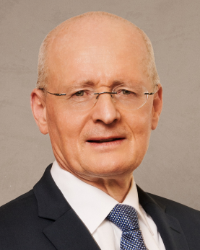

Schurti Partners Attorneys at Law Ltd is a Liechtenstein-based full-service law firm with a strong focus on cross-border matters. The firm’s lawyers were trained and are qualified in several jurisdictions (Austria, California, England and Wales, Germany, Ireland, Liechtenstein, New York and Switzerland), and have gained work experience abroad in some of the most prestigious international law firms. The firm was founded in 1991 as a partnership and incorporated in 2015. Over the years, it has grown to become one of the largest and most renowned law firms in Liechtenstein. Schurti Partners has established a solid track record of supporting clients with businesses and/or assets across the world, drawing on the support of the firm’s well-established networks of leading independent law firms based in other jurisdictions. Today, it is one of the leading Liechtenstein law firms in the area of corporate and commercial law, and M&A transactions, and regularly handles complex matters in these areas for large corporate clients and regulated financial service providers.
1. Corporate Governance Requirements
1.1 Corporate Forms and Governance Requirements
The predominant form of corporate/business organisation is the corporation (Aktiengesellschaft). For smaller business entities, the Liechtenstein establishment (Anstalt) is also quite common, albeit less popular in an international context. The limited company (Gesellschaft mit beschränkter Haftung) plays a less significant role in practice. Likewise, the European company (Societas Europaea – SE) is not very common in Liechtenstein.
1.2 Corporate Governance Legislation and Regulation
There is no separate piece of legislation or special code for corporate governance rules in Liechtenstein. Therefore, the key legislative source is the Liechtenstein Persons and Companies Act (PCA), which is not only the fundamental piece of legislation for Liechtenstein companies of any type, but also provides the legal framework for Liechtenstein corporations.
Due to Liechtenstein’s membership to the European Economic Area (EEA), the SE EU Council Regulation (EC) 2157/2001 of 8 October 2001 applies directly in Liechtenstein. As a result, Liechtenstein enacted its national SE Act, which complements the aforementioned EU Regulation.
At present, Liechtenstein does not have a stock exchange of its own. However, recently the Liechtenstein legislator enacted the Trading Place and Exchange Act (TPEA), which entered into force on 1 February 2025. The TPEA lists best practice rules and provisions for listed companies. Furthermore, the TPEA includes the regulatory framework for the operation of stock exchanges and other trading venues in Liechtenstein. It remains to be seen to what extent the TPEA will become relevant in practice: to date, and in the absence of a Liechtenstein stock exchange, very few Liechtenstein companies are listed on foreign stock exchanges in Switzerland or EEA member states.
Furthermore, there are a number of laws that deal with similar rules, such as the Takeover Act (Übernahmegesetz) and the Disclosure Act (Offenlegungsgesetz). In addition, such Liechtenstein companies are subject to certain Liechtenstein law requirements (Article 1096a PCA), one of which constitutes the obligation to prepare a corporate governance report.
In addition, for supervised corporations such as banks, life insurers or asset managers, additional laws that form part of the financial services regulation are relevant, such as the Banking Act, the Insurance Supervision Act and the FMA Act.
On 1 July 2026, a revision of Liechtenstein trust law will enter into force. This new legislation will strengthen trust governance by introducing, as a new requirement, the person entitled to information (Informationsberechtigter). As a result, the trustees of a Liechtenstein trust are subject to a new obligation to provide information in accordance with the new statutory rules.
1.3 Companies With Publicly Traded Shares
As very few Liechtenstein companies have issued shares that are publicly traded, there is no comprehensive, specific corporate governance legislation in separate laws or rules.
However, the PCA includes some mandatory corporate governance requirements for listed companies with shares that are publicly traded. In particular, an undertaking of public interest must have a committee separate from its supreme executive body (Prüfungsausschuss). It is the task of this committee to review and supervise the internal accounting, control and risk management systems, as well as sustainability reporting, and to report its findings to the supreme executive body of the company.
Furthermore, Liechtenstein companies that have issued shares publicly traded in another EEA member state must issue a corporate governance report as part of their annual report. This corporate governance report must, inter alia, include all relevant information on the corporate governance policies and practices (including any specific corporate governance code) that the company is subject to. Additionally, companies listed on stock exchanges within the EEA must publish the voting results of their general meetings in a transparent manner on their website. Finally, the TPEA contains noteworthy corporate governance provisions for stock exchange operator companies.
1.4 Stock Exchange Requirements Developments
As mentioned in 1.2 Corporate Governance Legislation and Regulation, Liechtenstein recently implemented the TPEA, which came into force last year. This legislation regulates the operation and supervision of trading venues and stock exchange companies. As part of an overhaul of financial market legislation, it implements EU directives and clarifies the regulatory requirements relating to algorithmic trading, market supervision and the admission of financial instruments. However, there is still no Liechtenstein stock exchange. As some Liechtenstein companies are listed on foreign stock exchanges in EEA member states, the TPEA includes a few mandatory corporate governance requirements for these companies.
2. Corporate Management
2.1 Principal Bodies or Functions
The fundamental structure of a Liechtenstein corporation (AG) is not very complex. The vast majority of Liechtenstein corporations have a one-tier system, which provides for a board of directors. The supreme executive/management body of a Liechtenstein corporation is the board of directors. Additional supervisory bodies are not common in Liechtenstein, but are permissible under statutory law.
It is possible for the board of directors to directly manage the corporation. Alternatively, as is the case in larger corporations, the board of directors can delegate operations and daily management to the executive management (Geschäftsleitung). Liechtenstein law allows such delegation to be very comprehensive. However, the general supervision duty and the ultimate responsibility to keep the corporation in a financially sound condition must not be delegated. Delegation to the executive management must be dealt with in separate organisational regulations (Organisationsreglement). It is also possible that such regulations permit “personal overlaps” such that a board member can also be a member of the executive management. The organisational regulations must define the powers that remain with the board of directors and the powers that are delegated to the executive management body.
Liechtenstein law does not require board members to comply with any statutory independence requirements. Nonetheless, case law has adopted, in some decisions, the principle that in order to avoid or mitigate personal liability, a board member must have sufficient availability, capacity and time to duly and carefully fulfil its obligations as a board member in a corporation.
Employees are not entitled to send representatives to sit on the board of directors of a Liechtenstein corporation. Nonetheless, it is possible that the articles of a corporation provide that a member of the employees is entitled to a seat on the board.
2.2 Types of Decisions
Under statutory law, the board of directors is obligated to:
- prepare any business for the general meeting of shareholders;
- carry out resolutions to set up any regulations necessary for orderly business activity;
- supervise the persons trusted with the management and representation of the company;
- supervise the implementation of any legal requirements, articles and internal regulations;
- advise regularly on the management of the business; and
- take all necessary measures and (if necessary) inform the court in the event of any impending insolvency of the company.
A supervisory board (Aufsichtsrat) is optional under Liechtenstein law. If installed, the task of this board is to supervise the management and administration of the company. The board of directors and, if it exists, the supervisory board can opt to institute one or more committees with specific tasks.
The general meeting of shareholders is the supreme body of a corporation. Its tasks under statutory law are:
- election of the board of directors;
- appointment of the auditors;
- approval of the annual accounts and assessment of the results and dividends;
- discharge of the board of directors;
- passing resolutions regarding any amendment of the articles; and
- passing resolutions on matters that are reserved for the general meeting by law, or by the articles of the company.
2.3 Decision-Making Processes
The shareholder’s meeting, as the supreme body of the Liechtenstein corporation, passes its resolutions by way of ordinary or extraordinary meetings. Typically, the articles of association and the PCA spell out the specific rules for the convocation and holding of such meetings. Please also refer also to 5.3 Incorporation and Registration.
Conversely, Liechtenstein statutory law provides for very few general rules in relation to the meetings and resolutions of the board of directors and the executive management body. Additional statutory provisions exist for companies under the supervision of the Liechtenstein Financial Market Authority (FMA). However, the corporation’s articles of association or internal specific relations can include detailed provisions in this regard.
3. Directors and Officers
3.1 Board Structure
The board of directors of a corporation that does not have/does not require any Liechtenstein licence must include at least one member, which is in possession of a qualification/licence enabling it to act as a professional trustee (see 4.4 Shareholder Claims).
3.2 Board Members
Typically, a board of directors consists of a chairperson/president and other board members. The chairperson is usually in charge of organising the board meetings. In many boards, there is usually also a vice-president/vice-chairperson, who steps in when the chairperson is absent. The other members can also be allocated specific tasks. In large boards, there can also be internal committees provided that the articles of association permit this.
Although not mandatory, it is a common task of the chairperson of the board of directors to also preside over the shareholder meetings of the company. Frequently, the corporation’s articles of association allocate additional roles to the chairperson, vice-chairperson and/or the other board members.
3.3 Board Composition
Please refer to 3.2 Board Members.
3.4 Appointment and Removal of Directors/Officers
Basically, it is the task of the general meeting of shareholders to elect and re-elect the members and the chairperson of the board of directors. To the extent that it is not dealt with differently in the corporation’s articles, a simple majority of the votes is required for such election.
As far as the removal of members of the board of directors and the executive management is concerned, corporate decisions to remove such members are the exception rather than the rule. It is more common for a member to resign unilaterally or not to stand for re-election.
In the vast majority of cases, the board of directors appoints the members of the executive management body. However, there are corporations that also require a shareholder vote for the appointment of such members.
Under Liechtenstein law, there is no general obligation for the board of directors to consist of more than one member. However, for corporations with nominal share capital exceeding CHF1 million, the board of directors must consist of at least three members. Board members can either be individuals or legal entities/corporate directors. For certain regulated companies (such as banks, insurers or asset managers), specific requirements apply pursuant to the pertinent legislation.
It should be noted that the board of directors is free to organise itself within the ambit of statutory law. Consequently, the board of directors can also set up internal committees for specific purposes in order to enhance the corporate governance and organisation of the corporation.
For corporations not subject to any licence requirement to carry out their activities, the law requires that at least one board member must be a citizen of Switzerland or an EEA state – and in possession of a licence as a professional trustee or a licence pursuant to Article 180a of the PCA.
3.5 Independence of Directors
In general, members of the board of directors are not under a statutory law requirement to be independent from any shareholder of the corporation. Nonetheless, the PCA contains specific rules regarding independence requirements within the specific audit committee (Prüfungsausschuss): in a nutshell, these rules require that the majority of the members of this committee must be independent of the corporation (including the chairperson of this committee).
General company rules in the PCR further include mandatory requirements regarding the voting rights in matters or business transactions between the company and him-/herself or a person close to him/her if such transaction results in a personal advantage for such board member. Furthermore, board members may not participate in any shareholder vote on their discharge.
3.6 Legal Duties of Directors/Officers
Under Liechtenstein law, board members must act in accordance with the principles of the business judgement rule. In doing so, they must safeguard the best interests of the corporation and act on the basis of adequate information, without bias and free of any conflict of interests. They must also consider the interests of employees and other stakeholders. The general legal duties of the board members include their statutory duty of care and loyalty to the corporation. Furthermore, the members of the board must treat the shareholders of the corporation equally in the same circumstances. These rules accordingly apply to members of the executive management body.
3.7 Responsibility/Accountability of Directors
Under Liechtenstein law, the board of directors is responsible for ensuring sufficient corporate governance. However, statutory law does not include explicit provisions that would constitute a specific legal obligation for the board in this regard. The law, however, contains various individual tasks that must be duly organised and complied with by the board of directors. Such tasks pertain to the overall management, financial situation and organisation of the corporation, as well as supervision of the members of the management body. The board must also ensure that the corporation’s financial documents are in line with the applicable accounting standards.
3.8 Breach of Directors’ Duties
Depending on the claim at hand, the corporation itself or, alternatively, the creditors of the corporation, can enforce a breach of duties. If such breach can be proven, the main consequence for the board member concerned will be an obligation to pay damages. For board members of regulated companies, additional sanctions may apply. To the extent the breach also qualifies as a crime under the Liechtenstein Criminal Code, the sanctions can also include fines and imprisonment.
Liechtenstein law provides for the personal liability of board members in the event they have infringed their legal obligations and duties. For such liability, not only must damage be proven, but also that the board member acted intentionally or negligently, and that such conduct caused the damage. The liability of various board members is joint and several in nature. Board members are liable for their wilful or intentional misconduct, and for their negligence. If a board member is liable for damages, the legal entity can only assert such damages against them if the board member has not been released from liability due to a discharge resolved by the shareholder meeting. If the corporation has no claim for damages, it is possible that the shareholders can directly enforce their claim for damages against board members.
3.9 Other Claims/Enforcement Against Directors/Officers
It is common for board members and/or members of the management of larger corporations to be insured under D&O insurance. In this context, it is acceptable that the company pays the insurance premium for board members and members of the management.
However, it would not be compatible with the law if the company accepted an obligation to indemnify board members and members of the management against any and all liabilities that they incur towards the company or its shareholders. Nonetheless, it is possible for a company to agree to such indemnity in a specific case/lawsuit.
3.10 Payments to Directors/Officers
The approvals required depend on the size of the company. For smaller companies, there are no major statutory law restrictions, but market practice will frequently set the limits for remuneration/fee amounts. Conversely, for public companies, a number of statutory law restrictions exist under the PCA and certain regulatory laws. The latter, however, apply only to the regulated companies concerned, such as banks or insurers. For listed companies, shareholder approval may be required for the remuneration of board members and members of the management. In addition, Liechtenstein banks and insurers are required by law to institute a separate committee within their board of directors, which also examines the lawfulness and adequacy of payments/remuneration payable to the directors and officers within that bank/insurer.
Publicly traded companies must disclose this information in their annual report. For regulated companies, such as banks and insurers, additional specific requirements exist in this regard (also regarding the structure and degree of detail for such disclosure).
4. Shareholders
4.1 Companies and Shareholders
Under Liechtenstein law, shareholders do not owe any duty of care, loyalty or any other duty to the corporation. This principle applies to both minority and majority shareholders in their capacity as shareholders.
Conversely, shareholders, in proportion with their voting powers, can influence the key decisions to be taken in relation to corporate governance issues at the level of the shareholder meeting. In this regard, their voting rights can prove a useful tool to supervise and influence the board of directors and its strategy. However, under Liechtenstein law, a shareholder is required neither to participate in the shareholder meeting nor to exercise his or her voting right on any agenda item of such meeting.
Depending on the scope of their participation, shareholders are subject to certain statutory disclosure requirements as regards their shareholdings. Such obligations apply to shareholders of listed corporations or companies that are regulated and under the supervision of the Liechtenstein FMA.
4.2 Role of Shareholders
Liechtenstein law does not impose on the shareholders of a Liechtenstein company any duty or obligation except the obligation to pay up the shares that they subscribed. In particular, the shareholders do not owe to the company a duty of care or loyalty. It should be noted that, under Liechtenstein law, a shareholder cannot be forced to exercise his or her voting rights.
However, if a shareholder is also a member of the board of directors, he/she will be subject to the duties owed by board members to the corporation – in particular, a duty of care and loyalty.
4.3 Shareholder Meetings
Unless a company’s articles require a larger number of meetings, there shall be least one shareholder meeting per year (annual shareholder meeting/ordinary shareholder meeting). On the occasion of such annual general meeting, key decisions are taken by the shareholders on financial matters (annual accounts, use of profits, other financial aspects for which a shareholder vote can be required under a corporation’s articles, etc). In addition, the shareholders at such meeting decide on the discharge of the board of directors and, in some instances, of the management board – and, to the extent necessary, elect or re-elect members of the board of directors and the auditor of the corporation.
If all shareholders are present or validly represented by a proxy, the shareholder meeting qualifies as a “universal/full shareholder meeting” for which the requirements and timelines regarding the calling of a shareholder meeting do not apply. Shareholders who jointly hold 10% of all countable votes arising from the share capital are entitled to request the calling of a shareholder meeting. In addition, shareholders of at least 5% of all the votes arising from the corporation’s share capital are entitled to request that an item be placed on the shareholder meetings agenda.
Furthermore, it is possible to hold additional/extraordinary general shareholder meetings. Such meetings can be convened by the board of directors in accordance with the articles and statutory law. It is also permissible for a shareholder who represents at least 10% of the corporation’s share capital to request the board to convene such extraordinary shareholder meeting. For publicly traded companies, this threshold is lower.
It is now possible to hold virtual shareholder meetings provided that the articles of a corporation permit the holding of such meetings.
It should be noted that, for certain material shareholder resolutions, simple majorities are not sufficient. For such resolutions, a qualified majority (as defined in the articles or by statutory law) will be required. This can de facto result in a blocking power of majority shareholders, whose consent would be required to reach a qualified majority.
4.4 Shareholder Claims
A shareholder can be entitled to sue a member of the board of directors or the corporation’s auditor on the shareholder’s own behalf or, in a scenario where the corporation is in financial distress, on behalf of the corporation (eg, for breach of duties; see 3.8 Breach of Directors’ Duties).
Furthermore, a shareholder can challenge a shareholder resolution, provided that such legal action complies with the statutory requirements and (relatively short) timelines. However, a shareholder cannot challenge a decision of the board of directors or of the management body. Nonetheless, the law grants protection since board resolutions that infringe basic rules qualify as null and void. A shareholder can therefore submit such resolution to the court and request that the court declares such resolution null and void.
4.5 Shareholders in Publicly Traded Companies
There are no limitations as far as the maximum number or percentage of shares or securities held by shareholder are concerned. However, it is possible for a corporation’s articles to include a limit, as far as the exercise of voting rights is concerned (including by introducing different share categories with different voting rights).
Conversely, Liechtenstein laws provide for certain disclosure obligations. Such obligations mainly concern listed companies and other companies that are regulated by and supervised by the Liechtenstein FMA. If an investor acquires or sells, directly or indirectly, shares in such company so that his or her voting rights reach, depending on the type of target, exceed or fall below 5%, 10%, 15%, 20%, 25%, 33%, 50% or 66%, such transaction and the resulting new shareholdings must be notified in advance to the FMA and the target company. The Disclosure Act (Offenlegungsgesetz) further provides very detailed disclosure rules for a number of different scenarios. However, these rules only apply to Liechtenstein corporations listed on a stock exchange.
Due to the AML legislation, a corporation must register shareholders/beneficial owners that hold more than 25% of the voting rights/share capital (or otherwise control the corporation) in a timely manner in the Register of Beneficial Owners, which is maintained by the Office of Justice in Vaduz.
5. Corporate Reporting and Disclosures
5.1 Financial Reporting Requirements
The ultimate responsibility for disclosure and transparency lies with the board of directors. In particular, the board is responsible for drawing up the annual report, which the auditors must review.
Liechtenstein law does not impose a general obligation on a Liechtenstein corporation to disclose or report on its corporate governance. However, Liechtenstein corporations that have issued securities listed on the regulator market in the EEA must include and publish a specific corporate governance report in their annual report. Article 1096a of the PCA lists in detail the content required for such corporate governance report.
Pursuant to Article 182a of the PCA, the members of the board of directors of a legal entity have a collective duty to ensure that the required accounting documents, as well as the corporate governance report, are prepared and disclosed in accordance with the provisions on accounting.
Furthermore, institutional investors and asset managers shall develop and publicly disclose a participation policy. The participation policy shall describe how institutional investors and asset managers monitor the companies in which they have invested with regard to important matters, in particular with regard to corporate governance. Liechtenstein companies that are subject to foreign listing rules, due to their listing on a foreign stock exchange, are subject to such foreign listing rules.
5.2 Corporate Governance Arrangement Disclosure
Please refer to 1.3 Companies With Publicly Traded Shares.
5.3 Incorporation and Registration
The Office of Justice (Amt für Justiz) in Vaduz maintains the commercial register in Liechtenstein. Liechtenstein corporations must be registered in this commercial register in order to come into legal existence. Furthermore, any subsequent changes to the articles of association of such corporation must be registered as well. Additional filings that a Liechtenstein corporation is obligated to submit to the Office of Justice include the appointment (and any subsequent changes) of the persons that can represent that corporation, their signing powers, the annual accounts and any change in such company’s structure, such as a liquidation, merger or spin-off.
The consequences of failing to make such filings include the nullity of appointments and changes in third parties. The Office of Justice has supervisory powers in relation to the due organisation of a Liechtenstein corporation. Therefore, it can intervene and request a corporation to rectify any non-compliance with the minimal standards set forth by Liechtenstein statutory law (eg, a sufficient number of board members or representatives).
5.4 Global Anti-Money Laundering
In addition to the general duties of care of the board of directors as set out in the PCA, reporting requirements relating to AML are primarily established by the Due Diligence Act (DDA) – but also under the Liechtenstein Automatic Exchange of Information Act (AIA) Act and the Foreign Account Tax Compliance Act FATCA) Act. These requirements apply to various “reporting entities”, ranging from financial institutions to specific professions. The most critical reporting requirement is the duty to inform the authorities in the event of suspicious activities. Therefore, entities must immediately submit a written report to the Financial Intelligence Unit (FIU) if there is any suspicion of money laundering, a predicate offence of money laundering, organised crime or terrorist financing.
Under the DDA, reporting entities must designate a member of the management who is specifically responsible for ensuring compliance with the Act and its associated ordinances. These individuals are legally obligated to ensure that the company has an adequate internal organisation to mitigate AML risks.
If a violation is committed within the business operations of a legal entity, the penal provisions apply directly to the members of the management who acted, or failed to act, on behalf of the entity. The individual management members are jointly and severally liable with the legal entity for any fines and procedural costs resulting from non-compliance.
6. Audit, Risk and Internal Controls
6.1 External Auditors
A Liechtenstein corporation must have an external auditor, which must fulfil the statutory requirements of independence. Such auditor is an external organ/body of the corporation. For smaller corporations/companies, it is possible to opt out of the auditor requirement.
6.2 Risk Management and Internal Controls
In Liechtenstein, regulators oversee geopolitical risks primarily through the enforcement of international sanctions and the assessment of geographic risk factors within due diligence frameworks. The FMA serves as a key supervisory body, monitoring the compliance of financial institutions and ensuring they maintain effective internal control and risk management systems. Oversight and management of these risks occur at the level of the board of directors, which is legally responsible for the company’s internal organisation and must explicitly approve business relationships involving higher risks.
The board of directors (and, if it exists, the supervisory board) is legally required to exercise direct oversight and maintain responsibility for a company’s compliance with international sanctions. This oversight is integrated into the broader framework of corporate governance, internal controls and AML due diligence.
7. Environmental, Social and Governance
7.1 ESG Requirements
Due to Liechtenstein’s EEA membership, ESG issues have become very relevant for Liechtenstein companies in relation to reporting. Liechtenstein continuously implements pertinent EEA/EU directives dealing with ESG matters. Therefore, it is not a surprise that the PCA provides for various obligations in this regard. Article 1096b of the PCA lists the factors that a Liechtenstein company must comply with in relation to reporting and auditing. The specific obligations of a Liechtenstein company depend on its size. It is fair to conclude that ESG-related matters nowadays constitute important elements of the corporate governance system of Liechtenstein companies. Public companies must also report on sustainability matters in their annual corporate governance report.
7.2 ESG Developments
On 8 July 2025, the Liechtenstein government resolved to implement the “Stop the Clock” Directive (EU) 2025/794 into national law. This postpones the initial application dates for certain sustainability reporting obligations under the Corporate Sustainability Reporting Directive by two years. This adjustment forms part of the ESG regulatory framework and is intended to grant companies more time to prepare for the implementation of the extensive sustainability reporting requirements.
8. Artificial Intelligence
8.1 Board Oversight of AI
As the EU AI Act (Regulation (EU) 2024/1689) has not yet been approved by the Joint EEA Committee, there are currently no specific legal requirements regarding board composition or dedicated committees for the oversight of artificial intelligence (AI). However, responsibility of the members of the board arises indirectly from general corporate governance principles set out in the PCA.
8.2 AI Use-Related Risks
In Liechtenstein, there is no specific legal framework regarding the use of AI. However, governance of AI use-related risks is addressed through a combination of general corporate law and the emerging application of the EU AI Act within the EEA. Therefore, under the PCA, AI risks are still managed through the general “standard of care” required of management. Since members of the board are legally required to lead the company with the care of a prudent businessperson, this includes making informed decisions, which necessitates understanding and mitigating the risks of AI integration into business models.
In the absence of specific statutory structures for AI governance, responsibility is allocated in accordance with general corporate governance principles under the PCA. The board of directors retains overall responsibility for AI strategy, oversight and governance. This includes ensuring that the scope of the use of AI is aligned with the company’s strategy and that appropriate duties of care, supervision, and risk management are fulfilled, including the establishment of adequate control systems.
8.3 Liability Exposures Arising From AI Use
In the absence of a specific legal framework for the use of AI, liability exposures for boards and officers in Liechtenstein arise from general corporate law. Accordingly, members of the board must lead the company with the care of a prudent businessperson. If an officer makes a strategic AI decision without adequate information, they can ultimately be held personally liable for resulting damages to the company.
8.4 Key Disclosure Requirements for AI Use
There are no AI-specific disclosure requirements under Liechtenstein law.
Schurti Partners Attorneys-at-Law
Zollstrasse 2
9490 Vaduz
Liechtenstein
+41 442 442 000
mail@schurtipartners.com www.schurtipartners.com
Law and Practice in Liechtenstein
Authors
Schurti Partners Attorneys at Law Ltd is a Liechtenstein-based full-service law firm with a strong focus on cross-border matters. The firm’s lawyers were trained and are qualified in several jurisdictions (Austria, California, England and Wales, Germany, Ireland, Liechtenstein, New York and Switzerland), and have gained work experience abroad in some of the most prestigious international law firms. The firm was founded in 1991 as a partnership and incorporated in 2015. Over the years, it has grown to become one of the largest and most renowned law firms in Liechtenstein. Schurti Partners has established a solid track record of supporting clients with businesses and/or assets across the world, drawing on the support of the firm’s well-established networks of leading independent law firms based in other jurisdictions. Today, it is one of the leading Liechtenstein law firms in the area of corporate and commercial law, and M&A transactions, and regularly handles complex matters in these areas for large corporate clients and regulated financial service providers.