Corporate M&A 2026
Türkiye
Trends and Developments
Authors
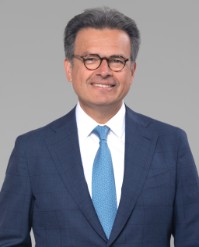


Hergüner Bilgen Üçer Attorney Partnership has recrafted the Turkish law firm model along modern corporate standards for more than three decades while maintaining the personal level of attention that its clients have come to expect. Its size and expertise make Hergüner one of the few truly full-service independent Turkish law firms with global reach, equally at home in the role of primary counsel in multinational transactions and as local counsel to foreign and domestic clients. The legal team of approximately 80 members, 16 of whom are partners, has a variety of educational and professional backgrounds, handling cases that require a full grasp of Turkish and cross-border jurisdictions, as well as different cultures and languages. The firm’s lawyers have considerable experience in all areas of M&A, including due diligence, negotiating and drafting contracts, representing clients during interim and closing phases, and providing post-closing advice for clients across a multitude of sectors.
Introduction
After several years of global macroeconomic uncertainty, 2025 marked clear growth in Türkiye’s M&A market, with both transaction volume and aggregate deal value increasing significantly versus previous years. In fact, market data suggests that total deal value reached its highest level in more than a decade, while transaction count also recorded steady growth.
Various market analyses indicate that total transaction value for 2025 reached the equivalent of double-digit billions of US dollars. Deloitte’s 2025 Annual Turkish M&A Review reports that aggregate disclosed transaction volume exceeded USD16 billion, supported by 450 completed deals. The increase in value was not driven by any single standout transaction but, instead, was a reflection of a higher number of deals between mid- and large-cap companies. The revival of high-value strategic transactions further supported this upward trend.
Moreover, the Turkish Competition Authority reviewed more than 400 M&A filings during 2025, demonstrating a material increase in notifications compared to 2024. Unlike the previous year, when exchange-rate shifts had a visible impact on USD-denominated deal value, 2025 showed a relatively more stable valuation environment. This relative stability supported structuring and execution of the transactions, and also contributed to the overall increase in reported deal value.
Importantly, the upward trend also reflected a renewed willingness by both strategic and financial investors to deploy capital. Corporate groups resumed expansion plans that had been postponed, while financial partners re-entered the market with a more selective, yet wider, approach. Although mid-market transactions continued to represent a substantial portion of overall activity, the presence of larger strategic acquisitions suggested a shift toward longer-term positioning and industrial interest.
Against the backdrop of increasing transaction activity and more competitive processes, deal structuring considerations also evolved. In line with the broader growth trajectory observed across EMEA, warranty and indemnity (W&I) insurance became increasingly visible in Turkish transactions in 2025. In practice, this type of insurance is most frequently considered in larger or cross-border deals, particularly where financial investors are involved or where sellers seek a relatively clean exit by limiting post-closing exposure involving strategic purchasers. While its use has grown, W&I insurance has not yet become a market standard in Türkiye, and many domestic mid-market transactions still rely on traditional risk-allocation mechanisms such as holdbacks and specific indemnities.
Overall, the market in 2025 appeared structurally stronger and more predictable than in the post-pandemic and high-inflation years.
Macroeconomic and Regulatory Landscape
The macroeconomic framework in Türkiye continued to affect business activity in 2025. Monetary policies remained tight, and managing inflation stayed at the focal point of economic policy. Compared to earlier periods characterised by sharp exchange-rate movements, the year demonstrated a relatively more stable valuation environment. While pricing negotiations remained cautious and disciplined on both purchaser and seller sides, the decline in short-term volatility allowed the execution of transactions previously been put on hold due to pricing uncertainty.
Regulatory activity remained significant. The Turkish Competition Authority’s 2025 M&A Overview Report states that the Competition Board reviewed 416 mergers, acquisitions, and privatisations during the year – the highest annual figure recorded since reporting began in 2013. Of these, 162 transactions involved target companies established in Türkiye, with a combined disclosed transaction value of approximately TRY466.1 billion (about USD11.81 billion). When privatisation transactions are included, the number of deals concerning Turkish targets totals 181, with an aggregate value of approximately TRY574.2 billion (about USD14.5 billion).
The increase in reviewed transactions reflects both higher deal activity and continued regulatory oversight. Foreign-to-foreign transactions notified in Türkiye further demonstrate the practical reach of Turkish merger control rules and their relevance for cross-border structures.
Sustainability and compliance considerations also remained embedded in transaction planning and structuring. European reporting and due diligence frameworks continued to influence Turkish companies with international exposure, resulting in environmental and governance matters being addressed more systematically during due diligence processes.
Investment incentives and sector-specific support mechanism, particularly in renewable energy, technology and infrastructure, continued to support investment decisions. Administrative practices concerning foreign investment reporting and sectoral approvals evolved gradually, contributing to greater procedural clarity for cross-border investors.
While global economic conditions and the local macroeconomic and regulatory landscape remained convoluted, a significant increase in transaction activity was recorded during 2025.
Role of Foreign Investors
Foreign investors maintained an active presence in Türkiye’s M&A market in 2025. Cross-border transactions were observed across manufacturing, energy, consumer services and technology sectors, reflecting continued international engagement with Turkish assets.
Foreign acquirers formed a meaningful portion of merger control filings. In addition to acquisitions of Turkish targets, foreign-to-foreign transactions leading to permanent change of control and exceeding the relevant turnover thresholds continued to require notification, underlining the extraterritorial dimension of Turkish merger control rules.
European investors remained visible, particularly in sectors integrated with European supply chains, including industrial production and renewable energy. US-based investors demonstrated activity in life sciences and digital platforms, in particular, while investors from the Gulf tended to focus on consumer goods, logistics and infrastructure-related assets.
Foreign participation in 2025 was generally characterised by structured transaction processes and careful regulatory sequencing. Detailed due diligence processes remained standard practice, particularly in highly-regulated sectors.
Role of Financial Investors
Financial investors continued to participate across multiple industries in 2025. Private equity funds were involved in growth-stage investments, add-on acquisitions and structured minority transactions, alongside traditional buyout structures.
Joint ventures and strategic partnerships also formed part of the transaction mix. Valuation discipline endured, with earn-out mechanisms and deferred consideration structures frequently incorporated into deal terms.
Venture capital activity continued to include both new investments and follow-on funding rounds in existing portfolio companies. Technology-driven and innovation-focused sectors continued to attract financial investor interest.
Digital transformation themes – including generative AI and infrastructure-related investments – featured in industry-wide acquisition strategies. Digital capabilities and data assets were increasingly scrutinised by investors as part of due diligence and valuation assessments. Such elements may now also impact certain deal-structuring considerations as well as post-completion integration planning.
Overall, financial investor participation in 2025 remained sustained across diverse transaction structures and industries.
Sectoral Trends and Notable Transactions
The technology, energy and consumer services sectors – particularly retail, consumer platforms and food and beverages – were among the principal drivers of M&A activity in 2025. The year also saw several material cross-border transactions in the consumer services and technology segments. In the technology space, Dream Games, the developer of Royal Match and Royal Kingdom, completed a growth financing round valuing the company at approximately USD2.75 billion, underlining continued international investor appetite for globally scalable Turkish gaming assets.
Technology and Digital Transformation
One of the most active parts of the market was the technology, media and telecommunications (TMT) sector. According to market data, TMT had the most deals of any sector in 2025, with 303 transactions. About 80% of these involved financial investors, which shows that financial investor-backed capital is still important in the technology ecosystem.
Transaction activity included interactive entertainment, digital marketplaces, and on-demand service platforms.
On that note, Dream Games, the developer of popular mobile games Royal Match and Royal Kingdom, finished a round of growth financing in the gaming sector which valued company at about USD2.75 billion. The deal showed that investors are still interested in gaming companies from Türkiye that can expand worldwide.
Platform consolidation was also seen in on-demand services. Uber bought 85% of Trendyol’s food delivery business for about USD700 million. This deal represents one of 2025’s landmark transactions, highlighting the consolidation of on-demand services, logistics networks, and e-commerce platforms.
In the industry as a whole, the primary reasons for acquisitions remain: (i) scalable digital infrastructure; (ii) expanding the user base; and (iii) and data-driven monetisation models.
Energy and Infrastructure
Energy and infrastructure transactions featured prominently in 2025, spanning downstream fuel distribution and cross-border energy transport assets. In the downstream segment, the merger between BP Turkey and Petrol Ofisi was completed early in the year, in February. Pursuant to the transaction, BP Turkey was dissolved, and all of its rights and obligations, as well as its distribution license, were transferred to Petrol Ofisi. As a result, Petrol Ofisi continues to operate former BP fuel stations under its own brand, with the rebranding process expected to be completed by Q4 2026. This transaction represented a significant consolidation within Türkiye’s fuel retail and terminal operations market.
Beyond downstream fuel distribution, energy infrastructure assets also attracted transactional interest during 2025. A noteworthy example was the sale of a 25% non-controlling stake in BP Pipelines (TANAP) Limited (the entity holding BP’s 12% interest in the Trans-Anatolian Natural Gas Pipeline) for approximately USD1 billion to Apollo-managed funds. For context, TANAP spans almost 1,800 kilometres across Türkiye and forms the central section of the Southern Gas Corridor, linking Caspian gas resources to European markets. This transaction reflected ongoing financial investor participation in long-term, regulated cross-border energy infrastructure.
Taken together, developments in 2025 demonstrated activity across different layers of the energy value chain, combining domestic market consolidation with shareholder level movements in strategic transmission assets.
Financial Services and Banking
The financial services sector was marked by one of the most notable cross-border ownership changes of the year. ADQ, the Abu Dhabi-based sovereign investor, acquired Odeabank, representing a significant foreign investment into Türkiye’s banking sector.
This transaction highlighted continued foreign participation in financial institutions and reflected the relevance of Türkiye’s banking assets within broader regional investment strategies. Beyond traditional banking, fintech and digital payment ecosystems remained aligned with broader technology-driven transaction dynamics observed in 2025.
Consumer, Retail and Beverages
Consumer-facing businesses accounted for a significant portion of disclosed transaction value in 2025. Market data indicates that the retail sector contributed approximately 40% of total disclosed deal volume during the year, reflecting sustained consolidation and strategic investment in branded consumer platforms.
In the alcoholic beverages segment, Tuborg’s acquisition of a controlling stake in Topkapı İçecek, a rakı manufacturer, reflected continued strategic positioning in the premium segment. The transaction was cleared by the Turkish Competition Authority and marked Tuborg’s first entry into the rakı market.
Cross-border activity in membership-based lifestyle services was evident in 2025 when Poland-based Benefit Systems S.A. reached an agreement to acquire MACFit, one of Türkiye’s largest fitness club networks with 121 locations, in Q2 2025, for approximately USD420 million.
Consumer services transactions also featured cross-border strategic participation, particularly in lifestyle, membership-based and platform-oriented business models. Retail and consumer-facing businesses continued to adapt to evolving consumption patterns, with logistics integration and digital distribution models forming part of transaction strategies.
Expectations for 2026
Activity data for 2025 suggests that the Turkish M&A market has moved beyond a short-lived rebound and entered a more structurally supported phase. The increase in transaction value was not driven by a single, standalone transaction but, instead, reflected broader participation across sectors and investor profiles. This more diversified and volume-driven deal flow points to a gradual rebuilding of confidence and a transactional environment that is growing in efficiency. Against this backdrop, M&A activity in Türkiye is expected to remain broadly stable in 2026.
The market will nevertheless continue to operate within a complex macroeconomic and geopolitical setting. Domestic factors, including the inflation trajectory, monetary policy direction and exchange rate stability, will remain central to valuation discussions and financing availability. At the same time, geopolitical developments, including ongoing regional conflicts and broader global tensions, may lead to volatility in international capital markets. This could affect global financing conditions and investor sentiment, which, in turn, may influence transaction timing, pricing dynamics and cross-border deal appetite.
From a sectoral perspective, strategic interest is likely to remain concentrated in technology, renewable and sustainable energy, healthcare, infrastructure and industrial production. Türkiye’s gaming ecosystem, in particular, continues to stand out as a globally competitive segment capable of attracting international strategic purchasers and growth investors. Energy transition initiatives, digital transformation projects and selective consolidation in regulated industries are also expected to sustain deal flow, particularly where regulatory frameworks provide visibility and predictability.
Foreign participation is expected to remain a defining feature of the Turkish M&A landscape. European as well as US-based strategic investors, together with private equity funds, are likely to continue pursuing platform investments, add-on acquisitions and structured minority positions. Regulatory review processes, including competition clearances and sector-specific approvals, will remain key execution considerations and should be factored into transaction planning at an early stage.
Following a successful year for M&A in 2025, the Turkish market enters 2026 with positive momentum. Activity is expected to continue to expand, supported by sustained investor interest and sector-driven opportunities. That said, the pace of growth will likely remain linked to broader macroeconomic stability and global market conditions, suggesting a year of steady progression rather than an abrupt acceleration. Market participants are also likely to maintain a pragmatic approach, prioritising operational resilience and long-term strategic fit over short-term valuation optimisation. This more measured stance may contribute to a transaction environment characterised by careful preparation, realistic pricing expectations and increased emphasis on post-completion integration.
Hergüner Bilgen Üçer Attorney Partnership
Büyükdere Caddesi 199
Levent 34394
Istanbul
Türkiye
+90 212 310 18 00
+90 212 310 18 99
info@herguner.av.tr www.herguner.av.tr
Trends and Developments
Authors
Hergüner Bilgen Üçer Attorney Partnership has recrafted the Turkish law firm model along modern corporate standards for more than three decades while maintaining the personal level of attention that its clients have come to expect. Its size and expertise make Hergüner one of the few truly full-service independent Turkish law firms with global reach, equally at home in the role of primary counsel in multinational transactions and as local counsel to foreign and domestic clients. The legal team of approximately 80 members, 16 of whom are partners, has a variety of educational and professional backgrounds, handling cases that require a full grasp of Turkish and cross-border jurisdictions, as well as different cultures and languages. The firm’s lawyers have considerable experience in all areas of M&A, including due diligence, negotiating and drafting contracts, representing clients during interim and closing phases, and providing post-closing advice for clients across a multitude of sectors.
