Derivatives 2026
Hong Kong SAR, China
Authors
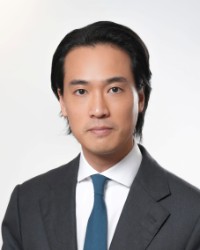



One Jackson Road Chambers (1JRC) was founded in 2018 as Suite 2703 Chambers and rebranded as One Jackson Road Chambers in January 2026, expanding to ten members and three door tenants. Comprised of leading individuals who are committed to providing unparalleled expertise and legal services in various practice areas, 1JRC has a strong focus on complex financial and securities disputes, criminal and regulatory matters and complex commercial disputes. Its members recognise the importance of their roles within the justice system of Hong Kong and beyond. They aim to offer practical and innovative legal advice while taking into account the commercial aspects of the issues faced by clients and solicitors, and pride themselves on their ability to provide effective, compelling and measured advocacy on behalf of their clients. Members of 1JRC have also been recognised by independent legal directories such as Chambers and Partners, in the fields of criminal law, and financial regulatory and securities law.
1. General
1.1 Overview of Derivatives Markets
In Hong Kong, the derivatives markets are divided into exchange-traded derivatives and non-centrally cleared (also known as over-the-counter, OTC) derivatives. Exchange-traded derivatives in Hong Kong are primarily traded on the Hong Kong Futures Exchange (HKFE) and cleared through HKEX clearing houses, featuring widely used products like Hang Seng Index (HSI) futures and options. OTC derivatives are private contracts directly negotiated between parties and commonly follow master agreements such as those published by the International Swaps and Derivatives Association (ISDA).
The two principal pieces of subsidiary legislation to the Securities and Futures Ordinance (SFO) now in operation form the majority of the regulatory framework over OTC derivatives trades. The reporting limb is principally contained in the Securities and Futures (OTC Derivative Transactions – Reporting and Record Keeping Obligations) Rules, Cap. 571AL, which impose reporting obligations under Section 101B of the SFO and related record-keeping obligations under Section 101E. The clearing limb is principally contained in the Securities and Futures (OTC Derivative Transactions – Clearing and Record Keeping Obligations and Designation of Central Counterparties) Rules, Cap. 571AN, which implement the clearing obligation under Section 101C, related record-keeping obligations under Section 101E, and the designation of central counterparties under Section 101J. The Securities and Futures Commission’s legislative history records that Cap. 571AN came into operation on 1 September 2016.
Locally, OTC derivatives compliance work is mainly focused on areas such as reporting, clearing, risk mitigation and margin. Particularly for SFC-regulated groups, the more relevant live issues include reporting to the Hong Kong Trade Repository (HKTR), clearing threshold monitoring, affiliate and booking-model governance, uncleared margin and risk mitigation controls, the prospective capital effect of the Financial Resources Rules (FRR) changes and proposed Type 11 and Type 12 regulated activities framework under the SFO and its sub-legislation.
1.2 Historical Trends and Looking Forwards
Since the global financial crisis in 2008, regulators and authorities have moved towards improving transparency and reduce counterparty risks in the OTC derivatives markets, resulting in reforms to the OTC derivatives markets on various fronts. From 2011 onwards, the Securities and Futures Commission (SFC) released a series of consultation conclusion by phases to bolster the OTC derivatives regulatory framework, including amendments to the Securities and Futures Ordinance (SFO) and its subsidiary legislations to address mandatory clearing and reporting obligations, as well as changes to licensing and capital regimes. (For a more in-depth analysis of the regulated activities reform introduced by the Securities and Futures (Amendment) Ordinance 2014, see the Trends and Developments chapter of this guide.) The exchange-traded derivatives regime is also undergoing reforms such as the Investor Identification Regime for which a consultation paper was issued by the SFC in June 2026 to further bolster the integrity and sustainable development of Hong Kong’s capital markets.
Being private and more variable in nature, the OTC derivatives market in Hong Kong is experiencing larger changes and therefore facing more impact as a result of new regulatory requirements as well as market changes. This chapter of the guide will also focus more on the OTC derivatives markets and reference the exchange-traded derivatives market where relevant.
2. Types of Derivatives
2.1 Futures and Options
In Hong Kong, the main listed futures and options on futures are equity index (for example, HSI, HSCEI, Hang Seng TECH), single-stock, FX (USD/CNH and other CNH pairs), interest rate (HIBOR), and commodity contracts (gold, silver and LME mini metals), with options on key equity index futures and flexible index options also widely traded. Innovative developments over the past 12 months include continued expansion of MSCI index futures and options and more CNH denominated contracts, while crypto futures remain largely offshore and are not a core HKEX product segment. Traditional commodity futures are physically or cash settled against tangible underlyings and linked to global benchmarks, whereas any crypto linked products available to Hong Kong investors tend to be cash settled, higher volatility, and accessed via overseas venues or structured products rather than HKEX futures.
2.2 Swaps and Security-Based Swaps
Swaps in Hong Kong predominantly trade over the counter and are cleared through OTC Clear, HKEX’s central counterparty for IRS, cross-currency swaps, non-deliverable currency forwards and deliverable FX. The SFC implements an OTC derivatives regime under the SFO, including mandatory clearing and reporting obligations for certain interest rate and FX derivatives, and licensing requirements for dealers and clearing participants. Cleared swaps benefit from CCP multilateral netting, standardised margin and collateral arrangements, and regulatory recognition of reduced counterparty credit risk, whereas uncleared swaps remain subject to bilateral credit support documentation, higher capital and margin expectations, and more intensive conduct and risk management oversight.
2.3 Forwards
Forwards in Hong Kong are generally treated as OTC derivatives under the SFO and associated OTC derivatives regime rather than as “futures contracts” traded on HKEX, with non-deliverable forwards and FX forwards qualifying as eligible products for clearing at OTC Clear. The SFC’s framework subjects specified forwards to transaction reporting, mandatory clearing (where in scope), and licensing obligations for institutions dealing, advising or providing clearing services in relation to such contracts. Deliverable FX forwards and FX swaps cleared through OTC Clear follow CCP rules on product eligibility, margin, collateral and default management, supplementing bilateral ISDA and credit support documentation that apply when trades remain uncleared.
2.4 Listed v Over-the-Counter
Exchange traded derivatives in Hong Kong, such as HKEX futures and options, must comply with listing and product approval requirements, trade via recognised exchange platforms, and be centrally cleared through HKCC or other HKEX CCPs under detailed rulebooks governing margin, position limits and default procedures. Over-the-counter derivatives are subject instead to the SFC’s OTC derivatives regime, mandatory trade reporting, clearing requirements for certain product classes, and applicable regulatory requirements for relevant market participants (references to Type 11 and Type 12 regulated activities should be treated with care, as those categories exist in the statutory framework but are not yet in operation for licensing purposes). In practice, this means exchange traded products face more standardised contract terms and transparency obligations, whereas OTC derivatives allow bespoke structuring but attract more stringent bilateral risk management, documentation and regulatory compliance burdens.
2.5 Asset Classes
There are two principal classes of collateral assets that are generally acceptable in Hong Kong as credit support for obligations under derivatives documentation: (i) cash and liquid equity; and (ii) fixed-income securities such as listed shares, US treasuries, corporate bonds and other readily marketable debt securities. Marketable debt securities are often issued or fully guaranteed by a sovereign, a relevant international organisation, a multilateral development bank or a public sector entity. The specific types of acceptable assets may depend on the nature of the transaction and the creditworthiness of the parties involved. In Hong Kong, where the counterparty borrower is a sizeable PRC corporation and when it enters into hedges in connection with its underlying loan obligations, it is also common to see the use of standby letters of credit issued by a third-party bank as credit support.
Since mid-2024, the Hong Kong Monetary Authority (HKMA) has signalled plans to expand eligible collateral to include e-HKD and licensed stablecoins (eg, USDC/USDT) for variation margin (VM), and green bonds for initial margin (IM), but with no formal approval yet. Participants should monitor HKMA circulars for form adoption timelines.
2.6 Exemptions, Non-Derivative Products and Spot Transactions
Certain types of products are exempt from the Margin Rules (see 4.1.2 Margins), otherwise authorised institutions (AIs) are required to adopt margins and other risk mitigation standards for all OTC derivatives transactions. These exempted products include:
- transactions such as repurchase agreements and securities lending transactions that are not themselves derivatives but share some attributes with derivatives;
- indirectly cleared derivatives;
- physically settled FX forwards and FX swaps, and the “FX transactions” embedded in cross-currency swaps associated with the exchange of principal;
- physically settled commodity forwards; and
- non-centrally cleared single-stock options, equity basket options and equity index options.
In terms of retail forex transactions, spot forex without leverage generally does not require a licence. However, Leveraged Foreign Exchange Trading (LFET) – commonly used in retail forex – is classified as a regulated activity (Type 3) and strictly overseen by the SFC. Any firm offering leveraged forex trading services to the Hong Kong public must be licensed by the SFC or registered with the HKMA as an authorised institution (AI). However, companies exempt from the licensing requirement under the Securities and Futures Ordinance by virtue of the Securities and Futures (Leveraged Foreign Exchange Trading-Exemption) Rules are not subject to any regulation in their LFET activities.
From the SFC’s Report on Leveraged Foreign Exchange Trading Activities Carried Out by Licensed Corporations published in April 2020, as a regulated activity licence holder, LFET brokers are subject to the same duties to act honestly, fairly, with due skill, care and diligence, and in the best interests of their clients when handling client orders under the Code of Conduct for Persons Licensed by or Registered with the Securities and Futures Commission.
3. Regulation of Derivatives
3.1 National
3.1.1 National Regulators
Hong Kong is a single unified jurisdiction, so derivatives are regulated at the level of the Hong Kong Special Administrative Region rather than by any federal or state authority. The principal legislation is the SFO, and two statutory regulators share the field.
The SFC is the independent regulator of the securities and futures markets, covering the licensing and conduct of intermediaries, the regulation of exchange-traded futures and options, and market misconduct. The HKMA is the banking regulator and supervises the derivatives business of authorised institutions, which are the dominant dealers in the over-the-counter (OTC) market.
The dividing line is drawn by type of participant rather than by product. The HKMA is the front-line supervisor of an authorised institution’s derivatives activity, while the SFC supervises licensed corporations and retains overall responsibility for market-wide conduct and for the securities and futures markets. For the OTC derivatives regime under Part IIIA of the SFO, the two regulators act jointly, with the HKMA operating the trade repository and the SFC leading on the licensing perimeter. The Insurance Authority has an ancillary interest where authorised insurers use derivatives.
A dedicated licensing regime for OTC derivatives – Type 11 (dealing in or advising on OTC derivative products) and Type 12 (providing client clearing services for OTC derivative transactions) – has been added to Schedule 5 to the SFO but is not yet in operation. In the interim, dealing in or advising on OTC derivatives may fall within existing regulated activities such as Type 1 (dealing in securities) and Type 2 (dealing in futures contracts).
3.1.2 Clearing
A mandatory central clearing obligation applies under the Securities and Futures (OTC Derivative Transactions – Clearing and Record Keeping Obligations and Designation of Central Counterparties) Rules (Cap. 571AN). In broad terms, two prescribed persons must centrally clear an in-scope transaction where each has exceeded the applicable clearing threshold. Prescribed persons are the major dealers, being certain authorised institutions, approved money brokers, and licensed corporations.
The scope of mandatory clearing is deliberately narrow. It captures specified, standardised interest rate swaps in HKD and the G4 currencies (USD, EUR, GBP and JPY), reflecting the products that are most liquid and suitable for central clearing.
Exemptions
The clearing obligation does not apply to every transaction. In particular:
- transactions in which either counterparty is not a prescribed person, or in which a party has not crossed the clearing threshold, fall outside the obligation;
- products outside the prescribed class of standardised interest rate swaps are not caught; and
- certain further transactions benefit from specified exemptions under the Rules.
Clearing Houses
Clearing of OTC derivatives is provided domestically by OTC Clearing Hong Kong Limited (OTC Clear), part of the Hong Kong Exchanges and Clearing Limited (HKEX) group. Exchange-traded contracts are cleared through the HKFE Clearing Corporation Limited (HKCC) and the SEHK Options Clearing House Limited (SEOCH).
3.1.3 Mandatory Trading
Hong Kong has not introduced a mandatory trading, or platform-execution, obligation for OTC derivatives. The SFO contains an enabling power under which the regulators could require prescribed transactions to be executed on a designated trading platform, but that power has not been activated.
As a result, OTC derivatives may continue to be executed bilaterally and off-exchange, in contrast to the swap execution facility regime in the United States and the trading obligation under the EU and UK regimes. Given that no obligation is in force, no exemptions arise.
3.1.4 Position Limits
Position limits apply to exchange-traded derivatives under the Securities and Futures (Contracts Limits and Reportable Positions) Rules (Cap. 571Y). For specified futures and options contracts, the Rules set a prescribed limit on the number of contracts a person may hold or control, together with a reportable position level at which open positions must be notified to the relevant exchange.
3.1.5 Reporting
A mandatory reporting obligation applies under the Securities and Futures (OTC Derivative Transactions – Reporting and Record Keeping Obligations) Rules (Cap. 571AL). In-scope transactions across the five principal asset classes – interest rate, foreign exchange, equity, credit, and commodity derivatives – must be reported to the Hong Kong Trade Repository (HKTR), which is operated by the HKMA.
Reporting entities are principally authorised institutions, approved money brokers, and licensed corporations, and the obligation extends to transactions they have conducted in, or originated from, Hong Kong. Reports must include prescribed transaction data and identify counterparties by Legal Entity Identifier (LEI). The regime has been aligned with international data standards, including the Unique Transaction Identifier, the Unique Product Identifier, and the Critical Data Elements.
Several reliefs qualify the obligation. In particular:
- an “exempt person” relief is available to authorised institutions, approved money brokers, and licensed corporations that hold only small positions in OTC derivative transactions;
- a “masking” relief applies where reporting would breach a foreign secrecy or data protection law in a designated jurisdiction; and
- certain excluded currency contracts, such as short-dated foreign-exchange forwards settling securities trades, fall outside the definition of a reportable transaction.
Unlike some regimes, Hong Kong does not provide a blanket exemption for inter-affiliate transactions, which remain reportable where the reporting conditions are met, subject to the reliefs described above.
3.1.6 Business Conduct
Intermediaries dealing in or advising on derivatives are subject to the SFC Code of Conduct for Persons Licensed by or Registered with the Securities and Futures Commission (the “Code of Conduct”), which the HKMA applies to registered institutions in parallel. The Code of Conduct imposes obligations of honesty, fairness, diligence and suitability, together with client agreement, disclosure, and know-your-client requirements.
Selling and Suitability – Client Categorisation
Retail clients receive the full suite of protections, while certain obligations are modified for professional investors under the Securities and Futures (Professional Investor) Rules (Cap. 571D). Many derivatives are “complex products”, which attracts additional selling restrictions and a suitability assessment even where a client transacts on an unsolicited basis. Derivative products offered to the public, such as listed structured products, are separately subject to SFC authorisation and disclosure requirements.
For OTC derivatives that are not centrally cleared, the SFC (through Schedule 10 to the Code of Conduct) and the HKMA impose risk-mitigation requirements on in-scope persons, including trading relationship documentation, timely trade confirmation, valuation, portfolio reconciliation, portfolio compression, and dispute resolution. These sit alongside the general capital, liquidity and risk-management obligations applicable to authorised institutions and licensed corporations.
3.1.7 Commercial End Users
Commercial end users – typically corporates using derivatives to hedge business risk – sit largely outside the dealer-focused perimeter. A company dealing as principal for its own account will generally not require an SFC licence, and it will not usually be a prescribed person, so the mandatory clearing obligation does not bite on it.
Hong Kong has no single statutory “end-user exception” of the kind found in the United States, but the practical effect is similar. In particular:
- reporting is the responsibility of the dealer counterparty, so an end user that is not a reporting entity has no standalone reporting duty;
- the margin requirements for non-centrally cleared derivatives are directed at financial counterparties and significant non-financial counterparties, so genuine commercial hedgers are frequently out of scope or benefit from thresholds; and
- end users nonetheless retain conduct protections as clients, and rely on their dealer counterparties for documentation and, where relevant, clearing access.
The principal issues for end users are therefore the documentation and credit terms negotiated with their dealers, rather than direct regulatory obligations of their own.
3.2 Local
Hong Kong is a single jurisdiction with no state, provincial or municipal tier of regulation. Regulatory authority is exercised at the level of the Hong Kong Special Administrative Region by the SFC and the HKMA, as described in 3.1.1 National Regulators.
Although Hong Kong is part of the People’s Republic of China, under the “one country, two systems” principle and the Basic Law, it maintains a separate legal system and its own financial regulators, and the national laws of Mainland China generally do not apply. In practice, Mainland China regulators such as the China Securities Regulatory Commission and the People’s Bank of China have no direct authority over the Hong Kong derivatives market; cross-boundary initiatives, such as Swap Connect, instead operate through co-operation between the two regimes, with each side regulating its own participants.
3.3 Self-Regulatory Organisations, Independent Authorities and Exchanges
Hong Kong does not rely on self-regulatory organisations exercising delegated statutory powers over their members; regulation is centralised in the SFC and the HKMA. The principal market infrastructure is operated by HKEX, itself a recognised exchange controller regulated by the SFC.
HKEX operates The Stock Exchange of Hong Kong Limited (SEHK) and the Hong Kong Futures Exchange Limited (HKFE), each a recognised exchange company under the SFO, together with the associated recognised clearing houses, including HKCC, SEOCH, the Hong Kong Securities Clearing Company Limited, and OTC Clear. The HKFE is the venue for exchange-traded futures and options and administers its own rules and contract specifications under SFC oversight.
Industry bodies such as the Treasury Markets Association and the International Swaps and Derivatives Association play an influential role in market practice and standard documentation, but they are trade associations rather than regulators and do not exercise statutory authority. All of this infrastructure is subject to SFC oversight, and there is no separate local-level supervision.
4. Documentation Issues
4.1 Trading Documentation
4.1.1 Industry Standards and Master Agreements
In Hong Kong, the documentation of derivatives transactions typically follow the framework published by the International Swaps and Derivatives Association (ISDA). The 2002 ISDA Master Agreement is the current market standard though the 1992 version of the same is still valid. The 2002 ISDA Master Agreement may also be supplemented by elections and designations made by parties.
For different asset classes there may be certain variations in the master confirmation agreements. ISDA’s product-specific definitions apply for particular assets classes such as:
- interest rate derivatives (under the 2021 ISDA Interest Rate Derivatives Definitions);
- foreign exchange derivatives (under the ISDA FX and Currency Option Definitions);
- equity derivatives such as equity swaps, options and forwards (under the 2002 ISDA Equity Derivatives Definitions);
- credit derivatives (2014 ISDA Credit Derivatives Definitions); and
- commodity derivatives (ISDA Commodity Definitions).
More recent asset classes for which bespoke confirmations have been published to supplement the ISDA Master Agreements include digital assets. The ISDA Digital Asset Derivatives Definitions launched in 2024 covers non-deliverable digital asset forwards and options referencing Bitcoin and Ethereum. The 2022 ISDA Securities Financing Transactions (SFT) Definitions and the SFT Schedule Provisions have also been introduced, allowing for unified documentation of derivatives and SFT Transactions that include derivatives, repos and stock loans under a single master agreement.
4.1.2 Margins
In Hong Kong, the documentation of arrangements for exchange of Variation Margin (VM) is largely dictated by regulatory requirements. In September 2020, the HKMA issued Module CR-G-14 of its Supervisory Policy Manual (SPM), titled Non-Centrally Cleared OTC Derivative Transactions – Margin and other Risk Mitigation Standards (also known as the “Margin Rules”), stipulating the collateral requirements for non-cleared OTC derivatives. The Margin Rules require authorised institutions (Als) to adopt margins and other risk mitigation standards for non-centrally cleared OTC derivatives transactions. It also includes requirements of posting Initial Margin (IM) and Variation Margin (VM) between counterparties in order to mitigate potential losses in events of default.
In terms of IM requirements, the Margin Rules apply when local and foreign Als such as banks and approved money brokers have entered into derivatives instruments on “covered products” with a “covered entity” (but if the Al is not locally incorporated, only in respect of non-cleared derivatives booked in its Hong Kong branch). Under 2.1.1 of the Margin Rules, these “covered products” include all non-centrally cleared derivatives transactions, with certain exceptions under 2.1.2 namely:
- other transactions, such as repurchase agreements and securities lending transactions, that are not themselves derivatives but share some attributes with derivatives;
- indirectly cleared derivatives;
- physically settled FX forwards and FX swaps, and the “FX transactions” embedded in cross-currency swaps associated with the exchange of principal;
- physically settled commodity forwards; and
- non-centrally cleared single-stock options, equity basket options and equity index options.
4.1.3 Other Agreements
In Hong Kong, while the most commonplace master agreements are those published by ISDA, regulators have also recognised other trading agreements for specific types of transactions. For example, in July 2025 the HKMA announced enhancements to the offshore RMB bond repurchase (repo) business to facilitate the participation of Northbound Bond Connect investors in repo business, recognising templates such as the Global Master Repurchase Agreement (GMRA) or National Association of Financial Market Institutional Investors (NAFMII)’s Bond Repurchase Master Agreement. For securities lending transactions, the Global Master Securities Lending Agreement (GMSLA) published by the International Securities Lending Association (ISLA) is a newly standardised legal framework used to govern cross-border and domestic securities lending.
4.2 Clearing Documentation
For derivatives transactions adopting the documentation framework of the ISDA Master Agreement, ISDA has commissioned Hong Kong legal opinions in respect of the enforceability of close-out netting and/or set-off provisions in derivatives documentation.
Solvency of parties is often a key issue to clearing brokers and their customers. Where parties are solvent, contractual netting and set-off provisions in the ISDA Master Agreement are generally enforceable in Hong Kong. There are several forms of set-off in Hong Kong, and contractual set-off pursuant to an agreement is generally enforceable.
However, if a counterparty is insolvent, then statutory/insolvency set-off would apply to mutual credits, mutual debts and other liabilities arising out of mutual dealings. The application of statutory/insolvency set-off is mandatory and cannot be contracted out of. Netting and set-off provisions under an ISDA Master Agreement are likely to comply with statutory/insolvency set-off requirements.
4.3 Opinions and Other Documentation Issues
The ISDA commissions netting and collateral opinions on the enforceability of netting provisions, termination, bilateral close-out netting and multibranch netting provisions, as well as credit support documents in various jurisdictions including Hong Kong. There are no derivative-specific execution requirements under Hong Kong law, but opinions ensure corporate counterparties are legally bound and that trades survive insolvency. Typically, ISDA Master Agreements serve to verify four core pillars:
- capacity;
- authority;
- enforceability (including termination netting); and
- collateral validity.
5. Enforcement Trends
5.1 Regulator Priorities and Enforcement Trends
As explained above, the major developments in enforcement trends in recent years focus more on OTC derivatives as opposed to exchange-traded derivatives. Currently, the dedicated OTC derivatives licensing regime introduced by the Securities and Futures (Amendment) Ordinance 2014, including Type 11 and Type 12 regulated activities, remains introduced in the statutory architecture but is still not yet in operation for licensing purposes. The SFC’s current licensing materials list Type 11 as “dealing in OTC derivative products or advising on OTC derivative products” and Type 12 as “providing client clearing services for OTC derivative transactions”, but mark both as not yet in operation for licensing purposes.
The proposed amendments are in advanced stages such that groups should already assess whether their present business would, once commencement occurs, fall within expanded Type 7, expanded Type 9, Type 11 or Type 12. The SFC’s 2025 OTC derivatives activities survey expressly targeted firms whose activities would fall within expanded Type 7, Type 11 or Type 12 when the licensing regime introduced by the 2014 Amendment Ordinance comes into effect.
While both the HKMA and SFC regularly review local markets and provide guidance to the general public in relation to compliance and surveillance issues, it remains a general theme of development in enforcement trends that regulators strive to improve transparency and reduce counterparty risks, especially in OTC derivatives transactions. For a more detailed examination of the latest reforms, see the Trends and Developments chapter of this guide.

Trends and Developments
Authors
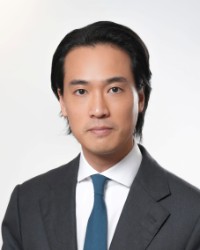



One Jackson Road Chambers (1JRC) was founded in 2018 as Suite 2703 Chambers and rebranded as One Jackson Road Chambers in January 2026, expanding to ten members and three door tenants. Comprised of leading individuals who are committed to providing unparalleled expertise and legal services in various practice areas, 1JRC has a strong focus on complex financial and securities disputes, criminal and regulatory matters and complex commercial disputes. Its members recognise the importance of their roles within the justice system of Hong Kong and beyond. They aim to offer practical and innovative legal advice while taking into account the commercial aspects of the issues faced by clients and solicitors, and pride themselves on their ability to provide effective, compelling and measured advocacy on behalf of their clients. Members of 1JRC have also been recognised by independent legal directories such as Chambers and Partners, in the fields of criminal law, and financial regulatory and securities law.
Historical Setting and Architecture
Hong Kong’s over-the-counter (OTC) derivatives reform forms part of the post-global-financial-crisis programme to improve transparency, reduce counterparty risk and strengthen market infrastructure. The legislative architecture was built principally through the Securities and Futures Ordinance (SFO), as amended by the Securities and Futures (Amendment) Ordinance 2014, together with subsidiary legislation governing reporting, clearing, trading, record-keeping and related compliance obligations. Joint administration by the Securities and Futures Commission (SFC) and Hong Kong Monetary Authority (HKMA) is central to the design of the regime because the affected market includes both SFC-licensed corporations and authorised institutions (AIs).
The framework has developed in stages: mandatory reporting became operational first, mandatory clearing followed on a narrower product and counterparty basis, margin and other risk mitigation requirements for non-centrally cleared OTC derivatives were developed through the conduct and prudential framework, and the bespoke licensing and capital architecture for OTC derivatives activities has remained the longest-developing limb of the reform package.
Two principal pieces of currently operational subsidiary legislation are:
- the Securities and Futures (OTC Derivative Transactions – Reporting and Record Keeping Obligations) Rules, Cap. 571AL, which impose reporting obligations under Section 101B of the SFO and related record-keeping obligations under Section 101E (the “Reporting Rules”); and
- the Securities and Futures (OTC Derivative Transactions – Clearing and Record Keeping Obligations and Designation of Central Counterparties) Rules, Cap. 571AN, which implement the clearing obligation under Section 101C, related record-keeping obligations under Section 101E, and the designation of central counterparties under Section 101J (the “Clearing Rules”).
The regime is best viewed through five regulatory levels:
- mandatory reporting;
- mandatory clearing;
- statutory trading-obligation architecture;
- conduct and risk mitigation obligations for uncleared transactions; and
- prudential or licensing consequences for firms carrying on OTC derivatives business.
Although Hong Kong’s live OTC derivatives compliance burden has centred mainly on reporting, clearing, risk mitigation and margin, the statutory architecture also contains a trading obligation framework, and regulators have adopted a trading determination process for assessing whether particular products should become subject to platform trading requirements. Firms should therefore monitor trading-obligation determinations even though this has not yet become the principal operational burden for most SFC-regulated groups.
For most SFC-regulated groups, the live issues now are Hong Kong Trade Repository (HKTR) reporting, clearing threshold monitoring, affiliate and booking-model governance, uncleared margin and risk mitigation controls, and the prospective capital effect of the Financial Resources Rules (FRR) changes and proposed Type 11 and Type 12 regulated activities framework under the SFO and its sub-legislation.
Licensing Reform and Scope of Regulated Activities
At the time of publication of this guide, the dedicated OTC derivatives licensing regime introduced by the Securities and Futures (Amendment) Ordinance 2014 includes Type 11 and Type 12 regulated activities. The SFC’s current licensing materials list Type 11 as “dealing in OTC derivative products or advising on OTC derivative products” and Type 12 as “providing client clearing services for OTC derivative transactions”, but both are marked as “not yet in operation”.
That does not reduce their practical importance. The policy design is sufficiently advanced that groups should already assess whether their present business would fall within the to-be-expanded Type 7, Type 9, Type 11 or Type 12. The SFC’s 2025 OTC derivatives activities survey expressly targeted firms whose activities would fall within expanded Type 7, Type 11 or Type 12 when the licensing regime introduced by the 2014 Amendment Ordinance comes into effect.
The reform also contemplates transitional arrangements. The SFC has previously indicated that there would be a six-month grace period from commencement of the OTC derivatives licensing regime, during which market participants may continue activities falling within the new or expanded regulated activities without relevant licences or registrations. This does not mean firms can wait passively. In practice, the grace period is designed to manage commencement, not to replace advance entity mapping, responsible officer planning, systems readiness and capital analysis.
Expanded Type 7 and Type 9
Expanded Type 7 is relevant where automated trading services involve OTC derivative transactions or products. Expanded Type 9 is relevant where the management of portfolios of OTC derivative transactions falls within scope. This captures firms performing ATS or asset management functions who may not be conventional front-office dealers or advisers but become regulated once the OTC derivatives licensing regime is commenced.
Asset managers whose derivatives activities go beyond hedging incidental to traditional securities or futures portfolios, may face specific OTC derivatives portfolio-management licensing analysis, subject to applicable exemptions, including where OTC derivatives portfolio management is wholly incidental to OTC derivatives dealing activities in specified circumstances. Similarly, platform operators and infrastructure providers should not assume that their analysis ends with Type 11 or Type 12; expanded Type 7 may become equally important where automated matching, execution, routing or trading functionality is involved.
Type 11
The proposed Type 11 regulated activity is intended to cover dealing in, and advising on, OTC derivative transactions. The dealing limb includes entering into or offering an OTC derivative transaction and inducing or attempting to induce another person to enter into or offer such a transaction; the advising limb includes advising or issuing reports or analyses on whether derivative transactions should be entered into or on the terms on which they should be entered into.
Type 11 is significant in that Type 1 and Type 4 regimes only capture part of the derivatives landscape, principally where the relevant product falls within the definition of securities. Many OTC derivatives businesses, including significant commodities derivatives and interest rate swap activity, do not fall within those categories, which is why the Type 11 perimeter is a major issue for firms using Hong Kong entities for marketing, execution support, structuring or client advice on non-securities OTC products.
Some exemptions relied on in existing business models, including principal-to-principal analysis under Type 1, may not survive once the OTC derivatives-specific regime is implemented. The practical analysis should therefore be undertaken by activity, product, counterparty, booking entity and client-contact function, rather than by assuming that existing Type 1 or Type 4 conclusions will automatically carry across.
Type 12
The proposed Type 12 regulated activity is intended to capture the provision of clearing and settlement services for OTC derivative transactions. For many groups, the immediate importance of Type 12 is not current licensing exposure but preparatory entity mapping: identifying which group company actually handles client clearing, post-trade processing, settlement support or intragroup facilitation in a manner that may later fall within Type 12.
This should be read together with the clearing regime and FRR proposals. A firm that provides client clearing services may face licensing obligations as well as capital, client-asset, disclosure, portability, segregation and operational resilience expectations. The commercial question is therefore not simply whether a Hong Kong entity can obtain Type 12 approval, but whether it can maintain the infrastructure, governance and capital base required for that activity on a sustainable basis.
Conduct Reform and Affiliate Structures
The conduct reforms are commercially significant because they are directed at common cross-border operating models. In particular, the regulated client-facing affiliate requirement addresses the practice under which a Hong Kong licensed corporation solicits or advises a client but the transaction is actually entered into with an overseas or other group affiliate.
The SFC’s consultation materials confirmed a regulated client-facing affiliate framework (the “Regulated CFA”). Broadly, where a licensed corporation introduces clients to group affiliates for OTC derivative transactions, the CFA must fall within the prescribed regulated categories, including licensed corporations, authorised financial institutions or comparable overseas-regulated entities, subject to the regulated client exemption, disclosure requirements, best-interest obligations and transitional arrangements for existing arrangements. A professional investor (PI) is not automatically a regulated client, and PI status does not by itself displace the regulated client analysis. For legacy arrangements, transitional treatment applies to existing client-facing affiliates, so the rule is not an immediate prohibition on all pre-existing structures.
A licensed corporation may therefore introduce a client to enter into an OTC derivative transaction with a group affiliate only where the affiliate falls within the relevant regulated categories, or where an applicable exemption or transitional arrangement applies. This requirement is exempted for OTC derivative transactions entered into with a regulated client, but the regulated client exemption does not apply merely because the client is a PI. The SFC rejected the proposition that PIs should automatically be treated as equivalent to regulated clients, because PI status does not necessarily mean the person is subject to regulatory standards comparable to those applicable to regulated client-facing affiliates.
The transitional period for the Regulated CFA Requirement lasts until the end of the transitional period for Type 11 regulated activity. During that transitional period, licensed corporations may continue to introduce clients to those existing affiliates, but they must implement reasonable measures to protect clients from conduct and prudential risks. This is an important qualification because it means that the rule should not be read as an immediate prohibition on every legacy unregulated affiliate arrangement, but a conduct-risk control which requires the licensed corporation to justify and manage the arrangement.
This is a major pressure point for remote booking models. Where Hong Kong staff perform the economically meaningful client-facing functions but the transaction is documented with an offshore affiliate selected primarily for balance sheet or capital reasons, the group needs to assess whether the affiliate is sufficiently regulated, and whether the overall structure remains coherent once the future Type 11 perimeter, conduct rules and prudential expectations are read together.
The oversight of unregulated risk-booking affiliates creates a related but distinct obligation. The SFC’s conclusions describe the risk-booking affiliate obligation as applying where a licensed corporation arranges OTC derivative transactions entered into with its clients, or back-to-back against client transactions, for group affiliates that are not licensed corporations, authorised financial institutions or similarly regulated OTC derivative dealers or banks. The licensed corporation should consider SFC guidance and relevant group or risk-booking affiliate regulator guidance when designing risk management programmes.
In practice, this means intra-group booking is no longer simply a treasury or middle-office decision; it becomes a governance issue requiring demonstrable alignment between local controls, group risk appetite, desk mandates and escalation arrangements. A licensed corporation should review its own risk policies and ensure that risks taken by the risk-booking affiliate are subject to risk management standards consistent with those expected by relevant regulators.
The practical issue is not merely when a rule takes effect, but whether a target operating model can withstand scrutiny where Hong Kong originates or negotiates trades while another entity books the trade, holds the risk and bears the capital cost. That model is especially exposed where the affiliate is not independently regulated, where governance documentation is weak, or where the Hong Kong entity cannot evidence meaningful oversight of the conduct and prudential risks created by the structure.
Mandatory Reporting and HKTR Developments
Mandatory reporting is the most developed limb of Hong Kong’s OTC derivatives regime. The Reporting Rules first took effect on 10 July 2015, initially covering certain interest rate swaps and non-deliverable forwards, and were later expanded to all specified OTC derivatives. In September 2024, the HKMA and SFC concluded on a more internationally standardised reporting framework requiring Unique Transaction Identifiers (UTI), Unique Product Identifiers (UPI), Critical Data Elements (CDE) and ISO 20022 XML, implemented on 29 September 2025. HKTR’s operating and technical materials have since been updated to reflect the ISO 20022 reporting environment. Firms should treat reporting as a systems-and-governance issue rather than a purely filing obligation.
A further 2026 operational update is important. HKTR announced on 5 March 2026 that live legacy transactions with a remaining maturity of more than one year as of 29 September 2025 had to be re-reported in ISO format within a six-month transitional period ending on 29 March 2026, marking the lapse of the key long-dated legacy migration deadline.
Practically, reporting compliance now depends on data lineage, control over UTI generation and sharing, product classification, life cycle-event reporting, valuation logic, error remediation and system capability to submit in the required XML format. In other words, the reporting obligation is now inseparable from systems architecture and operational governance.
That has several consequences for licensed corporations.
- First, booking architecture matters because it affects who has the source data needed for accurate reporting.
- Second, intra-group arrangements and third-party vendor contracts should clearly allocate responsibility for UTI creation, data quality, validation breaks and correction workflows.
- Third, legacy-trade migration and post-go-live exception management should be treated as continuing legal-compliance issues rather than one-off technology tasks.
Masking relief should also be noted. The March 2024 consultation explained that Rule 26(1) of the Reporting Rules permits masking of counterparty information where reporting is prohibited in designated jurisdictions, and regulators concluded that no change would be made to the current designated list. This is a narrow relief rather than a general exception, and firms relying on it should maintain legal analysis and evidence showing why disclosure is prohibited in the relevant jurisdiction.
Mandatory Clearing and Recent Refinements
Mandatory clearing in Hong Kong continues to operate on a targeted basis under the Clearing Rules. It applies by reference to prescribed persons, specified product classes, thresholds and designated central counterparties, rather than imposing universal clearing across the OTC derivatives market.
The clearing obligation under the Clearing Rules is threshold-based. A prescribed person becomes subject to the obligation once its applicable average local total position in relevant OTC derivative transactions during the relevant calculation period reaches the prescribed threshold, currently USD20 billion. From that point, relevant transactions entered into on or after the prescribed day must be centrally cleared.
The clearing framework is responsive to market developments, benchmark reform and clearing-house product specifications, and continues to be refined through periodic regulatory updates. In August 2023, the HKMA and the SFC concluded consultation on amendments to the Clearing Rules, including changes to floating rate option terms for certain interest rate swap classes affected by benchmark reform.
In June 2025, the HKMA and the SFC concluded the annual update to the Financial Services Providers (FSPs) list for the clearing regime. The updated FSP list was later gazetted and took effect on 1 January 2026. The SFC also reminded licensed persons that, where their average total position during a calculation period reaches the clearing threshold, relevant transactions entered into on or after the prescribed day, including transactions with FSPs, must be centrally cleared.
That annual update is not merely administrative. For firms near the clearing threshold, or firms that frequently transact with global dealers, changes to the FSP list may affect whether particular counterparties are included in the calculation mechanics relevant to the clearing obligation. Threshold monitoring should therefore be treated as an ongoing legal and compliance issue, rather than a one-off onboarding check.
The 2026 annual FSP review should also be noted. The HKMA and the SFC confirmed in April 2026 that there would be no change to the FSP list, but firms should maintain annual reviews as practical consequences of the clearing regime continue to depend on FSP designations and applicable calculation-period mechanics.
The January 2026 consultation on standard calculation periods has also been concluded. On 5 June 2026, the HKMA and the SFC issued consultation conclusions confirming broad support for standardising calculation periods under the Clearing Rules. They intend to proceed with legislative amendments so that, from 1 March 2027, the calculation periods will be standardised as 1 March to 31 May and 1 September to 30 November each year, reducing the need for repeated amendments to Schedule 2.
Risk Mitigation and Margin for Uncleared Transactions
Three related but distinct frameworks are involved here: SFC risk mitigation requirements, SFC margin requirements, and HKMA margin and risk mitigation standards for AIs.
SFC risk mitigation requirements
The SFC’s risk mitigation requirements apply to licensed corporations that enter into OTC derivative transactions, as well as to certain Type 9 asset managers in respect of OTC derivative transactions entered into on behalf of collective investment schemes, except where such transactions are handled by the governing body of the scheme or its delegate. The SFC’s requirements cover trading relationship documentation, trade confirmation, valuation, portfolio reconciliation, portfolio compression and dispute resolution.
The purpose of these requirements is to reduce legal uncertainty, operational risk and dispute risk in uncleared derivatives trading. The SFC does not prescribe a single mandatory form of documentation; rather, the key point is that legal certainty should be reviewed over time and not treated as a one-off onboarding exercise. Firms should periodically assess whether their master agreements, credit support documentation, confirmations, valuation processes and dispute-resolution mechanisms remain enforceable and operationally effective.
This matters because “uncleared” does not mean “lightly regulated”. Firms that choose, or are required, to remain outside central clearing must still maintain robust documentation, collateral, reconciliation, compression and dispute-management infrastructure. In practice, these obligations affect documentation strategy, collateral operating-model design, and the allocation of responsibility among front office, legal, operations, risk and collateral-management teams.
SFC margin requirements
The SFC’s margin requirements under Part III of Schedule 10 to the Code of Conduct apply to licensed persons that enter into non-centrally cleared OTC derivative transactions with covered entities, subject to the relevant counterparty classifications, average aggregate notional amount (AANA) thresholds, product scope, exemptions and substituted compliance. The regime requires the exchange of both initial margin (IM) and variation margin (VM) in the circumstances specified by the rules.
For IM, a licensed person must exchange IM on a gross basis with a covered entity in accordance with the implementation schedule. The rules permit the parties to agree not to exchange IM where the amount due is equal to or below HKD375 million, and that threshold is applied at the level of the relevant consolidated groups.
For VM, a licensed person must exchange VM with a covered entity where the licensed person or its consolidated group has an average aggregate notional amount of OTC derivatives exceeding HKD15 billion, subject to the higher HKD60 billion threshold for the instruments specified in paragraph 7(b). VM is intended to fully collateralise current exposure arising from changes in the mark-to-market value of the relevant transactions.
Substituted compliance is also important for cross-border groups. The SFC’s comparable jurisdiction framework permits a licensed person, in specified circumstances, to elect to follow a counterparty’s comparable foreign margin requirements instead of the SFC requirements, provided that the licensed person has notified the SFC and the relevant foreign requirements are deemed or determined comparable, subject to SFC conditions.
HKMA CR-G-14
For AIs, the HKMA’s Supervisory Policy Manual module CR-G-14, “Non-centrally Cleared OTC Derivatives Transactions – Margin and Other Risk Mitigation Standards” (the “Margin Rules”), is the key reference point. The HKMA describes CR-G-14 as setting minimum standards for AIs in respect of margin and other risk mitigation standards for non-centrally cleared OTC derivatives. It covers margin standards and risk mitigation techniques including trading relationship documentation, trade confirmation, valuation, portfolio reconciliation, portfolio compression and dispute resolution.
CR-G-14 matters because Hong Kong’s OTC derivatives regime must be understood through both the HKMA and SFC frameworks, depending on the nature of the entity and the transaction. Many group structures involve both an SFC-licensed corporation and an authorised institution, or involve trading with AIs as counterparties. A proper operating-model review should therefore map the applicable HKMA and SFC requirements and confirm that documentation, collateral, valuation and reconciliation processes are aligned with the relevant regime(s).
FRR Reform and Prudential Consequences
The Financial Resources Rules are where the OTC derivatives reform becomes strategically decisive for SFC-regulated entities. Following the 2017 consultation, the SFC launched a further public consultation on 14 July 2025 on draft amendments to the FRR and related guidelines for internationally comparable capital requirements for licensed corporations engaging in OTC derivative activities, together with other changes to facilitate market development.
At the time of publication of this guide (1 September 2026), the FRR amendments are in final consultation stage. The English draft consultation closed on 13 October 2025, and the Chinese version consultation closed on 6 February 2026, but the final commencement date is still pending SFC publication of the final conclusions.
The July 2025 proposals build on the 2017 framework by moving the regime closer to revised Basel standards, including updated approaches for market risk, counterparty credit risk and credit valuation adjustment (CVA) risk. More broadly, they shift capital treatment from a product-based to a more risk-sensitive model, making netting, booking structure and clearing profile more important for back-to-back and principal-based businesses.
The proposed FRR framework continues to distinguish OTC derivatives dealers by business model and risk profile, with the heaviest capital burden falling on non-cleared dealing businesses and lighter treatment for cleared, advisory or limited models. The proposed figures are commercially material. For example, the 2025 consultation indicates:
- HKD30 million paid-up share capital and HKD15 million floor required liquid capital (RLC) for OTC derivatives dealing cleared by regulated CCP only;
- HKD60 million paid-up share capital and HKD30 million floor RLC for OTC derivatives inter-dealer broker only;
- HKD500 million tangible capital and HKD78 million floor RLC for a general OTC derivatives dealer below specified thresholds;
- HKD1 billion tangible capital and HKD156 million floor RLC for other general OTC derivatives dealers;
- HKD1 billion tangible capital and HKD195 million floor RLC for Type 12 OTC derivatives clearing below specified thresholds;
- HKD100,000 floor RLC for Type 9 OTC derivatives asset management with no client assets; and
- HKD5 million paid-up share capital with HKD3 million floor RLC for other Type 9 OTC derivatives asset management models.
These figures explain why the licensing reform cannot be analysed in isolation. The decisive question for many groups is not merely whether an activity may require a Type 11 licence when the regime commences, but whether the Hong Kong entity can justify the resulting prudential cost, especially for non-cleared dealing businesses. The capital burden is influential to entity selection, product scope, client segmentation, transfer-pricing assumptions and even the commercial viability of maintaining certain OTC products within an SFC-licensed platform.
The consultation also gives attention to CVA and internal models. The SFC proposes a simplified CVA substitute approach under which, for users of the simplified OTC derivatives counterparty credit risk approach, the CVA risk charge would equal the counterparty credit risk capital requirement on the same OTC derivative transactions. The SFC may require a licensed corporation with total OTC derivatives positions exceeding HKD1 trillion to use the Basel CVA framework. This is significant because CVA risk is not merely an accounting concept; it becomes a prudential capital issue capable of affecting pricing, booking and counterparty selection.
The consultation gives significant attention to internal models and model risk management, allowing the use of internal models subject to approval and strict governance, documentation, validation and stress-testing standards. The draft model risk management principles state that a covered licensed corporation’s board is ultimately responsible for model risk management and should establish a comprehensive firm-wide model risk management framework, with policies covering model development, implementation, validation, revalidation, periodic review, governance, challenge and documentation.
The broader point is that internal model approval is not just a technical or quantitative exercise. It also depends on a firm’s governance structure, documentation quality, validation rights, independent challenge, audit access and ability to demonstrate reliable capital calculation. For groups relying on vendor models, group models or offshore quantitative teams, the Hong Kong licensed corporation will need to show that it has sufficient oversight and access to satisfy local regulatory expectations.
Taken together, the reforms indicate a move towards a more granular and risk-sensitive regime that better reflects how derivatives risk is managed across products and markets. The overall direction is towards closer alignment between prudential capital treatment and actual trading risk, but that alignment will also make booking structures, clearing decisions, netting enforceability and collateral arrangements more commercially consequential.
Practical Implications for Licensed Corporations
Several practical themes emerge from the present state of reform.
- Booking-model pressure remains intense. The combined effect of the regulated CFA requirement, oversight of unregulated risk-booking affiliates, the future Type 11 perimeter and the FRR capital proposals place sustained pressure on remote booking structures that separate Hong Kong client origination from offshore execution and risk ownership.
- Reporting compliance has become a data-governance exercise as much as a legal one. The move to UTI, UPI, CDE and ISO 20022 XML reporting means that firms must understand, document and control the provenance of reportable data across front-office systems, confirmations, life cycle-event processing, collateral records and HKTR submission tools. The enhanced reporting regime is already live, and the long-dated legacy migration deadline has already passed.
- Clearing-threshold monitoring should be treated as a continuing regulatory obligation. Annual FSP-list updates, technical refinements to the Clearing Rules and the forthcoming standardised calculation periods can alter whether trades with particular counterparties become caught, even where the firm’s core product set has not materially changed. From 1 March 2027, subject to completion of the legislative process, calculation periods are expected to be standardised as 1 March to 31 May and 1 September to 30 November each year.
- Capital analysis must be undertaken at business-model level rather than as a purely legal classification exercise. A group that can technically perform the relevant activity through a Hong Kong licensed corporation may still decide that the associated capital charges, governance upgrades and model-risk requirements render a different legal-entity structure commercially preferable.
- Governance evidence matters. Boards, responsible officers and control functions should expect scrutiny not just of legal conclusions but of desk mandates, product approvals, intra-group agreements, delegation arrangements, reporting controls, model-governance materials and documentary evidence showing who actually solicits, advises, negotiates, books and risk-manages the transaction.
- Uncleared derivatives should be treated as a control-intensive business. Even where a product is not centrally cleared, the firm must still address SFC risk mitigation requirements, SFC margin requirements where applicable, and Margin Rules where AIs are involved. Documentation, collateral, valuation, reconciliation, compression and dispute-management processes should therefore be tested as part of the operating model rather than treated as back-office implementation details.
- Firms should continue to monitor the trading-obligation framework even though it has not yet become the principal compliance burden. The statutory architecture includes reporting, clearing, trading and record-keeping, and future trading determinations could affect platform usage, execution processes and client documentation.
Conclusion
As of now, Hong Kong’s OTC derivatives regime is operationally mature but structurally incomplete. Mandatory reporting and clearing are live, with HKTR reporting materially enhanced through UTI, UPI, CDE and ISO 20022 requirements. The long-dated legacy trade migration period ended on 29 March 2026. Mandatory clearing remains targeted and threshold-based, with the clearing threshold currently set at USD20 billion and with standardised calculation periods expected to apply from 1 March 2027 following the June 2026 HKMA-SFC conclusions.
The Type 11 and Type 12 licensing regime and expanded Type 7 and Type 9 perimeter remain not yet be in operation for licensing purposes, but the SFC is continuously collecting OTC derivatives activity data and consulting on the FRR capital framework. The FRR amendments remain in the consultation or finalisation stage, and a final commencement date should not be assumed until the SFC publishes conclusions and the relevant subsidiary legislation is made.
For SFC-regulated groups, the main strategic issues are therefore no longer confined to legal classification. The practical questions are how client-facing functions, affiliate booking, HKTR data architecture, uncleared margin, risk mitigation controls and future capital charges interact in the target operating model. Firms that wait for formal commencement of every remaining licensing limb before reviewing booking arrangements, group-affiliate structures, data governance, documentation and capital allocation may find that the real commercial decisions have already been made for them by the architecture of the reform itself.

Law and Practice
Authors
One Jackson Road Chambers (1JRC) was founded in 2018 as Suite 2703 Chambers and rebranded as One Jackson Road Chambers in January 2026, expanding to ten members and three door tenants. Comprised of leading individuals who are committed to providing unparalleled expertise and legal services in various practice areas, 1JRC has a strong focus on complex financial and securities disputes, criminal and regulatory matters and complex commercial disputes. Its members recognise the importance of their roles within the justice system of Hong Kong and beyond. They aim to offer practical and innovative legal advice while taking into account the commercial aspects of the issues faced by clients and solicitors, and pride themselves on their ability to provide effective, compelling and measured advocacy on behalf of their clients. Members of 1JRC have also been recognised by independent legal directories such as Chambers and Partners, in the fields of criminal law, and financial regulatory and securities law.
Trends and Developments
Authors
One Jackson Road Chambers (1JRC) was founded in 2018 as Suite 2703 Chambers and rebranded as One Jackson Road Chambers in January 2026, expanding to ten members and three door tenants. Comprised of leading individuals who are committed to providing unparalleled expertise and legal services in various practice areas, 1JRC has a strong focus on complex financial and securities disputes, criminal and regulatory matters and complex commercial disputes. Its members recognise the importance of their roles within the justice system of Hong Kong and beyond. They aim to offer practical and innovative legal advice while taking into account the commercial aspects of the issues faced by clients and solicitors, and pride themselves on their ability to provide effective, compelling and measured advocacy on behalf of their clients. Members of 1JRC have also been recognised by independent legal directories such as Chambers and Partners, in the fields of criminal law, and financial regulatory and securities law.
