Doing Business In... 2026
The Doing Business In… 2026 guide features more than 60 jurisdictions. Covering the full spectrum of legal and business-critical issues affecting investment, establishment, operations and growth, the guide provides the latest legal information on restrictions to foreign investments, corporate vehicles, employment law, tax law, competition law, intellectual property (IP), data protection and upcoming legal reforms.
Last Updated: July 16, 2026
Compare law and practice by selecting locations and topic(s)
Select Locations

Select Topic(s)
Please select at least one location and one topic to use the compare functionality.
Author
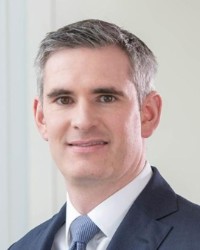
Matheson LLP is the law firm of choice for internationally focused companies and financial institutions doing business in and from Ireland. Established in 1825 in Dublin, Ireland, Matheson LLP celebrates its 200-year anniversary in 2025. The firm has offices in Dublin, Cork, London, New York, Palo Alto and San Francisco, almost 900 people work across the firm’s six offices, including 127 partners and tax principals and over 600 legal, tax and digital services professionals. The firm’s expertise is spread across more than 30 practice groups. Its clients include over half of the world’s 50 largest banks, seven of the world’s ten largest asset managers and seven of the top ten global technology brands, and it has advised the majority of the Fortune 100 companies.
Introduction
The eighth edition of Chambers Global Practice Guides: Doing Business In... is published at a time when macroeconomic volatility and geopolitical instability have become the new normal for global enterprises.
Economic growth is weaker than initially projected in 2026, weighed down by the recent outbreak of conflict in the Middle East and its consequences, a sharp rise in energy costs, record depletion of global oil reserves and supply chain disruptions (see IEA Oil Market Report – May 2026). The full impact of war on the global economy remains to be seen but the spectre of inflation and a significant slowdown in economic growth looms.
Against this backdrop, international policymakers have been striving to achieve security and stability for global businesses in the areas of trade. A notable development in the first half of 2026 was the agreement of major trade deals between the EU and the US and the EU and India, in a bid to restore economic confidence amid ongoing tariff disputes. The legality of the tariff policies imposed by the US administration remains a contested issue both domestically and globally, but the willingness of stakeholders to engage in multilateral trade negotiations signals a constructive development.
On the tax front, the OECD’s Side-by-Side Package has sought to bring clarity to the implementation of the Pillar Two rules for US headquartered multinational enterprises (MNEs). However, it remains to be seen whether this marks the final chapter of the OECD’s minimum tax project or whether the “stocktake” exercise to be conducted in future years will see further changes to remove any unfair advantages between different countries. With most large MNEs required to register for Pillar Two taxes this year, the impact and efficacy of this global minimum tax regime will need to continue to be assessed.
One particular area of economic growth that remains resilient in 2026 is investment in generative AI. By all accounts, the so-called “AI boom” appears set to continue this year, with many tech players implementing cost efficiency plans in an effort to shift capital towards investment in AI. Investment in physical infrastructure and data centres to support the rapid advancements in AI also remains steady. However, there has been a marked increase in scrutiny on the potential costs of such investments, including constraints in energy supply and impact on energy costs. This industry is also seeing increased regulatory requirements, which may slow growth in this developing sector.
In terms of digital regulation, the EU is continuing to focus on simplification and competitiveness as Ireland takes over the reins of the EU Presidency in July. The EU bloc will seek to remove overlapping regulations and reduce compliance burdens for digital businesses operating within the region with targeted amendments to align the EU Data Act, GDPR and AI Act. These changes are with a view to boosting AI innovation in Europe so as to ensure that regulatory complexity does not contribute to the region falling behind its global peers.
What does remain clear this year is that it is imperative for businesses and investors to remain agile in yet another year of volatility. The economic and geopolitical environment is shifting faster than policymakers and regulators can keep up with, and the businesses best placed to manage the gap will be those that proactively monitor regulatory changes while remaining flexible in their planning and responses.
In the context of this global macro-economic environment, the 2026 edition of the Doing Business In... guide provides a concise summary of the key legal and tax considerations for doing business in countries around the world. It serves as an essential reference point for both lawyers and investors looking to understand the basic principles and legal frameworks of the relevant jurisdictions.
The contributing experts for each jurisdiction have followed a common template, allowing readers to easily compare and contrast different jurisdictions.
The guide also summarises recent developments and updates that are of particular importance for those doing business in 2026.
We would like to thank all the participating contributors for their efforts in making this Doing Business In... guide such a vital resource and an essential component of the Chambers Global Practice Guides series.
Author
Matheson LLP is the law firm of choice for internationally focused companies and financial institutions doing business in and from Ireland. Established in 1825 in Dublin, Ireland, Matheson LLP celebrates its 200-year anniversary in 2025. The firm has offices in Dublin, Cork, London, New York, Palo Alto and San Francisco, almost 900 people work across the firm’s six offices, including 127 partners and tax principals and over 600 legal, tax and digital services professionals. The firm’s expertise is spread across more than 30 practice groups. Its clients include over half of the world’s 50 largest banks, seven of the world’s ten largest asset managers and seven of the top ten global technology brands, and it has advised the majority of the Fortune 100 companies.